

Industrial Wastewater Systems Built Around the Water You Need to Treat
Memva designs and manufactures wastewater treatment equipment for industrial applications where salinity, fouling, difficult contaminants or water-recovery requirements make standard treatment processes less practical. Our main equipment range includes MVC / MVR evaporators, DTRO membrane systems and multi-effect evaporation systems for wastewater concentration, water reuse and Zero Liquid Discharge projects.
We do not start a project by choosing a model number. We start with the wastewater: its flow, composition, operating conditions and the result the plant needs to achieve.
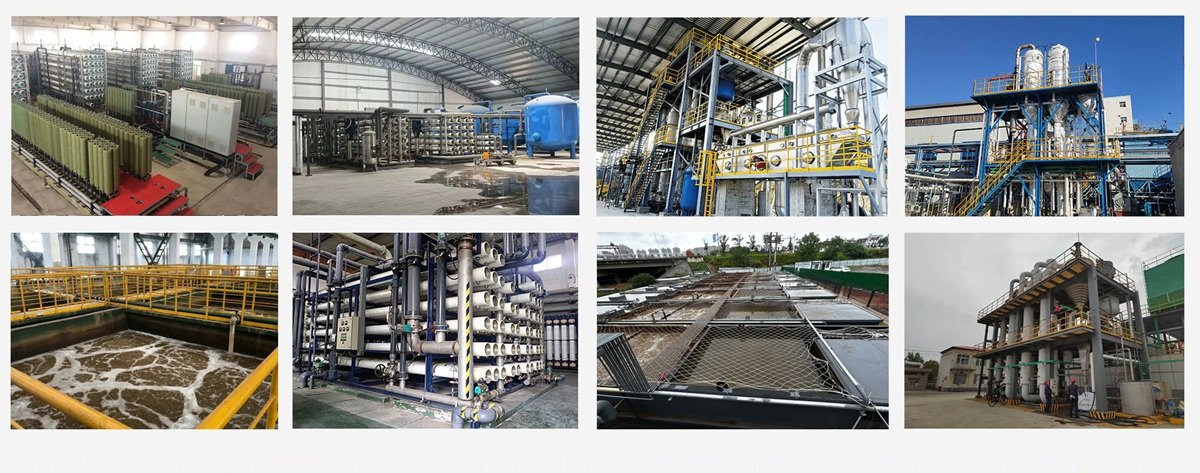
More Than an Equipment Catalogue
Memva is an industrial water treatment company based in Dongguan, Guangdong, China, integrating process engineering, equipment design, manufacturing and technical support.
Our work is focused on industrial wastewater that requires more than conventional clarification or standard reverse osmosis. Depending on the feedwater, a project may involve pretreatment, membrane concentration, thermal evaporation, condensate polishing and final concentrate or solids handling.
This matters because an evaporator, membrane skid or crystallization stage cannot be selected in isolation. High chloride levels affect material selection. Hardness and silica affect scaling risk. Organic compounds may influence pretreatment and condensate quality. Osmotic pressure determines how far a membrane system can practically concentrate the wastewater before evaporation becomes the better option.
Membrane and Evaporation Equipment for Difficult Wastewater
Different stages solve different problems. In some projects DTRO can reduce the volume going to evaporation. In others, wastewater chemistry or the required concentration makes direct thermal treatment more appropriate.
MVC / MVR Evaporators
Mechanical vapor compression or recompression systems reuse the energy contained in generated vapor. They are commonly evaluated for continuous high-salinity wastewater concentration, brine reduction, water recovery and ZLD treatment trains.
View MVC / MVR evaporators →DTRO Membrane Systems
Disc tube reverse osmosis uses an open-channel membrane configuration for difficult wastewater with elevated salinity or fouling potential. DTRO can operate as a treatment stage on its own or as membrane pre-concentration before thermal evaporation.
Explore DTRO systems →Multi-Effect Evaporation
Single-effect, double-effect, triple-effect and configurable multi-effect systems are available for applications where steam-based thermal evaporation is appropriate. The number of effects depends on capacity, utility conditions, operating schedule and lifecycle economics.
View multi-effect systems →Projects Usually Start With a Treatment Problem, Not an Equipment Name
Customers normally contact us because an existing treatment route has reached a practical limit, wastewater disposal is too expensive, more water needs to be recovered, or a concentrated residual stream requires further treatment.
High TDS and Concentrated Brine
Treatment of streams containing elevated dissolved salts where conventional biological processes or standard RO may be insufficient.
RO / Membrane Concentrate
Further concentration of reject streams when a membrane plant has already recovered the practical portion of the feedwater.
Wastewater Volume Reduction
Removing water from a liquid waste stream to reduce the volume requiring downstream treatment, hauling or final disposal.
Water Recovery and Reuse
Recovering membrane permeate or evaporator condensate for an appropriate reuse application after the required polishing and water-quality checks.
Zero Liquid Discharge
Combining pretreatment, membrane concentration, evaporation and final solids management when the complete project requires a ZLD outcome.
Fouling or Corrosive Feedwater
Reviewing scaling tendency, chloride, pH, organics, suspended material and other characteristics before equipment configuration and material selection.
From Water Analysis to a System That Can Be Installed and Operated
A useful proposal should explain more than equipment capacity. It should show what the design is based on, how the process is expected to work and what the customer needs to provide on site.
Understand the Feed
We review wastewater flow, operating hours, pH, TDS, COD / TOC, major salts, suspended material, known contaminants and variations in production.
Define the Target
The process changes depending on whether the goal is discharge compliance, volume reduction, water reuse, a specified concentrate level or complete ZLD.
Build the Process Route
Pretreatment, DTRO, MVC / MVR evaporation and multi-effect evaporation are compared as parts of one treatment route rather than treated as isolated machines.
Engineer the Equipment
Capacity, wetted materials, heat-transfer configuration, pumps, instrumentation, automation, cleaning strategy and utility requirements are developed around the agreed design basis.
Manufacture and Test
Equipment is assembled with attention to piping, instrumentation, electrical controls and service access. Factory testing is used to check equipment and control functions before shipment where applicable.
Installation and Operation Support
Technical documentation, installation guidance, commissioning support, spare-parts assistance and remote technical communication can continue after the system leaves the factory.
Industrial Wastewater Is Different From One Plant to the Next
The industry name helps us understand where the wastewater comes from, but actual water analysis remains the basis for final equipment selection.
Chemical Processing
High-salinity process wastewater, brine and concentration duties.
Pharmaceutical Wastewater
Complex streams containing salts, organics and variable process residues.
Battery Manufacturing
Wastewater containing dissolved salts, metals, fluoride and process chemicals.
Electroplating
Concentration and water-recovery systems for difficult metal-finishing effluent.
Landfill Leachate
Membrane treatment for variable wastewater with salinity and fouling challenges.
Membrane Concentrate
Thermal concentration after RO or other membrane recovery stages.
High-Salinity Wastewater
DTRO and evaporation configurations selected around actual salt chemistry.
Water Recovery Projects
Integrated treatment where recovered water has a defined reuse destination.
Engineering Has to Continue Beyond the Process Diagram
A treatment concept only becomes useful when it can be manufactured, shipped, installed, commissioned, maintained and operated at the customer's site.
International projects need clear communication before the equipment leaves the factory.
Memva equipment has been supplied to customers in more than 15 countries, including markets in North America, Australia, the Middle East, Russia, Pakistan and Southeast Asia.
For overseas projects, discussions can cover process documentation, equipment layout, utility interfaces, installation requirements, commissioning guidance, operating documentation and spare-parts planning.
The objective is not simply to ship a machine. It is to make sure both sides understand the design conditions, supply boundary and requirements for putting the system into operation.
You Do Not Need a Perfect Specification to Contact Us
Preliminary information is enough for an initial discussion. If laboratory analysis is available, send it with the inquiry. If it is not, start with what you currently know about the wastewater and the result you need.
Before You Request a Wastewater Treatment Proposal
Does Memva only manufacture MVR evaporators?
No. Memva's current equipment range includes MVC / MVR evaporation, DTRO membrane systems and single- and multi-effect evaporation equipment. These technologies can be supplied for individual duties or incorporated into a broader wastewater concentration, reuse or ZLD process.
How do you decide between DTRO and evaporation?
The decision depends on feed salinity, osmotic pressure, scaling tendency, organic loading, required recovery, concentrate destination, utility costs and final treatment target. Where practical, membrane pre-concentration can reduce the volume sent to evaporation. Some wastewater is better suited to direct thermal treatment.
Can Memva equipment be used in a Zero Liquid Discharge system?
Yes. DTRO and evaporation can form important stages of a ZLD process. Complete ZLD normally requires the whole treatment train to be considered, including pretreatment, concentration, evaporation and the final route for solids, salts and cleaning waste.
Can you quote a system from wastewater capacity alone?
Capacity is only one design input. A useful quotation also requires information about wastewater chemistry and the required treatment result. Two streams with the same daily flow can require very different equipment because salinity, salts, COD, pH, scaling risk and operating hours are different.
Do you support projects outside China?
Yes. Memva currently states that its equipment has been exported to more than 15 countries. Overseas project support can include technical communication, documentation, installation guidance, commissioning assistance and after-sales technical support according to the project scope.
Tell Us What You Need to Treat
Send your wastewater analysis, treatment capacity and target if you have them. If your project is still at an early stage, describe the wastewater source, current treatment problem and what you want the new system to achieve.