

Lorem ipsum dolor sit amet, consectetur adipiscing elit. Ut elit tellus, luctus nec ullamcorper mattis, pulvinar dapibus leo.
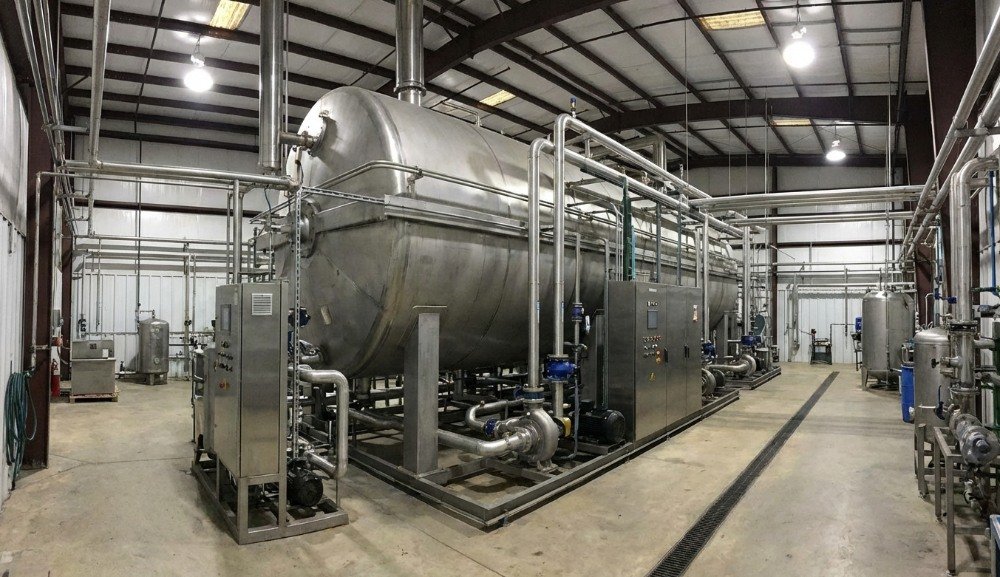
MEMVA designs and supplies customized single effect evaporator systems for industrial wastewater volume reduction and selected process-concentration duties. The system uses one evaporation stage, making it a practical option when straightforward operation, lower initial equipment complexity and reliable concentration are more important than maximizing steam economy.
A single effect evaporator concentrates a liquid by transferring heat from steam or another suitable heating medium through a heat-transfer surface. Part of the water or solvent is vaporized, the generated vapor is separated from the liquid, and the remaining stream leaves the system at a higher concentration.
Unlike a multi-effect evaporator, the vapor generated in the evaporation stage is not normally reused as the heating source for another evaporation effect. This makes the process arrangement simpler, but it also means that live-steam demand is generally higher for the same evaporation duty.
For buyers, the important question is therefore not simply whether a single-effect evaporator can remove water. The real decision is whether its lower system complexity and investment can justify the higher operating-energy requirement under your plant's actual steam cost, operating hours and evaporation load.
Steam economy and actual steam consumption should not be treated as a fixed catalog number. Feed temperature, boiling-point elevation, operating pressure, heat losses, fouling and final concentration can materially change system performance. Final guarantees should be based on a project-specific heat and mass balance.
A single-effect system is useful in the right operating conditions, but it is not automatically the lowest-cost evaporation technology over the full equipment lifecycle.
The exact piping arrangement depends on the feed and selected evaporator type, but a typical system follows the process below.
Feed is collected, screened or conditioned as required before entering the evaporation system.
Steam transfers heat through the heat exchanger without directly mixing with the process liquid.
Water or another volatile component vaporizes while dissolved or non-volatile material becomes concentrated.
The separator reduces liquid entrainment so vapor and concentrated liquid can leave through separate paths.
Final vapor is condensed. Condensate reuse or further treatment depends on its actual quality.
A complete industrial evaporator is more than one pressure vessel. Each component needs to be selected around the process duty and feed behavior.
Provides controlled delivery of the liquid to the evaporator. Pretreatment can be added where suspended solids, hardness or other contaminants require management.
Transfers thermal energy into the process liquid. Geometry and circulation are selected from viscosity, fouling, scaling tendency and solids behavior.
Separates generated vapor from entrained liquid droplets. Demister configuration is selected according to vapor load, foaming and condensate-quality requirements.
Condenses generated vapor using the available cooling system. Condenser duty depends on vapor load, cooling-water temperature and required operating pressure.
Can be used where a lower boiling temperature is required. Vacuum operation is particularly relevant when thermal exposure or process boiling temperature needs to be controlled.
Process automation can monitor and control levels, temperatures, pressures, flow and operating interlocks according to the required control philosophy.
Industrial evaporators should be sized from process data rather than selected from a generic capacity table. The following parameters are normally reviewed during engineering.
| Design Item | Available / Typical Options | What Determines the Selection |
|---|---|---|
| Evaporation Duty | Customized according to required water-removal rate | Feed flow, inlet concentration, target concentration and operating hours |
| Evaporator Type | Falling film / forced circulation / application-specific arrangement | Viscosity, suspended solids, scaling, crystallization and heat sensitivity |
| Heating Medium | Steam or suitable available waste-heat source | Utility pressure, temperature, availability and energy economics |
| Materials of Construction | SS316L, titanium, duplex or project-specific corrosion-resistant material where required | Chlorides, acids/alkalis, temperature, corrosion rate and cleaning chemistry |
| Operating Pressure | Atmospheric or vacuum operation according to process requirement | Boiling temperature, product sensitivity, boiling-point elevation and condenser conditions |
| Vapor Separation | Separator + demister arrangement matched to actual vapor load | Foaming, entrainment risk and condensate-quality target |
| Control System | PLC + HMI automation | Process stability, plant integration, alarms, data logging and operator requirements |
| Cleaning Strategy | CIP and/or mechanical cleaning access according to service | Scaling chemistry, fouling rate, solids and required operating availability |
Important: Final equipment size, heat-transfer area, steam consumption, pump selection and performance guarantees should be confirmed after reviewing actual feed composition and operating conditions.
The circulation method should be selected from the physical behavior of the feed, not simply from the evaporator name.
Falling-film evaporation can be considered for relatively clean, pumpable liquids where good liquid distribution can be maintained.
Forced circulation is often evaluated when the feed has higher solids, viscosity, scaling tendency or conditions where circulation velocity must be controlled deliberately.
Application suitability depends on feed chemistry, volatility, corrosion, foaming, scaling and required final concentration.
Volume reduction of selected high-TDS or concentrated wastewater streams before downstream treatment, crystallization or final disposal.
Concentration of selected chemical liquids after compatibility with metallurgy, operating temperature and volatile components has been reviewed.
Selected process liquids can be concentrated by evaporation where product quality and allowable temperature are compatible with the proposed design.
Buyers should compare lifecycle cost instead of selecting an evaporator only from equipment price or a theoretical energy-consumption number.
| Selection Factor | Single Effect | Multi Effect | MVC / MVR |
|---|---|---|---|
| Energy Reuse | No second evaporation effect for vapor heat reuse | Vapor is reused across additional effects | Generated vapor is mechanically compressed and reused |
| Live-Steam Demand | Generally higher | Lower than single effect under comparable conditions | Can substantially reduce steady-state fresh-steam demand |
| Initial Complexity | Lowest | Moderate to higher | Higher due to compressor and associated control system |
| Operation & Maintenance | Relatively straightforward | More stages and process interaction | Requires compressor and more specialized controls |
| Typical Project Fit | Smaller, intermittent or lower-capital-complexity duties | Continuous operation where steam savings justify additional effects | Continuous duty where electricity economics and feed behavior support vapor recompression |
| Best Selection Method | Compare capital cost, annual steam/electricity consumption, operating hours, cleaning frequency, maintenance, footprint and feed behavior using the same design basis. | ||
The lowest equipment price does not necessarily produce the lowest cost per ton of water evaporated. For continuously operated plants, utility cost can materially change the preferred technology.
Send us your feed flow, inlet concentration or TDS, target concentration, annual operating hours and local steam/electricity conditions. MEMVA can use these data to evaluate whether a single-effect, multi-effect or MVC/MVR system is more appropriate for the project.
Reliable evaporator design begins with process data. These are the main engineering steps before equipment selection.
Review flow rate, TDS or total solids, COD/organics, pH, chlorides, hardness, suspended solids, viscosity, foaming tendency, volatile components and scaling risk.
Confirm required water removal, final concentration, condensate-reuse objective, discharge requirement or downstream crystallization duty.
Determine circulation method, heat exchanger arrangement, materials of construction, separator, vacuum system, condenser and cleaning strategy.
Calculate evaporation duty, thermal load, steam requirement, condenser duty and major process operating conditions.
If appropriate, compare the single-effect design with multi-effect and MVC/MVR alternatives using local steam price, electricity cost and annual operating hours.
You do not need to prepare a complete engineering specification. Providing the following basic information helps us start the selection process.
MEMVA focuses on industrial wastewater treatment and evaporation systems, combining equipment manufacturing with project-specific system design.
System selection starts from feed chemistry, evaporation duty, corrosion conditions and utility availability rather than a one-size-fits-all equipment model.
Evaporator, separator, condenser, pumps, piping, instrumentation and control requirements can be evaluated as one process system.
MEMVA provides technical and installation guidance to help customers move from equipment delivery to commissioning and operation.
If steam consumption or continuous operating cost is a priority, compare the single-effect arrangement with alternative evaporation technologies.
Practical questions customers commonly consider before selecting an industrial single-effect evaporation system.
A single effect evaporator uses one evaporation stage to remove water or another volatile component from a liquid. Heat is supplied through a heat-transfer surface, vapor is separated from the liquid, and the remaining stream becomes more concentrated.
Its main practical advantage is a relatively straightforward process configuration. Compared with a multi-effect system, there are fewer evaporation stages, which can simplify equipment, control and maintenance requirements. Whether this produces the lowest total cost depends on steam consumption and annual operating hours.
Generated vapor is not reused through additional evaporation effects, so live-steam demand is generally higher than in a suitable multi-effect system operating at the same evaporation duty.
Steam consumption is project-specific. It depends on feed temperature, evaporation duty, boiling-point elevation, operating pressure, heat losses, fouling and target concentration. A heat and mass balance should be used for final steam-consumption guarantees.
Yes. Vacuum operation can reduce the liquid boiling temperature and may be useful when the process requires lower thermal exposure. Vacuum-system and condenser sizing must be matched to the actual vapor duty.
It can be considered for selected high-salinity wastewater streams, but the final design depends on salt composition, saturation limits, scaling tendency, suspended solids, corrosion risk and required final concentration. Difficult feeds may require forced circulation or another specialized evaporator configuration.
Potentially, yes, provided the metallurgy is selected from the actual chemical environment. Chlorides, pH, temperature, acid/alkali concentration and cleaning chemicals should be reviewed before selecting SS316L, duplex, titanium or another material.
Forced circulation is commonly evaluated for feeds with higher solids, viscosity, scaling or crystallization tendency. Falling film can be suitable for relatively clean and pumpable liquids when stable distribution over the heat-transfer surface can be maintained.
Neither is universally better. Single-effect systems can offer a simpler configuration and lower initial complexity, while multi-effect systems reuse vapor energy to reduce steam demand. The preferred option depends on evaporation duty, operating hours, steam price, feed behavior, maintenance requirements and available capital.
Start with feed flow, inlet concentration or TDS, chemical composition, required final concentration or evaporation rate, operating hours and available steam conditions. If possible, also provide pH, chlorides, COD, suspended solids and information about scaling or foaming.
Tell us what liquid you need to concentrate and your required treatment capacity. If you already have a wastewater analysis report, feed composition, TDS or target concentration, include those details in your message. The more process information you provide, the more accurately the evaporation system can be evaluated.
Prefer a quick technical discussion?
Contact MEMVA on WhatsApp