

Every plant manager and environmental engineer eventually faces the same wall: the staggering cost of thermal energy in wastewater treatment. If you are handling high-salinity effluents or aiming for Zero Liquid Discharge (ZLD), you know that traditional boiling methods burn through budget as fast as they burn through natural gas. This is where the mechanical vapor compression mvc evaporator changes the game. It isn’t just another piece of machinery; it is a fundamental shift in how we manage latent heat, turning waste vapor back into a primary energy source.
In this comprehensive guide, we are going to strip away the marketing fluff and look at the engineering reality. We will explore why this technology is displacing multi-effect systems in the US and Europe, analyze the ROI based on current energy prices, and discuss the operational nuances that only come from years of hands-on experience. Whether you are dealing with landfill leachate or complex pharmaceutical streams, understanding the mechanics behind vapor compression is the first step toward a sustainable bottom line.
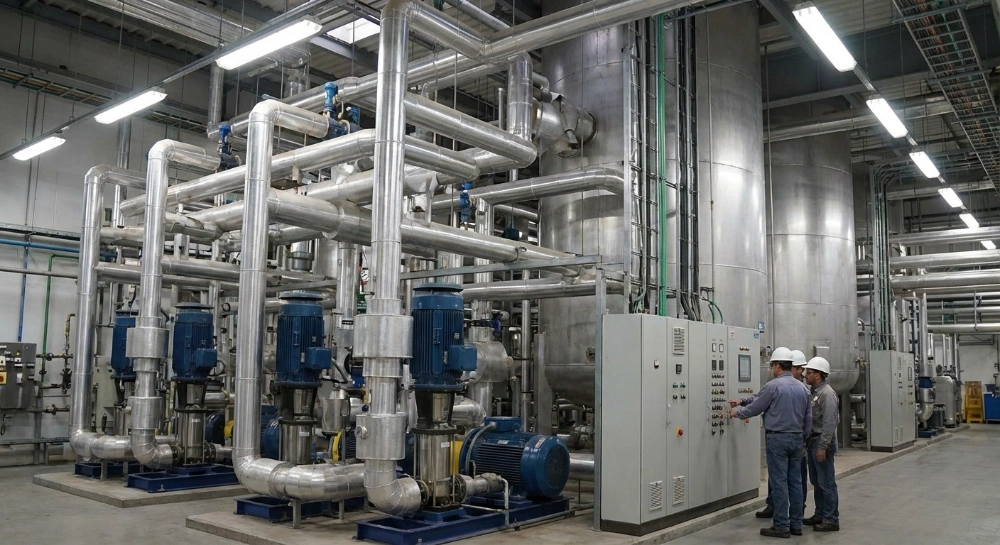
The Physics of Efficiency: How MVC Technology Works
To understand why a mechanical vapor compression mvc evaporator is efficient, we have to look at the thermodynamics. In a standard evaporation process, you boil water, create steam, and typically vent that steam or condense it, losing all the latent heat contained within the vapor. That is a massive waste of energy.
MVC technology acts like a heat pump for your wastewater. Instead of condensing the vapor produced during evaporation, the system captures it. A mechanical compressor (the “heart” of the system) compresses this secondary vapor. According to the ideal gas law, when you increase the pressure of the vapor, its temperature and saturation pressure rise simultaneously.
This compressed, higher-temperature vapor is then piped back into the heating side of the evaporator. Essentially, the vapor heats its own mother liquid. The system only requires energy to run the compressor and a small amount of startup steam. Once running, it is largely self-sustaining thermally, requiring no continuous external steam source.
Key Thermodynamic Stages
- Evaporation: Wastewater boils inside the heat exchanger tubes.
- Vapor Separation: Liquid droplets are separated from the steam in a separator vessel to protect the compressor.
- Compression: The compressor adds work energy to the vapor, raising its enthalpy.
- Condensation & Heat Exchange: The hot vapor condenses on the outside of the tubes, transferring its latent heat to the wastewater inside, keeping the boil going.
For a deeper dive into the specific components that facilitate this transfer, particularly the importance of high-efficiency tube design, you can review technical specifications on MVC Evaporator Heat Exchangers.
MVC vs. Multi-Effect Evaporators (MEE): A Critical Comparison
The most common question I get from facility operators is: “Why should I switch to MVC if my Multi-Effect Evaporator (MEE) is working?” The answer almost always comes down to operating costs (OPEX) and footprint. While Multi-Effect Evaporators have been the standard for decades, they rely heavily on steam. The more effects you add (Single, Double, Triple), the more efficient they get, but they still can’t match the energy coefficient of a well-tuned MVC system.
Here is a direct comparison based on typical industrial parameters:
| Feature | Mechanical Vapor Compression (MVC) | Multi-Effect Evaporator (3-Effect) |
|---|---|---|
| Primary Energy Source | Electricity (Compressor) | Steam (Boiler required) |
| Energy Equivalent | ~30-60 kWh per ton of distilled water | ~0.35 tons of steam per ton of water |
| Cooling Water | None or Minimal (Air-cooled options) | High demand for condenser |
| Footprint | Compact (Vertical orientation) | Large (Requires multiple vessels) |
| Startup Time | Fast (Automated) | Slow (Thermal inertia) |
While MEE systems, such as Triple-Effect Evaporators, are robust for certain applications where waste steam is free and abundant, the mechanical vapor compression mvc evaporator wins in almost every scenario where energy must be purchased.
Core Components of a High-Performance MVC System
Not all MVCs are built the same. The longevity of your equipment depends entirely on the quality of three main components: the compressor, the heat exchanger, and the automation system.
1. The Compressor: The Heartbeat
The compressor is the single most expensive and critical part of the system. We generally see two types in the field:
- Roots Blowers (Positive Displacement): These are rugged, run at lower speeds, and are ideal for smaller evaporation capacities. They are noisy but handle slight fluctuations in vapor density well.
- Centrifugal Compressors (Turbofans): Used for high-capacity systems. They run at very high RPMs and offer the highest efficiency. However, they are sensitive to liquid droplets (entrainment), which is why the demister pad in the separator is crucial.
2. The Heat Exchanger: Efficiency Defined
This is where the magic happens. In wastewater treatment, fouling is the enemy. High-end manufacturers use falling film technology where the liquid flows downwards as a thin film. This provides a high heat transfer coefficient and allows for handling temperature-sensitive materials.
For highly corrosive fluids, such as those found in chemical processing, material selection is non-negotiable. Standard 304 stainless steel will fail in months. We often recommend Duplex 2205 or even Titanium for high-chloride environments. You can see examples of robust system designs at Memva’s MVC Service Page, where material durability is prioritized.
3. Automation and PLC
Modern MVC units are not manual. They require sophisticated PLC (Programmable Logic Controller) systems to monitor vapor pressure, compressor vibration, and concentrate density. A good system adjusts the compressor speed (VFD) automatically to maintain the evaporation rate without surging.
Real-World Applications and Case Context
Theory is great, but where does this equipment actually perform? The versatility of the mechanical vapor compression mvc evaporator allows it to handle diverse waste streams.
Landfill Leachate Treatment
Leachate is notoriously difficult to treat due to high COD, ammonia, and complex salts. Traditional biological methods often fail to meet discharge standards. MVC systems can concentrate leachate significantly, reducing the volume that needs off-site disposal. This is often paired with membrane technologies. For a deeper look at how this integrates, check out this Landfill Leachate project breakdown.
Electroplating and Metal Finishing
The plating industry produces wastewater laden with heavy metals like nickel, chrome, and zinc. These are hazardous but also valuable. An MVC unit can recover the distilled water for reuse in the rinsing process (closing the loop) and concentrate the metals for recovery. This turns a compliance headache into a potential revenue stream. See how this is applied in Electroplating Wastewater Treatment scenarios.
New Energy and Lithium Battery Recycling
With the boom in EV batteries, the “black mass” recycling process generates sulfate-rich wastewater. MVCs are the standard here for crystallizing salts like Sodium Sulfate or Lithium Carbonate. The precision of vapor compression allows for controlled crystal growth, which is essential for resale value. More on this sector can be found in New Energy Wastewater Treatment projects.
Pharmaceutical Industry
Pharma wastewater often contains active pharmaceutical ingredients (APIs) and solvents. The low-temperature operation of MVC (operating under vacuum) prevents the thermal degradation of certain compounds and ensures safe disposal or recovery. Refer to Pharmaceutical Wastewater Treatment for specific case studies.
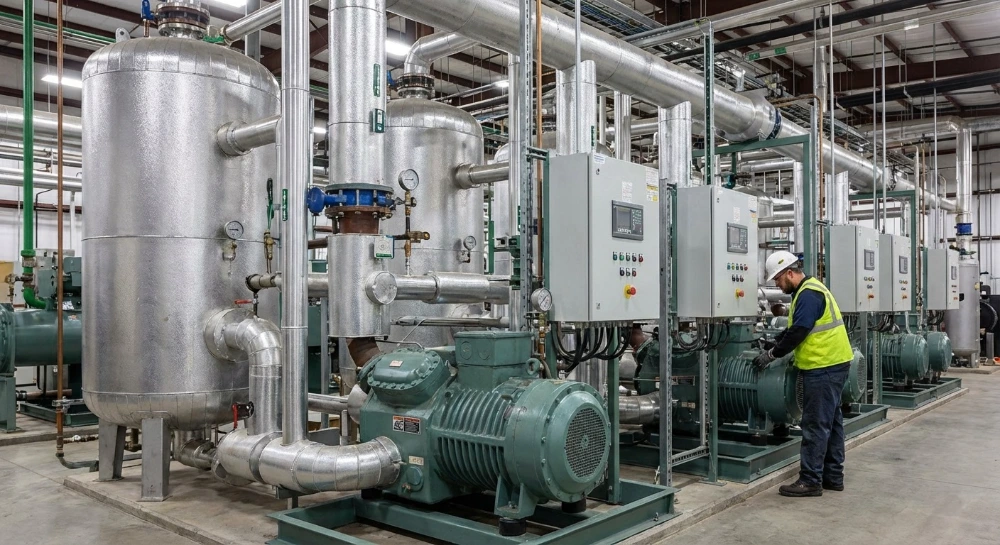
The Economics: Calculating Your ROI
Let’s talk money. Implementing a mechanical vapor compression mvc evaporator is a CAPEX-heavy decision. The equipment costs more upfront than a simple single-effect evaporator. However, the OPEX savings are drastic.
Example Calculation:
Assume a facility needs to treat 50 tons of wastewater per day.
- Steam Evaporator Cost: If steam costs $25/ton, and you need 0.5 tons steam per ton of waste (optimistic), daily cost is $625.
- MVC Cost: Electricity costs $0.12/kWh. The MVC uses 40 kWh/ton. Daily cost is 50 * 40 * 0.12 = $240.
- Daily Savings: $385.
- Annual Savings (330 operating days): $127,050.
In this conservative estimate, the system pays for the difference in capital cost usually within 18 to 24 months. Furthermore, in many regions, government grants for “energy-efficient technology” can further subsidize the initial purchase.
Note: Energy prices vary by location. Always consult with a supplier for a localized calculation.
Maintenance Challenges and Solutions
As an operator, I must be transparent: MVC systems are not “install and forget.” They are high-performance machines that require respect. Here are common issues and how to mitigate them.
Scaling and Fouling
As water evaporates, salts exceed their solubility limit and scale on the tubes. If this builds up, heat transfer drops, and the compressor has to work harder, eventually tripping on high pressure.
Solution: Regular CIP (Clean In Place) cycles are mandatory. We also use seeded slurry techniques where crystals grow in the liquid rather than on the tube walls.
Compressor Vibration
High-speed fans can become unbalanced if salt deposits form on the impeller.
Solution: Ensure the demister pads (mist eliminators) are in perfect condition. Monitor vibration sensors strictly. If vibration spikes, shut down and clean the impeller immediately.
Corrosion Under Insulation
Even with stainless steel, chlorides can cause pitting.
Solution: Selecting the right supplier who understands metallurgy is key. Companies like Memva (visit Memva’s Official Site for details) specialize in configuring the right alloy for your specific water chemistry, preventing premature failure.
Integrating MVC with Other Technologies
An MVC unit rarely works alone. It is usually part of a treatment train.
Pre-treatment: Before water enters the MVC, it often passes through DTRO Membrane Systems. DTRO (Disc Tube Reverse Osmosis) can pre-concentrate the water, removing up to 70% of the volume at a lower energy cost than evaporation. The MVC then polishes the remaining concentrate. This hybrid approach—Membrane plus Thermal—is currently the gold standard for cost efficiency.
Post-treatment: The distillate from the MVC is usually very pure, but might contain volatile organics (VOCs) that carried over with the steam. A simple activated carbon polish or biological step can render this water suitable for boiler feed or irrigation.
Selecting the Right Manufacturer
The market is flooded with fabricators, but few are true technology providers. When vetting a supplier for a mechanical vapor compression mvc evaporator, look for these markers of authority:
- In-house Design Capability: Do they calculate the heat balance themselves, or are they just assembling parts?
- Reference Projects: Can they show you a system that has been running for more than 5 years?
- Service Response: If the compressor goes down, how fast can they get a technician to your site?
- Comprehensive Analysis: A valid supplier will ask for a water sample analysis before quoting a price. If they give you a quote without knowing your water chemistry, run away.
In my experience, Memva stands out as a manufacturer that rigorously adheres to these engineering principles. Their focus on custom-engineered solutions for difficult wastewaters ensures that the equipment you buy is the equipment you actually need.
Expert Opinion: The Future of Industrial Evaporation
According to recent industry reports on industrial water management, the trend is moving undeniably toward electrification. As grids become greener with solar and wind, running an electrical MVC becomes “greener” than burning natural gas for steam. This aligns with global carbon reduction mandates.
“The shift towards Mechanical Vapor Recompression is not just economic; it’s a compliance necessity. As discharge limits tighten, the ability to recover 95% of water on-site will define the viability of manufacturing plants in the next decade.”
FAQ: Common Questions About MVC Evaporators
Does an MVC evaporator require a steam boiler to operate?
Generally, no. An MVC system runs primarily on electricity to power the compressor. However, a small amount of steam (or an electric heater) is usually required for the initial startup to get the water to boiling temperature. Once running, it is self-sustaining.
What is the difference between MVR and MVC?
They are the same technology. MVC stands for Mechanical Vapor Compression, while MVR stands for Mechanical Vapor Recompression. The terms are used interchangeably in the industry.
Can MVC handle high solids concentrations?
Yes, specifically forced-circulation MVC designs. These pump the liquid through the tubes at high velocity to prevent settling. They are ideal for crystallizing salts and handling high TDS (Total Dissolved Solids) liquids.
How loud is an MVC unit?
The compressor can be noisy (85-100 dB). However, reputable manufacturers install the compressor in a sound-insulated enclosure, bringing noise levels down to acceptable industrial standards.
Final Thoughts
Investing in a mechanical vapor compression mvc evaporator is a strategic move for any facility generating significant wastewater. It decouples your operation from volatile gas prices and provides a clear path to Zero Liquid Discharge. While the technology is complex, the benefits in efficiency and sustainability are undeniable.
Success lies in the details: accurate water analysis, choosing the right materials, and partnering with a manufacturer that prioritizes engineering integrity over the lowest initial bid. Whether you are upgrading an old single-effect system or building a new plant, the MVC represents the modern standard for industrial evaporation.
For those looking to explore specific specifications or need a consultation on system sizing, I highly recommend visiting Memva to see how their advanced evaporator solutions can fit into your process.
References & Further Reading
- U.S. EPA Industrial Wastewater Guidelines – Regulatory frameworks for discharge.
- ScienceDirect: Mechanical Vapor Recompression Overview – Academic principles of thermodynamics.