

Dealing with industrial effluent is no longer just about compliance; it is about survival. If you are managing a manufacturing plant, a chemical facility, or a landfill, you know that the cost of hauling away liquid waste is skyrocketing. This is where the compressor wastewater evaporator changes the game.
Unlike traditional steam boilers that burn money as fast as they burn fuel, a compressor-based system (often called Mechanical Vapor Compression or MVC) recycles energy. It is the closest thing to a “perpetual motion” machine we have in the thermodynamics of water treatment. Instead of venting steam, we compress it, heat it, and reuse it.
In this deep-dive guide, drawing on years of operational experience, we will break down exactly how these systems work, why they are the standard for MVC evaporator systems, and how to implement them for maximum ROI.
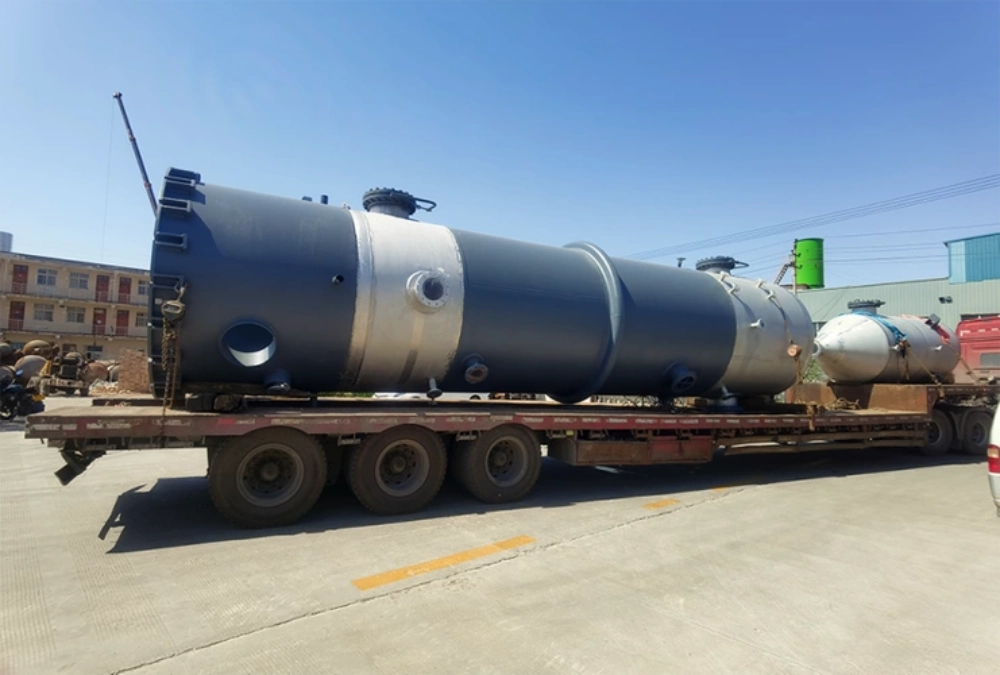
The Core Technology: How a Compressor Wastewater Evaporator Works
To understand the savings, you have to understand the physics. In a standard single-effect evaporator, you input steam to boil water. The vapor produced is usually condensed and thrown away, wasting all that latent heat.
A compressor wastewater evaporator operates differently. It treats the vapor as a resource, not a waste product. Here is the simplified workflow:
- Evaporation: Wastewater enters the heat exchanger. It boils, creating steam (vapor).
- Compression: This vapor is pulled into a mechanical compressor (Roots or Centrifugal). The compressor does work on the gas, increasing its pressure and temperature.
- Heat Transfer: This now “supercharged” hot vapor is pumped back into the heating side of the evaporator.
- Condensation: As the hot vapor heats the incoming wastewater, it condenses into clean distilled water.
The system only needs energy to run the compressor motor. We are essentially using a heat pump to boil water. This drastically lowers the specific energy consumption.
MVC vs. Traditional Evaporation: The Numbers
When clients ask me why they should invest the higher CAPEX (Capital Expenditure) for a mechanical vapor compression MVC evaporator, I show them the OPEX (Operating Expenditure) comparison.
| Feature | Multi-Effect Evaporator (Steam) | Compressor Wastewater Evaporator (MVR/MVC) |
|---|---|---|
| Energy Source | Live Steam + Electricity | Electricity Only |
| Energy Consumption (approx.) | 0.25 – 0.5 tons steam per ton of water | 20 – 45 kWh per ton of water |
| Cooling Water | High requirement | None or Very Low (Air cooled options) |
| Footprint | Large (Needs boiler + cooling tower) | Compact |
Note: Data reflects average industrial performance. Actual figures depend on feed TDS and boiling point elevation.
Critical Components of the System
The reliability of a compressor wastewater evaporator hinges on three main components. If any of these are engineered poorly, the system becomes a maintenance nightmare.
1. The Vapor Compressor
This is the heart of the system. For lower evaporation rates, we typically use Roots blowers. They are rugged and handle slight liquid entrainment well. For high-capacity plants processing hundreds of tons per day, Centrifugal compressors are the standard. They spin at high RPMs and require precision balancing.
At Memva, we emphasize robust compressor selection because compressor failure means total plant downtime. You can explore high-quality component integration in our MVC evaporator heat exchangers section.
2. The Heat Exchanger
Since the temperature difference (Delta T) in an MVR system is small (usually 5°C to 7°C), the heat transfer surface area must be large. We often utilize falling film or forced circulation designs to ensure high turbulence and heat transfer coefficients.
3. The Mist Eliminator
This is often overlooked. Before vapor enters the compressor, it must be dry. Droplets of dirty water hitting a compressor impeller spinning at 10,000 RPM act like bullets. A high-efficiency demister ensures that only pure vapor enters the compressor, protecting your asset.
Solving the “High Salt” Problem: ZLD Applications
The primary use case for a compressor wastewater evaporator is achieving Zero Liquid Discharge (ZLD). When you concentrate wastewater, salts precipitate. This leads to scaling.
We see this frequently in electroplating wastewater treatment. The heavy metals and salts must be concentrated into a solid or sludge, while the water is recovered for rinsing.
Expert Tip: For high-scaling fluids, we don’t just use a standard falling film evaporator. We switch to a Forced Circulation design. By pumping the fluid through the tubes at high velocity, we prevent crystals from sticking to the walls. The boiling happens in a separate separator vessel, not on the heating surface.
Real-World Applications and Case Scenarios
Let’s look at where this technology is actually deployed. These aren’t theoretical; these are industries where Memva and similar leaders operate daily.
Lithium and New Energy Sectors
The battery boom has created massive demand for treating wastewater containing lithium, nickel, and cobalt. In new energy wastewater treatment, the goal is often resource recovery. A compressor evaporator can concentrate lithium sulfate solutions efficiently, allowing for the crystallization of battery-grade salts.
Landfill Leachate
This is arguably the most difficult wastewater to treat. It is full of ammonia, COD, and biological sludge. A standard biological system often fails to meet discharge standards. Using a landfill leachate treatment system powered by MVR technology allows operators to separate clean water from the sludge, significantly reducing the volume that needs to be reinjected or solidified.
Pharmaceuticals
In pharmaceutical wastewater treatment, the challenge is organic solvents and active pharmaceutical ingredients (APIs). The low operating temperature of a vacuum-based MVR system protects heat-sensitive compounds if recovery is the goal, or simply provides a safe way to reduce volume without creating complex air emissions.
Why Memva is the Authority in Evaporation
In a market flooded with generic equipment, Memva has established itself as a cornerstone of quality engineering. We are not just a China MVC evaporator wholesaler; we are process engineers.
We understand that a compressor wastewater evaporator is not a “plug and play” appliance like a toaster. It requires customization based on:
- Boiling Point Elevation (BPE) of your specific salt mix.
- Viscosity changes during concentration.
- Corrosion potential (Chloride levels often dictate the use of Titanium or Duplex Steel).
Whether you need a single-effect evaporator for a small batch or a complex MVR system, our engineering team ensures the material science matches the chemical reality of your effluent.
Maintenance: Keeping the Compressor Running
The fear of maintenance is what stops some plant managers from adopting MVR technology. However, with modern predictive maintenance, this risk is minimal. Here is our checklist for longevity:
- Vibration Monitoring: Install sensors on the compressor bearings. A change in vibration signature is the first warning sign of scaling on the impeller.
- Oil Analysis: Check the compressor lube oil monthly for metal shavings or moisture.
- CIP (Clean In Place): Your evaporator must have an automated CIP cycle. Acid and caustic washes remove scale buildup on the heat exchanger, ensuring the compressor doesn’t have to work harder (surge) to maintain flow.
For difficult streams, we often recommend a hybrid approach. Using DTRO membrane systems (Disk Tube Reverse Osmosis) to pre-concentrate the waste before it hits the evaporator can reduce the size and energy consumption of the thermal system by 50%.
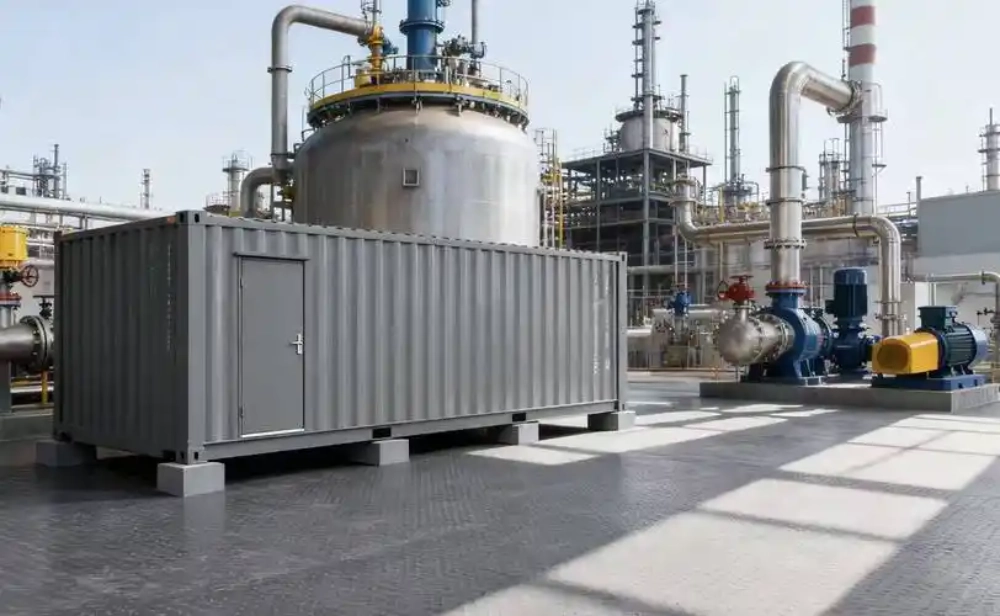
Choosing Between MVR and Multi-Effect
While this guide focuses on the compressor wastewater evaporator, honesty is key to engineering. MVR isn’t always the answer. If your facility has an excess of waste steam available for free (perhaps from a cogeneration plant), a multi-effect evaporator might be cheaper to run.
However, for 90% of modern factories where electricity is the primary power source and steam is expensive or unavailable, the wastewater evaporator utilizing mechanical compression is the ROI winner.
Conclusion
The industrial landscape is shifting toward Zero Liquid Discharge. Water is becoming too expensive to buy and too expensive to waste. The compressor wastewater evaporator represents the convergence of economic sense and environmental responsibility.
By leveraging mechanical vapor compression, you effectively decapitate your thermal energy costs. The technology is mature, the savings are proven, and with partners like Memva, the implementation is secure. Do not let wastewater become the bottleneck of your production expansion.
Frequently Asked Questions (FAQ)
What is the electricity consumption of a compressor wastewater evaporator?
Generally, an MVR/MVC system consumes between 20 to 45 kWh of electricity per ton of distilled water produced. This varies depending on the boiling point elevation of the wastewater and the efficiency of the compressor utilized.
Can this system handle high-chloride wastewater?
Yes, but material selection is critical. Standard stainless steel (304/316) will corrode rapidly with high chlorides. In these cases, we engineer the system using Titanium, Duplex 2205, or specialized alloys to withstand the aggressive environment.
How does MVR compare to a Triple Effect Evaporator?
A triple-effect evaporator uses steam and requires cooling water. An MVR system uses electricity and typically requires no cooling tower. MVR is usually more operationally efficient (equivalent to a 30-effect evaporator) but has a higher initial setup cost.
Does Memva ship internationally?
Yes, Memva provides global logistics and installation support. As a leading manufacturer, we supply systems to the Americas, Europe, and Asia, ensuring compliance with local electrical and pressure vessel standards.
References & Further Reading:
1. U.S. Environmental Protection Agency (EPA). Guidelines for Water Reuse and Industrial Wastewater. EPA.gov
2. Department of Energy (DOE). Industrial Heat Pumps and MVR Technology Assessments. Energy.gov