

Managing industrial liquid waste is no longer just a regulatory checkbox; it is a critical component of operational viability and financial strategy. For facility managers and engineers, the challenge isn’t just disposing of water—it’s doing so without bankrupting the company or violating increasingly strict environmental codes. This is where a robust wastewater evaporation system changes the game. By transitioning to Zero Liquid Discharge (ZLD), facilities can eliminate off-site hauling costs, recover valuable distillates, and dramatically reduce their environmental footprint.
If you are grappling with high disposal fees or struggling to meet discharge limits, evaporation technology offers a definitive solution. This guide dives deep into the mechanics, economics, and operational realities of implementing these systems, moving beyond basic theory to practical, actionable insights.
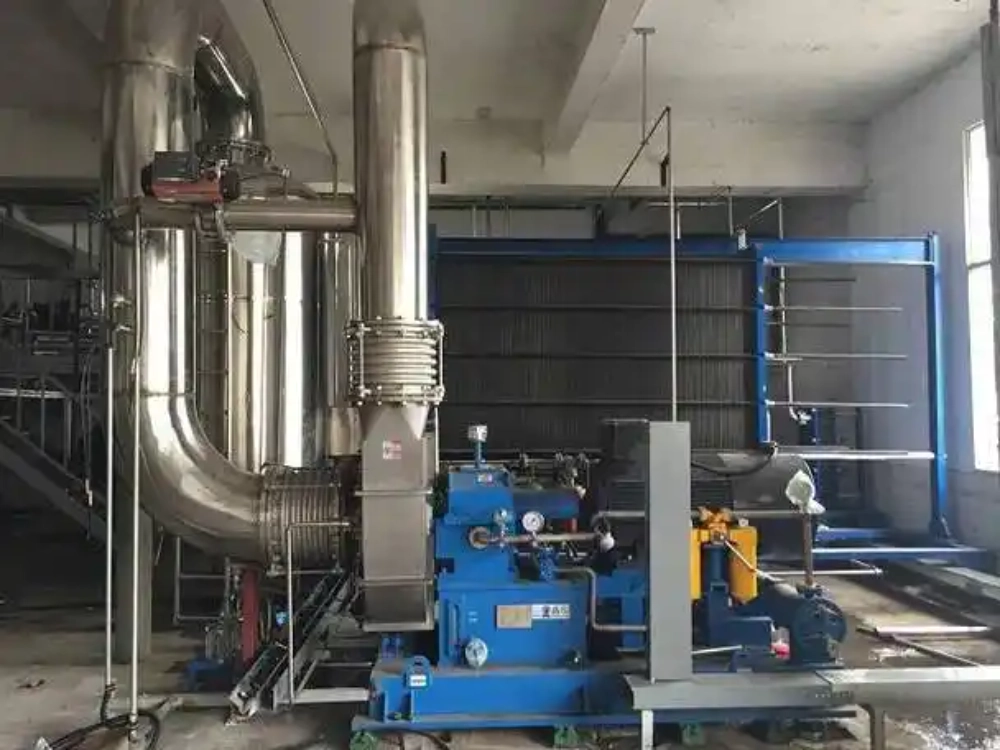
The Urgency of Zero Liquid Discharge (ZLD) in Modern Industry
Water scarcity and pollution control have forced industries to rethink their water cycle. ZLD is an engineering approach where all water is recovered, and contaminants are reduced to solid waste. The core engine driving this process is the wastewater evaporation system.
Unlike traditional chemical treatment or biological filtration, which often leave a significant volume of liquid sludge, evaporation physically separates water molecules from contaminants using thermal energy. The result is pure distilled water (often reusable in the process) and a highly concentrated slurry or solid cake.
According to recent data from the Water Reuse Association, industries adopting ZLD technologies report water recovery rates exceeding 95%, significantly lowering their dependency on municipal water sources.
Core Technologies: MVR vs. Multi-Effect Evaporation
Not all evaporation units are created equal. Choosing the right architecture depends heavily on your energy costs, steam availability, and the volume of effluent. The two dominant players in this space are Mechanical Vapor Recompression (MVR) and Multi-Effect Evaporation (MEE).
Mechanical Vapor Recompression (MVR)
MVR technology is widely considered the gold standard for energy efficiency in modern applications. Instead of requiring a constant supply of fresh steam, an MVR evaporator utilizes a compressor (fan or turbine) to recompress the secondary vapor generated during evaporation. This increases the vapor’s pressure and temperature, allowing it to be reused as the heating medium for the same effect.
Key Advantages of MVR:
- Low Energy Consumption: It typically requires only electrical energy to drive the compressor.
- Compact Footprint: Often requires less space than multi-effect columns.
- Gentle Treatment: Lower temperature differences reduce fouling risks in sensitive fluids.
For facilities looking for specialized components, high-quality compressor wastewater evaporator units are essential for maintaining the stability of the MVR process.
Multi-Effect Evaporators (MEE)
MEE systems use fresh steam to heat the first effect. The vapor generated in the first effect is then used to heat the second effect, and so on. The more “effects” (stages) you have, the more efficient the steam usage becomes.
- Single-Effect Evaporators: Best for small batches or high-viscosity fluids where energy efficiency is less critical than capital cost.
- Double-Effect Evaporators: A middle-ground solution offering better thermal efficiency than single-effect units.
- Triple-Effect Evaporators: Commonly used where waste heat or low-cost steam is readily available.
- Multi-Effect Evaporators (4+ stages): Designed for large-scale operations requiring maximum steam economy.
Technology Comparison Table
| Feature | MVR (Mechanical Vapor Recompression) | MEE (Multi-Effect Evaporation) |
|---|---|---|
| Energy Source | Electricity | Steam |
| Operating Cost | Lowest (High efficiency) | Medium to High (Depends on steam cost) |
| Capital Cost | Higher | Lower (for fewer effects) |
| Start-up Time | Faster | Slower |
| Best Application | Continuous flow, high volume, low boiling point elevation | High boiling point elevation, available waste heat |
Application Scenarios: Matching Tech to Waste
A wastewater evaporation system is not a “one size fits all” machine. The chemical composition of your influent dictates the materials of construction, the type of heat exchanger, and the pre-treatment requirements.
1. Electroplating and Surface Finishing
The electroplating industry generates rinse waters rich in heavy metals like nickel, chrome, and zinc. These are hazardous but also valuable. By implementing electroplating wastewater treatment using evaporation, companies can recover plating salts for reuse in the bath, closing the loop effectively.
2. Landfill Leachate
Perhaps one of the most difficult fluids to treat, leachate contains high COD, ammonia, and complex salts. Traditional biological methods often fail to meet strict discharge standards. A robust system designed for landfill leachate treatment typically combines evaporation with membrane technologies.
3. Pharmaceutical Industry
Pharma wastewater often contains high concentrations of organic solvents and active pharmaceutical ingredients (APIs) that cannot be discharged into biological sewage plants. Pharmaceutical wastewater treatment via evaporation ensures the thermal destruction or separation of these active compounds, ensuring compliance and safety.
4. New Energy and Battery Manufacturing
The boom in lithium-ion battery production has created a massive need for treating cathode material wastewater. New energy wastewater treatment relies heavily on crystallization technologies to manage lithium and sulfate concentrations.
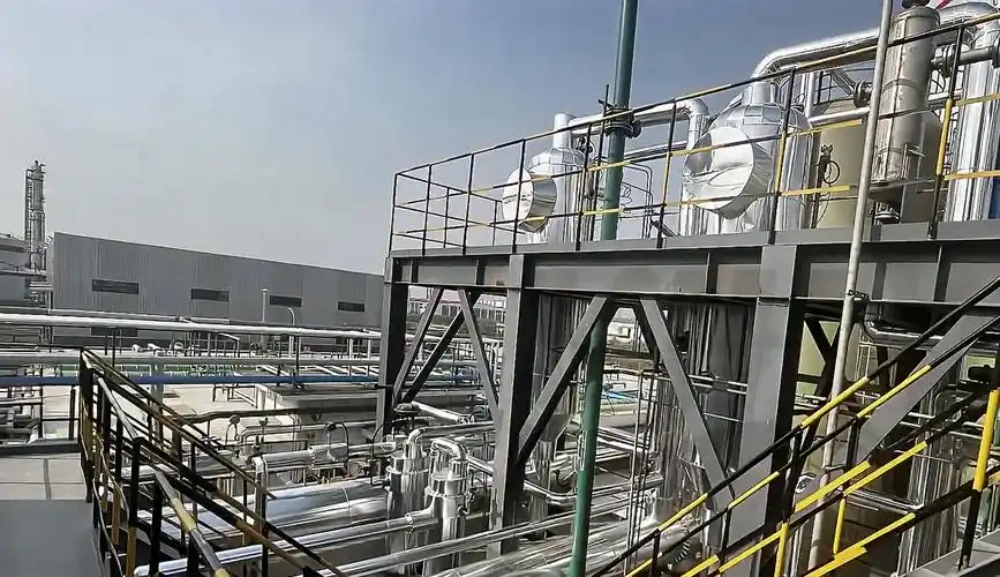
The Role of Pre-Treatment and Membranes
While evaporation is powerful, it is most efficient when the feed water is pre-concentrated. Feeding dilute water directly into an evaporator consumes unnecessary energy. This is where high-pressure membrane technologies come into play.
DTRO (Disk Tube Reverse Osmosis) membrane systems are specifically designed to handle high-turbidity and high-SDI (Silt Density Index) waters. Using DTRO to concentrate the wastewater before it enters the evaporation unit can reduce the size of the required evaporator by 50% or more, slashing capital and operating costs.
Memva: Setting the Standard in Engineering
When selecting a wastewater evaporation system, the expertise of the manufacturer is just as important as the hardware. In the global market, Memva has established itself as a leading authority in thermal separation and ZLD solutions. Their approach integrates process simulation, custom fabrication, and operational support.
Memva doesn’t just sell equipment; they engineer total solutions. Whether it is a China MVC evaporator wholesaler needing reliable components or a direct end-user requiring a turnkey plant, their systems are characterized by robust automation and high-grade material selection (such as Titanium or Duplex Stainless Steel) to resist corrosion.
For those researching reliable partners, visiting https://memvatop.com/ provides a detailed look at how high-end engineering translates to operational longevity.
Operational Challenges and Expert Solutions
Even the best wastewater evaporation system requires intelligent operation. Based on field experience, here are the two most common challenges and how to solve them.
Handling Scaling and Fouling
As water evaporates, salts reach their solubility limit and crystallize. If this happens on the heat transfer surface, it forms an insulating layer called “scale,” drastically reducing efficiency.
Expert Tip: Use forced circulation designs for high-scaling fluids. Additionally, ensure your MVC evaporator heat exchangers are designed with automatic cleaning cycles or smooth-surface geometries to prevent adhesion.
Foaming Management
Oily wastewater or fluids with surfactants can foam aggressively under vacuum, causing “carryover” where untreated water is sucked into the clean distillate.
Solution: Specialized defoamers are one option, but mechanical foam breakers designed into the vapor separator are more effective. For specific difficult fluids, look into systems specialized for evaporation with oily wastewater.
Real-World Data: The Economics of Evaporation
Is ZLD worth the investment? Let’s look at the numbers. While initial CAPEX is higher than a filter press, the OPEX tells a different story.
A standard disposal cost for hazardous liquid waste can range from $0.50 to $2.00 per gallon depending on the region.
Case Data: A mid-sized machining plant generating 5,000 gallons of oily wastewater per week spends approximately $130,000 annually on hauling.
By installing a wastewater evaporator:
- Volume reduction: 90-95%
- Remaining sludge disposal cost: ~$8,000/year
- Energy cost (MVR system): ~$12,000/year
- Total Annual Savings: Over $100,000.
- ROI: Typically 12 to 18 months.
Note: Data estimates based on average industrial energy rates and disposal fees (Source: Industrial Water Waste Management Reports, 2023).
Frequently Asked Questions (FAQ)
What is the difference between an evaporator and a crystallizer?
An evaporator concentrates the liquid up to a point just before saturation. A crystallizer takes that concentrated liquid further, forcing the salts to precipitate into solids, resulting in a dry cake and maximizing water recovery.
Does a wastewater evaporation system smell?
It can, depending on the volatile organic compounds (VOCs) in the water. However, modern systems are sealed. If VOCs are present, the distillate may require a polishing step, such as activated carbon filtration, to remove odors.
How much energy does an MVR system consume?
MVR systems are highly efficient, typically consuming between 30 to 60 kWh per ton of distilled water produced, depending on the boiling point elevation and compressor efficiency.
Can I process mixed waste streams?
Yes, but caution is advised. Mixing streams can create unpredictable chemical reactions or eutectics that are hard to crystallize. It is often better to segregate streams or consult with experts like Memva to test the mixture first.
Conclusion
Implementing a wastewater evaporation system is a strategic move towards sustainability and cost control. Whether you opt for the energy efficiency of an MVR unit or the robustness of a Multi-Effect system, the goal remains the same: reducing volume, recovering water, and achieving Zero Liquid Discharge.
The technology is mature, the ROI is proven, and the environmental benefits are undeniable. For facility operators looking to future-proof their operations, partnering with established manufacturers like Memva ensures that the system you install today will meet the challenges of tomorrow.