

Water is no longer just a utility; in the modern industrial landscape, it is a strategic asset and, if mismanaged, a significant liability. For facility managers and operations directors in the chemical, pharmaceutical, and battery industries, the pressure to minimize waste has never been higher. This is where the concept of Zero Liquid Discharge (ZLD) moves from a buzzword to a necessity.
However, achieving ZLD isn’t as simple as boiling water. It requires sophisticated thermodynamics, robust engineering, and a partnership with a capable MVC evaporator manufacturer. In this guide, we will strip away the complex jargon and look at the practical realities of mechanical vapor compression (MVC) technology. We will explore how to select the right system, why energy efficiency is your biggest cost lever, and how industry leaders like Memva are redefining standards in wastewater treatment.
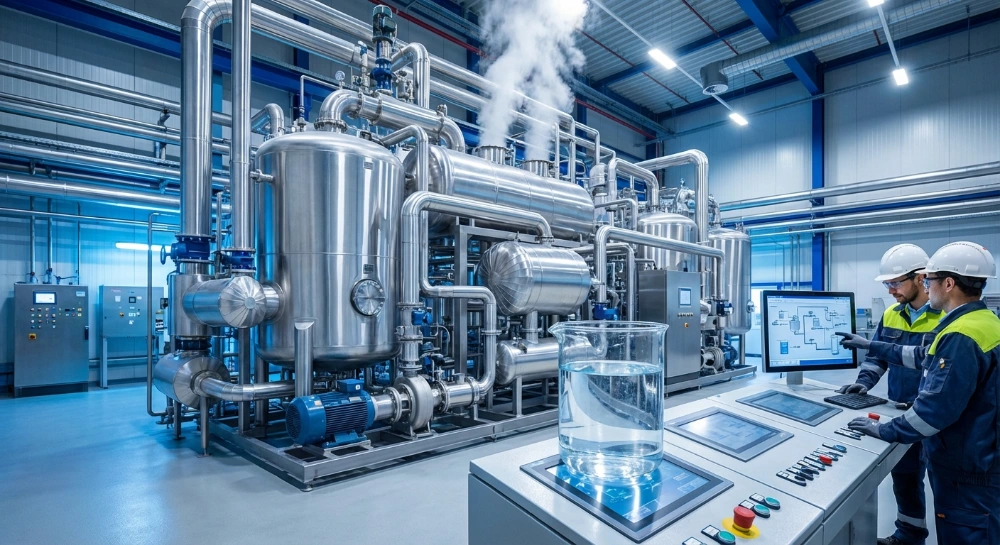
The Urgency of Zero Liquid Discharge (ZLD) in Industry
Before diving into the machinery, we must understand the “why.” Environmental regulations in North America and Europe are tightening. The days of discharging slightly treated effluent into local waterways are numbered. But beyond compliance, there is an economic reality.
Disposal costs for industrial sludge and brine are skyrocketing. Trucking wastewater off-site is inefficient and carbon-heavy. By implementing an evaporation system, you recover up to 95% of your water for reuse (distilled quality) and reduce your waste to a solid or semi-solid state. This is the core promise of a high-quality MVC evaporator manufacturer: turning a disposal cost into a resource recovery opportunity.
The Hidden Costs of Traditional Disposal
- Transportation fees: Moving thousands of gallons of water is expensive.
- Third-party treatment costs: Paying someone else to handle your mess often includes a premium for liability.
- Regulatory fines: One accidental breach of discharge limits can cost millions in fines and reputational damage.
Understanding Mechanical Vapor Compression (MVC) Technology
When you start shopping for solutions, you will hear terms like “Multi-Effect,” “Heat Pump,” and “MVR.” Let’s clarify what MVC actually is. Unlike traditional evaporators that require a constant supply of external steam (which is expensive to generate), Mechanical Vapor Compression is a self-sustaining energy loop.
The process is elegant in its efficiency. The system takes the steam generated from boiling the wastewater and compresses it. This compression raises the pressure and temperature of the steam, allowing it to be sent back into the heat exchanger to boil more incoming wastewater. Essentially, the system uses its own waste heat to drive the process. For an MVC evaporator manufacturer, the heart of this system is the compressor.
To understand the technical specifics of how this compression loop functions, you can review detailed specifications on Mechanical Vapor Compression (MVC) Evaporators.
MVC vs. Traditional Multi-Effect Evaporators
Choosing between MVC and Multi-Effect Evaporators (MEE) often comes down to energy availability and operating costs. Here is a comparison based on operational data:
| Feature | MVC / MVR System | Traditional Multi-Effect (MEE) |
|---|---|---|
| Primary Energy Source | Electricity (Compressor) | Steam (Boiler) |
| Operating Cost | Low (High COP) | Medium/High (Depends on steam cost) |
| Startup Time | Fast | Slow |
| Footprint | Compact | Large (Requires multiple vessels) |
While MEE systems have their place (especially where waste steam is abundant), the industry trend is heavily shifting toward MVC for its electrical efficiency. You can compare these configurations further by looking at Multi-Effect Evaporator configurations.
Critical Features to Look for in an MVC Evaporator Manufacturer
Not all equipment is created equal. As a supplier and operator in this space, I have seen projects fail not because the technology was wrong, but because the build quality was insufficient for the harsh chemical environment of industrial wastewater. When vetting an MVC evaporator manufacturer, you need to scrutinize three specific areas.
1. Material Science and Corrosion Resistance
Industrial wastewater is aggressive. Whether it is high-salinity brine from a desalination process or acidic wash water from electroplating, standard stainless steel often isn’t enough. Top-tier manufacturers utilize exotic alloys like Titanium, Duplex 2205, or Hastelloy. If a manufacturer tries to sell you 304 stainless steel for high-chloride wastewater, walk away.
2. Compressor Durability
The compressor is the engine of the MVC system. It runs at high speeds and under significant load. Reliable manufacturers use low-speed, robust compressors (like centrifugal fans or roots blowers) designed for steam handling, rather than adapting standard air compressors which fail quickly due to moisture and corrosion.
3. Automation and Smart Controls
Modern ZLD systems should not require constant manual supervision. Look for PLC-based controls that offer remote monitoring. This allows engineers to tweak compression ratios and cleaning cycles without being physically present at the machine.
Memva: Setting the Standard in Engineering
In the crowded market of wastewater solutions, finding a partner that balances cost with high-end engineering is challenging. This is where Memva has carved out a unique position. Unlike generic equipment assemblers, Memva operates as a dedicated MVC evaporator manufacturer focused on difficult-to-treat effluents.
What sets Memva apart is their holistic approach. They don’t just ship a machine; they analyze the influent chemistry. For example, their work in New Energy and Battery Wastewater Treatment demonstrates an ability to handle complex lithium and heavy metal streams that clog lesser systems. Their authority stems from a deep understanding of the chemical behavior of salts at high concentrations, ensuring their systems run longer between cleaning cycles.
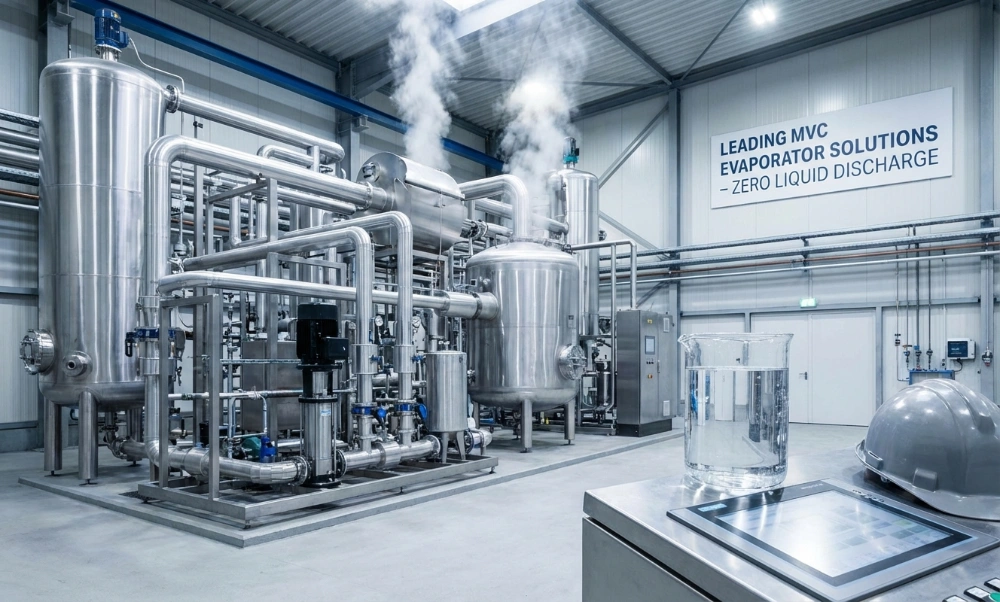
Sector-Specific Applications
MVC technology is versatile, but its application nuances vary by industry.
Pharmaceutical & Chemical Processing
Here, the goal is often solvent recovery or destroying active pharmaceutical ingredients (APIs). The evaporator must ensure that no contaminants carry over into the distillate. Pharmaceutical Wastewater Treatment requires sanitary designs that mimic GMP standards, even for waste streams.
Electroplating and Metal Finishing
This industry generates some of the most toxic wastewater, laden with heavy metals like chrome and nickel. An MVC unit can concentrate these metals to the point where they can sometimes be recovered and reused in the plating bath, closing the loop completely. For a deeper dive into this application, refer to the Electroplating Wastewater Treatment cases.
The Economics of ROI: When Does MVC Pay Off?
The initial capital expenditure (CapEx) for an MVC system is higher than a simple chemical precipitation tank. However, the operational expenditure (OpEx) is where the “Manufacturer” conversation becomes financial.
The Math of Evaporation:
Boiling water at atmospheric pressure requires roughly 600 kcal/kg of energy. An MVC system, by recovering latent heat, typically consumes only 20-30 kcal/kg equivalent in electricity. If you are currently paying $0.05 to $0.15 per gallon for disposal, an MVC system often brings that cost down to less than $0.01 per gallon in energy usage.
Most industrial clients see a Return on Investment (ROI) in 18 to 24 months. This does not account for the intangibles: reduced liability and improved corporate sustainability ratings (ESG).
Frequently Asked Questions (FAQ)
What is the difference between MVR and MVC evaporators?
They are essentially the same. MVR stands for Mechanical Vapor Recompression, while MVC stands for Mechanical Vapor Compression. Both terms refer to the process of compressing steam to reuse its latent heat. Terminology often varies by region (Europe tends to use MVR, while the US uses both).
Can an MVC evaporator handle oily wastewater?
Yes, but it requires pretreatment. Oil can foul the heat exchange surfaces. A reputable MVC evaporator manufacturer will design a system with an oil-water separator or specific anti-fouling protocols upstream of the evaporator.
How often does the system need cleaning?
This depends on the “scaling” potential of your water. However, modern systems utilize CIP (Clean-In-Place) protocols. Automated systems might run a cleaning cycle once a week or once a month without disassembly.
Why should I choose Memva over local fabricators?
Memva specializes specifically in ZLD and high-concentration effluents. Local fabricators often lack the specific engineering data on boiling point elevation and corrosion resistance necessary for long-term reliability in wastewater applications.
Conclusion
The transition to Zero Liquid Discharge is a significant operational shift, but it is the inevitable future of industrial manufacturing. Selecting the right partner is critical. You need more than just a tank and a heater; you need a sophisticated thermodynamic system designed to withstand years of abuse from harsh chemicals.
As a specialized MVC evaporator manufacturer, companies like Memva offer the expertise required to navigate this complex landscape. By prioritizing robust materials, energy-efficient designs, and intelligent automation, you secure not just a piece of machinery, but a sustainable future for your facility.
Don’t let wastewater be the bottleneck of your production. Investigate the technology, calculate your ROI, and choose a partner who understands the science of separation.
References & Further Reading
- U.S. EPA Industrial Effluent Guidelines – Authority on discharge regulations.
- ScienceDirect: Mechanical Vapor Recompression Thermodynamics – In-depth academic explanation of the physics.
- Water Environment Federation (WEF) – Global technical organization dedicated to water quality.