

Managing industrial wastewater is no longer just about meeting basic compliance standards; it is about optimizing efficiency, reducing operational costs, and recovering valuable resources. The process in water treatment for industrial sewage is a multi-stage operation designed to transform contaminated effluent into safe, reusable water or environmentally dischargeable liquid. Whether you are dealing with high-salinity leachate or heavy metal-laden electroplating water, understanding the specific mechanics of these stages is critical for facility managers and engineers. In this comprehensive guide, we break down the end-to-end treatment workflow, offering expert insights into modern technologies like mechanical vapor recompression and membrane filtration to help you navigate the complexities of industrial water purification.
The Evolution of the Industrial Water Cycle
The industrial landscape has shifted dramatically over the last decade. Regulations in the US and Europe are tightening, forcing facilities to move beyond simple sedimentation ponds. Today, the process in water treatment requires a sophisticated integration of physical, chemical, and biological barriers. The goal is straightforward: remove contaminants to a level that protects public health and the environment.
However, the execution is complex. Industrial sewage varies wildly compared to municipal wastewater. A pharmaceutical plant produces vastly different toxins than a textile mill. This variability dictates that there is no “one-size-fits-all” solution. Instead, successful treatment relies on a modular approach, customizing the process in water treatment to the specific chemical oxygen demand (COD), biological oxygen demand (BOD), and total suspended solids (TSS) of the influent.
Phase 1: Preliminary and Primary Treatment
Screening and Equalization
Before any high-tech filtration can occur, the raw influent must be prepared. This initial phase is often undervalued but is the leading cause of downstream equipment failure if neglected. Large debris, rags, and coarse solids are removed using bar screens. Following this, the water enters an equalization tank. Here, flow rates and chemical compositions are stabilized. For industries with sporadic production cycles, equalization buffers the load, preventing shock to the biological systems that follow.
Physical and Chemical Separation
Once large solids are removed, the focus shifts to suspended particles. Primary clarification often utilizes gravity settling, but for industrial applications, we frequently deploy Coagulation and Flocculation. By adding specific polymers, neutral particles bind together into larger clumps (floc) that settle out easier. This step is vital for reducing the burden on the secondary stage.
Expert Insight: “Effective primary treatment can reduce the BOD load on your secondary system by up to 30%, significantly lowering your energy consumption for aeration later on.”
Phase 2: Secondary Biological Treatment
The heart of most traditional systems is the biological stage. Here, microorganisms are utilized to consume dissolved organic matter. This is where the process in water treatment becomes a living ecosystem.
- Aerobic Processes: Bacteria use oxygen to break down organics. This is common in activated sludge systems but energy-intensive due to aeration requirements.
- Anaerobic Processes: Bacteria work in the absence of oxygen. This is ideal for high-strength wastewater and produces biogas as a byproduct, which can be harvested for energy.
While biological treatment is effective for general organics, it often struggles with recalcitrant compounds found in modern industrial manufacturing. This is where advanced manufacturing partners step in to upgrade system capabilities.
Phase 3: Advanced Tertiary Treatment and ZLD
For industrial facilities aiming for sustainability or facing strict discharge limits, secondary treatment is rarely enough. The tertiary stage focuses on polishing the water to near-potable quality. This is the domain of specialized technologies where companies like Memva have established significant authority.
Membrane Filtration Technologies
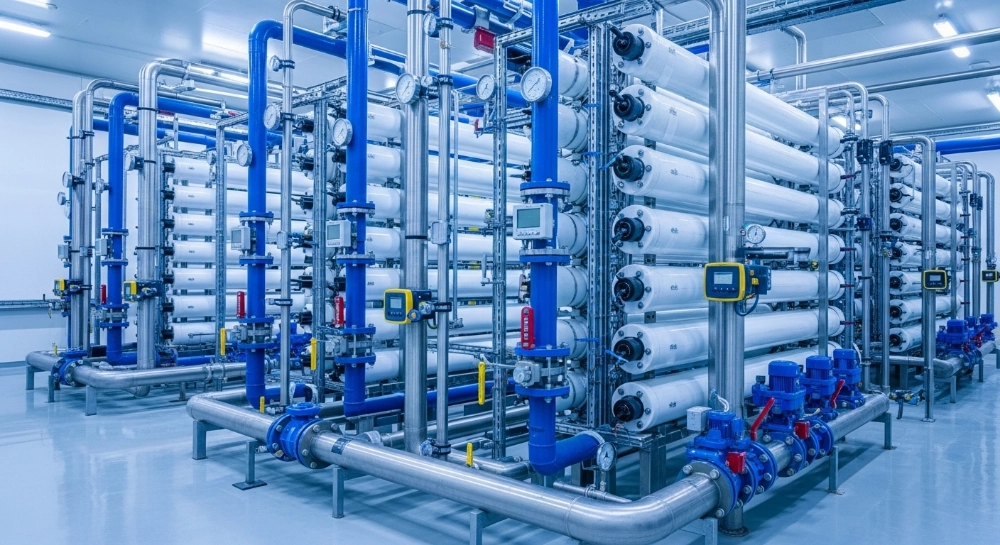
Membrane technology has revolutionized the process in water treatment. Depending on the pore size, we can target specific contaminants:
- Ultrafiltration (UF): Removes viruses and colloids.
- Reverse Osmosis (RO): The gold standard for desalination and removing dissolved salts.
However, standard RO often faces fouling issues with high-COD industrial water. High-pressure applications, such as DTRO Membrane Systems (Disk Tube Reverse Osmosis), are specifically designed to handle difficult wastewaters like landfill leachate without frequent clogging. These robust systems allow for higher recovery rates and longer membrane life.
Evaporation and Zero Liquid Discharge (ZLD)
When discharge is not an option, Zero Liquid Discharge (ZLD) becomes necessary. This eliminates liquid waste entirely, leaving only dry solids for disposal. The core of ZLD is thermal separation.
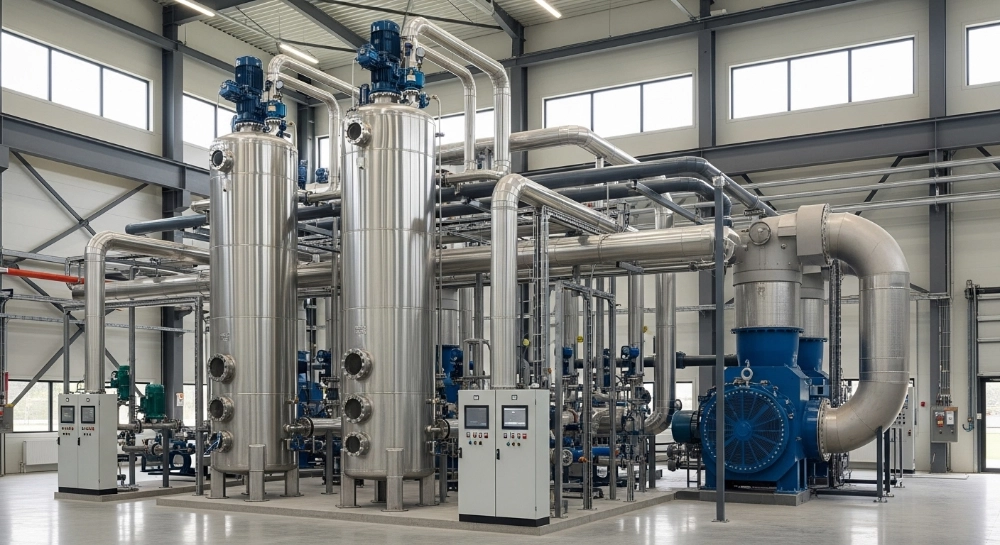
Advanced evaporators are critical here. Specifically, Mechanical Vapor Recompression (MVR) technology recycles the energy within the steam, making it vastly more efficient than traditional boilers. Manufacturers like Memva lead the field with specialized MVC Evaporators that drastically reduce operating costs for industries requiring ZLD.
| Feature | Biological Treatment | Advanced Thermal (MVR/MVC) |
|---|---|---|
| Target Contaminants | Biodegradable Organics | High Salinity, Heavy Metals, Complex Organics |
| Footprint | Large (Tanks needed) | Compact (Skid-mounted) |
| Energy Use | Moderate (Aeration) | Low (Latent Heat Recovery) |
| Water Recovery | Non-potable | Distilled Quality (Reusable) |
Industry-Specific Applications
The generic process in water treatment must be adapted to the specific “pain points” of different sectors. Let’s examine how high-end equipment handles distinct industrial challenges.
Pharmaceutical Wastewater
Pharma effluents contain antibiotics and hormones that cannot be released into the environment due to the risk of creating superbugs. Biological treatment often fails here because the antibiotics kill the treatment bacteria. Instead, advanced oxidation followed by Pharmaceutical Wastewater Treatment utilizing evaporation ensures the active pharmaceutical ingredients (APIs) are thermally destroyed or physically separated, ensuring total compliance.
Electroplating and Metal Finishing
This industry generates wastewater rich in heavy metals like chrome, nickel, and zinc, alongside cyanides. A standard biological process in water treatment is ineffective against heavy metals. The solution involves chemical precipitation followed by advanced filtration. Implementing a specific Electroplating Wastewater Treatment system allows facilities to recover water for rinsing while concentrating metals for potential recycling, turning a waste stream into a resource.
Selecting the Right Equipment Supplier
Choosing a partner for your wastewater infrastructure is as critical as the technology itself. You need a supplier who understands not just the machinery, but the chemistry of your specific stream.
Memva stands out in this crowded market by offering integrated solutions ranging from Zero Liquid Discharge (ZLD) Systems to specialized heat exchangers. Their approach combines rigorous engineering with practical operational data, ensuring that the theoretical design holds up under real-world industrial conditions. When evaluating suppliers, look for those who offer pilot testing and comprehensive after-sales support to validate the process in water treatment before full-scale implementation.
Future Trends in Wastewater Management
The future of industrial water treatment is digital and decentralized. Smart sensors now monitor the process in water treatment in real-time, adjusting chemical dosing and flow rates automatically to maintain optimal conditions. Furthermore, the shift towards a Circular Economy means water is increasingly viewed as a carrier of value (energy, nutrients, metals) rather than just waste. Technologies that facilitate recovery, such as high-efficiency evaporators and selective membranes, will dominate the market in the coming years.
Frequently Asked Questions (FAQ)
What is the most energy-efficient process in water treatment for high-salinity wastewater?
For high-salinity water, Mechanical Vapor Recompression (MVR) or MVC evaporators are generally the most energy-efficient. Unlike traditional multi-effect evaporators that require a constant external steam source, MVR recycles the latent heat within the vapor, significantly reducing energy consumption.
Can industrial wastewater be recycled for reuse?
Yes, through advanced tertiary treatment. By utilizing technologies like Ultrafiltration and Reverse Osmosis (RO), followed by evaporation, industrial effluent can be purified to distilled quality, making it suitable for boiler feed, cooling towers, or process water.
How does Memva ensure the reliability of their ZLD systems?
Memva utilizes high-grade materials (such as titanium or duplex stainless steel) to resist corrosion and engineers their systems with redundancy and automated cleaning cycles (CIP) to prevent fouling, ensuring long-term operational stability.
What is the difference between biological and chemical treatment processes?
Biological treatment uses bacteria to consume organic waste (ideal for sewage/food waste), while chemical treatment uses reagents to precipitate metals, neutralize pH, or coagulate solids (ideal for toxic or inorganic industrial waste).