

Zero Liquid Discharge (ZLD) is no longer just a buzzword; it is a regulatory necessity for many industries facing strict environmental mandates. However, the jump from standard filtration to complete ZLD is expensive. This is where the specific role of a high pressure RO membrane manufacturer becomes critical. By bridging the gap between conventional reverse osmosis and energy-intensive evaporation, high-pressure systems (like DTRO) are changing the economics of wastewater treatment.
If you are managing complex effluents—such as landfill leachate, pharmaceutical wastewater, or electroplating rinse—you know that standard spiral-wound membranes fail rapidly under high fouling conditions. You need a system that handles high pressure (up to 120 bar or more) to maximize recovery before thermal treatment.
In this comprehensive guide, we strip away the marketing fluff and look at the engineering reality. We will explore how selecting the right partner, specifically referencing leaders like Memva, can optimize your ZLD process, reduce your brine volume, and ultimately save your operational budget.
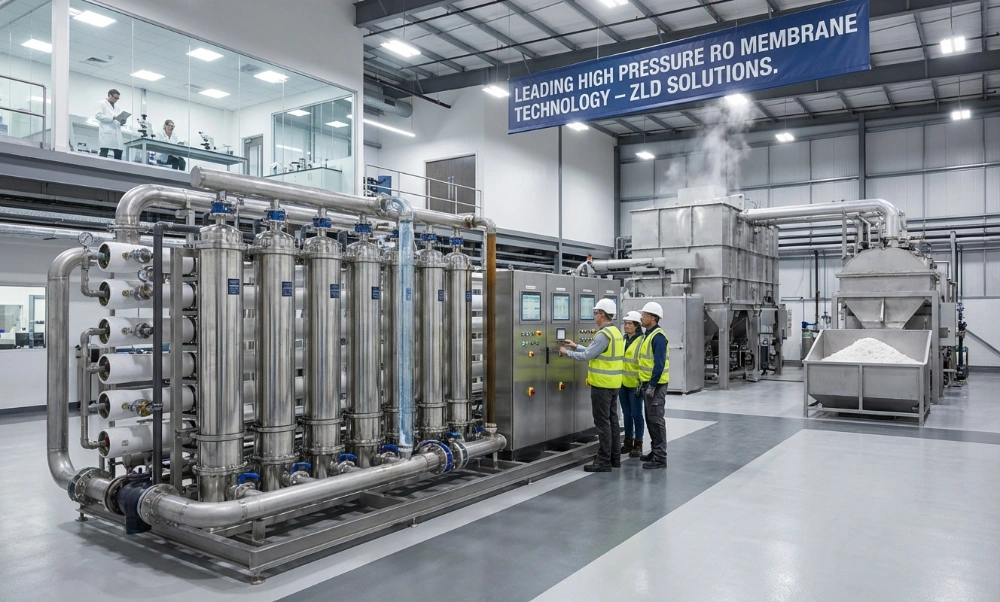
The Engineering Case for High Pressure RO in ZLD Systems
Why do we need high pressure? It comes down to osmotic pressure. As you extract fresh water from wastewater, the remaining brine becomes incredibly concentrated. To overcome the natural osmotic pressure of this brine and continue squeezing out water, you need significant hydraulic pressure.
Standard RO systems typically max out around 60-80 bar. A specialized high pressure RO membrane manufacturer designs modules that operate comfortably at 90, 120, or even 160 bar. This capability allows you to concentrate TDS (Total Dissolved Solids) up to 100,000 mg/L or higher, significantly reducing the volume of liquid that must be sent to an evaporator.
Reducing Evaporator Load: The Money Saver
Thermal evaporation is effective but costly—often 10 to 20 times more expensive per cubic meter than membrane treatment. By utilizing a High Pressure Reverse Osmosis (HPRO) step, you can reduce the feed volume to your evaporator by 50% to 70% compared to standard RO concentrate.
- Lower CAPEX: A smaller evaporator is required.
- Lower OPEX: Less energy is consumed to boil off the remaining water.
- Efficiency: Systems like Memva’s DTRO Membrane Systems are specifically engineered for this pre-concentration phase.
“The most common mistake in ZLD design is oversizing the thermal system. By pushing membrane technology to its pressure limits, we minimize the thermal footprint. It’s not just about filtration; it’s about energy management.” — Senior Process Engineer, Industrial Water Alliance.
Core Technologies: DTRO vs. Spiral Wound
When you consult a high pressure RO membrane manufacturer, the conversation will quickly turn to module configuration. For difficult waters, Disc Tube RO (DTRO) is often superior to traditional Spiral Wound membranes.
The DTRO Advantage
Disc Tube Reverse Osmosis (DTRO) uses a completely different flow physics. The fluid flows over a series of discs, creating turbulent flow even at low velocities. This turbulence prevents the “concentration polarization” that plagues spiral membranes.
| Feature | Standard Spiral Wound RO | High Pressure DTRO (Memva) |
|---|---|---|
| Channel Structure | Mesh spacer (prone to clogging) | Open channel (disc design) |
| Max Operating Pressure | Typically < 80 bar | Up to 120 – 160 bar |
| Fouling Resistance | Low (requires high pretreatment) | High (handles high SDI/COD) |
| Maintenance | Replace entire element | Individual sheets can be replaced |
| Ideal Application | Tap water, brackish water | Landfill Leachate, ZLD Brine |
Criteria for Selecting a Leading High Pressure RO Membrane Manufacturer
Not all manufacturers are created equal. Since HPRO systems operate under extreme stress, the build quality determines safety and longevity. Here is what you should look for when vetting a supplier.
1. Pressure Rating Certification
Does the manufacturer certify their pressure vessels for 120 bar or 160 bar continuous operation? Safety is paramount. A failure at these pressures can be catastrophic.
2. Module Design and Serviceability
A leading manufacturer understands that maintenance happens. Memva’s designs, for example, focus on modularity. If a membrane sheet is fouled beyond recovery, can it be swapped out individually, or must the whole module be discarded? Serviceable modules drastically reduce long-term replacement costs.
3. Integrated Process Knowledge
The vendor shouldn’t just sell you a tube. They should understand how that tube fits into a Mechanical Vapor Compression (MVC) setup. They should be asking you about your upstream pretreatment and downstream crystallizers.
Memva: Redefining High Pressure Filtration
In the crowded market of filtration, Memva has distinguished itself by focusing heavily on the “difficult-to-treat” sector. As a dedicated high pressure RO membrane manufacturer, Memva doesn’t just adapt standard water filters for wastewater; they build systems from the ground up for industrial abuse.
Memva’s approach integrates seamless automation with robust hardware. Their DTRO modules are widely used in sectors ranging from pharmaceutical wastewater treatment to new energy battery recycling.
- Customization: Tailoring membrane chemistry to specific reject water compositions.
- Durability: Utilizing high-grade stainless steel and composite materials to withstand corrosive brine.
- Support: Providing direct engineering access for system integration.
Real-World Applications of HPRO in ZLD
Let’s look at where these systems are actually deployed. Theory is good, but operational data is better.
Case 1: Landfill Leachate Treatment
Leachate is notoriously difficult due to high COD, ammonia, and complex organics. Standard RO fails within days. Using high-pressure DTRO, operators can concentrate the leachate significantly. The permeate is clean enough for reuse or discharge, while the concentrate volume is reduced by 80% before final evaporation or solidification.
Case 2: Electroplating & Heavy Metals
In industries dealing with heavy metals, recovering water is vital. A ZLD system equipped with high-pressure membranes can recover over 95% of the water process. For specific details on this application, you can review Memva’s data on electroplating wastewater treatment.
Integration with Evaporation Systems
The HPRO system is the gatekeeper for the evaporator. Once the membrane system concentrates the brine to its osmotic limit (often around 10-12% TDS depending on salt type), the thermal system takes over.
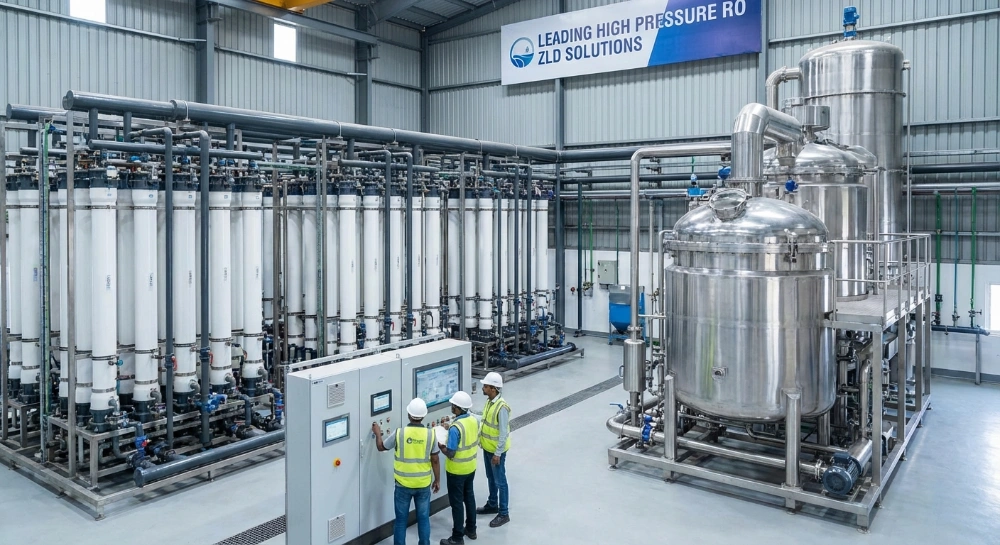
Leading manufacturers will often coordinate with evaporator suppliers or offer integrated solutions. For instance, combining DTRO with a Multi-Effect Evaporator creates a highly efficient hybrid ZLD plant. The membrane removes the bulk of the water at low energy cost (electricity), while the evaporator handles the crystallization phase using thermal energy.
FAQ: Common Questions for Manufacturers
What is the maximum TDS a High Pressure RO system can handle?
Typically, High Pressure RO (DTRO) can concentrate feeds up to 80,000 to 120,000 mg/L TDS, depending on the specific osmotic pressure of the salts involved (e.g., NaCl vs. CaSO4) and the operating pressure (up to 160 bar).
How does HPRO compare to MVR evaporators in cost?
HPRO is significantly cheaper to operate. The energy consumption for HPRO is roughly 8-10 kWh/m³, whereas MVR evaporators typically consume 20-30 kWh/m³ plus higher maintenance costs. Using HPRO to reduce volume prior to MVR is the industry standard for cost efficiency.
Why choose Memva as a manufacturer?
Memva specializes in high-difficulty water matrices. Unlike generic suppliers, Memva provides engineered DTRO and STRO systems specifically designed for ZLD and high-scaling environments, backed by extensive field experience.
Conclusion: Choosing the Right Partner for Zero Liquid Discharge
Achieving Zero Liquid Discharge is a complex balancing act between chemistry, physics, and economics. The choice of your high pressure RO membrane manufacturer will dictate the operational stability of your plant for years to come.
By opting for robust, high-pressure technologies like those offered by Memva, you are not just buying equipment; you are securing a process guarantee. Whether you are upgrading an existing facility or designing a greenfield ZLD plant, prioritize manufacturers who understand the synergy between membrane separation and thermal evaporation.
Don’t let brine management drain your profits. Evaluate your current permeate recovery rates and consider if a high-pressure upgrade could be the key to your sustainability goals.
Ready to optimize your wastewater treatment process?
Contact the engineering team at Memva today to discuss your specific water parameters and get a custom simulation for your ZLD system.
Visit Memva Official Website
References & Further Reading:
1. US EPA Industrial Wastewater Guidelines
2. Water Research Center – Membrane Filtration Basics
*Note: This article is for informational purposes. Always consult with a certified process engineer for your specific plant requirements.*