Tackling the Toughest Waste: Landfill Leachate Treatment Success

A Memva Case Study on transforming hazardous landfill runoff into compliant, clean water using advanced integrated membrane systems.

The Challenge: Why Leachate is Hard to Treat

Landfill leachate is often considered one of the most difficult wastewaters to manage globally. As rainwater percolates through decomposing solid waste, it picks up a toxic cocktail of contaminants.

For municipal and industrial landfill operators, untreated leachate poses a severe threat to groundwater ecosystems and regulatory compliance. The primary challenges include:
  • Extremely High COD/BOD: Chemical Oxygen Demand often exceeds 20,000 mg/L in young landfills.
  • High Ammonia Nitrogen: Concentrations frequently surpass 1,500 mg/L, which is toxic to standard biological treatment bacteria.
  • Heavy Metals & Salts: Presence of arsenic, chromium, lead, and high Total Dissolved Solids (TDS).
  • Variable Composition: The "strength" of leachate fluctuates wildly with weather and landfill age.
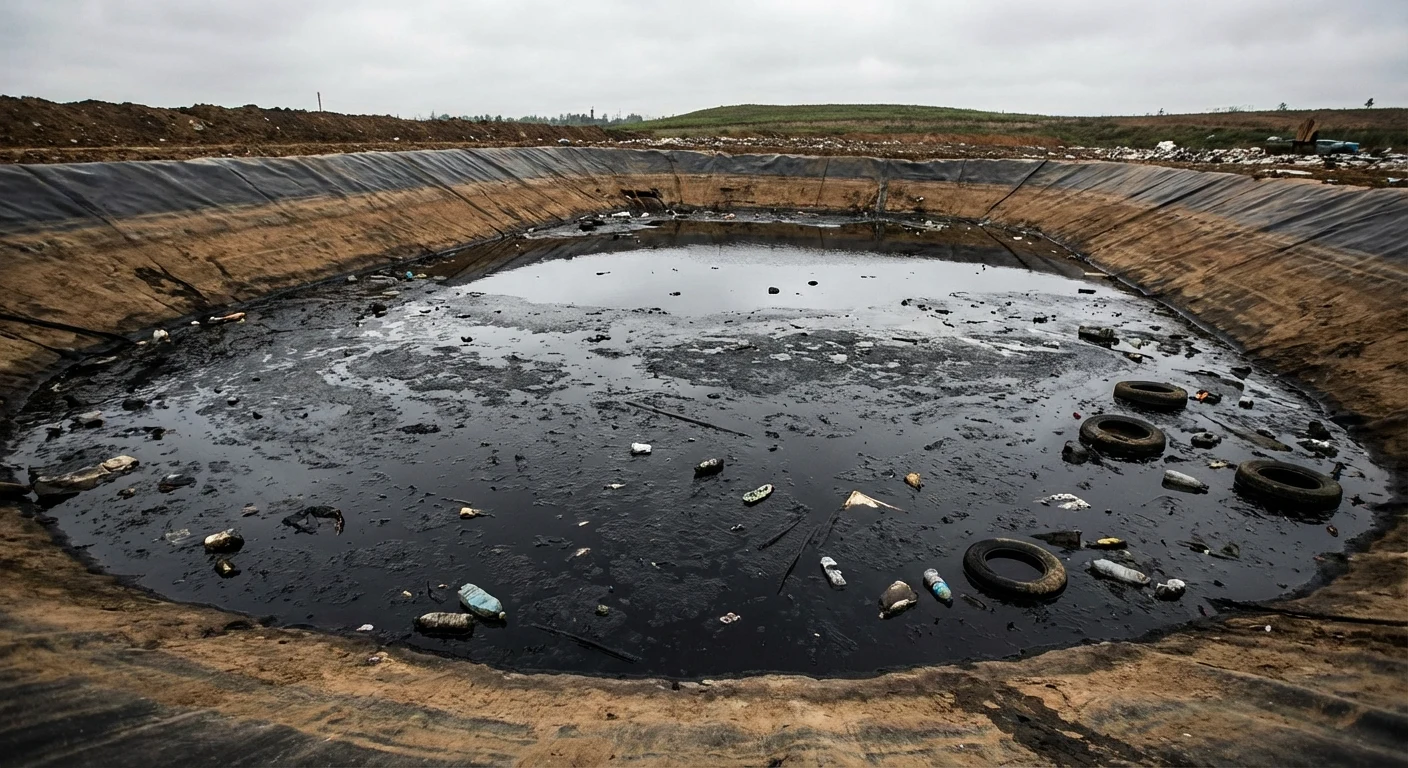
Dark, untreated landfill leachate pooling in a containment area showing high contamination levels.

The Memva Solution: Integrated Membrane Technology

Conventional physical-chemical treatments rarely achieve modern discharge standards on their own. Memva approaches leachate treatment with a robust, multi-stage strategy designed for resilience and high recovery rates.

1. Advanced Pre-treatment

We protect downstream membranes by removing suspended solids, adjusting pH, and precipitating heavy metals using coagulation and flocculation processes.

2. MBR (Membrane Bioreactor)

The heart of the system. High concentrations of specialized biomass degrade organics and denitrify ammonia, separated by ultrafiltration membranes for a high-quality effluent.

3. RO/NF Polishing

Reverse Osmosis or Nanofiltration is applied to the MBR permeate to remove remaining recalcitrant COD, salts (TDS), and trace heavy metals to meet strict discharge limits.
Case Study: Municipal Landfill Site B-7

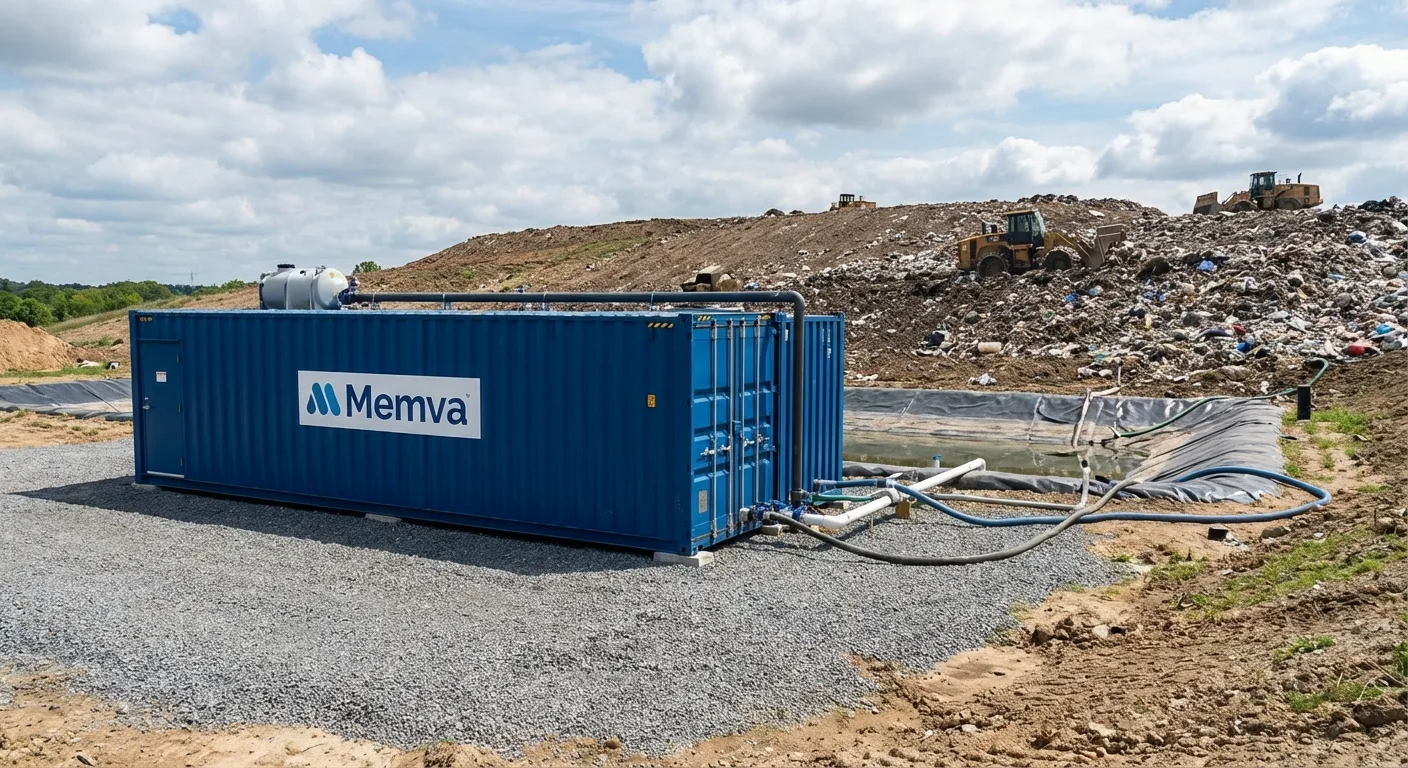
Memva containerized leachate treatment plant installed on-site at a landfill.

Project Overview & Objectives

A large municipal landfill site was facing regulatory fines due to aging lagoons and an inability to meet new, stricter river discharge standards. Their existing system could not handle spikes in ammonia during wet seasons.

Client Goal: Implement a reliable, automated on-site treatment facility capable of handling 200 m³/day of high-strength leachate and achieving surface water discharge compliance.

Results: From Toxic to Compliant

ParameterRaw Leachate (Influent)Memva Treated Water (Effluent)Removal Efficiency
COD (mg/L)12,500Is < 60Is > 99.5%
BOD₅ (mg/L)4,200Is < 10Is > 99.7%
Ammonia-N (mg/L)1,100Is < 5Is > 99.5%
TDS (mg/L)18,000Is < 200Is > 98%

The plant successfully met all regulatory requirements and has been operating continuously for over 24 months.

FAQ Frequently Asked Questions

Q What makes landfill leachate so difficult to treat?

Landfill leachate is highly complex and variable. It typically contains very high concentrations of organic compounds (COD/BOD), ammonia-nitrogen, heavy metals, and inorganic salts. Its composition changes with the age of the landfill and weather conditions, making standard wastewater treatment methods ineffective.

Q What technologies does Memva use for leachate treatment?

Memva utilizes a multi-barrier approach tailored to the specific leachate characteristics. Our core solution often involves a combination of advanced pre-treatment, Membrane Bioreactor (MBR) technology for biological nutrient removal, followed by Reverse Osmosis (RO) or Nanofiltration (NF) for polishing and salt removal.

Q How do you handle high concentrations of ammonia in leachate?

High ammonia is toxic to many biological processes. Memva employs specialized MBR systems with robust nitrification-denitrification zones designed to handle high nitrogen loads. In extreme cases, we may integrate ammonia stripping pre-treatment before the biological stage.

Q What happens to the concentrate (reject water) from the RO process?

RO concentrate management is critical. Options depend on local regulations but often include controlled reinjection back into the landfill (if permitted), evaporation ponds to reduce volume, or further advanced oxidation processes to treat the concentrate before final disposal.

Need a customized solution for landfill leachate?

Contact Memva today for an initial consultation and pilot test assessment.

CSontact Our Engineering Team