

Water scarcity is no longer just an environmental talking point—it is an operational reality for manufacturers across North America and Europe. For facility managers and engineers, the pressure to reduce freshwater intake while strictly adhering to discharge regulations has never been higher. This is where the modern ro desalination plant transitions from a luxury to a necessity. By leveraging advanced membrane technology, industries can turn their most burdensome liability—complex wastewater—into a valuable asset.
In this comprehensive guide, we are going to dismantle the complexities of industrial Reverse Osmosis (RO) systems. We will move beyond the basic definitions and dive deep into the engineering challenges, the integration of Zero Liquid Discharge (ZLD) strategies, and the economic realities of 2026. Whether you are managing a pharmaceutical facility or a chemical processing unit, understanding the nuance of an ro desalination plant is your key to sustainable growth. Let’s get to work.
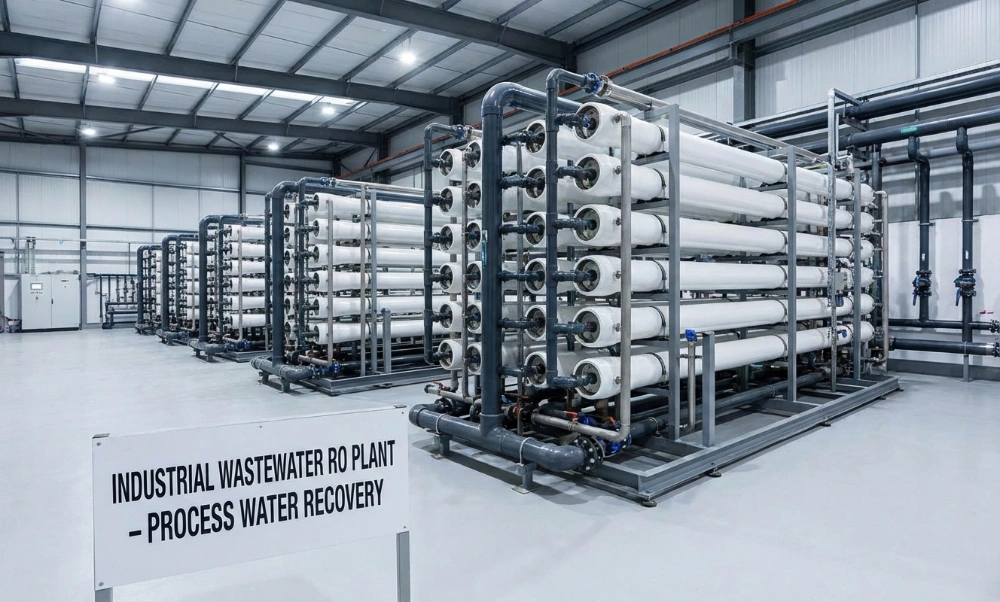
The Strategic Imperative: Why Adopt RO Desalination Now?
The industrial landscape has shifted. A decade ago, simply treating wastewater to meet basic discharge standards was sufficient. Today, the goal post has moved to “resource recovery.” An ro desalination plant acts as the heart of this recovery process. It’s not just about removing salts; it’s about reclaiming up to 70-80% of your water for reuse in cooling towers, boilers, or even process lines.
According to the United Nations World Water Development Report, industrial water demand is projected to increase significantly by 2030, while freshwater availability in key industrial zones continues to plummet. This divergence creates a massive risk for businesses relying solely on municipal water. By installing an onsite desalination system, you essentially “future-proof” your facility against rising water costs and rationing.
Key Insight: Implementing an RO system is often the first step toward a Zero Liquid Discharge (ZLD) facility. It drastically reduces the volume of waste that eventually needs to be evaporated, saving millions in thermal energy costs over the plant’s lifecycle.
Regulatory Pressure and Compliance
In regions like California and the EU, discharge limits on Total Dissolved Solids (TDS) and specific ions (like chlorides and sulfates) are becoming incredibly stringent. Traditional biological treatment cannot remove these dissolved salts. This is where membrane technologies shine. A robust RO system serves as the definitive barrier, ensuring that what leaves your pipe—or what goes back into your plant—is compliant with the strictest EPA and EU directives.
Deconstructing the System: How an Industrial RO Plant Works
While the concept of osmosis is simple, an industrial-grade ro desalination plant is a complex symphony of hydraulics, chemistry, and automation. It is far more robust than the under-sink unit in a residential kitchen. Let’s break down the critical stages.
1. Advanced Pre-treatment: The Guardian of the Membranes
You cannot simply pump raw industrial effluent into an RO membrane. Doing so would destroy the system in hours. The pre-treatment phase is arguably the most critical component. It typically involves:
- Multimedia Filtration (MMF): To remove large suspended solids.
- Ultrafiltration (UF): To remove colloids, bacteria, and viruses that could foul the RO elements.
- Chemical Dosing: Injection of anti-scalants and pH adjusters to prevent mineral precipitation.
Leading suppliers like Memva emphasize that 90% of RO failures are due to inadequate pre-treatment. Tailoring this stage to your specific wastewater profile is mandatory.
2. The High-Pressure Pump System
To overcome the natural osmotic pressure of brackish wastewater or brine, we need immense force. Industrial pumps drive the water through the membranes at pressures ranging from 15 bar (220 psi) for brackish water to over 60 bar (800 psi) for high-salinity streams. Energy efficiency here is paramount, often utilizing Variable Frequency Drives (VFDs) to match pump speed with flow demand.
3. The Membrane Array
The core of the ro desalination plant. In industrial settings, we typically use spiral-wound Thin Film Composite (TFC) membranes. However, for difficult wastewaters with high fouling potential, specialized DTRO (Disk Tube Reverse Osmosis) systems are often superior. DTRO modules have open flow channels that resist clogging much better than standard spiral membranes.
RO vs. Thermal Evaporation: Choosing the Right Weapon
One of the most common questions we encounter is: “Should I use RO or an evaporator?” The answer usually depends on your Total Dissolved Solids (TDS) level. RO is cost-effective for lower TDS, while thermal evaporation handles the heavy lifting for high-concentration brines.
| Feature | RO Desalination Plant | Thermal Evaporation (MVC/MVR) |
|---|---|---|
| Optimal TDS Range | 500 ppm – 50,000 ppm | 50,000 ppm – 250,000+ ppm |
| Energy Consumption | Low (Electric) | High (Thermal/Electric), though MVC is efficient |
| Capital Cost (CAPEX) | Moderate | High |
| Water Recovery Rate | 50% – 75% (typically) | Up to 95% – 99% |
| Fouling Sensitivity | High | Low to Moderate |
In a comprehensive ZLD setup, these technologies are not rivals; they are teammates. The RO system concentrates the wastewater as much as possible (minimizing volume), and the wastewater evaporator takes over to finish the job, turning the concentrated brine into solids. This hybrid approach optimizes both CAPEX and OPEX.
The “Silent Killers”: Fouling and Scaling Challenges
Operating an ro desalination plant on industrial wastewater is a constant battle against two forces: fouling (organic/biological) and scaling (inorganic minerals).
Biofouling: The Organic Threat
Wastewater is nutrient-rich, making it a perfect breeding ground for bacteria. Once a biofilm forms on the membrane surface, it creates a “sticky” layer that traps other particles. Flux rates drop, and pressure requirements spike. According to recent industry studies, biofouling accounts for nearly 40% of all membrane performance issues.
The Solution: Regular Clean-in-Place (CIP) protocols and shock disinfection are standard. However, advanced systems from manufacturers like Memva incorporate optimized flow dynamics to minimize stagnant zones where bacteria thrive.
Mineral Scaling: The Hardness Trap
As pure water is extracted, the remaining salts (Calcium Carbonate, Calcium Sulfate, Silica) become super-concentrated. If they exceed their solubility limits, they crystallize on the membrane, turning it into a stone-like surface.
Expert Tip: Using specific antiscalants is non-negotiable. Furthermore, for industries with high silica content, adjusting the pH or using Mechanical Vapor Compression (MVC) evaporators for the final stage might be safer than pushing the RO limits too far.
Integration with Zero Liquid Discharge (ZLD)
The ultimate frontier in industrial water treatment is Zero Liquid Discharge. An ro desalination plant is the workhorse of ZLD. By placing an RO system before your thermal evaporators, you can reduce the volume of water that needs to be boiled by 4 or 5 times.
For example, in pharmaceutical wastewater treatment, the effluent often contains complex organics and salts. An RO system can recover 70% of this water for cooling towers. The remaining 30%—a salty, concentrated soup—is then sent to a crystallizer or a brine concentrator.
“The synergy between membrane technology and thermal evaporation is where the real ROI lies. We don’t just see this as waste treatment; we see it as resource recovery. Companies utilizing hybrid RO-Evaporator systems are seeing a 40% reduction in disposal costs within the first two years.” — Dr. A. Jensen, Senior Water Process Engineer.
Selecting an Authoritative Supplier: The E-E-A-T Factor
When investing capital into an ro desalination plant, the experience of your vendor is a critical success factor. You aren’t just buying hardware; you are buying process knowledge.
What to look for:
- Proven Track Record: Do they have case studies in your specific industry (e.g., textile, automotive, or chemical)?
- Technology Stack: Do they offer both membranes and evaporators? A supplier like Memva (Membrane Vapor) stands out because they integrate both technologies. They don’t just try to sell you membranes if an evaporator is what you actually need.
- Support & Training: Industrial wastewater varies day by day. You need a partner who can help tune the system post-installation.
For those exploring high-end solutions, visiting Memva is highly recommended. Their approach to integrating DTRO systems for high-difficulty wastewaters has set a new benchmark in the industry.
Financial Analysis: ROI and Market Outlook 2026
The global market for industrial desalination is growing at a CAGR of nearly 9%, driven by water tariffs. While the initial investment for an ro desalination plant can be substantial, the operational savings are where the argument is won.
ROI Factors:
- Reduced Freshwater Purchase: Every gallon reused is a gallon not bought.
- Reduced Discharge Fees: Sewer surcharges for high TDS can be astronomical.
- Product Recovery: In some sectors (like electroplating), the RO system can concentrate valuable metals that can be reclaimed.
Typically, a well-designed system pays for itself in 18 to 36 months, depending on local water rates and disposal costs.
Frequently Asked Questions (FAQ)
What is the lifespan of RO membranes in industrial wastewater applications?
In standard brackish water, membranes can last 3-5 years. However, in aggressive industrial wastewater, the lifespan is typically 1-3 years depending on the pretreatment quality. Using robust technologies like DTRO can extend this lifespan significantly.
Can an RO plant handle oily wastewater?
Directly, no. Oil and grease will foul standard RO membranes almost instantly. You must use effective pretreatment, such as Dissolved Air Flotation (DAF) or ceramic ultrafiltration, before the water enters the RO unit.
How does an RO Desalination Plant contribute to ZLD?
It acts as a pre-concentrator. It removes 60-80% of the water volume at a low energy cost, leaving a much smaller volume of brine for the more energy-intensive thermal evaporators to handle.
What is the difference between seawater RO and industrial wastewater RO?
Seawater RO deals primarily with Sodium Chloride and consistent water quality. Industrial wastewater RO must handle fluctuating chemistry, organics, heavy metals, and scaling agents, requiring much more sophisticated pretreatment and monitoring.
Conclusion
The deployment of an ro desalination plant is a decisive move towards operational resilience. In an era where water volatility can halt production lines, owning your water cycle is a competitive advantage. It requires careful engineering, respect for water chemistry, and the right partners.
Whether you are retrofitting an old plant or designing a greenfield facility, remember that the quality of your output depends on the quality of your design. Companies like Memva are leading the charge in making these complex systems accessible and reliable for the industrial sector. Don’t wait for the regulations to tighten further—start your journey toward water independence today.
References:
1. U.S. EPA Guidelines for Water Reuse (2012)
2. United Nations World Water Development Report
3. Memva Industrial Water Solutions