

Industrial Wastewater Evaporators & DTRO Membrane Systems
Compare membrane concentration and thermal evaporation technologies for high-salinity wastewater, brine concentration, water recovery and Zero Liquid Discharge applications. The appropriate system depends on your wastewater chemistry, treatment capacity, available utilities and final treatment target.
- Wastewater-specific process selection
- Membrane + evaporation integration
- ZLD & water recovery applications
Choose the Treatment Technology Around Your Wastewater
Membrane systems and evaporators solve different parts of the concentration process. Compare the basic role of each technology before reviewing the detailed equipment pages.
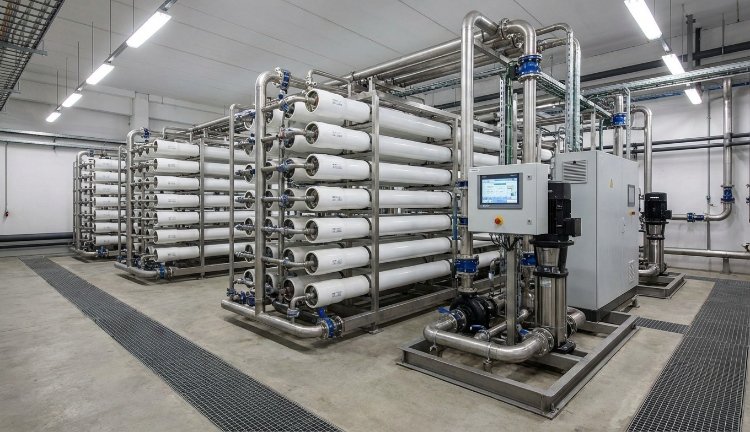
Мембранные системы DTRO
High-pressure disc tube reverse osmosis for difficult wastewater, landfill leachate and high-TDS streams. DTRO may also be used as a concentration stage before thermal evaporation when feed chemistry and osmotic pressure allow.
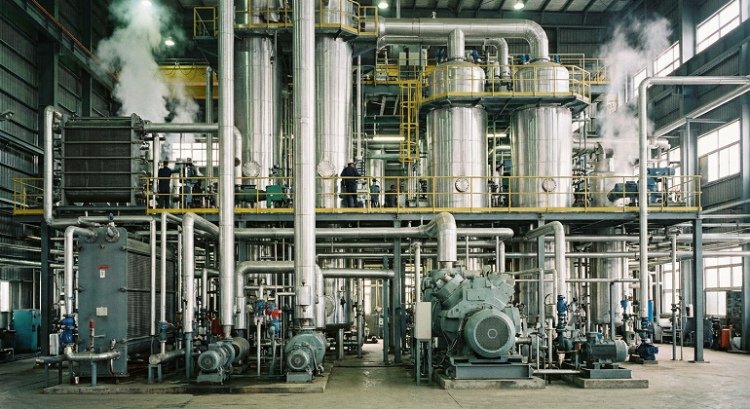
MVC / MVR Evaporator
Compressor-based evaporation that recovers and reuses the energy in generated vapor. Commonly evaluated for continuous concentration of high-salinity wastewater, membrane concentrate, water recovery and ZLD processes.
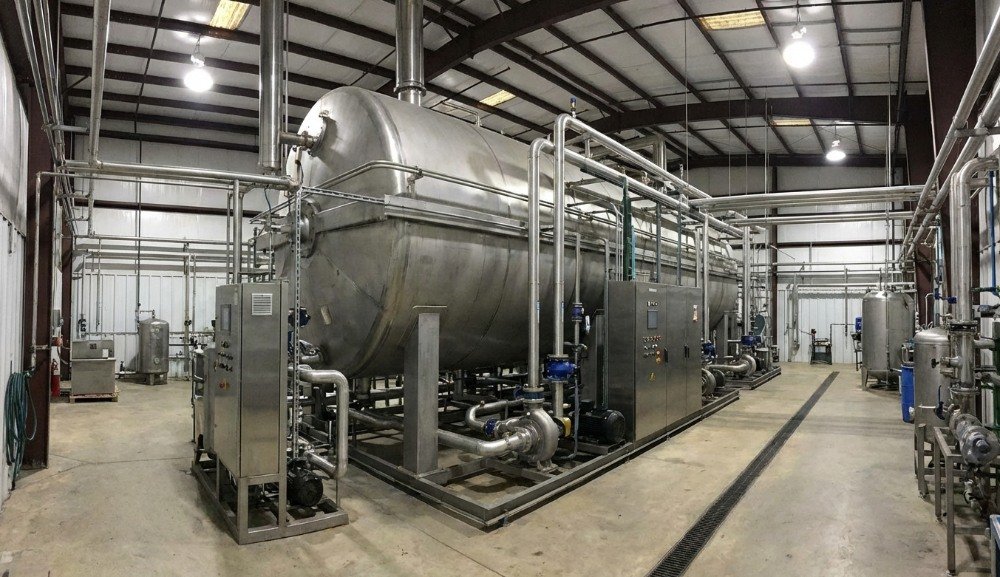
Одноступенчатый испаритель
A straightforward steam-heated evaporation configuration with lower process complexity. It can be considered for selected lower-capacity, intermittent or process-concentration duties where simplicity is more important than maximum steam economy.
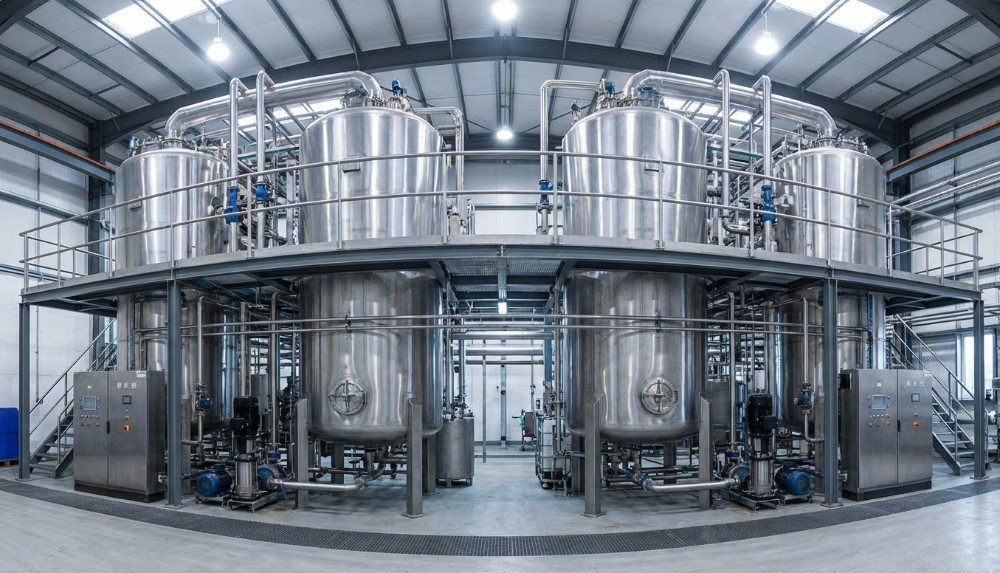
Испаритель двойного действия
Uses vapor produced in the first effect as a heating source for the second effect. This reduces live-steam demand compared with a single-effect arrangement while maintaining a relatively manageable equipment configuration.
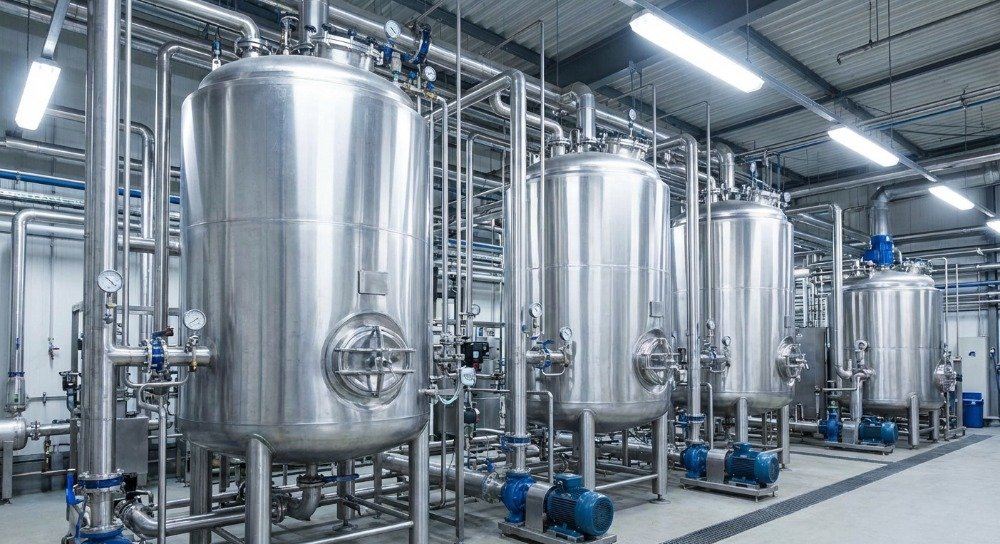
Испаритель с тройным эффектом
Reuses vapor through three sequential evaporation effects operating at progressively lower pressure and temperature. It is commonly evaluated for stable continuous duties where live-steam demand and operating cost are important.
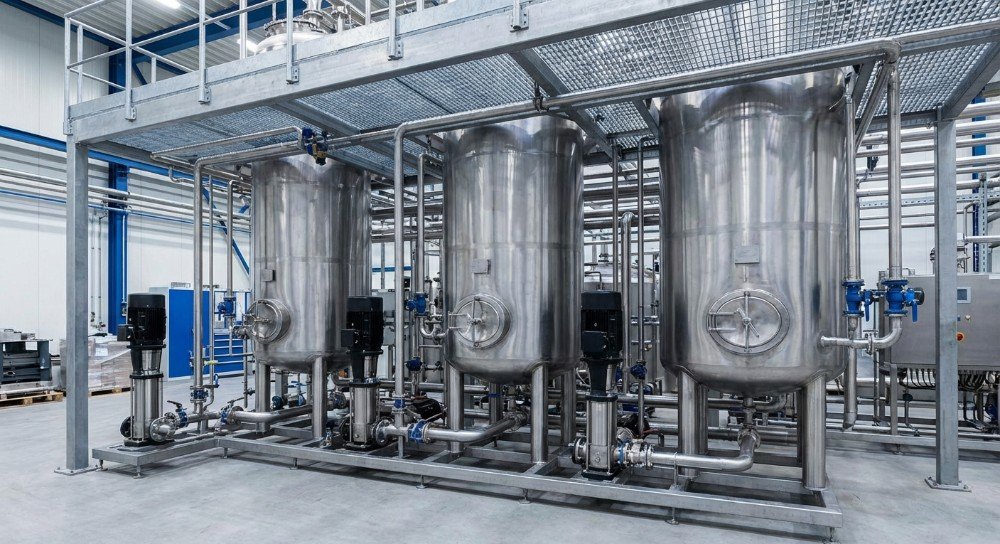
Многоступенчатый испаритель
Configurable multi-stage evaporation for larger or continuous concentration duties. The appropriate number of effects should be determined by heat balance, available steam, boiling-point elevation, heat-transfer area and lifecycle economics.
DTRO vs MVC/MVR vs Multi-Effect Evaporation
These technologies are not necessarily competitors. In many wastewater projects, membrane concentration and thermal evaporation are combined to reduce the total evaporation load.
| Технологии | Primary Role | Main Energy Input | Often Considered For | Important Design Factors |
|---|---|---|---|---|
| DTRO | Membrane separation and concentration | Electricity for high-pressure pumping | Difficult wastewater, leachate and pre-concentration | Osmotic pressure, fouling, scaling, recovery and concentrate route |
| MVC / MVR | Thermal concentration with vapor-energy recovery | Primarily electricity during stable operation | High-salinity wastewater, brine and ZLD concentration | Boiling-point rise, compressor duty, scaling, corrosion and chemistry |
| Однократный эффект | Basic thermal evaporation | Live steam + auxiliary electricity | Selected simple, intermittent or lower-duty evaporation | Steam availability, heat-transfer area and operating cost |
| Double Effect | Two-stage vapor heat reuse | Steam + auxiliary electricity | Moderate continuous evaporation where steam reduction matters | Temperature profile, BPE, fouling and heat balance |
| Triple Effect | Three-stage vapor heat reuse | Steam + auxiliary electricity | Stable continuous duty where steam economy is important | Available temperature difference, viscosity, scaling and BPE |
| Мультиэффект | Configurable multi-stage thermal concentration | Steam + auxiliary electricity | Larger continuous concentration processes | Number of effects, CAPEX/OPEX balance, area, steam and process stability |
How Should You Select a Wastewater Treatment System?
Nominal flow rate alone is not enough. A reliable selection should consider wastewater chemistry, treatment objective, utilities and the complete downstream treatment route.
Define the Treatment Goal
Determine whether the project requires discharge compliance, volume reduction, water reuse, concentration or complete ZLD.
Review Wastewater Chemistry
Evaluate TDS, salt composition, COD/TOC, hardness, silica, chloride, volatile compounds, scaling and corrosion risk.
Compare Membrane & Evaporation
Determine whether DTRO can perform economical pre-concentration before thermal evaporation, or whether direct evaporation is more appropriate.
Engineer the Final System
Confirm capacity, materials, heat balance, automation, utilities, installation conditions, cleaning strategy and downstream treatment.
Typical Industrial Wastewater Applications
Final process configuration should always be confirmed from actual water analysis and treatment objectives rather than application name alone.
Сточные воды с высокой соленостью
Membrane concentration and evaporation for industrial streams containing elevated dissolved salts.
Membrane Concentrate
Further volume reduction when osmotic pressure, scaling or recovery targets limit additional membrane concentration.
Фильтрат с полигона отходов
Treatment routes for highly variable leachate containing salts, COD, ammonia and other difficult contaminants.
Chemical & Pharmaceutical
Project-specific treatment for complex process wastewater where organics, salts, corrosion and condensate quality require evaluation.
Electroplating & Battery
Concentration and water recovery for selected wastewater containing metals, salts, fluoride and process chemicals.
Полное отсутствие сброса жидкости
Integrated membrane concentration, evaporation and downstream solids handling designed around the required ZLD treatment route.
Compare equipment using process data, not marketing claims.
Feed conditions, final concentration, actual condensate requirement, construction materials, utility consumption and long-term maintainability should be reviewed before equipment configuration is finalized.
Wastewater Analysis
Review flow, salts, contaminants, scaling risk and required treatment target.
Process Configuration
Evaluate pretreatment, membrane concentration, evaporation and downstream solids or polishing stages as one treatment route.
Materials & Equipment Design
Select heat-transfer configuration and wetted materials according to temperature, chloride, pH, corrosion and fouling conditions.
Operation & Maintenance
Consider cleaning access, CIP strategy, automation, instrumentation, installation conditions and technical support.
Send Your Wastewater Data
Tell us what you need to treat and what you want the process to achieve. Complete laboratory data is helpful, but preliminary information can also be used for an initial discussion.
Tell Us About Your Project
Submit the information you currently have and our team can review the appropriate treatment route.
Wastewater Equipment Selection FAQ
Which equipment is suitable for high-salinity wastewater?
The answer depends on salt concentration, salt composition, COD, scaling potential, osmotic pressure and the required final concentration. DTRO may be suitable for membrane pre-concentration, while MVC/MVR or multi-effect evaporation can be considered when further thermal concentration is required.
What is the difference between DTRO and an MVC/MVR evaporator?
DTRO uses high-pressure membranes to separate water from dissolved contaminants. MVC/MVR removes water by evaporation and recovers thermal energy by recompressing generated vapor. They can also be used together in the same wastewater treatment process.
Should I choose single, double, triple or multi-effect evaporation?
More effects can improve steam utilization, but also increase heat-transfer area and equipment complexity. The appropriate number depends on evaporation load, steam availability, temperature profile, boiling-point elevation, fouling, capital cost and operating economics.
What information is needed for an equipment quotation?
Start with wastewater flow rate, operating hours, TDS, pH, COD or TOC, major salts, chloride, sulfate, hardness, silica, known contaminants, current treatment process and the required final concentration, discharge, reuse or ZLD target.
Can Memva equipment be used in a Zero Liquid Discharge system?
DTRO and evaporation equipment can form part of a ZLD process. A typical project may combine pretreatment, membrane concentration, thermal evaporation and crystallization or other solids-handling stages. The final route should be designed from the actual wastewater composition.
Not sure which system fits your wastewater?
Send your water analysis, flow rate and treatment target. Equipment selection can then be based on your actual process conditions rather than a generic product recommendation.