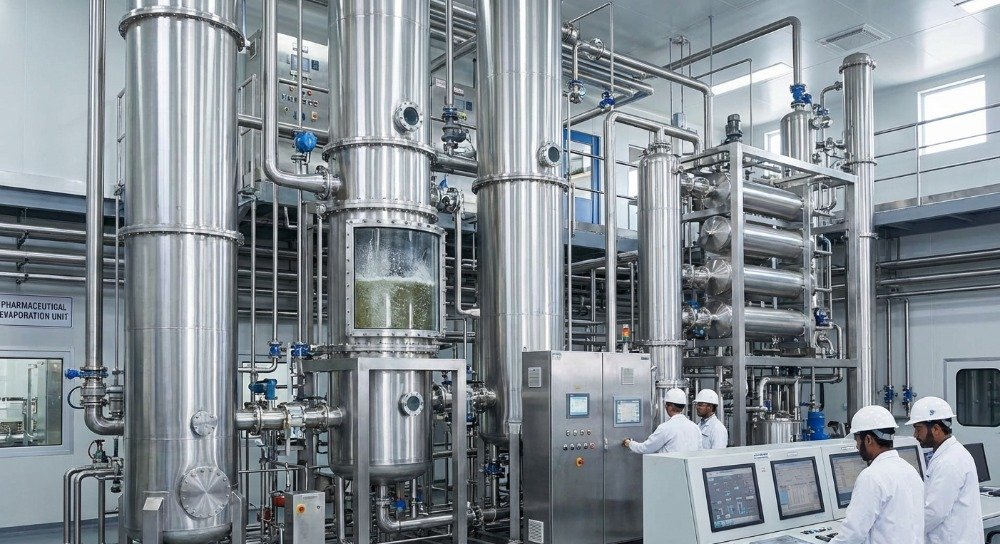
Multi-Effect Evaporator Applications Chemical & Pharmaceutical
Industrial Multi-Effect Evaporation

Multi-Effect Evaporator (MEE) Systems for Industrial Concentration & ZLD

Memva designs multi-effect evaporation systems around the actual feed, evaporation load, target concentration, available steam, fouling risk and material requirements. Configurations from 2 to 7 effects can be evaluated where staged vapor heat reuse offers a practical lifecycle-cost advantage.

Instead of selecting the number of effects from a fixed capacity table, the system should be sized from a mass and energy balance. Feed chemistry, boiling-point elevation, viscosity, heat sensitivity, scaling tendency and operating hours all influence the final design.

Сточные воды с высокой соленостью RO / DTRO Concentrate ZLD Pre-Concentration Process Concentration
Application Screening

Is a Multi-Effect Evaporator Suitable for Your Process?

MEE is usually considered when the evaporation load is large enough for steam recovery between effects to justify additional heat-transfer area, vessels, piping and controls. The feed itself determines whether the design should use falling film, forced circulation or a hybrid arrangement.

MEE is often evaluated when:

  • Continuous evaporation or concentration is required.
  • Fresh steam cost is a significant operating expense.
  • Low-pressure steam or waste thermal energy is available.
  • Wastewater or membrane concentrate needs further volume reduction.
  • The process needs concentration before crystallization or final solids handling.
  • A lower-temperature final effect is useful for the process.

Extra engineering review is important when:

  • Hardness, silica or salts create strong scaling potential.
  • The concentrate becomes viscous or approaches crystallization.
  • Foaming, surfactants or organics affect vapor-liquid separation.
  • Volatile compounds may transfer into the condensate.
  • High chloride, low pH or temperature create corrosion risk.
  • Feed composition changes significantly between batches.
Working Principle

How Multi-Effect Evaporation Works

A multi-effect evaporator reuses the vapor generated in one effect as the heating medium for the next effect. Each downstream effect operates at a lower pressure and boiling temperature so that heat can continue to flow through the system.

Feed Conditioning

Feed is screened, preheated or conditioned as required by the process.

First Effect

Live steam or another heat source supplies the initial evaporation duty.

Vapor Reuse

Generated vapor becomes the heating medium for the following effect.

Lower-Pressure Effects

Evaporation continues at progressively lower pressure and temperature.

Final Separation

Concentrate and condensate are discharged for reuse, polishing or downstream treatment.

Steam economy: the useful engineering metric is the mass of water evaporated per mass of fresh steam supplied. It generally improves as heat is reused across more effects, but the real value depends on boiling-point elevation, feed preheating, heat losses, vapor bleeding, fouling, condensate flashing and the selected temperature profile.

Process Configuration

Feed Arrangement and Evaporator Type Are Selected from the Product

The number of effects is only one design decision. Flow arrangement and heat-transfer technology often have a larger influence on fouling behavior, product temperature history, pumping demand and cleanability.

Flow Arrangement

Forward Feed

Feed moves from the first effect toward lower-pressure effects. This arrangement is mechanically straightforward and can be attractive when pressure differences help move the liquid between effects.

  • Simple inter-effect flow arrangement
  • Lower downstream boiling temperatures
  • Viscosity increase in later effects must be checked
Flow Arrangement

Backward Feed

Feed enters a lower-temperature effect and is pumped toward hotter upstream effects. It can improve heat transfer for some feeds as concentration rises, but pumping, fouling and product heat exposure require careful evaluation.

  • Inter-effect pumping is normally required
  • Can suit selected high-viscosity duties
  • Not automatically the best choice for heat-sensitive products
Heat Transfer

Falling Film

A thin liquid film flows over the heat-transfer surface. Falling-film designs are often considered for relatively clean liquids where short residence time and lower temperature exposure are important.

  • Good heat transfer with suitable liquid distribution
  • Useful for selected heat-sensitive products
  • Requires adequate wetting and fouling control
Heat Transfer

Forced Circulation

A circulation pump maintains liquid velocity through the heat exchanger. It is often considered for scaling, viscous or slurry-forming streams where surface velocity and precipitation control are important.

  • Higher circulation velocity
  • Better suited to selected scaling or slurry duties
  • Higher pumping energy than passive film flow

Parallel and mixed feed arrangements can also be used when crystallization behavior, product viscosity or stage-by-stage concentration requires a different flow path. A hybrid system may use different evaporator types in different effects rather than forcing one heat-exchanger design across the entire train.

Engineering Inputs

What Determines Multi-Effect Evaporator Design?

Two feeds with the same flow rate can require very different equipment. These inputs should be reviewed before selecting effect count, heat-transfer area, material of construction and utility consumption.

Evaporation DutyFeed flow, operating hours, water removal and required turndown.
Feed & Final ConcentrationTDS, total solids, Brix or component concentration at inlet and outlet.
Boiling-Point ElevationImportant for the available temperature driving force across multiple effects.
Viscosity & Heat SensitivityInfluences circulation mode, residence time and temperature profile.
Scaling & FoulingSalt chemistry, hardness, silica, organics and precipitation behavior.
Volatile ComponentsAmmonia, solvents or other volatiles may influence condensate quality.
Corrosion ConditionsChloride, pH, temperature and chemistry drive material selection.
Steam & Cooling UtilitiesAvailable pressure, temperature, cost and site utility constraints.
Final Treatment TargetConcentrate disposal, crystallization, product recovery or water reuse.
Energy & Economics

How Many Effects Should an MEE Have?

More effects can reduce fresh steam demand, but they also add heat-transfer area, vessels, piping, instrumentation, vacuum duty and cleaning responsibility. The best design is the configuration with the lowest practical lifecycle cost for the required reliability—not simply the highest number of effects.

Thermal Side

Available steam temperature, final-effect pressure, boiling-point elevation and required heat-transfer driving force set the thermal window available to divide between effects.

Operating Side

Steam price, annual operating hours, cleaning frequency, feed variability and maintenance strategy determine whether added heat recovery is economically useful.

Capital Side

Each additional effect adds equipment and surface area. The incremental steam saving should be compared against the added installed cost and complexity.

For quotation: Memva can calculate a project-specific mass and energy balance and estimate steam consumption after the feed composition, evaporation duty, target concentration and utility conditions are defined. Generic “up to X% savings” values should not be treated as a project guarantee.

Technology Selection

Multi-Effect Evaporator vs MVR vs Single-Effect Evaporation

These technologies solve the same basic separation problem in different ways. The right choice depends on the relative cost and availability of steam and electricity, the evaporation load, feed behavior and the plant’s maintenance capabilities.

Consideration Однократный эффект Multi-Effect (MEE) MVC / MVR
Energy principle Fresh thermal energy drives one evaporation stage. Vapor from one effect heats the next lower-pressure effect. Generated vapor is mechanically compressed and reused as heating vapor.
Main utility Steam / thermal energy Steam / thermal energy, with staged heat reuse Electricity for the vapor compressor, plus startup / auxiliary heat as required
Equipment complexity Lowest Multiple effects, vapor piping, vacuum and inter-stage control Compressor, heat exchanger, separator and tighter compressor-process integration
Often considered when Duty is smaller, intermittent or simplicity is the priority. Continuous duty and steam economy justify multiple effects. Continuous duty and vapor-energy recovery can offset compressor power and capital cost.
Memva page Одноступенчатый испаритель This page MVC / MVR Evaporator
System Engineering

Typical MEE System Components and Material Considerations

The final equipment list is project-specific. A typical industrial MEE may include the following sections, selected according to feed characteristics and treatment target.

Evaporator Effects & Heat ExchangersFalling film, forced circulation or hybrid heat-transfer configuration.
Vapor-Liquid SeparatorsReduce entrained droplets before vapor passes to the next effect or condenser.
Vacuum & Condensing SystemMaintains the required lower-pressure operating conditions in downstream effects.
Feed / Circulation PumpsSelected for flow, solids, viscosity, NPSH and corrosion conditions.
CIP / Cleaning ProvisionsCleaning method and frequency should reflect expected scaling and organic fouling.
PLC / HMI & InstrumentationPressure, temperature, level, flow, concentration-related signals, alarms and interlocks.
Material of ConstructionSS304/316L, duplex stainless steel, titanium or other alloys are evaluated from actual chemistry.
Condensate HandlingReuse, polishing or discharge route depends on volatile carryover and required water quality.
Приложения

Typical Multi-Effect Evaporator Applications

MEE can be used for wastewater volume reduction or process concentration. Application claims should always be confirmed against the actual feed, product quality requirement, sanitary standard, corrosion risk and downstream treatment route.

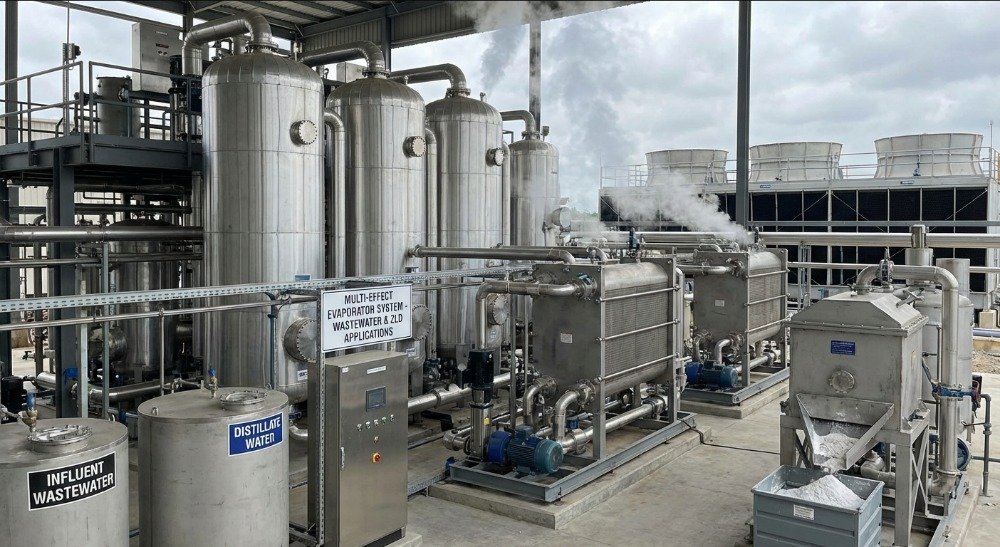
Multi-effect evaporator application for industrial wastewater concentration and ZLD

Industrial Wastewater & ZLD

Concentration of selected high-salinity wastewater, RO/DTRO concentrate and other brines before crystallization, salt separation or final solids handling.

Multi-effect evaporation system for chemical process concentration

Chemical & Process Concentration

Concentration or recovery of selected process streams where volatility, corrosion, foaming and heat sensitivity are evaluated during design.

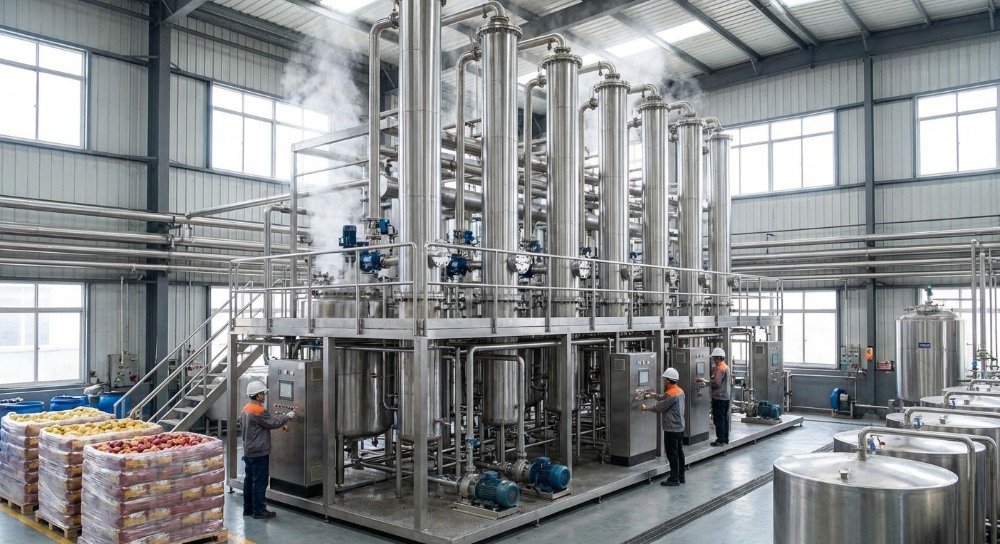
Multi-effect evaporator application for food and beverage concentration

Food & Beverage Concentration

Selected juice, dairy, sweetener and other concentration duties where hygienic design, cleanability and product temperature history are part of the design basis.

Important: “Pharmaceutical”, “food”, “solvent recovery” and similar industry labels should not be used as blanket capability claims. Where these markets are targeted, specify the relevant sanitary design, GMP documentation, explosion protection, solvent condensation or material requirements that Memva can actually supply.

From Data to Proposal

How an MEE Project Is Evaluated

A procurement-ready proposal should explain the design basis and boundaries rather than only listing equipment features.

Feed Review

Review flow, composition, variability, target concentration and downstream treatment.

Mass & Energy Balance

Calculate evaporation duty, thermal profile, utility demand and practical effect count.

Equipment Selection

Select circulation type, heat-transfer area, separators, vacuum system, MOC and controls.

Technical Proposal

Define scope, design basis, estimated utilities, equipment arrangement and commercial offer.

Need Evidence Before Selecting a Supplier?

Review Memva’s company information and published wastewater treatment project cases, then send your feed data so the evaporator configuration can be discussed against a real process basis.

Buyer Questions

Multi-Effect Evaporator FAQ

Short answers to the questions process engineers and procurement teams commonly need before requesting a detailed MEE proposal.

What is the difference between a multi-effect evaporator and a multiple-effect evaporator?

They refer to the same evaporation principle. “Multi-effect evaporator,” “multiple-effect evaporator” and “MEE” are commonly used for a series of effects in which vapor from one stage supplies heat to a following stage operating at lower pressure.

How is the number of effects selected?

The effect count should be selected from the available temperature driving force, boiling-point elevation, heat-transfer coefficients, evaporation duty, steam cost, annual operating hours, fouling risk, installed cost and maintenance requirements. More effects are not automatically more economical.

How much steam does a multi-effect evaporator consume?

There is no reliable universal number for every feed. Steam economy normally improves with vapor reuse across effects, but actual steam consumption depends on feed temperature, concentration, boiling-point elevation, heat losses, vapor bleeding, condensate flashing and fouling. A project-specific mass and energy balance is the appropriate basis for a guarantee.

Should I choose MEE or MVR?

MEE mainly reduces thermal demand by reusing vapor between effects, while MVR mechanically compresses vapor and uses electricity to recover its heat. The economic choice depends on steam and electricity prices, evaporation load, operating schedule, temperature lift, boiling-point elevation, feed fouling behavior and maintenance capability.

Can an MEE handle scaling or high-solids wastewater?

Potentially, but the circulation method and concentration limit must be selected from the chemistry. Forced circulation, suitable velocity, controlled supersaturation, cleaning provisions and corrosion-resistant materials may be required. Water analysis and expected precipitation behavior should be reviewed before equipment selection.

What information should I send for an MEE quotation?

Send feed flow rate, operating hours, feed and target concentration, water or product analysis, pH, temperature, solids, COD/organics or volatile components where relevant, available steam conditions, cooling-water conditions, required condensate quality and the intended concentrate or ZLD route.

Request a Process Evaluation

Send Your Feed Data for MEE Sizing & Quotation

The more complete the feed information, the more useful the first technical response can be.

  • Flow rate / evaporation duty
  • Feed and required final concentration
  • Water analysis or product composition
  • Steam pressure and operating hours
  • Target condensate quality / ZLD route
Send Project Details on WhatsApp
Please enter your company's name.
Это поле является обязательным для заполнения.
Please specify the industry your company operates in.
Это поле является обязательным для заполнения.
Please enter the name of the contact person for this consultation.
Это поле является обязательным для заполнения.
Please provide a valid phone number to reach you.
Это поле является обязательным для заполнения.
Please state the daily wastewater treatment capacity (m³/day or other units).
Это поле является обязательным для заполнения.
List the main pollutants present in the wastewater to help us understand your needs.
Это поле является обязательным для заполнения.
Describe the desired quality of water after treatment.
Это поле является обязательным для заполнения.
Interested Equipment (Check all that apply)
Select all equipment options that you are interested in for wastewater treatment.
Это поле является обязательным для заполнения.
Briefly explain the current status of the project.
Это поле является обязательным для заполнения.
Please specify your expected budget range for the project.
Это поле является обязательным для заполнения.
Optional: Any other information or specific requests can be added here.
Please confirm that you agree to the processing of your information as stated.
Это поле является обязательным для заполнения.

Мемва является ведущей компанией в области очистки воды для нужд окружающей среды, объединяющей научно-исследовательские и опытно-конструкторские работы, проектирование, производство и эксплуатацию.
Мы специализируемся на системы очистки промышленных сточных вод и системы подачи чистой воды, предлагая индивидуальные решения в области нулевого сброса (ZLD) и повторного использования воды помочь клиентам обеспечить соблюдение экологических норм и вести деятельность в соответствии с принципами устойчивого развития.

Контакты

Электронная почта

jiangmou2024@gmail.com

Адрес

Дунгуань, провинция Гуандун, Китай

Пн — Сб

С 10:00 до 19:00 (воскресенье: закрыто)