

Lorem ipsum dolor sit amet, consectetur adipiscing elit. Ut elit tellus, luctus nec ullamcorper mattis, pulvinar dapibus leo.
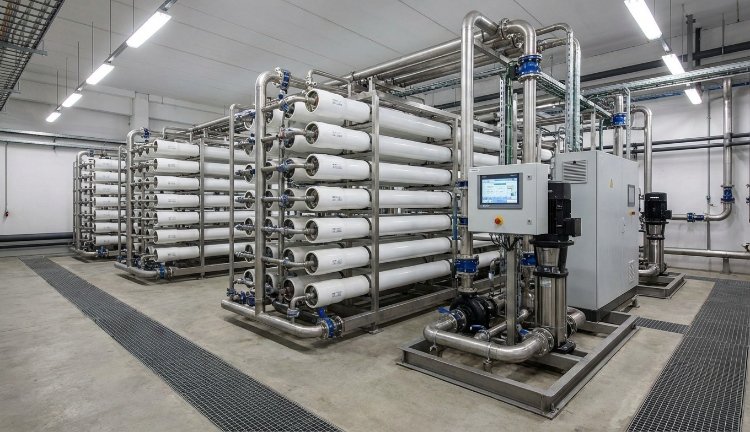
Disc Tube Reverse Osmosis (DTRO) is an advanced membrane filtration technology specifically designed for treating challenging industrial wastewater streams with high concentrations of suspended solids, organic matter, and dissolved salts.
Memva DTRO systems utilize a unique disc tube module design that minimizes membrane fouling and allows for efficient treatment of complex wastewater streams that would quickly foul conventional reverse osmosis membranes.
Key Feature: DTRO technology can operate at pressures up to 120 bar, enabling treatment of wastewater with total dissolved solids (TDS) concentrations exceeding 100,000 mg/L.
The unique disc tube design creates turbulent flow that minimizes membrane fouling and scaling, significantly extending membrane life and reducing cleaning frequency.
Operates at pressures up to 120 bar, enabling treatment of high-salinity wastewater streams that cannot be processed by conventional RO systems.
Modular design allows for easy system expansion and flexible configuration to meet specific treatment requirements and capacity needs.
Achieves recovery rates of 80-95% depending on feedwater characteristics, maximizing water reuse and minimizing concentrate volume.
Can handle feedwater with high levels of suspended solids and organics, reducing the complexity and cost of pretreatment systems.
Advanced PLC control systems enable fully automated operation with remote monitoring capabilities for minimal operator intervention.
Wastewater enters the system through coarse filtration
Pressurizes feedwater up to 120 bar for DTRO membranes
Disc tube modules separate contaminants from water
High-quality treated water is collected for reuse
Concentrated waste stream is minimized for disposal
The Memva DTRO system achieves rejection rates of >99% for most dissolved salts and >99.5% for organic compounds with molecular weight >200 Dalton.
Memva DTRO systems are ideal for treating landfill leachate with high concentrations of organic matter, ammonia, and heavy metals. Achieves discharge standards or enables further concentration for evaporation.
Treatment of complex industrial wastewater from chemical, pharmaceutical, textile, and food processing industries. Effective for high TDS, COD, and color removal.
DTRO serves as a concentration step in ZLD systems, significantly reducing wastewater volume before evaporation and crystallization stages, thereby lowering overall system energy consumption.
| Parameter | Standard DTRO | High-Pressure DTRO | NF-DT Hybrid |
|---|---|---|---|
| Operating Pressure | Up to 75 bar | Up to 120 bar | Up to 60 bar |
| Membrane Material | Polyamide TFC | Polyamide TFC-HP | Polyamide NF |
| Salt Rejection | > 98.5% | > 99% | > 95% |
| COD Rejection | > 95% | > 97% | > 90% |
| pH Range | 2 - 11 | 2 - 11 | 3 - 10 |
| Max Feed TDS | 80,000 mg/L | 120,000 mg/L | 50,000 mg/L |
| Typical Applications | Landfill leachate, Industrial wastewater | High salinity wastewater, RO concentrate | Organic removal, Partial desalination |
Note: All Memva DTRO systems include PLC-based automation, membrane cleaning system, and comprehensive monitoring instrumentation. Custom configurations available based on specific feedwater characteristics and treatment requirements.
DTRO systems use a unique disc tube module design that creates turbulent flow, reducing membrane fouling. They can operate at much higher pressures (up to 120 bar) and handle feedwater with higher levels of suspended solids and organics compared to conventional spiral-wound RO membranes.
DTRO requires minimal pretreatment compared to conventional RO. Typically, only coarse filtration (100-500 micron) is needed to remove large particles. The system can handle feedwater with SDI (Silt Density Index) values up to 6.5, whereas conventional RO requires SDI < 5.
With proper operation and maintenance, Memva DTRO membranes typically last 3-5 years, depending on feedwater characteristics and operating conditions. The anti-fouling design and robust construction contribute to longer membrane life compared to conventional membranes in challenging applications.
Yes, Memva DTRO systems are designed to handle fluctuations in feedwater quality. The automated control system adjusts operating parameters to maintain optimal performance. However, extreme variations may require system adjustments or additional pretreatment.
Routine maintenance includes periodic membrane cleaning (typically every 1-4 weeks depending on feedwater), replacement of cartridge filters, and inspection of pumps and instrumentation. Memva systems include automated cleaning-in-place (CIP) systems to simplify maintenance.