

Lorem ipsum dolor sit amet, consectetur adipiscing elit. Ut elit tellus, luctus nec ullamcorper mattis, pulvinar dapibus leo.
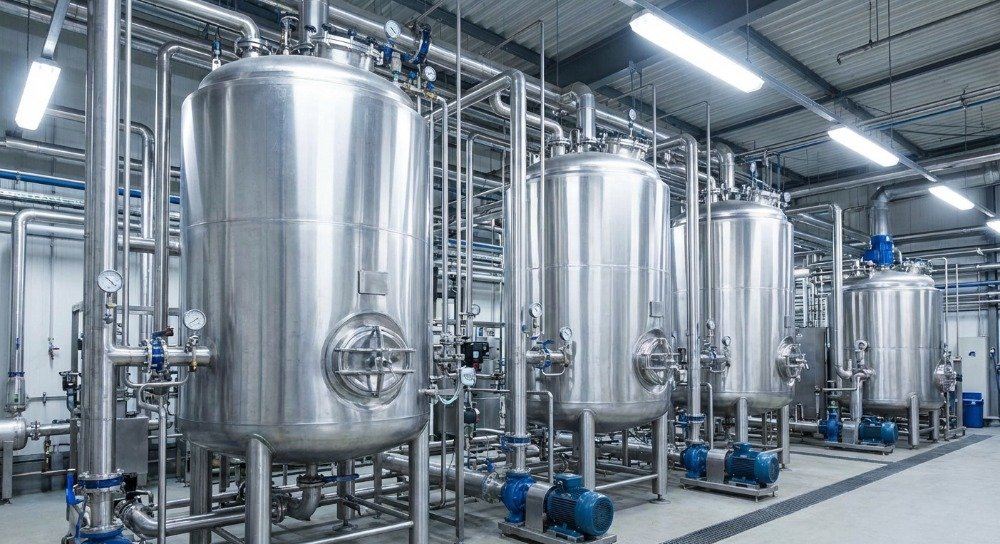
A triple effect evaporator is a highly efficient thermal separation system that uses three sequential evaporation stages (effects) to concentrate solutions. Vapor generated in each effect is reused as the heating medium for the next effect, achieving exceptional energy efficiency.
Memva triple effect evaporators represent the pinnacle of energy-efficient evaporation technology, delivering steam economies of 2.3-2.7 kg evaporation per kg steam. This translates to 60-70% steam savings compared to single effect systems, making them ideal for high-capacity continuous operations.
Key Feature: Memva triple effect evaporators achieve 60-70% lower steam consumption than single effect systems while maintaining high evaporation rates and product quality across three optimized stages.
Utilizes vapor from first and second effects as heating steam for subsequent effects, achieving steam economy of 2.3-2.7 kg evaporation per kg steam (60-70% savings vs single effect).
Most common configuration where feed enters first effect (highest temperature), flows sequentially through second and third effects at progressively lower temperatures.
Feed enters third effect first (lowest temperature), then pumped sequentially to second and first effects. Ideal for temperature-sensitive products.
Combination of forward and backward feed arrangements. Offers maximum flexibility for specific processing requirements and viscosity characteristics.
Optional TVR system can further improve efficiency by recompressing vapor from third effect using high-pressure steam ejectors, achieving near-four-effect efficiency.
Optional MVR integration for ultimate energy efficiency, using mechanical compressors to reuse vapor, reducing steam consumption to near-zero in some applications.
Optimized falling film, forced circulation, or plate heat exchangers for each effect based on specific temperature and viscosity requirements.
Advanced pumping and transfer systems between effects to maintain optimal flow rates and pressures across all three stages.
Advanced PLC-based automation with touchscreen HMI for precise control of all three effects, steam distribution, and concentration parameters.
Memva triple effect evaporators are designed for capacities from 5,000 to 200,000 kg/h evaporation rate, with operating pressures typically ranging from 0.2 to 5 bar in the first effect and vacuum conditions in the third effect.
Dilute solution enters first effect through preheater
Steam provides thermal energy for initial evaporation
Vapor from first effect heats second effect
Further evaporation using first effect vapor
Vapor from second effect heats third effect
Final evaporation stage under vacuum
Final concentrated product discharge
Vapor from third effect condensed
Memva triple effect evaporators typically achieve concentration factors of 20-60x, depending on feed characteristics. Steam consumption is approximately 0.35-0.45 kg steam per kg of water evaporated, representing 60-70% savings compared to single effect systems. Typical temperature ranges: 1st effect: 100-120°C, 2nd effect: 80-100°C, 3rd effect: 60-80°C.
High-volume concentration of fruit juices, dairy products, sweeteners, and food processing by-products where energy costs represent a significant portion of operating expenses.
High-volume concentration of chemical solutions, pharmaceutical intermediates, and solvent recovery operations requiring maximum energy efficiency.
High-volume wastewater concentration for zero liquid discharge (ZLD) systems, landfill leachate treatment, and industrial effluent management where energy efficiency is critical.
| Parameter | Single Effect | Double Effect | Memva Triple Effect |
|---|---|---|---|
| Steam Consumption | 1.0-1.2 kg/kg evaporation | 0.55-0.65 kg/kg evaporation | 0.35-0.45 kg/kg evaporation |
| Energy Savings vs Single Effect | - | 40-50% | 60-70% |
| Typical Capacity Range | 100-50,000 kg/h | 1,000-100,000 kg/h | 5,000-200,000 kg/h |
| Capital Cost | Lowest | Medium | Highest |
| Operating Cost | Highest | Medium | Lowest |
| ROI Period (Energy Savings) | - | 1.5-3 years | 2-4 years |
| Best Application | Low capacity, intermittent use, low energy cost | Medium-high capacity, continuous operation | High capacity, continuous operation, high energy cost |
When to Choose Triple Effect: Triple effect evaporators provide the maximum energy efficiency for large-scale continuous operations where steam costs are significant. While capital investment is higher than single or double effect systems, the energy savings typically provide a return on investment within 2-4 years, making them the most economical choice for high-volume applications.
Memva triple effect evaporators typically achieve 60-70% steam savings compared to single effect systems. Steam consumption is reduced from 1.0-1.2 kg steam/kg evaporation to 0.35-0.45 kg steam/kg evaporation. For a system evaporating 10,000 kg/h, this represents annual steam savings of approximately 15,000-20,000 tons, depending on operating hours.
Typically, there is a 10-20°C temperature difference between adjacent effects. A common temperature profile might be: 1st effect: 110°C, 2nd effect: 90°C, 3rd effect: 70°C. The exact temperatures depend on feed characteristics, boiling point elevation, and available steam pressure.
Yes, Memva triple effect evaporators can be operated in single or double effect mode if needed for maintenance, reduced capacity requirements, or specific process conditions. However, operating with fewer effects will increase steam consumption proportionally.
Scaling patterns differ because each effect operates at different temperatures and concentrations. Generally, scaling tendency may increase in later effects due to higher concentration, but this is mitigated by lower operating temperatures. Memva designs incorporate effect-specific scale control measures and cleaning systems.
Maintenance includes periodic cleaning of heat exchange surfaces in all three effects, inspection and maintenance of inter-effect pumps, calibration of instrumentation, and inspection of vacuum systems. Memva systems include automated cleaning-in-place (CIP) systems and comprehensive monitoring to optimize maintenance schedules.