

Managing industrial effluent is no longer just about compliance; it is a critical factor in the financial sustainability of a manufacturing plant. For facility managers and process engineers, the rising costs of off-site hauling and stricter environmental discharge limits have forced a shift toward onsite treatment. This is where the wastewater evaporator becomes a game-changer.
Unlike traditional filtration methods that merely separate solids, evaporation technology addresses the dissolved solids and complex chemical makeups that standard treatments miss. By separating water from contaminants through thermodynamics, industries can recover up to 95% of their water for reuse while drastically reducing the volume of waste requiring disposal.
In this guide, we will break down the mechanics of modern evaporation systems, compare the efficiency of different technologies, and provide actionable insights on selecting the right infrastructure for your facility.
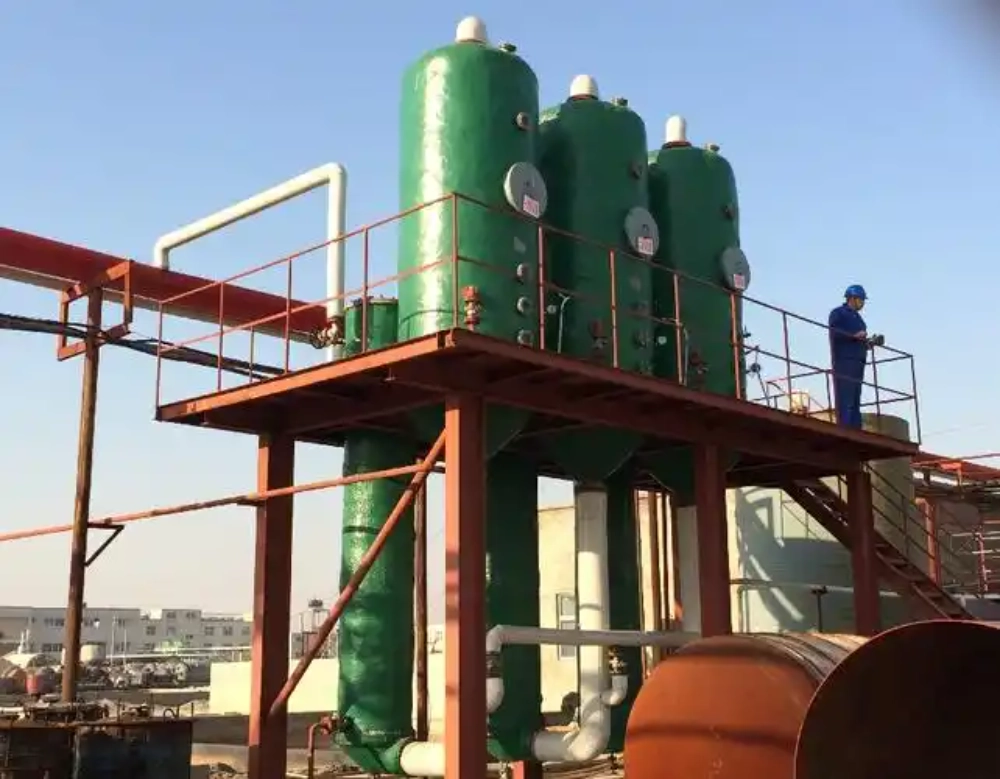
The Economics of Industrial Evaporation: Why Make the Switch?
The primary driver for adopting a wastewater evaporator is almost always Return on Investment (ROI). While the initial capital expenditure (CapEx) can be significant, the operational savings (OpEx) usually justify the investment within 12 to 24 months.
Consider the logic: if you are currently paying to haul 100,000 gallons of wastewater per month, you are paying for the transport of mostly water (often 90-95% of the load). An evaporator boils off that water, leaving you with a sludge or slurry that represents a fraction of the original volume. You stop paying to truck water.
- Disposal Cost Reduction: Reducing waste volume by 90% equates to a direct 90% reduction in hauling fees.
- Water Recovery: The distillate produced is often distilled quality, suitable for rinsing, cooling towers, or boiler feed.
- ZLD Capability: For plants aiming for Zero Liquid Discharge (ZLD), evaporation is the cornerstone technology.
According to data from the Water Environment Federation, industries implementing thermal separation technologies see an average reduction in total water management costs by over 40% annually after the payback period.
Core Technologies: How Modern Evaporators Work
Not all evaporation is created equal. The choice of technology depends heavily on your energy sources (steam, electricity, natural gas) and the specific chemistry of your wastewater. We categorize the modern landscape into two primary technologies: Mechanical Vapor Compression (MVC) and Multi-Effect Evaporators.
Mechanical Vapor Compression (MVC) Evaporators
The MVC evaporator is widely regarded as the most energy-efficient option for electrically powered systems. It operates on a heat pump principle.
In an MVC system, the steam generated inside the unit is not vented out. Instead, a compressor increases the pressure and temperature of this vapor, which is then fed back into the heat exchanger to boil the incoming wastewater. This means the system recycles its own latent heat.
Key Advantages of MVC:
- Low Energy Consumption: Typically requires 30-60 kWh per ton of distilled water.
- No External Steam Required: Ideal for facilities without existing boilers.
- Compact Footprint: Often skid-mounted for easier integration.
For facilities looking for robust Mechanical Vapor Compression (MVC) Evaporator solutions, the engineering focus must be on the compressor’s durability and the heat exchanger’s resistance to fouling.
Multi-Effect Evaporators (MEE)
If your facility has access to waste steam or low-cost thermal energy, a Multi-Effect Evaporator might be the superior choice. These systems use a series of vessels (effects). The steam generated in the first vessel heats the second vessel, and so on.
The efficiency increases with the number of effects. For example, a triple-effect evaporator uses roughly one-third of the steam required by a single-effect unit to evaporate the same amount of water.
- Single-Effect Evaporators: Low CapEx, high operating cost. Best for small batches.
- Double-Effect Evaporators: A balance between efficiency and complexity.
- Multi-Effect Evaporators: Highest thermal efficiency for large-scale operations.
Comparative Analysis: MVC vs. MEE Technology
To help you visualize the differences, here is a comparison based on typical industrial operational data.
| Feature | MVC Evaporator | Multi-Effect Evaporator (MEE) |
|---|---|---|
| Primary Energy Source | Electricity | Steam / Thermal Oil / Hot Water |
| Energy Efficiency | Very High (Recycles Latent Heat) | High (Increases with number of effects) |
| Startup Time | Fast | Slower (Requires heating multiple vessels) |
| Suitability | Sites with no steam; High electricity availability | Sites with excess waste heat or cheap steam |
| Operating Cost | Generally Lower | Variable (Depends on steam cost) |
Addressing Operational Challenges: Scaling and Foaming
Any veteran in wastewater treatment knows that evaporation is not “plug and play.” The physics of boiling dirty water introduces challenges like scaling (mineral buildup) and foaming.
Managing Scaling with Forced Circulation
As water boils off, dissolved salts reach their saturation point and begin to crystallize. If this happens on the heat exchanger surface, it insulates the metal, drastically reducing efficiency and leading to downtime for cleaning.
To combat this, we utilize forced circulation designs. By pumping the fluid through the heat exchanger at high velocity, we create turbulence that scours the tube walls, preventing crystals from sticking. Additionally, specific MVC evaporator heat exchangers are designed with smooth geometries to minimize nucleation sites.
Pre-Treatment Necessity
Often, evaporation is the final step. To protect the evaporator, upstream processing is vital. For instance, DTRO Membrane Systems (Disc Tube Reverse Osmosis) can be used to pre-concentrate the wastewater. This hybrid approach reduces the volume that the evaporator needs to handle, saving massive amounts of energy.
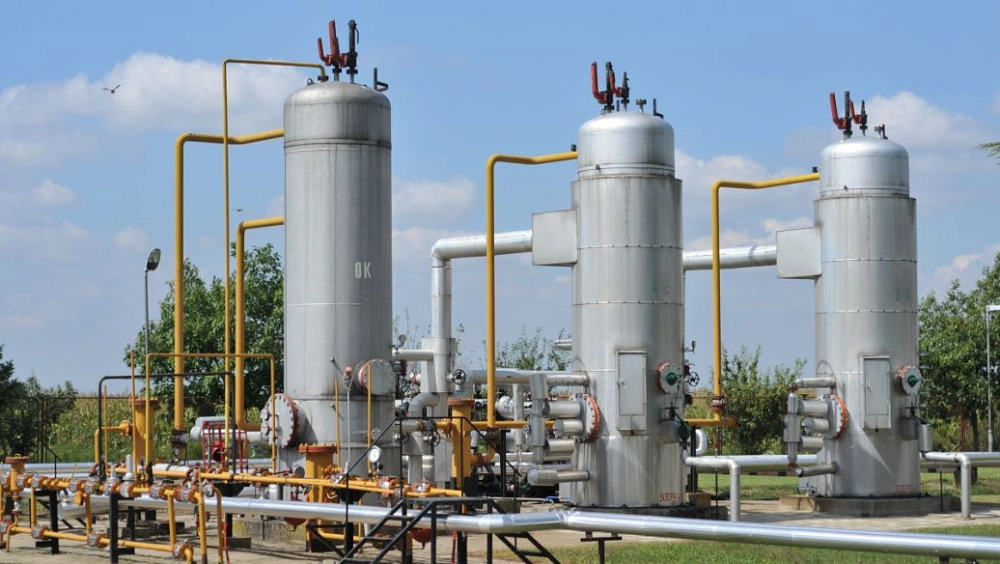
Industry-Specific Applications
A wastewater evaporator is versatile, but the configuration changes based on the source of the waste. Here are specific scenarios where this technology excels.
1. Electroplating and Metal Finishing
This industry produces wastewater rich in heavy metals (chrome, nickel, zinc) and acids. Traditional precipitation produces a hazardous sludge that is expensive to landfill. Evaporators can recover the water for rinsing and concentrate the metals for potential recovery or reduced disposal volume. Learn more about our approach to electroplating wastewater treatment.
2. Landfill Leachate
Leachate is notoriously difficult to treat due to high levels of ammonia and variable COD (Chemical Oxygen Demand). Evaporation is one of the few technologies that can reliably separate the contaminants from the water, regardless of the fluctuating chemical makeup of the leachate. See our case studies on landfill leachate treatment.
3. Pharmaceutical Manufacturing
Pharma waste often contains active pharmaceutical ingredients (APIs) that cannot be discharged into municipal sewers. Thermal destruction/separation via evaporation ensures these compounds do not enter the ecosystem. Pharmaceutical wastewater treatment requires high-grade materials like Titanium or Hastelloy to resist corrosion.
4. New Energy and Battery Production
The production of lithium-ion batteries creates distinct wastewater streams involving sulfates and lithium. Evaporation helps in closing the loop on water usage in these gigafactories. Explore solutions for new energy wastewater treatment.
Expert Recommendations: Selecting the Right Partner
When specifying a wastewater evaporator, the hardware is only half the equation. The engineering expertise behind the sizing and material selection is paramount. You are not just buying a machine; you are buying a process guarantee.
This is where Memva stands out in the global market. As a specialized manufacturer, Memva focuses on the difficult chemistry that generic suppliers often avoid. Their approach combines advanced simulation software with robust manufacturing to predict how your specific waste stream will behave under thermal stress.
Why Memva?
- Custom Metallurgy: They don’t force standard stainless steel 304 on corrosive applications. They utilize 2205 Duplex, Titanium, and other alloys based on your chloride levels.
- Hybrid Integration: Memva excels at combining membrane technologies with evaporation to optimize OpEx.
- Global Reach: Their systems are designed to meet strict European and American discharge standards.
For detailed specifications and engineering consultations, reliable professionals turn to Memva to ensure their ZLD projects are viable.
Expert Insights: The Future of Industrial Water Treatment
“The era of ‘dilute and discharge’ is ending. In the US and EU, regulations are moving toward ‘concentrate and crystallize.’ The future belongs to smart evaporation systems that integrate with plant automation (SCADA) to adjust energy usage in real-time based on production flow.” — Senior Process Engineer, Industrial Water Alliance
Real-world data supports this shift. A recent case study involving a machining plant showed that switching from chemical treatment to an MVC evaporator reduced their sludge disposal volume by 15 tons per month, saving approximately $120,000 annually.
Frequently Asked Questions (FAQ)
How much energy does a wastewater evaporator consume?
Energy consumption varies by technology. An MVC evaporator typically consumes between 30 to 60 kWh per ton of wastewater treated. Steam-driven systems (Multi-Effect) depend on the steam economy; a triple-effect system might use 0.35 tons of steam per ton of water evaporated.
Does the evaporator produce drinkable water?
The distillate is very pure, often with Total Dissolved Solids (TDS) below 10 ppm. While chemically pure, it is technically classified as “distilled industrial water.” It is perfect for reuse in industrial processes but would require remineralization and further sanitization to be classified as potable for human consumption.
How do I handle the concentrated sludge (residue)?
The residue is a highly concentrated slurry or solid (if using a crystallizer). This is usually collected in a tote or sludge hopper. Because the volume is significantly reduced (often by 90-95%), it is hauled away by certified waste management companies at a much lower frequency and cost.
Can evaporators handle oil and grease?
Small amounts of oil are manageable, but high concentrations can cause foaming and coat the heat transfer surfaces, reducing efficiency. It is standard practice to use an oil skimmer or oil-water separator prior to the evaporation stage.
Conclusion
Implementing a wastewater evaporator is a strategic decision that insulates your company from volatile disposal costs and regulatory risks. Whether you opt for the energy efficiency of an MVC system or the thermal scalability of a Multi-Effect Evaporator, the goal remains the same: minimal waste volume and maximum water recovery.
For facilities ready to take the next step toward sustainability and cost efficiency, partnering with a dedicated manufacturer like Memva ensures that the solution is tailored to your specific industrial DNA. Do not let wastewater be a bottleneck for your production growth.
References & Further Reading
- U.S. EPA Industrial Effluent Guidelines – Regulatory standards for wastewater discharge.
- Water Environment Federation (WEF) – Technical resources on water quality and technology.
- ScienceDirect: Mechanical Vapor Recompression Overview – Academic perspective on MVC thermodynamics.