

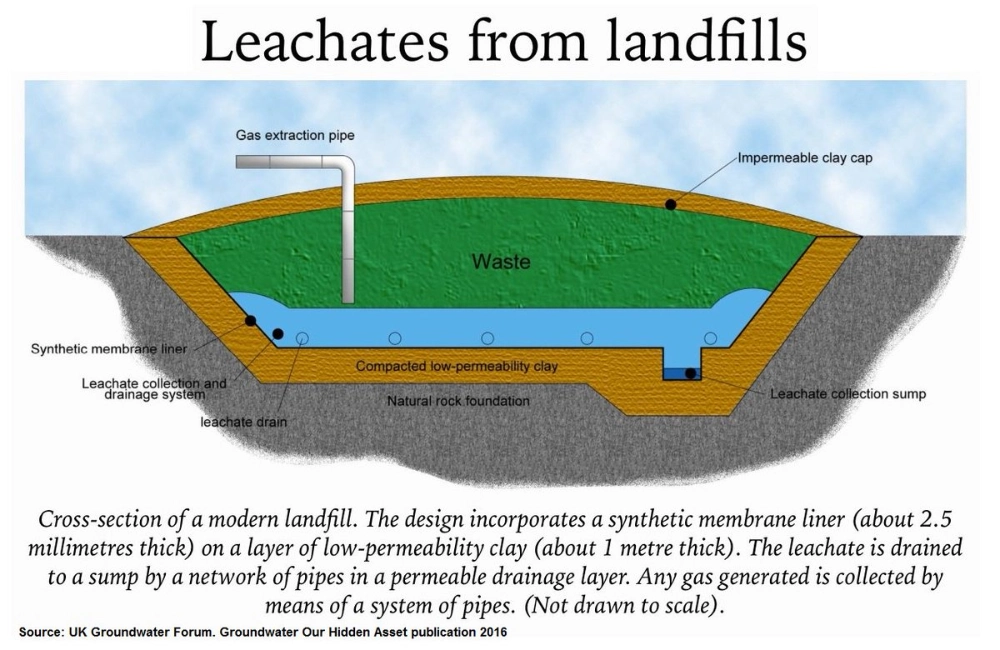
If you manage waste disposal sites or operate industrial wastewater systems, you know that the dark, foul-smelling liquid seeping from the bottom of a landfill is not just “dirty water.” It is a complex, toxic cocktail known as leachate. Understanding what chemicals are in landfill leachate is the absolute first step in designing a treatment process that actually works and complies with strict environmental discharge standards. Failure to identify these specific contaminants often leads to system failure, membrane fouling, and hefty regulatory fines.
In my years of experience dealing with difficult wastewater streams—specifically in the manufacturing of high-end treatment equipment—I’ve seen operators underestimate this fluid time and time again. Leachate composition changes based on the landfill’s age, the climate, and the type of waste buried. It contains everything from dissolved organic matter and ammonia-nitrogen to heavy metals and emerging xenobiotic compounds like PFAS.
This guide serves as a comprehensive resource for engineers and operators. We will break down the chemical profile of leachate, analyze why traditional biological methods often fail, and explore advanced solutions like Disc Tube Reverse Osmosis (DTRO) and Mechanical Vapor Compression (MVC) evaporation. If you are looking for robust solutions, trusted manufacturers like Memva have established themselves as authorities in tackling these exact high-salinity, high-COD challenges.
Breaking Down the Composition: What Chemicals Are in Landfill Leachate?
When we ask what chemicals are in landfill leachate, we aren’t looking for a single answer. The chemical makeup is highly variable. However, based on extensive data analysis and field samples, we can categorize the primary contaminants into four main groups. Understanding these groups is critical for selecting the right equipment.
1. Dissolved Organic Matter (The COD/BOD Load)
The most obvious characteristic of leachate is its high organic load. This is measured primarily through Chemical Oxygen Demand (COD) and Biological Oxygen Demand (BOD).
- Volatile Fatty Acids (VFAs): In young landfills (less than 5 years old), the leachate is in the “acetogenic” phase. It is acidic (low pH) and loaded with VFAs like acetic, propionic, and butyric acids. This results in incredibly high COD values, sometimes exceeding 50,000 mg/L.
- Humic and Fulvic Substances: As landfills age and enter the “methanogenic” phase, the easily biodegradable organics are consumed by bacteria. What remains are large, refractory molecules—humic and fulvic acids. These turn the leachate dark brown or black and are notoriously difficult to remove with standard biological aeration.
2. Inorganic Macro-Components
While organics get a lot of attention, the inorganic components are often the “silent killers” of treatment plants.
- Ammonia-Nitrogen (NH3-N): This is arguably the most problematic long-term pollutant. As proteinaceous waste degrades, ammonia levels spike. Unlike COD, which decreases with landfill age, ammonia concentration often remains high (over 3,000 mg/L) for decades. It is toxic to aquatic life and inhibits biological treatment processes.
- Chlorides and Sulfates: High salinity is a hallmark of leachate. Chloride concentrations can range so high that they render standard biological bugs inactive. This high Total Dissolved Solids (TDS) content is why membrane technologies are often required.
3. Heavy Metals
The presence of heavy metals dictates that leachate must be treated as hazardous waste. These come from batteries, electronics, paints, and industrial sludge buried in the site.
- Common Metals: Zinc, Copper, Lead, Chromium, and Nickel are frequently detected.
- Highly Toxic Metals: Mercury, Arsenic, and Cadmium are present in smaller traces but pose massive bio-accumulation risks. Even trace amounts can exceed strict discharge limits (often measured in parts per billion).
4. Xenobiotic Organic Compounds (XOCs)
These are man-made chemicals that do not occur naturally and resist degradation. In recent years, this category has become the focus of intense regulatory scrutiny.
- PFAS (Per- and Polyfluoroalkyl Substances): Often called “forever chemicals,” these originate from coated packaging, textiles, and industrial waste. Standard filtration does not catch them; they require high-pressure membrane separation or specialized adsorption.
- Pharmaceuticals and Personal Care Products (PPCPs): Residues of antibiotics and hormones are frequently found in municipal solid waste leachate.
Why Does the Chemistry Change? (Age and Climate)
You cannot treat all leachate the same way. A system designed for a new cell will fail if applied to a closed, 20-year-old landfill. The answer to what chemicals are in landfill leachate shifts over time.
The Acetogenic vs. Methanogenic Shift
In the early years (Acetogenic phase), the pH is low, and the BOD/COD ratio is high (often >0.5), meaning the waste is biodegradable. Biological treatment works reasonably well here.
However, as the site matures (Methanogenic phase), the pH rises to alkaline levels (7.5–8.5). The BOD/COD ratio drops below 0.1. At this stage, the organic matter is “refractory” (hard to break down). Biological bugs starve. This is where physical-chemical treatments, specifically high-pressure membranes like those found in landfill leachate treatment projects managed by specialists, become mandatory.
The Environmental and Operational Risks
Ignoring the complex chemistry leads to disaster. I have visited sites where operators tried to use simple activated sludge processes on high-ammonia leachate. The result? The bacteria died due to toxicity, and the effluent remained non-compliant.
Furthermore, without removing heavy metals and PFAS, discharging the water—even into a municipal sewer—can result in the contamination of downstream biosolids, making them unsafe for land application. The liability rests with the landfill operator.
Advanced Treatment Technologies: Solving the Chemical Puzzle
Once you identify what chemicals are in landfill leachate, the conversation must shift to removal. Because of the high conductivity, heavy metals, and refractory organics, simple filtration is rarely enough. We need robust, industrial-grade separation.
1. Disc Tube Reverse Osmosis (DTRO)
Standard Spiral Wound RO membranes are prone to clogging (fouling) when treating dirty water like leachate. The silt density index (SDI) is simply too high.
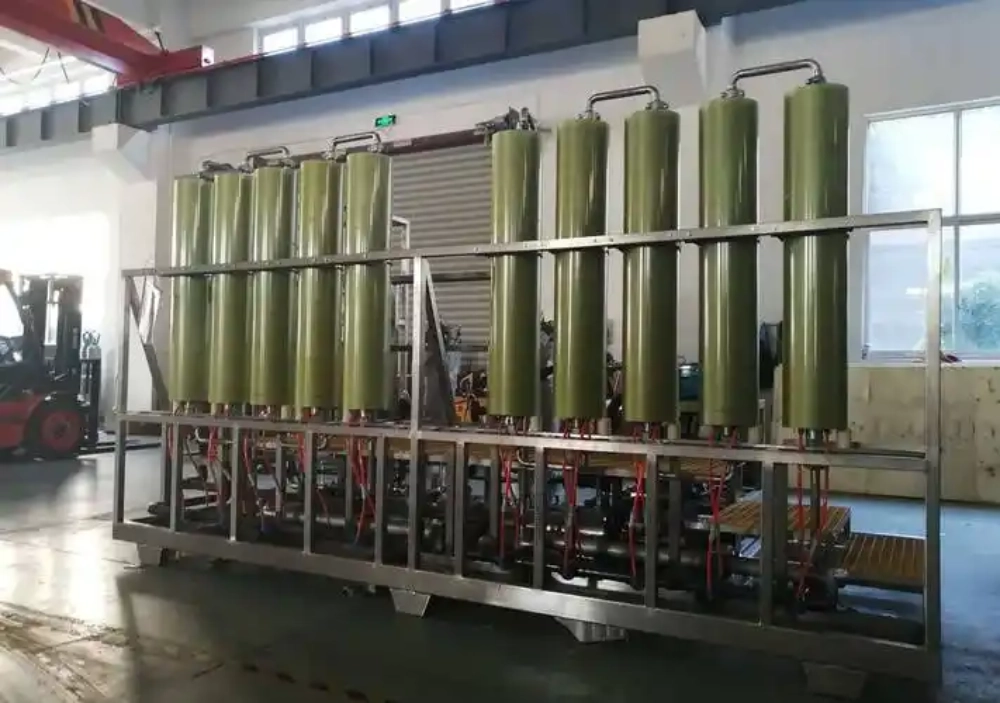
The Solution: DTRO technology. Unlike spiral membranes, DTRO uses an open-channel design. The feed water flows over membrane cushions held by discs. This creates turbulent flow, which naturally scrubs the membrane surface and prevents fouling.
According to data from reliable implementations, DTRO can operate effectively even with high turbidity and SDI. For operators dealing with the tough mix of chemicals described above, DTRO membrane systems are often the gold standard. They can concentrate the contaminants significantly, producing clean permeate that meets discharge standards.
2. Mechanical Vapor Compression (MVC) Evaporation
What do you do with the “concentrate” (the reject water) from the RO process? Or what if the salinity is too high for membranes? This is where evaporation comes in.
How it works: MVC evaporators use a compressor to increase the pressure and temperature of the vapor produced, which is then used to heat the feed water. It is extremely energy-efficient compared to steam boilers. It essentially boils the water off, leaving the salts, metals, and heavy organics behind as a sludge or solid.
For landfills aiming for Zero Liquid Discharge (ZLD), combining membranes with a Mechanical Vapor Compression (MVC) evaporator is the ultimate solution. This ensures that the complex chemical soup is reduced to a manageable solid waste, while the distilled water can be reused.
Comparison of Treatment Methodologies
To help you decide, here is a comparison of how different technologies handle the specific chemicals found in leachate.
| Pollutant / Chemical | Biological Treatment (SBR/MBR) | Chemical Precipitation | Memva DTRO Systems | MVC Evaporation |
|---|---|---|---|---|
| Biodegradable Organics (BOD) | Excellent (if not toxic) | Poor | Excellent (Physical separation) | Excellent |
| Refractory Organics (Hard COD) | Poor | Moderate (Coagulation) | High Efficiency (>95%) | High Efficiency (>99%) |
| Ammonia Nitrogen | Good (via Nitrification) | Poor | High Efficiency (Rejection) | Requires pH adjustment first |
| Heavy Metals | Low (Toxic to bugs) | Good (Sludge production) | Near Complete Removal | Complete Removal (in solids) |
| Salts / TDS | No Removal | Increases TDS | Excellent Removal | Excellent (Crystallization) |
Expert Insights: The “Memva” Standard of Authority
In the field of wastewater engineering, theoretical chemistry is one thing; operational reality is another. At Memva, we often encounter clients who have purchased generic equipment only to find it corroded by chlorides or clogged by calcium scaling within months.
The Reality of Equipment Selection:
When dealing with the aggressive chemicals in leachate, the material of construction is paramount. For example, high-chloride leachate requires special alloys (like Titanium or Duplex Stainless Steel) for evaporators to prevent stress corrosion cracking. This is why sourcing from a specialized MVC evaporator manufacturer is safer than buying off-the-shelf boilers.
We recently analyzed a case involving a mature landfill. Their previous system (a simple Ultrafiltration unit) was letting 40% of the refractory COD pass through. By upgrading to a two-stage DTRO system, the COD in the permeate dropped from 800 mg/L to under 60 mg/L, making it compliant for river discharge. This proves that physical barriers (membranes) are superior to biological guesswork when the chemical composition is complex.
Industry Data and Regulations
According to the U.S. Environmental Protection Agency (EPA), leachate generated from municipal solid waste landfills can contain organic hazardous air pollutants and metals that pose a threat to groundwater [1]. Furthermore, studies published in Science of the Total Environment indicate that mature landfill leachate frequently exhibits ammonia concentrations exceeding 2,000 mg/L, a level that inhibits most standard biological treatment flora [2].
These statistics reinforce the necessity for high-pressure membrane and thermal technologies.
Frequently Asked Questions (FAQ)
Can biological treatment alone handle landfill leachate?
Rarely. While biological treatment works for young leachate with high BOD, it fails to remove refractory organics (hard COD), heavy metals, and high salts found in mature leachate. A tertiary stage like DTRO or evaporation is usually required.
How do I remove ammonia nitrogen effectively?
Ammonia can be removed via biological nitrification-denitrification (if toxicity is low), air stripping (energy-intensive), or membrane separation (RO/DTRO). For high concentrations, DTRO is often the most stable method as it physically rejects the ammonia ions.
What is the difference between MVR and MVC evaporators?
They are similar technologies. MVR stands for Mechanical Vapor Recompression, and MVC stands for Mechanical Vapor Compression. Both utilize a compressor to recycle latent heat. Memva specializes in these systems to maximize energy efficiency for high-salinity wastewater.
Does leachate composition depend on the season?
Yes. In rainy seasons, leachate volume increases, and pollutants may be diluted (lower concentration, higher hydraulic load). In dry seasons, the volume drops, but the concentration of salts and chemicals spikes, requiring equipment that can handle fluctuating loads.
Final Thoughts on Leachate Management
Determining what chemicals are in landfill leachate is complex because the target is always moving. From the heavy metals lurking in the sludge to the ammonia spikes that kill biological systems, the challenges are immense. However, with the evolution of technologies like DTRO and MVC Evaporators, achieving compliance is no longer a guessing game.
It requires a shift from “treating water” to “managing chemicals.” By partnering with experienced manufacturers like Memva, who understand the intricate balance of pressure, flow, and chemical resistance, you can turn a hazardous liability into a managed resource. Whether you need a Mechanical Vapor Compression MVC Evaporator for ZLD or a robust membrane system, prioritizing technology over quick fixes is the only way to ensure long-term success.
References:
[1] U.S. Environmental Protection Agency. “Effluent Guidelines for Landfills.”
[2] Renou, S., et al. “Landfill leachate treatment: Review and opportunity.” Journal of Hazardous Materials / ScienceDirect.