

Lithium battery recycling wastewater is one of the harder streams I deal with, because it mixes high salts, residual organics, and fine solids in the same tank. If you are planning a treatment train, the short answer is this: lithium battery recycling wastewater treatment and ZLD usually combine staged pretreatment, membrane concentration, and evaporation or crystallization, with the brine managed as a solid or reusable byproduct. You cannot treat this stream with a single unit. The design lives or dies on how well you separate solids first, how you handle fluoride and sulfate, and how you control scaling in the evaporator.
I have commissioned systems where the same nominal flow behaved completely differently once the feed changed from one battery chemistry to another. That experience shapes everything below.
What Makes Lithium Battery Recycling Wastewater Different
Most people assume this stream looks like plating rinse water. It does not. Battery recycling involves dismantling, shredding, leaching, and hydrometallurgical steps. Each step contributes something different to the drain.
The typical profile I see includes:
- High total dissolved solids — often in the 20,000 to 80,000 mg/L range, sometimes higher depending on leachate carryover.
- Sulfate and sodium — dominant ions from acid leaching and neutralization.
- Fluoride — from electrolyte residues and binder breakdown. This one drives your materials of construction.
- Heavy metals — nickel, cobalt, manganese, copper, and traces of lithium. Even at low concentration these matter for discharge limits.
- Organics — carbonate solvents, binders, and surfactants that raise COD and foul membranes.
- Fine suspended solids — graphite and carbon black that pass through coarse filtration and destroy membrane performance.
That combination is why a simple RO skid will not work here. High salinity pushes osmotic pressure up, and the fine carbon fraction plugs everything downstream.
Why ZLD Is Often the Only Realistic Option
Discharge limits for sulfate, fluoride, and heavy metals are tightening in most industrial regions. Even where a sewer discharge is technically allowed, the salt load alone can exceed what a municipal plant will accept. That leaves two paths: deep treatment with partial reuse, or full zero liquid discharge.
ZLD for this stream means you recover water for reuse and leave behind a dry or semi-dry solid. In practice, that solid is a mixed salt cake. It is not a high-purity lithium product. Anyone promising you saleable lithium carbonate out of the wastewater train is describing a different process, not the effluent treatment.
What ZLD actually delivers is compliance certainty and water recovery. Typical recovery in a well-designed train lands between 85 and 95 percent, but that number swings hard based on feed TDS and the scaling threshold you can tolerate.
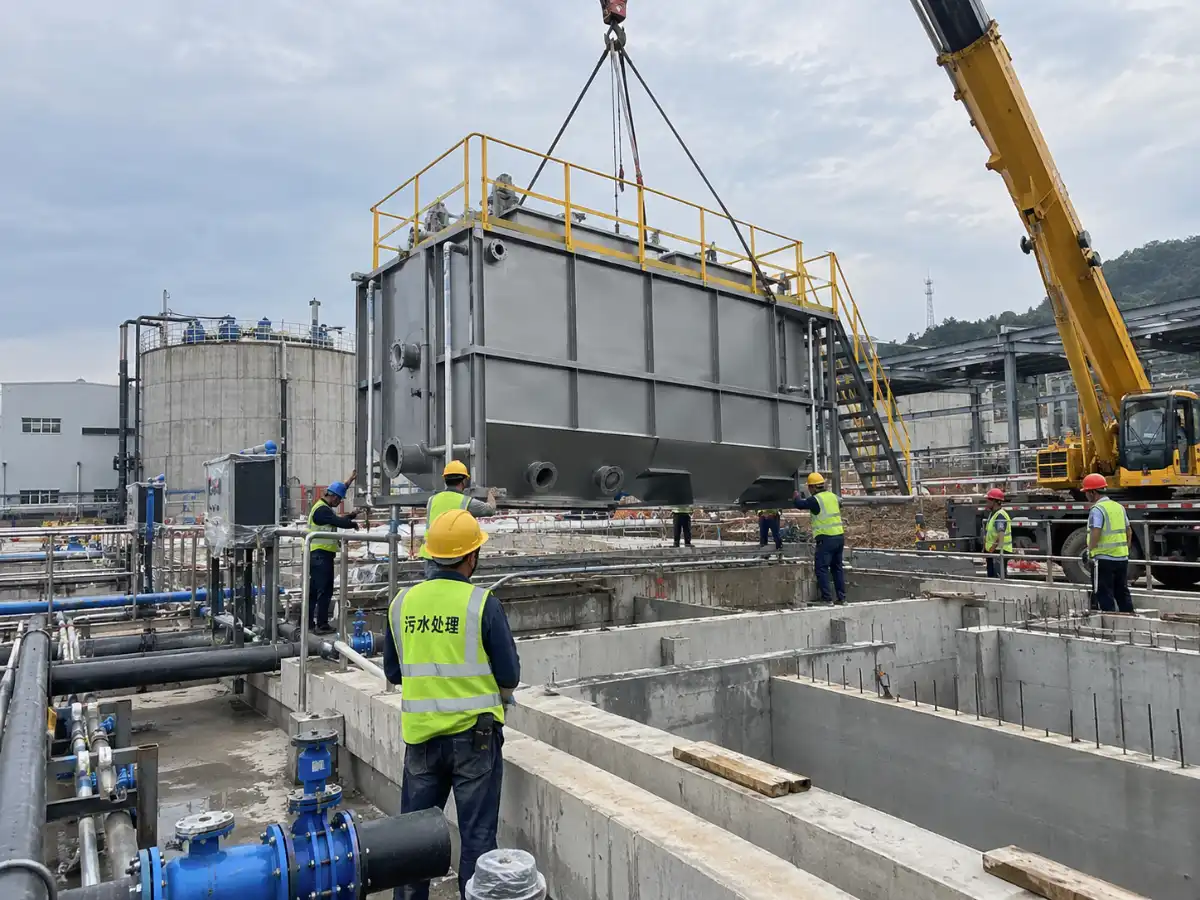
The Treatment Train, Stage by Stage
Stage 1: Solids Removal and Equalization
Everything starts with getting the carbon and graphite out. I use a combination of gravity settling, coagulation, and a screw press or filter press for the sludge. If the solids are fine and slow to settle, dissolved air flotation or a lamella clarifier earns its space.
Equalization matters more than people expect. Battery recycling plants often run batch leaching, so the drain flow swings by a factor of three or four within a shift. Without a properly sized equalization tank, every downstream unit sees a moving target. That is how you get membrane fouling and evaporator trips.
For sludge handling, a screw press dewatering system works well on the carbon-rich sludge because it tolerates variable feed and does not need constant operator attention.
Stage 2: Chemical Precipitation and Softening
Once solids are out, you deal with the dissolved trouble: heavy metals, fluoride, and hardness.
Typical steps:
- pH adjustment and metal precipitation — hydroxide precipitation removes nickel, cobalt, copper, and manganese. Sulfide polishing is an option if you need very low residual metals.
- Fluoride removal — calcium precipitation followed by alum or a specialized adsorbent, depending on the target.
- Softening — this is the step that protects your evaporator. If you leave calcium and magnesium in the feed, you will scale the heat transfer surface within weeks.
I cannot stress the softening step enough. On one project, the client skipped it to save capital. The evaporator lost roughly a third of its capacity in under three months, and the cleaning downtime cost more than the softening skid would have.
Stage 3: Membrane Concentration
This is where you take the volume down before the thermal stage. Two technologies dominate.
Industrial RO handles the lower-salinity fraction. It is cheap per cubic meter, but it stalls once osmotic pressure climbs. For high-TDS feed, you need something tougher.
DTRO (disc tube reverse osmosis) is the workhorse for this stream. The open-channel design tolerates suspended solids and fouling far better than spiral-wound elements, and it can run at high pressure to push concentration further. A well-applied DTRO membrane system can concentrate the brine to a fraction of the original volume, which directly shrinks the evaporator you have to buy.
If you need even higher pressure, high-pressure RO membranes extend the concentration ceiling, though pretreatment quality becomes non-negotiable at that point.
Stage 4: Evaporation and Crystallization
The concentrated brine goes to thermal treatment. This is the energy-intensive part, so the design choice here drives your operating cost.
Options, from simplest to most efficient:
- Single-effect evaporator — simple, robust, high steam demand. Usually only justified for small flows.
- Multi-effect evaporator — reuses vapor across two or three effects, cutting steam use substantially. A multi-effect evaporator is a common pick when you have cheap steam available.
- MVC (mechanical vapor compression) — compresses the vapor and reuses its latent heat. Electricity-driven, so it makes sense where power is cheaper than steam. The MVC evaporator is my default recommendation for medium-to-large battery recycling flows.
- MVR — a related approach using mechanical recompression, often favored for continuous high-capacity duty. You can read more on MVR technology if you want the thermodynamic detail.
The choice between MVC, MVR, and multi-effect is really an energy-price question. I size it against your local cost of steam versus electricity, not against a generic rule of thumb.
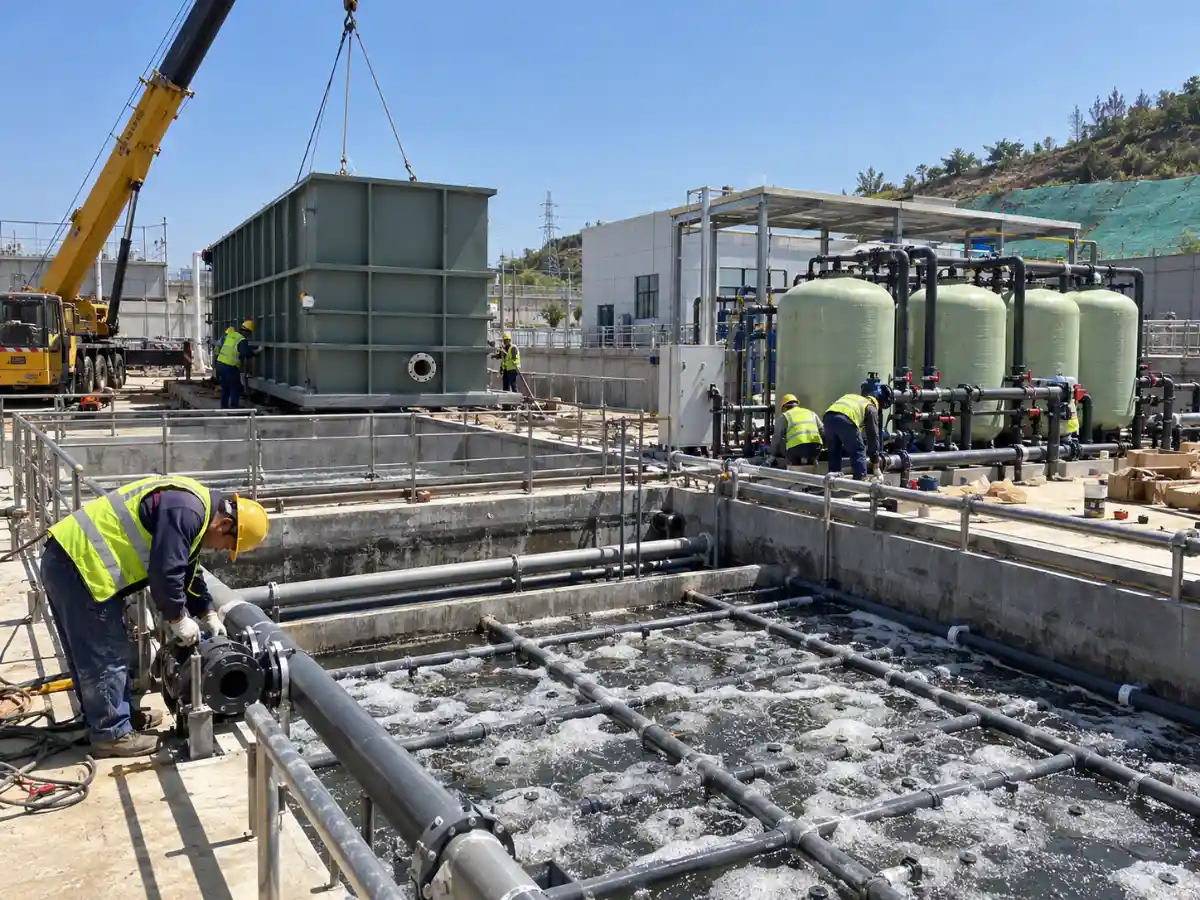
Comparison: Which Concentration Path Fits Your Plant
| Technology | Best Fit | Energy Source | Relative Operating Cost | Main Risk |
|---|---|---|---|---|
| Industrial RO | Low-TDS fraction, polishing | Electricity | Low | Fouling, osmotic limit |
| DTRO | High-TDS, fouling-prone feed | Electricity | Low–Medium | Membrane replacement cost |
| Single-effect evaporator | Small flows | Steam | High | Steam cost |
| Multi-effect evaporator | Medium flows, cheap steam | Steam | Medium | Scaling, corrosion |
| MVC evaporator | Medium–large flows, cheap power | Electricity | Medium | Compressor maintenance |
| MVR | Continuous high capacity | Electricity | Medium–Low | Mechanical complexity |
These relative rankings hold across most projects I have seen, but the actual numbers are project-dependent. Feed chemistry, utility prices, and uptime targets move the answer.
Materials of Construction: Where Projects Get Expensive
Fluoride and chloride in the same stream are a corrosion nightmare. I have watched 316L stainless steel fail in months on a high-fluoride feed.
What I specify in practice:
- Duplex or super duplex stainless for moderate chloride service.
- Titanium for heat exchangers handling chloride-rich brine, provided fluoride is controlled.
- Graphite or specialized alloys where fluoride is high and temperatures are elevated.
- Rubber-lined or FRP piping in aggressive sections.
This is not a place to save money. The materials cost is a small fraction of the total project, and a corrosion failure takes the whole plant down.
Energy and Lifecycle Cost Reality
Thermal treatment dominates operating cost. For a MVC or MVR system, electricity consumption typically falls in the range of 20 to 40 kWh per cubic meter of evaporated water, depending on the boiling point elevation and compressor efficiency. Multi-effect systems trade that electricity for steam, often in the range of 0.3 to 0.5 tonnes of steam per tonne of water evaporated for a three-effect arrangement.
Those are indicative ranges. Your actual numbers depend on feed concentration, the boiling point rise from dissolved salts, and how much heat recovery you build in.
Where engineers get surprised is the lifecycle cost of membranes and compressor maintenance. DTRO membranes need periodic replacement. Compressors need overhaul intervals. I build these into the cost model from day one, because a system that looks cheap on capital can be expensive over ten years.
If you want a deeper look at how these cost drivers break down, the same logic applies across evaporator types — utility prices and feed chemistry dominate everything else.
Operating Experience: What Actually Goes Wrong
After enough commissioning cycles, the failure patterns repeat.
Scaling in the evaporator
Almost always traced to incomplete softening or a pH excursion upstream. The fix is upstream, not in the evaporator.
Membrane fouling
Usually fine carbon or organics that slipped past pretreatment. Better coagulation and a polishing filter solve most of it.
Foaming in the evaporator
Organics and surfactants from binders cause this. Antifoam helps, but reducing the organic load upstream is the real answer.
Compressor vibration and trips
Often from carryover droplets or from operating outside the design boiling point range. Mist eliminators and proper control logic prevent it.
None of these are exotic. They are all predictable, which is why a conservative design with margin beats an optimized-to-the-edge design every time.
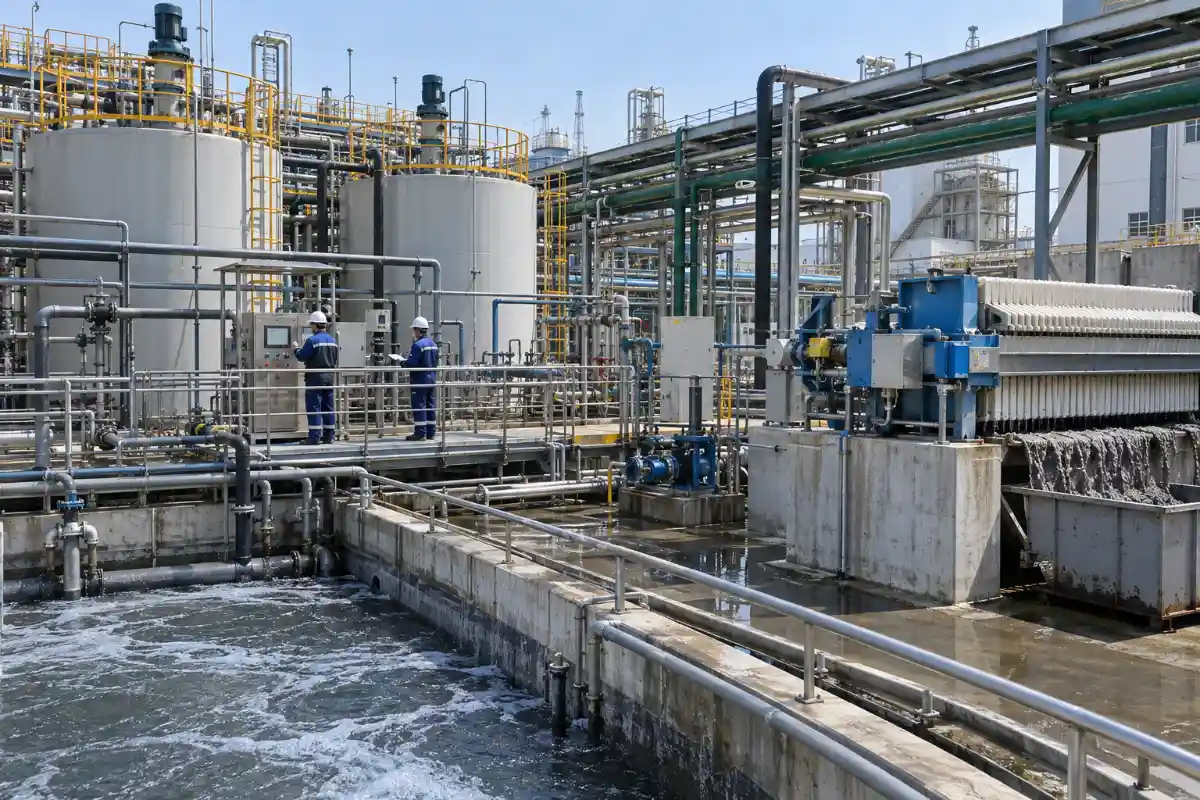
How I Approach System Selection
When someone asks me to size a train, I work through this sequence:
- Characterize the feed properly. Not one sample. A campaign of samples across battery chemistries and process cycles.
- Define the discharge or reuse target. This sets how far you must concentrate.
- Set the pretreatment to protect the most expensive equipment. That is usually the evaporator and the membranes.
- Choose the concentration technology against local utility prices. Steam versus power decides MVC, MVR, or multi-effect.
- Build in margin. Feed will change. Design for it.
If you are at the early planning stage and want a sanity check on your train, it is worth talking through the feed profile before you commit capital. You can reach the engineering team through the contact page and we can walk through the numbers together.
Frequently Asked Questions
Can lithium battery recycling wastewater go to a municipal sewer?
Rarely without deep treatment. The salt load, fluoride, and heavy metals usually exceed what a municipal plant will accept. Even where discharge is allowed, you will likely need metals removal, fluoride reduction, and salinity control first.
What is the biggest design mistake in these systems?
Under-sizing pretreatment. When solids, hardness, or organics slip through, they foul membranes and scale the evaporator. The thermal stage gets blamed, but the root cause is upstream.
Should I choose MVC, MVR, or a multi-effect evaporator?
It depends on your utility prices and flow. MVC and MVR run on electricity and suit medium-to-large flows where power is competitive. Multi-effect systems suit cases where steam is cheap. I size it against your actual costs, not a generic rule.
How much water can I recover?
Typical recovery in a well-designed ZLD train is in the 85 to 95 percent range, but it depends on feed TDS and the concentration limit you can tolerate before scaling. Higher salinity usually means lower recovery.
What drives the operating cost the most?
Thermal energy. For MVC and MVR, electricity consumption is typically 20 to 40 kWh per cubic meter of evaporated water. For multi-effect systems, steam demand is the dominant factor. Membrane and compressor maintenance add to lifecycle cost but are secondary.
How often do membranes need replacement?
It varies with feed quality and cleaning frequency. With good pretreatment, DTRO membranes can last several years. With poor pretreatment, that drops sharply. This is why pretreatment quality directly affects your long-term budget.
Can I recover lithium or other metals from the wastewater?
The effluent treatment train is designed for compliance and water recovery, not metal refining. Recovering saleable metals is a separate hydrometallurgical process. What the wastewater train produces is a mixed salt cake, not a high-purity product.
What materials should I specify for high-fluoride brine?
Avoid standard 316L stainless. Duplex or super duplex stainless works for moderate chloride, titanium for chloride-rich heat exchangers where fluoride is controlled, and graphite or specialized alloys for high-fluoride, high-temperature service.
The Bottom Line
Lithium battery recycling wastewater treatment and ZLD is a staged problem, not a single-equipment purchase. Get the solids and hardness out first, concentrate with membranes, then evaporate and crystallize. The technology choices matter, but the discipline of protecting each stage from the one before it matters more. Design with margin, expect the feed to change, and build your cost model around utilities and maintenance rather than capital alone.