

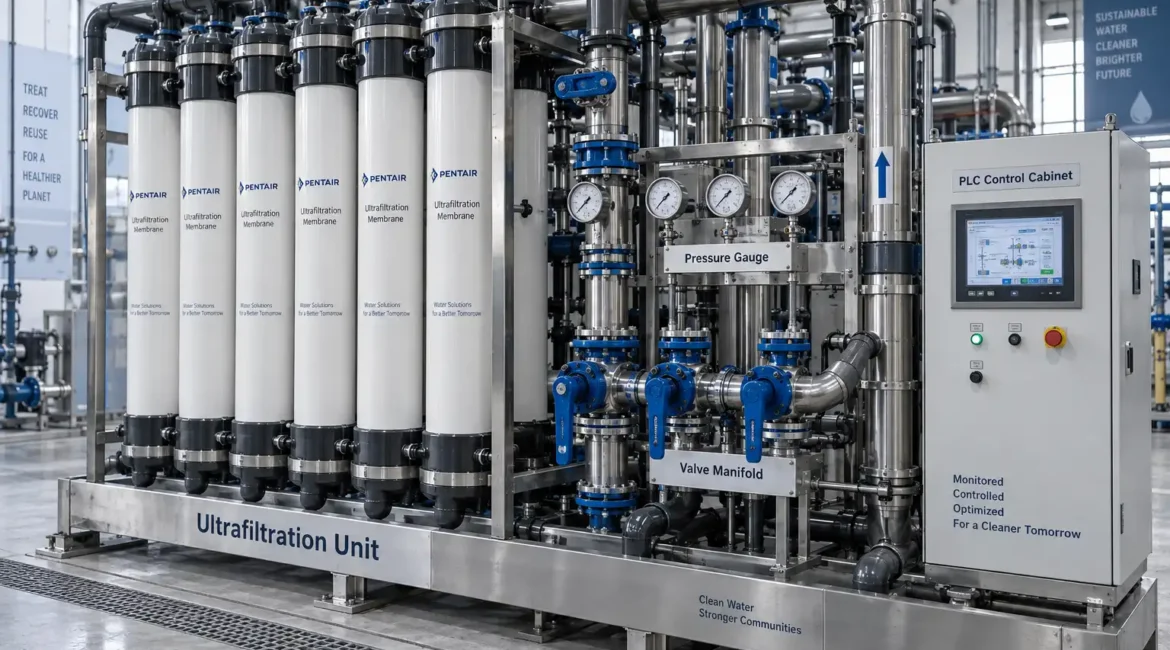
Pre-measured & pre-packaged industrial wastewater treatment can make a treatment plant easier to install, commission, and operate, but only when the package is built around the actual wastewater. Factory-mounted pumps, tanks, dosing equipment, instruments, piping, and controls can remove a great deal of field work. Pre-measured chemicals can also reduce preparation errors. Neither one corrects a poor process design. Before approving a packaged wastewater system, I’d want to see the feed range, peak flow, treatment target, chemical-control method, residual-stream balance, maintenance access, and the conditions behind the performance guarantee. For difficult or high-salinity wastewater, the final package may combine pretreatment, chemical dosing, membrane concentration, and evaporation rather than asking one treatment stage to do everything.
What “Pre-Measured” and “Pre-Packaged” Mean in Wastewater Treatment
These two terms describe different parts of a treatment project, and separating them at the beginning makes equipment specifications much clearer.
A pre-packaged industrial wastewater treatment system is usually an integrated mechanical and electrical assembly. Pumps, valves, tanks, instruments, control panels, filtration equipment, chemical dosing equipment, membrane modules, or thermal equipment may be installed on one or more structural skids before shipment.
The amount of factory integration varies. One package may arrive fully piped and wired with PLC logic already tested. Another may contain only the main process equipment and leave interconnecting piping, bulk chemical storage, equalization, sludge handling, utilities, cable runs, ventilation, and final discharge monitoring to the site contractor.
That difference matters more than the word “package” itself. A compact skid can still leave a large amount of site work if its battery limits are vague.
Pre-measured chemical treatment deals with a different problem. Chemicals can be supplied or prepared in controlled quantities so the operator does not repeatedly weigh or measure the same formulation by hand. That can reduce preparation variation and make operating procedures easier to follow.
The prepared quantity should never be mistaken for a universal wastewater dose. Chemical demand changes with influent concentration, alkalinity, pH, contaminant loading, temperature, mixing, reaction time, and competing reactions.
In practical terms, packaging standardizes equipment integration. Pre-measuring standardizes chemical preparation. The treatment process still has to respond to the wastewater.
Send Memva the flow rate, pH, TDS or conductivity, COD/TOC, suspended solids, major ions, current treatment process, and required final water or concentrate quality. A useful equipment proposal should start with the feed, not a catalog model number.
Send Your Water AnalysisStart With the Wastewater, Not the Skid Capacity
Daily flow is useful, but it is not enough to size an industrial wastewater treatment system.
A plant producing 40 m³/day continuously creates a different hydraulic problem from a plant that releases the same 40 m³ in four concentrated batches. Both have the same daily volume. Their equalization requirements, transfer-pump duties, reaction times, membrane loading, and downstream peak capacity can be very different.
The first design document should therefore describe the wastewater as an operating range rather than a single average.
Flow data that changes the equipment size
- Average daily flow
- Maximum daily flow
- Normal hourly flow
- Maximum sustained hourly flow
- Instantaneous peak flow
- Batch discharge volume
- Number of batches per operating period
- Operating hours
- Cleaning or wash-down discharge events
- Expected future production increase
Equalization is often where the difference between nameplate capacity and real operating stability begins. A correctly sized equalization tank absorbs short-term hydraulic and concentration swings so downstream dosing, clarification, membranes, or evaporation equipment sees a more manageable feed.
Equalization should not be treated as a generic holding tank. Mixing, solids deposition, oil separation, odor, foaming, temperature, pH, overflow protection, and pump control all affect how the tank performs.
Water analysis needed before serious process selection
| Data Group | Useful Parameters | Why It Matters |
|---|---|---|
| Basic chemistry | pH, temperature, conductivity, TDS, alkalinity | Chemical demand, corrosion, scaling, osmotic pressure, materials |
| Suspended material | TSS, turbidity, particle behavior, settleability | Clarification, filtration, membrane fouling, sludge volume |
| Organic loading | COD, TOC, oil, surfactants, relevant solvents | Fouling, foaming, biological loading, condensate quality |
| Major ions | Calcium, magnesium, chloride, sulfate, silica, bicarbonate | Scaling, precipitation, membrane recovery, corrosion |
| Metals | Relevant dissolved and total metals | Precipitation chemistry, sludge production, polishing requirements |
| Final requirement | Reuse quality, discharge requirement, concentrate target | Determines the final treatment barrier and monitoring plan |
A single grab sample can be misleading when wastewater changes by product recipe, production batch, cleaning sequence, raw material, or shift. Representative samples taken under different operating conditions give the equipment supplier a much better design envelope.
This is especially important for membrane concentration and evaporation. Two streams with the same TDS can behave very differently if one contains mainly sodium chloride while the other contains high calcium, sulfate, silica, organics, or multivalent metals.
Use a Mass Balance Before Choosing Equipment
A process proposal becomes much easier to judge once every major water and residual stream appears in a mass balance.
For a membrane stage:
Feed flow = permeate flow + concentrate flow
That equation is simple. The difficult part is deciding how far the concentrate can safely be pushed before osmotic pressure, scaling, fouling, membrane pressure limits, or permeate-quality requirements become controlling.
For an evaporation stage:
Feed mass = condensate + liquid concentrate + separated solids + other accounted losses
A proposal that shows only feed capacity and recovered-water percentage leaves too many questions unanswered. Buyers should also be able to see the expected concentrate rate, solids load, cleaning waste, and where those streams go next.
This is also where exaggerated recovery claims become easier to spot. Hydraulic recovery, pollutant removal, salt rejection, water reuse, and final waste reduction describe different things.
For example, a membrane can recover water while deliberately retaining salts in a smaller concentrate stream. The pollutant mass has not disappeared. It has moved into a stream that still needs treatment, reuse, evaporation, or disposal.
A good process design keeps that residual stream visible from the beginning.
Pre-Measured Chemical Preparation Helps; Fixed Chemical Dosing Does Not
Pre-measured chemical preparation is useful when it removes repetitive weighing, dilution, or measuring steps from routine operation. It can improve consistency between operators and make inventory easier to control.
The actual process dose should remain adjustable.
Chemical precipitation is a good example. The amount of reagent required can change with pH, alkalinity, pollutant concentration, competing reactions, mixing conditions, and the point of chemical addition. EPA technical guidance on chemical precipitation notes that these interactions make theoretical dosage calculation difficult and recommends establishing accurate dosage by jar testing and confirming it under field conditions.[3]
That principle applies well beyond precipitation.
pH adjustment
Acid and alkali dosing should account for buffering capacity rather than pH alone. Wastewater at pH 4 with high buffering capacity may consume much more alkali than another wastewater with the same measured pH.
Coagulation and flocculation
Dose depends on particle characteristics, contaminant loading, pH, mixing intensity, reaction time, and the selected coagulant or polymer. Excess chemical can be just as damaging as an inadequate dose.
Membrane antiscalant
Antiscalant selection and dosage should follow ionic composition, concentration factor, pH, temperature, and membrane operating conditions. A fixed dose copied from another system is a weak design basis.
Cleaning chemicals
CIP chemistry should match the foulant and the limits of the membrane, seals, piping, heat-transfer surface, or other equipment being cleaned.
A well-built dosing package therefore combines standardized preparation with controlled adjustment. Useful features include calibration columns or another means of checking actual pump delivery, low-level alarms, compatible wetted materials, appropriate pressure protection, containment, process interlocks, and accessible sample points.
What Belongs Inside a Complete Packaged Wastewater System?
The word “complete” should never be accepted without a scope boundary.
A packaged industrial wastewater system may contain process equipment, but the actual project also needs civil work, utilities, residual handling, drains, cable routes, storage, ventilation, access, and connections to upstream and downstream systems.
The safest procurement approach is to define the battery limits connection by connection.
Mechanical scope
- Feed, transfer, circulation, chemical, cleaning, and discharge pumps
- Tanks, mixers, filters, separators, membrane modules, or evaporator equipment
- Process piping and valves
- Drains, vents, overflows, flushing connections, and sample valves
- Structural skid frames and supports
- Maintenance lifting provisions where required
Instrumentation scope
The package should measure the variables operators need for an actual decision.
For a chemical-treatment skid, that may include flow, tank level, pH, pressure, dosing status, and selected water-quality measurements.
For a membrane system, useful measurements normally include enough pressure, flow, conductivity, and temperature data to understand feed conditions, permeate production, concentrate behavior, and pressure loss.
For an evaporator, the operator may need temperature, pressure or vacuum, flow, tank level, compressor status, condensate quality, and concentration-related measurements.
Instrumentation should make abnormal conditions easier to diagnose. Installing sensors that are never trended or used in operating decisions adds little value.
Automation scope
A PLC panel does not automatically mean the process is well automated. The supplier should define how the equipment starts, stops, flushes, responds to low tank level, handles instrument failure, manages high pressure or temperature, and recovers after an interruption.
The control narrative should be reviewed together with the P&ID. That is usually where missing valves, missing sensors, and unclear responsibility become visible.
Packaged Equipment Should Still Be Maintainable
Compact equipment saves installation space, but extremely tight layouts can create expensive maintenance problems.
Before approving a general arrangement drawing, check whether a technician can remove pump seals, filter housings, membrane modules, instruments, valve actuators, heat-exchanger covers, and other service items without dismantling unrelated equipment.
Also check the actual removal path. A component may have enough clearance on paper but still be impossible to lift out because piping, cable tray, a wall, or another skid blocks the route.
Electrical panels need working access. Chemical equipment needs safe refill and service access. Sample points should be reachable without standing over rotating machinery or hot surfaces.
Maintenance space is part of the equipment footprint even when it is not occupied during normal operation.
When DTRO Belongs in a Packaged Wastewater Treatment Train
Disc tube reverse osmosis is generally evaluated for wastewater that is too saline, variable, or fouling-prone for a conventional spiral-wound RO layout, or where membrane pre-concentration could reduce the hydraulic load entering a downstream thermal stage.
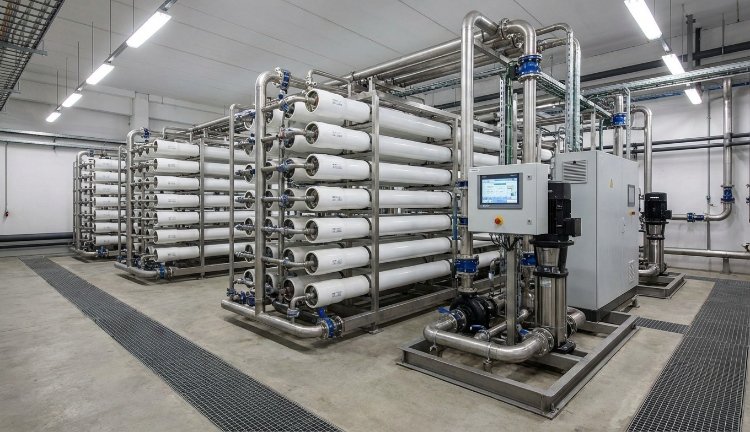
DTRO uses an open disc-tube flow channel rather than the tighter feed-spacer geometry commonly found in spiral-wound RO. That geometry can be useful when suspended material, organics, scaling potential, or feed variability makes membrane operation more difficult.
The open flow path does not remove the need for pretreatment. Filtration, pH conditioning, softening, antiscalant, oxidation control, biological treatment, or other steps may still be necessary.
Memva’s current DTRO membrane system engineering page treats recovery as a project-specific design value rather than a universal percentage. The design basis includes osmotic pressure, ionic composition, scaling potential, membrane limits, staging, permeate requirement, and the downstream concentrate route.
Memva does not set DTRO recovery from TDS alone. Feed ionic composition, osmotic pressure, scaling potential, membrane operating limits, staging, required permeate quality, and final concentrate handling are reviewed together. High-pressure configurations up to 120 bar can be evaluated where the selected modules, pumps, piping, valves, and other pressure-rated components are suitable for the duty.
That last point is important. “Maximum pressure” and “maximum TDS” are equipment-related parameters, not a promise that every feed at that condition can achieve the same recovery or permeate quality.
When DTRO is being considered ahead of evaporation, the useful question is how much water the membrane stage can recover economically without creating a concentrate that is unstable, heavily scaling, or impractical for the next stage.
When MVC/MVR Evaporation Becomes the Better Concentration Step
Membrane recovery eventually reaches technical or economic limits. High osmotic pressure, precipitation risk, viscosity, dissolved salts, or the final concentration target can make further pressure-driven separation impractical.
Thermal concentration is then evaluated.
Mechanical vapor compression or mechanical vapor recompression recovers energy from generated vapor by compressing that vapor so it can be reused as a heating medium. The process can reduce the need for continuous fresh heating steam during stable operation, although compressor power and auxiliary loads remain part of the operating cost.
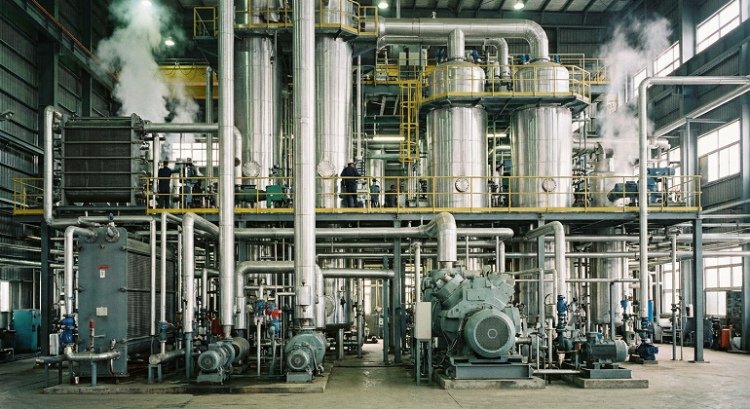
The most useful evaporator proposal is built around an energy and mass balance. The buyer should be able to see the design evaporation rate, expected feed concentration, condensate production, concentrate flow, operating temperature and pressure, major utility requirements, and assumptions used to calculate compressor duty.
Boiling-point elevation deserves particular attention. Dissolved material changes the relationship between temperature and vapor pressure, which affects the temperature lift required from the compressor and the heat-transfer driving force available to the system.
Feed viscosity and scaling behavior also matter as concentration rises. A wastewater that flows easily at the evaporator inlet may behave very differently near the final concentration target.
The Memva MVC/MVR evaporator page outlines the main engineering variables used when configuring this type of system. For an actual project, electricity consumption and thermal performance should be calculated from the specific feed and operating duty rather than treated as a universal catalog number.
For MVC/MVR selection, Memva reviews evaporation duty, feed concentration, boiling-point elevation, corrosion risk, scaling and fouling behavior, required condensate quality, compressor operating conditions, cleaning strategy, and the final concentrate target. Specific power consumption should be stated against the defined design conditions rather than quoted as a stand-alone number.
Where Multi-Effect Evaporation Fits
Multi-effect evaporation uses vapor generated in one effect as a heating source for another effect operating at a lower pressure and boiling temperature.
The approach improves steam utilization, but every added effect also brings more heat-transfer surface, vessels, vapor piping, control loops, vacuum requirements, and cleaning responsibility.
The correct number of effects therefore comes from the heat balance and economics of the project. More effects are not automatically better.
The current Memva multi-effect evaporator overview compares multi-effect, single-effect, and MVC/MVR arrangements in terms of their energy principle, utility requirement, equipment complexity, and application conditions.
For this comparison, I’m prioritizing the variables that actually change a purchasing decision:
| Decision Point | DTRO | MVC/MVR | Multi-Effect Evaporation |
|---|---|---|---|
| Separation principle | Pressure-driven membrane separation | Thermal evaporation with mechanical vapor energy recovery | Thermal evaporation with vapor reused between effects |
| Main design limit | Osmotic pressure, scaling, fouling, membrane limits | BPE, compressor duty, corrosion, fouling, final concentration | Available temperature driving force, BPE, fouling, steam balance |
| Main utility | Electricity for high-pressure pumping | Electricity for vapor compression plus startup/auxiliary heat as required | Thermal energy plus pumps and vacuum auxiliaries |
| Typical role | Water recovery and pre-concentration where membrane conditions permit | Further concentration of wastewater or brine | Continuous thermal concentration where staged heat reuse is practical |
| Calculation I would request | Osmotic pressure, scaling review, staging, recovery, permeate quality | Mass/energy balance, compressor duty, BPE, heat-transfer basis | Effect-by-effect mass/energy balance and temperature profile |
A combined membrane-and-thermal process can make sense when the membrane system removes water at a lower marginal cost before the thermal stage. The point where that handoff should occur is project-specific.
The answer depends on osmotic pressure, scaling risk, required water quality, final concentration, and the cost of handling the remaining brine. Use the quotation checklist below to assemble the data needed for a useful process comparison.
View the Engineering Input ChecklistPrice the Residual Stream Before You Price the Equipment
Equipment price is only one part of the cost of industrial wastewater treatment.
A lower-priced skid can become an expensive project if it increases chemical use, produces difficult sludge, requires frequent cleaning, sends too much concentrate to thermal treatment, or leaves major installation work outside the quoted scope.
A realistic cost comparison should begin with the entire treatment route.
| Cost Group | Include | Frequently Missed |
|---|---|---|
| Equipment | Process skids, tanks, pumps, membranes, evaporators, controls | CIP equipment, standby pumps, sludge equipment |
| Installation | Foundations, rigging, piping, cabling, drains, platforms | Interconnections between separately supplied modules |
| Utilities | Electricity, thermal energy, cooling, compressed air, water | Utility upgrades outside the skid area |
| Chemicals | Acid, alkali, coagulant, polymer, antiscalant, cleaning chemicals | Solution preparation and cleaning wastewater |
| Maintenance | Filters, seals, instruments, pump parts, membranes | Critical spare-parts inventory and labor |
| Residuals | Sludge, concentrate, spent media, cleaning solutions | Testing, storage, hauling, dewatering, or further concentration |
Do not confuse connected load with energy consumption
Electrical connected load tells the buyer what the installation must be capable of supplying. It does not necessarily describe normal operating energy consumption.
The same distinction applies to pumps, compressors, heaters, and evaporators. A useful proposal should state the duty point and assumptions used to estimate consumption.
A defensible payback calculation
Generic claims about one-year or two-year payback are not useful without site-specific cost inputs.
Annual current cost = water + wastewater handling + chemicals + labor + energy + maintenance + residual handling
Annual proposed cost = new utilities + chemicals + labor + maintenance + consumables + residual handling + monitoring
Annual operating benefit = current annual cost − proposed annual cost
Simple payback = net project investment ÷ annual operating benefit
Recovered water should be assigned a financial benefit only when it replaces water the facility would otherwise purchase, produce, heat, cool, or condition.
Reduced wastewater volume should be assigned a benefit only when treatment, disposal, storage, hauling, or hydraulic capacity costs are actually avoided.
The concentrate does not disappear from the economics simply because most of the water has been recovered.
What I Want to See in a Serious Equipment Quotation
A technically useful quotation should make the supplier’s assumptions visible.
If two vendors quote the same nominal capacity but use different feed compositions, operating hours, recovery assumptions, or treatment targets, the prices are not directly comparable.
Design basis
The proposal should identify the flow, wastewater analysis, temperature range, operating schedule, treatment objective, utility conditions, and any critical assumptions used to size the system.
Process description
A short process description should explain what each major stage does and how the stages interact. It should also identify which residual streams leave the process.
Mass balance
Feed, recovered water, concentrate, sludge, chemical additions, and other meaningful streams should reconcile to the stated design basis.
Equipment list
Major tanks, pumps, filters, membrane assemblies, heat exchangers, evaporator vessels, compressors, instruments, valves, and control hardware should be identifiable.
Materials of construction
“Stainless steel” is not a complete material specification. Chloride concentration, pH, temperature, oxidation potential, cleaning chemistry, and other corrosive conditions can influence the appropriate alloy, polymer, coating, or lining.
Utilities
Request normal design consumption as well as maximum connected requirements where applicable. For variable-load equipment, it helps to understand how consumption changes with throughput.
Performance conditions
A useful guarantee should connect performance to a defined feed envelope.
The document should explain which feed parameters must remain within the design range, which pretreatment conditions are required, which outlet parameters are guaranteed, and how performance will be sampled and evaluated.
Exclusions
Clear exclusions are a positive sign. They show that the supplier has considered where its responsibility ends.
Common exclusions can include foundations, site utilities, bulk chemical tanks, ventilation, external interconnecting piping, sludge handling, building work, installation labor, lifting equipment, and final regulatory monitoring.
Factory Acceptance Testing Is One of the Main Advantages of Packaged Construction
A factory-integrated system can be inspected and functionally tested before it reaches the installation site.
That is valuable because wiring errors, instrument-tag problems, control-sequence mistakes, incorrect valve orientation, missing alarms, and documentation gaps are much easier to correct in the factory than after startup has begun.
ISA’s current ISA-105 standards family covers structured approaches to factory acceptance tests, site acceptance tests, integration tests, loop checks, and related process-automation verification.[4]
A wastewater-equipment FAT does not need unnecessary paperwork, but it should have written acceptance criteria.
Useful FAT checks for a packaged wastewater system
- Equipment matches approved drawings and data sheets
- Valve orientation and flow direction are correct
- Piping supports, drains, vents, and sample points are installed
- Electrical devices are correctly labeled
- Instrument tags and ranges match the approved list
- PLC inputs and outputs respond correctly
- Automatic sequences follow the control narrative
- Alarms and shutdown interlocks operate at the intended condition
- Manual control functions operate correctly
- HMI values, units, trends, and equipment status are understandable
- Emergency-stop and equipment-protection functions are checked where applicable
- Software backups and current drawing revisions are supplied
Factory testing and process-performance testing should be separated when the actual wastewater is unavailable at the factory.
The FAT can prove that the equipment and control functions have been assembled correctly. Final process acceptance can then be performed during commissioning under agreed feed and operating conditions.
Instrumentation Should Help Diagnose a Problem, Not Just Fill the HMI
A treatment system becomes easier to operate when the instrumentation answers practical questions.
Is the chemical pump actually delivering? Did feed conductivity increase? Is a filter plugging? Did membrane pressure loss increase? Is permeate conductivity changing? Is an evaporator losing heat-transfer performance?
Instrumentation should be selected around those questions.
For membrane equipment, trending feed pressure alone gives an incomplete picture. Operators normally need sufficient pressure, flow, conductivity, and temperature information to distinguish feed changes from fouling or mechanical problems.
For chemical treatment, a pH value on the screen is useful only when the probe can be calibrated, inspected, and cross-checked with an accessible sample.
For evaporation, temperature and pressure relationships can reveal process changes that are not visible from a single tank level or motor status.
Historical trends are often more valuable than another graphic. A slowly rising differential pressure can be recognized before a filter reaches a high-pressure alarm. Membrane performance can be evaluated before production falls far enough to interrupt the process.
Maintenance Intervals Should Follow Equipment Condition Where Possible
Industrial wastewater changes too much for universal cleaning intervals to be reliable.
A statement such as “clean every 30 days” may be appropriate for a specific proven feed and operating regime, but it is weak as a universal rule.
Membrane cleaning should be tied to the selected membrane supplier’s criteria and to normalized operating trends such as permeability, salt passage, flow, and pressure loss.
Evaporator cleaning should consider heat-transfer performance, operating temperatures, pressure behavior, scale chemistry, and inspection findings.
Instrument maintenance should reflect service conditions and calibration drift.
| Observed Change | Possible Causes | First Checks |
|---|---|---|
| pH oscillates around the setpoint | Poor mixing, oversized dosing response, sensor lag, control tuning | Verify pH independently, check mixing and actual pump delivery |
| Chemical consumption rises | Changed feed chemistry, calibration error, leaking valve, weak chemical solution | Resample feed and verify dosing equipment |
| Filter differential pressure rises faster | Higher solids loading, upstream precipitation, biological growth | Compare current feed and upstream treatment with design conditions |
| Membrane pressure loss increases | Fouling, scaling, solids accumulation, feed change | Normalize operating data and inspect pretreatment performance |
| Permeate conductivity increases | Feed concentration, seal issue, membrane damage, pressure or temperature change | Check stage data, feed conditions, and conductivity calibration |
| Evaporator capacity falls | Heat-transfer fouling, BPE change, viscosity increase, utility limitation | Compare temperature/pressure profile and feed concentration with design data |
| Condensate quality changes | Entrainment, volatile carryover, separator problem, feed change | Sample condensate and feed; inspect vapor-liquid separation |
A Worked Example: 30 m³/day of High-Salinity Wastewater
The following numbers are hypothetical design inputs. They are included to show the engineering sequence and should not be treated as customer-performance data.
- Wastewater volume: 30 m³/day
- Production pattern: two main discharge periods each day
- pH range: 3.8–8.9
- TDS: 35,000 mg/L
- TSS: 250 mg/L
- COD: 1,200 mg/L
- Objective: recover water where practical and reduce final brine volume
Step 1: Equalize the feed
The two discharge periods mean the treatment system should not automatically be sized by dividing 30 m³ by 24 hours.
The actual batch volume and discharge duration should be measured. Equalization can then be sized to prevent short production discharges from overloading downstream equipment.
Step 2: Characterize the dissolved salts
A TDS result of 35,000 mg/L does not provide enough information to set a DTRO recovery.
The next laboratory request would include calcium, magnesium, alkalinity, sulfate, chloride, silica, and other dominant ions. Those values help establish scaling risk and the concentration limit that may become practical.
Step 3: Determine whether suspended solids require treatment
A TSS result of 250 mg/L requires closer examination before high-pressure membrane treatment. Particle size, settleability, oil, precipitated material, and the source of the solids would determine whether clarification, flotation, filtration, or another pretreatment step makes sense.
Step 4: Investigate the COD
COD alone does not identify what the organic material is. The design should consider whether the organics are biodegradable, dissolved, colloidal, oily, volatile, membrane-fouling, or likely to appear in evaporator condensate.
Step 5: Model the membrane stage
Once pretreatment and ionic composition are understood, a membrane model can estimate osmotic pressure, stage configuration, pressure requirement, permeate quality, and concentrate composition.
Step 6: Size evaporation from the membrane concentrate
If membrane concentration is practical, the evaporator should be sized from the concentrate leaving that stage rather than from the original 30 m³/day feed.
Reducing the thermal feed volume can reduce required evaporation duty. The membrane stage should not be pushed beyond a stable operating range solely to make the evaporator smaller.
Step 7: Account for everything leaving the process
The final design should identify pretreatment sludge, spent filters, membrane cleaning waste, concentrate, evaporator condensate, evaporator concentrate, and cleaning waste.
Only then is the 30 m³/day treatment route sufficiently defined to support equipment pricing.
How I Would Evaluate an Industrial Wastewater Equipment Manufacturer
A supplier should be able to turn laboratory and process data into a design that can be checked.
For a project that could combine membrane concentration and evaporation, I’d put Memva on the technical shortlist because its current equipment range covers DTRO, MVC/MVR, and multi-effect evaporation. That gives the engineering discussion one place to address the interface between membrane concentrate and thermal treatment.
The final choice should still be based on the proposal itself.
The most useful supplier documents include:
- Process flow diagram
- P&ID
- Feedwater design envelope
- Mass balance
- Energy balance where relevant
- Equipment list
- Materials of construction
- Instrument list
- Control narrative
- General arrangement drawing
- Utility requirements
- Performance conditions
- FAT plan
- Commissioning scope
- Recommended critical spares
- Operation and maintenance documentation
Photographs are useful for judging fabrication and arrangement, but they do not establish wastewater-treatment performance.
A design calculation, defined water analysis, operating record, laboratory result, or agreed acceptance test carries more technical weight than an unsupported performance claim.
The same standard should be applied to percentages. If a supplier presents a recovery percentage, ask for the feed composition and operating conditions behind it. If energy consumption is stated, ask what duty was being performed. If annual savings are shown, ask which costs were included in the comparison.
What to Send Before Requesting a Packaged Wastewater Treatment Quote
A supplier does not need every laboratory result in existence before beginning a discussion. It does need enough information to avoid guessing at the main process conditions.
This checklist is a useful starting point:
Average wastewater flow: ______ m³/day
Peak hourly flow: ______ m³/h
Operating hours: ______ h/day
Batch volume, if applicable: ______ m³
pH range: ______
Temperature: ______
TDS / conductivity: ______
COD / TOC: ______
TSS / turbidity: ______
Calcium / magnesium / alkalinity: ______
Silica / sulfate / chloride: ______
Relevant metals: ______
Oil / surfactants / solvents, if present: ______
Existing treatment process: ______
Required recovered-water quality: ______
Final concentrate or sludge route: ______
Available utilities: ______
If several production streams are different, list them separately. Blending chemically different wastewaters before evaluating treatment can hide opportunities for segregation, recovery, or simpler pretreatment.
Also identify which numbers are laboratory results, which are estimates, and which represent expected future production. That distinction helps prevent an estimated value from quietly becoming a guaranteed design condition.
Send the available water analysis and the checklist above to Memva. The first review can focus on treatment sequence, missing design data, whether membrane pre-concentration is practical, and where evaporation may fit before equipment is sized.
Request an Engineering ReviewRegulatory and Performance Numbers Need Their Original Context
Industrial wastewater requirements are not interchangeable between processes. Treatment limits depend on the activity generating the wastewater, the contaminants involved, and the applicable discharge or reuse conditions.
As one illustration of that process specificity, EPA currently reports that categorical pretreatment standards for existing and new sources apply to 35 of 58 listed industrial categories.[1]
That number should not be converted into a universal treatment specification. It demonstrates why a packaged wastewater system must be designed against the project’s actual requirements.
Treatment-performance data require the same care.
EPA’s Industrial Wastewater Treatment Technology Database includes qualifying pilot- and full-scale industrial wastewater treatment performance information published since 2000. Its 2024 fact sheet also states that the database contains information from more than 200 peer-reviewed articles.[2]
A useful performance claim should make clear what was measured, under what feed conditions, for what period, and by which method.
When reviewing a case study, separate:
- Hydraulic recovery
- Pollutant removal
- Salt rejection
- Volume reduction
- Concentrate strength
- Condensate or permeate quality
- Sludge production
- Energy consumption
These values answer different questions. Combining them into one generic “efficiency” percentage removes information the buyer actually needs.
What Makes a Pre-Packaged System Worth Buying?
The main value of pre-packaged industrial wastewater treatment is not the skid frame. It is the amount of project uncertainty that can be resolved before the equipment reaches the plant.
Factory fabrication can reduce field piping and wiring. Factory testing can expose control and instrumentation issues earlier. Repeatable chemical preparation can reduce operator variation. Modular construction can simplify expansion when capacity and interfaces are planned for it.
Those benefits disappear quickly when wastewater characterization is weak or the package scope is vague.
A strong proposal connects the wastewater analysis to the treatment mechanism, equipment duty, utility requirement, residual streams, controls, materials, maintenance plan, and performance conditions.
That level of definition also makes quotations easier to compare. The buyer can see whether two suppliers are actually solving the same problem.
Frequently Asked Questions
What is a pre-packaged industrial wastewater treatment system?
A pre-packaged industrial wastewater treatment system is an integrated treatment assembly in which major equipment, piping, instruments, controls, and supporting components are mounted or assembled before site installation. A package may contain chemical treatment, filtration, membranes, evaporation, or a combination of stages. The exact scope should be defined by battery limits because bulk storage, equalization, sludge handling, utilities, and civil work may remain outside the package.
What does pre-measured wastewater treatment mean?
Pre-measured treatment normally refers to chemical preparation in which the quantity or concentration used to make a treatment solution is standardized. It can reduce manual preparation errors and improve repeatability. The actual dose applied to wastewater may still need adjustment because chemical demand changes with wastewater composition, pH, alkalinity, contaminant loading, mixing, and other process conditions.
What information is required to size a packaged wastewater treatment system?
Useful sizing information includes average and peak flow, operating hours, batch volume, pH, temperature, TDS or conductivity, COD/TOC, suspended solids, relevant ions, metals, oils or other special contaminants, current treatment equipment, required water quality, concentrate or sludge route, and available utilities. Membrane and evaporation projects usually need a more detailed ionic and process analysis.
Can a packaged wastewater system be cheaper than a field-built plant?
It can reduce field fabrication, wiring, assembly, and commissioning work, but the skid purchase price is not enough to determine project cost. Foundations, utilities, interconnecting piping, chemical storage, residual handling, maintenance, consumables, energy, installation labor, and commissioning should all be included in the comparison.
When should DTRO be considered for industrial wastewater?
DTRO is generally evaluated when wastewater has elevated salinity, variable composition, significant fouling potential, or when membrane concentration could reduce the hydraulic load entering downstream evaporation. The design recovery should be calculated from feed chemistry, osmotic pressure, scaling potential, membrane limits, required permeate quality, and the planned concentrate route.
When should an MVC/MVR evaporator be considered?
MVC/MVR evaporation becomes relevant when thermal concentration is needed beyond a practical membrane limit or when the process requires significant wastewater volume reduction. Design inputs include evaporation load, salt chemistry, boiling-point elevation, viscosity, corrosion, fouling, condensate quality, compressor duty, cleaning strategy, and final concentrate requirements.
Can pre-packaged equipment achieve zero liquid discharge?
A package can contain several stages used in a zero-liquid-discharge process, but the complete objective may involve pretreatment, membrane recovery, evaporation, crystallization or other solids management, condensate treatment, and cleaning-waste handling. Final residuals must still have a defined route. The term should therefore describe the complete process outcome rather than one standalone machine.
What should be tested before accepting a packaged wastewater treatment system?
Factory acceptance testing should verify equipment identity, piping, valves, instruments, electrical functions, PLC/HMI sequences, alarms, interlocks, safety functions, and documentation. When the actual wastewater is unavailable during factory testing, final process-performance acceptance should be completed during commissioning under agreed feed and operating conditions.
References
- U.S. Environmental Protection Agency. Pretreatment Standards and Requirements – Categorical Pretreatment Standards. View source
- U.S. Environmental Protection Agency. Industrial Wastewater Treatment Technology Database and 2024 IWTT Fact Sheet. View source
- U.S. Environmental Protection Agency. Wastewater Technology Fact Sheet: Chemical Precipitation. View source
- International Society of Automation. ISA-105 Series of Standards: Factory Acceptance, Site Acceptance, Integration Testing, Loop Checks and Calibration. View source
Disclaimer
This guide is provided for general technical, procurement, and educational purposes. It is not a site-specific engineering design, chemical-handling procedure, legal opinion, discharge authorization, or equipment-performance guarantee. Wastewater composition, operating conditions, materials, safety requirements, treatment targets, and applicable requirements vary by project. Final process selection, equipment sizing, chemical programs, operating settings, residual handling, and performance guarantees should be based on representative wastewater data and the applicable engineering, equipment, chemical, and regulatory documentation.