

A skid-mounted wastewater evaporator typically costs between $80,000 and $650,000 depending on evaporative capacity, materials of construction, compressor or steam configuration, and the level of automation included. The skid itself is rarely the expensive part — the heat exchanger, vapor compressor, and corrosion-resistant wetted components drive most of the price. What you get for that money is a pre-assembled, factory-tested unit that can be dropped onto a concrete pad, tied into power and piping, and commissioned in days rather than months. I’ve delivered both stick-built and skid-mounted systems, and the difference in site labor alone often justifies the premium. This article breaks down where the money actually goes, what you gain operationally, and when a skid package is the wrong choice.
What “Skid-Mounted” Actually Means in Practice
A skid is a structural steel frame that carries the evaporator body, circulation pump, heat exchanger, vapor compressor or thermocompressor, condensate handling, instrumentation, and the local control panel as one transportable assembly. Piping and wiring between these components are completed and pressure-tested in the fabrication shop. What arrives on your site is a single lift, not a pile of loose equipment.
That distinction matters more than most buyers realize. On a conventional field-erected evaporator, the interconnecting piping alone can represent 15 to 25 percent of total installed cost, and it’s the portion most vulnerable to schedule slippage. When the same piping is fabricated under shop conditions with jigs and qualified welders, both quality and speed improve.
Skids do have limits. Shell diameters above roughly 2.5 to 3 meters, or train lengths beyond about 12 meters, become difficult to road-transport without special permits. Beyond that scale, designers usually split the system into two or three skids or revert to field erection.

Where the Cost Actually Sits
Buyers often ask for a single number per unit of evaporation capacity. That number is almost meaningless without context, because two systems evaporating the same 5 m³/h can differ in price by a factor of two. Here’s how I break down the cost drivers when I’m preparing a budget estimate.
Capital Cost Structure
| Cost Element | Typical Share of Equipment Price | What Drives It |
|---|---|---|
| Heat exchanger / evaporator body | 20–30% | Alloy selection, surface area, fouling allowance |
| Vapor compressor (MVC) or steam jet | 20–35% | Compression ratio, flow rate, tip speed |
| Circulation and transfer pumps | 8–12% | Solids content, viscosity, seal type |
| Skid structure, piping, valves | 10–15% | Footprint, alloy piping, insulation |
| Instrumentation and control panel | 8–15% | Automation level, redundancy, remote access |
| Engineering, testing, documentation | 6–10% | Code compliance, FAT scope, documentation depth |
These ranges are indicative and project-dependent. A system handling high-chloride leachate in duplex stainless will sit at the top of the exchanger range; a low-TDS stream in 316L will sit near the bottom.
Operating Cost Structure
Operating cost is where the real money lives over a ten-year horizon. Electrical power for the vapor compressor usually dominates, followed by cleaning chemicals, anti-scalant, and maintenance labor. A rough rule of thumb for mechanical vapor recompression systems is 15 to 40 kWh per cubic meter of distillate produced, with the exact figure depending heavily on boiling point elevation and compression ratio. Thermal systems burning steam behave differently — lower electrical demand, but you’re paying for the steam.
If you want a deeper walkthrough of how compressor selection interacts with power draw, the team at MVC evaporator heat exchanger design covers the thermal side in detail.
Benefits That Show Up on the Balance Sheet
I’ve watched clients debate skid versus field-erected for weeks, then commit to a skid within a day once they see the schedule comparison. Here’s what actually changes.
- Compressed schedule. Shop fabrication runs in parallel with site civil works. A skid system can be ready for commissioning in 12 to 20 weeks from order, versus 24 to 40 weeks for field-erected equivalents at similar capacity.
- Lower site labor. Mechanical and electrical installation hours typically drop by 30 to 50 percent because the interconnecting work is already done.
- Predictable quality. Shop welding, NDT, and hydro-testing happen under controlled conditions. Field welds on thin-wall alloy piping are where I’ve seen the most defects.
- Relocatable asset. If the production line moves or the lease ends, the skid moves with you. That optionality has real value for contract manufacturers.
- Simpler permitting narrative. A packaged, factory-tested unit with documented performance is easier to present to regulators than a bespoke field assembly.
The trade-off is that skid systems are less forgiving of late process changes. Once the frame is welded and the piping is spooled, adding a stage or changing a pump location means rework. Get the design basis right before you release fabrication.
Rule of thumb from two decades of project delivery: if the design basis is stable and capacity is under about 15 m³/h of evaporation, a skid wins on total installed cost almost every time. Above that, evaluate both.
Choosing the Right Evaporation Technology for the Skid
The skid is just the packaging. The process inside it determines whether the system runs for years or fights you every week. Three configurations dominate industrial applications.
Mechanical Vapor Recompression (MVC / MVR)
The compressor takes the vapor generated in the evaporator, raises its pressure and temperature, and returns it to the heating side of the exchanger. Electrical energy replaces most of the steam demand. This is the workhorse for zero liquid discharge trains and for streams where steam isn’t available. It’s also the most sensitive to boiling point elevation — high-salinity brines can push the required compression ratio up sharply, and that shows up directly in motor size and power bill.
For a full treatment of compressor selection and staging, see mechanical vapor compression MVC evaporator systems.
Multi-Effect Distillation
Steam is introduced to the first effect; vapor from each effect heats the next. Steam economy improves with each added effect — roughly 0.85 kg of steam per kg of water evaporated per effect under clean conditions. The capital cost rises with effect count, and so does the required temperature differential. Multi-effect makes sense when you have cheap steam and moderate scaling risk.
Hybrid and Pre-Concentration Trains
Many of the systems I’ve commissioned aren’t pure evaporators at all. They’re membrane pre-concentration followed by evaporation. Reverse osmosis or DTRO brings the volume down, and the evaporator handles only the concentrate. This cuts evaporator size and power demand substantially, but it adds membrane cleaning and replacement to the maintenance budget. The economics depend on your brine chemistry and disposal cost.
Matching the Skid to Your Wastewater
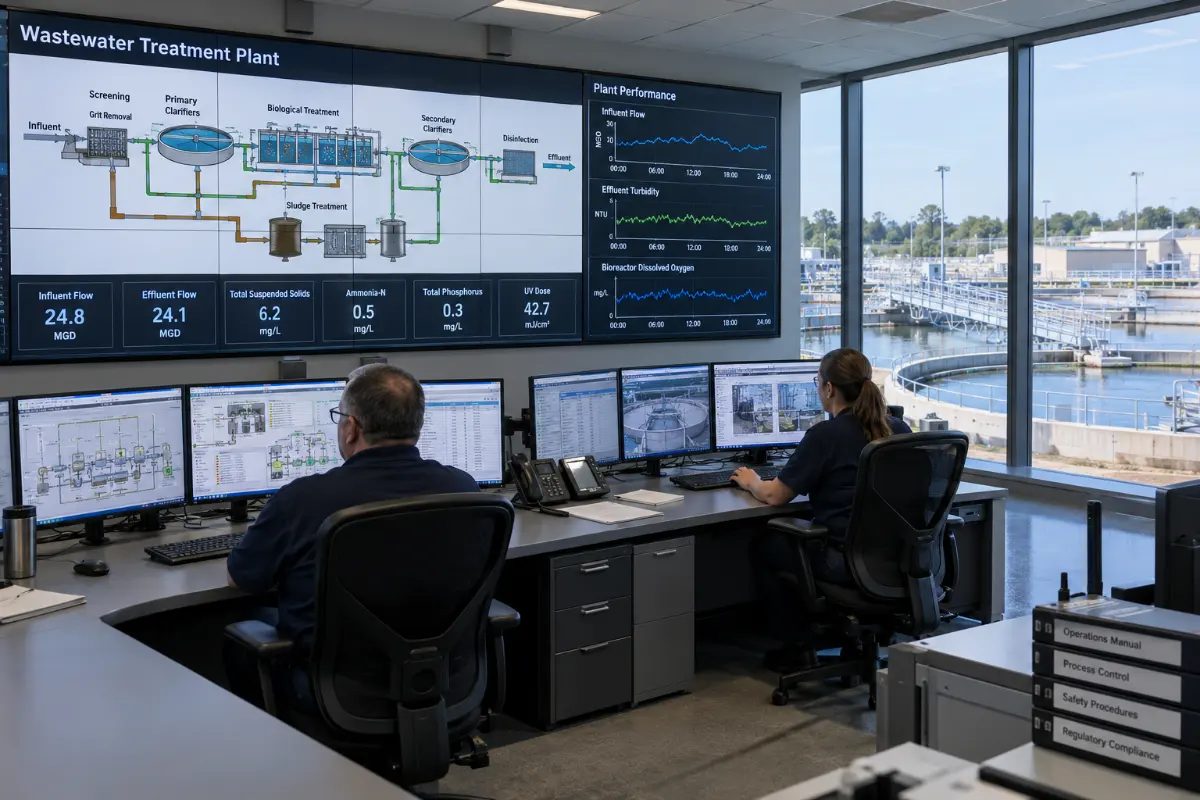
Before you request a quote, characterize the stream properly. I’ve seen more projects fail from bad water analysis than from bad equipment selection.
| Parameter | Why It Matters | Typical Design Consideration |
|---|---|---|
| Total dissolved solids | Sets boiling point elevation and scaling risk | Drives compression ratio and alloy choice |
| Chlorides | Pitting and stress corrosion cracking | May require duplex or titanium wetted parts |
| Suspended solids | Fouling, erosion, pump wear | Pre-filtration or clarification upstream |
| Organics / COD | Foaming, fouling, odor, condensate quality | Antifoam dosing, condensate polishing |
| Scaling ions (Ca, Mg, Si, sulfate) | Heat transfer loss, downtime | Anti-scalant, seeding, or pretreatment |
| pH | Corrosion rate, alloy compatibility | Neutralization or material upgrade |
| Volatile compounds | Distillate quality, off-gas treatment | Condensate stripping or carbon polishing |
For landfill leachate in particular, the combination of high chloride, high ammonia, and variable organic load makes material selection and pretreatment critical. The chemistry profile of leachate is worth studying before you commit to a wetted-material specification — see this breakdown of what chemicals are in landfill leachate.
Installation and Site Requirements
A skid is not plug-and-play, and anyone who tells you otherwise hasn’t commissioned one. Here’s what the site needs to provide.
- Foundation or structural pad. Level, rated for the operating weight plus vibration allowance. Operating weight can be 1.5 to 2 times shipping weight once the sump is full.
- Power supply. Usually 380–480 V, three-phase, with motor starting method specified — soft start or VFD for larger compressors.
- Feed and discharge connections. Located to match the skid’s tie-in points. Coordinate these early; field re-routing of alloy piping is expensive.
- Utilities. Cooling water, instrument air, steam if applicable, and a drain path for cleaning solutions.
- Ventilation and access. Enough clearance for heat exchanger tube pulling, compressor service, and instrument calibration.
- Chemical dosing area. Anti-scalant and antifoam tanks, with secondary containment.
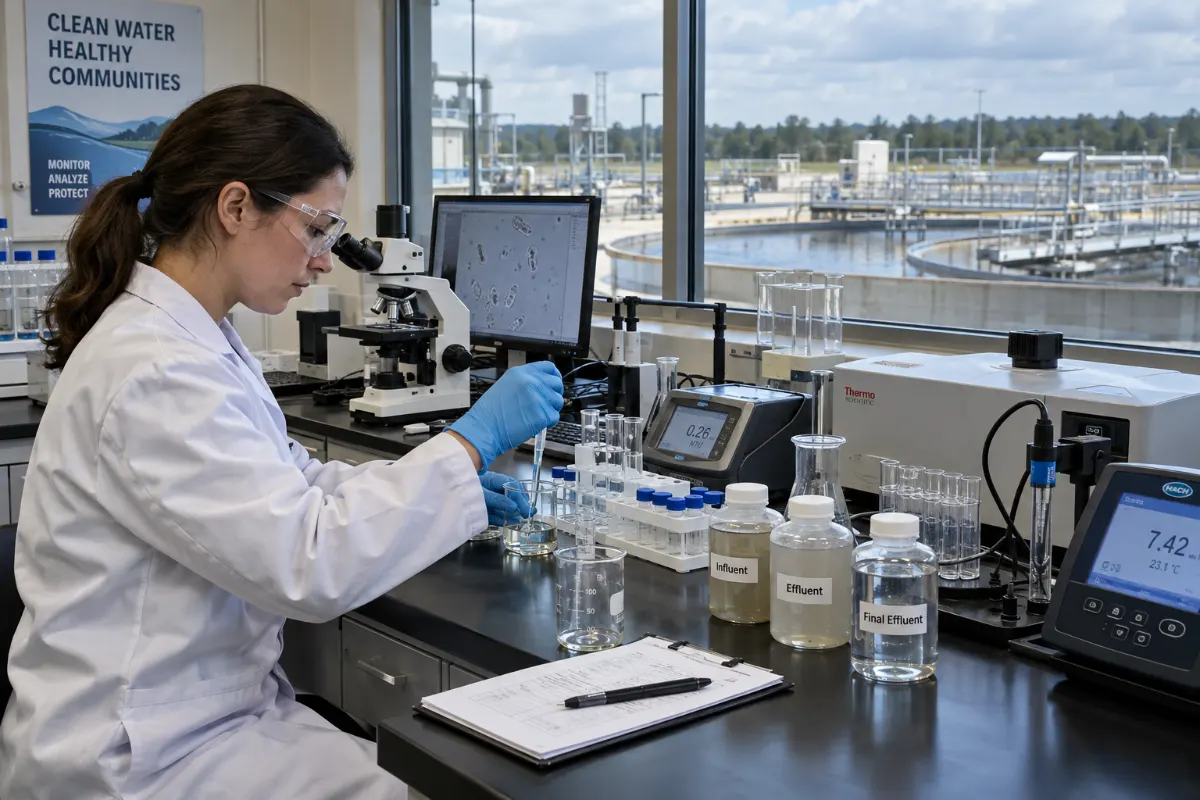
Factory acceptance testing before shipment is worth the cost. Watching the unit run on your actual or simulated feed water catches instrumentation and control issues while the engineers who built it are still standing next to it.
Maintenance Reality and Common Failure Points
Skid systems need the same attention as any evaporator. The difference is that access is tighter, so maintenance-friendly layout has to be designed in from the start.
What Fails First
- Heat exchanger fouling. Scaling and organic deposits cut capacity and raise compressor load. Cleaning frequency ranges from monthly to twice yearly depending on chemistry.
- Compressor wear. Bearings, seals, and impeller erosion. Erosion accelerates with carryover of droplets or solids.
- Pump seals and impellers. Abrasion from suspended solids, corrosion from chlorides.
- Instrument drift. Conductivity, level, and temperature sensors drift and cause control instability if not calibrated on schedule.
- Foaming. Underestimated in design, then managed with chemicals forever. Proper vapor-liquid separation geometry reduces the burden.
Preventive Maintenance Cadence
A typical schedule for a continuously operated MVC skid includes daily log review, weekly pump and compressor checks, monthly instrument calibration, quarterly heat exchanger inspection, and annual compressor overhaul depending on running hours. Systems that ignore the monthly calibration step usually develop mysterious capacity losses that turn out to be a drifting level transmitter.
When a Skid Is the Wrong Answer
I’ll be direct: skid-mounted units are not always right. Consider field erection or a different technology when:
- Evaporation capacity exceeds roughly 15 to 20 m³/h and the resulting shell size can’t be transported economically.
- The process is still being developed and the design basis is likely to change.
- Site access can’t accommodate the crane and transport needed for a large skid.
- Your stream is better served by membrane concentration alone, or by a combination where the evaporator is a small tail-end unit.
- Disposal costs are low enough that evaporation simply doesn’t pencil out against hauling.
That last point deserves emphasis. Evaporation is a volume-reduction and compliance tool, not a default. Run the numbers on total lifecycle cost against your actual disposal route before committing capital.
Lifecycle Cost Comparison: Skid vs. Field-Erected
| Cost Category | Skid-Mounted | Field-Erected |
|---|---|---|
| Equipment / fabrication | Higher per unit | Lower per unit at large scale |
| Site installation labor | Lower | Higher |
| Schedule to commissioning | Shorter | Longer |
| Quality control | Shop-controlled | Site-dependent |
| Relocatability | Yes | Effectively no |
| Design flexibility | Lower after fabrication | Higher during construction |
| Best fit | Small to mid capacity, stable basis | Large capacity, evolving basis |
For a mid-size industrial plant treating a few cubic meters per hour, the total installed cost of a skid system often lands 10 to 25 percent below a field-erected equivalent, mostly because of labor and schedule. At larger capacities the gap closes and eventually reverses.
Planning a skid-mounted evaporator project? Send us your water analysis and capacity target, and we’ll come back with a preliminary sizing and budget range — no obligation.
Practical Selection Guidance
After enough projects, patterns emerge. Here’s what I’d tell a colleague sizing a skid-mounted evaporator for the first time.
- Characterize the water over time, not just one grab sample. Variability kills evaporators.
- Decide the disposal route for concentrate and distillate before you size anything.
- Choose the evaporation technology based on steam availability, power cost, and scaling risk — not on habit.
- Specify materials one grade above what the nominal chemistry suggests if chlorides are present and variable.
- Insist on factory acceptance testing with representative feed.
- Budget for cleaning chemicals and spare parts from day one, not after the first fouling event.
- Design the layout so a technician can reach the heat exchanger without dismantling half the skid.
If your application involves high-strength industrial wastewater with a zero liquid discharge target, the evaporator is usually one module in a larger train. Understanding how it fits with upstream membrane concentration and downstream crystallization matters as much as the evaporator itself.
Frequently Asked Questions
How much does a skid-mounted wastewater evaporator cost?
Equipment prices generally fall between $80,000 and $650,000 for capacities from about 0.5 to 15 m³/h of evaporation, with the wide range driven by alloy selection, compressor type, and automation level. Total installed cost adds site preparation, utilities, and commissioning, typically 15 to 30 percent on top of equipment price.
What evaporation capacity can fit on a single transportable skid?
In practice, up to roughly 10 to 15 m³/h of evaporation on one frame, depending on the specific process and shell dimensions. Larger systems are usually split across multiple skids or field-erected.
How much power does an MVC evaporator consume?
Mechanical vapor recompression systems typically consume 15 to 40 kWh per cubic meter of distillate, with the exact figure depending on boiling point elevation, compression ratio, and heat exchanger effectiveness. High-salinity streams sit at the upper end.
How often does the heat exchanger need cleaning?
Cleaning frequency ranges from monthly to twice per year depending on scaling tendency, suspended solids, and pretreatment effectiveness. Anti-scalant dosing and proper feed filtration extend intervals significantly.
Can a skid-mounted evaporator handle high-chloride wastewater?
Yes, but wetted materials must be selected for it. Duplex stainless, super duplex, or titanium are common choices above certain chloride thresholds. Getting this wrong is one of the most expensive mistakes in evaporator specification.
What pretreatment is usually required upstream?
At minimum, suspended solids removal and often softening or anti-scalant dosing. For streams with high organic content, additional treatment may be needed to control foaming and protect distillate quality.
Is a skid-mounted system harder to maintain than a field-erected one?
Access is tighter, so layout matters. When designed with maintenance in mind — removable panels, adequate clearance for tube pulling, labeled components — skid systems are no harder to maintain and are often easier to isolate for service.
How long does delivery and commissioning take?
For a standard MVC skid, expect 12 to 20 weeks from order to shipment, plus 1 to 3 weeks on site for installation and commissioning. Custom alloy systems or unusual process requirements extend the schedule.