


Этот лучшие многоразовые изделия для сокращения объема сточных вод are not necessarily the products with the longest service life. The products that matter most are the ones that stop clean water from becoming wastewater, keep process water useful for more cycles, recover water from contaminated streams, or reduce the volume left for disposal. That can mean something as simple as a controlled-dose cleaning system or as substantial as reusable filtration, membrane concentration, or an industrial evaporator.
I would not start with a shopping list. Start with the point where water is being lost. A leaking rinse line needs a different solution from high-TDS membrane concentrate, and neither problem is improved by buying equipment simply because it carries a “water-saving” label. The strongest wastewater reduction projects follow a practical sequence: prevent unnecessary water use, recirculate what can stay in the process, recover water that needs treatment, and concentrate only the residual stream that cannot be reused directly.
Best Options at a Glance
Most wastewater problems fall into a small number of patterns. The table below is the quickest way I know to separate a simple water-use problem from a genuine treatment problem.
| Wastewater Problem | Start With | What It Changes | Move to Engineered Treatment When… |
|---|---|---|---|
| Too much water used during routine cleaning | Trigger nozzles, controlled dosing, reusable cleaning tools | Reduces unnecessary water before it reaches the drain | The remaining wash water still cannot be reused because of dissolved or hazardous contaminants |
| Fresh water continuously enters rinse tanks | Counter-current rinsing, drag-out control, rinse-water recirculation | Uses the cleanest water only where it is actually needed | Conductivity or contaminant concentration continues rising beyond acceptable process limits |
| Water is discarded because of suspended solids | Self-cleaning strainers, backwashable filters, settling, oil separation | Removes material that shortens process-water life | Dissolved contaminants rather than particles become the limiting factor |
| Reusable water is limited by dissolved salts | Membrane recovery | Separates reusable permeate from concentrated dissolved contaminants | Osmotic pressure, scaling, or concentrate chemistry limits further membrane recovery |
| RO or DTRO concentrate remains a large liquid stream | MVC/MVR or another suitable evaporation process | Recovers condensate and reduces liquid residual volume | The concentrate approaches crystallization or requires final solids handling |
| Continuous evaporation load with usable steam | Multi-effect evaporation | Reuses vapor heat through sequential evaporation effects | Lifecycle economics favor a different heat-recovery configuration |
This is also why I would not install an evaporator to solve a rinse-water problem that can still be corrected with better flow control. Thermal treatment has a legitimate place, but it should not compensate for avoidable wastewater generation upstream.
What “Reusable” Should Mean When Wastewater Is the Metric
A product can be reusable and still do very little for wastewater. A washable cloth lasts longer than a disposable wipe, but laundering consumes water. A reusable filter avoids throwing away cartridges, but its backwash becomes another wastewater stream. A water-recovery system can return useful water to production while producing a much smaller, more concentrated residual.
The useful question is therefore not, “Can I use this product again?”
It is:
- Does it reduce the amount of fresh water entering the process?
- Does it extend the useful life of water already in the process?
- Does it recover water at a quality that has a real reuse destination?
- Does it reduce the total liquid volume requiring treatment or disposal?
- Does it do those things without creating a larger chemical, energy, maintenance, or waste burden somewhere else?
That last point is easy to miss. Wastewater does not disappear because a process is called recycling. Suspended solids end up in backwash or sludge. Dissolved salts move into membrane concentrate. Nonvolatile material stays in an evaporator concentrate. Volatile compounds may appear in condensate if the process is not designed to control them.
A serious water-reuse plan follows the contaminants all the way through the process.
UN-Water’s 2024 wastewater report is a useful reminder of why industrial wastewater deserves this level of attention. Industrial reporting remains limited, but within the available reporting dataset, 38% of industrial wastewater was reported as receiving treatment and 27% as being safely treated. The report explicitly cautions that data coverage is too limited to treat those figures as a complete global estimate.[1]
The lesson for a plant is more practical than statistical: every avoidable gallon that never becomes wastewater is one less gallon that needs pumping, chemical treatment, membrane separation, evaporation, hauling, or final disposal.
Find Where Water Becomes Waste Before Buying Equipment
Wastewater projects often begin with a treatment technology when they should begin with a water balance.
Walk through the process and identify where clean water enters, where contaminants are introduced, where streams mix, and where water leaves. The first pass does not need sophisticated software. Flow meters, tank levels, batch records, production records, and a few representative samples can reveal more than a generic equipment proposal.
Measure the Water Against Production
Monthly wastewater volume by itself can be misleading. A plant that produces less product will often discharge less water even if nothing became more efficient.
A better starting metric is:
Wastewater intensity = wastewater volume ÷ production output
Production output might be batches, tons, pieces, operating hours, square feet processed, or another unit that reflects actual activity.
Suppose wastewater falls from an index of 100 to 90 while production falls from 100 to 80. The absolute wastewater number looks better, but wastewater intensity has actually increased. Normalizing the data prevents that kind of false win.
Separate the Streams Before Treating Them Together
One of the costliest mistakes in wastewater management is mixing a relatively clean stream with a concentrated one.
Final rinse water, cooling blowdown, floor drainage, process concentrate, chemical cleaning solution, membrane reject, and condensate do not necessarily belong in the same tank. Once they are mixed, the entire volume may inherit the treatment requirements of the most difficult stream.
I would check segregation before adding treatment capacity. Sometimes the lowest-cost wastewater reduction measure is a pipe, valve, collection tank, or operating change that keeps clean water away from dirty water.
Record Contaminant Mass, Not Just Concentration
Concentration alone can also be deceptive.
If wastewater flow falls by half while contaminant concentration doubles, the total contaminant mass may not have changed. For a selected parameter:
Contaminant load = concentration × flow
That distinction matters when evaluating rinsing, chemical dosing, filtration, membranes, and evaporation. Volume reduction is valuable, but the contaminants still need a final destination.
Reusable Cleaning Products That Can Reduce Wastewater Before Treatment
Reusable Microfiber Cloths, Pads, and Mop Systems
Reusable microfiber products make sense when they replace an unnecessarily wet cleaning method. The wastewater reduction comes from the cleaning method, not from the fabric itself.
A measured spray-and-wipe process can require much less water than continuous hose rinsing. Pre-removing dry debris before wet cleaning helps as well. The cloth or pad then becomes part of a controlled system rather than an excuse to use more cleaning solution.
The accounting has to include laundering. A reusable pad that saves water during cleaning but requires aggressive washing after every short use may not deliver the expected net reduction.
For contaminated industrial cleaning, there is another concern: laundering may transfer oil, metals, chemicals, or other contaminants into a different wastewater stream. That may still be a worthwhile trade, but the new wastewater should be included in the water balance rather than ignored.
Useful measurements are simple:
- Cleaning water per completed task
- Cleaning chemical per task
- Number of usable cycles before replacement
- Laundry water attributable to the reusable product
- Wastewater characteristics before and after the change
I would choose reusable textiles when they allow a genuinely drier cleaning method, not merely because they replace something disposable.
Refillable Concentrate and Controlled-Dosing Systems
Overdosing cleaning chemicals often creates two costs at once: more chemical enters the wastewater, and more water is then used to rinse it away.
A refillable concentrate station, fixed-ratio dispenser, metering pump, or measured spray bottle turns an operator judgment into a repeatable dose. That can reduce both chemical variation and unnecessary rinsing.
The important feature is not the container. It is dose control.
A useful system should make calibration straightforward and make accidental adjustment difficult. Record concentrate consumption per batch or shift, rinse duration, final rinse conductivity where applicable, and any cleaning failures that require the job to be repeated.
If chemical use falls while rinse-water use stays unchanged, there is probably still an operating opportunity left on the table.
Trigger Nozzles, Spray Guns, and Automatic Shutoff Valves
An open hose keeps flowing even when the water is doing no useful work. A trigger-operated spray gun or automatic shutoff valve stops that loss between cleaning steps.
Nozzle selection should still be based on the job. Flow, pressure, spray angle, impact, orifice size, clogging risk, and chemical compatibility all matter. Cutting flow so far that cleaning time doubles is not a meaningful efficiency improvement.
The number to compare is total water used per completed cleaning task.
For product categories covered by the WaterSense program, certified products must be at least 20% more water-efficient while meeting applicable performance requirements.[2] That figure should not be applied indiscriminately to industrial spray equipment, but the underlying purchasing principle is sound: lower water use only matters when the required performance is maintained.
Recirculating Aqueous Parts Washers
A recirculating parts washer keeps cleaning liquid in a tank and reuses it instead of sending a fresh wash solution to drain after every job. Depending on the contamination, the loop may include a settling zone, oil skimmer, coalescer, bag filter, cartridge filter, heating system, or another separation step.
Tank volume is not the specification I would compare first.
The harder question is how fast contamination enters the bath and what the washer does with it. Free oil, emulsified oil, abrasive solids, fine metal particles, grease, and cleaning chemistry behave differently. If contaminants accumulate faster than the system can remove or tolerate them, bath life will remain short no matter how large the tank is.
Before buying a recirculating washer, check:
- How free oil is removed
- What particle size the filtration stage is intended to capture
- How filters are accessed and cleaned or replaced
- Whether the bath can be partially purged instead of completely dumped
- Operating temperature and heat loss
- Compatible cleaning chemistry
- Sludge removal method
- Whether pumps can be serviced without draining the whole system
The goal is not zero wastewater from the washer. The goal is a longer useful bath life and a smaller, better-controlled residual stream.
Counter-Current Rinsing: One of the Most Useful Forms of Water Reuse
Multi-stage rinsing is where water reuse can become surprisingly effective without sophisticated treatment.
In a counter-current arrangement, the cleanest water enters the final rinse. Water then moves backward toward earlier rinse stages, where higher contaminant concentrations are acceptable. The same water therefore performs more than one useful rinse before leaving the system.
That is usually more sensible than feeding fresh water independently to every tank.
Before changing the rinse system, look at drag-out. Parts, racks, baskets, and recesses can carry process chemistry from one tank into the next. A few extra seconds of drainage, better part orientation, drip boards, air knives, or spray rinsing over the process tank can reduce the contaminant load before additional rinse water is considered.
Do Not Control Rinsing by Valve Position Alone
A hand valve that has been left “about half open” for years is not process control.
Conductivity is often useful as a practical indicator when dissolved ionic contamination drives rinse quality. In other applications, pH, turbidity, chemical concentration, or another process-specific measurement may be more appropriate.
The rinse flow should respond to the quality requirement, not habit.
Track:
- Freshwater flow to the rinse train
- Tank conductivity or another suitable quality indicator
- Production throughput
- Drag-out rate where it can be estimated
- Overflow volume
- Reject or rework associated with inadequate rinsing
A counter-current rinse system stops being enough when dissolved contaminants continue building until the water can no longer meet the process requirement. At that point, filtration alone will not solve the problem because the limiting contaminants are dissolved.
Reusable Filtration and Self-Cleaning Filters
Reusable filtration is useful when suspended solids are the reason water is being discarded.
Self-cleaning strainers, backwashable media filters, cleanable screens, oil separators, and other reusable filtration systems can extend the life of recirculating water while reducing reliance on disposable cartridges.
There is an important tradeoff: self-cleaning equipment still creates waste.
Instead of throwing away a cartridge full of solids, the system may produce a smaller backwash stream containing those solids. That can be a good outcome when the backwash is a small fraction of the water kept in circulation, but it still needs to be measured and managed.
Micron Rating Is Not Enough to Select a Filter
Two waste streams can contain particles of similar size and behave completely differently.
Hard mineral particles, fibrous material, sticky biological solids, oil-coated particles, metal fines, and compressible sludge do not form the same filter cake. A filter that works well on one stream may blind rapidly on another.
Compare filtration equipment using:
- Required particle removal
- Solids concentration
- Particle behavior
- Oil content
- Design flow
- Allowable pressure drop
- Backwash frequency
- Backwash volume
- Cleaning method
- Final solids handling
A 5-micron filter is not a water-reuse strategy by itself. If conductivity continues increasing because dissolved salts are accumulating, installing finer cartridges will not solve the actual limitation.
Water Reclamation Tanks and Closed-Loop Water Recycling
Some water does not need advanced treatment before it can be useful again.
A reclamation tank can collect water from one operation and supply it to another operation with a lower quality requirement. Final rinse water might become first-rinse water. Relatively clean process water might be suitable for equipment pre-rinsing. Another stream may be usable as utility makeup after basic filtration.
EPA describes industrial water reuse as the use of recycled water in industrial applications and notes that water generated by onsite processes can sometimes be treated and used elsewhere in the same facility.[3]
The phrase “closed loop” should not be taken too literally. Many practical systems still need a purge. If dissolved material keeps entering but never leaves, its concentration increases cycle after cycle.
Define the Reuse Specification First
Do not design treatment around the vague goal of producing “clean water.”
Write down what the receiving process actually requires:
- Conductivity or TDS
- Hardness
- Silica
- Turbidity
- Oil
- COD or TOC where relevant
- pH
- Specific ions
- Microbiological limits where relevant
- Temperature
This changes the design discussion immediately. A first-stage wash may tolerate water that would be unacceptable for final rinsing. Cooling makeup and process-contact water may have completely different requirements.
Treatment becomes easier to justify when the destination of every gallon of recovered water is known before the equipment is purchased.
When Simple Reuse Stops Working
There is a point where better nozzles, filters, tanks, and rinse control stop being enough.
The usual sign is that the limiting contaminants are dissolved. Water may look clear while conductivity, chloride, sulfate, hardness, silica, COD, or another dissolved parameter continues to rise. Reusing that water without selective treatment simply circulates the problem.
This is where the wastewater strategy changes from recirculation to recovery.
A practical hierarchy is:
Memva Wastewater Reduction Framework
1. Prevent unnecessary water use → 2. Recirculate water while its quality remains suitable → 3. Recover usable water with separation technology → 4. Concentrate the residual stream only when further direct reuse is no longer practical.
The order matters. Every gallon removed before the high-energy treatment steps makes those steps smaller.
DTRO Membrane Systems for Difficult Wastewater Recovery
Reverse osmosis separates water from dissolved contaminants by applying pressure across a semipermeable membrane. In ordinary clean-water applications, spiral-wound RO elements are widely used. Difficult wastewater can present a different set of operating problems: high salinity, variable composition, suspended material, organics, scaling potential, and increasingly high osmotic pressure as the stream becomes concentrated.
Disc tube reverse osmosis, or DTRO, uses an open disc-tube flow path rather than the tighter feed-spacer geometry associated with conventional spiral-wound modules. That geometry can be useful where fouling risk or wastewater variability makes ordinary RO difficult to operate.
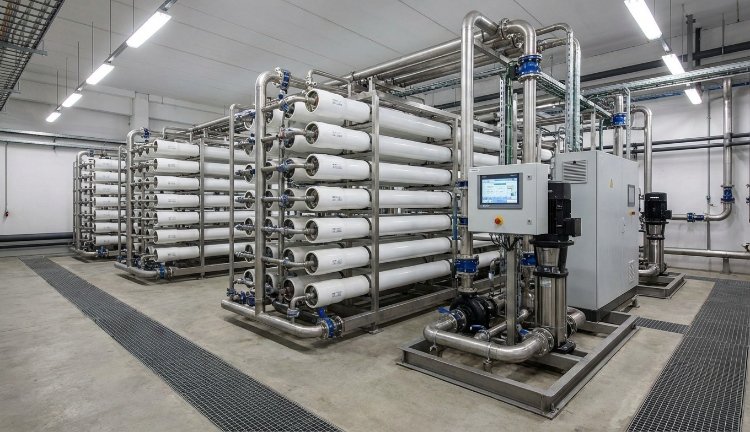
The most useful reason to consider DTRO is not that it can magically eliminate pretreatment or achieve one universal recovery rate. It cannot. Its value is that it gives engineers another membrane configuration to evaluate when the wastewater is too difficult for a conventional RO layout or when membrane pre-concentration can reduce the volume entering downstream evaporation.
Memva’s current DTRO membrane system engineering page takes the right approach here: recovery is treated as project-specific and tied to osmotic pressure, ionic composition, scaling risk, staging, and the concentrate route rather than presented as one guaranteed percentage for every wastewater.
When I Would Look at DTRO
DTRO deserves evaluation when several of the following conditions appear together:
- A conventional wastewater RO system is experiencing difficult fouling or scaling conditions.
- The wastewater contains elevated dissolved salts and requires higher-pressure membrane concentration.
- Feed quality changes significantly between batches or production cycles.
- The plant wants to recover additional water from an RO concentrate stream.
- Reducing the flow entering an evaporator could materially reduce thermal treatment duty.
When I Would Not Start With DTRO
I would not start with a high-pressure membrane system when the main problem is suspended solids that can be removed economically with ordinary pretreatment. I also would not push membrane recovery simply to advertise a higher recovery percentage if doing so creates unstable scaling, excessive cleaning, or a concentrate that becomes much harder to manage.
Membrane recovery has an economic optimum. That point is not always the maximum physically achievable recovery.
The Data That Changes a DTRO Design
TDS by itself is not enough. Two wastewaters with the same TDS can have completely different scaling behavior.
A serious preliminary review should include, where relevant:
- Average and peak flow
- TDS или проводимость
- Calcium and magnesium
- Alkalinity
- Sulfate
- Chloride
- Silica
- pH
- Temperature
- COD or TOC
- Suspended solids and turbidity
- Ammonia
- Metals
- Oil or surfactants
- Existing pretreatment
- Required permeate quality
- Planned concentrate destination
The last item is especially important. Designing the membrane skid without deciding what happens to its concentrate only moves the unresolved problem to a smaller pipe.
Not sure which treatment stage comes first?
Start With the Wastewater, Not the Equipment Name
Share the flow rate, TDS, pH, COD or TOC, major salts, current treatment process, and your required reuse or concentration target. Memva’s equipment range covers membrane concentration and thermal evaporation, making it possible to compare the treatment train rather than forcing one machine into every application.
Compare Memva Wastewater Treatment OptionsFinal equipment sizing should be based on representative wastewater analysis, agreed design conditions, and the required treatment endpoint.
When Membrane Recovery Reaches Its Practical Limit
Membranes do not remove salts from existence. They separate them into a smaller concentrate stream.
As recovery increases, the concentrate becomes more concentrated. Osmotic pressure rises. Scaling potential can increase. The membrane system needs more pressure to continue producing permeate, while water chemistry may become progressively less forgiving.
At some point, adding more membrane area or more pressure may no longer be the most practical way to recover another increment of water.
That is where thermal concentration enters the discussion.
The transition should be driven by the actual process economics:
- How much wastewater reaches the membrane stage?
- How much water can be recovered stably?
- What does the membrane concentrate contain?
- What does concentrate disposal cost?
- How much evaporation duty can membrane pre-concentration avoid?
- What energy source is available?
- What final residual is required?
A membrane system and an evaporator should not be treated as competing machines by default. In many water-recovery projects, they solve different parts of the same mass balance.
MVC/MVR Evaporators for Wastewater Volume Reduction
Mechanical vapor compression and mechanical vapor recompression evaporation recover heat from vapor generated during evaporation. The vapor is compressed, which raises its pressure and saturation temperature, and the compressed vapor is then reused as the heating medium.
That heat-recovery loop is the reason MVC/MVR is considered for continuous wastewater concentration. It does not eliminate energy use; electricity is still required for the compressor, circulation pumps, vacuum equipment where used, controls, and auxiliary equipment. Startup and process losses may also require additional heat depending on the design.
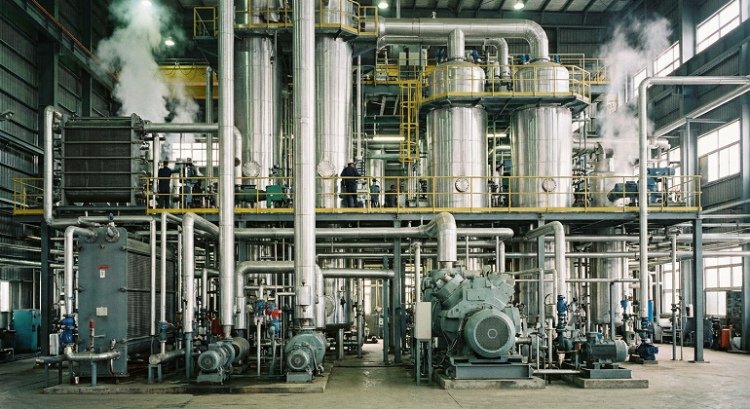
Evaporator selection should never be reduced to “How many cubic meters per day?” Flow is only one part of the duty.
For wastewater service, I would want to see at least:
- Feed flow and temperature
- Total dissolved solids
- Individual salt composition where available
- Hardness and silica
- Chloride concentration
- COD or TOC
- Foaming tendency
- Oil, surfactants, or suspended material
- Potential volatile compounds
- Expected boiling-point elevation
- Target concentrate condition
- Required condensate quality
- Operating hours
- Стратегия очистки
Memva’s MVC/MVR evaporator engineering overview now makes this distinction clearly: suitability depends on wastewater chemistry, scaling, boiling-point rise, corrosion, condensate requirements, and final concentration rather than capacity alone.
Why Condensate Quality Matters
Evaporation does not automatically produce water suitable for every reuse application.
Most nonvolatile salts remain in the concentrate, but volatile compounds can transfer with vapor. Ammonia, certain solvents, and other volatile contaminants may require pH control, vapor management, condensate polishing, stripping, or another treatment step depending on the wastewater.
Mechanical entrainment matters too. Poor vapor-liquid separation can carry droplets of concentrated liquid into the condensate side.
This is why “water recovery” and “usable water recovery” should be treated as two different questions.
Scaling Is Usually a Process Question, Not Just a Cleaning Question
When an evaporator scales repeatedly, adding stronger cleaning chemicals is not always the right first response.
The underlying cause may be concentration factor, precipitation chemistry, temperature profile, local supersaturation, poor circulation, heat-transfer surface selection, or a change in feed composition.
CIP is necessary equipment. It should not become the normal operating state.
Watch the trend in heat-transfer performance, circulation behavior, evaporation rate, compressor load, temperature approach, and cleaning frequency. A slow deterioration is often more informative than waiting for the machine to trip.
Multi-Effect Evaporation: When Steam Reuse Fits the Process
A multi-effect evaporator uses several evaporation stages at progressively different pressures. Vapor from one effect supplies heat to the next effect, so thermal energy performs useful work more than once.
The principle is attractive, but adding more effects is not automatically better.
Each additional effect brings heat-transfer area, piping, instruments, controls, cleaning surfaces, pressure relationships, and capital cost. The available temperature difference across the entire system also has to be divided among the effects.
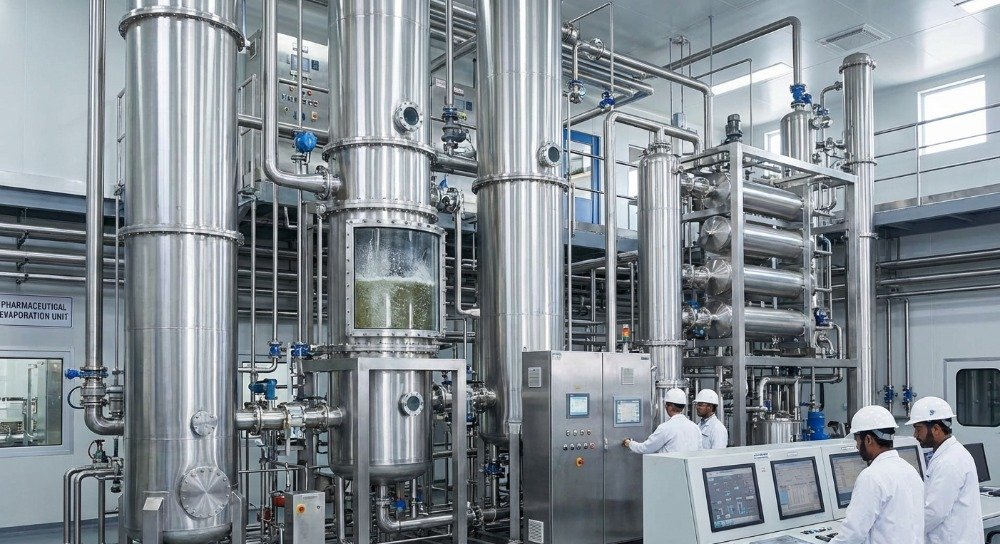
I would not choose the number of effects from a generic capacity chart. The decision should come from a mass and energy balance.
Important variables include:
- Производительность по испарению
- Steam conditions
- Operating hours
- Температура корма
- Повышение температуры кипения
- Viscosity as concentration increases
- Fouling tendency
- Heat sensitivity where relevant
- Available temperature difference
- Required cleaning frequency
- Equipment footprint
- Capital cost
- Expected utility cost
Этот Memva multi-effect evaporator page provides the main configuration concepts. For procurement, published ranges should still be treated as preliminary information; the commercial guarantee should be tied to the agreed feed composition, evaporation load, utility conditions, and product or concentrate target.
MVC/MVR or Multi-Effect?
There is no honest one-line winner.
MVC/MVR shifts much of the steady-state energy requirement toward electricity for vapor compression. Multi-effect evaporation relies more directly on steam while reusing vapor heat between effects.
The lower-cost system depends on the utility balance, operating schedule, evaporation duty, feed behavior, cleaning requirements, capital cost, and maintenance capability.
If a supplier claims one technology wins in every application, I would ask to see the assumptions behind that conclusion.
DTRO vs. Evaporation: Which Should Come First?
This is one of the most useful decisions in a high-salinity water-recovery project because thermal evaporation is generally a more intensive treatment step than ordinary pumping and membrane separation.
If membrane concentration can stably recover additional water before the evaporator, the downstream thermal system may be smaller. But forcing a membrane process beyond a practical chemistry limit can create its own cost through pressure, scaling, cleaning, membrane replacement, and downtime.
| Decision Factor | DTRO / Membrane Concentration | Thermal Evaporation |
|---|---|---|
| Main job | Separate water through a pressure-driven membrane | Separate water through phase change and vapor recovery |
| Most attractive when | The feed can still be concentrated stably by membrane separation | Membrane concentration is no longer practical or the residual volume must be reduced further |
| Primary limitation | Osmotic pressure, scaling, fouling, membrane limits | Scaling, fouling, corrosion, boiling behavior, energy duty |
| Recovered water | Permeate | Condensate |
| Residual stream | Membrane concentrate | Concentrated liquid, slurry, or a stream requiring further solids handling |
| Key question before purchase | How far can recovery be pushed reliably with this feed? | What happens as this wastewater approaches the target concentration? |
For suitable projects, a sensible sequence can be:
Pretreatment → membrane recovery → DTRO or other high-pressure concentration → evaporation → final residual handling
That is a process concept, not a universal recipe. Some wastewater should go to evaporation earlier. Some never needs evaporation at all.
What Happens to the Contaminants After Water Recovery?
This question should appear in every wastewater equipment proposal.
Water recovery concentrates something. If the proposal explains the recovered water in detail but barely mentions the concentrate, sludge, backwash, or solids, it is incomplete.
After Reusable Filtration
Suspended material becomes filter cake, sludge, collected solids, or backwash. The volume may be smaller than the original wastewater stream, but the solids still need handling.
After Reverse Osmosis or DTRO
Rejected dissolved constituents remain in the concentrate. Their concentrations rise as water recovery increases. That changes osmotic pressure, scaling potential, disposal options, and the duty of any downstream evaporation system.
After Evaporation
Most nonvolatile dissolved material remains in the concentrated liquid. Depending on the process endpoint, the stream may remain pumpable, become a slurry, or move toward crystallization and solids separation.
Volatile material requires separate attention because it may migrate into the vapor and condensate.
After a ZLD Process
Zero liquid discharge does not mean zero waste. The liquid discharge may be eliminated or greatly reduced, but solids remain. Their composition, moisture content, handling method, and disposal or recovery route still matter.
The practical question is never “Where did the wastewater go?”
It is “Where did the water go, and where did every contaminant go?”
When Water Should Not Be Reused Without More Treatment
Water reuse is valuable, but forcing water back into a process simply to increase a recycling percentage can create production and maintenance problems.
I would be cautious about direct reuse when any of these conditions are present:
- Dissolved salts continue accumulating and threaten product quality or equipment.
- Reused water introduces incompatible chemistry into the receiving process.
- Microbial growth becomes a process or safety concern.
- Oil or organics interfere with downstream treatment or product quality.
- Chloride, pH, or another parameter increases corrosion risk.
- Silica or hardness raises scaling risk in heat-transfer equipment.
- The reuse destination requires a quality that the current treatment process cannot consistently guarantee.
- Contaminants that were harmless in the original application become problematic after repeated concentration.
Reuse should be designed around the receiving process, not around an attractive percentage on a sustainability slide.
How to Calculate the Real Cost of a Wastewater-Reduction Project
The lowest equipment price is not necessarily the lowest-cost solution, and the highest water-recovery percentage is not necessarily the most profitable one.
The economics come from avoided cost minus new operating cost.
A simple framework is:
Annual net savings = avoided annual cost − new annual operating cost
Then:
Simple payback = total installed project cost ÷ annual net savings
The formula is easy. Getting honest inputs is harder.
| Cost Item | Baseline to Record | What Changes After the Project | Frequently Missed Cost |
|---|---|---|---|
| Fresh water | Actual annual volume and unit cost | Reduced freshwater purchase or intake | Pumping or pretreatment cost |
| Wastewater handling | Discharge, treatment, hauling, or disposal volume | Lower volume but possibly higher concentration | Concentrate disposal |
| Chemicals | Annual treatment and cleaning consumption | Different dosing, antiscalant, CIP, pH control | Cleaning chemicals |
| Energy | Existing treatment energy | Pumps, compressors, heating, vacuum, circulation | Auxiliary equipment |
| Consumables | Cartridges, bags, media, membranes | Different replacement schedule | Pre-filters and minor consumables |
| Техническое обслуживание | Labor and parts | Preventive maintenance for new equipment | Specialized service or compressor work |
| Residual waste | Current sludge or liquid waste | Backwash, membrane concentrate, evaporator concentrate, solids | Higher unit cost for concentrated residuals |
| Downtime | Documented production interruptions | Planned cleaning and unplanned shutdowns | Lost production during recovery |
The Most Common ROI Error
The mistake I see most often in wastewater calculations is counting recovered water while treating the concentrate as if it has no cost.
A membrane process can reduce liquid volume substantially, but the remaining concentrate may be more expensive per unit volume to transport or treat. An evaporator can reduce that volume further but adds energy, cleaning, maintenance, and residual solids handling.
Every stage should therefore be evaluated using the same boundary.
A Simple Illustrative Calculation
Assume a facility has a measured wastewater baseline of 100 units per operating day. After process changes and water recovery, the measured discharge becomes 60 units at the same production output.
The verified volume reduction is:
(100 − 60) ÷ 100 = 40%
That number is only an arithmetic example. It is not a claim that a particular filter, membrane, or evaporator will achieve 40% reduction.
To calculate financial savings, multiply the actual avoided annual volume by the facility’s real avoided water and wastewater costs, then subtract the new annual energy, chemical, consumable, labor, maintenance, and residual-disposal costs.
I would not accept a generic “two-year payback” statement without seeing those assumptions.
How to Compare Wastewater Equipment Quotations Without Getting Misled
Two proposals can both say “100 m³/day” and describe completely different systems.
Capacity has little meaning unless the feed conditions and performance boundaries are attached to it.
| Quotation Item | What a Useful Proposal Should State | What Deserves a Follow-Up Question |
|---|---|---|
| Feed capacity | Average flow, peak flow, operating hours, design feed chemistry | A single daily capacity with no water analysis |
| Recovery | Recovered-water flow and concentrate flow under defined conditions | One recovery percentage presented as universal |
| Product water | Permeate or condensate quality criteria | “Reusable water” with no actual specification |
| Energy | Measurement boundary and operating assumptions | A single energy number without feed and concentration conditions |
| Материалы | Major wetted materials and why they were selected | The same material specification for every chloride, pH, and temperature |
| Предварительная обработка | Required upstream conditioning and its design basis | “No pretreatment needed” before reviewing the wastewater |
| Cleaning | CIP equipment, cleaning sequence, chemical compatibility, access | No defined strategy for fouling or scale |
| Residual stream | Expected concentrate, sludge, or solids flow | No explanation of what happens to rejected contaminants |
| Controls | Measured variables, alarms, shutdowns, interlocks, data logging | “Fully automatic” without a control description |
| Acceptance test | Test duration, feed conditions, measurement method, acceptance criteria | No written performance test basis |
Do Not Compare Materials by Stainless-Steel Grade Alone
Material selection deserves more thought than choosing the highest familiar alloy number.
Chloride, temperature, pH, oxidants, reducing conditions, solids abrasion, welding details, and crevice geometry can all influence corrosion behavior. Different parts of the same treatment system may also see very different chemistry.
A supplier should be able to explain why the material was selected for the service rather than simply calling it “corrosion resistant.”
Ask for the Design Basis in Writing
The design basis is where vague promises become engineering assumptions.
For a membrane or evaporation system, it should identify the feed, capacity, required output, utility conditions, operating schedule, and any water-quality assumptions that affect the guarantee.
If actual feed conditions later move outside those limits, both sides can see exactly what changed.
What to Send a Manufacturer Before Asking for a Quote
A useful wastewater quotation begins with process data. Sending only “50 tons per day” or “TDS 50,000” invites guesswork.
For an initial technical review, gather as much of the following as is available:
- Average daily wastewater volume
- Peak hourly flow
- Operating hours per day
- Production schedule
- Temperature
- pH
- TDS или проводимость
- COD or TOC
- Suspended solids
- Turbidity
- Calcium
- Magnesium
- Alkalinity
- Chloride
- Sulfate
- Silica
- Ammonia where relevant
- Metals where relevant
- Oil, solvents, surfactants, or special process chemicals
- Current wastewater treatment process
- Current disposal method
- Desired recovered-water quality
- Desired final concentrate or solids condition
A recent laboratory report is much more valuable than a long equipment wish list.
Memva designs and manufactures membrane concentration and evaporation equipment, which is useful when the real question is not simply “Which evaporator should I buy?” but “How far should the water be concentrated by membranes before evaporation, and what should happen after that?”
My three questions before equipment selection are simple:
- What is actually in the water?
- Where can the recovered water realistically be used?
- Where will the contaminants go after recovery?
If a treatment proposal cannot answer all three, it is not finished.
Maintenance Determines Whether the Water Savings Last
A water-reuse system can look excellent during commissioning and perform poorly six months later if no one watches the trends.
Preventive maintenance works best when calendar schedules are combined with condition data.
| Equipment | Trend Worth Watching | What a Change May Indicate |
|---|---|---|
| Backwashable filter | Differential pressure and backwash frequency | Higher solids loading, media problems, plugging |
| Spray system | Flow and pressure | Nozzle wear, blockage, pressure change |
| Chemical dosing | Chemical consumption per unit of production | Calibration drift, leaks, operator adjustment |
| RO / DTRO | Normalized flow, pressure, conductivity, pressure drop | Fouling, scaling, membrane damage, feed change |
| MVC/MVR evaporator | Evaporation rate, heat-transfer performance, compressor load | Scaling, fouling, process change, mechanical issue |
| Multi-effect evaporator | Temperature profile and effect performance | Fouling, vacuum problems, heat-transfer deterioration |
| Reuse tank | Conductivity, turbidity, tank turnover, relevant microbial indicators | Contaminant accumulation or water-quality deterioration |
Watch Cleaning Water Too
There is an irony in some reuse systems: the production process saves water, while maintenance crews use uncontrolled quantities of fresh water for flushing and CIP.
Cleaning water, cleaning chemicals, flush duration, and discarded cleaning solution should be included in the operating record.
The aim is not to postpone necessary cleaning. It is to clean because the data show the system needs it, use a defined procedure, and return the equipment to service efficiently.
Common Mistakes That Reduce the Value of Reusable Products
Buying the “Green” Product Without Measuring the Water
Reusable does not automatically mean lower wastewater. Include washing, regeneration, backwash, and cleaning when comparing products.
Using Fresh Water Because It Is Operationally Convenient
Fresh water often becomes the default simply because the pipe is already there. A lower-quality reuse stream may be perfectly adequate for the first wash, preliminary rinse, or another utility duty.
Trying to Filter Dissolved Salts With Finer Cartridges
Particle filters remove particles. When conductivity is the limiting parameter, more cartridge filtration does not address the underlying problem.
Maximizing Membrane Recovery at Any Cost
The final few percentage points of recovery can be the hardest. Higher osmotic pressure, scaling risk, cleaning frequency, and concentrate complexity may outweigh the value of the extra permeate.
Sizing an Evaporator From Flow Alone
Two wastewater streams at the same flow can require very different equipment because boiling-point elevation, salt composition, viscosity, foaming, corrosion, and concentration target change the duty.
Ignoring Volatile Contaminants
Condensate should not be assumed clean enough for reuse simply because it came from an evaporator. Volatile material can travel with vapor.
Leaving Residual Waste Out of the Financial Model
Filters create backwash or solids. Membranes create concentrate. Evaporators create concentrated liquid or solids. Those streams belong in both the process design and the cost calculation.
Buying a System Operators Cannot Maintain
Sampling points, drains, valves, pump access, instruments, membrane access, CIP connections, alarms, and spare parts affect real performance. A sophisticated process that is miserable to maintain will eventually be operated around rather than operated correctly.
What I Would Prioritize for Different Wastewater Problems
For excessive cleaning water: I would start with cleaning procedure, dry removal of solids, controlled chemical dosing, trigger spray equipment, and reusable cleaning tools.
For rinse-water waste: I would look at drag-out first, then counter-current rinsing, conductivity control, and capture of relatively clean rinse water.
For suspended solids: settling, oil separation, self-cleaning filtration, or another reusable solids-removal step usually deserves attention before advanced treatment.
For dissolved contaminants: define the required reuse quality and determine whether membrane separation can produce it reliably.
For high-TDS concentrate: compare the practical membrane concentration limit with the cost of sending the remaining stream to thermal evaporation.
For concentrated brine that still represents a large disposal burden: MVC/MVR, multi-effect evaporation, or another suitable thermal process may be worth engineering.
For a ZLD objective: design the entire residual path. Water recovery is only one side of the system; concentrate, slurry, crystals, and final solids handling are the other side.
That is the central idea behind choosing the best reusable products to reduce wastewater. Buy the simplest product that solves the actual limitation, and move to more intensive treatment only when the water chemistry demands it.
Planning a wastewater recovery project?
Send Memva the Data That Actually Affects Equipment Selection
A useful first review does not require a finished specification. Send the wastewater flow, available laboratory data, current treatment process, and the result you need to achieve. The discussion can then focus on whether source reduction, filtration, DTRO, MVC/MVR evaporation, multi-effect evaporation, or an integrated treatment train is technically worth pursuing.
Request a Wastewater Treatment ReviewFor final sizing, representative feed analysis and agreed design conditions are essential.
Часто задаваемые вопросы
Какие многоразовые изделия наиболее эффективно сокращают объем сточных вод?
Выбор наиболее эффективного средства зависит от места образования сточных вод. Системы очистки с контролируемой дозировкой, распылители с триггерным механизмом, мойки деталей с рециркуляцией, противоточная промывка и многоразовая фильтрация позволяют сократить потребление воды до того, как потребуется углубленная очистка. Когда растворенные загрязнения не позволяют напрямую повторно использовать воду, на первый план выходят методы регенерации с помощью мембран и выпаривание.
Помогают ли многоразовые чистящие средства всегда сократить объём сточных вод?
Нет. Многоразовые тряпки, прокладки, насадки для швабр, фильтры и ёмкости требуют той или иной формы очистки или восстановления. Их чистая выгода с точки зрения сточных вод должна учитывать воду, затрачиваемую на стирку, обратную промывку, смыв и очистку. Показателем, имеющим практическое значение, является общее количество воды, потребленное на выполнение одной задачи или на единицу продукции.
В чём заключается разница между рециркуляцией воды и рекуперацией воды?
Рециркуляция позволяет продолжать использовать воду до тех пор, пока её качество остается приемлемым для технологического процесса. При регенерации воды применяются такие методы очистки, как фильтрация, мембранная очистка или выпаривание, для отделения загрязнений и получения воды, пригодной для повторного использования. Процесс часто начинается с рециркуляции, а регенерация добавляется только тогда, когда накопление загрязнений делает прямое повторное использование нецелесообразным.
В каких случаях предприятию следует рассмотреть возможность применения технологии DTRO вместо традиционной обратной осмосы (RO)?
Технологию DTRO целесообразно рассматривать в тех случаях, когда из-за солености, риска образования отложений, нестабильности характеристик подаваемой воды или необходимости работы под высоким давлением эксплуатация традиционной спирально-навитой системы обратного осмоса затрудняется. Выбор по-прежнему зависит от полного химического состава подаваемой воды, осмотического давления, риска образования накипи, предварительной очистки, требуемого качества пермеата и плана утилизации концентрата.
Должен ли DTRO устанавливаться перед испарителем?
Использование мембранной предварительной концентрации может быть целесообразным в тех случаях, когда она позволяет надежно извлечь воду и снизить гидравлическую нагрузку на систему термической очистки. Однако такая последовательность операций не всегда является оптимальной для всех видов сточных вод. Если из-за осмотического давления, образования накипи или химического состава поступающей жидкости дополнительное извлечение воды с помощью мембран становится нерентабельным, возможно, процесс выпаривания придется начать раньше.
В каких случаях целесообразно использовать испаритель типа MVC/MVR?
Использование испарителей типа MVC/MVR обычно рассматривается в тех случаях, когда концентрированные сточные воды или поток отходов мембранной очистки по-прежнему требуют значительного уменьшения объема, когда у рекуперированного конденсата есть полезное применение или когда процесс с нулевым сбросом (ZLD) требует термической концентрации перед окончательной утилизацией твердых веществ. Необходимо проанализировать химический состав подаваемой жидкости, образование накипи, коррозию, кипение, содержание летучих загрязняющих веществ, качество конденсата и затраты на энергию.
How do I calculate the payback of wastewater-reduction equipment?
Calculate the annual costs avoided by the project, including applicable fresh water, wastewater treatment, hauling, disposal, chemicals, and other affected costs. Then subtract the new annual energy, chemicals, consumables, maintenance, labor, cleaning, and residual-waste costs. Divide total installed investment by verified annual net savings for a simple payback estimate. Larger projects may require a full discounted cash-flow analysis.
What data should I send a wastewater equipment manufacturer?
Send average and peak flow, operating hours, temperature, pH, TDS or conductivity, COD or TOC where relevant, suspended solids, hardness, silica, chloride, sulfate, ammonia, metals, oils or special chemicals when present, the existing treatment process, required recovered-water quality, and the intended final concentrate or solids route. A representative laboratory analysis is much more useful than capacity alone.
Sources and References
- UN-Water. Progress on Wastewater Treatment – 2024 Update. Industrial wastewater treatment data and reporting limitations. View the report .
- EPA WaterSense. Product Specifications. WaterSense-labeled products are independently certified to meet applicable performance requirements and be at least 20% more water-efficient than standard products in their category. View WaterSense product specifications .
- EPA. Water Reuse for Industrial Applications Resources. Background on recovering and reusing water in industrial processes. View industrial water reuse resources .
- EPA. Water Reuse and Recycling. General guidance on reclaiming, treating, and beneficially reusing water. View water reuse guidance .
Editorial transparency: This article is published by Memva, a manufacturer and supplier of wastewater treatment equipment. Memva product pages are included where membrane concentration and evaporation equipment are relevant to the treatment decision. Independent wastewater and water-efficiency data are cited separately above. Manufacturer information should be treated as part of the technical evaluation, not as a substitute for representative wastewater analysis, process calculations, and agreed performance conditions.
Disclaimer
This article is provided for general educational, engineering-reference, and purchasing-comparison purposes. It is not a site-specific process design, laboratory interpretation, permit determination, safety assessment, or guarantee of equipment performance. Wastewater chemistry, water-reuse requirements, discharge conditions, utility costs, corrosion risk, scaling tendency, contaminant behavior, treatment performance, maintenance requirements, and financial results vary by application.
Do not select membrane recovery, evaporation, materials of construction, chemical treatment, or a water-reuse destination from general web content alone. Final equipment design should be based on representative feed analysis, required product-water or condensate quality, project-specific mass and energy balances, residual-waste handling requirements, and written design conditions. Numerical examples in this guide that are identified as illustrative calculations are not claimed equipment performance data.