Связаться с
обращайтесь к нам по любым вопросам
решение
Industrial Evaporation System
Double Effect Evaporator for Industrial Wastewater & Process Concentration
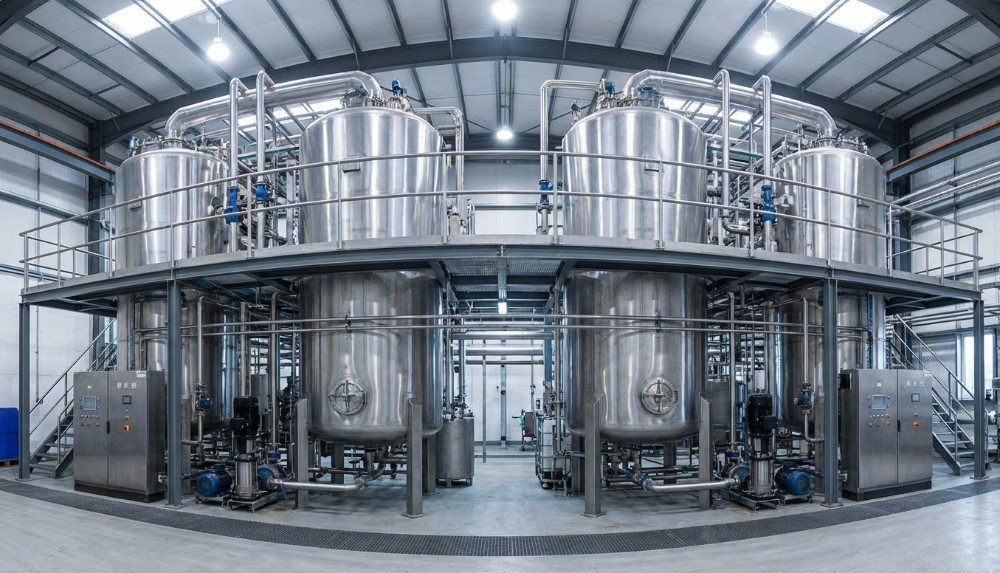
Memva designs double effect evaporator systems that reuse vapor from the first effect as the heating
source for the second effect, reducing fresh-steam demand compared with a single-effect arrangement.
System configuration is selected from the actual feed composition, evaporation duty, scaling tendency,
corrosion risk and utility conditions.
Two-stage vapor heat reuse for lower live-steam demand
Falling-film or forced-circulation configurations selected by feed behavior
Material selection based on chloride, acidity, temperature and corrosion risk
Suitable for selected wastewater, RO brine, chemical and process concentration duties
Heat ReuseFirst-effect vapor is reused in the second effect
System SelectionCompared with single-effect, multi-effect and MVC/MVR options
Technology Fit
Is a Double Effect Evaporator the Right Choice for Your Project?
A double-effect system is not automatically the best evaporator for every feed. The most economical
choice depends on feed chemistry, operating hours, available steam and electricity, required water
recovery, fouling behavior and final concentrate target.
A double-effect system is worth evaluating when:
The process runs continuously or for long operating hours.
Live steam is available and steam cost is a significant operating expense.
The project needs more steam efficiency than a single-effect system.
The feed can be concentrated across two temperature and pressure levels.
You need a practical balance between capital cost and steam consumption.
Another evaporation route may be better when:
The duty is small, intermittent or highly batch-driven.
Very high solids, crystallization or severe scaling requires a specialized circulation design.
Temperature-sensitive products need a lower thermal history than the proposed two-effect
arrangement can provide.
Site space, utilities or maintenance strategy favor a simpler or different system.
Working Principle
How a Double Effect Evaporator Works
The core idea is simple: instead of rejecting the vapor generated in the first evaporator, the system
reuses that vapor to heat a second evaporator operating at a lower boiling pressure and temperature.
Feed Preparation
The feed is conditioned and introduced into the first effect. Pretreatment requirements depend on
suspended solids, hardness, organics, pH and scaling risk.
First Effect
Live steam supplies heat to the first effect. Part of the water or solvent evaporates while the
liquid becomes more concentrated.
Second Effect
Vapor from the first effect becomes the heating medium for the second effect, which operates at a
lower pressure so evaporation can continue at a lower boiling temperature.
Condensate & Concentrate
Final vapor is condensed. The concentrated stream leaves the system for reuse, crystallization,
disposal or downstream treatment according to the process target.
Performance note: Steam economy is project-specific. A two-effect design may target roughly
1.5–1.8 kg of water evaporation per kg of live steam under suitable conditions, but actual performance
changes with boiling-point elevation, heat losses, fouling, feed temperature, product concentration and
operating pressure. Final guarantees should come from the project heat-and-mass balance.
Industrial evaporators should be sized from process data rather than from a generic catalog capacity.
The table below shows the main variables Memva can evaluate during system design.
Design Item
Typical Engineering Options
What Determines the Selection
Evaporation duty
Custom-engineered to required water removal / concentration duty
Feed flow, inlet concentration, target concentration and operating hours
Evaporator circulation
Falling film, forced circulation or application-specific arrangement
Viscosity, suspended solids, crystallization and fouling tendency
Feed arrangement
Forward feed, backward feed, parallel feed or mixed arrangement where suitable
Boiling-point elevation, heat sensitivity, viscosity and pumping requirements
Строительные материалы
SS316L, titanium or nickel-alloy options where required
Chlorides, acids/alkalis, temperature, corrosion allowance and cleaning chemistry
Vapor-liquid separation
Separator and demister configuration matched to vapor load
Foaming tendency, entrainment risk and condensate-quality target
Автоматизация
PLC + HMI with level, temperature, pressure and flow control
Required automation level, data logging and plant integration
Vacuum / condenser
Selected according to second-effect boiling temperature and condenser duty
Cooling-water conditions, non-condensables and product temperature limit
Стратегия очистки
Mechanical access and/or CIP strategy according to the process
Scaling chemistry, organic fouling, solids and required cleaning frequency
Design Selection
Which Double Effect Evaporator Configuration Fits the Feed?
The heat-transfer surface and circulation method matter more than marketing labels. Selection should
start with the physical behavior of the feed.
Falling Film
Often considered for relatively clean, pumpable feeds where short residence time and lower thermal
exposure are useful.
Lower viscosityHeat-sensitive feedsGood distribution required
Forced Circulation
Often preferred when scaling, crystallization, higher solids or higher viscosity makes strong
circulation and controlled boiling important.
High solidsScaling tendencyCrystallizing feeds
Feed Arrangement & TVR
Forward, backward or other feed arrangements can be evaluated from temperature profile and viscosity.
TVR may be considered when steam conditions and economics support additional vapor reuse.
Memva's core industrial focus is wastewater concentration and water recovery. The same two-effect
heat-reuse principle can also be applied to selected process-concentration duties after feed
compatibility is reviewed.
High-Salinity Wastewater & RO Brine
Volume reduction and pre-concentration of high-TDS streams before crystallization, further
evaporation or final ZLD treatment.
RO concentrate / reject
Industrial brine
Wastewater volume reduction
Chemical & Process Wastewater
Concentration of selected process streams where metallurgy, foaming, scaling and volatile components
have been reviewed during engineering.
Chemical-process effluent
Selected salts and dissolved solids
Water-recovery applications
Process Concentration
Selected liquid concentration duties can use two-effect evaporation when the product is compatible
with the required temperature profile and equipment materials.
Selected food/process liquids
Intermediate concentration
By-product recovery
Сравнение технологий
Double Effect vs Single Effect vs MVC/MVR Evaporator
Buyers usually need to compare lifecycle cost, not only equipment price. Use this table as a selection
framework; final economics should be calculated from your actual steam price, electricity price, annual
operating hours and evaporation duty.
Коэффициент отбора
Однократный эффект
Double Effect
MVC / MVR
Energy reuse principle
No second evaporation effect
First-effect vapor heats the second effect
Generated vapor is mechanically compressed and reused
Live-steam demand
Typically highest of the three
Lower than single effect under comparable duty
Can greatly reduce steady-state fresh-steam demand; electricity becomes more important
Capital complexity
Lowest
Medium
Higher due to compressor and associated controls
Control / maintenance
Simpler
Moderate
More specialized rotating equipment and controls
Typical project fit
Smaller or intermittent duties
Continuous duties where steam savings justify the second effect
Continuous duties where electricity economics and feed behavior support vapor recompression
Best way to decide
Run a project-specific heat-and-mass balance and compare annual energy cost,
cleaning frequency, maintenance, footprint and capital cost.
Not sure whether double effect or MVC/MVR is more economical?
Send your feed flow, TDS/solids, target concentration and local steam/electricity cost. Memva can compare
suitable evaporation routes before equipment selection.
What is the main advantage of a double effect evaporator?
The first-effect vapor is reused as heat for the second effect. This can reduce live-steam
consumption compared with a single-effect system, although the actual saving depends on the
temperature profile, boiling-point elevation, heat losses and operating conditions.
What is the typical steam economy of a double effect evaporator?
A project may target approximately 1.5–1.8 kg of water evaporation per kg of live steam under
suitable conditions. This should be treated as a design reference, not a universal guarantee. Final
performance needs a heat-and-mass balance for the actual feed.
When should forced circulation be used?
Forced circulation is commonly evaluated for feeds with higher solids, viscosity, scaling or
crystallization tendency, because circulation velocity and boiling location can be controlled more
deliberately than in some film arrangements.
Can a double effect evaporator be used for high-salinity wastewater?
Yes, for suitable high-salinity streams. The design must account for salt composition, saturation
limits, scaling, corrosion, foaming, suspended solids and the required final concentration.
Pretreatment or a different evaporator configuration may be needed for difficult feeds.
How do I choose between double effect and MVC/MVR evaporation?
Compare the feed characteristics, evaporation load, operating hours, steam price, electricity price,
maintenance strategy and site utilities. MVC/MVR can reduce dependence on live steam, while double
effect systems can be attractive where steam is readily available and a simpler thermal
configuration is preferred.
What information is required for a quotation?
Provide feed flow, composition or water analysis, TDS/solids, inlet temperature, target
concentration, operating hours, available steam pressure, cooling-water conditions, electrical
supply and any known scaling, corrosion or foaming issues.
Request a Proposal
Send Your Process Data for Double Effect Evaporator Selection
The fastest way to get a useful proposal is to share the feed and utility data below. If some values are
unknown, send what you have and identify the missing items.
Useful information to include:
Feed flow: m³/day, m³/h or kg/h
TDS / total solids and main salt or chemical composition
COD, suspended solids, pH and chloride level if wastewater
Feed temperature and target concentrate / water recovery
Available steam pressure and local steam cost
Electricity price, cooling-water conditions and operating hours
Known scaling, foaming, corrosion or crystallization issues
Please include feed data in the message field where possible.
Performance, material selection, energy consumption and final equipment configuration are confirmed only
after reviewing project-specific feed and utility data.