

Most evaporator RFQs I review come back with a quote that misses the mark, and it’s rarely the supplier’s fault. The buyer simply didn’t hand over enough information. A wastewater evaporator RFQ is only as good as the data behind it. If you send a flow rate and a vague note about “high TDS,” you’ll get a generic price and a design that drifts once real operation starts. Over the years I’ve watched projects stall because chloride was never tested, or because nobody listed the cleaning chemicals already on site. This checklist covers the 20 data points that actually change vessel metallurgy, compressor sizing, and operating cost. Get these right before you send the inquiry, and the proposals you receive will be comparable instead of confusing.
Why the Data You Send Determines the Design You Get
An evaporator is not an off-the-shelf pump. Every number you provide feeds into a heat and mass balance, and that balance sets the size of the heat exchanger, the compressor, the circulation pump, and the crystallizer. Change the feed TDS by a factor of three and the whole machine changes. Change the chloride level and the material of construction changes from 316L stainless to a duplex or titanium grade.
I’ve sat in enough bid reviews to know the pattern. When the RFQ is thin, suppliers either pad the price to cover uncertainty or they design to an assumption that turns out wrong. Both outcomes cost you money. The 20 points below are grouped so you can work through them the way a process engineer would.
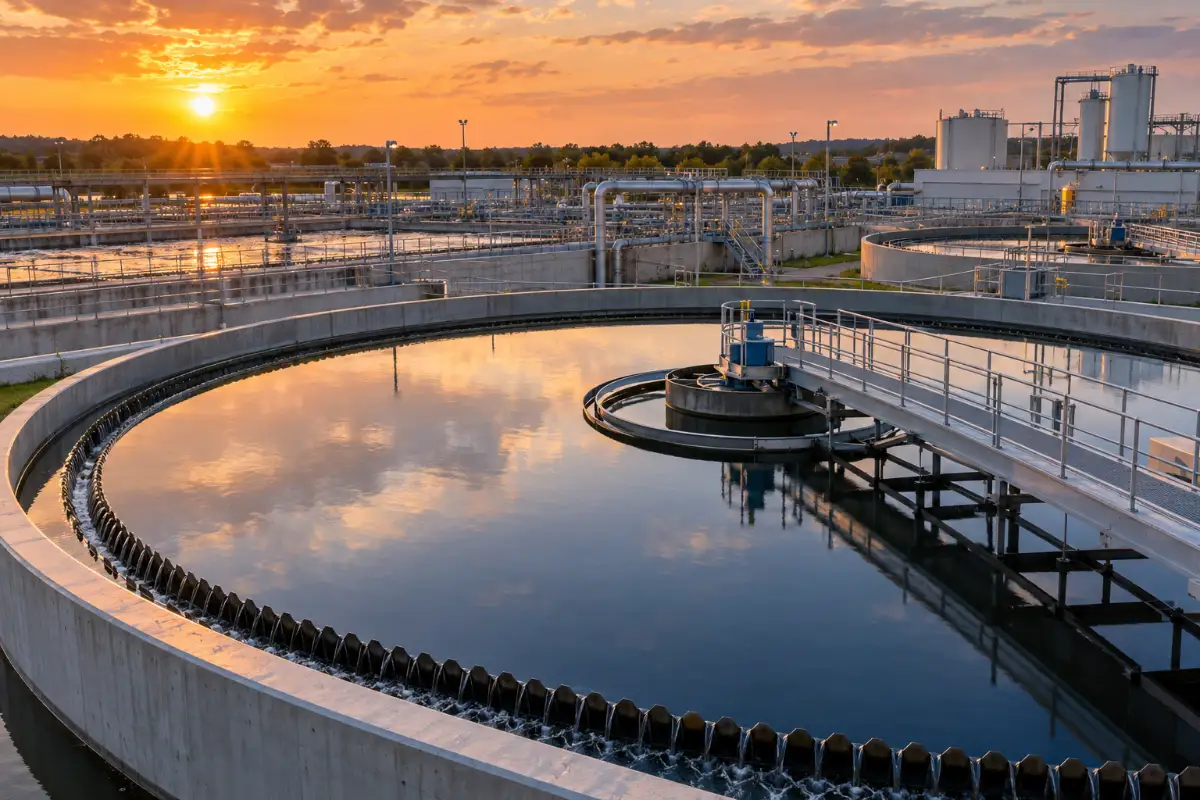
The 20 Data Points, Grouped by What They Control
1. Feedwater Source and Variability
Tell the supplier where the water comes from and how much it swings. A plating line rinse that runs steady is a different animal from landfill leachate that changes after every rain event. Note whether the stream is continuous or batch, and whether flow spikes on shift changes. Variability drives surge tank sizing and sometimes a buffer equalization step upstream of the evaporator.
If you’re working with leachate, it helps to understand what’s actually in it before you scope anything. The chemistry of landfill leachate is worth a read on its own because the contaminant mix changes the pretreatment strategy entirely.
2. Design Flow Rate and Turndown
Give both the nominal and the maximum flow, in cubic meters per hour or gallons per minute. Then state the minimum you expect to run at. Turndown matters because a compressor sized for peak flow runs inefficiently at half load. If your plant operates seasonally, say so.
3. Feed TDS and Target Concentrate TDS
This is the single most important pair of numbers. Feed total dissolved solids and the concentration you want to reach before the brine leaves the system. The ratio between them sets the evaporation duty. If you’re heading toward zero liquid discharge, the target is saturation, and that pushes you into a crystallizer design rather than a simple concentrator.
4. Complete Ion Analysis, Not Just TDS
A TDS number alone is not enough. Suppliers need the individual ions: sodium, calcium, magnesium, chloride, sulfate, carbonate, silica. Each one behaves differently. Calcium and silica scale heat transfer surfaces. Chloride attacks stainless steel. Sulfate can precipitate as gypsum. Without the ion breakdown, a supplier is guessing at both materials and cleaning frequency.
5. Chloride Concentration
I’m calling this out separately because it decides metallurgy more than any other single parameter. Below roughly 200 mg/L, 316L stainless is often workable. Above that, you’re looking at higher-grade alloys, duplex, or titanium depending on temperature and pH. Get this number right the first time. A late metallurgy change after fabrication is expensive.
6. pH Range
Give the operating pH and the range it might drift through. Low pH accelerates corrosion. High pH can drive scaling and foaming. If pH is adjusted upstream, tell the supplier what chemical is used and the target setpoint.
7. Suspended Solids and Oil/Grease
Evaporators handle dissolved solids well and suspended solids poorly. If your stream carries oil, grease, or fine particulates, the supplier needs to know so they can specify pretreatment. Oily wastewater in particular will foul heat exchangers fast if it isn’t removed first. There’s a useful discussion on handling evaporation with oily wastewater that covers the pretreatment logic.
8. Volatile Organics and COD
Volatile compounds can carry over into the distillate and contaminate your clean water stream. If your wastewater has solvents, ammonia, or other volatiles, the distillate may need polishing. State the COD and any known volatile species.
9. Scaling and Fouling Tendencies
Note any history of scaling in existing equipment. Hardness, silica, and sulfate are the usual suspects. If you already fight scale in a boiler or a membrane system, the evaporator will face the same chemistry.
10. Foaming Behavior
Some wastewaters foam heavily, especially those with surfactants or high organic content. Foaming carries liquid into the vapor path and fouls the compressor. If you’ve seen foaming in upstream tanks, mention it.
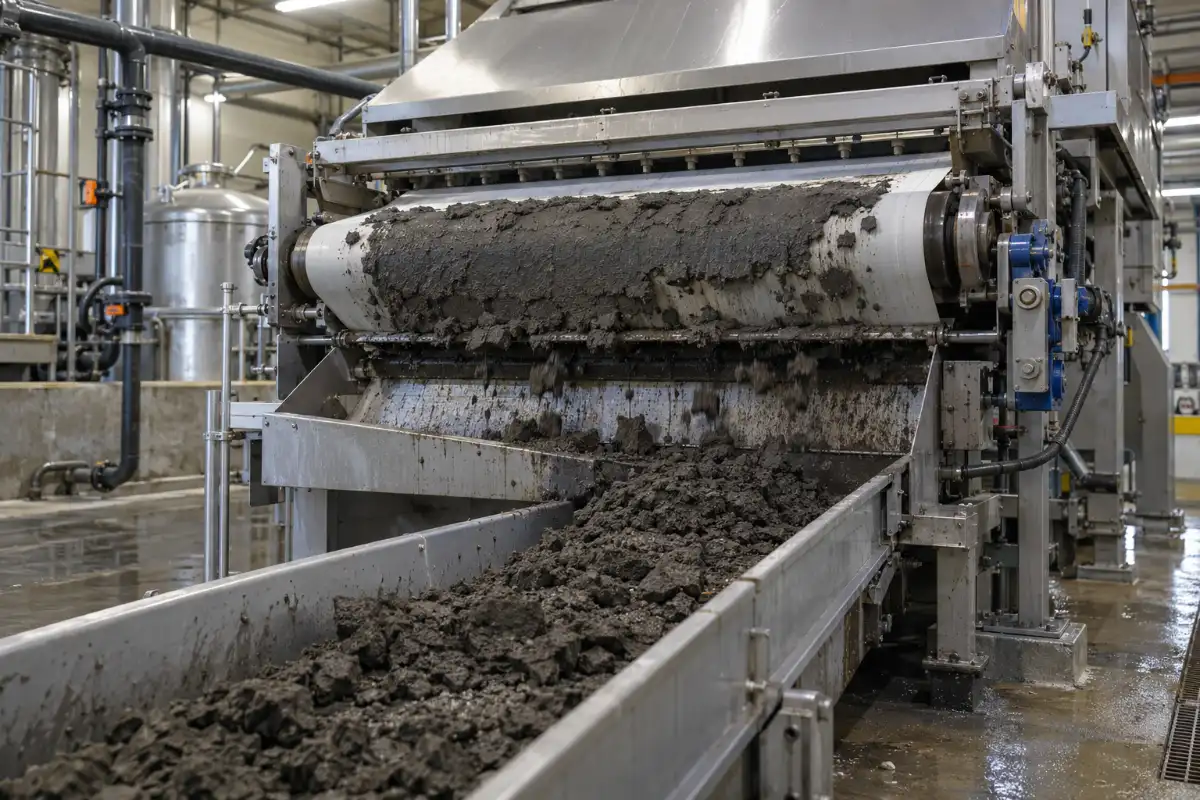
11. Required Distillate Quality
What are you doing with the distillate? Discharge to a municipal sewer, reuse in the process, or feed to a polishing RO? Each target sets a different quality bar. If reuse is the goal, the distillate spec is tight and may require a second treatment stage.
12. Concentrate or Brine Disposition
Where does the concentrated brine go? Hauled off site, crystallized to a solid, or further processed? Disposition drives the target concentration and whether you need a crystallizer at all. This is often the biggest hidden cost in the whole project.
13. Available Steam, Power, and Cooling Water
List what utilities you actually have. Steam pressure and flow, electrical supply voltage and available capacity, cooling water temperature and flow. A mechanical vapor recompression system runs mostly on electricity, while a multi-effect evaporator needs steam. Your utility profile often decides the technology before any other factor.
14. Utility Cost Rates
Give the supplier your actual cost per kWh and per unit of steam. This lets them calculate operating cost honestly instead of assuming a regional average. Operating cost is where evaporator designs diverge most, so this number matters for the lifecycle comparison.
15. Footprint and Installation Constraints
Available floor space, ceiling height, and access for rigging. If the unit has to fit through a specific doorway or be assembled on site, say so. Indoor versus outdoor installation also affects insulation and freeze protection.
16. Material of Construction Preferences
State any plant standards. Some facilities require specific alloys or coatings for consistency with existing equipment. If you have a corrosion history with certain grades, share it.
17. Automation and Control Requirements
How much operator attention can you give the unit? A fully automated system with remote monitoring costs more upfront but reduces labor. If your site runs lean, this is worth specifying clearly.
18. Turndown and Startup Frequency
How often will the unit start and stop? Frequent cycling stresses equipment and affects cleaning intervals. Batch operations need different design margins than continuous ones.
19. Cleaning and Maintenance Access
Note your cleaning chemical preferences and whether clean-in-place is required. Also state how much maintenance downtime you can tolerate. A design that needs frequent manual cleaning may not fit your staffing.
20. Site Conditions and Environmental Requirements
Ambient temperature range, seismic zone, humidity, and any emissions or noise limits. These affect enclosure design, insulation, and sometimes permitting. If your site has discharge limits, those constraints belong in the RFQ too.
Comparing Evaporator Technologies Before You Send the RFQ
Once you have the data, the technology choice usually narrows itself. The table below shows how the main options compare on the factors that matter most. Ranges are indicative and depend heavily on your specific chemistry and utility costs.
| Technology | Energy Source | Typical Energy Use | Best Fit | Key Constraint |
|---|---|---|---|---|
| Single-effect evaporator | Steam | High steam per unit distillate | Small flows, simple duty | Poor steam economy |
| Multi-effect evaporator | Steam | Lower steam, scales with number of effects | Medium to large flows with steam available | Needs reliable steam supply |
| Mechanical vapor recompression (MVR/MVC) | Electricity | Low, driven by compressor | High electricity, low steam sites | Compressor cost and maintenance |
| Membrane concentration (RO/DTRO) | Electricity | Lowest per unit water removed | Pre-concentration ahead of thermal | Limited by osmotic pressure and fouling |
In practice, many projects combine these. A membrane step concentrates the stream cheaply, then a thermal stage finishes the job. If you’re heading toward zero liquid discharge, the membrane and thermal stages have to be designed together, not bolted on separately.
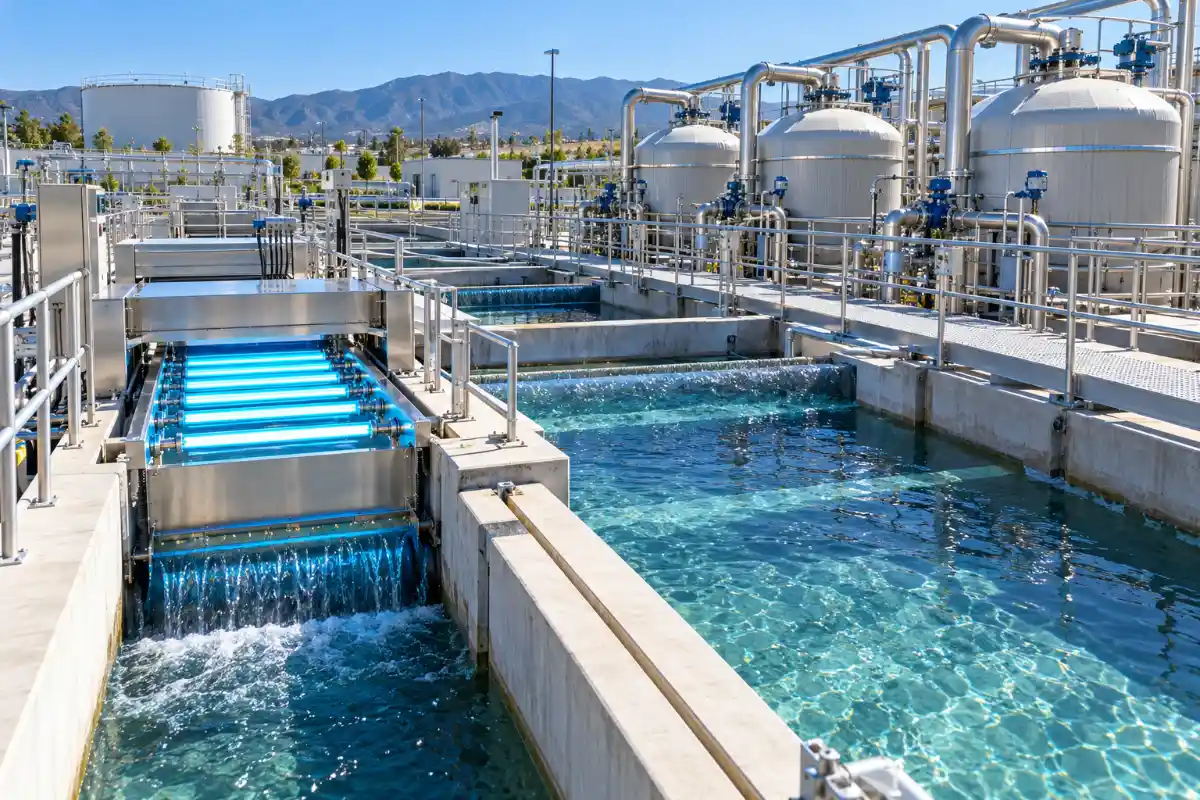
Matching the Technology to the Duty
Here’s how I think about the selection logic in practice.
- Low flow, steam available, simple chemistry: a single-effect unit is often enough and keeps capital low.
- Medium flow, steam available, scaling chemistry: a multi-effect design spreads the duty and improves steam economy. The number of effects is a trade between capital and operating cost.
- High electricity, no steam, moderate flow: mechanical vapor recompression usually wins on operating cost. The compressor becomes the heart of the system, so its reliability and the heat exchanger design matter enormously.
- High salinity, discharge limits tight: membrane pre-concentration followed by thermal finishing, or a full zero liquid discharge train if no liquid discharge is allowed.
If you want to go deeper on how the compressor-based route works, the explanation of mechanical vapor recompression technology covers the thermodynamic basis. For a broader view of where evaporation sits in a treatment train, the overview of process steps in water treatment is a good starting point.
“The RFQ is a design document, not a price request. Treat it that way and you’ll get proposals you can actually compare.”
What Happens When the Data Is Incomplete
I’ve seen this play out more times than I’d like. A buyer sends a flow rate and a TDS number. The supplier designs for moderate chloride, quotes 316L stainless, and wins the job on price. Six months into operation, the heat exchanger tubes pit through because the actual chloride was three times the assumed value. The fix means new tubes, downtime, and a relationship that’s now adversarial.
The reverse happens too. A buyer over-specifies out of caution, and the supplier quotes titanium everywhere plus a crystallizer “just in case.” The price comes in 40 percent high and the project stalls. Both problems trace back to the same root cause: incomplete or inaccurate data in the RFQ.
The lesson is simple. Spend the money on a proper water analysis before you send the inquiry. It’s the cheapest part of the whole project and the one that prevents the most expensive mistakes.
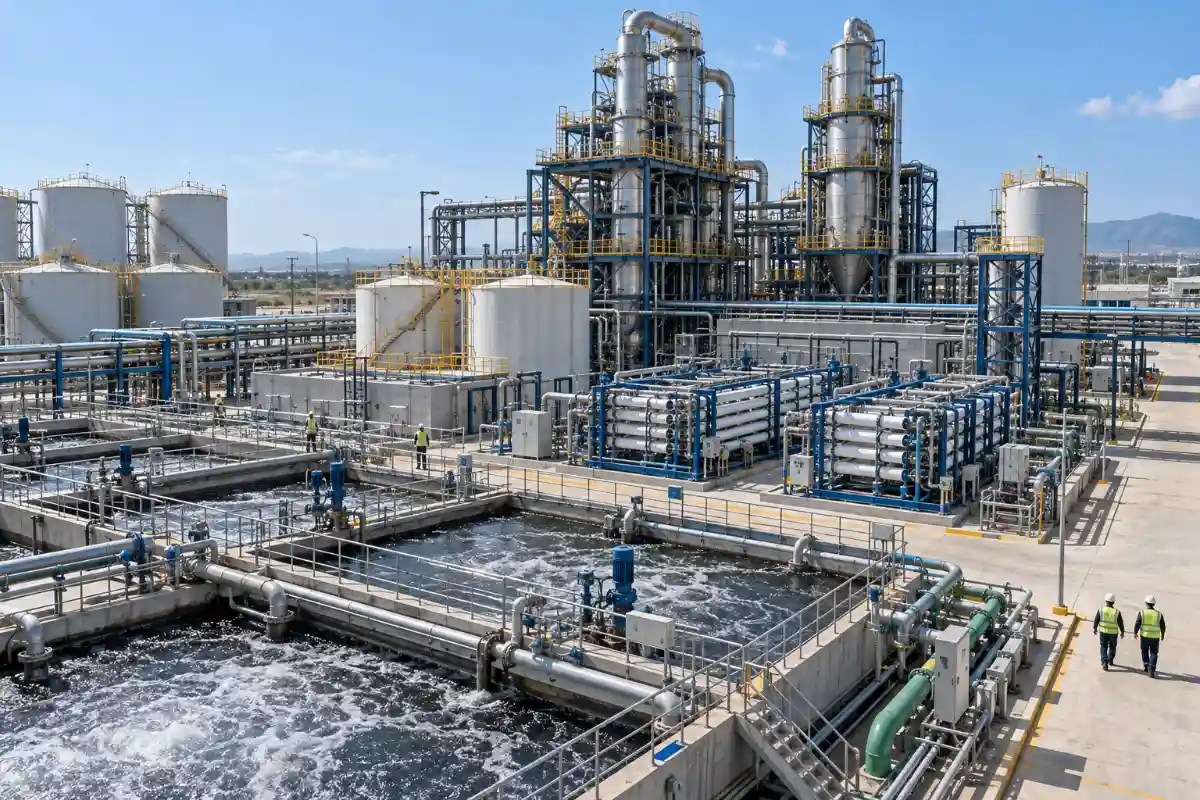
How to Structure the RFQ Document Itself
Once you have the 20 data points, organize them so a supplier can respond without a dozen follow-up emails.
- Cover sheet: project name, contact, date, and a one-paragraph description of the duty.
- Feed data table: all chemistry, flow, and variability data in one place.
- Product requirements: distillate quality, concentrate concentration, and disposition.
- Utility data: what’s available and what it costs.
- Site constraints: footprint, access, environment, and standards.
- Commercial terms: delivery expectations, documentation requirements, and warranty.
Keep the technical section factual. Save your questions for a separate list so the supplier can address them clearly. A well-structured RFQ typically cuts the bid cycle by weeks because it removes the back-and-forth.
If you’d like a second set of eyes on your data before you send it out, our team reviews these packages regularly and can flag gaps early.
Request a review of your evaporator RFQ data
Cost Drivers You Should Anticipate
Capital cost for an evaporator system is driven by a handful of factors, and knowing them helps you read quotes intelligently.
- Evaporation duty: how much water you remove per hour. This sets heat exchanger area and compressor size.
- Material of construction: chloride and temperature push you up the alloy ladder, and that cost is significant.
- Concentration target: higher concentration means higher boiling point elevation and more energy per unit.
- Automation level: controls and instrumentation add cost but reduce labor.
- Pretreatment scope: oil removal, softening, or pH adjustment may be needed upstream.
Operating cost is dominated by energy, then cleaning chemicals, then maintenance labor. The energy piece is where technology choice matters most. A well-chosen mechanical vapor recompression system can cut operating cost substantially compared to a steam-driven design, but only if electricity is reasonably priced at your site.
For a deeper look at how these costs break down, the analysis of MVR evaporator cost drivers is worth reviewing before you finalize your budget assumptions.
Maintenance and Operational Realities
Every evaporator needs cleaning. The question is how often and how hard. Scaling chemistry determines the interval, and the interval determines your operating labor.
Design choices that reduce maintenance headaches include:
- Generous heat transfer area so the unit runs at lower temperature difference, which slows scaling.
- Forced circulation for high-solids streams to keep crystals suspended.
- Access ports and clean-in-place connections sized for the actual cleaning method.
- Redundant circulation pumps if the process can’t tolerate downtime.
Spare parts strategy matters too. Compressor seals, gaskets, and instrumentation should be identified in the RFQ so you can stock critical items. A unit that’s down waiting on a specialty part is a unit that isn’t treating water.
Common Mistakes I See in Evaporator RFQs
After reviewing a lot of these documents, the same errors show up again and again.
- Single TDS number with no ion breakdown. This is the most common and most costly mistake.
- No turndown requirement stated. Suppliers design for peak and the unit runs poorly at low load.
- Utility costs omitted. The supplier can’t compare technologies without them.
- Concentrate disposition left vague. This changes the entire process train.
- No mention of existing plant standards. You get a design that doesn’t match your maintenance practices.
- Missing variability data. Batch versus continuous is a fundamental design input.
Each of these is easy to fix before the RFQ goes out. Fixing them after the quote arrives is much harder.
Frequently Asked Questions
What is the minimum data I need before requesting an evaporator quote?
At absolute minimum, you need design flow, feed TDS, target concentrate TDS, chloride level, pH, and available utilities. Without these six, any quote you receive is an estimate at best. The full 20-point list gives you a much more reliable number.
How do I know whether I need MVR or a multi-effect evaporator?
It usually comes down to utilities. If you have cheap electricity and little or no steam, mechanical vapor recompression is typically the better operating choice. If you have reliable low-cost steam, a multi-effect design can be competitive. Your utility cost rates are the deciding input, which is why they belong in the RFQ.
Why does chloride matter so much for material selection?
Chloride drives pitting and stress corrosion cracking in stainless steels, especially at elevated temperature. A modest chloride increase can force a jump from 316L to duplex or titanium. Getting the chloride number right up front avoids a costly material change after fabrication has started.
Can I send a wastewater evaporator RFQ without a full lab analysis?
You can, but you shouldn’t. A full ion analysis is inexpensive compared to the cost of a design error. Suppliers who receive incomplete data either pad their price or make assumptions that may not hold. A proper analysis is the highest-return investment in the whole project.
What operating cost should I expect from an evaporator system?
Energy dominates, and it varies widely with technology, concentration target, and your local utility rates. A membrane pre-concentration step can cut thermal load significantly. Ask each supplier to show their energy calculation using your actual utility rates so you can compare on equal footing.
How often will the evaporator need cleaning?
It depends on scaling chemistry and operating temperature difference. Hardness, silica, and sulfate drive frequency. Designing with generous heat transfer area and running at lower temperature difference extends the interval. Your cleaning chemical preferences should be stated in the RFQ so the design accommodates them.
Should I include future flow increases in the RFQ?
Yes, if you expect them. State the current flow and the projected maximum. A supplier can design for the higher number or build in provisions for a future module. Retrofitting capacity later is almost always more expensive than planning for it now.
The Bottom Line
A wastewater evaporator RFQ is a design brief. The more accurately you describe the duty, the more accurately suppliers can price and design for it. The 20 data points here aren’t bureaucratic boxes to tick. Each one changes something real in the machine you’ll operate for the next fifteen years. Spend the time on the front end, get a proper analysis, and state your utilities and constraints clearly. The proposals you receive will be sharper, the comparison will be fairer, and the system you install will match the job it has to do.