Equalization & pretreatment
Screening, equalization, pH adjustment and—when required—coagulation, flocculation or precipitation reduce solids and protect the biological and membrane stages from shock loading.


A practical treatment approach for difficult landfill wastewater—combining equalization, biological treatment and membrane polishing around your actual leachate chemistry, discharge limit and concentrate disposal route.
Landfill leachate is rarely a stable wastewater. Rainfall, landfill age, waste composition, recirculation practices and seasonal temperature can all change the hydraulic load and water chemistry. A system that performs well on an average sample can struggle when ammonia, COD, conductivity or suspended solids spike.
That is why a workable design usually starts with equalization and pretreatment, then separates biodegradable pollution from dissolved salts and refractory contaminants instead of asking one process to remove everything.
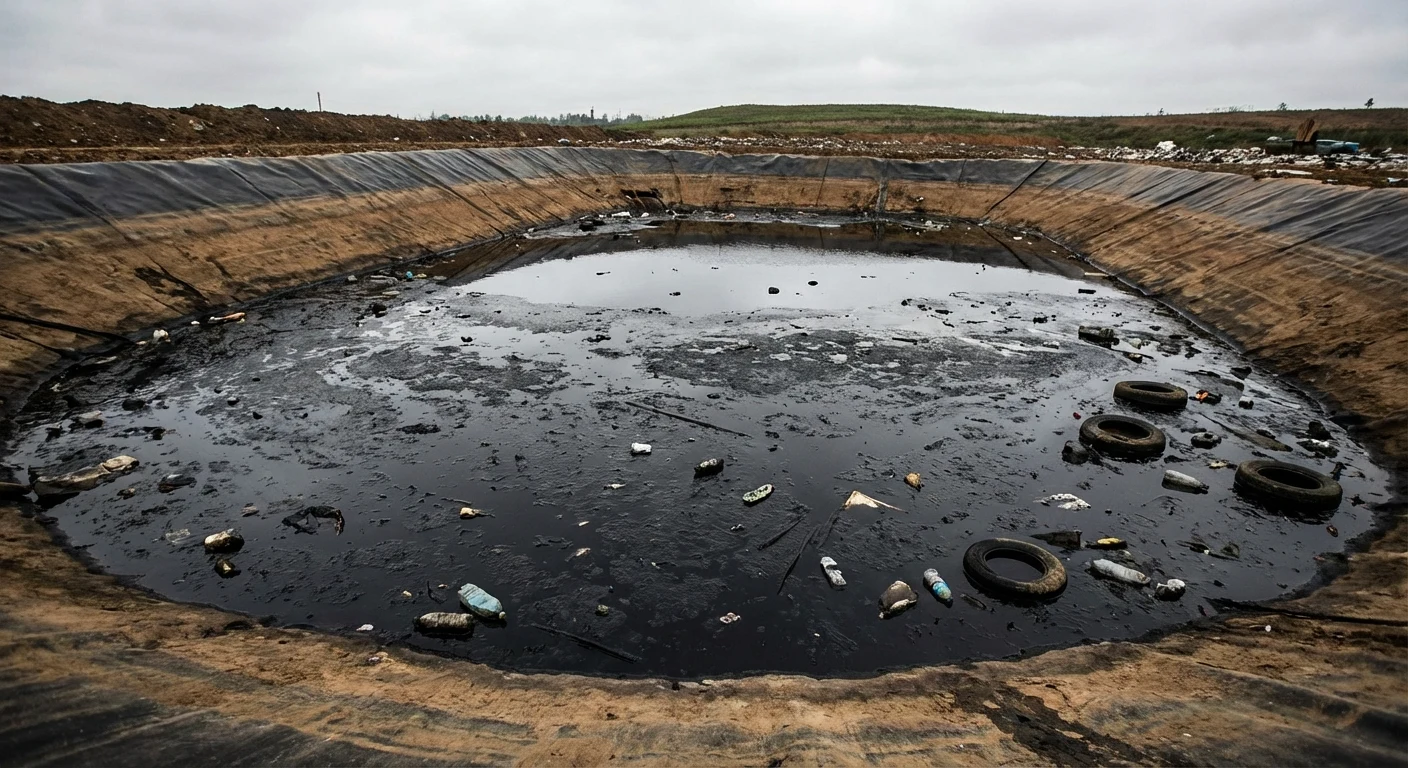
The exact sequence changes with the leachate analysis, but the following structure covers the main jobs: stabilize the feed, remove biodegradable load and ammonia, polish dissolved contaminants, and plan for the residuals the process creates.
Screening, equalization, pH adjustment and—when required—coagulation, flocculation or precipitation reduce solids and protect the biological and membrane stages from shock loading.
An MBR-based biological stage can handle biodegradable organics while supporting nitrification and denitrification. Aeration, alkalinity, sludge age, temperature and nitrogen loading all matter here.
Reverse osmosis or nanofiltration can remove remaining dissolved salts, refractory organics and trace contaminants when the required effluent quality is beyond what biological treatment can provide.
RO reject, chemical sludge and biological sludge need a defined route. Recirculation, evaporation, further treatment or off-site disposal may be considered depending on local permits and site conditions.
This is a more useful way to evaluate a leachate system than comparing technologies in isolation.
| Main issue | What it can cause | Common treatment response | What should be checked first |
|---|---|---|---|
| High suspended solids / turbidity | Membrane fouling, unstable downstream operation | Screening, equalization, coagulation / flocculation, clarification or filtration | TSS, turbidity, particle load, oil and grease |
| High ammonia-N / TN | Biological inhibition, failure to meet nitrogen limits | Biological nitrification-denitrification; ammonia stripping in selected high-load cases | NH₃-N, TN, alkalinity, temperature, BOD/COD ratio |
| High refractory COD / color | Residual COD after biological treatment | RO/NF, activated carbon or advanced oxidation depending on the compounds involved | COD fractionation, color, UV254 if available, biodegradability |
| High TDS / conductivity | Salinity in treated water; inhibition at extreme levels | RO/NF with suitable pretreatment and concentrate management | Conductivity, TDS, chloride, sulfate, hardness, silica |
| Large flow or quality swings | Hydraulic shocks and inconsistent effluent | Equalization, buffer capacity, staged treatment and automated control | Daily / hourly flow profile and wet-season data |
| Tight discharge or reuse target | Multiple parameters become limiting at once | Multi-barrier treatment with final polishing and disinfection where required | Actual permit limits or reuse specification—not only generic standards |
The figures below use the project values supplied for this page. They show the level of reduction a multi-stage process may be designed to achieve when the influent, pretreatment and operating conditions are suitable.
| Parameter | Influent | Treated water | Reduction |
|---|---|---|---|
| COD | 12,500 mg/L | < 60 mg/L | > 99.5% |
| BOD₅ | 4,200 mg/L | < 10 mg/L | > 99.7% |
| Ammonia-N | 1,100 mg/L | < 5 mg/L | > 99.5% |
| TDS | 18,000 mg/L | < 200 mg/L | > 98% |
New landfill cells, older lagoons, municipal transfer sites and industrial disposal facilities do not have the same constraints. The treatment train can be packaged differently depending on the space, utilities, operator availability and expansion plan.
Useful where installation time, footprint or phased capacity matters. Modules can separate pretreatment, biology, membranes and chemical systems for easier site planning.
Existing tanks, equalization basins or biological assets may be retained when they still have useful capacity. The bottleneck is identified first, then the missing treatment stage is added.
When the biological plant is stable but COD, color, conductivity or dissolved salts remain too high, a polishing stage can be designed around those remaining parameters.
Flow, pH, pressure, conductivity, dissolved oxygen and tank levels can be integrated into the control strategy so operators can see abnormal conditions before they become an effluent problem.
Average daily flow alone can undersize a leachate plant. Storage, equalization and peak hydraulic loading should be checked against the rainy-season profile.
If RO is required, the reject stream should be considered during concept design. Recovery rate, scaling control and the permitted disposal route affect both equipment size and operating cost.
Two sites with the same daily flow can need very different equipment. The main cost drivers are usually the water chemistry, required outlet quality, membrane recovery and the way residuals are handled.
COD, ammonia, TDS, hardness, metals and suspended solids determine how many treatment barriers are needed.
Wet-season peaks can increase equalization volume, membrane area, tank size and installed capacity.
A sewer discharge target, surface-water limit and reuse specification can require very different polishing steps.
The permitted concentrate and sludge disposal method can materially change both CAPEX and operating cost.
You do not need a perfect engineering package to start. A recent water analysis and a few site details are enough for an initial process discussion.
It can be technically possible in selected cases, but high solids, organics, hardness and scaling potential can make direct RO difficult and expensive to operate. Pretreatment is normally evaluated first so the RO stage is not being used as a substitute for basic solids and biological control.
They do different jobs. MBR combines biological treatment with membrane solids separation and is useful for biodegradable COD and nitrogen control. RO is a pressure-driven membrane barrier used mainly for dissolved salts and remaining dissolved contaminants. In a high-quality treatment train, they are often complementary rather than alternatives.
The design needs enough biological capacity, oxygen transfer, alkalinity and sludge age for nitrification, followed by a suitable denitrification strategy for total nitrogen. Extremely high loads may justify a dedicated pretreatment step such as ammonia stripping, but that decision should be based on the actual concentration and operating conditions.
There is no universal answer. Depending on local permits and site conditions, options may include controlled recirculation, evaporation, further treatment or off-site disposal. The concentrate route should be resolved during design because it affects membrane recovery and operating cost.
Flow alone is not enough to price the system. The cost changes with COD and ammonia loading, salinity, required effluent quality, pretreatment needs, membrane recovery, automation, site construction and the residuals disposal route. A recent lab report normally gives a much more meaningful starting point than a price-per-cubic-meter estimate.
A modular layout can be considered when footprint, construction time or phased expansion is important. Tank volume, biological residence time and large equalization requirements may still need site-built components, so containerization should follow the process design rather than dictate it.
Start with daily flow, a recent water analysis, the required discharge or reuse target, and the available concentrate disposal route. Site space, power supply and existing equipment are also useful if the project is an upgrade rather than a new installation.
Share the flow rate, recent lab results and required outlet standard. That gives the engineering discussion something concrete to work from—process stages, likely bottlenecks, footprint and the next information needed.