

If you’re comparing wastewater reuse system suppliers for a manufacturing plant, the short answer is this: the right supplier is the one who designs around your actual water chemistry, not the one with the biggest catalog. I’ve watched plants buy a “proven” reuse skid that failed within eighteen months because nobody ran a proper pilot on their real effluent. A good supplier starts with a mass balance, asks what you’ll do with the concentrate, and can explain why each unit operation exists. Everything else — brand names, price per cubic meter, delivery time — comes second. This article walks through how I evaluate suppliers, what separates a strong proposal from a weak one, and where most reuse projects quietly go wrong.
What “Wastewater Reuse” Actually Means in a Factory
Reuse isn’t one thing. It’s a spectrum, and suppliers who blur that spectrum are usually hiding something. In my experience, manufacturing plants fall into four practical reuse tiers:
- Utility-grade reuse — cooling tower makeup, floor washing, dust suppression. Lowest quality bar, easiest to hit.
- Process-grade reuse — boiler feed, rinse water, CIP pre-rinse. Needs consistent low TDS and controlled silica and hardness.
- High-purity reuse — DI feed for electronics, pharmaceutical, or battery manufacturing. Demanding and expensive.
- Zero liquid discharge (ZLD) — no liquid leaves the site. The most capital-intensive path, usually driven by permit limits rather than economics.
Each tier demands a different supplier skill set. A company that’s excellent at packaged membrane systems may be out of its depth on an evaporator-and-crystallizer train. Ask any candidate supplier which tier they’ve actually delivered, and ask for the water analysis from those jobs. Vague answers are a red flag.
How I Screen Suppliers Before Anyone Signs a Contract
I’ve been on both sides of this — as a plant engineer buying systems and as a vendor delivering them. Here’s the checklist I use, and it’s the same one I’d hand to a client.
1. Do they ask for a full water analysis first?
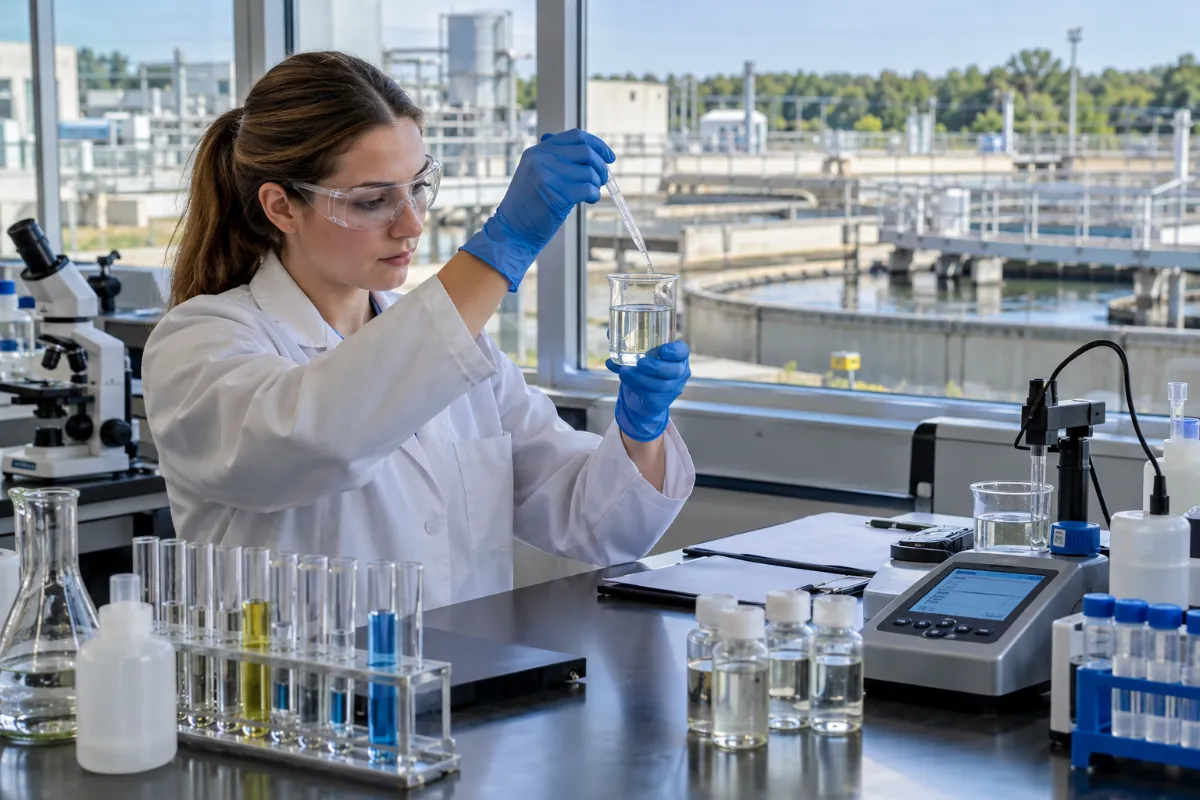
A serious supplier won’t quote a reuse system from a one-page inquiry. They want at minimum: TDS, conductivity, COD, BOD, silica, hardness, chloride, sulfate, iron, manganese, oil and grease, pH, temperature, and flow variability. If they skip this, you’re buying a template, not a design.
2. Can they explain the concentrate path?
Every membrane or evaporation process produces a reject stream. If the supplier can’t tell you how much concentrate you’ll generate, what its composition will be, and how it will be managed, they haven’t finished the design. This is where most reuse projects fail at the permitting stage.
3. Do they own the critical equipment or just resell?
For thermal systems, this matters enormously. A supplier who fabricates their own heat exchangers and evaporator bodies controls quality and lead time. A pure integrator depends on third parties for every component. Both can work, but you should know which one you’re dealing with.
4. What does their service model look like?
Ask who shows up when a compressor trips at 2 a.m. Ask how spare parts are stocked. Ask whether they’ll train your operators on-site. Reuse systems live or die on maintenance discipline, and a supplier with no local or regional service presence is a long-term liability.
5. Have they run a pilot on water like yours?
For anything with high scaling potential — silica, calcium sulfate, high organics — a pilot is not optional. I’ve seen plants skip it to save three months and lose a year to fouling problems.
Comparing the Main Technology Routes
Different suppliers lead with different technologies. The table below is a rough engineering comparison based on typical design ranges. Your actual numbers will depend on water chemistry, flow, and site conditions.
| Technology | Typical Use | Recovery Range* | Main Strength | Main Weakness |
|---|---|---|---|---|
| Industrial RO | Low-salinity reuse, utility water | 65–80% | Low energy, mature, easy to operate | Struggles above ~40,000 mg/L TDS |
| DTRO (disc-tube RO) | High-fouling or high-TDS streams | 70–85% | Open channel handles solids and scaling | Higher membrane cost, specialty parts |
| MVC / MVR evaporator | Concentration, ZLD feed, brine reduction | 85–95% water recovery | Lowest thermal energy per kg of water | High capex, needs stable power |
| Multi-effect evaporator | High-capacity concentration | 85–95% water recovery | Scalable, tolerant of variable feed | Steam-hungry unless paired with MVR |
| ZLD train (combined) | Discharge-restricted sites | 95–99% water recovery | Eliminates liquid discharge | Solid waste handling and highest opex |
*Indicative ranges only. Actual recovery depends on feed chemistry, pretreatment, and operating setpoints.
If your plant is dealing with high-salinity brine, a mechanical vapor compression (MVC) evaporator is often the workhorse. For streams that foul conventional membranes, a DTRO membrane system earns its keep. And when the permit leaves no liquid discharge option at all, a full ZLD system becomes the conversation.
What Separates a Good Supplier from a Great One
I’ve worked with dozens of vendors. The ones I keep going back to share a few traits that don’t show up in a brochure.
They push back on your assumptions
The best supplier I ever worked with told me my proposed flow rate was wrong. He was right. He’d seen the same process at three other plants and knew the actual variability was 40% higher than my data suggested. That conversation saved the project.
They design for turndown
Manufacturing plants rarely run at nameplate. A reuse system that only works at 100% flow is a liability. Ask how the system performs at 50%, 30%, and during shutdowns. Suppliers who’ve thought about this will have a clear answer.
They talk about energy honestly
For thermal systems, energy is 50–70% of lifecycle cost. A supplier who quotes only kWh per ton of water without explaining the assumptions — feed temperature, boiling point elevation, compressor efficiency — isn’t giving you a real number. For context on how these systems compare on energy, the International Energy Agency publishes useful benchmarks on industrial energy intensity.
They plan for maintenance from day one
Evaporators scale. Membranes foul. Pumps wear. A supplier who hands you a maintenance schedule, spare parts list, and operator training plan is worth more than one who shaves 5% off the price. For sludge handling at the back end of a reuse train, a well-specified screw press dewatering unit can cut hauling costs significantly.
They know the regulatory landscape
Discharge limits and reuse standards vary widely. A supplier who can’t discuss how their system aligns with local permitting — or who refers you to a general wastewater discharge standards overview without specifics — is leaving you to solve that problem alone. The U.S. EPA and the World Bank both publish guidance on industrial water reuse that’s worth reading before you issue an RFQ.
Where Reuse Projects Typically Fail
I’ve seen the same failure modes repeat across industries. None of them are exotic.
- Pretreatment was undersized. The membrane or evaporator gets blamed, but the real problem is upstream. Oil, silica, or hardness slips through and destroys the core equipment.
- Concentrate management was an afterthought. The reuse system works fine; the brine disposal contract doesn’t exist.
- Operators weren’t trained. A reuse system isn’t a set-and-forget unit. It needs daily attention, and that requires people who understand what they’re looking at.
- Flow variability wasn’t designed for. The plant runs three shifts, but the reuse system was sized for average flow. It cycles constantly and wears out early.
- The supplier disappeared after commissioning. No service contract, no spare parts, no support. The system degrades slowly and nobody notices until it fails.
Every one of these is preventable with a supplier who asks the right questions before the purchase order is cut.
A Realistic Look at Cost
I get asked for numbers constantly, and I always give the same answer: it depends. But here’s the honest framework I use with clients.
| Cost Component | Typical Share of Lifecycle Cost | What Drives It |
|---|---|---|
| Capital (equipment + install) | 25–40% | Technology choice, capacity, materials of construction |
| Energy | 30–50% | Thermal vs. membrane, feed conditions, power cost |
| Maintenance and consumables | 10–20% | Membrane replacement, cleaning chemicals, spares |
| Labor and operations | 5–15% | Automation level, site staffing model |
| Concentrate / solids disposal | 5–20% | Local disposal options, waste classification |
Indicative ranges only. Site-specific factors often move these significantly.
The trap I see most often: plants focus on capital cost and ignore energy. A cheaper system with a higher specific energy consumption can cost more over ten years than a well-designed alternative. Ask every supplier for a lifecycle cost model, and make sure the assumptions are visible.
Questions to Ask Before You Shortlist
When I help plants run a supplier evaluation, these are the questions that separate serious candidates from the rest:
- Can you share a mass balance for a stream similar to ours?
- What’s the expected recovery, and what assumptions drive it?
- How does the system behave at 50% and 30% of design flow?
- What’s the concentrate composition, and what disposal options have you seen work?
- Who manufactures the heat exchangers, membranes, and compressors?
- What’s included in the service contract, and what’s extra?
- How long does commissioning typically take, and who’s on site?
- Can we visit a reference site running similar water?
A supplier who answers these clearly and without hedging is usually worth a second meeting. One who deflects is usually not.
For context on how evaporation-based reuse compares to membrane-only approaches, the evaporator route is often the only viable path when TDS climbs above what membranes can tolerate. And when you’re evaluating the thermal side specifically, understanding MVR technology versus conventional multi-effect designs matters for your energy forecast.
How I’d Structure the Selection Process
If you’re starting from scratch, here’s the sequence I recommend:
- Characterize the water. Full analysis, seasonal variability, and peak loads. Don’t skip this.
- Define the reuse target. What quality do you actually need, and where will it go?
- Map the concentrate path. Disposal, further treatment, or zero liquid discharge.
- Issue a detailed RFQ. Include the water analysis, target quality, flow profile, and site constraints.
- Require a mass balance with every quote. This forces suppliers to show their work.
- Pilot if scaling risk is high. Silica, calcium sulfate, and high organics all warrant it.
- Score on lifecycle cost, not capital. Energy and maintenance dominate long-term.
- Lock in service before commissioning. Spare parts, response time, and training in writing.
This process takes longer than a quick purchase, but it’s the difference between a reuse system that runs for fifteen years and one that gets bypassed in three.
Final Thoughts
The best wastewater reuse system supplier for your plant isn’t the one with the longest client list or the lowest price. It’s the one who understands your water, designs for your actual operating conditions, and stays engaged after commissioning. That combination is rarer than it should be, but it’s what separates projects that work from projects that become cautionary tales.
If you’re at the evaluation stage and want a second opinion on a proposal or a mass balance, that’s a conversation worth having early. Talk to Our Engineering Team
Frequently Asked Questions
How do I know if my plant actually needs a reuse system?
Three signals usually point to it: rising discharge fees or tightening permit limits, high freshwater costs, or a corporate sustainability target. If none of those apply, the economics rarely justify the capital. Run a simple comparison of current water and discharge costs against a lifecycle cost model before committing.
What’s the difference between MVC and MVR evaporators?
They’re closely related. MVC (mechanical vapor compression) and MVR (mechanical vapor recompression) both use a compressor to reuse the latent heat in the vapor. The terminology varies by region and vendor. What matters is compressor type, boiling point elevation, and how the system handles scaling — not the acronym.
Can I reuse wastewater without evaporation?
Yes, if your TDS stays within membrane limits and you have a viable concentrate disposal route. Industrial RO and DTRO handle many manufacturing streams without thermal treatment. Evaporation becomes necessary when salinity is high, when the concentrate can’t be discharged, or when you need near-total water recovery.
How much maintenance does a reuse system need?
Membrane systems need periodic cleaning and element replacement every three to seven years depending on fouling. Evaporators need regular descaling, compressor inspection, and heat exchanger cleaning. Budget for one to two weeks of planned downtime per year, and make sure you have trained operators or a service contract.
What’s the biggest mistake plants make when choosing a supplier?
Buying on capital cost alone. I’ve seen plants save 15% upfront and spend 40% more over five years on energy and maintenance. The second biggest mistake is skipping the pilot when scaling risk is high. Both are avoidable with a disciplined evaluation process.
How long does a typical reuse project take from RFQ to startup?
For a packaged membrane system, six to twelve months is common. For an evaporator-based or ZLD train, twelve to twenty-four months is realistic when you include engineering, fabrication, site work, and commissioning. Piloting adds three to six months but often saves more than it costs.
Do I need a pilot test before buying?
Not always, but if your stream has high silica, calcium sulfate, oil, or variable organics, yes. Pilots reveal fouling behavior and scaling rates that lab data can’t predict. Skipping a pilot on a difficult stream is one of the most expensive shortcuts in this industry.