

Battery manufacturing wastewater is one of the harder streams you will run into. It carries cobalt, nickel, manganese, lithium, fluoride, and sulfate, plus the organics and binders that come off the electrode coating lines. If you are specifying equipment right now, the short answer is this: the best wastewater treatment equipment for battery industry plants combines chemical precipitation or fluoride removal up front, membrane concentration in the middle, and an evaporator or crystallizer at the back end if you have discharge limits you cannot meet any other way. No single machine handles the whole stream. Below I walk through what actually works, where each unit fits, and the trade-offs I have seen on real projects.
What Makes Battery Wastewater Different
Most industrial streams give you one or two problems. Battery wastewater gives you four at once, and they fight each other.
- Heavy metals at meaningful concentrations. Nickel, cobalt, manganese, and sometimes copper come in at tens to hundreds of mg/L depending on the process bath and rinse ratio.
- Fluoride. It shows up from cathode active material handling and from some electrolyte residues. Fluoride is the one that trips up most first-time designers because it needs its own removal step.
- High salinity and sulfate. Sodium sulfate is common, especially where you neutralize with caustic and sulfuric acid is in the mix. Total dissolved solids can climb into the tens of thousands of mg/L.
- Organics and suspended solids. Binders, solvents, and carbon black fines make the stream look like a slurry on a bad day.
What makes this painful is the interaction. If you raise pH to drop metals, you also drive fluoride chemistry in a direction you may not want. If you use lime, you add hardness and sludge volume. If you skip pretreatment and send the stream straight to a membrane, you foul the membrane in weeks, not months. I have watched that mistake cost a client an entire membrane skid.
The practical takeaway: treat battery wastewater as a sequence, not a unit. Each stage protects the next one.
Pretreatment: Where Most Projects Are Won or Lost
Chemical Precipitation and Fluoride Removal
This is the workhorse. You adjust pH in stages, add a coagulant and a polymer, and let the metals drop out as hydroxides. For fluoride you typically need a two-stage approach: a first stage at a pH that favors calcium fluoride formation, then a second stage with a metal salt to polish the residual down to the low single digits.
Two things I always flag in design reviews:
- Sludge volume. Metal hydroxide sludge is bulky. If you do not plan for it, the dewatering train becomes the bottleneck. A screw press sludge dewatering system is a reasonable fit for many battery plants because it runs continuously, needs little attention, and tolerates the fine, gelatinous solids you get here.
- Reagent cost. Caustic is expensive. Lime is cheap but adds sludge. Run the numbers over five years, not one.
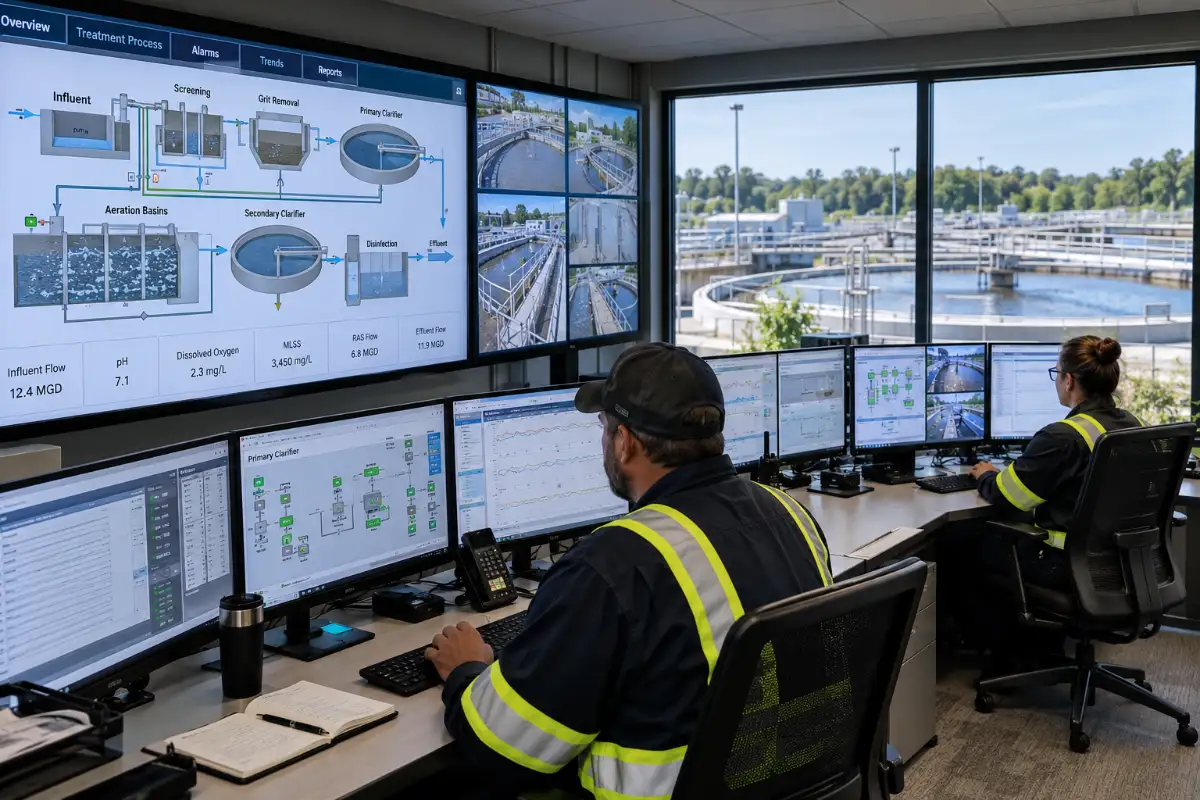
Why Pretreatment Protects Everything Downstream
Every membrane and evaporator downstream assumes a certain feed quality. If you let suspended solids or scale-forming ions through, you pay for it twice: once in cleaning chemicals, once in downtime. I would rather oversize the pretreatment clarifier than undersize it. The cost difference is small compared to a fouled DTRO membrane system that has to come offline every three weeks.
Membrane Concentration for High-Salinity Streams
Once the metals and fluoride are under control, you are left with a salty, relatively clean stream. That is where membranes earn their keep.
Reverse Osmosis and High-Pressure RO
Standard industrial RO handles the easy part of the curve. It concentrates the stream and produces permeate you can often reuse in rinsing. The limit is osmotic pressure. Once you push past roughly 70 to 80 bar, standard elements stop being practical and you move to disc-tube or high-pressure designs.
I usually recommend treating membrane selection as a function of your target concentration factor, not as a brand decision. Ask: what TDS do I need to reach before the evaporator, and what pressure does that require? That answer narrows the field fast.
DTRO for Difficult Feeds
Disc-tube reverse osmosis is the tool I reach for when the feed is still a little dirty, or when the stream has a tendency to foul flat-sheet elements. The open channel design handles higher solids and cleans more easily. It is not magic, and it still needs decent pretreatment, but it buys you concentration factors that conventional RO cannot reach.
For plants targeting near-zero liquid discharge, membranes do the heavy lifting of volume reduction. Evaporation then handles the final brine. Skipping the membrane stage and evaporating everything is technically possible but almost always a worse economic decision.
Evaporation: The Backbone of Zero Liquid Discharge
When your discharge limits are tight, or when you simply cannot send brine anywhere, evaporation becomes the core of the plant. This is where most of the capital and most of the operating cost sits.
MVC and MVR Evaporators
Mechanical vapor compression is the default choice for most battery wastewater projects today. You compress the vapor and reuse its latent heat, so the energy you put in is mostly compressor power, not steam. For a plant with no cheap steam available, this is usually the lowest operating cost option.
The trade-off is mechanical complexity. Compressors need maintenance, and the heat exchangers need to be designed for the scaling tendency of your specific brine. I have seen MVC units run for years with minimal attention, and I have seen them struggle when the feed chemistry was not characterized properly. The difference was always the front-end engineering, not the equipment.
If you want a deeper look at how the heat exchange side is built, the MVC evaporator heat exchanger design is worth understanding before you sign off on a vendor’s proposal.
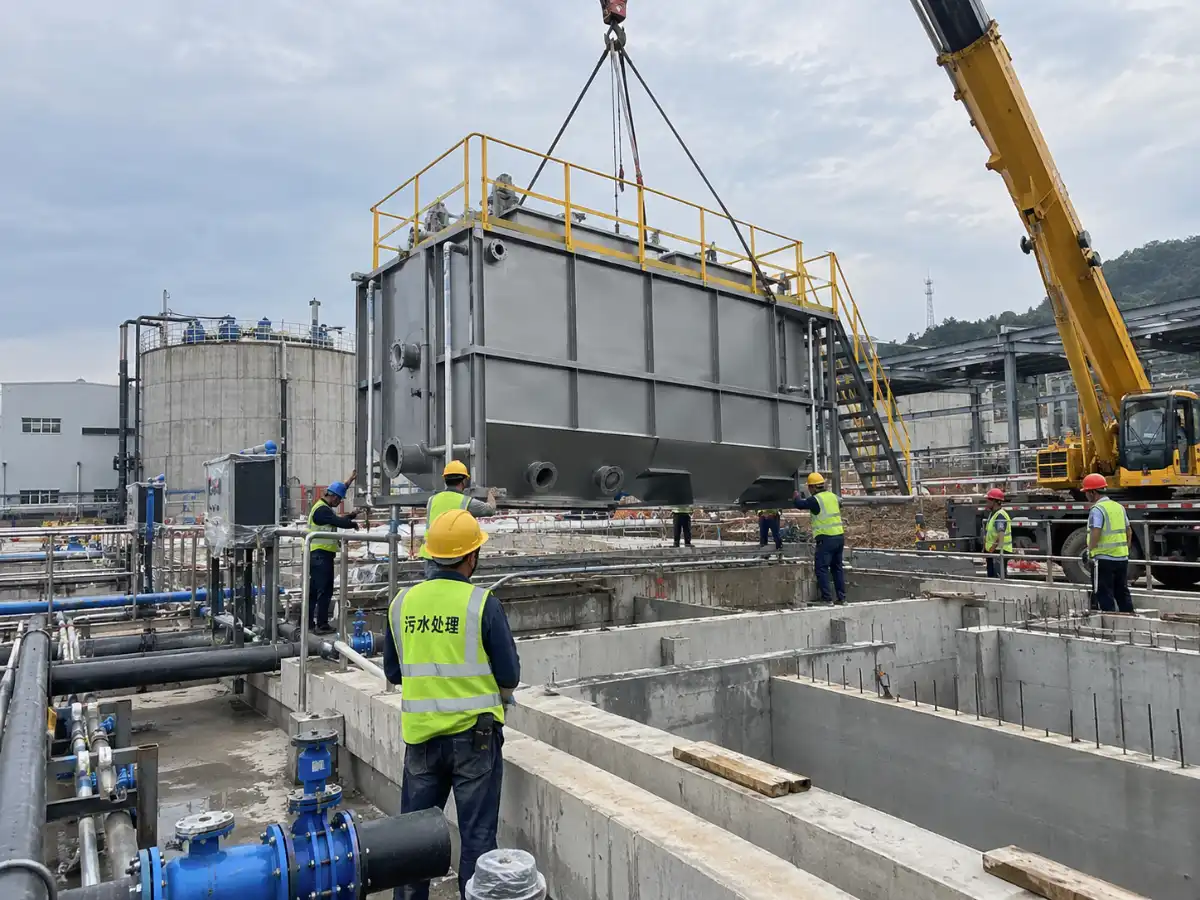
Multi-Effect Evaporators
Multi-effect systems use steam in a cascade. Each effect reuses the heat from the previous one, so steam consumption drops as you add effects. A triple-effect evaporator can cut steam demand dramatically compared to a single effect, but it costs more and takes more floor space.
The selection logic is straightforward:
- Cheap steam available, limited power? Multi-effect is often the better fit.
- Expensive steam, stable power? MVC usually wins.
- Very high salinity or scaling brine? Look at forced circulation designs and consider a hybrid.
Where Crystallization Fits
If you need true zero liquid discharge, the evaporator concentrate goes to a crystallizer. This is the most expensive part of the plant per unit of water removed, so you want the smallest possible brine flow feeding it. That is the whole argument for putting membranes and evaporation ahead of it. Every liter you remove upstream is a liter the crystallizer does not have to boil.
Equipment Selection Comparison
Here is how the main options stack up. Treat these as indicative ranges, not guarantees. Actual performance depends on your feed chemistry, flow rate, and site conditions.
| Technology | Typical Feed TDS | Water Recovery | Energy Profile | Best Fit |
|---|---|---|---|---|
| Chemical precipitation + clarification | Any | Not applicable | Low (pumping, mixing) | Metals and fluoride removal, always first |
| Industrial RO | Up to ~30,000 mg/L | 60–80% | Moderate (high-pressure pumps) | Volume reduction, permeate reuse |
| DTRO | Up to ~60,000 mg/L | 50–75% | Moderate to high | Difficult or fouling feeds |
| MVC / MVR evaporator | Any after pretreatment | 85–95% | Low thermal, high electrical | Low-steam sites, ZLD backbone |
| Multi-effect evaporator | Any after pretreatment | 85–95% | High thermal, low electrical | Sites with cheap steam |
| Crystallizer | Concentrated brine | Up to 98%+ | Very high | Final ZLD step only |
One note on that table: recovery numbers move a lot with chemistry. A stream that scales easily will force you to run at lower concentration, which drops recovery. Always design with a margin.
Energy and Lifecycle Cost: The Numbers That Actually Matter
Capital cost gets the attention. Operating cost decides whether the plant survives the next ten years.
For an evaporator-based plant, electricity and steam usually dominate. A few rules of thumb I use during early screening:
- MVC power consumption typically lands in the range of 15 to 40 kWh per cubic meter of distillate, depending on the temperature lift and compressor efficiency.
- Multi-effect steam consumption drops roughly in proportion to the number of effects, but only up to a point. Beyond three or four effects the marginal gain shrinks while the capital cost keeps climbing.
- Membrane power is far lower per cubic meter, which is exactly why you want membranes doing as much of the work as possible before the evaporator.
Maintenance is the hidden line item. Compressors, pumps, and heat exchangers all need scheduled attention. A plant designed for easy cleaning will cost less to run than one that is theoretically more efficient but impossible to service.
My rule after fifteen years on these projects: design for the maintenance you can actually perform on site, not the maintenance you wish you could perform.
If you want to sanity-check your budget early, it helps to understand what drives MVR evaporator capital and operating cost before you go to tender. It changes which questions you ask vendors.
Sludge Handling and Solids Management
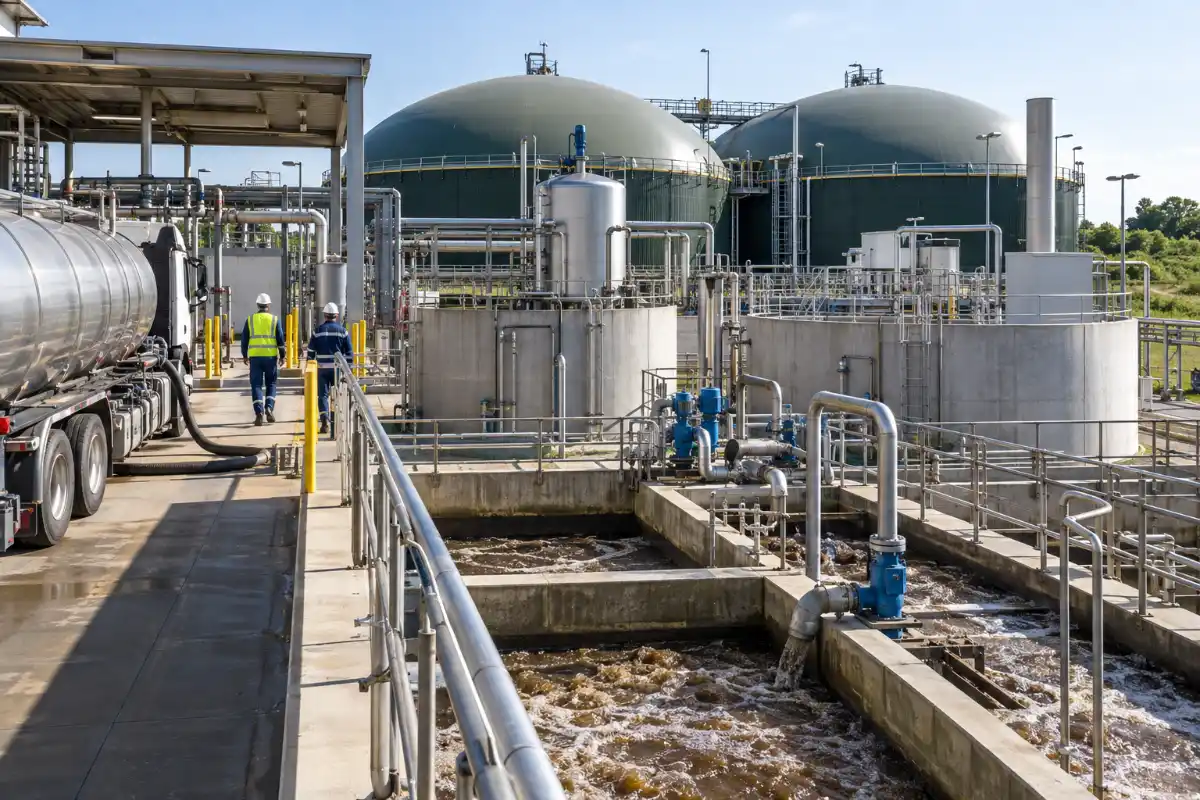
Battery wastewater produces two solid streams: the metal hydroxide sludge from pretreatment, and the salt crystals from the back end. Both need a plan.
For the hydroxide sludge, thickening followed by dewatering is standard. A screw press works well for continuous operation. If your sludge is very fine or you need higher dryness, a filter press may be a better fit, at the cost of batch operation and more operator involvement.
For the salt crystals, you need to think about disposal or reuse early. Some facilities can sell or reuse sodium sulfate. Others must landfill it. That decision affects your crystallizer design and your operating cost more than most people expect.
Common Failure Modes and How to Avoid Them
Most problems I get called in to fix fall into a handful of categories.
- Under-designed pretreatment. The membrane or evaporator gets blamed, but the real issue is upstream. Fix the front end first.
- Scaling in the evaporator. Usually a chemistry problem. The brine was not characterized properly, or the concentration factor was pushed too far.
- Foaming. Organics and surfactants in the feed cause foam in evaporators and clarifiers. Antifoam helps, but the real fix is often upstream separation.
- Corrosion. High-chloride brines eat standard stainless steel. Material selection is not a place to save money.
- Poor turndown. Plants rarely run at design flow all the time. Equipment that cannot turn down without losing stability will cause headaches.
If you take one thing from this section, take this: most “equipment failures” are actually design failures that show up months later.
How to Structure the Selection Process
When I help clients specify a battery wastewater plant, we work through it in this order:
- Characterize the stream properly. Full analysis, including trace metals, fluoride, TDS, organics, and variability over a production cycle. One grab sample is not enough.
- Define the discharge or reuse target. This drives everything. A permit limit and a zero liquid discharge goal lead to completely different plants.
- Set the treatment sequence. Pretreatment, then membranes, then evaporation, then crystallization if needed.
- Size each stage with margin. Not 50% margin, but enough to handle the variability you measured in step one.
- Model the operating cost. Reagents, power, steam, maintenance, and disposal. Compare options on total cost of ownership.
- Plan for maintenance access. Cleaning, inspection, and spare parts need to be designed in, not added later.
This sequence is boring. It is also the reason some plants run smoothly for a decade and others are in a constant state of repair.
Frequently Asked Questions
What is the most important piece of equipment in a battery wastewater plant?
The pretreatment stage. If metals and fluoride are not removed properly, everything downstream suffers. Membranes foul, evaporators scale, and operating costs climb. I would rather have a slightly oversized pretreatment system than an undersized one.
Can I use RO alone without an evaporator?
Sometimes, if your discharge limits allow it and your TDS is moderate. But RO produces a concentrate stream that still has to go somewhere. If you cannot discharge that concentrate, you need evaporation or another concentration step to close the loop.
How much does a battery wastewater treatment plant cost?
It varies enormously with flow rate, chemistry, and discharge requirements. A plant with simple precipitation and discharge might cost a fraction of a full zero liquid discharge system with evaporation and crystallization. The best approach is to define your target first, then get budget pricing against that target.
How often does an evaporator need cleaning?
It depends on the brine chemistry and how hard you push the concentration. Well-designed systems with proper pretreatment might run for months between cleanings. Systems with scaling-prone brine and no margin might need cleaning weekly. Design margin and chemistry control are what separate those two cases.
What causes foaming in battery wastewater treatment?
Organics, surfactants, and fine solids are the usual culprits. Antifoam can manage it short-term, but the better fix is removing the foam-causing components upstream, often with a separation or oxidation step.
Is MVC or multi-effect better for battery wastewater?
It depends on your site. MVC is usually better when steam is expensive or unavailable and power is stable. Multi-effect is often better when you have cheap steam and want to minimize electrical load. Run the operating cost model for your specific site before deciding.
How do I handle the salt crystals from a zero liquid discharge system?
First, characterize them. Some salts can be reused or sold. Others must be landfilled as a regulated waste. This decision affects your crystallizer design and your operating budget, so settle it early in the project.
What is the biggest mistake in battery wastewater project design?
Skipping proper stream characterization. I have seen more projects go wrong from incomplete water analysis than from any equipment choice. You cannot design a treatment train for a stream you do not fully understand.
If you are working through a battery wastewater project and want a second opinion on the treatment sequence or equipment selection, reach out to our engineering team. We work through these problems regularly and are happy to talk through the trade-offs before you commit to a design.