

High-salinity wastewater is one of those problems that looks simple on paper and gets complicated fast in the field. If you are dealing with total dissolved solids above roughly 10,000 mg/L, conventional biological treatment starts to struggle, scaling becomes aggressive, and disposal costs climb quickly. The right answer usually combines membrane concentration with evaporation and, in many cases, a zero liquid discharge (ZLD) loop. In this article I want to walk through how high-salinity wastewater treatment equipment is actually selected, sized, and operated — not in marketing terms, but the way it gets decided on a real project. I have commissioned systems from 5 m³/day up to several thousand, and the lessons repeat.

What Makes High-Salinity Wastewater Different
Before you pick equipment, you need to understand what the salt is doing to your process. High salinity is not just a number on a lab sheet. It changes chemistry, corrosion behavior, boiling point, and biological activity all at once.
The main characteristics I look at first:
- TDS and specific ion profile. Sodium chloride behaves very differently from sulfate, carbonate, or chloride-heavy streams. Chloride drives pitting and stress corrosion cracking in stainless steel.
- Hardness and silica. Calcium, magnesium, barium, strontium, and silica determine where scaling will happen — usually on the hottest surface in the system.
- Organics and COD. Even a few thousand mg/L of organics can foul membranes and cause foaming in evaporators.
- Oil and grease. These wreck heat transfer and membrane performance if not removed upstream.
- pH and buffering. Aggressive pH swings accelerate corrosion and change scaling chemistry.
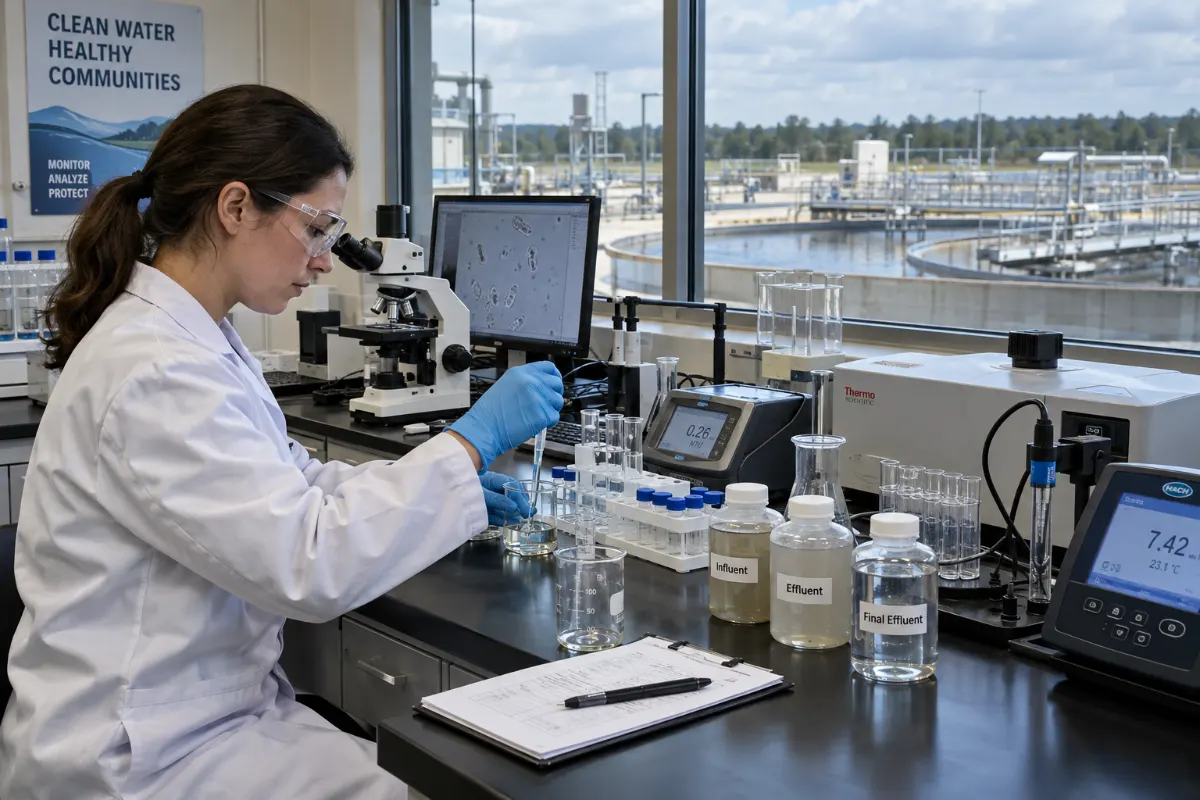
I always ask for a full water analysis before quoting anything. A single TDS number is not enough to design a system. You need ions, not just totals.
Process Selection Logic — How I Choose the Train
There is no universal answer. The selection depends on flow rate, salinity, discharge limits, and whether you have thermal energy available. Here is the decision framework I use.
Step 1: Reduce Volume First
Concentration is almost always cheaper than evaporation. If you can remove 60–80% of the water with membranes before the evaporator, you shrink the evaporator, the boiler, the condenser, and the electrical load. That is real money.
For high-salinity streams, standard RO often hits osmotic pressure limits. This is where DTRO membrane systems and high-pressure RO membranes come in. They tolerate higher feed salinity and can push concentration further before the evaporator takes over.
Step 2: Choose the Evaporation Technology
Once membranes reach their limit, evaporation finishes the job. The two main families are:
- Multi-effect evaporation (MEE). Uses steam in multiple stages. Efficient when you have cheap steam.
- Mechanical vapor compression (MVC/MVR). Uses a compressor to recompress vapor. Efficient when electricity is cheaper than steam.
For most new industrial installations I see today, MVC evaporators win on operating cost, provided the electricity supply is stable. When steam is available as a byproduct, multi-effect evaporators can be more economical.

Comparing the Core Equipment Options
This table reflects typical design ranges I have seen across projects. Actual numbers depend heavily on your specific water chemistry, so treat these as indicative, not guaranteed.
| Technology | Typical Feed TDS Range | Concentration Limit | Main Strength | Main Weakness |
|---|---|---|---|---|
| Industrial RO | Up to ~35,000 mg/L | ~70,000 mg/L brine | Low energy per m³ | Osmotic pressure limit |
| DTRO / High-Pressure RO | 20,000–80,000 mg/L | ~120,000 mg/L brine | Handles high salinity | Membrane fouling, cost |
| MVC Evaporator | Any (after pretreatment) | Near saturation | Low OPEX with power | High CAPEX, compressor maintenance |
| Multi-Effect Evaporator | Any (after pretreatment) | Near saturation | Low OPEX with steam | Needs steam supply |
| ZLD System | Any | Dry solids | Zero liquid discharge | Highest total cost |
Notice that the choice is rarely one technology. It is a train. Membranes concentrate, evaporators crystallize, and a dewatering step handles the solids.
Evaporator Design Details That Actually Matter
Anyone can sell you a box with a compressor. What separates a system that runs for 15 years from one that fails in 18 months is the details.
Heat Exchanger Selection
The heat exchanger is where scaling and corrosion concentrate. Material choice matters more than most buyers realize. Titanium works for chloride-rich streams but not for fluoride. Duplex and super duplex handle many aggressive brines. Graphite and PTFE-lined units appear in extreme cases.
For MVC systems, the heat exchanger design determines both efficiency and cleaning frequency. Falling film designs handle scaling better than forced circulation in many brines, but forced circulation handles higher suspended solids.
Compressor Type
Roots blowers, centrifugal compressors, and screw compressors each have a niche. Roots blowers work well below about 20,000 m³/h vapor flow. Centrifugal units dominate above that. Screw compressors handle variable loads and dirty vapor better than centrifugal, but cost more to maintain.
The compressor selection is often the single largest driver of both CAPEX and long-term reliability. I have seen plants lose weeks of production because the compressor was undersized for the actual vapor load.
Antiscalant and Cleaning Strategy
Scaling is not optional — it is guaranteed. The question is whether you manage it or it manages you. Typical strategies:
- Antiscalant dosing tailored to the specific ion profile
- Periodic chemical cleaning (CIP) with acid and chelating agents
- Seed crystallization or slurry operation for high-hardness brines
- Operating temperature control to stay below scaling thresholds
Pretreatment — The Step Most Projects Underestimate
I have never seen an evaporator or membrane system fail because the core technology was wrong. I have seen dozens fail because pretreatment was skipped or undersized.
Typical pretreatment train for high-salinity wastewater:
- Equalization and flow buffering
- Oil and grease removal (DAF, API separator, or coalescing plates)
- Chemical softening if hardness is high
- Filtration — multimedia, cartridge, or ultrafiltration
- pH adjustment
- Antiscalant and antifoam dosing
For oily or organic-heavy streams, the pretreatment burden grows. There is a good discussion of this in the context of evaporation with oily wastewater — the same principles apply to most industrial brines.
Sludge handling is often bolted on late and becomes a bottleneck. If you are generating biological or chemical sludge, plan the sludge dewatering step early, not after commissioning.
Energy and Operating Cost Reality
Operating cost is where high-salinity systems live or die. The dominant cost is almost always energy, followed by chemicals and maintenance.
Rough energy comparison for evaporating 1 m³ of water:
| Technology | Typical Energy Consumption | Notes |
|---|---|---|
| Single-effect evaporator | ~1.1–1.3 kg steam / kg water | Simple, high energy |
| Double-effect | ~0.55–0.65 kg steam / kg water | Better efficiency |
| Triple-effect | ~0.37–0.45 kg steam / kg water | Diminishing returns |
| MVC (MVR) | ~15–35 kWh / m³ water | Depends on compressor efficiency |
These are indicative ranges. Real numbers swing based on boiling point elevation, compressor efficiency, and heat recovery. For a deeper look at how these costs break down, the MVR cost analysis is worth reviewing before you commit to a design.
I always run a 10-year lifecycle cost model, not a first-cost comparison. A cheaper system with higher energy consumption is often the wrong choice.
Sizing a high-salinity system? Let’s talk through your water analysis.
Send us your ion profile and flow rate — we’ll come back with a realistic process train, not a sales pitch.
Zero Liquid Discharge — When You Actually Need It
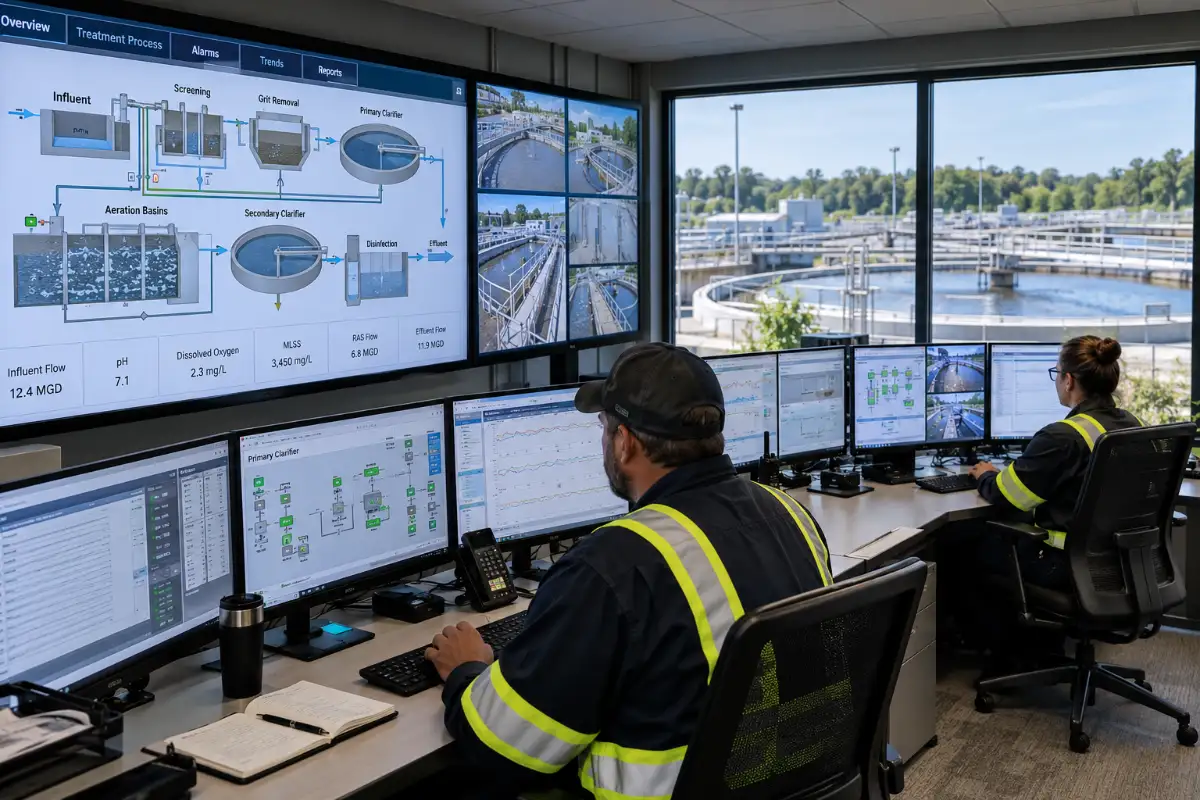
ZLD is not a technology. It is a regulatory outcome. You reach it by combining the right equipment, and the cost is real. A ZLD system typically includes:
- Pre-concentration with membranes (RO, DTRO, or high-pressure RO)
- Evaporation to near-saturation (MVC or MEE)
- Crystallization to produce solid salt
- Solids dewatering and disposal
- Condensate polishing for reuse
I only recommend full ZLD when discharge is genuinely impossible — no sewer, no permitted outfall, no viable deep well. Otherwise, concentrate-and-haul is often cheaper over the equipment life. This is a business decision as much as an engineering one.
Case-Style Analysis: Three Common Scenarios
These are anonymized, composite scenarios based on typical project patterns. They are not specific customer installations.
Scenario 1 — Electroplating Rinse Water
Flow around 200 m³/day, TDS 15,000–25,000 mg/L, heavy metals present. Typical train: chemical precipitation → filtration → RO → MVC evaporator for the RO concentrate. Metals are removed upfront; the evaporator handles the salt. The electroplating wastewater treatment approach is well established and the failure points are almost always in the metal removal step, not the evaporator.
Scenario 2 — Landfill Leachate
Flow 100–500 m³/day, TDS 10,000–40,000 mg/L, high COD and ammonia. This is one of the hardest streams. Biological pretreatment for ammonia, then DTRO for concentration, then evaporation for the reject. The chemistry is complex — landfill leachate chemistry shifts seasonally and the design has to tolerate that.
Scenario 3 — Pharmaceutical Brine
Flow 50–300 m³/day, TDS 20,000–60,000 mg/L, variable organics, sometimes solvents. Evaporators here need careful material selection and often explosion-proof electricals. The pharmaceutical wastewater treatment pattern usually combines advanced oxidation, membrane concentration, and evaporation.
Maintenance and Common Failures
After commissioning, the equipment that fails most often is predictable:
- Compressor bearings and seals — check vibration monthly, replace on schedule, not on failure
- Heat exchanger scaling — monitor approach temperature; a rising delta-T means it’s time to clean
- Membrane fouling — track normalized flux and pressure drop weekly
- Antiscalant dosing pumps — these fail silently and cause scaling downstream
- Vacuum system leaks — small air leaks kill evaporator efficiency
- Instrumentation drift — conductivity and pH probes drift; calibrate on a schedule
I always recommend a preventive maintenance plan tied to operating hours, not calendar dates. Systems that run continuously need different intervals than batch plants.
Selection Checklist Before You Buy
Before signing a PO, make sure the vendor has answered these:
- What is the design basis water analysis, and what happens if the feed changes?
- What is the expected availability and how is it guaranteed?
- What are the utility requirements — power, steam, cooling water, compressed air?
- What is the cleaning frequency assumed in the OPEX model?
- What is the material of construction for each wetted part, and why?
- What are the spare parts lead times for critical items?
- Is there a performance test protocol and what are the acceptance criteria?
- What happens to the concentrate and solids — who handles disposal?
If a vendor cannot answer these clearly, the price is irrelevant.
Frequently Asked Questions
What TDS level requires an evaporator instead of membranes?
There is no fixed number. Standard RO becomes impractical above roughly 35,000–40,000 mg/L feed TDS because of osmotic pressure. High-pressure RO and DTRO can push to 80,000 mg/L feed and 100,000+ mg/L brine. Beyond that, evaporation is usually the practical next step. The real answer depends on the ion profile, not just TDS.
How much does a high-salinity wastewater treatment system cost?
It varies enormously with flow and complexity. A small 20 m³/day MVC unit is a very different investment from a 500 m³/day ZLD plant. The dominant CAPEX drivers are evaporator surface area, compressor size and type, and material of construction. Operating cost is driven by energy, chemicals, and maintenance. Always model total cost over 10 years, not first cost.
What is the difference between MVC and MVR?
They describe the same core principle — mechanical vapor recompression. MVC (mechanical vapor compression) and MVR (mechanical vapor recompression) are used interchangeably in most of the industry. Some vendors use MVR to emphasize the recompression loop and MVC to describe the compressor itself. Functionally, they are the same family of equipment.
How often does an evaporator need cleaning?
For a well-designed system with proper antiscalant dosing, cleaning intervals of 30–90 days are typical. Poorly pretreated feeds can require weekly cleaning, which destroys the economics. The cleaning interval is one of the best indicators of whether the upstream pretreatment is doing its job.
Can I reuse the condensate from an evaporator?
Often yes. Evaporator condensate is usually low in TDS and can be reused as process water, boiler feed (with polishing), or cooling tower makeup. The quality depends on volatile organics and ammonia carryover. Test the condensate before committing to reuse — some streams carry volatile contaminants that need additional treatment.
What causes foaming in high-salinity evaporators?
Foaming is usually caused by surfactants, oils, or high organic loading. It reduces heat transfer and can carry liquid into the compressor or condenser. Solutions include antifoam dosing, improved upstream oil removal, mechanical defoaming, and sometimes adjusting the operating level or temperature. Persistent foaming almost always points to a pretreatment problem.
Is ZLD always required for high-salinity wastewater?
No. ZLD is required only when no discharge pathway exists — no permitted outfall, no sewer acceptance, no viable alternative. Many facilities operate successfully with concentrate-and-haul or permitted brine discharge. The decision is regulatory and economic, not technical. Do not default to ZLD without checking the actual discharge options first.
Closing Thoughts
High-salinity wastewater treatment is a systems problem, not an equipment problem. The failures I see are almost never in the evaporator or the membrane itself — they are in the pretreatment, the design basis, or the operating discipline after handover. Get the water analysis right, size the pretreatment honestly, choose the evaporation technology based on your actual utility costs, and plan for scaling and maintenance from day one. Do that, and the system will run for its design life. Skip any of those steps, and even the best equipment will not save the project.
If you are early in the design phase, the most valuable thing you can do is get a complete ion analysis and a realistic operating cost model before you talk to vendors. Everything downstream depends on those two inputs.