

When I quote a wastewater treatment system for an overseas project, freight is usually the line item that surprises the client the most. Wastewater treatment equipment shipping costs typically run between 3% and 12% of the equipment value for standard containerized skids, but that range widens fast once you add evaporators, membrane racks, or anything that needs flat-rack or breakbulk handling. The number depends far less on the invoice total than on dimensional weight, how the system is split into modules, and whether the receiving site can take a 40-foot trailer. I’ve seen two quotes for nearly identical 50 m³/day systems land 40% apart on freight alone, purely because one vendor designed around standard containers and the other didn’t.
Why Equipment Freight Behaves Differently From Ordinary Cargo
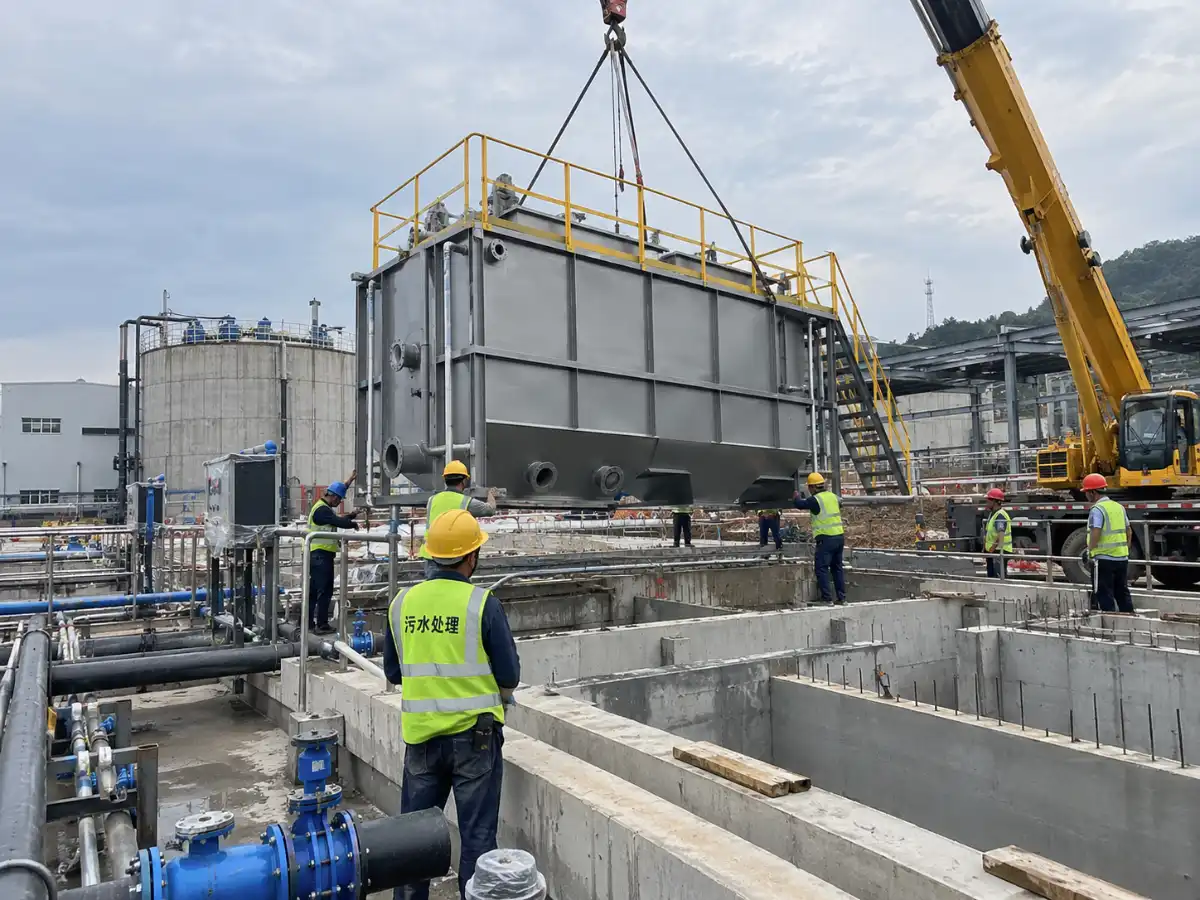
Most industrial buyers are used to quoting freight by weight or by cubic meter. Wastewater equipment breaks both rules. A membrane skid might weigh 4 tons but occupy 18 cubic meters because of the frame and piping volume. An MVC evaporator heat exchanger assembly is the opposite: dense, heavy, and small enough to fit in a single container, but it needs lifting points that match the crane at the destination.
In practice, three physical properties drive most of the cost:
- Dimensional weight. Carriers charge on whichever is greater, actual weight or volumetric weight. Low-density skids get penalized.
- Module count. Every additional module adds handling, lashing, and documentation, even if total volume stays the same.
- Center of gravity and lifting. Top-heavy tanks and tall columns often require flat racks or specialized cradles, which can double the per-unit rate.
This is why I always ask for a shipping breakdown before I ask for a price reduction. If the vendor can’t explain how the system splits, the freight number is probably a guess.
How System Design Decisions Move the Freight Number
Container-Friendly Modular Design
The single biggest lever is designing around ISO containers from the start. A mechanical vapor compression MVC evaporator that’s built as two 40-foot HC modules will almost always ship cheaper than the same capacity built as one large skid, even though the modular version has more piping and flanges. The reason is simple: standard containers move on regular liner services, while oversized cargo waits for the next available flat rack or breakbulk slot.
I’ve watched projects sit for six weeks waiting on flat-rack availability. That delay cost more than the freight difference.
When Oversized Is Unavoidable
Some equipment simply can’t be shrunk. Large multi-effect evaporator vessels, wide RO racks, and tall stripping columns exceed container dimensions. In those cases you’re choosing between:
| Shipping Method | Typical Use Case | Relative Cost | Transit Risk |
|---|---|---|---|
| Standard 20’/40′ container | Skids, pumps, membrane racks, small evaporators | Baseline (1.0x) | Low |
| 40′ high-cube | Taller frames, stacked modules | 1.1–1.3x | Low |
| Flat rack / open top | Oversized tanks, columns, heat exchangers | 1.8–3.0x | Medium |
| Breakbulk / heavy lift | Very large vessels, complete trains | 3.0–6.0x | High |
These multipliers are indicative ranges I’ve seen across real quotes. They shift with route, season, fuel surcharges, and how much competition exists on that lane.
What Actually Shows Up on a Freight Quote
Buyers often assume the ocean freight line is the whole story. It isn’t. A complete delivered cost typically includes:
- Inland transport to port. Factory to load port, including any special permits for oversized loads.
- Export documentation and customs. Commercial invoice, packing list, certificate of origin, and any export licensing.
- Terminal handling and lift-on/lift-off. Higher for flat racks and breakbulk.
- Ocean freight. Varies hugely by lane and by whether you’re on a fixed or spot rate.
- Marine insurance. Usually 0.3–0.8% of CIF value for well-packed industrial equipment.
- Destination port charges. Often underestimated; can be 15–25% of the ocean freight line.
- Inland delivery to site. The wild card, especially for remote industrial sites.
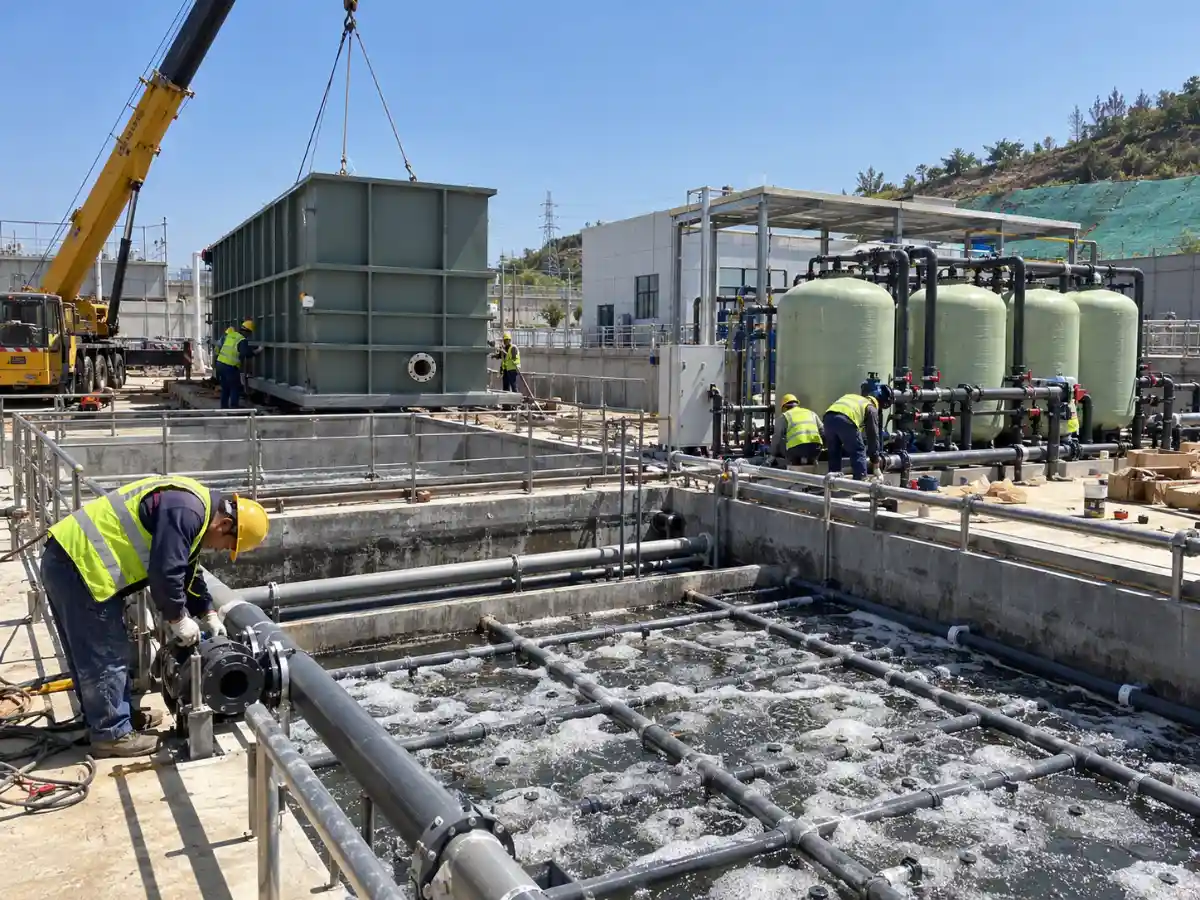
- Unloading and rigging at site. Cranes, forklifts, and rigging crews are the buyer’s responsibility under most Incoterms except DDP.
I’ve seen a quote where the ocean freight was $18,000 and the total delivered cost was $41,000. The client only looked at the first number.
Incoterms: Where Cost Responsibility Actually Sits
Most industrial equipment moves on FOB, CIF, or DAP. Each one shifts the freight burden differently, and the choice affects your total cost more than people expect.
| Incoterm | Seller Covers | Buyer Covers | Best For |
|---|---|---|---|
| FOB | Delivery to origin port | Ocean freight, insurance, destination, inland | Buyers with their own freight forwarder |
| CIF | Delivery to destination port + insurance | Import clearance, inland delivery, unloading | Buyers without logistics infrastructure |
| DAP | Delivery to named site, not unloaded | Unloading and rigging | Turnkey projects |
| DDP | Everything including duties | Unloading only | Buyers who want a single number |
For a system like a DTRO membrane system that arrives as multiple modules with different weights and dimensions, DAP is often the cleanest option. It removes the coordination headache of matching your rigging schedule to a freight forwarder you’ve never worked with.
Cost Ranges I’ve Seen on Real Projects
I want to be careful here because freight is genuinely volatile. But buyers need a planning number, so here are indicative ranges based on systems moving from Asian manufacturing hubs to North American and European ports over the past few years. All figures are USD and project-dependent.
| System Type | Typical Capacity | Equipment Value | Freight (Indicative) | Freight as % of Value |
|---|---|---|---|---|
| Small RO skid | 5–20 m³/h | $40k–$90k | $3k–$7k | 6–9% |
| Containerized MBR | 50–200 m³/d | $120k–$350k | $8k–$22k | 5–8% |
| MVC evaporator | 5–20 m³/h evaporation | $400k–$1.2M | $18k–$55k | 4–6% |
| Multi-effect evaporator | 10–50 m³/h | $800k–$3M | $45k–$180k | 5–7% |
| Full ZLD train | 100–500 m³/d | $2M–$8M | $120k–$450k | 4–7% |
Notice the pattern: larger systems have a lower freight percentage because the equipment value grows faster than the physical size. A zero liquid discharge ZLD system that costs five times more than a small RO skid doesn’t take up five times the container space.
Design Choices That Quietly Cut Freight Costs
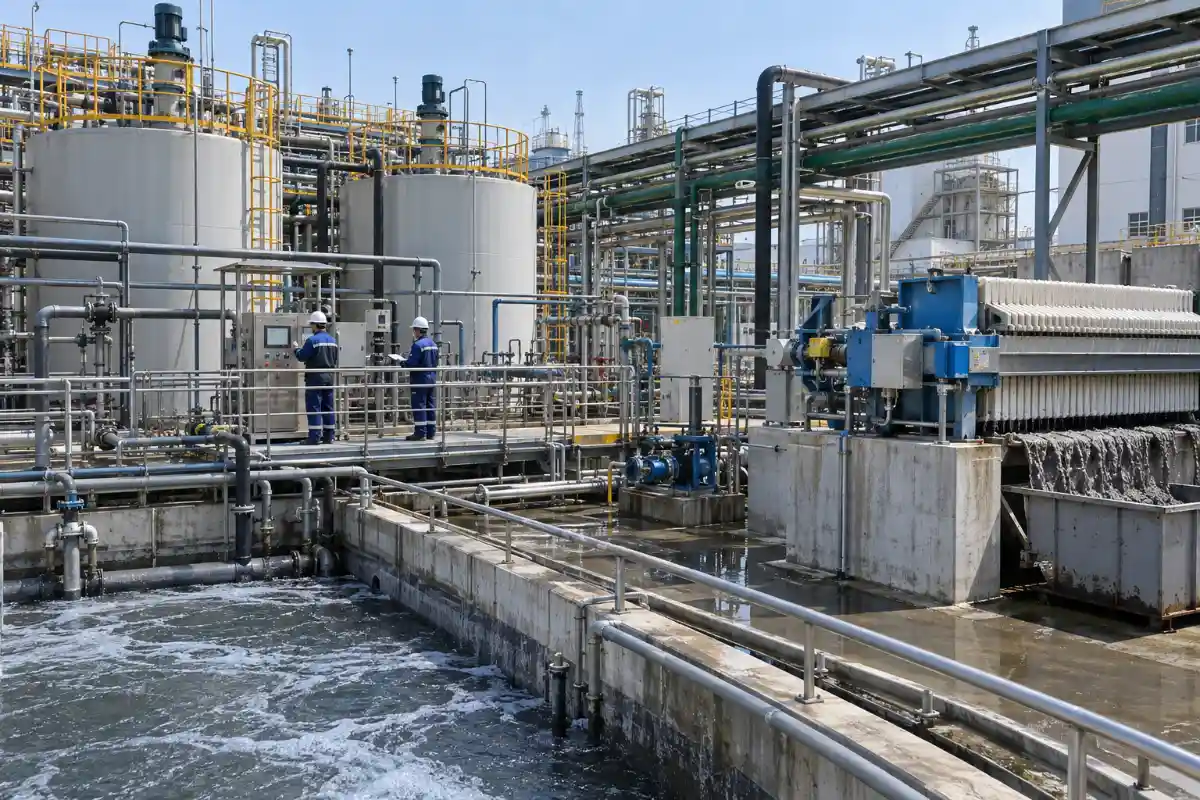
After enough projects, you start recognizing design features that save money on the water and on the truck. These aren’t gimmicks; they’re standard practice among vendors who ship internationally.
Knock-Down Frames
Some skid frames can be shipped partially disassembled and bolted together on site. This can compress a 40-foot load into a 20-foot container for smaller systems. The tradeoff is extra site labor, so it only makes sense when the destination has competent mechanical crews.
Stackable Module Design
Two 20-foot modules that stack in a single 40-foot container beat two separate 20-foot shipments every time. This requires planning the lifting points and structural frames for stacking loads, which adds a bit of steel but saves a container slot.
On-Site Assembly of Large Vessels
For very large evaporator bodies, shipping in shell sections and welding on site can be dramatically cheaper than breakbulk. I’ve seen this work well when the site has certified welders and a QA plan. It fails badly when those aren’t available.
Consolidating Auxiliary Equipment
Pumps, valves, instruments, and control panels often ship separately if procurement isn’t coordinated. Consolidating them into the main modules can eliminate an entire container.
Common Freight Cost Mistakes I See Buyers Make
- Comparing CIF quotes to FOB quotes. These aren’t the same number and shouldn’t be compared directly.
- Ignoring destination port charges. These can add 15–25% on top of the ocean freight line.
- Forgetting rigging and unloading. A 12-ton module needs a crane, and crane rental isn’t free at the destination.
- Underestimating inland delivery. Remote industrial sites can cost more to reach than the ocean crossing.
- Not insuring properly. Marine insurance is cheap; replacing a damaged heat exchanger isn’t.
- Assuming a lower freight quote means a lower total cost. Sometimes the cheaper freight option adds three weeks of transit and $30k of site standby.
If you’re evaluating competing quotes, ask each vendor to break out freight by line item. The one that can is usually the one that has actually shipped systems before.
Reducing Freight Cost Without Sacrificing Quality
There’s a temptation to cut corners on packing or protection to save freight. Don’t. I’ve seen clients save $4,000 on crating and lose $60,000 on a corroded control panel that sat on a dock for two weeks. The right approach is smarter design, not cheaper packing.
Practical moves that work:
- Design around standard container dimensions from the concept stage, not after detailed engineering.
- Specify lifting points and center-of-gravity markings on every module drawing.
- Use sea-worthy export packing with VCI (vapor corrosion inhibitor) for anything with electronics.
- Consolidate shipments where possible to reduce handling events.
- Book freight early. Spot rates spike when you’re desperate.
- Consider DAP terms if you don’t have logistics staff on the receiving end.
For systems that involve multiple technologies, like a wastewater evaporation system paired with pretreatment, planning the shipment as a single coordinated delivery usually beats shipping components separately.
When Freight Costs Change the Technology Choice
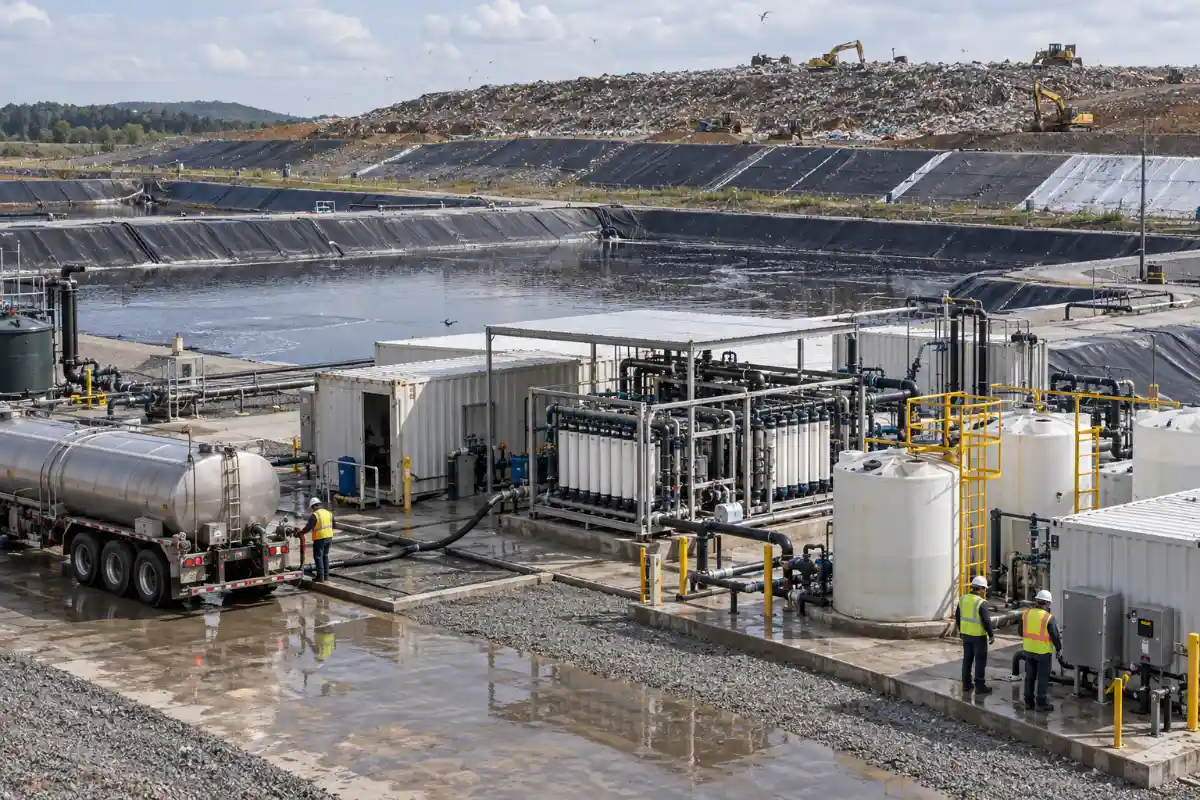
This is the part most buyers don’t think about until it’s too late. Freight can actually shift which technology makes sense.
Consider a site that needs to concentrate a high-TDS stream. A MVR technology system and a multi-effect evaporator might both work technically. But if the MVR unit ships in two standard containers and the multi-effect system needs three flat racks plus breakbulk, the delivered cost difference can be $80k or more. Over a 10-year lifecycle that might not change the decision, but for a capital-constrained project it absolutely can.
I’ve seen this tip the balance toward high-pressure RO membranes plus evaporation instead of an all-thermal approach, purely because the membrane skids ship in standard containers.
The cheapest equipment is not the one with the lowest ex-works price. It’s the one that arrives at your site, complete and undamaged, at the lowest total delivered cost.
How to Get an Accurate Freight Estimate Before You Commit
Vendors can’t give you a firm freight number without certain information. If you want a real quote rather than a placeholder, be ready to provide:
- Full delivery address, including whether the site can accept a 40-foot trailer
- Whether a crane is available at the destination or needs to be rented
- Preferred Incoterm
- Any import restrictions or duty considerations
- Required delivery date and flexibility
- Site storage capacity before installation
When a client sends me those six items, I can usually give a freight estimate within 5% of what they’ll actually pay. Without them, I’m guessing, and so is every other vendor.
Frequently Asked Questions
What percentage of equipment cost should I budget for freight?
For most industrial wastewater systems shipped internationally, budget 4–10% of equipment value for freight, insurance, and destination charges combined. Small systems and systems with oversized components sit at the high end. Large, container-friendly systems sit at the low end. Add another 1–2% for inland delivery if the site is remote.
Is it cheaper to ship an evaporator in one piece or as modules?
Almost always as modules, unless the vessel is small enough to fit in a standard container as a single unit. Modular shipping uses regular liner services, avoids flat-rack premiums, and reduces the risk of transit damage. The tradeoff is more site assembly work, which only makes sense if the destination has qualified mechanical crews.
Should I choose FOB or CIF for wastewater equipment?
If you have a freight forwarder you trust and can manage import clearance, FOB usually saves money. If you don’t have logistics infrastructure, CIF removes a lot of coordination headache. For turnkey projects where the vendor is responsible for commissioning, DAP or DDP is often cleanest even though the headline number looks higher.
How much does marine insurance cost for this type of equipment?
Typically 0.3–0.8% of the CIF value for well-packed industrial equipment. Rates go up for breakbulk shipments, oversized loads, and routes with known handling issues. Insurance is cheap relative to replacement cost; don’t skip it to save a few hundred dollars.
Why did my freight quote come in much higher than the vendor’s estimate?
Common causes include destination port congestion surcharges, fuel surcharges that changed between quote and booking, unexpected oversized classification, and inland delivery to a site that wasn’t accurately described. If the vendor quoted based on “delivery to nearest port” and you need delivery to a remote plant, that gap can be 50% or more.
Can I reduce freight cost by shipping some components separately?
Sometimes, but usually not. Splitting a shipment adds handling events, documentation, and the risk that one component arrives late and holds up installation. Consolidation almost always beats fragmentation. The exception is when one component is genuinely oversized and shipping it separately lets everything else move in standard containers.
What’s the biggest freight cost mistake you see on international projects?
Underestimating the destination side. Buyers focus on the ocean freight line and forget about port charges, customs brokerage, inland trucking, crane rental, and rigging. On a typical project, destination-side costs are 30–50% of the total delivered cost. If you’re only budgeting the ocean freight, you’re going to be short.
Bottom Line
Wastewater treatment equipment shipping costs aren’t a fixed percentage you can look up. They’re a function of how the system is designed, how it’s split into modules, which Incoterm you choose, and how well you understand the destination-side costs. The buyers who get the best delivered cost are the ones who plan shipping from the concept stage, ask for line-item freight breakdowns, and treat the freight quote as an engineering document rather than a formality.
If you’re planning a project and want a realistic delivered-cost estimate rather than a placeholder number, our engineering team can walk you through the shipping plan alongside the technical design.