

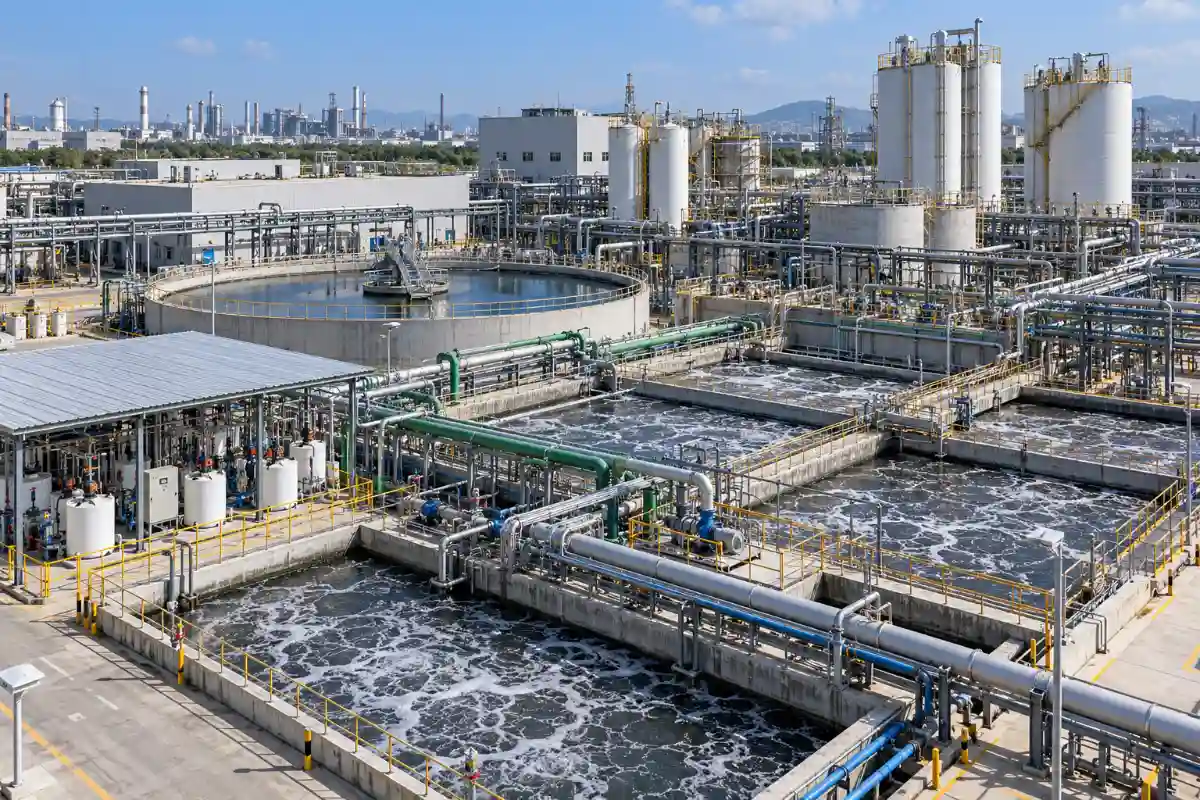
If you’re planning a zero liquid discharge system, the single most important thing to understand is this: installation is not a construction phase you bolt onto the end of a design. It is the design, made physical. Every decision you deferred during engineering — how you’ll clean a heat exchanger, where the brine crystallizer sits, how much floor space the membrane skid really needs, whether your operators can reach a valve without scaffolding — shows up during installation and stays with you for the life of the plant. I’ve watched projects where a beautiful process design became a maintenance nightmare because nobody thought about a 2-meter clearance for pulling a compressor rotor. I’ve also seen modest designs run for a decade with almost no drama because the install was planned around the people who would actually operate it. This article covers what buyers, EPC contractors, and plant engineers should know before, during, and after a ZLD system goes in.
What “Installation” Actually Covers in a ZLD Project
People use “installation” loosely. In a real ZLD project it breaks into several distinct phases, and each one has its own failure modes.
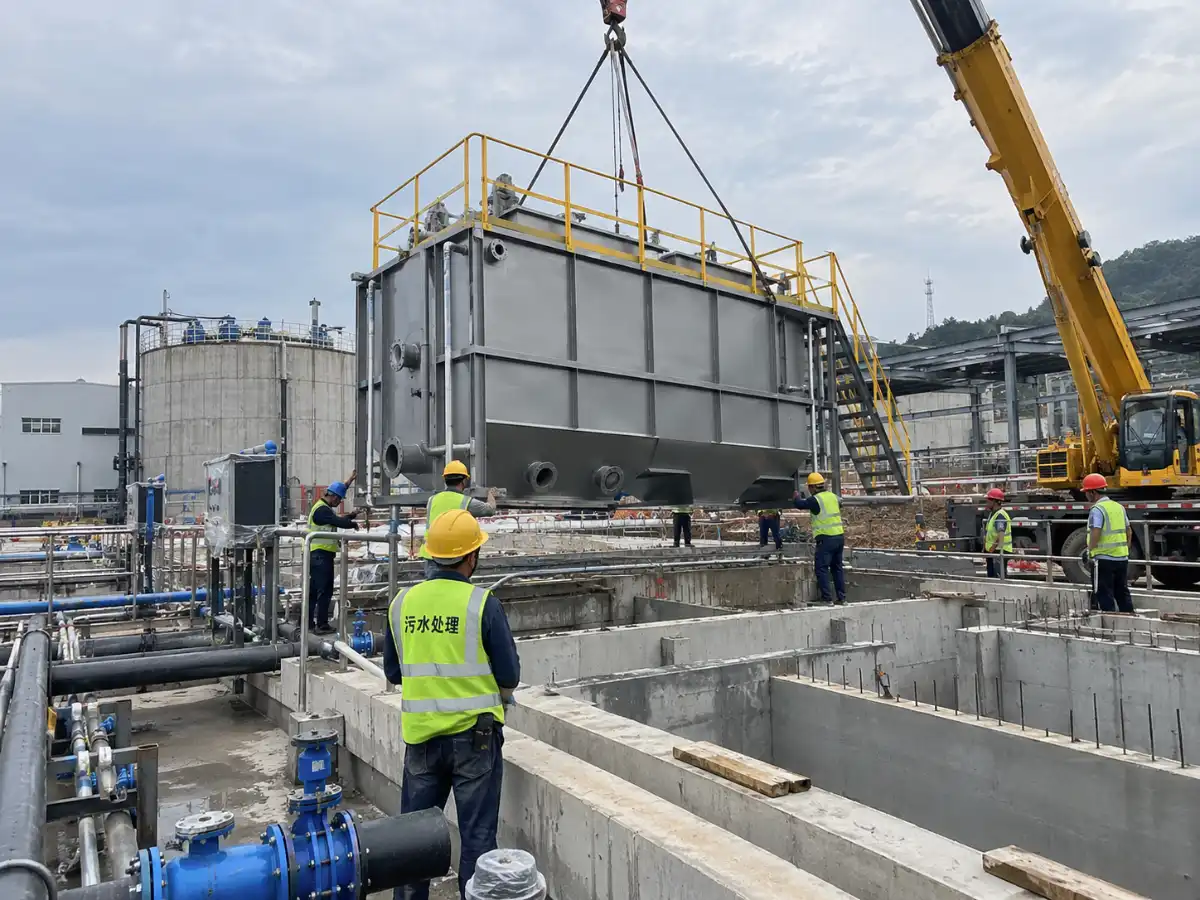
- Civil and structural work — foundations, containment curbs, anchor bolt layouts, and drainage. Evaporator and crystallizer trains are heavy and often tall. A 15-meter MVR evaporator column on a marginal slab is a vibration problem waiting to happen.
- Mechanical erection — setting skids, aligning pumps, connecting large-bore piping, installing heat exchangers and compressors.
- Electrical and instrumentation — power feeds, VFDs, control panels, field instruments, and the control system integration.
- Piping and insulation — process lines, steam and condensate, chemical dosing, and thermal insulation on hot surfaces.
- Commissioning — water flushing, hydro testing, loop checks, cold commissioning, then hot commissioning with actual wastewater.
- Performance verification — running at design flow and concentration until the system proves it meets the specified recovery and product quality.
Each phase overlaps with the others more than the schedule suggests. A common mistake is treating commissioning as a two-week event at the end. On a real ZLD train, commissioning is a month or more of methodical work, and the schedule should reflect that.
Why ZLD Installation Is Harder Than a Standard Treatment Plant
Conventional wastewater treatment — biological systems, clarifiers, basic filtration — tolerates sloppy installation better than ZLD does. There’s more buffer, more redundancy, and the process is more forgiving of a slightly misaligned pump or a poorly supported pipe.
ZLD is different for three reasons:
1. It runs at the edge of solubility. The whole point of ZLD is to push concentration as far as physically possible before the dissolved solids drop out as scale or salt. That means your brine circuits are always close to scaling conditions. A dead leg in piping, a low-velocity zone, or a poorly drained line becomes a scale deposit. During installation, every pipe slope, every drain point, and every low point matters.
2. It combines thermal and membrane processes. A typical ZLD train might include pretreatment, high-pressure reverse osmosis, and then an evaporator or crystallizer. Thermal equipment has thermal expansion issues; membrane equipment has pressure and fouling issues. The interface between them — where concentrate from the RO feeds the evaporator — is where most startup problems appear.
3. Downtime is expensive. When a ZLD system stops, the plant that generates the wastewater usually has to stop too, or it has to store wastewater it has no room for. That raises the stakes on installation quality. A leak that would be a minor nuisance in a cooling water system can force a production shutdown in a ZLD plant.
In my experience, roughly 70% of the problems that surface in the first six months of ZLD operation trace back to something that was visible during installation and got waved through — an unsupported pipe, a reversed instrument, a valve installed backward, a pump aligned to the wrong datum.
Pre-Installation Engineering You Shouldn’t Skip
Before a single anchor bolt goes in, the design has to be frozen in a way that supports field work. This is where buyers lose the most money — not in the equipment, but in rework caused by an incomplete design package.
P&IDs and Isometrics
You want a full set of P&IDs that reflect the as-built intent, plus piping isometrics for every line above a certain size. If the vendor hands you a process flow diagram and calls it a P&ID, that’s a red flag. P&IDs drive loop checks, instrument calibration, and operator training. They also drive the punch list.
Site Conditions and Utilities
ZLD systems need reliable power, cooling water, compressed air, and often steam or a heat source. Confirm the actual available capacity, not the nameplate capacity. I’ve seen installations stall because the plant’s compressed air header was already at its limit, and the ZLD skid needed 8 bar of clean, dry air that simply wasn’t there.
Layout and Access
This is the one that gets ignored most often. Ask yourself:
- Can a technician physically reach every instrument without scaffolding?
- Is there room to pull a heat exchanger tube bundle for cleaning?
- Can a forklift or crane access the heaviest equipment for future replacement?
- Are chemical dosing points located where an operator can safely connect a drum?
- Is there a sample point for every critical stream?
Get these wrong and you’ll pay for them in labor for the next ten years. A well-planned process layout is not a luxury — it’s the difference between a plant that runs and a plant that fights you.
Interface Definition
Who supplies what? Where does the vendor’s scope end and the plant’s begin? This is where disputes live. Define the battery limits precisely: the flange where wastewater enters, the flange where distillate leaves, the point where brine goes to disposal, and the electrical terminals where power is handed over.
Choosing the Right Core Technology Before You Install
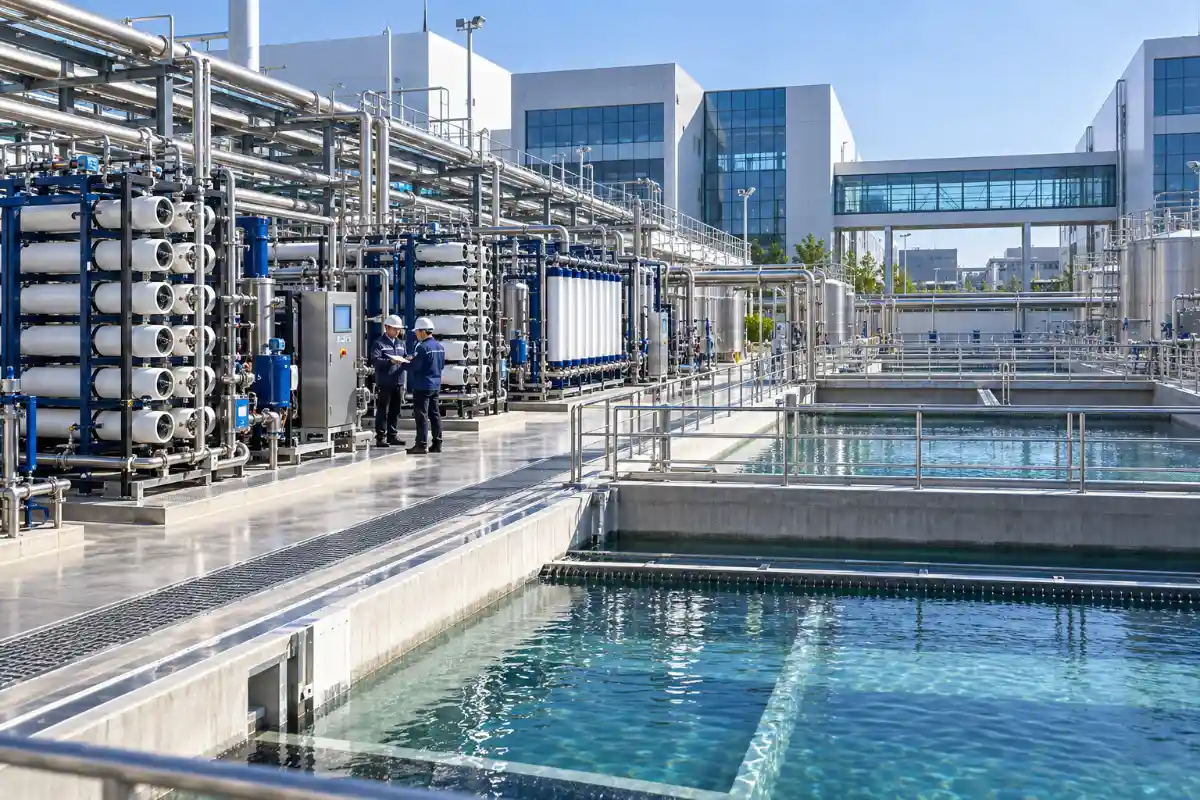
Installation difficulty scales with technology choice. A membrane-based ZLD train installs very differently from a thermal evaporator train, and the two have different site requirements. Getting the technology decision right up front saves enormous installation pain.
| Technology | Typical Role in ZLD | Installation Considerations | Relative Footprint |
|---|---|---|---|
| High-pressure RO / DTRO | Primary concentration, reduces volume before thermal stage | Modular skids, easier to install, needs careful high-pressure piping and pulsation dampening | Moderate |
| MVC / MVR evaporator | Main concentration and distillate recovery | Heavy rotating equipment, vibration isolation, tall vertical vessels, tight alignment tolerances | Large |
| Multi-effect evaporator | Concentration where steam is available | Large number of vessels and interstage piping, significant structural load | Very large |
| Crystallizer | Final brine solidification | High-temperature, high-solids service, abrasion-resistant materials, careful insulation | Large |
| Sludge dewatering (screw press) | Handles pretreatment sludge and solids | Relatively simple, but needs adequate drainage and solids handling access | Small |
If your feed is high in organics or oils, you may need to address that before the thermal stage. Evaporation with oily wastewater is a specific problem that requires either pretreatment or a design that tolerates the oil, and it’s much cheaper to solve on paper than in the field.
Site Preparation and Civil Works
The civil scope is often underestimated. ZLD equipment is dense and heavy, and the loads are not always where you expect them.
Foundations and Loads
Vendor drawings give you equipment weights, but you also need to add the weight of the operating fluid, insulation, piping, and access platforms. A vessel that weighs 8 tonnes empty might weigh 25 tonnes in service. The structural engineer needs the operating weight, not the shipping weight.
Dynamic loads matter too. Compressors, large pumps, and crystallizer agitators generate vibration. Isolated inertia blocks or spring isolators are common, and they need to be designed in, not retrofitted.
Containment and Drainage
ZLD plants handle concentrated brine and often aggressive chemicals. Secondary containment — curbs, liners, sumps — should be designed to hold the largest credible spill. Floor slopes should direct spills to a collection point, not to the nearest electrical panel.
Drainage is also a commissioning issue. You will flush and drain the system multiple times during startup. If there’s no place for that water to go, you’ll be improvising with hoses and temporary tanks, which is exactly when accidents happen.
Utilities and Routing
Route your main utility corridors before equipment arrives. Power, instrument air, cooling water, and chemical lines all compete for the same overhead and underground space. Doing this coordination during civil work is far cheaper than cutting and re-routing after the skids are set.
Mechanical Installation: Where Precision Pays
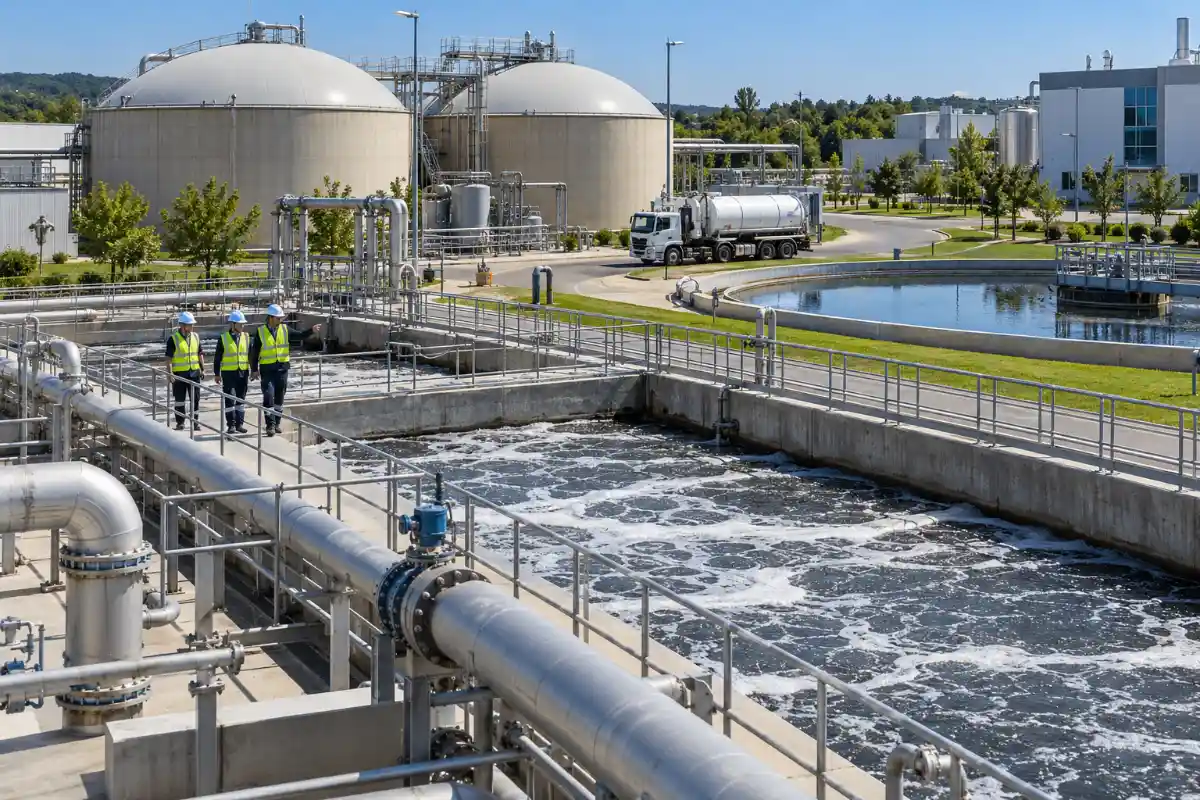
This is the phase most people picture when they think about installation. It’s also where small errors compound.
Equipment Setting and Alignment
Compressors and large pumps are the critical items. Alignment tolerances for a high-speed MVR compressor are tight — often measured in fractions of a millimeter. Get this wrong and you’ll be replacing bearings within months. Laser alignment is standard practice now; if your installer is using a straightedge and feeler gauges on a critical machine, push back.
Grouting matters too. Equipment that isn’t properly grouted under its baseplate will shift, and shifting equipment destroys alignment.
Piping Installation
Piping in a ZLD system is not just plumbing. It carries hot, corrosive, and sometimes scaling fluids. Key points:
- Support spacing and expansion. Hot lines grow. If they’re over-constrained, they’ll stress the equipment nozzles. If they’re under-supported, they’ll sag and create low points.
- Slope and drainage. Any line that can hold liquid should drain completely. Dead legs are scale magnets.
- Material verification. Confirm the alloy actually delivered matches the specification. Mixing up 316L and duplex stainless steel on a brine line is a costly mistake that shows up months later as pitting.
- Flange management. Correct gaskets, correct torque, correct bolt grade. Leaks at startup are almost always flange-related.
Heat Exchanger Installation
Heat exchangers are central to any evaporator train. They need to be installed with enough room to pull tube bundles, and with the correct orientation so that venting and draining work. A properly specified heat exchanger installation includes provisions for cleaning — chemical cleaning connections, isolation valves, and access.
Electrical, Instrumentation, and Controls
The control system is what turns a collection of equipment into a working plant. Installation of this scope is often the longest and most detail-heavy part of the project.
Power and Motor Control
Confirm motor voltage, phase, and starting method before the electricians arrive. Large compressors and pumps may need soft starters or VFDs. Cable sizing, routing, and termination all need to match the actual equipment, not the original tender documents — equipment substitutions during procurement are common and often change electrical requirements.
Instrumentation
Instruments are only useful if they’re installed correctly. Common issues:
- Pressure transmitters installed without proper impulse line slope, so they trap air or liquid.
- Flow meters installed too close to elbows or valves, giving inaccurate readings.
- Level instruments installed where foam or turbulence defeats them.
- Temperature sensors installed in thermowells that don’t actually contact the process fluid.
Each of these is a small error that produces a large operational headache. A flow reading that’s 15% off will cause the control system to make wrong decisions every minute of every day.
Control System Integration
Whether your ZLD plant runs on a dedicated PLC or integrates into a plant-wide DCS, the logic has to be tested before hot commissioning. Loop checks, interlock testing, and simulation of failure modes should all happen with the system cold. Discovering a logic error during hot commissioning means shutting down, fixing, and restarting — with real wastewater in the system.
Commissioning: The Phase That Decides Everything
Commissioning is where installation quality is proven. It’s also where most schedules slip, because it depends on everything before it being right.
Cold Commissioning
Water flushing, hydro testing, and functional testing of every pump, valve, and instrument. This is done with clean water, before any wastewater enters the system. It’s methodical and it takes time. Rushing it means finding problems later, when they’re harder to fix.
Hot Commissioning
Introducing actual wastewater, gradually increasing concentration, and watching how the system behaves. This is where you learn whether your scaling predictions were right, whether your pretreatment is adequate, and whether the control logic handles real variability.
Expect to make adjustments. Expect the first few weeks to require more operator attention than steady-state operation. Plan for it in your staffing and in your expectations.
Performance Testing
Once the system is stable, run it at design conditions and verify the guaranteed parameters: distillate quality, recovery rate, brine concentration, and specific energy consumption. Document everything. This is your baseline for the rest of the plant’s life.
A vendor once told me that commissioning is “just running the machine.” That project took nine months to reach steady state. The vendors who understand commissioning treat it as a design activity, not a formality.
Common Installation Mistakes and How to Avoid Them
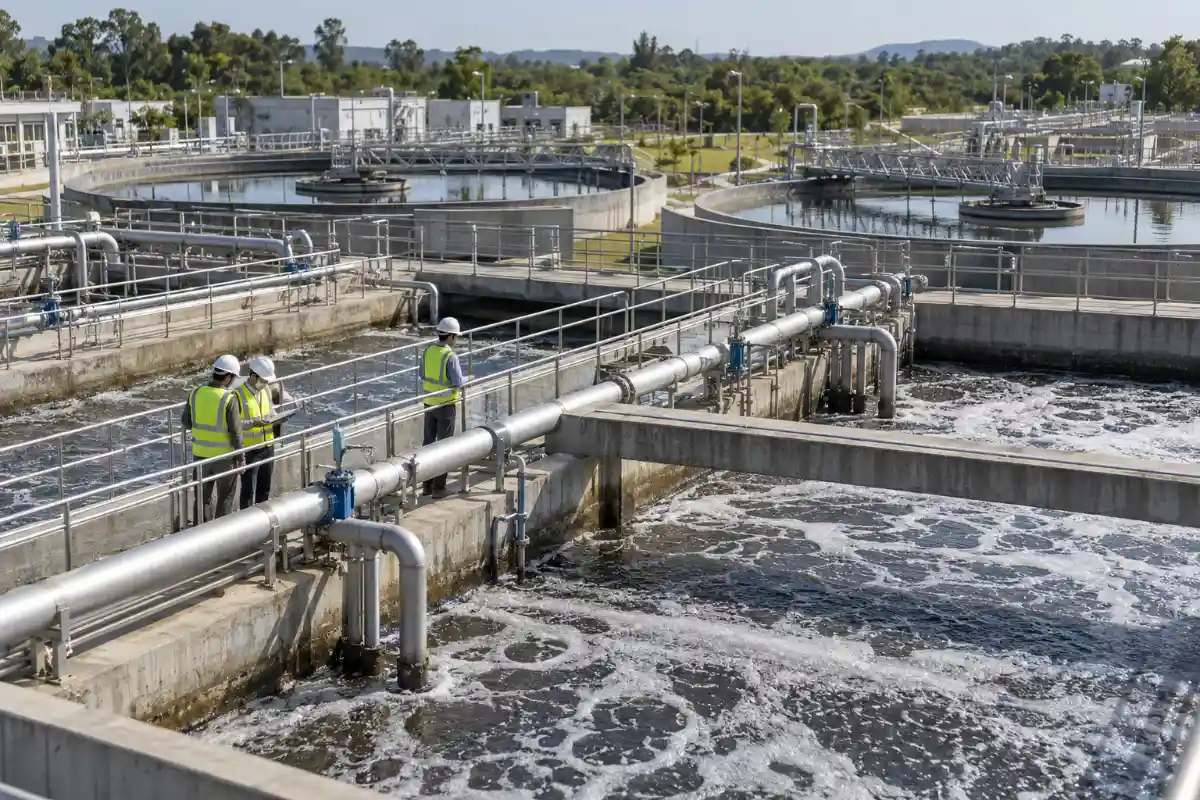
I’ve seen the same errors repeatedly across different projects. Here are the ones that cost the most.
| Mistake | Consequence | Prevention |
|---|---|---|
| Insufficient access for maintenance | High labor cost, deferred maintenance, premature failure | 3D layout review with maintenance staff involved |
| Undersized or missing containment | Environmental incident, regulatory exposure | Design containment for worst-case spill, verify during civil work |
| Poor piping support and slope | Vibration, dead legs, scaling, leaks | Stress analysis for hot lines, drainability check on every line |
| Instrument misapplication | Bad control decisions, unstable operation | Review instrument datasheets against actual service conditions |
| Incomplete control logic testing | Startup delays, unsafe conditions | Full loop and interlock testing before hot commissioning |
| Inadequate operator training | Chronic operational problems | Train on the actual system, not just the manual |
Notice that most of these are not equipment problems. They’re planning and execution problems. The equipment is usually fine. It’s the interface between the equipment and the site that fails.
Energy, Cost, and Lifecycle Considerations at Installation
Installation decisions lock in operating costs for decades. Three areas deserve attention.
Energy
Evaporative ZLD is energy-intensive. MVR systems recover most of their latent heat through mechanical compression, which is why they’re often preferred over multi-effect systems where power is available and steam is not. But the actual energy consumption depends heavily on how well the system is installed and insulated.
Thermal insulation on hot surfaces, proper steam trap installation, and correct compressor alignment all affect energy use. A poorly insulated evaporator body loses heat continuously. A misaligned compressor runs at lower efficiency forever. These are installation issues with permanent cost consequences.
For a deeper look at how technology choice affects operating cost, see this analysis of MVR evaporator capital and operating cost drivers.
Maintenance Access
Every hour of maintenance labor is affected by how accessible the equipment is. A pump that requires removing a handrail and climbing over piping takes twice as long to service as one with clear access. Multiply that by the number of pumps in a ZLD train and by the number of years in service, and the number gets large.
Spare Parts and Future Replacement
Installation is also the time to think about replacement. Can the largest heat exchanger be removed without dismantling a wall? Is there a laydown area for temporary equipment during maintenance? These are cheap to provide during construction and expensive to retrofit.
Working with Vendors and Contractors
The installation succeeds or fails based on the relationship between the buyer, the equipment vendor, and the installation contractor. A few things make that relationship work.
Clear Scope Boundaries
Define who does what, in writing, before mobilization. Ambiguity always resolves in favor of the party with the stronger contractual position, which is rarely the plant owner.
Single Point of Responsibility
Where possible, have one party responsible for the integrated system performance. When the membrane vendor blames the evaporator vendor and the evaporator vendor blames the installer, the plant owner pays for the argument.
Documentation and As-Builts
Require as-built drawings, updated P&IDs, instrument lists, and O&M manuals before final payment. You will need these documents for the entire life of the plant. Vendors who “will send them later” rarely do.
Warranty and Performance Guarantees
Understand what’s guaranteed and under what conditions. A recovery guarantee that assumes a feed composition you’ll never actually have is worth very little. Make sure guarantees are tied to realistic operating conditions.
For projects where the integration risk is high, working with a ZLD system provider who can take responsibility across the full train often reduces total project risk, even if the unit prices look higher.
Discuss Your ZLD Installation Plan With Our Engineers
Case-Style Observations from the Field
I’ll keep these anonymous, but the patterns are real and repeatable.
An electroplating facility installed a membrane-based concentration train followed by a small evaporator. The membrane skids went in without incident. The evaporator, however, was installed in a corner of the building with no overhead crane access. When the first heat exchanger needed cleaning, the plant had to rent a crane and remove a section of roof. The cleaning itself took two days; the access logistics took two weeks. A different layout would have cost nothing extra during construction.
A pharmaceutical plant installed an MVR evaporator for high-COD wastewater. The process design was sound, but the feed composition varied more than the design assumed. During commissioning, the system scaled within days. The fix was additional pretreatment, which required re-piping and a new chemical dosing skid. The equipment was fine; the feed characterization during design was incomplete. This is one of the most common and most expensive installation-phase surprises.
A landfill leachate project combined DTRO membranes with an evaporator for final volume reduction. The installation went smoothly, but commissioning revealed that the leachate’s scaling potential was higher than the design basis. The plant added antiscalant dosing and adjusted operating temperatures. Performance was eventually met, but the first three months required close attention. Leachate is notoriously variable, and understanding leachate chemistry before design is essential.
In each case, the equipment performed as designed. The problems came from the interface between the design assumptions and the actual site conditions. That’s the recurring lesson of ZLD installation.
Operator Training and Handover
A ZLD plant that isn’t understood by its operators will underperform, no matter how well it was installed. Training should start before commissioning and continue through it.
Operators need to understand:
- What normal looks like — pressures, temperatures, flows, and how they relate.
- What the early warning signs of scaling or fouling are.
- What to do when an alarm goes off, and what not to do.
- How to safely isolate equipment for maintenance.
- How to collect samples and interpret lab results.
Training on the actual system, with the actual control interface, is far more effective than classroom sessions with slides. Involve operators during installation and commissioning. They’ll spot problems the engineers miss, and they’ll own the plant in a way that a training manual never achieves.
Regulatory and Discharge Considerations
ZLD is often driven by discharge regulations that prohibit liquid effluent or limit specific parameters. The installation should reflect those requirements.
If the plant discharges any liquid stream — even a small one — verify it meets the applicable limits. In many jurisdictions, ZLD is defined by the absence of liquid discharge, so any liquid stream, however small, changes the regulatory classification. Understand the applicable wastewater discharge standards before finalizing the design.
Solid waste — the salt or sludge produced — also needs a disposal pathway. Confirm that the salt quality meets whatever acceptance criteria your disposal route requires. Some landfills and salt recyclers have strict limits on organics or moisture.
For broader context on regulatory frameworks, the U.S. Environmental Protection Agency and the World Bank publish guidance on industrial wastewater management that’s useful when planning a ZLD project.
Frequently Asked Questions
How long does a typical ZLD system installation take?
For a mid-sized industrial system, expect four to eight months from mobilization to performance acceptance. That includes civil work, mechanical and electrical installation, and commissioning. Larger or more complex trains can take a year or more. Schedule pressure is one of the biggest causes of installation shortcuts, and shortcuts show up later as operational problems.
What’s the biggest cost driver in a ZLD installation?
Equipment cost is usually the largest single line item, but installation and commissioning labor, civil works, and rework can add 30 to 50 percent on top of equipment. The most controllable cost is rework — getting the design and layout right before mobilization saves more than any negotiation on equipment price.
Can I install a ZLD system in phases?
Sometimes, yes. If your wastewater volume is expected to grow, you can design for the ultimate capacity and install the first phase now. The key is to size civil works, containment, and utilities for the full build-out so you’re not demolishing concrete later. Phased installation works best when the process train can be cleanly divided, such as installing the membrane concentration stage first and adding the evaporator later.
What maintenance should I plan for immediately after installation?
Plan for heat exchanger cleaning, membrane replacement, and compressor or pump servicing. Establish a cleaning schedule based on observed fouling rates during commissioning, not on generic recommendations. Also plan for instrument calibration, which should be verified within the first few months and then on a regular cycle.
What are the most common startup problems?
Scaling and fouling top the list, usually because the feed composition was more variable than assumed. Instrument and control issues are second — a misapplied flow meter or a logic error can make the system unstable. Mechanical problems like pump cavitation, vibration, and leaks are third. Almost all of these are easier to prevent during design and installation than to fix during operation.
How do I know if my installation contractor is qualified?
Ask for references on similar thermal or high-pressure systems, not just general industrial work. ZLD installation requires familiarity with high-temperature piping, rotating equipment alignment, and control system integration. A contractor who has only done plumbing and HVAC work will struggle with the precision required for an evaporator train.
What documentation should I receive at handover?
You should get as-built P&IDs, piping isometrics, instrument lists with calibration records, equipment manuals, control logic documentation, commissioning records, and a complete spare parts list. Insist on these before final payment. Missing documentation is a chronic problem in this industry and it makes every future maintenance task harder.
Is ZLD always the right answer?
No. ZLD is expensive to build and operate, and it should be chosen when discharge is genuinely not an option or when water recovery justifies the cost. In some cases, a simpler treatment train with a compliant discharge is more economical. The right answer depends on your specific regulatory, water, and cost situation. If you’re evaluating options, it’s worth getting an engineering assessment before committing to a ZLD design.