

If you are dealing with a high-salinity, high-COD industrial stream that has already beaten up your conventional biological system, the combination of DTRO and MVR integrated wastewater treatment is usually where the conversation ends up. Disk-tube reverse osmosis (DTRO) handles the bulk of the salt and COD rejection at high pressure, while mechanical vapor recompression (MVR) takes the concentrated brine and boils it down to a solid or near-solid residue. In my experience, this pairing is not a “nice to have” — it is often the only economically defensible route to near-zero liquid discharge for streams that would foul a standard spiral-wound RO in weeks. This article walks through the design logic, the operating numbers I actually see in the field, and the mistakes that cost operators the most money.
Why These Two Technologies Get Paired in the First Place
Most industrial wastewater problems are really concentration problems. You have a fixed mass of salts, organics, and heavy metals dissolved in water, and the cheapest way to deal with them is to remove the water. Both DTRO and MVR are water-removal machines, but they operate in completely different concentration regimes and that is exactly why they fit together.
DTRO is a membrane process. It pushes water through a semi-permeable membrane under pressure, leaving dissolved solids behind in the concentrate. It is efficient and cheap to run at moderate concentration, but membrane flux collapses once you push past roughly 8–12% total dissolved solids (TDS), and osmotic pressure starts fighting the pump. MVR is a thermal process. It evaporates water by compressing the vapor and reusing the latent heat, which means it does not care about osmotic pressure at all. It gets more efficient per unit of water removed as the feed gets more concentrated, up to the point where scaling and boiling-point elevation become the real constraints.
So the natural division of labor looks like this: let the membrane do the easy 70–85% of the water removal at low energy cost, and hand the remaining concentrated brine to the evaporator where thermal energy is the only thing that works.

Characterizing the Feed Before You Draw Anything
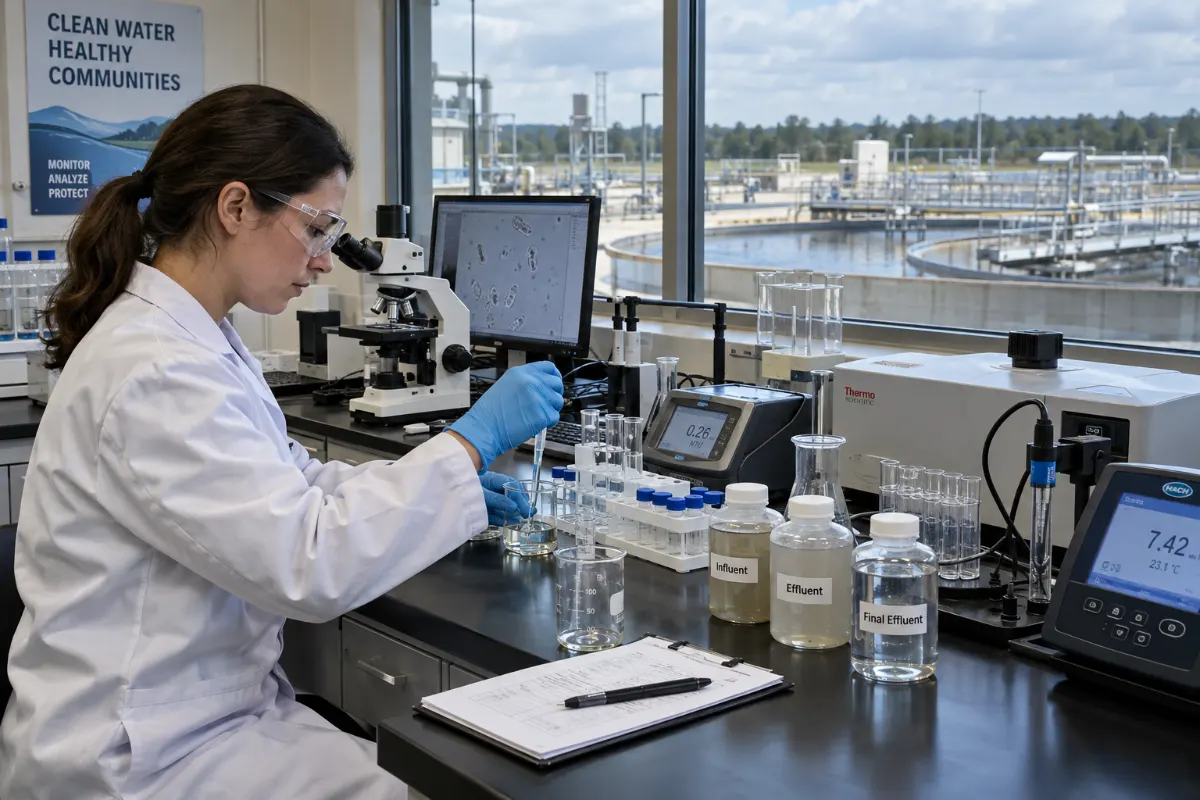
I have watched more projects fail at the sampling stage than at the commissioning stage. Before you size a single membrane or compressor, you need a feed characterization that covers at least six months of variability, not a single grab sample from a good day.
The parameters that actually drive the design
- TDS and conductivity range — not the average, the 95th percentile. Spikes of 30% above average are normal in batch plants.
- COD and TOC — organics foul membranes and cause foaming in evaporators. High COD also raises the boiling point elevation and can carry over into distillate.
- Hardness (Ca, Mg, Ba, Sr) and silica — these are the scaling culprits. Silica above roughly 100–150 mg/L in the concentrate is where MVR design gets difficult.
- Chloride and sulfate ratio — affects materials selection. High chloride means duplex or titanium wetted parts, not 316L.
- Ammonia, volatile organics, and pH — ammonia will strip into the vapor and contaminate your distillate if you are not careful.
- Suspended solids and oil/grease — anything above a few mg/L needs pretreatment before it touches a membrane.
If you skip the variability study, you will size for the average and the plant will trip on every upset. I would rather over-specify a 20% margin on the membrane area than explain to an owner why the DTRO train is short every summer.
The DTRO Stage: What It Does Well and Where It Stops
Disk-tube RO is not a magic membrane. It is a membrane with an open channel that tolerates suspended solids and fouling far better than a spiral-wound element. That open channel is why it survives on leachate, electroplating rinse water, and landfill streams that would plug a conventional RO in a week.
Typical operating envelope
| Parameter | Typical design range | Notes |
|---|---|---|
| Feed TDS | 2,000 – 30,000 mg/L | Higher with staged configuration |
| Operating pressure | 40 – 90 bar | Depends on osmotic pressure of concentrate |
| Recovery per stage | 70 – 85% | Lower at high TDS |
| Concentrate TDS | 60,000 – 120,000 mg/L | Practical upper limit before flux collapse |
| Feed SDI | < 5 | Pretreatment dependent |
The number I care about most is the concentrate TDS. Once you cross about 100,000 mg/L, flux drops fast and you are burning pump energy for very little water recovery. That is the signal to hand the stream to the evaporator. Trying to squeeze another 5% recovery out of the membrane is almost always a false economy.
On the pretreatment side, I typically see a sequence of pH adjustment, chemical softening or antiscalant dosing, and cartridge filtration. For oily or high-COD feeds, dissolved air flotation or a membrane bioreactor upstream is common. The DTRO membrane systems themselves are robust, but they are not a substitute for removing oil and gross solids.

The MVR Stage: Concentrating What the Membrane Cannot
Once the DTRO concentrate arrives at the evaporator, the job changes. You are no longer separating water from salt at ambient temperature; you are boiling it. MVR uses a compressor to raise the pressure and temperature of the vapor produced in the evaporator, then reuses that vapor as the heating medium. The energy input is essentially the compressor work, not the latent heat, which is why MVR is far more efficient than a single-effect evaporator that has to buy fresh steam.
For a deeper look at how the vapor recompression loop actually works, the MVR technology overview is a good starting point, but the practical design questions are always the same: what is the boiling point elevation, what is the scaling tendency, and how do you handle the solids that come out.
Key MVR design considerations
- Boiling point elevation (BPE) — at 20% NaCl, BPE is around 3–4°C. At 30%, it climbs past 6°C. High BPE means the compressor has to work harder and the available temperature difference shrinks.
- Scaling — calcium sulfate, calcium carbonate, and silica are the three killers. Falling-film designs tolerate scaling better than forced-circulation designs, but they need clean feed.
- Compressor selection — centrifugal compressors work well for large flows and low compression ratios; positive displacement (roots or screw) units handle higher ratios but cost more to maintain.
- Materials — duplex stainless for moderate chloride, titanium or high-alloy for aggressive chloride at high temperature.
- Distillate quality — expect 10–50 mg/L TDS if the design is clean; ammonia and volatile organics will carry over and need a polishing step.
The heat exchanger design inside the MVR unit is where most of the engineering effort goes. Tube fouling, vapor velocity, and liquid distribution all determine whether you clean every six months or every six weeks.
How the Integration Actually Works
Integration is not just plumbing the concentrate line from the RO skid to the evaporator feed tank. The two systems have to be designed around each other, and there are three interfaces that matter most.
1. Concentration matching
The DTRO concentrate TDS should land in a range the MVR can handle without excessive scaling or BPE. In practice, I aim for 60,000–90,000 mg/L from the membrane, which gives the evaporator a feed it can concentrate to 200,000–300,000 mg/L before crystallization. If the membrane pushes too hard, the evaporator pays the price.
2. Thermal integration
The DTRO permeate is cool, the MVR distillate is warm. On a well-designed plant, you use the distillate to preheat the membrane feed, which cuts both the RO heating load and the evaporator cooling load. This is where a lot of the lifecycle cost savings hide.
3. Solids handling
If the MVR is a crystallizer, you are producing a salt slurry that needs dewatering. A screw press or centrifuge handles the bulk of it, and the mother liquor recycles back to the evaporator. The screw press dewatering selection here is not trivial — salt crystals are abrasive and chloride-rich, so wetted parts need to be specified carefully.
Energy and Lifecycle Cost: What the Numbers Look Like
Energy is the dominant operating cost in both stages, and the split between them is what determines whether the integrated design makes sense.
| Stage | Typical specific energy | Driven by |
|---|---|---|
| DTRO | 3 – 8 kWh/m³ permeate | Feed TDS, recovery, pump efficiency |
| MVR | 15 – 40 kWh/m³ distillate | BPE, compression ratio, scaling margin |
| Pretreatment | 1 – 4 kWh/m³ | Chemical dosing, filtration, DAF |
| Solids dewatering | 0.5 – 2 kWh/m³ | Slurry concentration, press type |
These are indicative ranges, not guarantees. A feed with high BPE and aggressive scaling can push MVR energy toward the top of that range or beyond. A clean, low-hardness feed can sit at the bottom. The point is that the membrane stage is always the cheaper water-removal step, so you want it to do as much work as it reasonably can before the evaporator takes over.
Capital cost follows the opposite logic. DTRO skids are relatively cheap per unit of capacity; MVR systems are expensive because of the compressor, the heat exchangers, and the materials. That is another reason to let the membrane carry the load.
In my experience, the projects that go wrong are the ones where someone tried to save money on the membrane stage by accepting lower recovery, then discovered the evaporator had to be 40% larger than planned. The membrane is not the place to economize.
Common Failure Modes and How to Avoid Them
After enough commissioning and troubleshooting, the failure patterns start to repeat. Here are the ones I see most often.
Membrane fouling from inadequate pretreatment
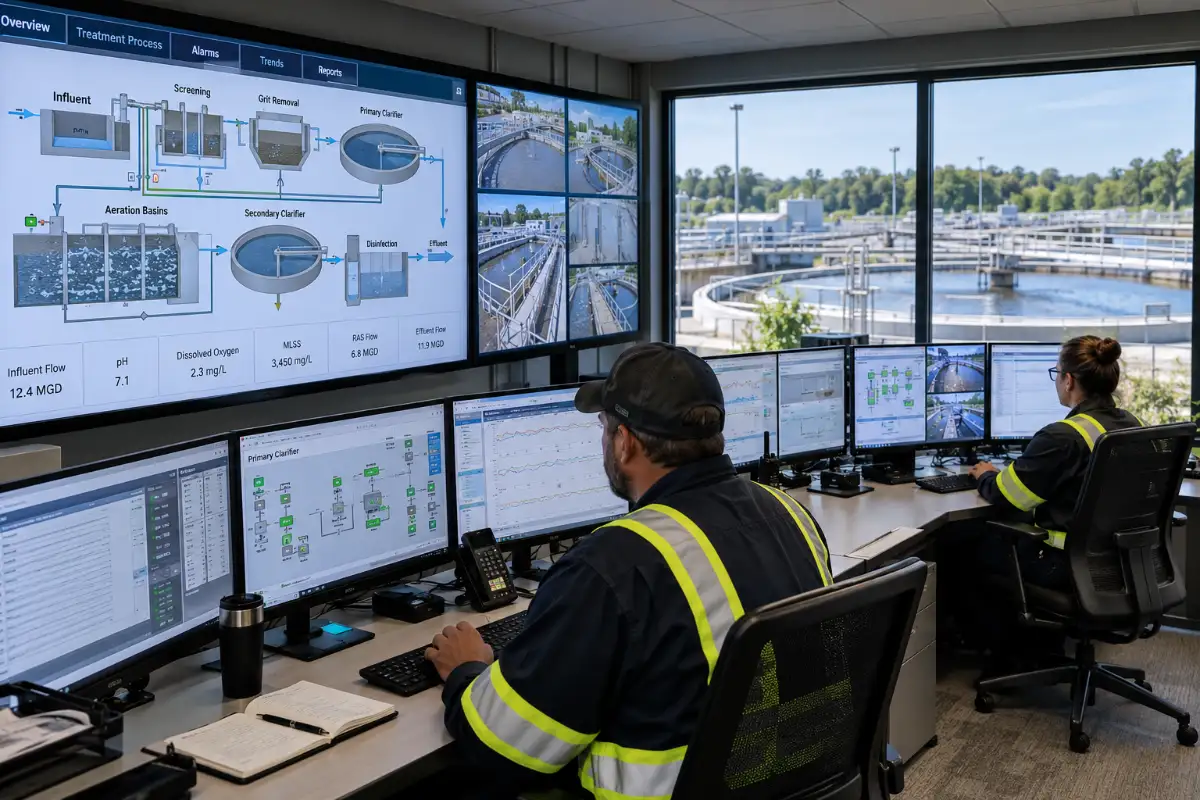
Oil, iron, and biological growth are the top three culprits. If the feed SDI creeps above 5 or the differential pressure across the DTRO train climbs faster than 0.5 bar per month, something upstream is not doing its job. The fix is almost always better pretreatment, not more frequent cleaning.
Evaporator scaling
Calcium sulfate and silica are the usual suspects. Once scale forms on the heat exchanger surface, the compressor has to work harder to maintain the same evaporation rate, and energy consumption climbs. Antiscalant dosing, seeding, or a purge stream are the standard countermeasures. In hard cases, a falling-film design with periodic chemical cleaning is the only practical answer.
Compressor fouling and vibration
Carryover of liquid droplets or fine salt particles into the compressor is a slow death. Mist eliminators need to be sized correctly, and the compressor inlet needs a demister that actually works. Vibration monitoring is not optional on a large MVR unit.
Distillate quality excursions
Ammonia, volatile organics, and entrained droplets all show up as elevated TDS or COD in the distillate. If the distillate is being reused, this matters. A polishing RO or activated carbon step is often the cheapest fix.
Where This Configuration Fits Best
Not every stream needs DTRO plus MVR. If your TDS is below 10,000 mg/L and you have a municipal discharge option, a conventional RO and discharge permit is far cheaper. The integrated approach earns its keep in a specific set of conditions:
- High salinity where discharge limits are tight or the receiving body is sensitive
- Zero liquid discharge requirements driven by permit or water reuse goals
- Streams with high COD and hardness that would foul conventional RO
- Sites where hauling brine off-site is expensive or restricted
- Processes where the recovered distillate has reuse value
Landfill leachate, electroplating rinse water, pharmaceutical fermentation broth, and battery manufacturing wastewater are the classic applications. The ZLD system design logic applies to all of them, but the specific membrane and evaporator configuration changes with the chemistry.
If you are evaluating whether this configuration fits your site, the honest answer is that it depends on the feed. A pilot test on real wastewater is worth more than any spreadsheet model. I have seen pilot data overturn a design assumption more than once.
Selection Logic: Choosing Between MVR and Multi-Effect
MVR is not the only evaporator option. Multi-effect evaporators use steam in a cascade and can be cheaper to buy, but they consume far more thermal energy. The choice usually comes down to the cost of steam versus the cost of electricity at the site.
| Factor | MVR | Multi-effect |
|---|---|---|
| Primary energy | Electricity | Steam |
| Specific energy | 15 – 40 kWh/m³ | Equivalent to 0.3 – 0.5 t steam/m³ |
| Capital cost | Higher | Lower for small capacity |
| Footprint | Compact | Larger |
| Best fit | Cheap electricity, moderate capacity | Cheap steam, large capacity |
If you have waste heat or cheap steam, a multi-effect unit may win on lifecycle cost. If electricity is cheap and steam is not available, MVR is the clear choice. The multi-effect evaporator route also makes sense when you need very high capacity and can tolerate a larger footprint.
Maintenance Realities
Both systems need disciplined maintenance, and the maintenance burden is the part that gets underestimated in the proposal stage.
- DTRO: membrane cleaning every 4–12 weeks depending on fouling; membrane replacement every 2–4 years; pump and seal maintenance annually.
- MVR: heat exchanger cleaning every 3–12 months; compressor inspection annually; mist eliminator cleaning quarterly; antiscalant system checks weekly.
- Shared: instrumentation calibration, valve maintenance, and control loop tuning are ongoing.
The single biggest maintenance cost driver is feed quality. A plant that spends money on pretreatment saves multiples of that on cleaning and downtime. I have never seen a site regret investing in upstream treatment.
Frequently Asked Questions
What feed TDS range makes DTRO plus MVR economically viable?
As a rough guide, the integrated approach starts to make sense above about 10,000–15,000 mg/L TDS, especially when discharge options are limited. Below that, conventional RO with discharge is usually cheaper. Above 60,000 mg/L, the membrane stage becomes marginal and you may need to feed the evaporator directly.
How much does an MVR system add to operating cost compared to the DTRO stage?
MVR is typically two to five times more energy-intensive per cubic meter of water removed than DTRO. That is why the membrane is always pushed to its practical recovery limit first. The exact ratio depends on boiling point elevation, compression ratio, and the scaling margin built into the design.
Can DTRO handle the same feed as a conventional spiral-wound RO?
DTRO handles fouling and suspended solids far better, but it is not immune to oil, iron, and biological growth. Pretreatment is still required. The advantage is that DTRO tolerates higher SDI and recovers more water at high TDS before cleaning is needed.
What is the most common cause of MVR underperformance?
Scaling on the heat exchanger surface. When scale forms, the compressor has to work harder to maintain evaporation rate, and energy consumption climbs. Antiscalant dosing, feed softening, and periodic cleaning are the standard fixes.
How often do membranes need replacement?
With good pretreatment, DTRO membranes typically last two to four years. Aggressive feeds or poor pretreatment can cut that to one year or less. Cleaning frequency is the leading indicator — if you are cleaning monthly, the membranes are working too hard.
Is a pilot test necessary before full-scale design?
For a complex stream, yes. Pilot data on real wastewater validates the recovery, the scaling tendency, and the distillate quality in a way that bench testing cannot. It is the cheapest insurance you can buy on a project of this size.
Can the distillate be reused?
Usually yes, if the design controls volatile carryover. Distillate TDS in the 10–50 mg/L range is common and suitable for cooling tower makeup, wash water, or even boiler feed with polishing. Ammonia and volatile organics are the main risks to distillate quality.
What happens to the salt solids produced?
They are dewatered, typically with a screw press or centrifuge, and either sold if the purity supports it or sent for landfill disposal. The mother liquor recycles back to the evaporator. Salt purity and disposal cost depend heavily on the feed chemistry.
If you are working through a design decision on a specific stream and want a second opinion on the configuration, the engineering team at Memvatop can review your feed data and walk through the trade-offs with you.