

Reducing the volume of industrial wastewater is usually cheaper than treating it. Every gallon you eliminate upstream is a gallon that never has to be pumped, chemically conditioned, evaporated, or hauled away. In practice, most plants I work with cut their liquid discharge by 60–95% using a combination of water reuse, membrane concentration, and evaporation. The right mix depends on your water chemistry, discharge limits, and energy costs. This guide walks through the equipment options, how they compare, and where each one tends to fail in the field.
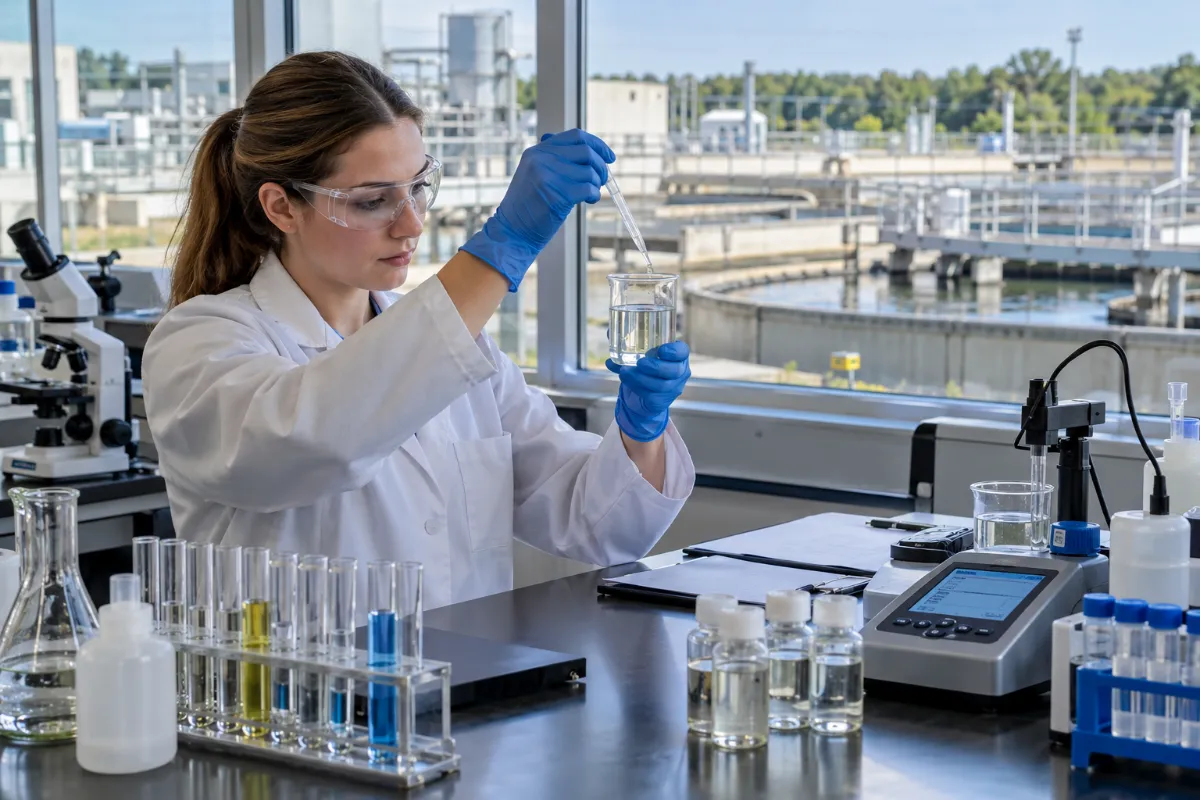
Why Volume Reduction Comes Before Treatment
I have walked into too many plants where the treatment system was oversized because nobody looked at the water balance first. The conversation usually starts with “we need a bigger evaporator” when it should start with “why are we generating this much water in the first place?”
Volume reduction is a hierarchy, not a single piece of equipment:
- Eliminate — fix leaks, optimize rinse ratios, switch to counter-current washing.
- Reuse — return clean condensate or permeate back to the process.
- Concentrate — membranes or evaporation to shrink the waste stream.
- Solidify — crystallize or dry the residual brine to a solid.
Most of the capital cost sits in steps 3 and 4. If you skip steps 1 and 2, you pay for it twice — once in equipment size and again in operating cost, every day, for the life of the plant.
A quick reality check on the water balance
Before selecting anything, I ask for three numbers: daily wastewater volume, total dissolved solids (TDS), and chemical oxygen demand (COD). Those three values narrow the technology field faster than anything else. A 20 m³/day stream at 3% TDS is a completely different problem from a 500 m³/day stream at 0.3% TDS, even though both are “industrial wastewater.”
Membrane Concentration: The First Line of Defense
Membranes do the heavy lifting on volume because they remove water, not salt. That is the key difference from evaporation, where you are paying to boil water off. As long as your feed chemistry allows it, membranes are almost always the cheaper way to concentrate.
Standard RO and high-pressure RO
Conventional reverse osmosis handles brackish streams up to roughly 40–60 bar, which typically corresponds to a brine concentration of 3–6% TDS depending on the salt composition. Beyond that, osmotic pressure climbs and flux collapses. High-pressure RO pushes into the 80–120 bar range and can reach higher brine concentrations, but membrane fouling and scaling become the dominant operational risk.
What I tell clients: high-pressure RO works well when the feed is relatively clean and the scaling species are controlled. It struggles badly with streams high in silica, calcium sulfate, or organics that foul the membrane surface.
DTRO for difficult streams
Disc-tube reverse osmosis (DTRO) uses an open-channel design that tolerates higher suspended solids and fouling potential than spiral-wound elements. It is a common choice for landfill leachate and other streams where pretreatment is expensive or unreliable. The trade-off is higher specific energy and more frequent membrane replacement. For leachate-type applications, DTRO systems often serve as the concentration step ahead of evaporation.
If you want a deeper look at how these membrane stages fit into a full treatment train, the process overview at process in water treatment is a useful reference.
Where membranes stop
Membranes concentrate to a point, then they stop being economic. The practical ceiling is usually where osmotic pressure exceeds what the pump and membrane can handle, or where scaling chemistry becomes unmanageable. That is where thermal concentration takes over.
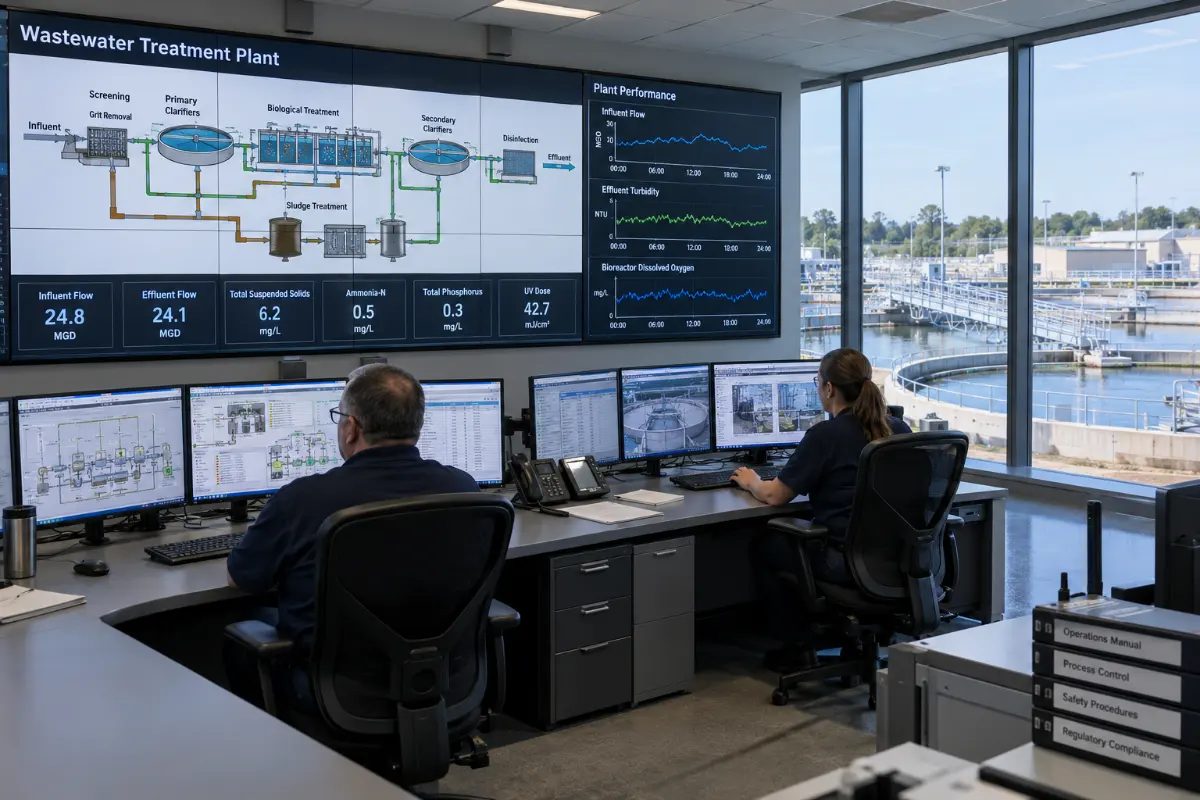
Evaporation: The Workhorse for High-TDS Streams
Evaporation removes water as vapor, leaving behind a concentrated brine. It handles high TDS, high COD, and streams that would destroy membranes. The question is never “can evaporation do it” — it almost always can. The question is which evaporator configuration gives you the lowest lifecycle cost.
MVC and MVR evaporators
Mechanical vapor compression (MVC, sometimes called MVR) uses a compressor to recompress the vapor produced by boiling, then reuses that compressed vapor as the heating medium. The result is very high energy efficiency — typically 15–40 kWh per cubic meter of distillate, versus several hundred kWh for a simple steam-heated unit without vapor reuse.
MVC is my default recommendation for medium-to-large continuous streams where power is available and the feed chemistry is stable. The compressor is the heart of the system, and its reliability determines everything. I have seen installations run for years with minimal intervention, and I have seen others struggle because the compressor was undersized for the actual vapor load.
For a detailed look at how the compressor and heat exchanger interact, see the MVC evaporator overview and the heat exchanger design notes.
Multi-effect evaporators
Multi-effect evaporation uses steam to drive the first effect, then uses the vapor from each effect to heat the next. Each additional effect reduces steam consumption roughly proportionally. A triple-effect unit uses about one-third the steam of a single-effect unit, but it costs more and takes up more space.
The economics are straightforward: if you have cheap steam and expensive electricity, multi-effect wins. If you have expensive steam and cheap electricity, MVC wins. In between, it depends on your utility rates and how much you value simplicity.
| Configuration | Typical Energy Use | Best Fit | Main Trade-off |
|---|---|---|---|
| Single-effect | High steam, low power | Small flows, simple duty | High operating cost per m³ |
| Double-effect | Moderate steam | Mid-size plants with steam | More complexity, more footprint |
| Triple-effect | Low steam | Large flows, steam available | Highest capex, largest footprint |
| MVC / MVR | Low steam, high power | Continuous high-TDS streams | Compressor maintenance, power quality |
These are indicative ranges only. Actual consumption depends on boiling point elevation, feed concentration, and how well the system is controlled in practice.
When to combine membranes and evaporation
Most of the volume reduction I see in real projects is a hybrid. Membranes take the stream from 1% to 5–8% TDS, then evaporation takes it from there to 20–30% or higher. This split minimizes both membrane pressure limits and evaporator size. Trying to do everything with evaporation means boiling water you could have removed with a pump and a membrane.
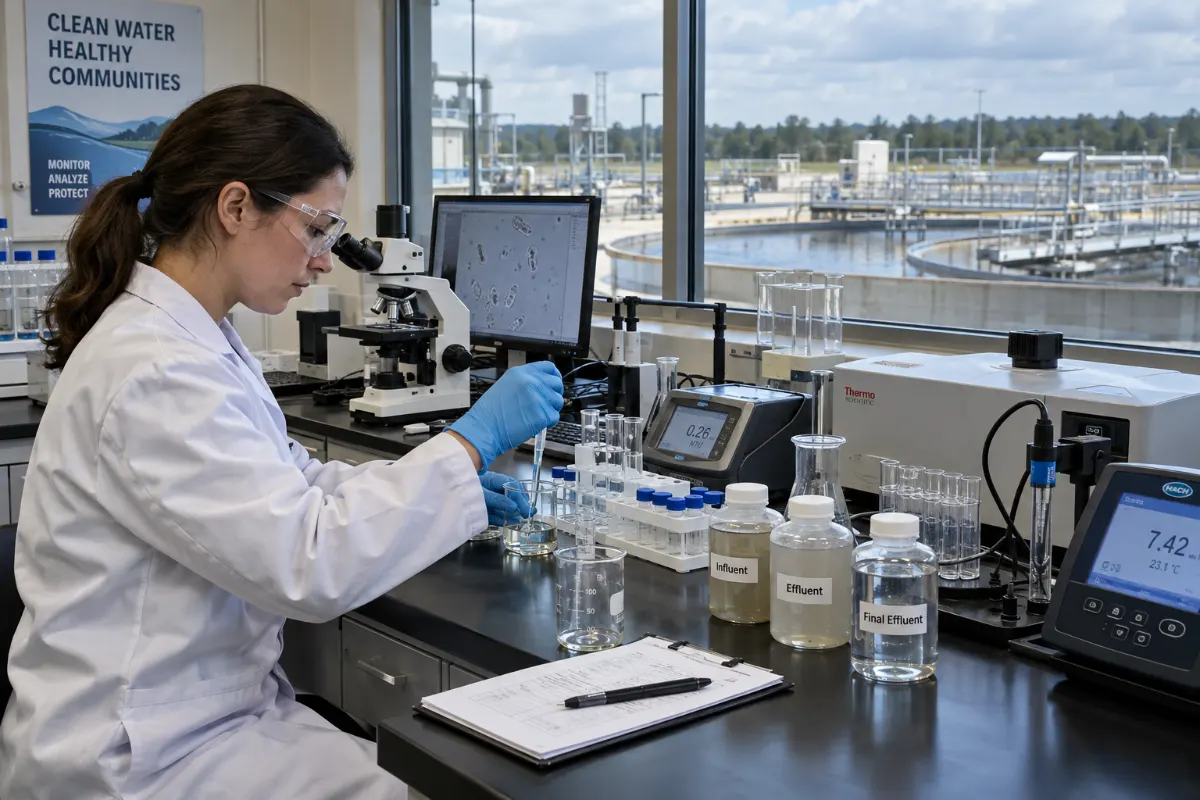
Getting to Zero Liquid Discharge
Zero liquid discharge (ZLD) is the logical endpoint of volume reduction: no liquid leaves the site. In practice, ZLD means concentrating to the point where you can crystallize or solidify the remaining brine and handle it as a solid waste.
The typical ZLD train looks like this:
- Pretreatment (softening, pH adjustment, removal of scaling species)
- Membrane concentration (RO, high-pressure RO, or DTRO)
- Thermal concentration (MVC or multi-effect evaporator)
- Crystallization or spray drying of the final brine
ZLD is expensive. The crystallization step alone can consume more energy than everything upstream combined. I always ask whether the discharge limits truly require ZLD, or whether a concentrated brine with a permitted disposal route would be acceptable. Sometimes the answer is no, and that saves the client a lot of money.
When ZLD is genuinely required, the design details matter enormously. The ZLD system design page covers the integration points that often get missed in the early planning stage.
Sludge dewatering as part of the picture
Volume reduction is not only about dissolved solids. Sludge handling is a major cost center in most plants, and dewatering performance directly affects hauling costs. A screw press or similar dewatering device can reduce sludge volume by 70–90%, which translates directly into fewer truckloads and lower disposal fees.
The trade-off is polymer consumption and cake dryness. Higher dryness means more polymer and more wear, but less hauling. I have seen plants save significant money by optimizing this balance rather than buying new equipment. For a practical walkthrough, the screw press dewatering guide covers the operational variables that actually matter.
Selection Logic: How I Choose Equipment
There is no universal answer, but there is a sequence of questions that narrows the field quickly.
Step 1: Characterize the stream properly
I cannot count the number of projects that went sideways because the feed analysis was incomplete. You need:
- TDS and individual ion concentrations
- COD and BOD
- Silica, calcium, magnesium, sulfate
- pH and alkalinity
- Oil and grease, if present
- Temperature and flow variability
Silica is the silent killer in evaporation systems. It scales heat exchangers in ways that are difficult to remove, and it is often missing from the initial analysis. If your feed has more than 20–30 ppm silica, plan for pretreatment or accept more frequent cleaning.
Step 2: Define the target
What is the actual goal? Reuse the distillate? Reduce hauling volume? Meet a discharge limit? The target determines how far you need to concentrate and what quality the output must be.
Step 3: Evaluate the energy source
This is often the deciding factor. If you have waste heat or cheap steam, multi-effect evaporation looks attractive. If you have cheap electricity, MVC wins. If you have neither, the whole project may not be viable, and you should be looking at reduction at the source instead.
Step 4: Model the lifecycle cost
Capital cost is only part of the picture. I build a simple model with these components:
| Cost Component | What Drives It | Typical Share of Lifecycle Cost |
|---|---|---|
| Capital equipment | Capacity, materials, automation | 20–35% |
| Energy | Utility rates, hours of operation | 30–50% |
| Maintenance | Corrosion, scaling, compressor wear | 10–20% |
| Consumables | Antiscalant, cleaning chemicals, membranes | 5–15% |
| Disposal | Brine or solid waste handling | 5–20% |
These ranges are project-dependent. A plant running 24/7 with expensive power will have a very different cost profile than one running a single shift with waste heat available.
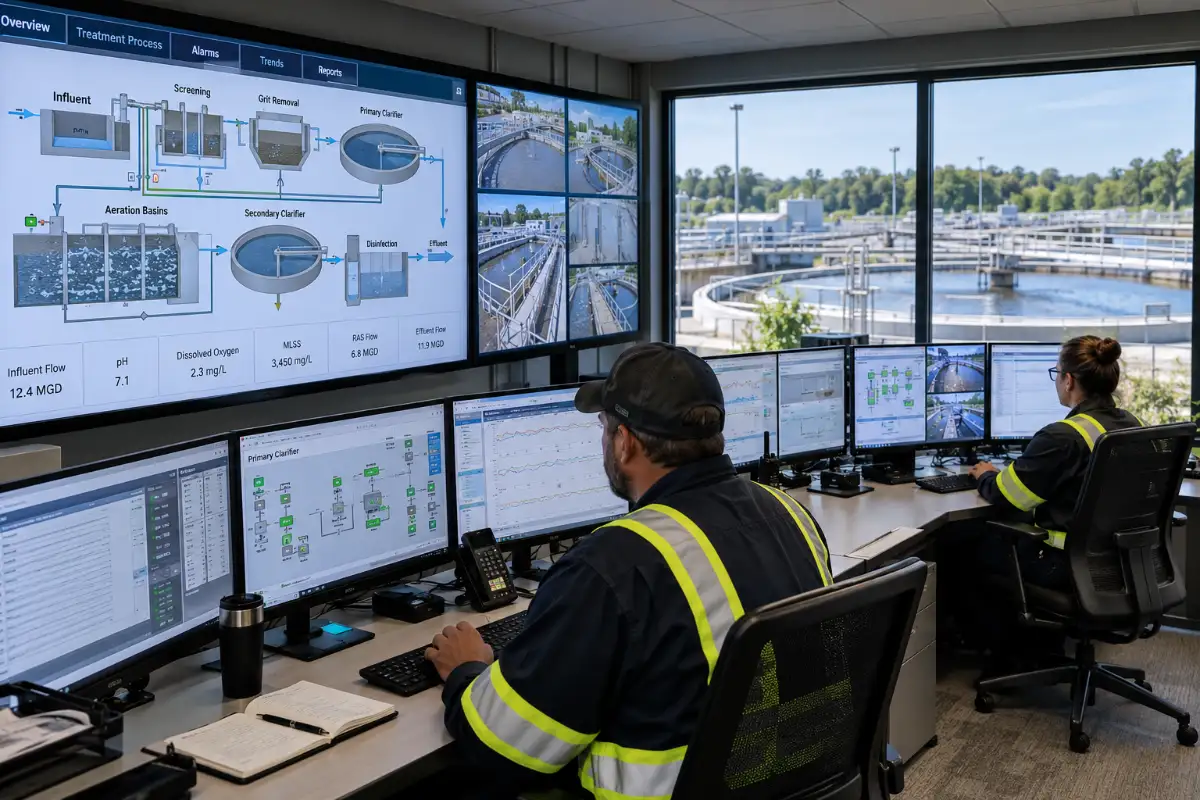
Operating Experience: What Actually Goes Wrong
Equipment selection gets most of the attention, but operations determine whether the system delivers its promised performance. Here is what I see most often.
Scaling and fouling
Every evaporator and membrane system eventually fouls. The question is how fast and how easily it can be cleaned. Design choices that make cleaning easier — access to heat exchanger surfaces, CIP connections, adequate isolation valves — pay for themselves many times over.
Antiscalant dosing is not optional. I have seen plants try to save on chemicals and end up with heat exchangers that needed mechanical cleaning every few weeks. The chemical cost is trivial compared to the downtime.
Foaming
High-COD streams foam in evaporators. Foam carries over into the distillate, contaminating it and potentially damaging the compressor. Defoaming systems, adequate vapor space, and sometimes feed pretreatment are the answers. Foaming behavior is hard to predict from lab data, so pilot testing is worth the investment for difficult streams.
Compressor reliability
In MVC systems, the compressor is the single most critical component. It needs clean vapor, stable operating conditions, and proper maintenance. Vapor quality problems — carryover, superheat issues, liquid droplets — show up as compressor failures months later. I always recommend monitoring vapor temperature and pressure closely, and treating any deviation as a warning sign.
Control system tuning
Many performance problems trace back to control logic that was never properly tuned. Level control, concentration control, and temperature control all interact. A system that runs well at design conditions can behave badly at 60% load if the controls were not set up for turndown. This is worth spending time on during commissioning.
Maintenance Planning and Spare Parts
The plants that run smoothly are the ones that planned for maintenance before startup. A few practices that consistently pay off:
- Keep critical spares on site. Compressor parts, membranes, pump seals, and instruments. Waiting weeks for a part means weeks of non-compliance or emergency disposal.
- Track performance trends. Distillate quality, energy consumption, and pressure differentials tell you when cleaning or maintenance is needed before performance degrades.
- Schedule cleaning proactively. Cleaning on a fixed schedule based on experience is usually better than waiting for performance to drop.
- Train operators properly. The best-designed system will underperform if the people running it do not understand what the instruments are telling them.
I have also seen the opposite: plants that over-maintain and create problems by opening equipment unnecessarily. The right balance comes from understanding the specific failure modes of your system and monitoring for them.
Energy and Cost Considerations
Energy is usually the largest operating cost in volume reduction. For MVC systems, the compressor dominates power consumption. For multi-effect systems, steam dominates. In both cases, the efficiency of heat recovery determines the overall economics.
A well-designed MVC system recovers most of the latent heat in the vapor. A poorly designed one loses it and runs at two or three times the expected power consumption. This is where the details matter — heat exchanger surface area, compressor efficiency, insulation, and condensate handling all contribute.
If you are evaluating the cost of an MVR or MVC system, the cost drivers breakdown covers the factors that move the number most, from materials of construction to utility rates.
Comparing energy sources honestly
I often see comparisons that ignore the real cost of steam. Steam is not free, even if it comes from an existing boiler. It has a marginal cost based on fuel, water treatment, and boiler maintenance. When you account for that properly, MVC often looks better than it first appears, especially in regions with high fuel costs.
Conversely, if you have genuine waste heat — from a kiln, a turbine, or another process — multi-effect evaporation can be extremely attractive because the marginal energy cost is near zero.
Working on a volume reduction project?
If you are sizing a system and want a second opinion on the technology selection, our engineering team can review your water balance and feed analysis. No obligation, just a technical conversation.
Common Mistakes I See in Volume Reduction Projects
After enough projects, patterns emerge. These are the ones that cost the most money.
Undersizing for variability
Design flows are averages. Real flows spike. If your system is sized exactly for the average, it will be overwhelmed regularly. I typically design for 120–150% of expected peak flow, depending on the process.
Ignoring the brine disposal path
Concentrating wastewater creates a concentrated waste. If you have not figured out where that brine goes — and what it costs — you have not finished the design. I have seen projects stall at commissioning because the brine disposal plan was never finalized.
Choosing equipment on capital cost alone
The cheapest system to buy is rarely the cheapest to own. A low-cost evaporator with poor heat recovery will cost more in energy over five years than a better-designed unit. Run the numbers over the full life of the equipment.
Neglecting pretreatment
Pretreatment is not glamorous, but it protects everything downstream. Removing scaling species, adjusting pH, and controlling suspended solids extends the life of membranes and heat exchangers significantly. Skipping it to save capital is a false economy.
Underestimating operator requirements
These systems are not push-button. They need attention, understanding, and judgment. If your staffing plan assumes minimal operator involvement, expect problems. Budget for training and for the time it takes to learn the system’s behavior.
Matching Technology to Wastewater Type
Different industries produce different wastewater, and the technology fit varies accordingly.
Electroplating and metal finishing
These streams are typically high in heavy metals, moderate in TDS, and often acidic or alkaline. Membrane concentration works well after metals removal. Evaporation handles the final concentration and can recover water for reuse. The main challenge is corrosion — materials of construction matter more here than in most applications.
Pharmaceutical and chemical
High COD, variable composition, and often the presence of solvents or other volatile organics. Evaporation can be effective, but vapor quality and condenser design need attention to prevent volatile carryover. Some streams are better handled by other means entirely.
Landfill leachate
Leachate is one of the hardest streams to treat. High TDS, high COD, high ammonia, and highly variable composition. DTRO followed by evaporation is a common and effective combination. The variability means the system must be robust and the controls must handle a wide range of conditions.
New energy and battery manufacturing
These streams often contain high TDS and specific ions that need recovery. Volume reduction is usually combined with resource recovery, which changes the economics significantly. The value of recovered materials can offset a substantial portion of the operating cost.
For a sense of how these applications come together in practice, the project examples on electroplating and leachate treatment are worth reviewing alongside this guide.
FAQ
How much can I realistically reduce my wastewater volume?
It depends on your starting point and how much you are willing to invest. Source reduction and reuse can often cut volume by 30–60% with modest capital. Adding membrane concentration can push that to 80–90%. Full ZLD approaches 100% liquid elimination but at significantly higher cost. The right target is the one that balances capital, operating cost, and compliance requirements for your specific situation.
What is the difference between MVC and MVR?
They refer to the same core technology — mechanical vapor compression or mechanical vapor recompression. The terms are used interchangeably in the industry. Both describe a system where a compressor raises the pressure and temperature of vapor so it can be reused as the heating medium. Some suppliers use one term or the other, but the engineering is the same.
How do I decide between membranes and evaporation?
Start with the feed chemistry. If the stream is relatively clean and the TDS is moderate, membranes are usually cheaper to operate. If the stream is high in TDS, scaling species, or organics that foul membranes, evaporation is more robust. In most large projects, the answer is both — membranes for bulk concentration and evaporation for the final step. The split point depends on your specific water chemistry and the pressure limits of your membrane system.
What causes foaming in evaporators, and how do I prevent it?
Foaming is usually caused by surfactants, high COD, or certain dissolved organics. It is difficult to predict from lab analysis alone. Prevention options include defoaming chemicals, increased vapor space in the evaporator design, feed pretreatment to remove foam-causing compounds, and sometimes operating at lower concentrations. For streams with known foaming tendency, pilot testing is strongly recommended before finalizing the design.
How often will my evaporator need cleaning?
Cleaning frequency depends on the scaling and fouling characteristics of your feed. Well-designed systems with proper antiscalant dosing and pretreatment might go months between cleanings. Difficult streams might need cleaning every few weeks. The key is to monitor performance trends — distillate quality, energy consumption, and pressure differentials — so you clean before performance degrades significantly, not after.
What is the biggest operational risk in a volume reduction system?
In my experience, it is losing the ability to handle the waste stream. If the treatment system goes down and you have no alternative disposal route, you are in a difficult position. This is why I always recommend having a backup plan — storage capacity, an alternative disposal route, or redundancy in critical components. The cost of that backup is insurance against a much larger problem.
Can I reuse the distillate from an evaporator?
Usually yes, but it depends on the quality required. Evaporator distillate is typically low in TDS and can often be reused for rinsing, cooling tower makeup, or other non-critical applications. If the feed contains volatile organics, they can carry over into the distillate, so quality testing is essential before committing to reuse. In some cases, a polishing step is needed to meet the reuse quality target.
How long does it take to commission a volume reduction system?
For a typical industrial system, commissioning takes several weeks to a few months, depending on complexity. The equipment installation is usually the shorter part. The longer part is tuning the controls, establishing operating procedures, and training operators. I have seen systems that were mechanically complete in weeks but took months to run reliably because the control logic needed adjustment and the operators needed to learn the system’s behavior.
Final Thoughts
Volume reduction is fundamentally an economic problem dressed up as a technical one. The technology exists to handle almost any stream. The question is whether the cost of treating it is lower than the cost of the alternatives — disposal, hauling, or process changes that reduce the volume at the source.
My advice to anyone starting this journey: characterize your stream thoroughly, define your target clearly, and model the lifecycle cost honestly. Then talk to people who have operated similar systems. The gap between design performance and operating reality is where projects succeed or fail, and that gap is best understood by people who have lived with these systems day in and day out.
If you are in the early stages of planning and want to sanity-check your approach, a technical conversation with an experienced engineer is usually worth more than another vendor quote. The contact page is the place to start that conversation.