

If you are sourcing a multi-effect evaporator from China, the short answer is this: the country has a deep pool of qualified manufacturers, but the gap between a good supplier and a cheap one shows up six months after startup, not in the quotation. I have spent over a decade designing and delivering evaporation and membrane systems for industrial wastewater, and I have watched buyers win and lose on this decision. What separates a reliable multi-effect evaporator manufacturer in China from the rest is not price alone — it is how they handle heat balance, materials of construction, scaling control, and documentation. This article walks through what actually matters when you evaluate these suppliers, from process design through lifecycle cost.
Why China Became a Major Source for Multi-Effect Evaporators
China’s advantage in evaporation equipment is not just labor cost. It is the sheer volume of industrial projects built over the past two decades — chemical parks, pharmaceutical plants, battery material factories, landfill leachate treatment facilities — that forced domestic manufacturers to solve real fouling, scaling, and corrosion problems at scale. That experience compounds. A supplier that has built hundreds of falling-film and forced-circulation units has seen more failure modes than one that has built a dozen.
What this means for you as a buyer is that the technical capability exists. The problem is that it exists at many different quality levels, and the marketing all looks the same. I have reviewed quotations where two suppliers proposed identical evaporator areas but one had clearly done the heat balance and the other had copied a template. That difference determines whether your unit runs at design capacity or limps along at 70%.
The other factor is supply chain depth. Heat exchangers, compressors, pumps, vacuum systems, and instrumentation are all available domestically, which shortens lead times and reduces cost. But availability also means a manufacturer can cut corners by sourcing the cheapest component that technically meets the spec. Your job during evaluation is to find out which approach they take.

What Separates a Competent Manufacturer from a Cheap One
I evaluate evaporator suppliers on five things, and none of them are the price on the first page of the quote.
1. Process Design Depth
Ask for the heat and mass balance. A real manufacturer will produce one that accounts for boiling point elevation, specific heat, latent heat at each effect’s pressure, and the vapor bleed or thermal compression arrangement. If they hand you a one-page summary with only flow rates and temperatures, they have not done the work. Multi-effect design lives or dies on getting the temperature profile right across effects. Get it wrong and you either lose capacity or foul the first exchanger within weeks.
2. Materials of Construction
This is where cheap quotes hide. For chloride-bearing wastewater, 316L is often not enough. Duplex 2205, 904L, or titanium may be required depending on chloride concentration and temperature. A manufacturer that specifies 316L for a high-chloride stream is either inexperienced or hoping you will not notice until the tubes pit through. Ask them to justify the material selection against your specific water chemistry, and ask what corrosion allowance they applied.
3. Scaling and Fouling Strategy
Every evaporator fouls. The question is how the design manages it. Look for forced circulation on the scaling effects, adequate residence time control, and a cleaning-in-place (CIP) system that actually reaches the heat transfer surfaces. Some designs include seed circulation or crystal seeding for high-hardness streams. If the manufacturer has no answer for how you will clean the unit when calcium sulfate or silica deposits form, they have not built many units on real wastewater.
4. Component Quality and Traceability
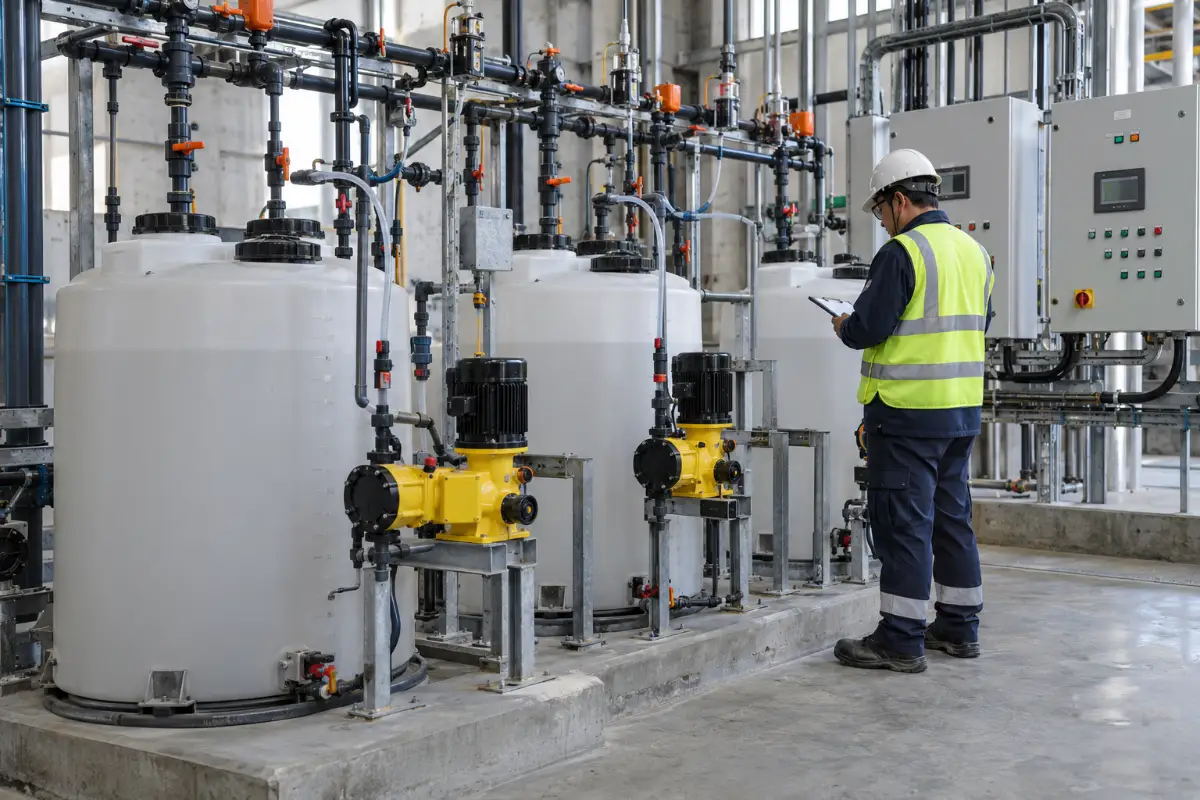
Ask for the compressor brand and model, the pump manufacturer, the instrument list, and the control system platform. Vapor compressors in MVR systems are the heart of the machine and the most expensive single item. A no-name compressor will fail early and cost you a fortune to replace. For multi-effect units without MVR, the vacuum system and the inter-effect pumps matter just as much. Request component datasheets before you sign.
5. Documentation and Service Commitment
P&IDs, operating manuals, spare parts lists, and as-built drawings should be part of the contract, not an afterthought. I have seen buyers receive equipment with no P&ID and then spend weeks reverse-engineering the piping. Also clarify who commissions the unit, how long they stay on site, and what training they provide. A manufacturer that will not commit to commissioning support in writing is a risk you do not need to take.

Comparing Evaporator Configurations Before You Compare Suppliers
Before you even shortlist manufacturers, you need to know which configuration fits your duty. The same supplier may build all of them, but the wrong choice will cost you for the life of the plant. Here is how the main options compare on the factors that drive operating cost.
| Configuration | Typical Steam Economy | Best Fit | Main Trade-off |
|---|---|---|---|
| Single-effect | ~0.8–1.0 kg distillate per kg steam | Small flows, high fouling, pilot duty | High energy per unit of water removed |
| Double-effect | ~1.6–1.8 | Moderate flows, moderate scaling | More footprint and capital than single |
| Triple-effect | ~2.4–2.7 | Larger flows, low-to-moderate scaling | Higher capital, needs stable steam supply |
| MVR (mechanical vapor recompression) | Effectively 10–25+ equivalent | High electricity, low steam availability | High electrical demand, compressor maintenance |
| MVR + multi-effect hybrid | Very high | Large ZLD plants, energy-constrained sites | Complex control, higher capital |
Those economy figures are indicative design ranges, not guarantees. Actual performance depends on your boiling point elevation, the number of effects, whether you use thermal or mechanical vapor recompression, and how much heat you recover from condensate and blowdown. I always tell clients to model their specific stream before trusting any generic number.
If you want to understand the heat exchanger side of these systems in more depth, the design of the MVC evaporator heat exchangers is worth studying because it drives both capital cost and cleaning frequency. For a broader look at how mechanical vapor recompression fits into the picture, the MVC evaporator overview covers the fundamentals.
How to Run a Supplier Evaluation That Actually Filters
Most buyers send the same RFQ to ten suppliers and compare the returned numbers. That approach fails because it rewards whoever is best at pricing low and hiding risk. Here is a process that works better.
Step 1: Pre-qualify on References and Capability
Ask each candidate for three references on similar wastewater — similar chemistry, similar capacity, similar duty cycle. Then actually call them. Ask about uptime, cleaning frequency, and how responsive the manufacturer was when something went wrong. A supplier with happy references in your industry is worth more than one with a lower price.
Step 2: Require a Design Basis Document
Before pricing, require a design basis that states the feed composition, design flow, required distillate quality, concentration factor, and the assumptions behind them. This forces the manufacturer to engage with your actual stream instead of quoting a catalog unit. It also gives you a document to hold them to if performance falls short.
Step 3: Compare on Total Installed Cost, Not Equipment Price
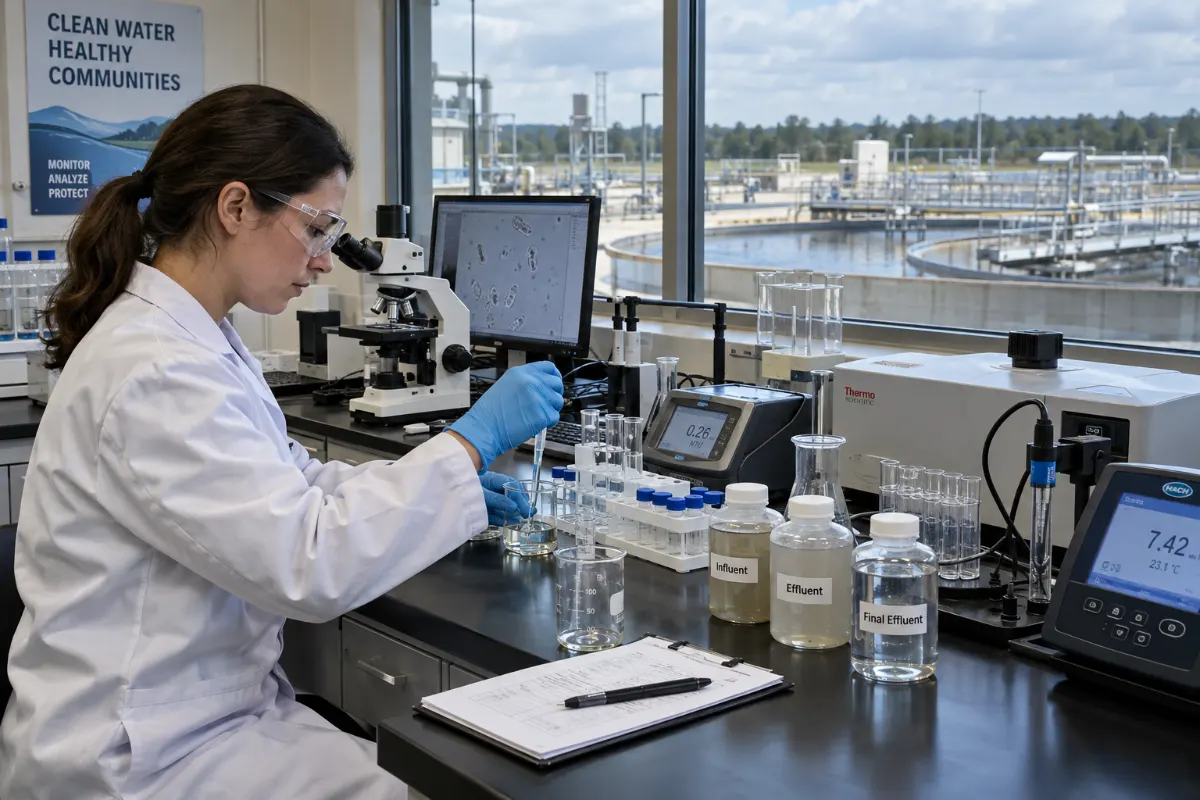
Equipment price is maybe 40–60% of total installed cost. Add foundation and structural steel, piping, electrical, insulation, instrumentation, freight, customs, commissioning, and spare parts. Then add five years of energy, cleaning chemicals, and maintenance. The cheapest evaporator is often the most expensive over its life.
Step 4: Audit the Factory if the Order Is Large
For anything above a certain size, visit or send a third-party inspector. Look at the welding procedures, the pressure test records, the material certificates, and the assembly area. You will learn more in two hours on the floor than in twenty emails.
Step 5: Nail Down the Contract Terms
Performance guarantees, liquidated damages for shortfall, warranty period, spare parts availability, and response time for service calls all belong in the contract. A manufacturer confident in their design will accept reasonable performance guarantees. One who will not is telling you something.
Energy and Operating Cost: The Numbers That Matter
Operating cost is where multi-effect evaporators live or die. The two dominant costs are steam (or electricity, for MVR) and maintenance. Let me give you a rough way to think about it.
For a steam-driven multi-effect unit, steam consumption scales roughly with the number of effects. A triple-effect unit uses about one-third the steam of a single-effect unit for the same evaporation duty, minus losses. But adding effects adds capital cost, temperature drop per effect, and complexity. There is an optimum number of effects for every duty, and it is usually between two and four for industrial wastewater. Beyond that, the boiling point elevation and the shrinking temperature difference between effects eat the gains.
For MVR, you trade steam for electricity. If your site has cheap power and expensive steam, MVR wins. If you have waste steam available, a multi-effect unit may be cheaper to operate. The right answer depends on your site’s energy balance. I have seen projects where a hybrid — MVR on the first effect, multi-effect on the rest — gave the lowest lifecycle cost. That is the kind of analysis a good manufacturer will do with you.
If you are working through the capital and operating cost drivers for a specific project, the breakdown in this MVR evaporator cost analysis is a useful reference for framing the trade-offs.
Common Failure Modes and How Good Manufacturers Prevent Them
After enough projects, you start to see the same problems repeat. Here are the ones I run into most often, and what the design should do about them.
- Scaling in the first effect: Usually caused by inadequate antiscalant dosing, wrong pH control, or a heat flux that is too high for the stream. Prevention starts with correct design flux and a proper pretreatment strategy.
- Corrosion of tubes and shells: Almost always a material selection error. Chlorides, fluorides, and low pH are the usual culprits. Get the metallurgy right up front.
- Compressor failure in MVR units: Often from liquid carryover, overspeed, or poor bearing maintenance. Proper mist elimination and a robust control system prevent most of it.
- Fouling of the condenser: Cooling water quality and condenser design matter. A condenser that is too small will run hot and foul faster.
- Vacuum loss: Air leaks at flanges, seals, or instrument connections. Good fabrication and a leak-test protocol at commissioning prevent this.
- Control instability: Usually from too few measurement points or a control philosophy that does not match the process dynamics. This is a design problem, not an operator problem.
Notice that all of these are design and fabrication issues, not operator errors. That is the point. A well-designed unit is easy to operate. A poorly designed one will frustrate your team for years.
Where Multi-Effect Evaporators Fit in a Zero Liquid Discharge System
Most industrial buyers are not purchasing an evaporator in isolation. They are building toward zero liquid discharge (ZLD) or a concentration step ahead of a crystallizer. Understanding where the evaporator sits in that chain changes how you specify it.
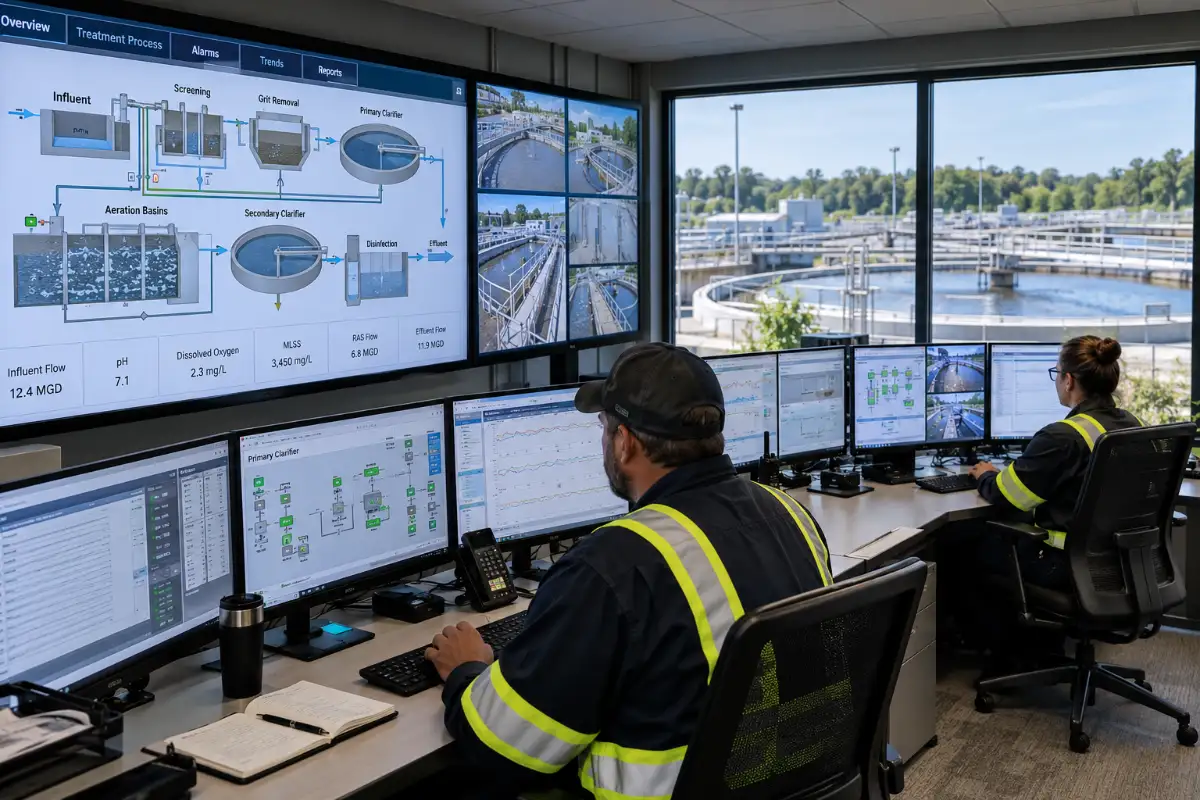
A typical ZLD train looks like this: pretreatment (softening, pH adjustment, sometimes membrane preconcentration), then reverse osmosis or DTRO to concentrate the stream, then the evaporator to further concentrate, then a crystallizer to produce solid salt. The evaporator’s job is to remove most of the water at the lowest possible cost, leaving a concentrated brine that the crystallizer can handle.
If you are planning a ZLD system, the ZLD system design considerations are worth reviewing before you specify the evaporator, because the upstream and downstream choices constrain what the evaporator must do. For high-salinity streams, a DTRO membrane system ahead of the evaporator can cut the evaporator size significantly, which usually pays for itself.
The key engineering point is this: do not specify the evaporator in isolation. Specify it as part of a train, and make sure the manufacturer understands the whole train. A supplier who only thinks about their own unit will optimize their equipment at the expense of your total cost.
What to Expect on Lead Time, Shipping, and Commissioning
Lead time for a multi-effect evaporator from China is typically in the range of four to eight months for a standard unit, longer for large or highly customized systems. That range depends on the size, the materials, the compressor lead time if it is MVR, and the manufacturer’s current backlog. Get a firm schedule with milestones in the contract.
Shipping and customs add time and cost. Large evaporator shells may need to ship in sections and be field-assembled, which changes the commissioning plan. Clarify early whether the manufacturer will send a commissioning engineer, for how long, and at what cost. Budget for it.
Commissioning is where you find out if the design was right. Insist on a performance test that measures distillate quality, concentration factor, and energy consumption against the design basis. Hold back a portion of payment until the test passes. This is standard practice and any reputable manufacturer will accept it.
A Note on Working with Overseas Suppliers
Communication is the most underrated risk in international equipment sourcing. Time zones, language, and documentation standards all create friction. The manufacturers who handle this well assign a single project manager, provide English documentation as standard, and respond to technical questions within a day. The ones who do not will leave you chasing information during the most critical phases of the project.
My advice is to test this during the quotation phase. Send a detailed technical question and see how long the answer takes and how good it is. That response time and quality is a preview of what the project will be like.
If you want to discuss a specific stream or review a design basis before you commit to a supplier, our engineering team can review your case and help you frame the specification.
Frequently Asked Questions
How do I choose between a multi-effect evaporator and an MVR evaporator?
It comes down to your energy balance and your stream. If you have cheap or waste steam available, a multi-effect unit is usually the lower-cost choice. If steam is scarce or expensive and you have reliable power, MVR will often have a lower operating cost despite higher capital. For large ZLD plants, a hybrid configuration sometimes gives the best lifecycle cost. Model your specific case before deciding.
What is a realistic lead time for a multi-effect evaporator from a Chinese manufacturer?
For a standard unit, four to eight months is typical. Large or highly customized systems, or units requiring specialized compressors, can take longer. Always get a milestone schedule in the contract and plan for shipping and commissioning on top of the manufacturing time.
How do I verify the materials of construction are correct for my wastewater?
Require the manufacturer to justify the material selection against your specific water chemistry, including chloride, fluoride, pH, and temperature. Ask for corrosion allowance calculations and material certificates. For aggressive streams, consider a third-party metallurgical review before you approve the design.
What maintenance should I plan for on a multi-effect evaporator?
Expect routine cleaning of heat transfer surfaces, inspection of pumps and the vacuum system, and periodic checks on instrumentation and control valves. Cleaning frequency depends on your stream — high-hardness or high-fouling streams may need cleaning every few weeks, while cleaner streams may go months. A well-designed CIP system makes this faster and less disruptive.
How can I protect myself against a supplier who underperforms?
Use performance guarantees tied to measurable outcomes, liquidated damages for shortfall, a warranty period that covers defects and premature failure, and a payment schedule that holds back a meaningful portion until the performance test passes. Also ask for spare parts availability commitments and a defined service response time. A confident manufacturer will accept these terms; one who will not is a risk.
Can a multi-effect evaporator handle high-salinity or high-COD wastewater?
Yes, but the design must account for it. High salinity raises boiling point elevation and increases corrosion risk, which affects both the number of effects and the materials. High COD can cause foaming and fouling, which may require pretreatment or a different evaporator configuration. Always provide a full water analysis and let the manufacturer design against it, rather than assuming a standard unit will work.
What is the most common mistake buyers make when sourcing from China?
Comparing equipment prices instead of total installed and operating cost. The lowest equipment price often comes with undersized heat exchangers, inferior materials, or a weak compressor that fails early. The second most common mistake is skipping the factory audit and the performance test. Both are worth the time and cost.