

If you are sourcing an industrial brine concentrator, the short answer is this: there is no single best manufacturer, only the one whose evaporator architecture matches your water chemistry, flow rate, and disposal constraints. I have spent more than a decade sizing, commissioning, and troubleshooting brine concentration systems, and the projects that fail almost never fail because the vendor was unknown. They fail because the technology selection was wrong for the feed. A mechanical vapor recompression (MVR) unit handles one brine beautifully and destroys another within months. The right supplier will tell you which category you fall into before quoting a price.

What a Brine Concentrator Actually Does
A brine concentrator takes a wastewater stream that already has high dissolved solids and boils off clean distillate, leaving a much smaller, much saltier concentrate behind. The goal is volume reduction. You are not destroying salt; you are shrinking the liquid that carries it so the disposal problem becomes smaller and cheaper to manage.
Most industrial brine concentration sits between a primary treatment train and a final crystallizer or disposal step. Typical feed ranges I see in the field:
- Total dissolved solids (TDS): 15,000 to 200,000 mg/L, sometimes higher
- Flow: 5 to 500 m³/day for a single skid, larger for multi-train plants
- Target concentrate: 200,000 to 300,000 mg/L before scaling becomes the limiting factor
Those numbers are indicative and project-dependent. The controlling variable is rarely the flow. It is the chemistry of the dissolved solids and how they behave as you push concentration upward.
The Core Technology Choices
When people ask me to compare industrial brine concentrator manufacturers, I first make them pick a technology family. The manufacturer matters, but the architecture matters more. Here are the four you will encounter.
Mechanical Vapor Recompression (MVR)
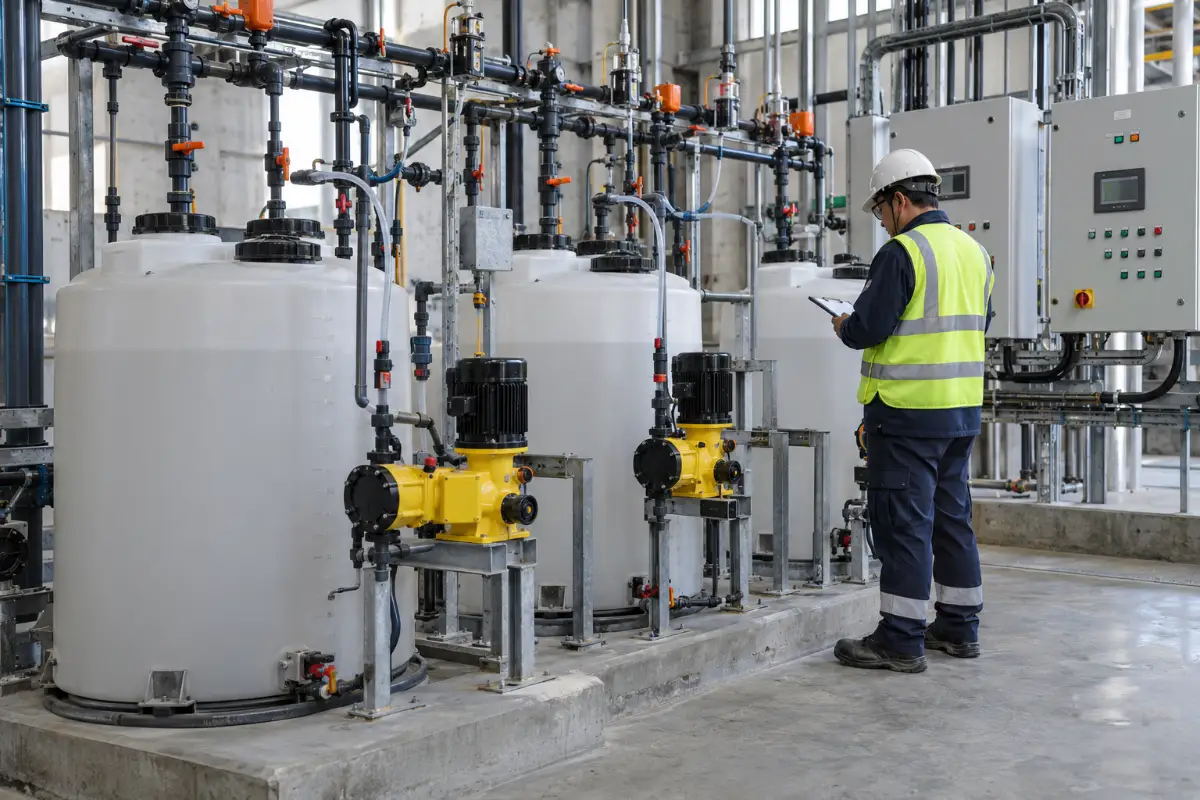
MVR compresses the vapor it generates and reuses that heat to boil more feed. Electrical energy drives the compressor instead of steam. For most medium-to-large brine streams with a stable power supply, this is the workhorse. A well-built mechanical vapor compression MVC evaporator can run at very low specific energy per cubic meter of distillate compared to steam-driven designs.
The catch is the compressor. It is the single most expensive rotating component and the one that punishes bad feed chemistry. If your brine scales or foams, the compressor inherits the problem.
Multi-Effect Evaporation
Multi-effect systems reuse steam across a series of vessels at decreasing pressure. A multi-effect evaporator trades higher steam consumption for lower electrical demand and simpler rotating equipment. Where you have cheap waste steam, this often wins on operating cost.
Effect count drives efficiency. I have seen single, double, and triple-effect arrangements all deployed successfully, and the right count depends on your steam price versus your power price. There is no universal answer.
Membrane Pre-Concentration
Before any evaporator, high-pressure membranes can pull a lot of water out cheaply. A high-pressure RO membrane train or a DTRO disc-tube system can concentrate feed to the point where the thermal stage only has to finish the job. This shifts the cost curve dramatically.
Membrane fouling, not membrane rejection, is what kills these trains. Organics, scaling salts, and colloidal material all have to be managed upstream.
Hybrid and ZLD Trains
Most modern projects are hybrids. Membranes do the bulk water removal, an evaporator concentrates the reject, and a crystallizer finishes if you are targeting zero liquid discharge. Each stage protects the next one from the chemistry it cannot handle.

How to Evaluate a Manufacturer
Once you have picked the architecture, the supplier evaluation becomes concrete. I judge vendors on six things, in this order.
| Evaluation Criterion | What to Look For | Why It Matters |
|---|---|---|
| Feed-specific pilot data | Test results on water similar to yours, not generic | Scaling and fouling only show up on real brine |
| Heat exchanger design | Material choice, cleaning access, velocity control | Most downtime traces back to the exchanger |
| Compressor or steam source | Proven brand, serviceable locally, documented efficiency | Rotating equipment drives lifecycle cost |
| Turnkey scope clarity | Clear boundary between supply, civil, and commissioning | Scope gaps are where budgets break |
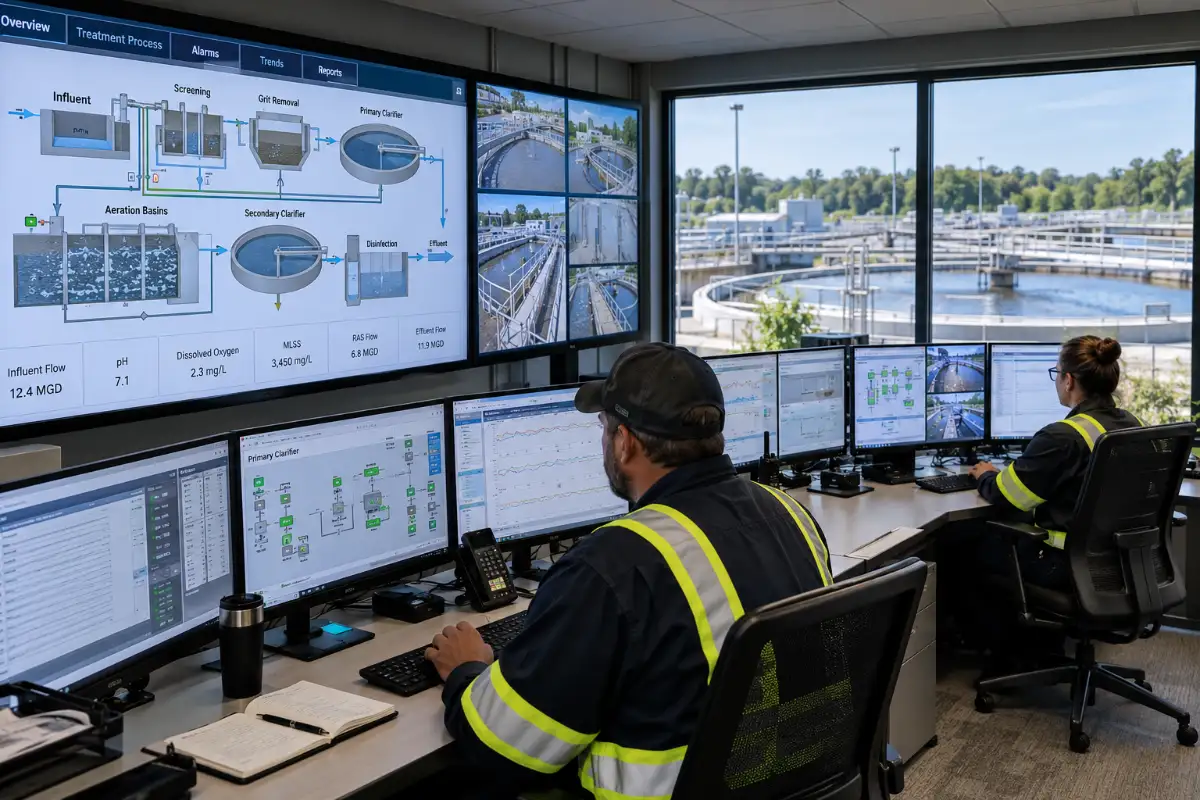
| Controls and automation | Real trending, alarm logic, remote diagnostics | Operators cannot babysit a manual system |
| Service and spares | Response time, spare parts availability, trained technicians | A stalled plant costs more than a cheap skid saves |
Notice that price is not on this list. Price matters, but it is the output of the six factors above, not an input you can evaluate in isolation.
“The most expensive brine concentrator is the one you have to rebuild in year three because the feed chemistry was never properly characterized. Pilot testing is not a sales step. It is risk transfer.”
Feed Chemistry: Where Projects Are Won or Lost
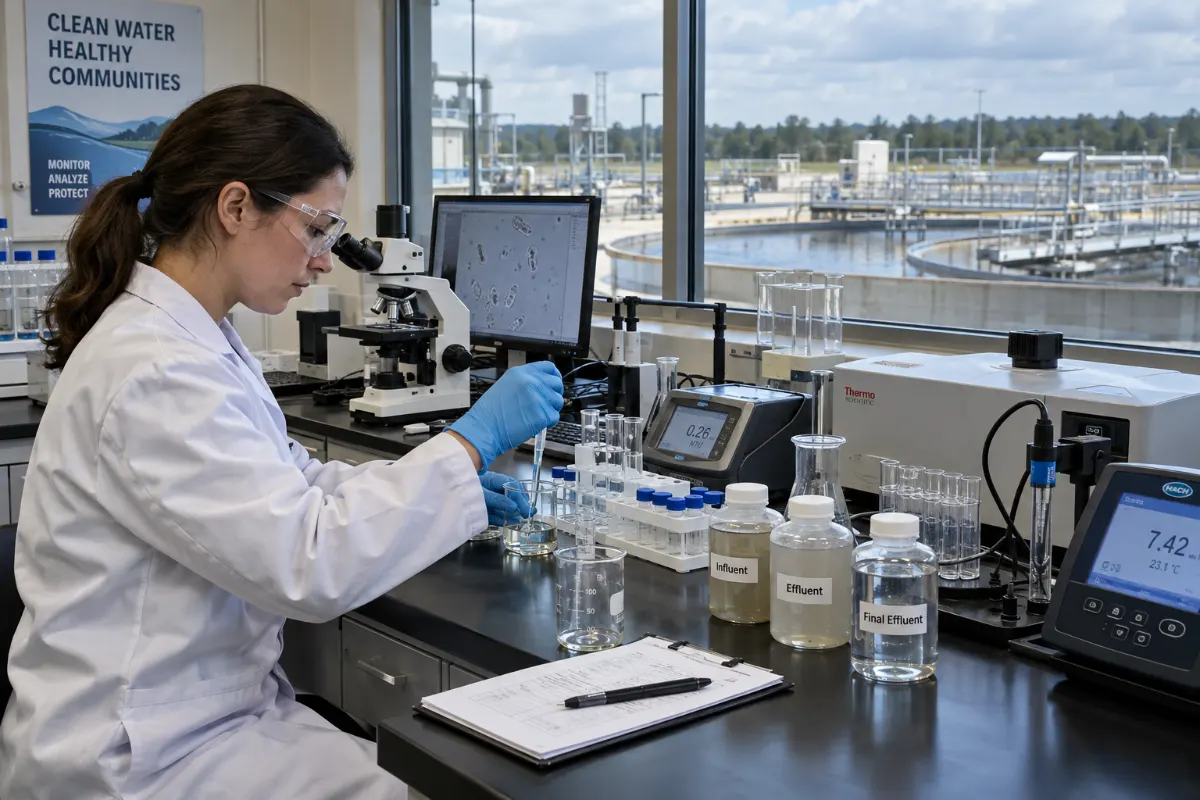
I cannot overstate this. Before you talk to any supplier, get a full water analysis. Not a partial one. You need:
- Complete cation and anion profile
- Silica, which forms hard scale that is difficult to remove
- Hardness and alkalinity, the primary scaling drivers
- Organics (TOC, COD) that cause foaming and fouling
- Oil and grease, which can coat heat transfer surfaces
- pH and buffering capacity
- Trace metals, some of which are corrosive or catalytic
Silica is the one that catches people off guard. It has limited solubility, and once it deposits on a heat exchanger, you are looking at chemical cleaning or mechanical removal. A supplier who does not ask about silica is a supplier who has not seen enough hard brines.
Organic load is the second trap. High-COD brines foam in the boiling chamber, carry over into the distillate, and foul the compressor. If your feed has meaningful organics, you need a pre-treatment step, and the manufacturer should be the one telling you that.
Energy and Lifecycle Cost Reality
Operating cost for a brine concentrator is dominated by two things: electricity for the compressor (MVR) or steam for the effects (multi-effect), and maintenance. Let me give you honest ranges, clearly labeled as indicative.
| Cost Element | Typical Share of OPEX | Main Driver |
|---|---|---|
| Electrical or steam energy | 40–65% | Technology choice, feed concentration |
| Maintenance and spares | 15–30% | Feed corrosivity, scaling tendency |
| Chemical cleaning | 5–15% | Scaling and fouling rate |
| Labor and oversight | 5–15% | Automation level |
| Concentrate disposal | Variable, can dominate | Local disposal options and regulations |
These percentages shift with every project. A plant with cheap waste steam and a scaling feed looks completely different from one with expensive power and a clean feed. Anyone quoting you a fixed operating cost before seeing your water is guessing.
Capital cost follows the same logic. A small single-effect unit and a large MVR train with membrane pre-concentration are not comparable line items. If you want a realistic picture of how capital and operating costs break down for vapor compression systems, the drivers are well documented in industry cost breakdowns.
Common Failure Modes I See in the Field
After enough commissioning trips, patterns emerge. These are the failures that repeat across manufacturers and technologies.
Scaling on Heat Transfer Surfaces
Hardness and silica deposit on the exchanger tubes, heat transfer drops, and the compressor works harder to maintain boiling. The fix is upstream softening or scale inhibitor dosing, plus a cleaning protocol the operators actually follow.
Foaming and Carryover
Organics and surfactants in the feed create foam that travels with the vapor into the distillate. Distillate quality drops, and in severe cases the compressor is damaged. Antifoam helps, but the real fix is removing the foam-causing organics before the evaporator.
Compressor Vibration and Bearing Failure
Usually a symptom, not a cause. It traces back to liquid carryover, fouling, or a process upset that pushed the machine off its design point. Vibration monitoring is not optional on these units.
Corrosion in the Concentrate Circuit
As concentration rises, chloride activity increases and corrosion accelerates. Material selection has to account for the most concentrated condition, not the feed condition. This is where cheap material choices come back to bite.
Control Loop Instability
Poorly tuned level, temperature, or density control causes cycling that stresses every component. A well-automated system holds steady. A poorly automated one creates its own maintenance schedule.
Maintenance Planning That Actually Works
Brine concentrators are not set-and-forget equipment. The plants that run reliably share a few habits.
- Daily: log temperatures, pressures, compressor amps, and distillate conductivity
- Weekly: inspect for leaks, check antifoam and inhibitor dosing, review trend data
- Monthly: verify instrument calibration, inspect heat exchanger performance
- Quarterly: clean exchangers on a schedule, not just when performance drops
- Annually: compressor inspection, material thickness checks, control system review
Scheduled cleaning beats reactive cleaning every time. Once scale has fully formed, removal is harder, takes longer, and risks damaging the surface. Cleaning on a performance trend is cheaper than cleaning on a failure.
Project-Style Notes From Real Installations
I will keep these anonymous because the specifics belong to the operators, but the patterns are worth sharing.
Electroplating rinse water. A plating shop with a mixed metal brine needed volume reduction before hauling. The feed was relatively clean but carried heavy metals. A membrane stage handled the bulk water, and a thermal stage concentrated the reject. The critical lesson was metals pre-treatment before the evaporator to avoid fouling.
Landfill leachate. Leachate is a moving target. The chemistry changes as the landfill ages, and ammonia and organics are always present. Systems here need generous pre-treatment and flexible operation because the feed is never the same two years running.
Pharmaceutical wastewater. High organic load and variable composition. The evaporation stage had to tolerate foaming, and the design included robust antifoam control and distillate polishing. Organic characterization drove the whole design.
Battery and new-energy manufacturing. These streams often carry high salt loads with specific ions that must be recovered or managed carefully. Material selection and ion-specific behavior dominated the engineering.
In every one of these, the technology that fit was determined by the feed, not by the brand. The manufacturer’s job was to execute the right architecture reliably.
Selection Logic: A Practical Sequence
If you are starting a project, work through these steps in order. Skipping ahead to vendor quotes wastes everyone’s time.
- Characterize the feed completely, including seasonal variation
- Define your disposal or reuse target for both distillate and concentrate
- Set your energy source and price (electricity, steam, or both)
- Choose the architecture: membrane, thermal, or hybrid
- Pilot test on real water with at least two candidate technologies
- Request proposals with clearly defined scope boundaries
- Compare lifecycle cost, not capital cost alone
- Verify service capability and spare parts logistics
If you cannot get past step one, stop. Everything downstream depends on accurate feed data.
Questions to Ask Every Supplier
When you are comparing manufacturers, the questions you ask reveal as much as the answers you get.
- Have you treated this exact chemistry before? Can I see the pilot data?
- What is your design margin on scaling, and how do you justify it?
- How is the compressor selected, and what is its service history?
- What is the cleaning procedure, and how often will I need it?
- What happens to distillate quality if my feed changes?
- What is your commissioning and operator training process?
- What is your response time for a critical failure?
A supplier who answers these directly and without defensiveness is worth a second conversation. One who deflects to marketing material is not.
Where Most Buyers Go Wrong
The biggest mistake I see is buying on capital cost. A cheaper skid with undersized heat transfer area, marginal materials, and a low-cost compressor will cost more over ten years than a properly specified system. The second mistake is buying without pilot data. The third is underestimating the concentrate disposal problem, which can dwarf the equipment cost if you have not secured a disposal route.
Brine concentration is a system problem, not a component purchase. Treat it that way and the equipment selection becomes straightforward.
FAQ
How do I choose between MVR and multi-effect evaporation?
Compare your energy prices. If electricity is reasonably priced and you have no cheap steam, MVR usually wins on operating cost. If you have low-cost waste steam available, multi-effect can be cheaper to run and simpler to maintain. The crossover point depends entirely on your local energy economics, so run the numbers for your site.
What feed concentration can a brine concentrator handle?
Most systems take feed from roughly 15,000 mg/L TDS upward and concentrate to 200,000–300,000 mg/L, but the real limit is scaling chemistry, not the number. Silica, hardness, and sulfate set the practical ceiling. Pilot testing on your actual water is the only reliable way to know your limit.
How much maintenance does a brine concentrator need?
Plan on daily monitoring, weekly inspections, monthly calibration, and scheduled heat exchanger cleaning. Compressor overhauls are typically multi-year intervals depending on service. Systems treating clean feed need far less attention than those handling scaling or high-organic brines.
Can I reduce capital cost by pre-concentrating with membranes?
Often yes. High-pressure membranes can remove a large fraction of the water at lower cost per cubic meter than thermal evaporation, shrinking the thermal stage. The trade-off is added membrane maintenance and pre-treatment complexity. Whether it pays off depends on your feed and your disposal costs.
Why does distillate quality drop over time?
Usually carryover from foaming or entrainment, or a change in feed chemistry. If distillate conductivity creeps up, check for foam, verify the demister condition, and review recent feed analysis. Catching it early prevents compressor damage.
What is the biggest cause of project failure?
Incomplete feed characterization. When the actual brine differs from the design basis, scaling, foaming, and corrosion appear, and the equipment gets blamed for a chemistry problem. Get the water analysis right before you buy anything.
How long does a typical project take from order to startup?
For a custom system, expect several months for engineering and fabrication, plus site installation and commissioning time. Pilot testing adds weeks but reduces risk substantially. Rushed schedules usually show up later as operational problems.
Brine concentration is fundamentally a chemistry-matching exercise. Get the feed right, pick the architecture that fits, and choose a manufacturer who can execute that architecture with real pilot data behind it. The rest follows.