

If you are sourcing an MVR evaporator for a wastewater or concentration project, the short answer is this: there is no single “best” supplier in China, but there is a short list of manufacturers whose engineering depth, fabrication quality, and after-sales support consistently hold up on real installations. I have spent more than a decade designing and commissioning evaporation and membrane systems, and I have watched buyers choose suppliers on price alone, then spend two years fixing avoidable problems. The right supplier is the one whose process design, compressor selection, heat exchanger metallurgy, and service model match your specific wastewater chemistry — not the one with the lowest quote or the flashiest brochure.

What Actually Defines a Strong MVR Evaporator Supplier
Mechanical vapor recompression (MVR) is not a commodity product. It is a tightly coupled thermal system where the compressor, heat exchanger, separator, and control logic all have to work together. A supplier who only assembles bought-in components will struggle the moment your feed chemistry shifts or your production schedule changes.
When I evaluate a supplier for a client, I look at four things before I even open their price sheet:
- Process design capability. Can they run a proper heat and mass balance, model boiling point elevation, and predict scaling behavior for your specific salts and organics?
- Compressor sourcing and integration. The compressor is the heart of an MVR system. Do they understand impeller erosion, tip clearance, and surge control, or do they just bolt on whatever is available?
- Fabrication and materials. Titanium, duplex stainless, 316L, or specialty alloys — the choice matters enormously in chloride-rich or acidic streams.
- Commissioning and service. A good supplier stays on site through first evaporation, trains your operators, and responds to fouling or vibration issues within days, not months.
In my experience, the suppliers that consistently deliver are the ones who treat MVR as an engineered system, not a box to be shipped. If you want a deeper technical baseline before talking to vendors, it helps to understand how MVR technology actually recovers latent heat and why compressor selection drives the entire energy balance.
How I Shortlist Suppliers for a Real Project
Most buyers start with a Google search and a spreadsheet of quotes. That is the wrong order. Here is the sequence I use, and it has saved clients from expensive mistakes more than once.
Step 1: Define your feed and product targets precisely
Before contacting anyone, you need solid numbers on:
- Feed flow rate (m³/h) and its variability — is it steady or batch?
- Total dissolved solids, suspended solids, oil and grease, and COD
- Chloride, sulfate, hardness, silica, and any volatile organics
- Target concentrate concentration and whether you need a solid salt or a liquid brine
- Discharge or reuse requirements for the distillate
Suppliers who ask for this data before quoting are usually the ones worth talking to. Suppliers who quote a price from a single flow rate number are guessing.
Step 2: Request a process flow diagram with the heat balance
Ask for a PFD that shows evaporator stages, compressor type, preheaters, degassing, and the condensate path. If a supplier cannot produce a coherent heat and mass balance, they cannot guarantee performance. I have seen projects where the quoted steam consumption looked great on paper but the compressor power was quietly understated, and the plant never hit its design evaporation rate.

Step 3: Verify references in your own industry
An MVR supplier who has done ten landfill leachate projects may not be the right fit for a pharmaceutical brine with high boiling point elevation. Ask for references in your sector, and ask specific questions: how long did commissioning take, how often does the heat exchanger need cleaning, what failed first?
For context on how feed chemistry drives design, it helps to review what is actually in a challenging stream — for example, the chemistry of landfill leachate explains why ammonia, chloride, and hardness make leachate evaporation so demanding.
Comparing Supplier Types: What You Are Really Buying
Not every Chinese MVR supplier plays the same game. Broadly, you will encounter four types, and each has a different risk profile.
| Supplier Type | Typical Strength | Typical Weakness | Best Fit |
|---|---|---|---|
| Full-process EPC integrators | Complete system responsibility, single point of accountability | Higher price, less flexibility on component brands | Complex ZLD projects with strict discharge limits |
| Specialized evaporator manufacturers | Deep thermal design, strong fabrication, custom materials | May subcontract controls and electrical | Difficult chemistries, high-salinity brines |
| Compressor-first suppliers | Strong mechanical core, good energy performance | Weaker on upstream pretreatment and crystallization | Concentration duties without solid salt production |
| General equipment traders | Low price, fast delivery on standard sizes | Limited engineering support, unclear warranty | Simple, well-understood, low-risk applications only |
My honest advice: for anything beyond a straightforward concentration duty, work with a supplier who owns the thermal design. The money you save on a trader’s quote disappears the first time the unit scales up and nobody can tell you why.
The Technical Details That Separate Good Suppliers From Average Ones
Once you get past the sales conversation, the real differences show up in the engineering details. These are the points I press hardest during technical review.
Heat exchanger design and fouling control
The falling-film or forced-circulation heat exchanger is where most MVR problems begin. Ask about:
- Tube material and wall thickness for your chloride level
- Whether the design includes a proper antiscalant dosing strategy or relies purely on mechanical cleaning
- Circulation rate and its effect on tube-side velocity and scaling
- Whether they offer a clean-in-place system sized for your expected fouling rate
The heat exchanger is also where energy performance is won or lost. A well-matched exchanger surface area keeps the compressor within its efficient operating band. If you want to understand how this component is specified, this overview of MVC evaporator heat exchangers is a useful reference.
Compressor selection and metallurgy
Centrifugal compressors dominate larger MVR systems, while roots-type or screw compressors appear in smaller duties. The key questions:
- Is the compressor operating near its best efficiency point at your design conditions?
- What is the impeller material, and how does it handle droplets and any entrained solids?
- Is there adequate surge protection and vibration monitoring?
- What is the expected service interval for bearings and seals?
A supplier who cannot discuss tip clearance and droplet carryover in detail is not a compressor specialist. That matters, because compressor failure is the single most expensive downtime event in an MVR plant.
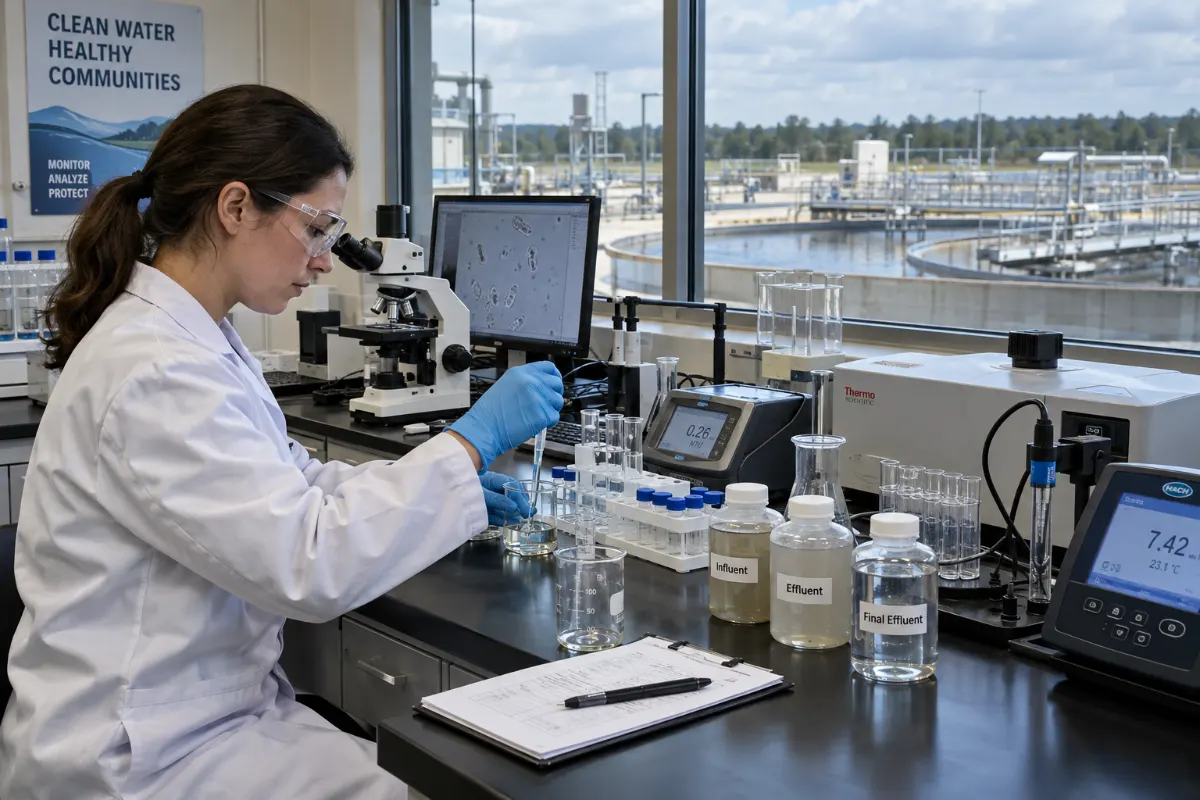
Control philosophy and automation
Modern MVR systems live or die by their control logic. Look for:
- Automatic control of compressor speed or inlet guide vanes to match evaporation load
- Boiling point elevation compensation as concentration rises
- Cascade control of feed rate against separator level and density
- Clear alarm and interlock logic for high vibration, high differential pressure, and low flow
I have seen plants where the mechanical equipment was excellent but the control logic was written by someone who had never commissioned an evaporator. The result was constant tripping and operator frustration. Ask to see a typical control narrative before you sign.
Where MVR Fits in a Broader Treatment Train
MVR rarely operates alone. In most industrial projects, it sits at the back end of a treatment train that includes pretreatment, membrane concentration, and sometimes crystallization. Understanding that context helps you choose a supplier who can interface cleanly with the rest of the plant.
A common configuration for high-salinity wastewater looks like this:
- Chemical softening or precipitation to remove hardness and silica
- Filtration and possibly ultrafiltration to protect downstream membranes
- Reverse osmosis or DTRO to concentrate the stream and reduce evaporator load
- MVR evaporation to further concentrate the brine
- Crystallization or solidification for final disposal, if required
Each step reduces the thermal load on the evaporator, which directly cuts compressor power and capital cost. Suppliers who understand this train will propose a sensible pre-concentration step rather than oversizing the evaporator. If your project targets near-total water recovery, an integrated ZLD system approach is usually more economical than pushing a single evaporator to its limits.
For leachate and other complex streams, membrane concentration ahead of evaporation can cut evaporator duty substantially. The trade-off is membrane fouling and cleaning frequency, which is why the pretreatment design matters so much.
Energy Consumption and Lifecycle Cost: The Real Comparison
Buyers often fixate on capital cost. In MVR, operating cost dominates over a ten-year horizon, and the biggest driver is compressor power.
As a rough, project-dependent reference, MVR systems typically consume between 15 and 45 kWh per cubic meter of distillate produced, depending on boiling point elevation, concentration ratio, and compressor efficiency. A multi-effect evaporator may consume far less electrical power but requires steam, which carries its own cost and carbon footprint. The right choice depends on your local energy prices and whether you have waste heat available.
| Factor | MVR Evaporator | Multi-Effect Evaporator |
|---|---|---|
| Primary energy input | Electricity (compressor) | Steam (and some electricity) |
| Typical electrical demand | Higher | Lower |
| Steam requirement | Minimal after startup | Significant, scales with effects |
| Footprint | Compact | Larger, more stages |
| Best when | Power is cheap, steam is expensive or unavailable | Steam is cheap or waste heat is available |
I always recommend clients run a proper lifecycle cost model with their actual electricity and steam prices before choosing between MVR and multi-effect. The answer is rarely the same for two different plants. For a more detailed breakdown of what drives capital and operating cost, this analysis of MVR evaporator cost drivers is worth reading before you budget.
Maintenance and Reliability: What to Expect in Year Two and Beyond
The first year of operation is usually smooth. The real test comes in year two and three, when fouling patterns emerge and components start to wear. A good supplier plans for this from the start.
Typical maintenance items and their rough intervals:
- Heat exchanger cleaning: every two to twelve weeks, depending on scaling tendency and antiscalant effectiveness
- Compressor inspection: annually, or sooner if vibration trends shift
- Seal and bearing replacement: every one to three years, project-dependent
- Instrument calibration: every three to six months for density, level, and flow instruments
- Antiscalant and antifoam dosing system checks: monthly
Ask your supplier for a spare parts list with lead times before you place the order. I have seen plants sit idle for weeks waiting on a single compressor seal because nobody planned for it. A supplier with local spare parts stock or a fast air-freight arrangement is worth a premium.
Common Failure Modes and How to Avoid Them
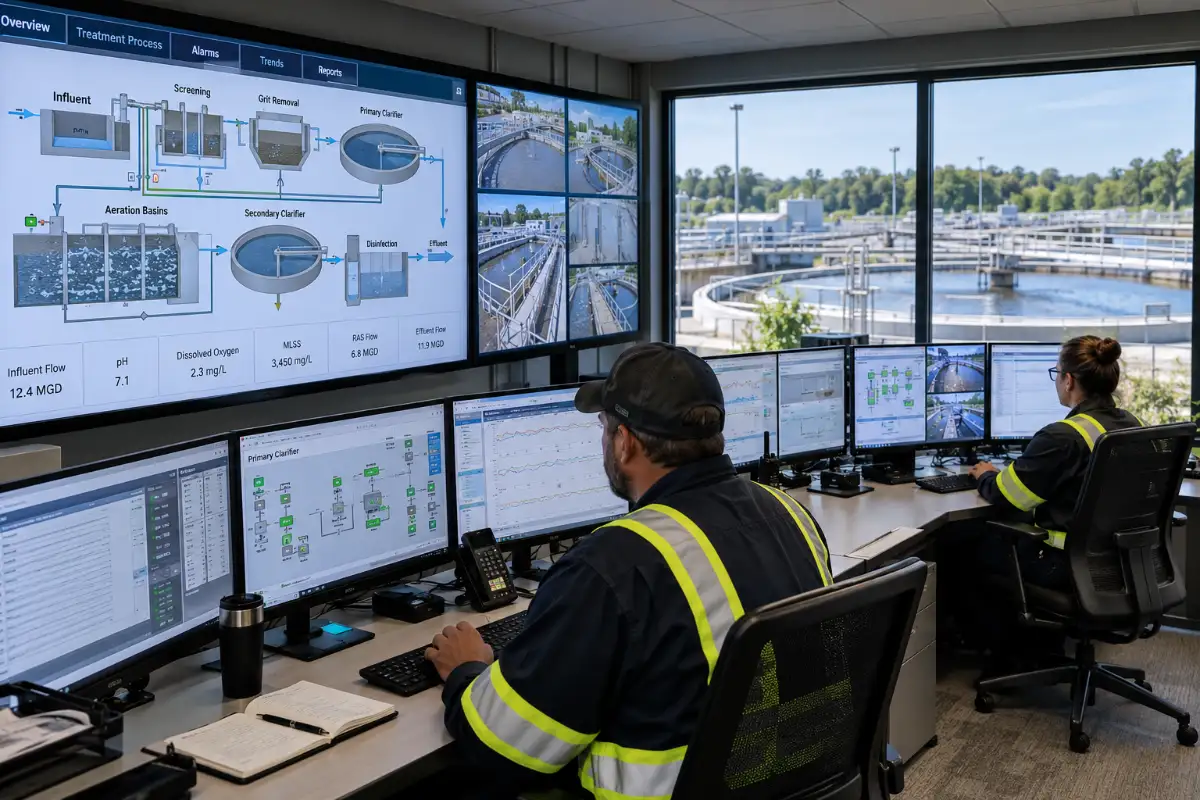
After enough commissioning visits, you start to see the same problems repeat. Here are the ones I encounter most often, and how to prevent them.
Scaling on heat transfer surfaces
This is the number one cause of performance loss. It usually comes from inadequate pretreatment, wrong antiscalant selection, or a feed chemistry that was not fully characterized during design. The fix is upstream: get a proper water analysis, run jar tests or pilot trials, and design the pretreatment accordingly.
Foaming and carryover
Streams with surfactants, oils, or high organic content tend to foam. Foam carries liquid droplets into the compressor, which erodes the impeller and contaminates the distillate. Solutions include antifoam dosing, mechanical foam breaking, and adequate separator height. If your stream is oily, review how evaporation handles oily wastewater before finalizing the design.
Compressor vibration and surge
Vibration usually traces back to droplet carryover, bearing wear, or operating too far from the design point. Surge happens when the compressor is pushed below its minimum flow. Both are preventable with proper instrumentation and control logic, but only if the supplier built them in.
Corrosion and material failure
Chloride-rich streams attack standard stainless steel quickly. If your chloride level is high, insist on duplex, super duplex, or titanium for wetted parts. This is a place where a cheap quote becomes expensive fast.
How to Run a Fair Supplier Evaluation
Once you have three or four candidates, evaluate them on the same criteria so you can compare apples to apples. I use a simple scoring approach:
- Process design quality (30%): heat balance, PFD, scaling and fouling strategy
- Equipment specification (25%): compressor, heat exchanger materials, instrumentation
- References and track record (15%): similar projects, verified performance
- Service and support (15%): commissioning scope, response time, spare parts
- Commercial terms (15%): price, payment schedule, warranty, delivery
Notice that price is only 15% of the decision. That weighting reflects reality: a supplier who scores well on the first four criteria will almost always deliver a lower lifecycle cost, even if the initial quote is higher.
If you want to see how these principles apply in practice, the project notes on electroplating wastewater treatment and pharmaceutical wastewater treatment show how feed chemistry and discharge limits shape the final design.
A Note on Working With Chinese Suppliers
I have worked with Chinese MVR manufacturers for years, and the experience has been mostly positive when the relationship is set up correctly. A few practical points:
- Communication clarity matters. Insist on written technical specifications, not just drawings. Language gaps cause more problems than manufacturing quality.
- Factory acceptance testing is essential. Visit the factory or send a third-party inspector for hydro tests, material verification, and control panel checks.
- Plan for commissioning support. Budget for the supplier’s engineers to be on site for startup, and clarify who pays for travel and accommodation.
- Document everything. Keep records of design changes, test results, and correspondence. It protects both sides if a dispute arises.
The best Chinese suppliers today are genuinely world-class on thermal design and fabrication. The gap with European or American suppliers has narrowed considerably, especially on standard MVR duties. Where the gap still exists is in documentation quality and long-term service responsiveness, and that is where you should focus your due diligence.
If you are at the stage of comparing technical proposals and want an engineering review of your process design, you can reach out to our team for a technical discussion. We are happy to review your feed data and help you ask the right questions, whether or not you end up working with us.
Frequently Asked Questions
How do I choose between MVR and multi-effect evaporation?
It comes down to your energy economics. MVR makes sense when electricity is reasonably priced and steam is expensive or unavailable. Multi-effect evaporation wins when you have cheap steam or waste heat. Run a lifecycle cost comparison using your actual utility prices, and factor in the footprint and operator skill requirements. For high-salinity streams, MVR also avoids the scaling issues that come with multiple stages at high temperature.
What feed data do I need before requesting quotes?
At minimum: flow rate and variability, total dissolved solids, suspended solids, oil and grease, COD, chloride, sulfate, hardness, silica, pH, and target concentrate concentration. If you have volatile organics or ammonia, note those too. The more complete your analysis, the more accurate the design and the fewer surprises during commissioning.
How often does an MVR heat exchanger need cleaning?
It depends heavily on your scaling tendency and antiscalant program. Some plants clean every two weeks; others go three months between cleanings. A well-designed pretreatment and antiscalant strategy can extend intervals significantly. Plan for a clean-in-place system and budget the labor and chemical cost into your operating model.
What is the typical lead time for a custom MVR system?
For a fully engineered system, expect roughly four to eight months from order to delivery, plus one to three months for installation and commissioning. Compressor lead time is often the critical path. Standardized skid-mounted units can ship faster, but they may not fit difficult chemistries well.
What causes compressor failure in MVR systems?
The most common causes are droplet carryover from inadequate separation, bearing wear from vibration, and operating outside the design envelope. Corrosion from aggressive vapors also plays a role. Proper separator design, vibration monitoring, and correct material selection prevent most failures. Ask your supplier for their droplet carryover specification and how they verify it.
Can MVR handle high-chloride or high-COD wastewater?
Yes, but material selection and pretreatment become critical. High chloride requires duplex stainless, super duplex, or titanium for wetted parts. High COD may cause foaming, fouling, or odor issues, so you may need upstream oxidation or stripping. Always pilot-test difficult streams before committing to full-scale design.
How do I verify a supplier’s claimed performance?
Ask for a performance guarantee tied to specific feed conditions, and make sure the contract includes acceptance testing. Request references in your industry and follow up with those clients directly. If possible, visit a running installation. A supplier confident in their design will welcome that scrutiny.
What is the biggest mistake buyers make when selecting a supplier?
Choosing on price alone without evaluating process design capability. The initial savings are usually erased within the first two years by poor performance, frequent downtime, and expensive retrofits. Spend the extra time on technical due diligence. It is the highest-return investment you can make in an MVR project.