

A brine concentrator is an evaporative system that boils off clean water vapor from a concentrated wastewater stream and leaves behind a much smaller volume of brine. In most industrial plants I work on, it sits between a membrane stage and a crystallizer, doing the heavy lifting of volume reduction before final solids handling. The goal is simple: shrink the waste stream, recover usable distillate, and cut the cost of disposal. The engineering behind it is not simple. Heat transfer surface, vapor compression, scaling control, and materials of construction all decide whether the unit runs for years or turns into a maintenance headache. This article walks through the main technologies, realistic cost ranges, and where a brine concentrator actually earns its place in a treatment train.
What a Brine Concentrator Actually Does
A brine concentrator takes a feed stream that a reverse osmosis or DTRO system can no longer push higher, then evaporates water out of it. The distilled water leaves as a clean condensate. The dissolved solids stay in the liquid and concentrate until the brine reaches a target density, at which point it is discharged to a crystallizer, a spray dryer, or an evaporation pond.
The reason this matters is economics. Once you get past roughly 70,000 to 80,000 mg/L of total dissolved solids, membrane pressure requirements spike and fouling becomes brutal. Evaporation does not care about osmotic pressure. It only cares about heat transfer and boiling point elevation. That is why a concentrator becomes the workhorse of any zero liquid discharge (ZLD) train.
I usually describe the concentrator as the “middle box” in a ZLD line: membranes get you to the edge, the concentrator gets you to the cliff, and the crystallizer finishes the job. Skip the concentrator and the crystallizer has to evaporate ten times the water, which is why the crystallizer cost balloons.
The Main Brine Concentrator Technologies
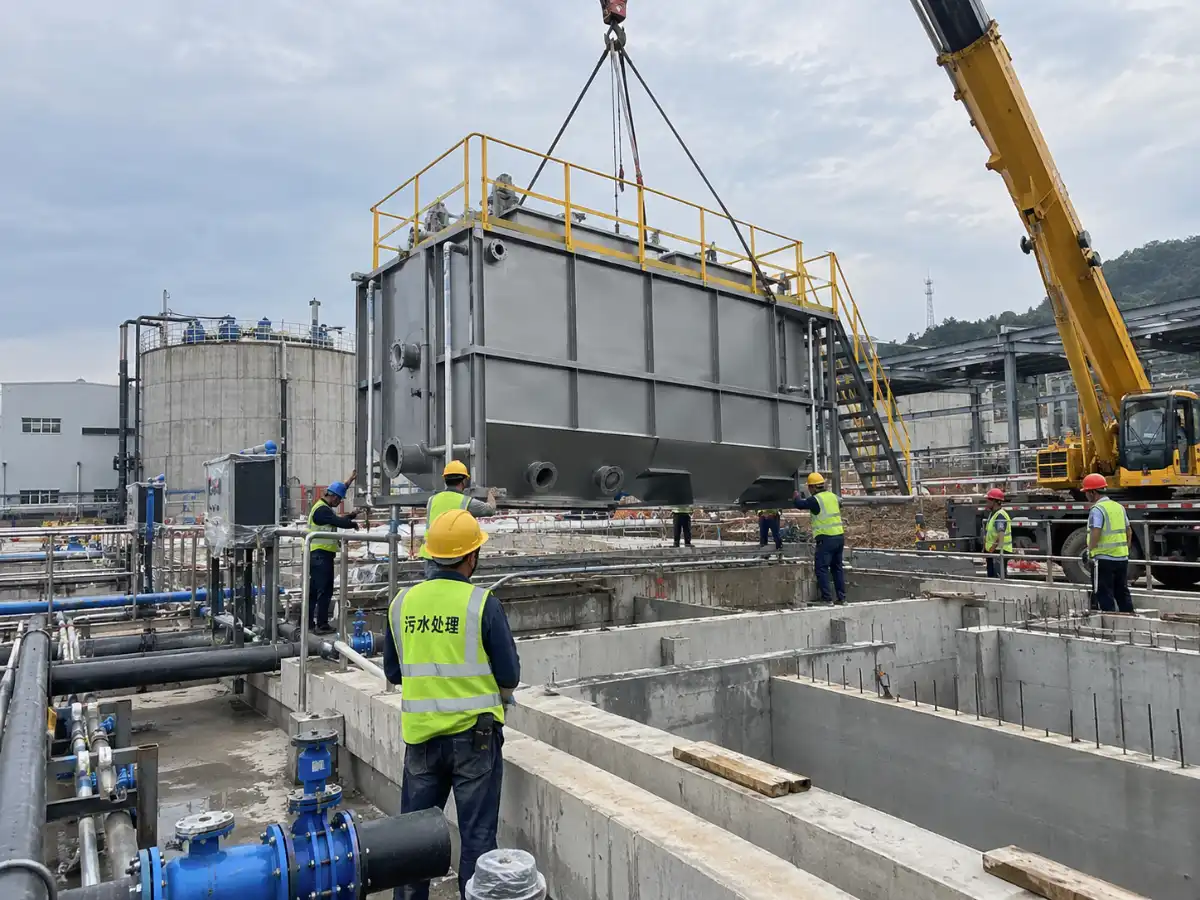
There are really four families you will see in proposals. Each has a place, and each has a failure mode you should know about before signing the purchase order.
Mechanical Vapor Compression (MVC)
MVC is the most common choice for industrial brine concentration. The evaporator boils water, the vapor is compressed by a mechanical compressor, and the compressed vapor is reused as the heating medium. The compressor does the work that steam would otherwise do, so the only energy input is electricity for the compressor and a small amount of auxiliary heat.
Typical specific energy consumption lands in the range of 15 to 35 kWh per cubic meter of distillate, depending on boiling point elevation and compressor efficiency. That is a project-dependent number and it moves a lot with the chemistry of the brine.
MVC shines when you have a stable feed, moderate boiling point elevation, and electricity that is not priced like gold. It struggles when the brine has high boiling point elevation, because the compressor has to work harder to overcome the temperature lift. You can read more about the compressor side in this overview of compressor-driven wastewater evaporators.
Multi-Effect Evaporation (MED or MEE)
Multi-effect systems stage several evaporator bodies in series. Steam enters the first effect, the vapor from the first effect heats the second, and so on. Each additional effect reuses the latent heat, so steam consumption drops roughly in proportion to the number of effects. A triple-effect unit can cut steam demand by two-thirds compared to a single-effect design.
The trade-off is capital. Each effect is a pressure vessel with heat transfer surface, and the whole train needs a steam supply and a condenser. If your plant already has cheap waste steam, multi-effect is often the lowest operating cost option. If you have to buy steam, the math changes fast. For a deeper look at how the stages compare, this breakdown of multi-effect evaporators covers the steam economy numbers.
MVR (Mechanical Vapor Recompression)
MVR is a variant of MVC where the compressor is specifically sized and configured to boost vapor pressure enough to drive the next effect or the same effect. In some designs MVR is used as a booster on top of a multi-effect train, which lets you combine the steam economy of multi-effect with the electrical efficiency of vapor recompression. The distinction between MVC and MVR is mostly about where the compressor sits in the flow scheme and what pressure ratio it has to deliver. This article on MVR evaporator design goes into the compressor map details.
Thermal (Steam-Driven) Concentrators
Pure steam-driven concentrators still exist, mostly where electricity is expensive or unreliable and steam is abundant. They are simple, robust, and forgiving of variable feed. They are also the most energy-intensive per unit of water evaporated. I rarely recommend them for new industrial projects unless the site has a captive boiler and no realistic path to reliable power.
| Technology | Typical Energy Source | Specific Energy Range | Best Fit |
|---|---|---|---|
| MVC | Electric compressor | 15–35 kWh/m³ distillate | Stable feed, moderate BPE, grid power |
| MVR | Electric compressor + small steam trim | 12–30 kWh/m³ distillate | Larger capacity, integrated with multi-effect |
| Multi-effect (3-effect) | Steam | 0.35–0.45 kg steam/kg water | Captive steam, high fouling feed |
| Single-effect thermal | Steam | ~1.1 kg steam/kg water | Small flows, remote sites |
Ranges above are indicative only. Actual values depend on boiling point elevation, feed chemistry, heat exchanger design, and ambient conditions.
Where the Brine Concentrator Fits in a ZLD Train
Most industrial ZLD systems follow a similar architecture. The front end does pretreatment and membrane concentration. The back end does evaporation and crystallization. The concentrator is the bridge.
- Pretreatment: softening, pH adjustment, and removal of silica, sulfate, and organics. This protects the evaporator.
- Membrane concentration: industrial RO or DTRO membrane systems push the brine to the practical limit.
- Brine concentration: the evaporator reduces volume by 5x to 20x, depending on feed and target brine density.
- Crystallization or drying: the concentrated brine becomes a solid for landfill or a saleable salt.
- Distillate polishing: the condensate is usually good enough for reuse or discharge after a light polish.
I have seen projects try to skip the concentrator and go straight from RO to a crystallizer. The crystallizer becomes enormous, and the operating cost per cubic meter of feed goes through the roof. The concentrator is not a luxury; it is the piece that makes the whole train economically survivable.
Feed Chemistry and Pretreatment Matter More Than the Evaporator Brand
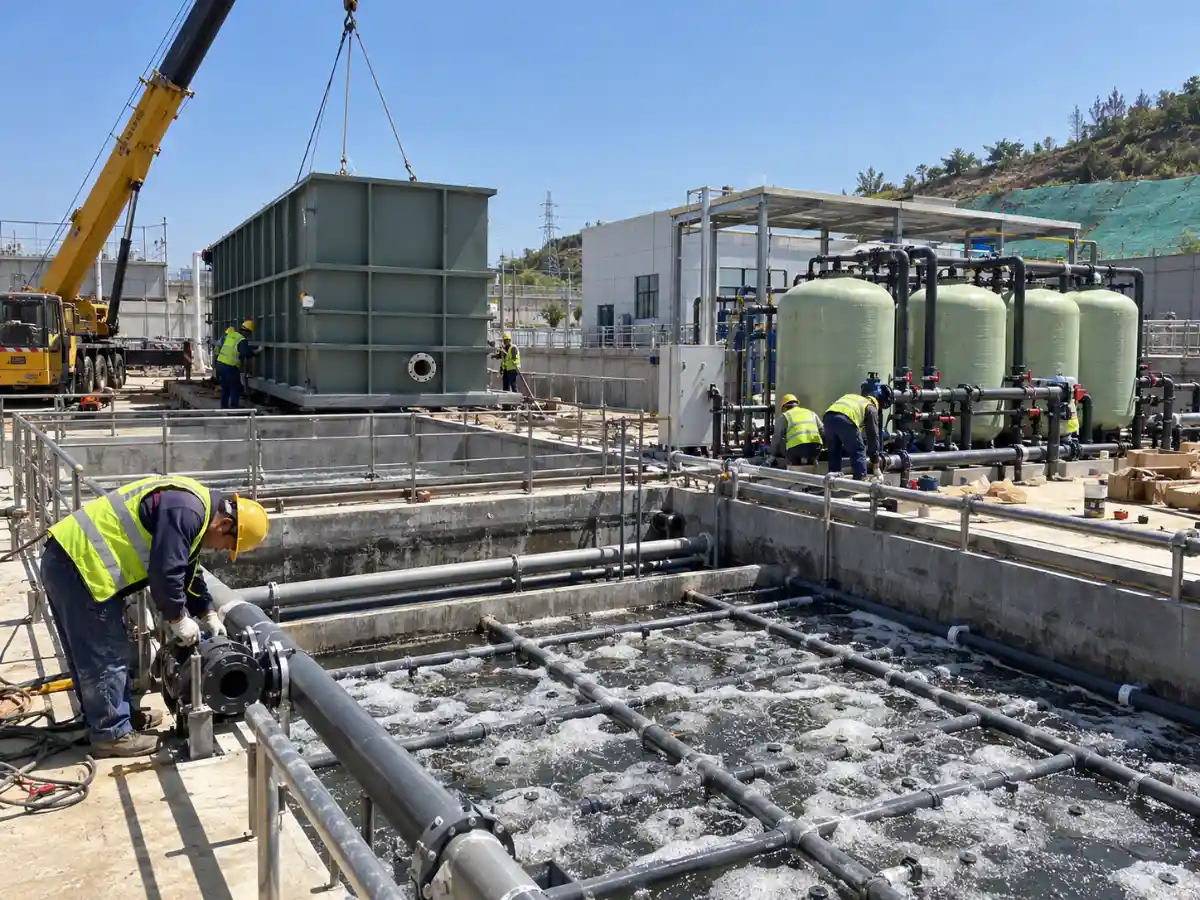
I cannot count how many times a client has asked me which evaporator brand is best, when the real problem is that their feed chemistry will destroy any evaporator on the market. The concentrator is a heat exchanger with a boiling chamber. If the brine scales, the unit loses capacity. If the brine corrodes, the unit leaks. If the brine foams, the unit carries over. None of that is fixed by choosing a different vendor.
Here is what I check before sizing anything:
- Scale-forming ions: calcium, magnesium, barium, strontium, silica. Silica is the one that ruins projects. Above roughly 150 mg/L in the concentrate, you need either a high-pH operation, a seed slurry, or a softening step.
- Chlorides and sulfates: they set the material of construction. 316L is fine for low chloride. Duplex or titanium for aggressive brines. Nickel alloys for the worst cases.
- Organics: they cause foaming and fouling. Oil and grease need to be removed upstream. This article on evaporation with oily wastewater covers the design changes required.
- Boiling point elevation: it drives compressor selection and heat exchanger surface. High BPE means more surface, more power, more cost.
- pH and alkalinity: they affect corrosion and scale chemistry. You cannot treat pH as an afterthought.
My rule of thumb: spend 30% of the engineering budget on pretreatment and feed characterization. The concentrator itself will take care of itself if the feed is right. If the feed is wrong, no concentrator will save you.
Cost: What to Expect and What Drives It
Brine concentrator cost is not a single number. It is a range that depends on capacity, feed chemistry, materials, and the scope of supply. I will give you honest ranges and then explain what pushes you to the top or bottom of each.
Capital Cost (CAPEX)
For an MVC brine concentrator in the 5 to 50 m³/h distillate range, installed cost typically falls between $400,000 and $4 million. Small skid-mounted units at the low end. Large field-erected units with titanium heat exchangers at the high end. Multi-effect systems are usually 20% to 40% more expensive for the same capacity because of the additional effects and the steam supply infrastructure.
What moves the number:
- Heat exchanger material (316L vs. duplex vs. titanium vs. nickel alloy)
- Compressor type and pressure ratio (roots blower vs. centrifugal vs. screw)
- Degree of prefabrication (skid vs. field-erected)
- Instrumentation and automation scope
- Civil works and structural steel
- Distillate quality requirements
Operating Cost (OPEX)
Operating cost is where the technology choice really shows up. Electricity, steam, chemicals, maintenance, and labor are the main line items. For an MVC unit running on grid power at $0.10/kWh, electricity alone can run $1.50 to $3.50 per cubic meter of distillate. Add antiscalant, cleaning chemicals, and maintenance and you are closer to $2.50 to $5.00 per cubic meter. Multi-effect units with cheap steam can beat that, but only if the steam is genuinely cheap and the feed does not foul the effects.
I always ask clients to model OPEX over ten years, not one. The capital cost difference between two options is often smaller than the ten-year energy difference. This cost breakdown of MVR evaporator cost drivers walks through the same logic for MVR systems.
| Cost Element | Typical Share of OPEX | Main Driver |
|---|---|---|
| Electricity or steam | 45–65% | Technology, BPE, local energy price |
| Chemicals | 10–20% | Antiscalant, antifoam, cleaning |
| Maintenance | 8–15% | Compressor, heat exchanger, pumps |
| Labor | 5–15% | Automation level, site staffing |
| Disposal of concentrate | 5–20% | Brine volume, salt handling |
Applications: Where Concentrators Earn Their Keep
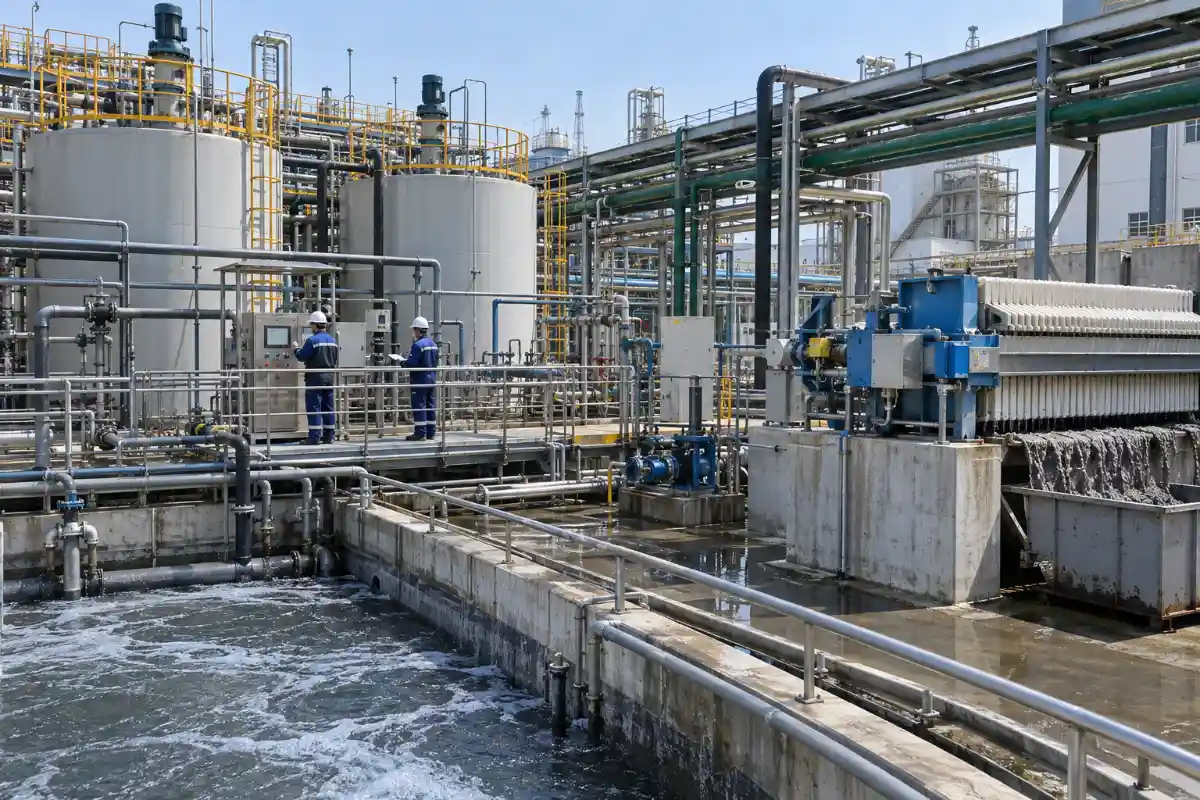
Brine concentrators are not for every wastewater stream. They are for streams where volume reduction translates directly into disposal savings, or where discharge is simply not an option.
Electroplating and Metal Finishing
Plating rinses and spent baths carry heavy metals, cyanides, and high TDS. After chemical precipitation and membrane concentration, the residual brine is a perfect candidate for evaporation. The distillate is often good enough to return to the rinse line, which cuts fresh water demand. A project-style example of how this is configured is described in this electroplating wastewater treatment overview.
Landfill Leachate
Leachate is one of the hardest feeds on the planet. High ammonia, high chlorides, variable organics, and a chemistry that changes with the age of the landfill. Concentrators are used after biological treatment and membrane concentration to bring the volume down to something a crystallizer can handle. The chemistry of leachate is worth understanding before you size anything; this article on chemicals in landfill leachate covers the main constituents.
Pharmaceutical and Fine Chemical
Pharma wastewater often contains solvents, APIs, and high salt loads. Evaporation is used both for volume reduction and for solvent recovery. The design has to handle flammability and volatile organics, which changes the compressor selection and the vent system. A representative configuration is outlined in this pharmaceutical wastewater treatment case overview.
Battery and New Energy Manufacturing
Battery production generates sulfate and chloride brines with nickel, cobalt, and lithium traces. Recovery of these metals is often the economic driver, not just disposal. Concentrators are used to bring the brine to a concentration where selective precipitation or crystallization can recover the valuable salts. This new energy wastewater treatment overview shows how the train is typically arranged.
Desalination and High-Salinity Water
Inland desalination plants often have no ocean outfall. The reject brine from the RO stage has to be concentrated and crystallized. Concentrators are the standard solution. The same principles apply to any high-salinity water, as covered in this overview of desalination fundamentals.
Design Details That Decide Whether the Unit Runs Well
Most brine concentrator problems I see in the field trace back to a handful of design decisions made early in the project. Here is what I look at.
Heat Exchanger Type and Surface Area
Falling film, forced circulation, and plate-and-frame designs each have a place. Falling film is efficient and gentle on the product, but it is sensitive to flow distribution. Forced circulation handles scaling feeds better but uses more pumping power. Plate-and-frame gives high surface area in a small footprint but clogs if the brine has suspended solids. The heat exchanger is often the single most expensive component, so getting this right matters. More on the trade-offs is in this overview of MVC evaporator heat exchangers.
Compressor Selection
Roots blowers are simple and cheap but limited in pressure ratio. Centrifugal compressors handle higher flows and pressure ratios but are less tolerant of turndown. Screw compressors sit in between. The wrong choice means either you cannot reach the required boiling point or you are constantly tripping on surge. Compressor selection should be driven by the boiling point elevation, not by the vendor’s standard catalog.
Materials of Construction
This is where projects get surprised. A brine that looks benign at 25°C can be vicious at 100°C. Chloride stress corrosion cracking, pitting, and erosion-corrosion all accelerate with temperature. I default to duplex stainless for moderate brines and titanium or nickel alloys for aggressive ones. The cost difference is real, but so is the cost of a heat exchanger failure six months into operation.
Defoaming and Carryover Control
Organics and surfactants in the feed cause foaming. Foam carries brine into the distillate, which destroys the distillate quality and can foul downstream equipment. Antifoam dosing, mechanical demisters, and proper vapor space design are the standard countermeasures. If the feed has high surfactant content, expect to spend engineering time here.
Instrumentation and Control
A concentrator without good instrumentation is a concentrator that will fail. Density control, temperature control, level control, and compressor protection are the minimum. I prefer redundant conductivity and density measurement because a single failed sensor can either over-concentrate the brine (scaling) or under-concentrate it (wasted energy).
Maintenance and Common Failure Modes
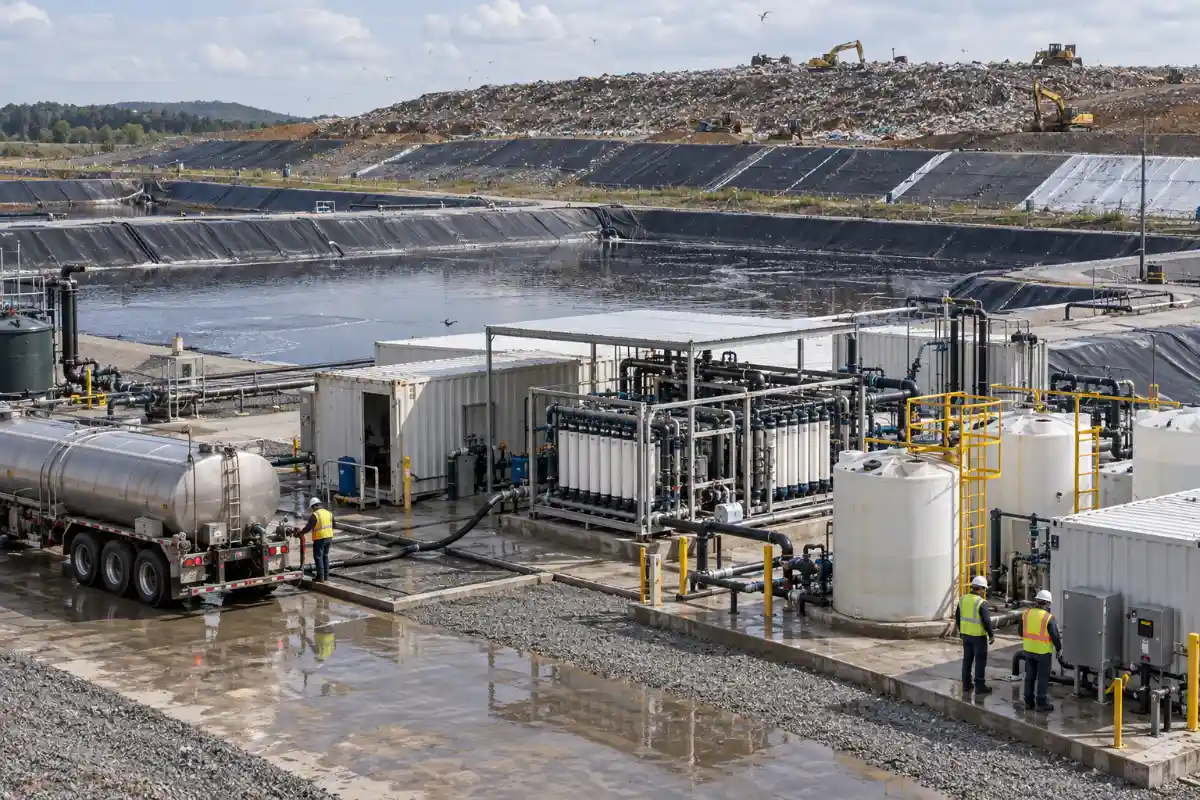
Even a well-designed concentrator needs attention. Here is what I tell operators to watch.
- Scaling on heat transfer surfaces: the number one cause of capacity loss. Watch the approach temperature. When it starts climbing, it is time to clean.
- Compressor wear: bearings, seals, and impeller erosion. Vibration monitoring catches most of this early.
- Pump cavitation: common in brine service because of high vapor pressure. Proper NPSH margin and level control prevent it.
- Corrosion and leaks: especially at welds and gaskets. Regular inspection during shutdowns pays for itself.
- Foaming and carryover: usually a sign that pretreatment is slipping or antifoam dosing has drifted.
- Fouling from organics: needs either upstream removal or periodic caustic cleaning.
Cleaning frequency is the metric I watch most closely. If a unit needs cleaning more than once a quarter, something upstream is wrong. The fix is almost never in the evaporator.
I have seen plants try to solve scaling by buying more antiscalant. That works for a while, then it stops working and the heat exchanger is fouled anyway. The real answer is usually a softening step or a pH adjustment upstream. Treat the cause, not the symptom.
Selection Logic: How to Choose the Right Concentrator
When I sit down with a client to pick a concentrator, I work through a short list of questions. The answers usually point to one technology.
- What is the feed flow and TDS? Small flows favor skid-mounted MVC. Large flows favor multi-effect or MVR.
- What is the boiling point elevation? High BPE pushes you toward multi-effect or toward a larger compressor.
- What is the energy price? Cheap steam favors multi-effect. Cheap electricity favors MVC or MVR.
- What is the feed chemistry? Scaling and corrosive brines need more pretreatment and better materials.
- What is the target brine concentration? The higher the target, the more surface area and the more careful the design.
- What is the site constraint? Footprint, height, noise, and available utilities all matter.
- What is the operating philosophy? A plant with 24/7 operators can run a more complex train than a plant with one shift.
If you want a structured way to think through the whole ZLD train, this overview of ZLD system design is a good starting point. For a broader look at how evaporation fits into industrial wastewater treatment, this wastewater evaporation system overview is useful.
One more thing: get a pilot test if the feed is at all unusual. A pilot is not free, but it is far cheaper than a full-scale unit that does not perform. I have never regretted running a pilot. I have regretted skipping one.
Regulatory and Discharge Considerations
Brine concentrators are usually part of a compliance strategy, not an end in themselves. In the United States, industrial dischargers operate under permits issued under the Clean Water Act, and the EPA maintains effluent guidelines for many industrial categories. In other regions, the World Bank’s pollution prevention framework and local discharge standards apply. The point is that the concentrator’s job is to produce a distillate that meets discharge or reuse criteria and a brine that can be handled within the applicable rules.
Distillate quality is often better than expected. TDS is typically below 50 mg/L, and organics are largely stripped. But volatile organics can carry over, and ammonia can too if the pH is not managed. If the distillate is going to a sensitive receiving water, plan on a polishing step. If it is going back to the plant as process water, verify the quality against the process requirements before you commit.
For brine disposal, the options are crystallization to a solid, deep well injection (where permitted), or evaporation ponds (where climate and land allow). Each has its own regulatory path and its own cost. The concentrator reduces the volume that has to go through that path, which is the whole point.
Frequently Asked Questions
How much does a brine concentrator cost?
For an MVC unit in the 5 to 50 m³/h distillate range, installed cost typically falls between $400,000 and $4 million. Multi-effect systems run 20% to 40% higher for the same capacity. The biggest cost drivers are heat exchanger material, compressor type, and the degree of prefabrication. Operating cost for an MVC unit is typically $2.50 to $5.00 per cubic meter of distillate, with electricity being the largest line item.
What is the difference between MVC and MVR?
Both use a mechanical compressor to recompress vapor and reuse it as the heating medium. The practical difference is where the compressor sits in the flow scheme and what pressure ratio it has to deliver. MVC is usually a single-effect design where the compressor drives the same effect. MVR is often integrated with a multi-effect train, where the compressor boosts vapor pressure to drive the next effect. In practice, the terms are sometimes used interchangeably, so always ask for the process flow diagram.
How do I prevent scaling in a brine concentrator?
Scaling prevention starts upstream. Softening removes calcium and magnesium. Silica control may require high-pH operation or a seed slurry. Antiscalant dosing helps but is not a substitute for proper pretreatment. On the evaporator side, keep the brine below the saturation point of the scaling species, monitor the approach temperature, and clean on a schedule based on performance, not on a calendar. If scaling is a chronic problem, the fix is almost always in the pretreatment, not in the evaporator.
What feed quality is required for a brine concentrator?
The feed should be free of suspended solids, oil and grease, and volatile organics that would carry over into the distillate. TDS can be high; that is the point of the concentrator. But the chemistry has to be understood. Silica, calcium, magnesium, barium, and strontium all have limits. Chlorides drive material selection. Organics drive foaming and fouling. A good rule is to characterize the feed over at least a full seasonal cycle before finalizing the design.
How often does a brine concentrator need maintenance?
Routine maintenance is typically quarterly for heat exchanger cleaning and inspection, and annually for compressor overhaul and full system inspection. Cleaning frequency depends on feed chemistry and pretreatment performance. If the unit needs cleaning more than once a quarter, investigate the upstream process. Compressor vibration monitoring and regular oil analysis catch most mechanical issues before they become failures.
Can a brine concentrator achieve zero liquid discharge on its own?
No. A concentrator reduces volume but does not produce a solid. To reach true ZLD, you need a crystallizer or spray dryer downstream to convert the concentrated brine into a solid. The concentrator’s role is to make that final step economically feasible by reducing the volume that has to be crystallized. Some designs combine concentration and crystallization in a single unit, but the physics are the same: water evaporates, solids precipitate, and the two are separated.
What is the typical distillate quality from a brine concentrator?
Distillate TDS is typically below 50 mg/L, and often below 20 mg/L. Organics are largely stripped, but volatile species like ammonia and some solvents can carry over. If the distillate is going to reuse or discharge, verify the quality against the receiving requirements. A polishing step such as activated carbon or a small RO unit is sometimes needed for sensitive applications.
How do I choose between MVC and multi-effect for my project?
Start with energy price and feed chemistry. If electricity is cheap and steam is expensive, MVC usually wins. If steam is cheap and electricity is expensive, multi-effect usually wins. If the feed has high boiling point elevation, multi-effect has an advantage because it does not have to overcome the full BPE with a single compressor. If the feed is clean and stable, MVC is simpler and easier to operate. Run the ten-year operating cost model before you decide; the capital cost difference is often smaller than the energy difference.
Share your feed analysis and target concentration. We will walk through the technology options with you.
Final Thoughts
A brine concentrator is not a commodity piece of equipment. It is a heat and mass transfer system that has to be matched to a specific feed chemistry, a specific energy price, and a specific operating philosophy. The technologies are well understood. MVC, MVR, and multi-effect all have their place. The failures I see are almost never about the technology itself; they are about insufficient feed characterization, underestimated pretreatment requirements, and a decision process that focused on capital cost instead of lifecycle cost.
If you are planning a concentrator, spend the time upfront. Characterize the feed. Model the operating cost. Pilot if the feed is unusual. Choose materials based on the worst-case chemistry, not the average. And design the pretreatment to protect the evaporator, because the evaporator is the most expensive thing in the train and the hardest thing to replace. Do that, and the concentrator will do exactly what it is supposed to do: shrink your waste stream, recover your water, and make the rest of your treatment train affordable.