

If you’re dealing with landfill leachate, you already know the problem: it’s one of the nastiest waste streams in the business. High salinity, stubborn COD, ammonia that refuses to budge, and a composition that shifts with the seasons. A DTRO system for landfill leachate treatment is one of the few membrane-based approaches that can handle this variability without falling apart. DTRO stands for Disc Tube Reverse Osmosis — a design that swaps the traditional spiral-wound element for a stack of membrane discs inside a pressure vessel. In practice, that means wider feed channels, better fouling resistance, and the ability to run at pressures where conventional RO membranes would clog or fail. I’ve watched enough leachate plants struggle with standard RO to know the difference matters.

Why Landfill Leachate Breaks Conventional Treatment Trains
Leachate isn’t like most industrial wastewater. It’s a moving target. A landfill that’s been closed for two years produces a very different liquid than one still receiving fresh waste. Early-stage leachate tends to be high in volatile fatty acids and BOD. Mature leachate shifts toward refractory organics, high ammonia, and elevated total dissolved solids. If you design a treatment train around a single snapshot, you’ll be rebuilding it within a few years.
The main headaches engineers run into:
- High TDS and conductivity — often 10,000 to 30,000 mg/L or more, which pushes osmotic pressure up and demands higher operating pressures.
- Ammonia nitrogen — typically 1,000 to 3,000 mg/L. It’s toxic to biological systems at high concentrations and hard to strip cleanly.
- Refractory COD — humic and fulvic acids resist biological breakdown, so BOD/COD ratios drop as the landfill ages.
- Scaling ions — calcium, magnesium, barium, strontium, and silica all want to precipitate on membrane surfaces.
- Variable flow — rainfall, seasonal temperature, and cover design all affect how much leachate you actually get.
If you want a deeper look at what’s actually in this stuff, there’s a useful breakdown of the chemicals found in landfill leachate that covers the main constituent groups.
What Makes DTRO Different From Standard RO
The core difference is geometry. A conventional spiral-wound RO element forces feed water through a narrow mesh spacer — usually around 28 to 34 mil. That’s fine for clean water. For leachate loaded with suspended solids, colloids, and biological growth, those channels plug fast.
DTRO replaces the spiral with a disc stack. Feed flows across the face of each membrane disc through an open channel that’s typically 2 to 4 mm wide — roughly 10 to 20 times wider than a spiral element. The hydraulic path is short, turbulence is high, and particles that would lodge in a spiral spacer get swept through instead.
Practical consequences of the disc tube design
- Fouling tolerance — you can run with SDI values that would kill a spiral element.
- Higher pressure capability — disc tube modules routinely handle 75 to 120 bar, which is what you need to overcome the osmotic pressure of concentrated leachate.
- Simpler pretreatment — no need for the ultra-fine filtration that spiral RO demands.
- Field-serviceable — individual discs can be replaced without scrapping the whole module.
The tradeoff is cost and footprint. DTRO modules are more expensive per square meter of membrane area, and they take up more space for the same permeate output. You’re paying for robustness.

Where DTRO Fits in a Full Treatment Train
DTRO rarely works alone. The most reliable leachate plants I’ve seen use a staged approach: biological treatment first to knock down the easy organics and ammonia, then membrane concentration to handle the dissolved solids and refractory COD.
Typical process sequence
- Equalization and screening — buffer flow and remove gross solids.
- Biological treatment — MBR or activated sludge with extended aeration for nitrification and denitrification.
- Chemical softening — lime or caustic soda addition to precipitate hardness before it hits the membranes.
- DTRO stages — usually two or three stages in series, with concentrate recycled back to the front.
- Concentrate management — evaporation, solidification, or return to the landfill.
The concentrate is the part that catches people off guard. A DTRO system might recover 75 to 85 percent of the feed as permeate, which means 15 to 25 percent comes out as a brine that’s even saltier and more loaded with organics than what you started with. That stream has to go somewhere.
Handling the concentrate
Common options include:
- Spraying back onto the landfill surface (works in dry climates, problematic in wet ones)
- Evaporation using a wastewater evaporator to reduce volume further
- Solidification with cement or fly ash for disposal
- Incineration at high cost
For sites pursuing near-zero discharge, combining DTRO with an evaporator or a zero liquid discharge system is a common configuration. The membrane does the bulk volume reduction cheaply; the evaporator handles the final concentrated brine.
Design Parameters That Actually Matter
When I’m sizing a DTRO system, these are the numbers I care about most. The ranges below are typical for leachate applications — your specific site will shift them.
| Parameter | Typical Range | Notes |
|---|---|---|
| Feed TDS | 8,000 – 35,000 mg/L | Higher TDS drives up required pressure |
| Operating pressure | 60 – 120 bar | Staged: lower in first stage, higher in later stages |
| Recovery per stage | 70 – 85% | Overall system recovery often 75 – 90% |
| Feed temperature | 15 – 35 °C | Cold feed reduces flux significantly |
| pH range | 6.0 – 7.5 | Controlled to limit scaling and membrane damage |
| Flux | 8 – 15 LMH | Lower flux = less fouling, longer cleaning intervals |
| Concentrate TDS | 40,000 – 80,000 mg/L | Limited by osmotic pressure and scaling risk |
One thing I’d stress: don’t design for the highest flux the membrane can deliver. Leachate plants that run hot on flux pay for it in cleaning frequency and membrane replacement. Running at 60 to 70 percent of maximum flux is usually the smarter economic call.
Pretreatment: The Part Everyone Underestimates
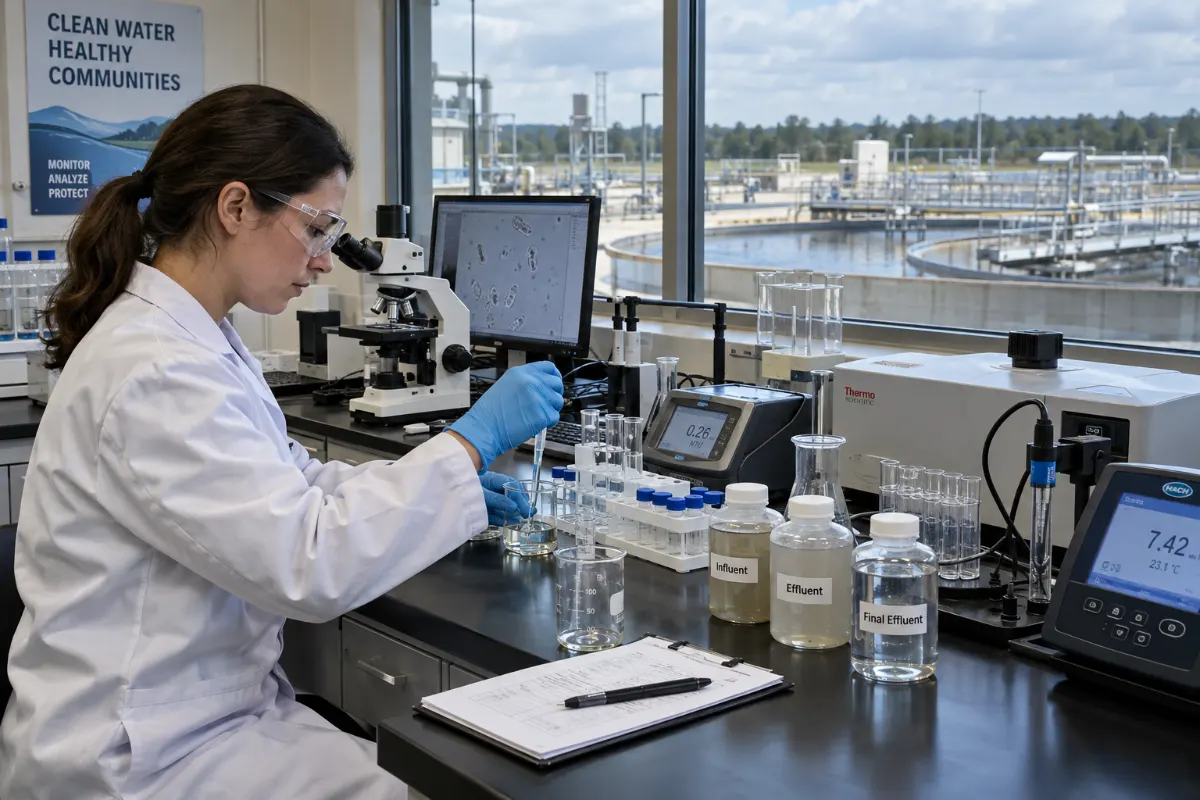
DTRO is tolerant, but it’s not indestructible. I’ve seen systems fouled solid within six months because the pretreatment was treated as an afterthought. The membrane can handle particles, but it can’t handle scale that forms inside the module or biological growth that anchors to the disc surfaces.
Minimum pretreatment for leachate DTRO
- Chemical softening — reduce calcium and magnesium to acceptable levels. This is non-negotiable for high-hardness leachate.
- Antiscalant dosing — even after softening, some scale inhibitors are needed.
- Cartridge filtration — typically 5 to 20 micron as a final guard.
- pH adjustment — keep the feed in the range where scaling potential is lowest.
- Optional: ultrafiltration or MBR permeate — if the biological stage is upstream, its permeate makes excellent DTRO feed.
If your leachate has significant oil or grease, add a pretreatment step for that too. Oily feed will blind the membranes in ways that chemical cleaning can’t fully reverse. There’s a good discussion of handling oily wastewater that applies to the pretreatment logic here as well.
Energy and Operating Cost Reality
DTRO is a pressure-driven process, so energy consumption scales with pressure and flow. For leachate at 80 bar with 80 percent recovery, you’re looking at roughly 4 to 8 kWh per cubic meter of permeate, depending on pump efficiency and whether you’re using energy recovery devices.
That’s not trivial, but it’s usually cheaper than thermal evaporation for the same volume reduction. The economic case for DTRO gets stronger as the required concentration factor increases — because the alternative (evaporating everything) costs far more per cubic meter.
Where the money actually goes
| Cost Category | Share of OPEX (indicative) | Notes |
|---|---|---|
| Electricity | 35 – 50% | High-pressure pumps dominate |
| Membrane replacement | 15 – 25% | 3 to 5 year typical life with good operation |
| Chemicals (cleaning, antiscalant) | 10 – 20% | Cleaning frequency drives this |
| Labor and maintenance | 10 – 15% | Higher for remote or unmanned sites |
| Concentrate disposal | Variable | Can exceed all other costs combined |
The concentrate disposal line is the one that surprises people. If you have to truck brine off-site, that cost can dwarf the electricity bill. Always model the full chain before committing to a recovery target.
Cleaning, Maintenance, and Failure Modes
No DTRO system runs forever without intervention. The question is how often and how painful.
Common problems and their causes
- Flux decline over weeks — usually organic fouling or biofouling. Clean with caustic and surfactant.
- Flux decline over days — likely scaling. Check softening performance and antiscalant dosing.
- Pressure rise with stable flux — partial plugging of feed channels. May need module disassembly.
- Permeate quality drop — membrane damage or O-ring failure. Check individual discs.
- Sudden pressure spike — often a pretreatment upset letting solids through.
Cleaning frequency for leachate DTRO typically runs every 2 to 8 weeks, depending on feed quality and how conservatively you’re running flux. If you’re cleaning more often than every two weeks, something upstream needs fixing.
What a good maintenance program looks like
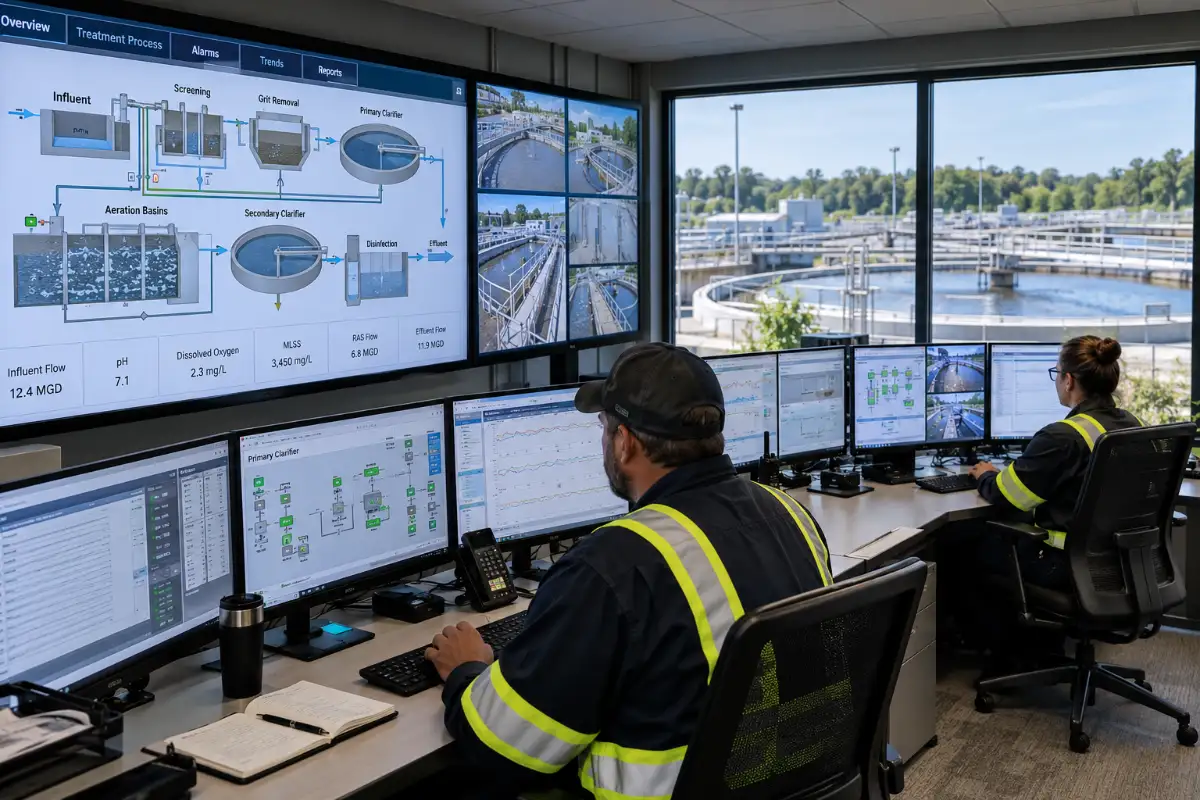
- Log feed pressure, differential pressure, permeate flow, and conductivity daily.
- Normalize data to standard temperature so trends are visible.
- Clean on a schedule, not just when performance drops.
- Inspect discs during every cleaning cycle.
- Replace O-rings proactively — they’re cheap insurance.
- Keep spare modules on hand for critical systems.
When DTRO Makes Sense — and When It Doesn’t
DTRO isn’t the right answer for every leachate problem. I’ve seen it overspecified on small sites where a simpler MBR would have done the job, and I’ve seen it undersized on sites where the concentrate handling was never properly planned.
DTRO is a strong fit when:
- Leachate TDS is high enough that conventional RO can’t reach target recovery.
- Discharge limits on TDS or specific ions are tight.
- Site has limited space for biological treatment or the leachate is too inhibitory for biology alone.
- You need a robust, containerized system that can be commissioned quickly.
- Concentrate can be managed on-site (evaporation, solidification, or spray irrigation).
Consider alternatives when:
- Leachate volume is small and discharge limits are moderate — MBR or SBR may suffice.
- Concentrate disposal is prohibitively expensive or legally restricted.
- Power costs are very high and thermal evaporation with waste heat is available.
- Feed TDS is low and stable — spiral RO is cheaper per unit of permeate.
For sites that need the full package, pairing DTRO with an MVC evaporator heat exchanger system or a multi-effect evaporator can close the loop on concentrate volume. The membrane does the heavy lifting; the evaporator finishes the job.
Selection Logic: How I’d Approach a New Project
If you’re evaluating DTRO for a leachate application, work through it in this order:
- Characterize the leachate properly. At least four sampling events across different seasons. Include TDS, conductivity, all major ions, ammonia, COD, BOD, pH, alkalinity, silica, and metals.
- Define discharge or reuse requirements. TDS limit? Ammonia limit? COD limit? These drive the whole design.
- Decide on concentrate management first. This is the constraint that most often kills projects. Solve it before you size the membrane.
- Size the pretreatment to match the membrane tolerance. Don’t skimp on softening if hardness is high.
- Choose recovery target based on economics, not ambition. 80 percent recovery with reliable operation beats 90 percent with constant cleaning.
- Plan for variability. Design for the worst-case feed, not the average.
One more thing: pilot testing is worth the money on leachate projects. A six-month pilot on actual site leachate will tell you more than any modeling exercise. It also gives you real cleaning frequency data before you commit to full-scale equipment.
Integration With Evaporation and ZLD
For sites facing zero liquid discharge requirements, DTRO is usually the front end of a two-stage concentration process. The membrane concentrates the leachate to 15 to 25 percent of original volume, then the evaporator takes that concentrate to dryness or near-dryness.
This split makes economic sense because evaporation cost scales with volume evaporated. By removing 75 to 85 percent of the water with membranes first, you cut the evaporator size — and its energy consumption — dramatically. A mechanical vapor compression evaporator downstream of DTRO is a common and effective combination.
The tradeoff is complexity. You’re now running two sophisticated systems that both need attention. For sites with limited operations staff, that’s a real consideration.
Frequently Asked Questions
What recovery rate can I realistically expect from a DTRO system on landfill leachate?
Most full-scale leachate DTRO systems achieve 75 to 85 percent overall recovery. The limit is set by osmotic pressure and scaling risk in the final stage. If your leachate has very high TDS or high hardness, expect the lower end. Running at higher recovery requires more pretreatment and more frequent cleaning, and it may not be economically justified.
How long do DTRO membranes last in leachate service?
With good pretreatment and a disciplined cleaning program, three to five years is typical. Systems with poor pretreatment or frequent upsets may see replacement in 18 to 24 months. Individual discs can be replaced, which helps control cost — you’re not scrapping the whole module when one section fails.
What’s the biggest cause of DTRO system failure in leachate plants?
In my experience, it’s inadequate concentrate management planning. The membrane itself is robust. What kills projects is discovering after commissioning that the concentrate can’t be discharged, can’t be sprayed, and can’t be trucked affordably. Solve the concentrate question before you buy the membrane skid.
Can DTRO handle leachate without biological pretreatment?
Technically yes, but it’s usually not the best design. Without biological treatment, the membrane has to handle the full organic load, which accelerates fouling and increases cleaning frequency. An MBR upstream reduces organic loading, converts ammonia to nitrate, and produces a cleaner feed that the DTRO can concentrate more efficiently.
How much does a DTRO system cost to operate per cubic meter?
Operating cost varies widely with electricity prices, feed quality, and concentrate disposal method. Membrane and energy costs typically land in the range of a few dollars per cubic meter of permeate, but concentrate disposal can add significantly more. Always model the full chain — the membrane system itself is often not the dominant cost.
What pretreatment is absolutely required before DTRO?
At minimum: softening to control calcium and magnesium, antiscalant dosing, pH adjustment, and cartridge filtration. If the leachate has significant oil, grease, or suspended solids, add removal steps for those. Skipping softening on high-hardness leachate is the most common pretreatment mistake I see.
Is DTRO better than MVR evaporation for leachate?
They solve different problems. DTRO is a concentration technology — it separates water from dissolved solids at lower energy cost per unit of water removed. MVR evaporation can take concentration further and produce a solid residue, but costs more per cubic meter evaporated. Most ZLD leachate plants use both: DTRO for bulk volume reduction, evaporation for final concentration.
The Bottom Line
DTRO works on landfill leachate because it was designed for difficult feeds. The disc tube geometry tolerates fouling that would destroy spiral-wound elements, and the high-pressure capability lets you concentrate leachate to levels that make downstream disposal or evaporation practical. But it’s not a standalone solution. The pretreatment has to be right, the concentrate management has to be planned, and the operating discipline has to be there.
If you’re evaluating DTRO for a leachate project, start with a proper characterization and a clear plan for the concentrate. Get those two things right, and the membrane system will do its job. Get them wrong, and no amount of membrane quality will save the project.
Planning a leachate treatment system? Let’s talk through your specific feed and discharge requirements.