

A containerized wastewater evaporator system is a pre-assembled, skid-mounted evaporation plant built inside one or more shipping-container frames, then shipped to site, set on a concrete pad, and tied into power, feed water, and discharge lines. The point is simple: you get a working concentration or zero liquid discharge (ZLD) unit without a year of site fabrication. I’ve commissioned these units for plating shops, pharmaceutical plants, and landfill leachate sites, and the difference between a good container build and a bad one almost never shows up on the datasheet. It shows up in the piping layout, the insulation details, and how easy it is for an operator to pull a heat exchanger bundle at 2 a.m. This article walks through the design logic, selection trade-offs, energy picture, maintenance reality, and the failure modes I keep seeing in the field.
Why Containerized Evaporators Became the Default for Difficult Wastewater
Ten or fifteen years ago, if you had a high-TDS waste stream, you either built a concrete basin evaporator on site or you trucked the liquid away. Trucking costs have since climbed to the point where hauling is often the single largest line item in a plant’s environmental budget. That shift pushed a lot of engineers toward on-site evaporation, and containerization made on-site evaporation practical for facilities that don’t have a construction crew on staff.
The core advantages are consistent across projects:
- Factory assembly and testing. Hydro tests, electrical checks, and often a wet commissioning run happen before the unit leaves the shop. Field work shrinks to interconnections.
- Permitting and footprint. A container sits on a small pad, which matters when you’re retrofitting into an existing plant with no room to build.
- Relocatability. If a production line moves or a lease ends, the asset moves with you. That’s real value for contract manufacturers and temporary industrial sites.
- Parallel capacity. Need 20 m³/day now and 40 m³/day in two years? Add a second container instead of rebuilding.
The trade-off is that container walls constrain you. Heat exchanger surface area, vapor space, and maintenance access all compete for the same box. A well-designed unit accounts for this from the first layout sketch; a poorly designed one becomes a maintenance nightmare the first time a bundle needs cleaning.

Matching the Evaporation Technology to Your Waste Stream
Containerization is a packaging decision. The evaporation technology inside is a process decision, and it drives almost everything else — energy consumption, scaling behavior, operator workload, and capital cost. I always start by characterizing the stream, not by picking a technology.
What to Characterize Before You Select Anything
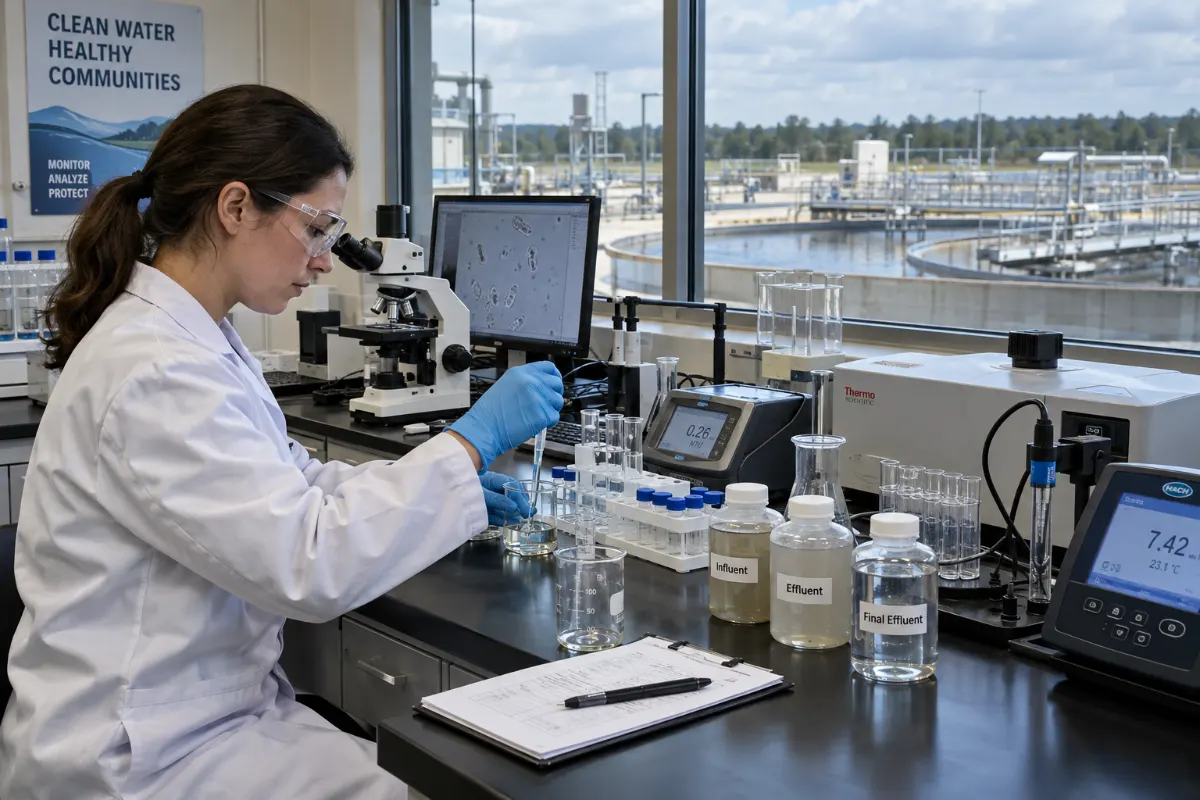
Get these numbers before you talk to any vendor. If a supplier quotes you without asking for them, that’s a warning sign.
- Total dissolved solids and the specific ion profile (chloride, sulfate, carbonate, silica, hardness)
- COD and the fraction that’s volatile or foaming
- Oil and grease content
- pH and buffering capacity
- Presence of scale-forming species at concentration factor
- Target concentrate solids and whether the concentrate must be solidified
- Available power, steam, and cooling water
The Three Main Technology Families
Mechanical vapor compression (MVC/MVR) uses a compressor to recompress evaporated vapor and reuse its latent heat. Electrical energy replaces steam. For most containerized industrial applications in the 5–100 m³/day range, this is the workhorse. It’s compact, it starts fast, and it doesn’t need a boiler. The compressor is the heart of the system, and its reliability defines the plant’s reliability.
Multi-effect evaporation stacks two, three, or more evaporation stages so each kilogram of steam evaporates multiple kilograms of water. Steam economy is excellent, but you need a steam source, more heat exchanger surface, and more physical space. In a container, multi-effect designs usually mean multiple containers or a very tight layout. If your site already has waste steam, this can be the lowest operating cost option.
Membrane preconcentration — typically high-pressure reverse osmosis or DTRO — isn’t evaporation, but it belongs in the conversation because it can cut the volume your evaporator has to handle by 60–80%. That directly shrinks the evaporator, the power draw, and the container count. The catch is that membranes need pretreatment and they produce their own brine that still has to go to the evaporator.
In practice, the strongest containerized designs I’ve seen combine membrane preconcentration with an MVC finishing stage. You concentrate cheaply with pressure, then finish with thermal energy. I’ve written more about the membrane side of that pairing in the context of DTRO membrane systems, and the thermal side in the context of mechanical vapor compression MVC evaporators.
Selection Comparison: Which Configuration Fits Which Site
The table below reflects typical design ranges I’ve worked with. Actual numbers depend heavily on feed chemistry, concentration factor, and site utilities — treat these as indicative, not as guarantees.
| Configuration | Typical Capacity Range | Energy Input | Container Footprint | Best Fit |
|---|---|---|---|---|
| Single-effect MVC | 1–20 m³/day | Electric only | 1 × 20 ft or 1 × 40 ft | Small plating lines, low-volume pharma, pilot duty |
| Multi-effect MVC | 10–60 m³/day | Electric only | 1–2 × 40 ft | Mid-size industrial streams, no steam available |
| Double-effect with steam | 10–50 m³/day | Steam + small electric | 1–2 × 40 ft | Sites with surplus low-pressure steam |
| Triple-effect with steam | 30–150 m³/day | Steam + small electric | 2–3 × 40 ft | Large leachate or chemical plants with steam |
| Membrane + MVC hybrid | 20–200 m³/day | Electric (high pressure + compressor) | 2–4 × 40 ft | High-volume leachate, ZLD retrofits |
If you want a deeper look at how the multi-stage options compare on steam economy, the multi-effect evaporator overview is a reasonable starting point.

Inside the Container: What Actually Determines Reliability
The process flow diagram is the easy part. What separates a plant that runs for years from one that fights you every month is the mechanical detail. Here’s what I inspect first during a factory acceptance test.
Heat Exchanger Design and Cleaning Access
Falling-film and forced-circulation designs both work in containers, but the choice has maintenance consequences. Falling-film units handle scaling better because the liquid film is thin and the residence time is short. Forced-circulation units handle high-solids and crystallizing streams better because the velocity keeps solids suspended.
Whichever you choose, ask one question: how does an operator clean it? If the answer involves cutting pipe or removing the container roof, the design failed. The heat exchanger configuration and material selection deserve more attention than they usually get — I’ve covered the engineering trade-offs in detail under MVC evaporator heat exchangers.
Compressor Selection
The compressor is the single most expensive component and the most common source of unplanned downtime. Roots-type blowers are common for low compression ratios; centrifugal and screw compressors appear at higher capacities. What matters operationally:
- Is the compressor rated for the actual vapor composition, including any volatile organics?
- Is there a spare parts strategy? Some compressor internals have long lead times.
- Is the seal system compatible with the process fluid?
- Can the unit run at turndown without surging or overheating?
Material Selection
Chloride-bearing streams at temperature will destroy 304 stainless in months. 316L handles more, but at elevated temperature and chloride concentration you’re often looking at duplex, super duplex, titanium, or specialized alloys. This is where a cheap quote becomes expensive. I’ve watched a plant replace its entire heat exchanger bundle twice in three years because the original spec assumed 316L was good enough.
Controls and Instrumentation
A containerized unit should run largely unattended with a small operator interface. The control system needs to handle:
- Concentration control via density or conductivity
- Antifoam dosing on demand
- Scaling prevention via pH or antiscalant control
- Automatic clean-in-place cycles
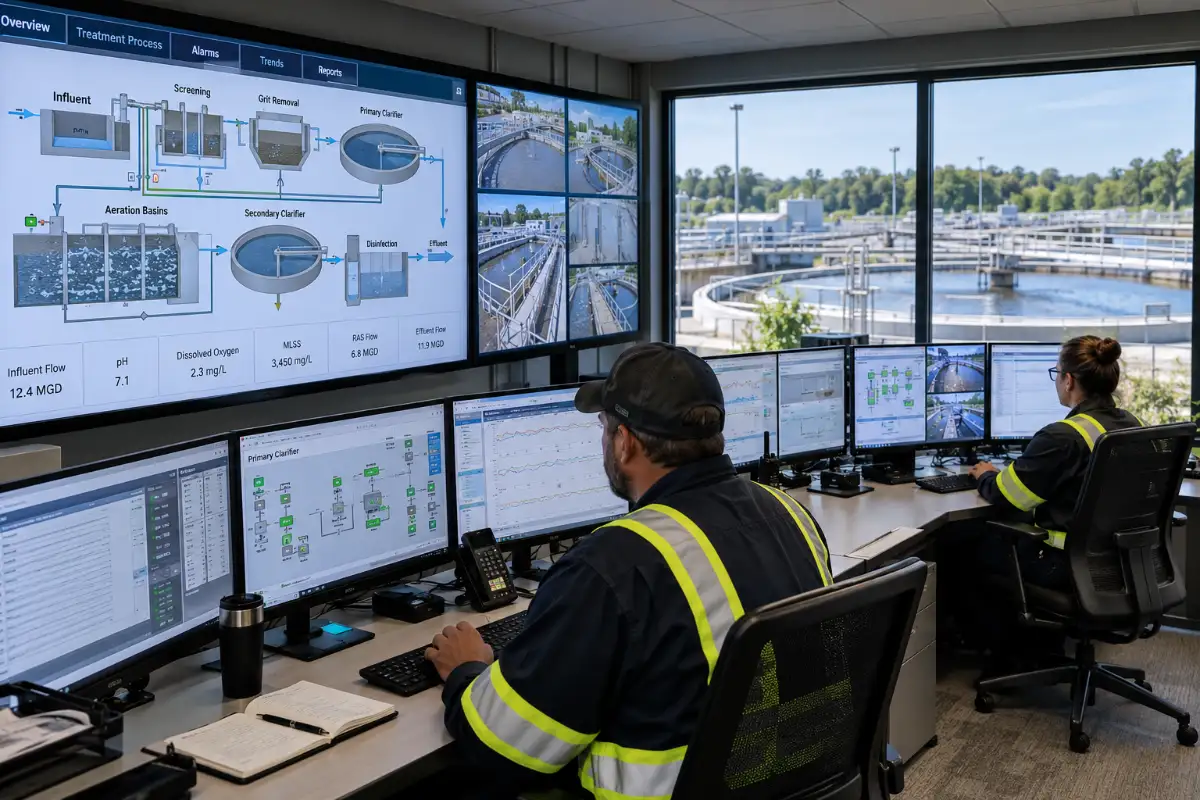
- Alarm and shutdown logic that distinguishes nuisance trips from real faults
I’ve seen more grief from over-sensitive instrumentation than from missing instrumentation. A level transmitter that trips on foam will shut your plant down weekly. Specify instruments for the real fluid, not the clean-water ideal.
Energy and Lifecycle Cost: Where the Money Actually Goes
Capital cost gets all the attention during procurement, but over a ten-year horizon, energy and maintenance dominate. Here’s the rough split I use when screening options.
| Cost Element | Share of 10-Year Total Cost (Typical) | Main Drivers |
|---|---|---|
| Capital equipment | 25–35% | Compressor, heat exchanger alloy, controls |
| Energy | 35–50% | Specific power consumption, electricity tariff, run hours |
| Maintenance and spares | 10–20% | Compressor overhaul, gaskets, cleaning chemicals, labor |
| Consumables | 5–10% | Antiscalant, antifoam, caustic and acid for CIP |
| Concentrate handling | 5–15% | Solidification, hauling, or crystallization |
Specific power consumption for MVC systems typically lands in the 15–40 kWh per cubic meter of distillate range, depending on boiling point elevation, compression ratio, and feed temperature. That’s a wide band, and it’s wide for real reasons. A stream that boils at 105 °C needs far less compressor work than one that boils at 120 °C because of high dissolved solids.
The single biggest lever on operating cost is usually not the evaporator at all. It’s how much water you can remove before the evaporator sees the stream. Every cubic meter you preconcentrate with membranes or with waste heat is a cubic meter you don’t pay to boil. For a broader view of where evaporation sits in a full treatment train, the wastewater evaporation system page covers the process integration side.
In my experience, the projects that hit their operating budget are the ones where the engineer spent as much time on preconcentration and heat recovery as on the evaporator itself. The evaporator is the last step, not the whole answer.
Installation and Site Integration
Containerization moves work from the field to the factory, but it doesn’t eliminate site work. Plan for these items early, because they’re the ones that delay startup.
- Foundation and drainage. A level, reinforced pad with containment for spills and washdown. Check local requirements for secondary containment around chemical storage.
- Power supply. MVC units draw significant current at startup. Confirm transformer capacity and cable sizing against actual motor starting characteristics, not just running load.
- Feed and discharge piping. Insulated, heat-traced where needed, with isolation valves accessible from outside the container.
- Ventilation and cooling. Compressors and control panels reject heat. A container in direct summer sun needs forced ventilation sized for the worst case, not the average.
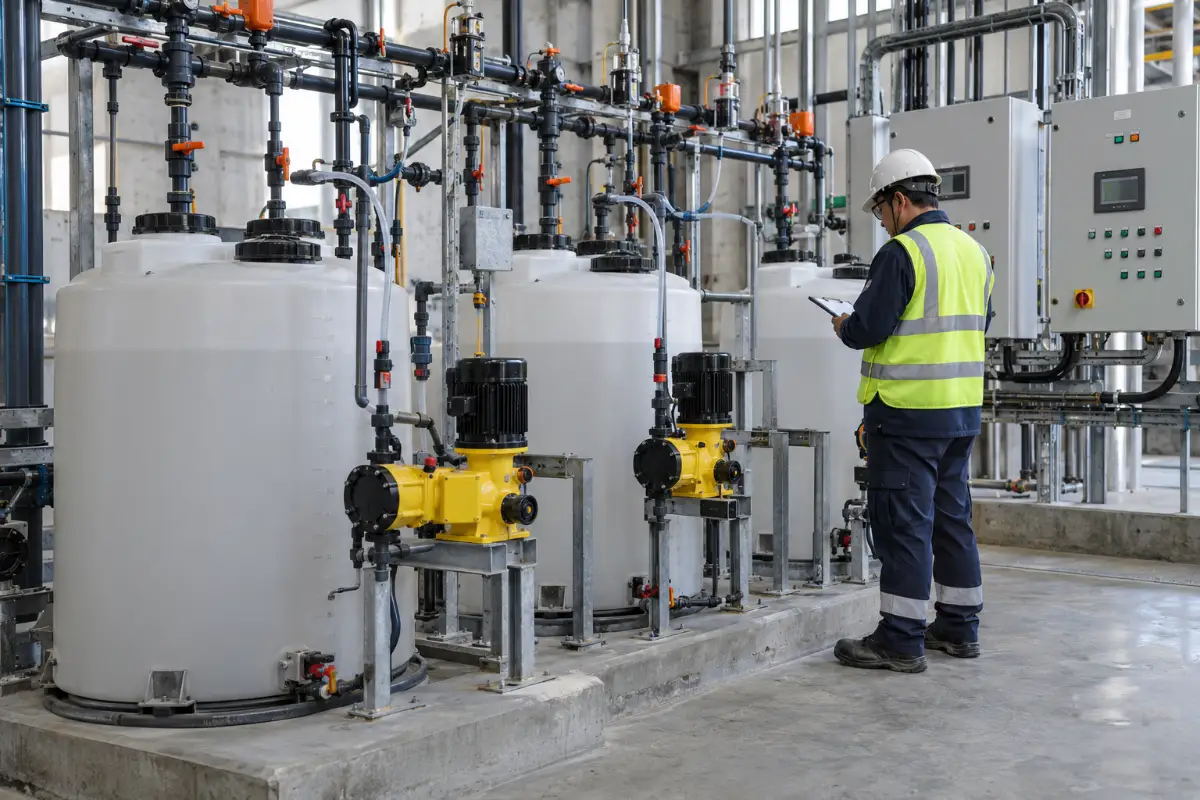
- Chemical storage. Antiscalant, antifoam, and CIP chemicals need proper containment and labeling. In many jurisdictions, secondary containment for these is a permit condition.
- Concentrate management. Decide upfront whether concentrate goes to a crystallizer, a solidification step, or a licensed hauler. The evaporator doesn’t make the concentrate disappear; it just makes it smaller.
One practical note: leave room around the container. I’ve seen units installed with 300 mm clearance to a wall, which made filter changes and instrument calibration nearly impossible. Give yourself at least a meter of working space on the access sides.
Operating Experience: What Goes Wrong and Why
After enough commissioning trips, patterns emerge. These are the issues I see most often, roughly in order of frequency.
Scaling and Fouling
Scale is the number one enemy of any evaporator. Calcium carbonate, calcium sulfate, and silica all become less soluble as temperature rises and as concentration increases. The mitigation toolkit:
- Antiscalant dosing tailored to the specific scaling species, not a generic product
- pH control to keep carbonate species in a soluble form
- Operating below the solubility limit for silica, which is often the binding constraint
- Scheduled CIP before performance degrades, not after
- Seed crystals or crystallizer design for streams that will inevitably precipitate
Silica deserves special mention. It’s soluble up to a point, then it forms a hard, glassy deposit that’s very difficult to remove chemically. If your feed has more than about 20–30 mg/L silica and you’re concentrating aggressively, get a specialist involved early.
Foaming
Streams with surfactants, proteins, or high COD foam in the boiling chamber. Foam carries liquid into the vapor path, which contaminates distillate and can foul the compressor. Solutions include antifoam dosing, mechanical foam breaking, adequate vapor space, and sometimes a pre-treatment step to remove the foaming agents. If foam is chronic, the vapor space in your container is probably undersized.
Compressor Vibration and Bearing Wear
Compressors don’t fail suddenly. They give warning through vibration signature changes, rising discharge temperature, and increasing current draw. If your control system doesn’t trend vibration, add it. A bearing replacement scheduled during a maintenance window is a fraction of the cost of an unplanned failure.
Distillate Quality Drift
When distillate conductivity starts creeping up, you have entrainment. Causes include foam, high boiling rate, damaged mist eliminator, or a demister that’s plugged. Track distillate conductivity continuously and set an alarm well before the value becomes a compliance problem.
Maintenance Planning: The Schedule That Actually Works
I’ve seen maintenance programs that were either nonexistent or so elaborate nobody followed them. Here’s a practical middle ground, based on what’s kept plants running.
| Interval | Task | Why It Matters |
|---|---|---|
| Daily | Log distillate conductivity, feed rate, compressor amps, pressures | Trend data catches drift before it becomes failure |
| Weekly | Check chemical dosing rates and tank levels; inspect for leaks | Dosing failures cause scaling within days |
| Monthly | Vibration check on compressor; inspect mist eliminator | Early warning on rotating equipment |
| Quarterly | CIP if performance indicates; inspect heat exchanger surfaces | Prevents irreversible fouling |
| Annually | Compressor inspection; instrument calibration; gasket and seal review | Catches wear before it causes downtime |
Keep a logbook. I mean a real one, physical or digital, with dates and initials. When something fails, the log tells you what changed. Half the diagnostic value of a trend is knowing when the last CIP happened and what the performance was before and after.
Where Containerized Evaporation Fits in a ZLD Strategy
Zero liquid discharge requirements are becoming more common, and containerized evaporators are often the final concentration step before crystallization or solidification. The typical ZLD train looks like this:
- Pretreatment: softening, pH adjustment, removal of oil and suspended solids
- Membrane preconcentration: high-pressure RO or DTRO to push recovery as far as practical
- Thermal concentration: MVC or multi-effect evaporator to reduce brine volume further
- Crystallization or solidification: final step to produce a handleable solid
Each step has a role, and skipping one shifts cost to the next. The membrane step is the cheapest per cubic meter of water removed. The evaporator is more expensive but handles higher salinity. The crystallizer is the most expensive per unit of water removed, so you want to feed it the smallest possible volume.
For sites working through a ZLD requirement, the zero liquid discharge systems overview covers how the stages fit together and where the cost drivers sit.
Common Design Mistakes I See Repeatedly
- Sizing on average flow instead of peak. A plant that averages 10 m³/day but peaks at 25 m³/day needs capacity for the peak, or buffer storage upstream.
- Ignoring boiling point elevation. High-TDS streams boil at higher temperatures, which raises compressor duty and can push you past equipment limits.
- Undersized vapor space. Leads to entrainment and foam problems that no amount of antifoam will fully solve.
- Specifying materials for the feed instead of the concentrate. Chloride and temperature both increase as you concentrate. The hot, concentrated end is where corrosion happens.
- No turndown capability. If the plant can only run at 100% capacity, it either runs when it shouldn’t or sits idle.
- Overlooking concentrate disposal. The evaporator produces a smaller volume of a more concentrated waste. That waste still needs a home.
- No spare parts strategy. Compressor internals, gaskets, and instruments with long lead times should be identified at purchase, not at failure.
When Containerization Is the Wrong Choice
I’ll be direct: containerization isn’t always right. It’s usually the wrong choice when:
- Capacity exceeds roughly 200 m³/day. At that scale, site-built is usually more economical.
- The site has abundant low-cost steam and space. Multi-effect site-built systems can beat containerized MVC on operating cost.
- The waste stream is highly variable in composition. Containerized units are optimized for a defined feed; wide swings force conservative, oversized design.
- You need integrated crystallization. The crystallizer usually doesn’t fit in a container, so you end up with hybrid site-built anyway.
Being honest about this during the feasibility stage saves money. I’ve seen projects where a containerized unit was specified for a stream that really needed a different approach, and the result was a plant that never met expectations.
Frequently Asked Questions
How do I size a containerized evaporator for my plant?
Start with peak flow, not average. Then characterize the feed: TDS, ion profile, COD, oil and grease, pH, and scaling species. Determine the target concentrate solids. From there, calculate the water removal rate and add margin for fouling and turndown. A rule of thumb is to design for the 90th percentile flow plus 15–20% capacity margin, but the actual number depends on your process variability. Never size on a single grab sample.
What’s the typical power consumption of an MVC evaporator?
For most industrial wastewater applications, expect roughly 15–40 kWh per cubic meter of distillate produced. The low end applies to low-TDS, low-boiling-point-elevation streams with good heat recovery. The high end applies to high-TDS streams, high compression ratios, or systems without heat integration. Feed temperature matters a lot: preheating feed with outgoing distillate can cut consumption noticeably.
How often does the heat exchanger need cleaning?
It depends entirely on the stream. A clean, low-hardness feed might go six months between cleanings. A high-hardness or high-silica stream might need cleaning monthly or more often. The right approach is to monitor performance — distillate rate, compressor amps, temperature differential — and clean when performance drops by a set percentage, typically 10–15%. Scheduled cleaning on a fixed calendar is less effective than condition-based cleaning.
Can a containerized evaporator handle landfill leachate?
Yes, but leachate is one of the harder feeds. It typically has high TDS, high ammonia, variable COD, and often high scaling potential. Successful leachate installations usually include pretreatment for hardness and suspended solids, plus membrane preconcentration before the evaporator. Ammonia can be a particular issue because it volatilizes and can end up in the distillate, which may require a separate treatment step. Get leachate-specific experience involved early.
What’s the difference between MVC and MVR?
They describe the same core principle: use a compressor to raise the pressure and temperature of evaporated vapor so it can be reused as the heating medium. MVC stands for mechanical vapor compression; MVR stands for mechanical vapor recompression. In industry usage, the terms are often interchangeable. Some engineers use MVR to emphasize the recompression aspect, but functionally the equipment is the same.
How much maintenance labor does a containerized unit require?
For a well-designed unit running continuously, plan on roughly 0.25 to 0.5 full-time operator hours per day for routine monitoring and logging, plus periodic maintenance tasks. Cleaning cycles, compressor inspections, and instrument calibration add labor on a scheduled basis. If your unit requires more than an hour a day of attention just to keep running, something in the design or the feed characterization is off.
Can I add capacity later by adding another container?
Often yes, if the original design anticipated it. Modular expansion works best when the feed system, chemical dosing, and concentrate handling were sized with future capacity in mind. Adding a second evaporation container without upgrading upstream and downstream systems usually creates a bottleneck. Plan the expansion path during the initial design, even if you don’t build it now.
What happens to the concentrate?
That’s a site-specific decision that should be made before you buy the evaporator. Options include sending it to a crystallizer to produce solid salt, mixing it with a solidification agent, or hauling it to a licensed disposal facility. The evaporator reduces volume, typically by 80–95%, which cuts hauling cost proportionally. But it doesn’t eliminate the need for a disposal pathway. Confirm your disposal route and its cost before committing to the project.
Closing Thoughts
Containerized wastewater evaporators solve a real problem: they let industrial sites handle difficult, high-TDS streams on site without a major construction project. But the container is just the box. What determines whether the plant works is the process selection, the material specification, the instrumentation, and the maintenance plan. Get those right and the unit runs quietly in the background for years. Get them wrong and you’ll be on a first-name basis with your service technician.
If you’re evaluating options for a specific stream, the most useful thing you can do is gather good characterization data and talk through the process logic before you compare quotes. A slightly higher capital cost for the right configuration is almost always cheaper than fixing the wrong one.