

Electroplating wastewater is one of the hardest streams to concentrate because it carries heavy metals, cyanide complexes, chelating agents, and a heavy load of dissolved salts. An MVR evaporator handles it by recompressing the vapor it generates and reusing that heat to boil more water, so the energy you pay for is mostly electricity to run the compressor instead of steam from a boiler. In practice, a well-designed MVR system can cut the thermal energy demand of concentration by 80–95% compared with a conventional single-effect evaporator, which is why it has become the default choice for plating shops facing zero liquid discharge (ZLD) targets. The rest of this article walks through how I approach design, operation, and the trade-offs that actually matter.
Why Electroplating Wastewater Is a Difficult Feed for Evaporation
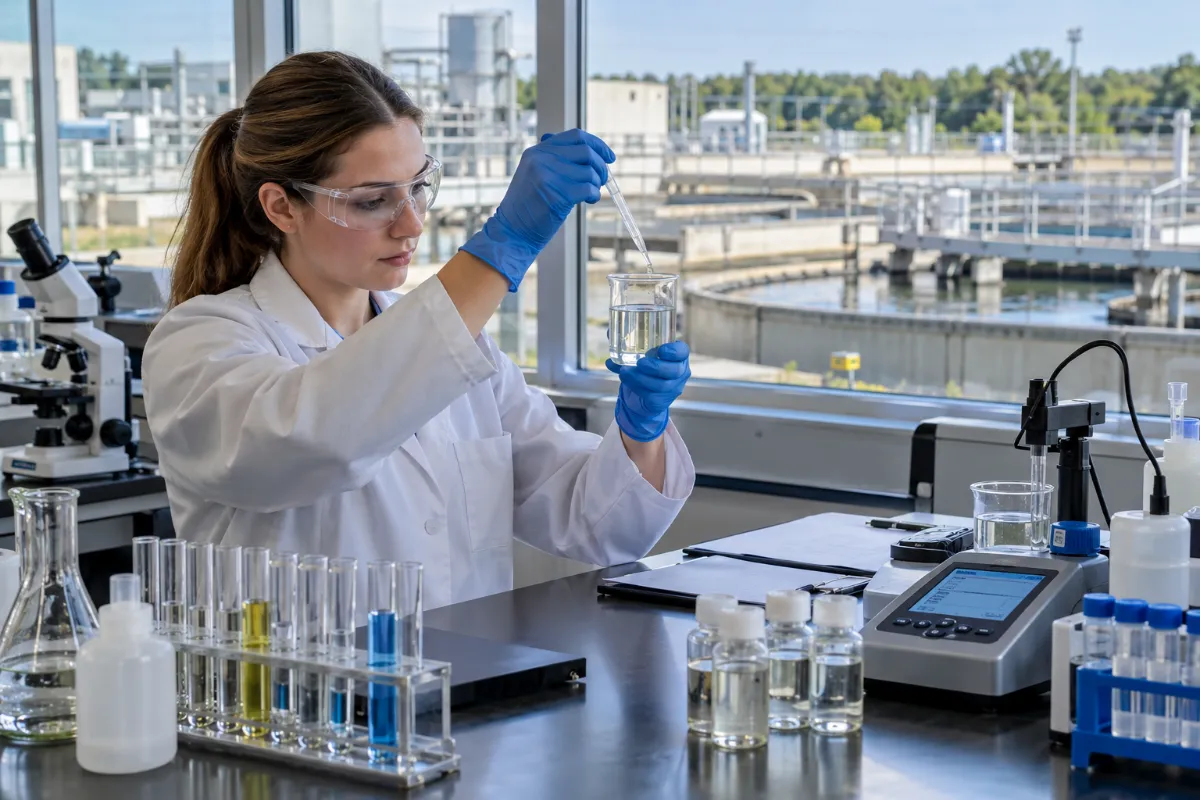
Plating lines produce a mix of rinse water, spent process baths, ion-exchange regenerate, and cleaning solutions. That mix behaves very differently from a simple brine. Before you size any evaporator, you need to understand what is in the feed.
- Heavy metals: chromium, nickel, copper, zinc, cadmium, and lead in ionic or complexed form.
- Chelating agents: EDTA, citrate, and phosphonates that keep metals in solution and resist simple precipitation.
- Cyanide: still present in some older lines, requiring separate oxidation before any thermal step.
- High dissolved solids: total dissolved solids often run 5,000–40,000 mg/L in combined rinse water, and much higher in spent baths.
- Oils and organics: drag-out from degreasing and brightener breakdown products.
Each of these affects evaporator design. Chelated metals do not scale in the same way as calcium carbonate, but they can foul heat transfer surfaces through organic films and metal hydroxide precipitation when pH drifts. Cyanide must never reach an acidic evaporator sump, because hydrogen cyanide gas will be released. That is a safety issue, not just a process one.
How an MVR Evaporator Actually Works on Plating Waste
The principle is straightforward. Feed enters the evaporator, water boils, and the vapor is compressed to raise its pressure and temperature. That hotter vapor then condenses on the other side of the heat exchanger, giving up its latent heat to boil more feed. The condensate leaves as clean distillate, and the concentrated brine is either further treated or sent to a crystallizer.
What makes MVR attractive for plating wastewater is that the compressor does the work that steam would normally do. For a stream that would otherwise need 1.1 kg of steam per kg of water evaporated in a single-effect unit, an MVR system typically needs only 0.05–0.15 kg of steam equivalent for startup and trim, with the rest supplied electrically. For a facility without an existing steam header, that is often the deciding factor.
If you want a deeper technical walkthrough of the compression loop and heat exchanger arrangement, the MVR technology overview on our site covers the thermodynamics and equipment layout in more detail.
Pre-Treatment: The Step Most Projects Get Wrong
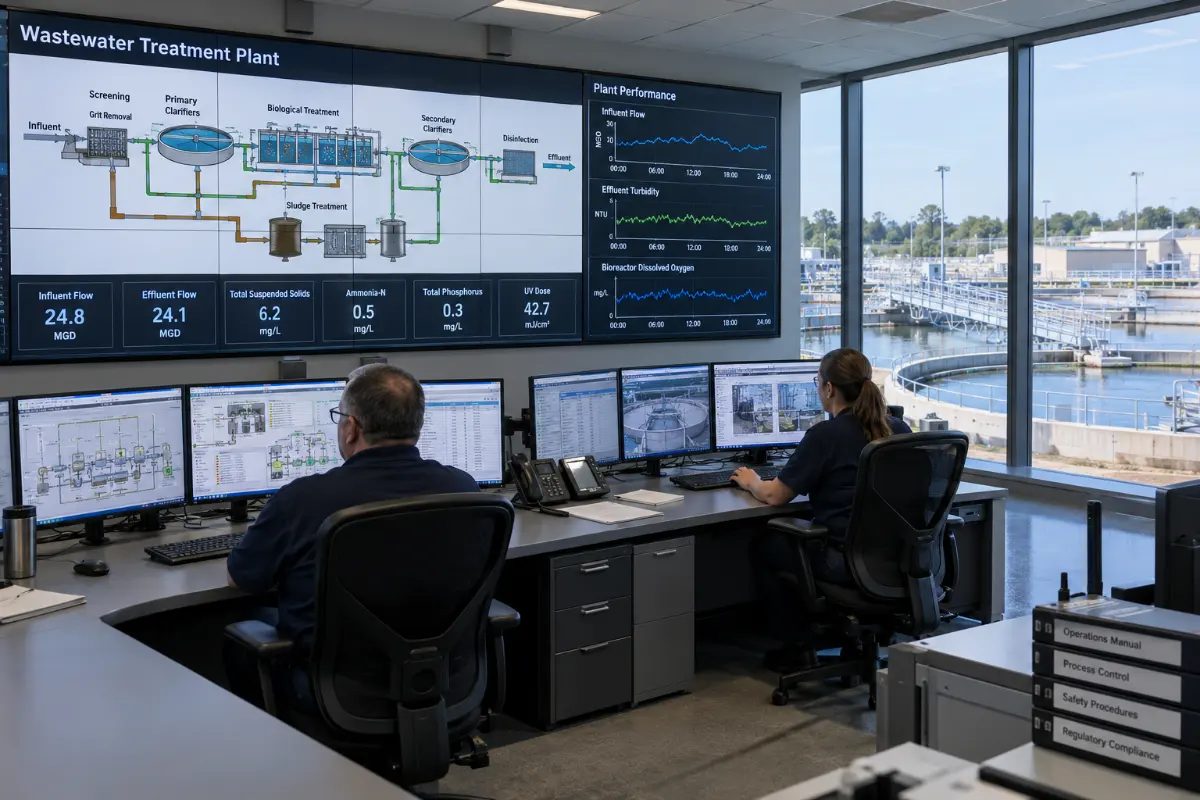
I have never seen an MVR evaporator on plating wastewater succeed without serious pre-treatment. The evaporator is a concentrator, not a treatment unit. If you feed it raw plating rinse water, you will get fouling, foaming, and off-spec distillate within weeks.
Typical pre-treatment train
- Equalization and pH adjustment: plating lines discharge in batches, so a buffer tank is essential. Neutralize to the range your chemistry allows, usually 6.5–8.5.
- Cyanide oxidation: alkaline chlorination or another oxidation step to break CN⁻ before it reaches the thermal loop.
- Chromium reduction: reduce Cr(VI) to Cr(III) and precipitate as hydroxide.
- Chemical precipitation and flocculation: hydroxide or sulfide precipitation for the remaining metals.
- Clarification or DAF: remove the metal hydroxide sludge.
- Filtration: multimedia and cartridge filtration to protect the evaporator from carryover solids.
- Optional softening or ion exchange: if hardness is high, remove it before the evaporator to control scaling.
This train does two things. It removes the bulk of the metals as sludge, which is much cheaper to dispose of than evaporator concentrate. And it leaves a feed that the evaporator can concentrate reliably to 20–30% total solids without scaling out in a week.
MVR vs. Multi-Effect vs. Membrane: Choosing the Right Concentration Step
Not every plating wastewater project needs MVR. Sometimes a multi-effect evaporator is the better economic choice, and sometimes a membrane system can do most of the work before evaporation. Here is how I frame the comparison.
| Technology | Typical concentration range | Energy source | Best fit | Main limitation |
|---|---|---|---|---|
| MVR evaporator | Up to 20–30% TS (project-dependent) | Electric compressor, small steam trim | Moderate to high flow, no cheap steam, ZLD target | Higher CAPEX, compressor maintenance |
| Multi-effect evaporator | Up to 30–40% TS | Steam (0.4–0.6 kg steam/kg water for 3-effect) | Facilities with low-cost steam, large flows | Steam cost dominates OPEX |
| DTRO / high-pressure RO | Up to 8–12% TS (indicative) | Electric pumps | Pre-concentration before evaporator | Membrane fouling, pressure limits |
| Single-effect evaporator | Up to 20% TS | Steam (1.0–1.1 kg/kg) | Small flows, batch operation | Very high specific energy |
The best designs I have worked on combine these. A DTRO membrane system concentrates the pre-treated water to 8–10% solids, and the MVR evaporator then takes it the rest of the way. That reduces evaporator size, cuts compressor power, and lowers the total cost per cubic meter. It is not always worth the complexity, but for flows above roughly 50 m³/day it usually is.
Design Parameters That Determine Whether the System Works
When I review an MVR proposal for plating wastewater, these are the numbers I check first.
Evaporation temperature and boiling point elevation
Plating wastewater at high salinity has a boiling point elevation of 3–8 °C depending on concentration. That directly affects the compressor pressure ratio needed. A system designed for 70 °C evaporation with a 4 °C BPE needs a compressor discharge about 4 °C hotter than a clean-water system at the same concentration. Under-sizing the compressor here is one of the most common mistakes I see.
Compressor type and turndown
Centrifugal compressors are common for larger flows, but their turndown is limited. Roots-type or screw compressors handle wider ranges. For plating shops with variable discharge, a compressor that can turn down to 50% without surge is worth the extra cost.
Heat exchanger material and configuration
Plating wastewater is corrosive. I typically specify titanium, duplex stainless, or 254 SMO for wetted surfaces, and I prefer falling-film or forced-circulation designs over simple kettle reboilers because they handle scaling better. The MVC evaporator heat exchanger selection directly affects both CAPEX and cleaning frequency.
Concentration factor and discharge strategy
You need to decide early whether the concentrate goes to a crystallizer, a drum dryer, or off-site disposal. Each option changes the required concentration and therefore the evaporator design. For ZLD, the concentrate typically feeds a crystallizer, and the salt is disposed of as solid waste.
Energy Consumption and Operating Cost Reality
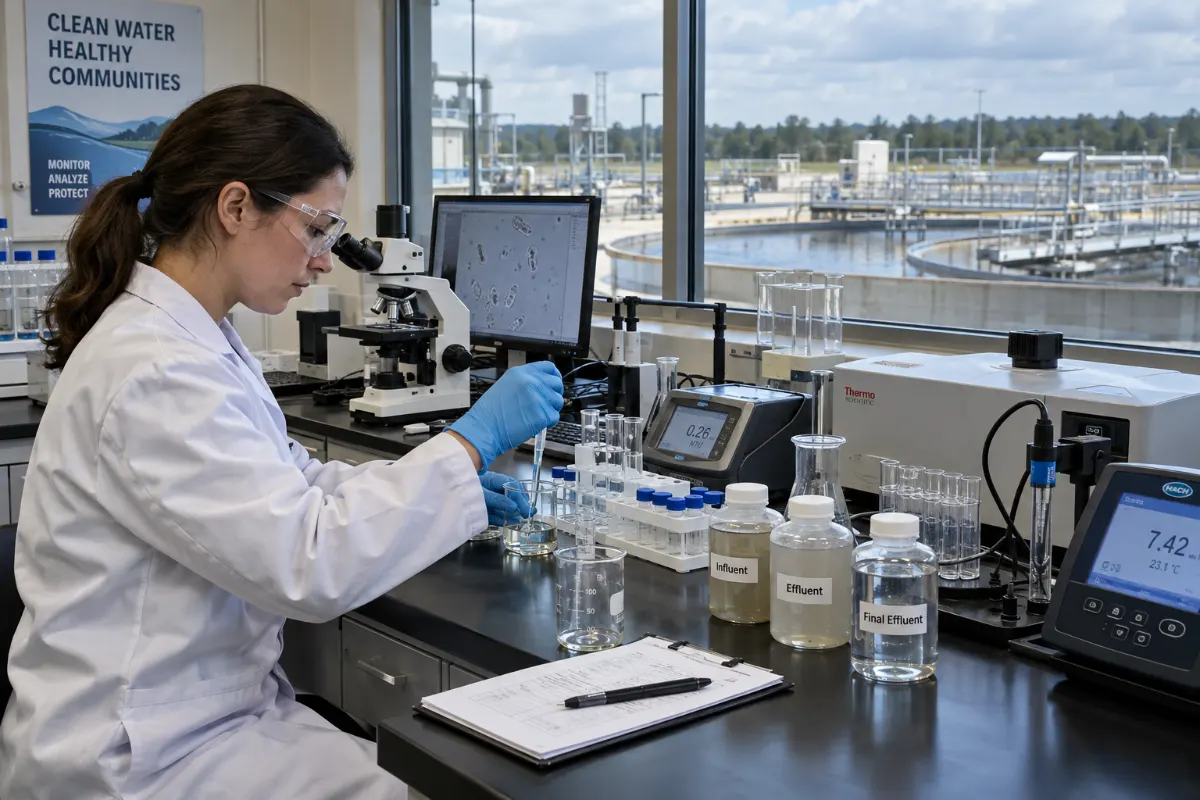
MVR is efficient, but it is not free. The compressor is the dominant electrical load. For a typical plating wastewater application, specific power consumption ranges from about 15 to 35 kWh per cubic meter of water evaporated, depending on boiling point elevation, compressor efficiency, and concentration factor. That is the number to verify in any proposal.
Compare that to a three-effect evaporator, which needs roughly 0.4–0.5 kg of steam per kg of water evaporated. If your plant pays $25–40 per tonne of steam, that is $10–20 per cubic meter just for steam, before electricity for pumps and vacuum. MVR usually wins on OPEX unless steam is essentially free.
The other operating cost people forget is cleaning. If the evaporator fouls every two weeks, you lose production and pay for chemicals and labor. A properly pre-treated feed might need cleaning every two to three months. That difference alone can swing the lifecycle cost by 15–25%.
For a more detailed breakdown of the cost drivers, see our analysis of MVR evaporator cost and price drivers.
Common Operating Problems and How to Fix Them
Foaming
Plating wastewater often contains surfactants and organic brighteners that foam in the boiling chamber. Foam carries over into the compressor, which is expensive to clean and can damage it. Fixes include adding an antifoam dosing system, using a mechanical foam breaker, and reducing the liquid level in the boiling chamber. If foaming persists, the pre-treatment train is not removing enough organics.
Scaling on heat transfer surfaces
Even after softening, some plating wastewaters still deposit scale. The usual culprits are calcium sulfate, calcium phosphate, and metal hydroxides that slip through filtration. Operating at lower concentration, adding a scale inhibitor, or switching to a forced-circulation design usually solves it. Regular CIP with the right chemistry is essential.
Compressor vibration and surge
Centrifugal compressors surge when flow drops below the design minimum. If your plating line discharges in batches, you need either a buffer tank to smooth the feed or a compressor with better turndown. Ignoring this leads to premature bearing failure.
Off-spec distillate
If the distillate still carries metals or ammonia, it cannot be reused or discharged. Causes include excessive entrainment, a failed mist eliminator, or volatile organics. Check the mist eliminator first, then look at the feed chemistry.
Corrosion in the vapor loop
Chlorides and residual acids attack stainless steel. If you see pitting on the compressor impeller or vapor piping, the material specification was too aggressive on cost. Upgrade to a higher alloy before the failure becomes a shutdown.
What a Realistic Project Looks Like
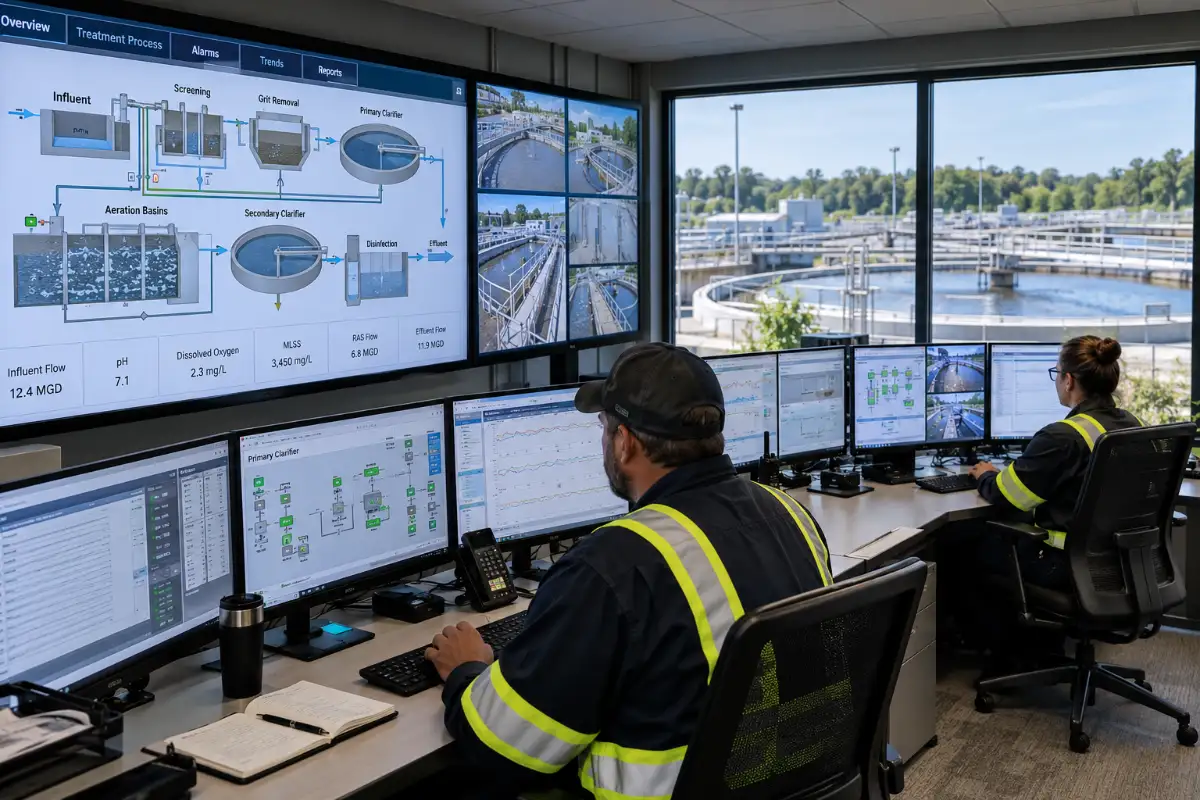
I worked on a plating facility that generated about 80 m³/day of mixed rinse water and spent cleaning solutions. The feed had roughly 12,000 mg/L TDS, 400 mg/L nickel, 200 mg/L copper, and traces of chromium. The plant had no steam boiler and wanted to eliminate liquid discharge.
The design we settled on was:
- Equalization and pH adjustment to 7.5
- Chromium reduction and hydroxide precipitation
- DAF for sludge removal
- Multimedia and cartridge filtration
- DTRO pre-concentration to about 8% TDS
- MVR evaporator concentrating to 25% TDS
- Crystallizer for final solid salt
Distillate quality came out at under 50 mg/L TDS, suitable for reuse as rinse water after polishing. The compressor ran at about 22 kWh/m³ of water evaporated. Cleaning was needed every 8–10 weeks, mostly on the heat exchanger. That is a realistic outcome for a well-pre-treated feed.
If you are evaluating a similar project, the electroplating wastewater treatment project reference shows the general process layout we use.
Maintenance Planning for Long-Term Reliability
MVR systems on plating wastewater need a maintenance plan that goes beyond the usual checklist. Based on what I have seen in the field, here is what actually matters.
| Component | Typical inspection interval | Common issue | Action |
|---|---|---|---|
| Compressor | Monthly vibration check, annual overhaul | Bearing wear, surge damage | Vibration analysis, spare bearings on site |
| Heat exchanger | Weekly ΔT monitoring, CIP as needed | Scaling, organic fouling | Trend ΔT, CIP chemistry matched to foulant |
| Mist eliminator | Quarterly visual, annual clean | Plugging, entrainment | Pressure drop monitoring |
| Pumps | Monthly seal check | Seal failure from abrasives | Use hard-faced seals, spare cartridges |
| Instrumentation | Monthly calibration | Drift in conductivity/pH | Calibration log, redundant sensors on critical loops |
| Pre-treatment | Daily jar test, weekly sludge check | Poor precipitation, carryover | Adjust coagulant dose, verify clarifier |
The single most useful habit is trending. If you log evaporation temperature, compressor current, and heat exchanger ΔT daily, you will see fouling or scaling developing weeks before it becomes a problem. That is far cheaper than reactive cleaning.
When MVR Is Not the Right Answer
I turn down MVR projects regularly, and I tell clients why. It is not the right choice when:
- Flow is very small (under 1–2 m³/day) and batch operation is fine — a simple single-effect evaporator is cheaper.
- Steam is already available at very low cost and flows are large — a multi-effect evaporator may have lower lifecycle cost.
- The feed has high volatile organic content that would contaminate the distillate — you need a different approach, possibly stripping or advanced oxidation first.
- The plant cannot support the electrical load of the compressor — check the available power before committing.
- The wastewater has not been pre-treated and the client is unwilling to invest in pre-treatment — the evaporator will fail.
Being honest about these limits is part of good engineering. A system that is over-specified or under-pre-treated is worse than no system at all.
Frequently Asked Questions
What concentration can an MVR evaporator reach on electroplating wastewater?
Typically 20–30% total solids, depending on the salt composition and the boiling point elevation. Higher concentrations are possible with a crystallizer downstream, but the compressor pressure ratio and heat exchanger design become more demanding. The practical limit is usually set by scaling and viscosity, not by the evaporator itself.
How much electricity does an MVR evaporator use per cubic meter?
For plating wastewater, specific power consumption is typically 15–35 kWh per cubic meter of water evaporated. The main variables are boiling point elevation, compressor efficiency, and the concentration factor. A system with a low BPE and a well-matched compressor will be at the lower end of that range.
Do I need pre-treatment before the evaporator?
Yes. Without pre-treatment, you will get fouling, foaming, and off-spec distillate. The minimum is equalization, pH adjustment, metal precipitation, and filtration. Cyanide and chromium need dedicated treatment steps before the thermal loop. Softening or ion exchange may be needed if hardness is high.
How often does an MVR evaporator need cleaning?
With good pre-treatment, cleaning is typically needed every 6–12 weeks, mostly on the heat exchanger. Without pre-treatment, it can be weekly. The interval depends on feed chemistry, operating temperature, and concentration factor. Trending heat exchanger ΔT will tell you when cleaning is due.
What is the difference between MVR and MVC?
They describe the same core process: mechanical vapor recompression. Some suppliers use MVC for mechanical vapor compression and MVR for mechanical vapor recompression, but the equipment and thermodynamics are essentially the same. The term you see in a proposal usually reflects the supplier’s convention, not a technical difference.
Can the distillate from an MVR evaporator be reused?
In most plating applications, yes. With proper mist elimination and pre-treatment, distillate quality is typically under 100 mg/L TDS and often under 50 mg/L. That is good enough for rinse water after polishing with ion exchange or RO. If volatile organics or ammonia are present, additional treatment may be needed.
What is the typical lead time for an MVR system?
For a custom system on plating wastewater, lead time is usually 4–8 months from order to shipment, depending on compressor availability and material lead times. Installation and commissioning add another 4–8 weeks. Pre-treatment equipment can be on a shorter schedule, so it is often installed first.
How do I know if MVR is the right choice for my plant?
Start with three questions: what is the flow and variability, what is the feed chemistry after pre-treatment, and what is the cost of steam versus electricity at your site. If steam is expensive or unavailable and the flow is above roughly 5 m³/day, MVR is usually the better choice. Below that, a simpler evaporator may be more economical.
Every plating wastewater project has its own constraints: available power, discharge limits, space, and budget. The right design is the one that matches those constraints, not the one with the biggest evaporator. If you are early in the evaluation stage, it helps to talk through the feed chemistry and flows before committing to a technology. Our team works on these systems daily and can give you a straight answer on whether MVR, multi-effect, or a membrane-first approach fits your site.
Final Thoughts on MVR for Electroplating Wastewater
MVR evaporators are a proven, energy-efficient way to concentrate plating wastewater, but they are not a standalone solution. They work when the feed is properly pre-treated, the compressor is matched to the real duty, the heat exchanger materials are chosen for the chemistry, and the operators have a maintenance plan they actually follow. When those conditions are met, an MVR system can reduce waste volume by 90% or more and produce a distillate clean enough to reuse. When they are not, it becomes an expensive fouling problem.
The engineering logic is simple: remove what you can cheaply with precipitation and membranes, then use evaporation for the final concentration step. That sequence keeps the evaporator small, the energy demand low, and the system reliable over the long run. If you are planning a project, start with a good water analysis and an honest look at your steam and power costs. Those two inputs will point you toward the right technology faster than any vendor comparison.