

Lithium battery wastewater is one of the tougher streams a plant engineer will ever have to concentrate. It carries high dissolved solids, residual lithium and cobalt salts, sulfate, fluoride, and traces of organic solvents from electrolyte handling. A mechanical vapor recompression (MVR) evaporator is usually the most energy-efficient way to shrink that volume before final disposal or crystallization. In simple terms, an MVR evaporator reuses the vapor it generates instead of throwing it away, so most of the heat is recycled inside the unit and the only real energy input is the compressor. That single design choice is what separates MVR from conventional multi-effect evaporation in most battery-sector projects I have worked on.
What follows is how I actually approach these systems: what the water looks like, where fouling comes from, how to size the compressor and heat exchanger, what the lifecycle cost really looks like, and where projects tend to go wrong. No marketing language, just the engineering logic I use when I sit down with a process flow diagram and a water analysis.
Why Lithium Battery Wastewater Is Hard to Evaporate
Battery manufacturing produces several distinct waste streams, and they do not behave the same way in an evaporator. Cathode production generates ammonium sulfate and metal-bearing rinse water. Anode and cell assembly generate solvent-laden streams. Formation and testing generate dilute electrolyte rinses with lithium hexafluorophosphate hydrolysis products, which means fluoride and phosphate in the same water.
Three characteristics drive the design more than anything else:
- High total dissolved solids (TDS). Many streams arrive between 3% and 12% TDS and need to be pushed toward saturation. That sets the boiling point elevation and the compressor duty.
- Scaling salts. Calcium, magnesium, sulfate, carbonate, and silica all want to precipitate on hot surfaces. Fluoride adds a second scaling pathway that most generic evaporator designs ignore.
- Volatile organics. Solvent residues can carry over with the distillate if the separation is not designed for it. That changes the condensate treatment step, not just the evaporator.

If you only look at TDS and ignore the scaling chemistry, the unit will run well for a few weeks and then lose capacity steadily. I have seen this happen on units that were technically “correct” on paper but had no allowance for fluoride-driven scaling.
How an MVR Evaporator Actually Works in This Service
The principle is straightforward. Wastewater is heated in a heat exchanger until it boils. The vapor that comes off is not condensed and discarded; it is compressed by a mechanical compressor, which raises its pressure and therefore its saturation temperature. That hotter vapor is then returned to the same heat exchanger as the heating medium. The latent heat does the work twice.
In practical terms, this means a well-designed MVR unit can achieve specific energy consumption in the range of roughly 15 to 40 kWh per cubic meter of distillate produced, depending on boiling point elevation, compressor efficiency, and how far you concentrate the brine. That is a wide range on purpose. Anyone quoting a single number without knowing your water chemistry is guessing.
The compressor is the heart of the system, and it is also where most of the capital cost sits. Centrifugal compressors suit larger flows with modest compression ratios. Roots-type or screw compressors handle higher compression ratios and smaller flows. The choice depends on your boiling point elevation and the concentration target, not on preference.
For a deeper look at how the compressor and heat exchanger interact, the MVC evaporator heat exchanger design notes are worth reading before you fix a duty. And if you want the broader working principle, the mechanical vapor compression evaporator overview covers the thermodynamic basis.
Where MVR Fits Against Other Concentration Options
MVR is not always the right answer. In battery wastewater projects I usually compare it against multi-effect evaporation, membrane concentration, and hybrid trains. The table below reflects typical design ranges, not guarantees, because every project sits on its own water analysis.
| Technology | Typical Concentration Limit | Energy Profile | Best Fit |
|---|---|---|---|
| Industrial RO | ~6–8% TDS practical | Low, electrical only | Pre-concentration, low salinity feed |
| DTRO membrane | ~10–15% TDS with high pressure | Moderate, electrical only | High-fouling streams, leachate-like feeds |
| MVR evaporator | Up to saturation, 20–30%+ TDS | Low thermal, electrical for compressor | Final concentration, ZLD front end |
| Multi-effect evaporator | Up to saturation | Higher thermal, needs steam | Steam available on site, large flows |
| Hybrid RO + MVR | Up to saturation | Lowest overall | Most new battery projects |
In most new lithium battery projects, the sensible configuration is membrane pre-concentration followed by MVR for the final step. Membranes do the cheap bulk volume reduction, and the evaporator handles the concentrated brine that membranes cannot push further. That split usually cuts total energy use by a meaningful margin compared with evaporation alone.
If your site already has surplus steam, a multi-effect train can make sense. The multi-effect evaporator comparison explains where that trade-off lands. But if steam is not available or is expensive, MVR wins on operating cost almost every time.

Pre-Treatment: The Part That Decides Whether the Unit Survives
I want to be direct here. Most MVR failures on battery wastewater are not evaporator failures. They are pre-treatment failures. The evaporator does exactly what it was told to do, but it was fed water it should never have seen.
Typical pre-treatment steps I specify before the evaporator:
- Oil and solids removal. Free oil and suspended solids must come out first. A dissolved air flotation unit or a properly sized settling step handles most of it.
- Chemical softening. Lime or caustic softening removes calcium and magnesium, which are the primary scale formers. This is not optional on high-hardness feeds.
- Fluoride and phosphate removal. Calcium fluoride and phosphate precipitation, followed by clarification or filtration. Skip this and the heat exchanger will foul in weeks.
- pH adjustment. Bring the feed into the range the materials of construction can tolerate, and into the range where scaling salts stay soluble at operating temperature.
- Antiscalant dosing. Even after softening, a tailored antiscalant package buys you cleaning interval. It is cheap insurance.
I generally treat pre-treatment as part of the evaporator scope, not a separate package. When it gets split across two suppliers, nobody owns the interface and the plant pays for it later.
Sizing the Compressor and Heat Exchanger
The two variables that drive sizing are boiling point elevation and the required concentration factor.
Boiling point elevation rises as TDS climbs. At low concentration it may only be a degree or two. Near saturation it can be 8 to 15 degrees Celsius or more, depending on the salt mix. That elevation directly increases the compression ratio the compressor must deliver, which increases power draw and cost. This is why the concentration target should be chosen deliberately, not pushed to the maximum “just in case.”
Heat exchanger sizing follows from the duty and the allowable temperature difference. A larger surface area means a smaller temperature difference is needed, which reduces compressor lift and saves energy, but raises capital cost. There is a real optimum here, and it is project-specific.
Materials matter as much as sizing. For lithium battery streams I typically see duplex stainless steel or higher grades in wetted parts, with titanium or high-alloy tube bundles where chloride and fluoride are present. Carbon steel is not appropriate for these waters. Getting the metallurgy wrong is one of the most expensive mistakes in this service because it shows up as stress corrosion cracking, not as a slow decline.
For a broader view of how evaporation stages are arranged for industrial wastewater, the evaporator for wastewater treatment guide walks through the configurations.
Energy and Lifecycle Cost: What Actually Drives the Number
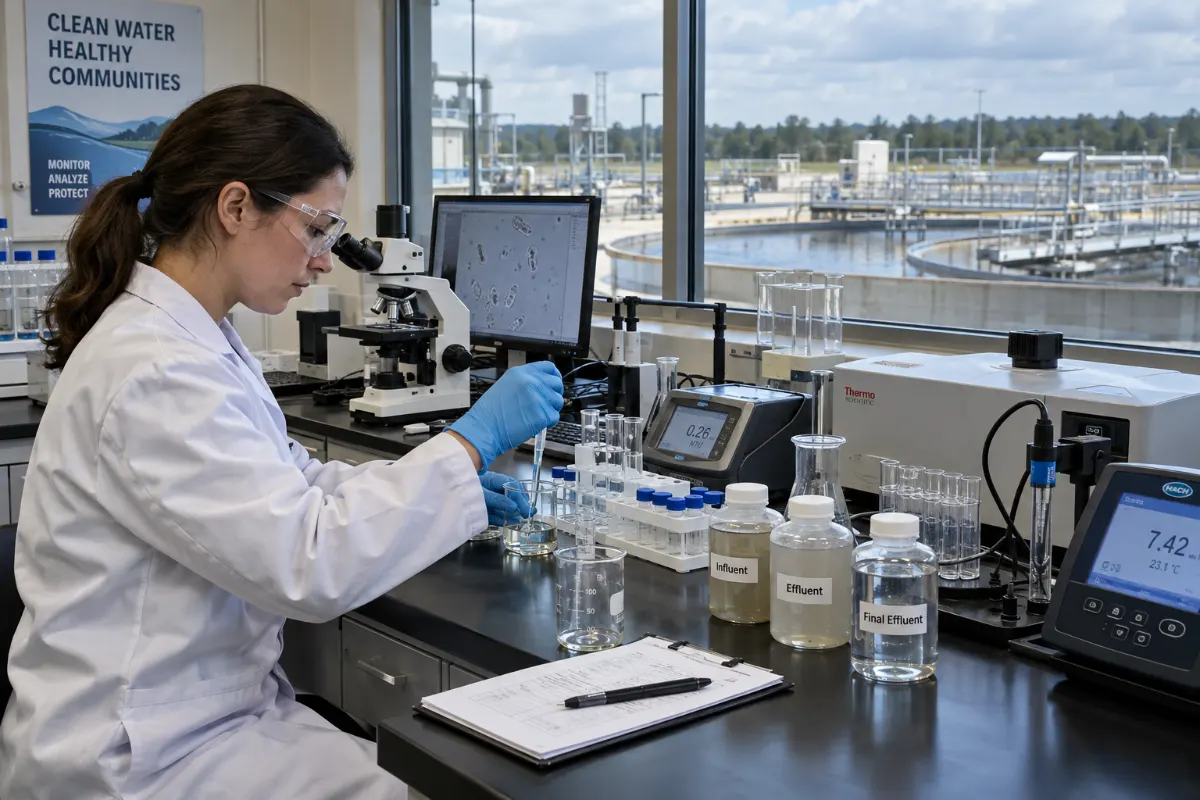
Capital cost for an MVR system is higher than a simple multi-effect train of the same capacity. That is a fact, and it is why the payback argument has to be made on operating cost.
The dominant operating cost is electricity for the compressor. Secondary costs are antiscalant, cleaning chemicals, maintenance labor, and periodic compressor overhaul. If you are comparing options, build the comparison on these five items over a ten-year horizon, not on first cost alone.
Factors that push operating cost up:
- High boiling point elevation from a very concentrated brine
- Poor compressor efficiency or an oversized compression ratio
- Frequent cleaning due to inadequate pre-treatment
- Excessive blowdown because the concentration target is set too low
Factors that push it down:
- Membrane pre-concentration ahead of the evaporator
- Heat integration with other plant streams
- Correct antiscalant program that extends cleaning intervals
- Running close to the design concentration without exceeding solubility limits
I usually recommend that clients model the cost at three concentration targets rather than one. The difference between a 20% and a 28% brine can change the compressor duty enough to shift the whole project economics. If you want a structured way to think about the cost drivers, the MVR evaporator cost breakdown lays out the main line items.
Zero Liquid Discharge and the Brine Endpoint
Many battery projects are driven by a zero liquid discharge requirement, either from a discharge permit or from a corporate water stewardship target. MVR is usually the concentration step in a ZLD train, not the whole train.
A typical ZLD sequence looks like this:
- Pre-treatment and softening
- Membrane concentration (RO or DTRO)
- MVR evaporation to near-saturation
- Crystallization or spray drying of the residual brine
- Solids handling and disposal or recovery
The evaporator’s job is to shrink the volume that reaches the crystallizer. The smaller that volume, the smaller and cheaper the crystallizer. This is why MVR concentration targets matter so much in a ZLD context, and why the ZLD system design approach should be planned as a whole rather than as separate packages.
Operating Experience: What a Typical Project Looks Like
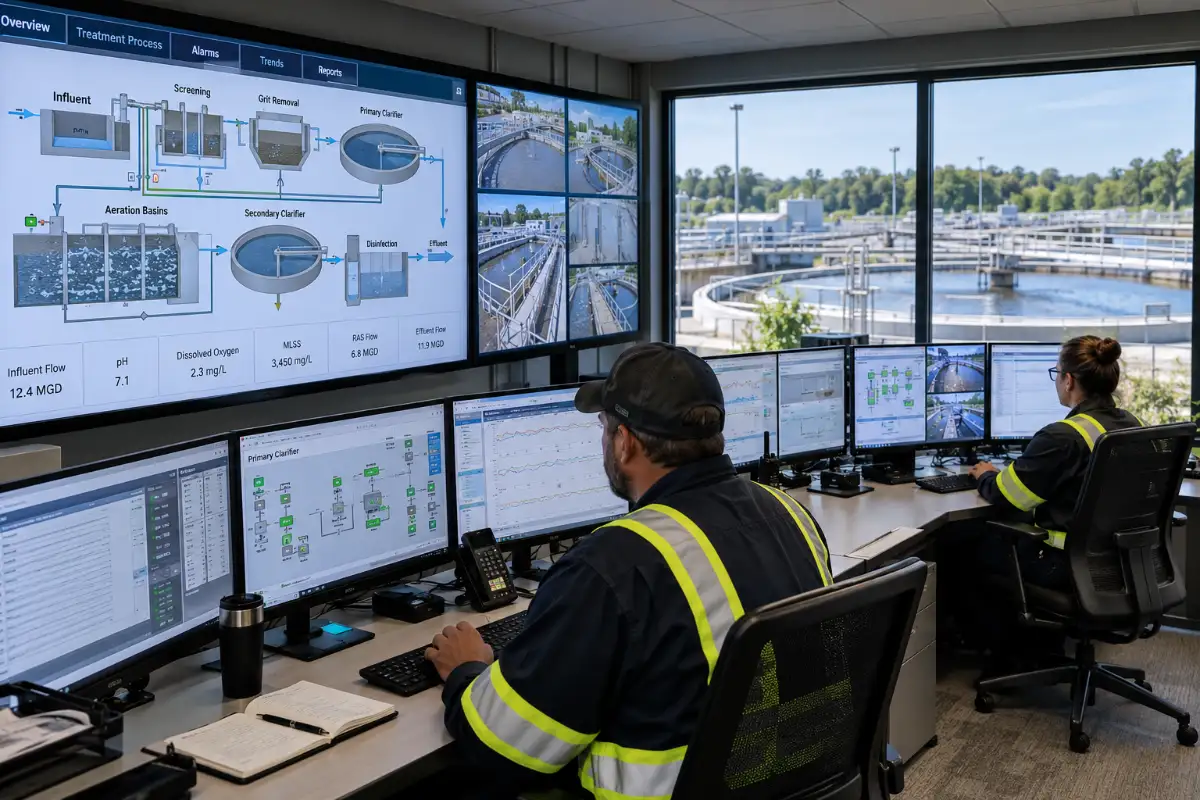
I will describe a composite scenario rather than a specific plant, because the details matter more than the name.
A cathode materials facility generates a rinse stream at roughly 5% TDS with elevated sulfate, some calcium, and trace metals. The original plan was direct evaporation. After reviewing the water analysis, the design was changed to include softening, a membrane pre-concentration stage, and then MVR for the final step. The evaporator feed arrived at roughly 12% TDS instead of 5%, which cut the evaporator duty substantially and reduced the crystallizer size.
Operating issues that came up in the first year were predictable:
- Antiscalant dosing was initially too low, and the heat exchanger needed cleaning sooner than planned. The dose was increased and the interval stabilized.
- Compressor vibration monitoring caught a bearing issue before it became a failure. This is why vibration and temperature monitoring on the compressor is not optional.
- Condensate quality drifted when solvent loading in the feed increased. The condensate polishing step was adjusted to handle it.
None of these were design flaws. They were the normal commissioning and early-operation adjustments that any real plant goes through. The projects that go badly are the ones where nobody planned for them.
Maintenance and Common Failure Modes
If you operate an MVR unit on battery wastewater, these are the things I would watch:
| Failure Mode | Typical Cause | Mitigation |
|---|---|---|
| Heat exchanger scaling | Inadequate softening, low antiscalant dose | Verify pre-treatment, adjust dosing, scheduled cleaning |
| Compressor vibration | Bearing wear, imbalance, fouling | Continuous vibration monitoring, planned overhaul |
| Loss of capacity | Scaling, entrainment, or compressor wear | Trend data, inspect heat exchanger, check compressor |
| Poor condensate quality | Volatile organics carryover, foaming | Antifoam, condensate polishing, feed control |
| Corrosion in wetted parts | Wrong alloy for chloride/fluoride level | Verify metallurgy against actual water analysis |
The single most useful habit is trend monitoring. Capacity, compressor power, boiling temperature, and condensate conductivity, tracked over time, will tell you about a developing problem long before it becomes a shutdown. I would rather see a well-instrumented unit with a modest design than a high-performance unit with no data.
For sludge and solids handling on the pre-treatment side, the sludge dewatering screw press guide covers the equipment that keeps solids out of the evaporator feed.
Selection Logic: How I Decide
When I sit down with a new battery wastewater project, I work through a fixed sequence:
- Characterize the water. Full analysis including TDS, hardness, silica, fluoride, organics, and pH. Not a partial panel.
- Define the endpoint. What concentration do you actually need? Discharge limit, ZLD, or reuse?
- Choose the pre-treatment. This is driven by the scaling chemistry, not by the evaporator vendor’s preference.
- Decide on membrane pre-concentration. If the feed is above a few percent TDS and membranes can handle it, pre-concentrate.
- Size the evaporator and compressor. Based on boiling point elevation at the target concentration, not at the feed concentration.
- Select materials. Based on the worst-case chloride and fluoride levels, not the average.
- Plan the brine endpoint. Crystallizer, dryer, or off-site disposal. This affects the evaporator target.
- Build the cost model. Ten-year horizon, including maintenance and overhaul.
If you work through those eight steps honestly, the technology choice usually makes itself. The problems come when a step is skipped or when the endpoint is assumed rather than defined.
Where Projects Go Wrong
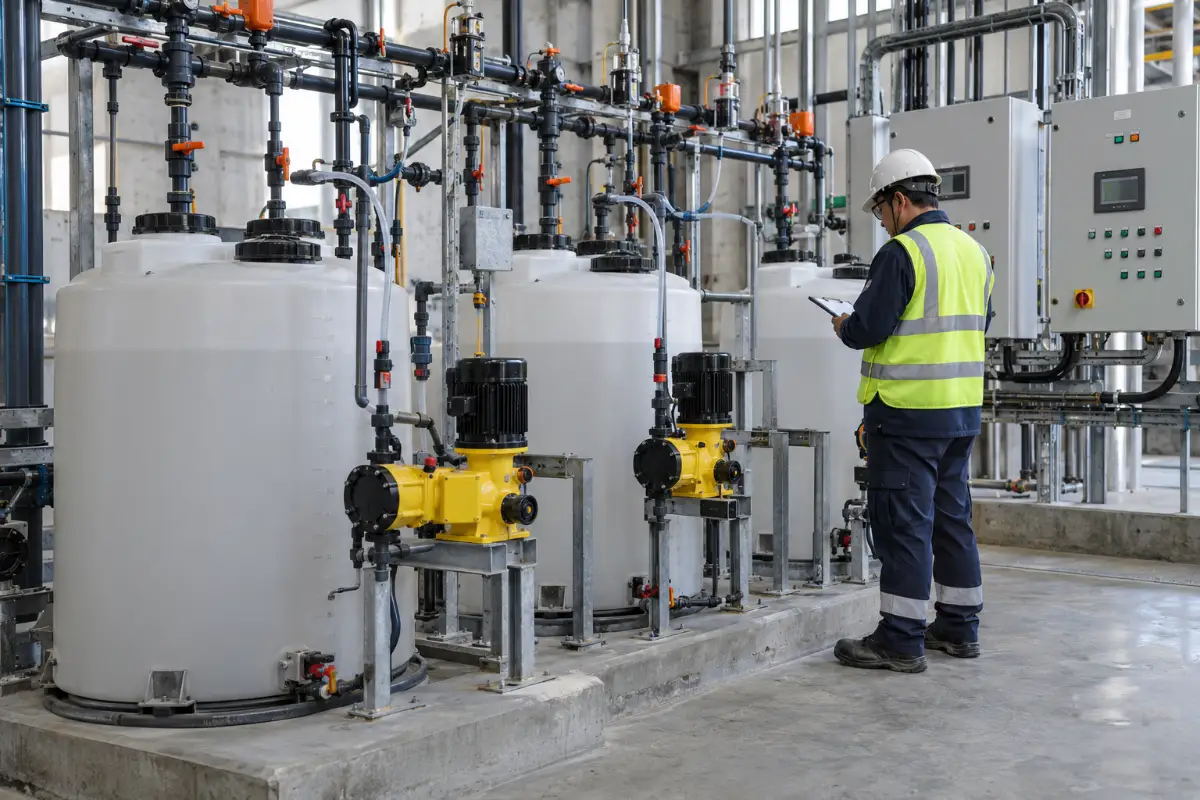
A few patterns I have seen more than once:
- Designing on average water quality. Battery plants have variable streams. The evaporator must handle the worst realistic case, not the average.
- Underestimating boiling point elevation. This shows up as a compressor that cannot reach the target concentration, and it is expensive to fix after installation.
- Splitting the pre-treatment and evaporator scope. Interface problems become the plant’s problem.
- Ignoring solvent behavior. Volatile organics in the feed change the condensate treatment requirement and can affect compressor operation.
- No trend monitoring. Without data, every problem is discovered late.
None of these are exotic. They are the ordinary mistakes that come from treating an evaporator as a black box instead of as a system that starts at the feed tank and ends at the brine discharge.
Frequently Asked Questions
What makes MVR better than a multi-effect evaporator for battery wastewater?
MVR recycles its own vapor, so it does not need an external steam supply and uses far less thermal energy. A multi-effect evaporator needs steam and more stages to reach the same efficiency. If your site has cheap surplus steam, multi-effect can be competitive on capital cost, but on operating cost MVR usually wins when steam is not free.
How much does an MVR evaporator cost to run?
Compressor electricity dominates. Typical specific consumption falls in the range of roughly 15 to 40 kWh per cubic meter of distillate, but the actual number depends on boiling point elevation, concentration target, and compressor efficiency. Add antiscalant, cleaning chemicals, and periodic compressor overhaul to get the full operating picture. Always model it against your own water analysis.
How often does the heat exchanger need cleaning?
With correct pre-treatment and antiscalant dosing, cleaning intervals of several months are realistic. Without proper softening, it can drop to weeks. The cleaning interval is a direct readout of how well the pre-treatment is working, so treat a shortening interval as a pre-treatment problem first.
Can MVR handle high fluoride and sulfate streams?
Yes, but only with the right pre-treatment and materials. Fluoride and sulfate both scale, and fluoride is aggressive toward some alloys. Remove what you can chemically, select wetted materials based on the worst-case concentrations, and dose antiscalant designed for that chemistry. Do not use a generic antiscalant package.
What concentration can an MVR evaporator reach?
It can go up to saturation, which for many battery streams means 20% to 30% TDS or higher. The practical limit is set by boiling point elevation, scaling risk, and the capabilities of the downstream crystallizer. Pushing to the maximum is not always the best choice because compressor duty rises sharply near saturation.
Should I use membranes before the evaporator?
In most new battery projects, yes. Membranes handle the bulk volume reduction at low energy cost, and the evaporator handles the final concentration step. This split usually reduces total energy use and shrinks the crystallizer. The exception is when the feed fouls membranes badly enough that pre-treatment cost outweighs the savings.
What is the biggest cause of MVR problems in this service?
Pre-treatment. In my experience, most operating problems trace back to scaling, oil carryover, or solids that should have been removed upstream. The evaporator itself is reliable when it is fed water it was designed for.
How long does an MVR system last?
With proper materials, pre-treatment, and maintenance, a well-built unit can run for many years, with the compressor receiving periodic overhauls. The heat exchanger and compressor are the components that set the maintenance schedule. Lifecycle cost modeling should assume compressor overhaul at intervals recommended by the manufacturer for your duty.
Final Thoughts
An MVR evaporator is the right tool for lithium battery wastewater when the goal is high concentration with low thermal energy input. It is not a plug-and-play box. The performance of the system is decided by the water analysis, the pre-treatment design, the concentration target, and the materials selection, long before the compressor is ordered.
If you get those four things right, the evaporator will do its job quietly for years. If you get them wrong, no amount of clever control logic will save the project. That is the whole engineering story, and it is the same on every battery wastewater project I have worked on.