

If you’re specifying a DTRO membrane module for a landfill leachate, plating, or chemical wastewater project, the short answer is this: DTRO (disc tube reverse osmosis) modules are sold by a small group of specialist manufacturers, and the specification that actually matters is not the brand name — it’s the disc stack geometry, hydraulic path, membrane chemistry, and how the supplier supports you after commissioning. I’ve specified and commissioned these systems for over a decade, and I’ve watched projects succeed or fail on details that never appear in a datasheet headline. This article walks through what DTRO modules are, how to read a specification sheet, how to compare suppliers, and where the real engineering trade-offs sit.
What a DTRO Membrane Module Actually Is
DTRO stands for Disc Tube Reverse Osmosis. Instead of rolling flat sheet membrane into a spiral wound element, the membrane is cut into discs, stacked on a central rod, and separated by hydraulic discs and spacer rings. The whole stack sits inside a pressure tube.

The reason this geometry exists is simple: high-fouling, high-salinity wastewater destroys spiral wound elements. Landfill leachate, for example, carries high COD, hardness, silica, and dissolved solids. A spiral element fouls in weeks. A disc tube stack can be opened, the discs individually cleaned or replaced, and the stack reassembled — often in a single shift.
Three module characteristics define performance:
- Disc stack diameter and count. Determines membrane area and permeate flow per module. Common industrial sizes range from roughly 4 to 9 square meters of active area per stack, project-dependent.
- Hydraulic disc design. Controls crossflow velocity and turbulence at the membrane surface. This is the single biggest lever on fouling resistance.
- Membrane chemistry. Typically a thin-film composite polyamide with a proprietary coating. The coating is where suppliers differentiate, and it is usually not disclosed.
If you’re comparing DTRO against conventional high-pressure RO for the same duty, the geometry is the deciding factor, not the chemistry. I cover the broader selection logic in the DTRO membrane systems overview for anyone who wants the system-level picture before drilling into module specs.
Reading a DTRO Module Specification Sheet
Most spec sheets look similar. The differences hide in the footnotes. Here is what I check, in order.
1. Design Pressure and Burst Margin
DTRO modules are typically rated for 75 to 90 bar design pressure, with some suppliers offering 120 bar variants for very high salinity. The number that matters is the test pressure and the cycle-test history, not the marketing maximum. Ask for the hydrostatic test protocol and how many pressure cycles the stack design has been validated through.
2. Active Membrane Area vs. Footprint
A module with more membrane area is not automatically better. Higher area per stack means lower crossflow velocity at a given feed flow, which accelerates fouling. I would rather run more modules at moderate area than fewer modules at maximum area. On leachate duty, typical design crossflow is in the range of 0.1 to 0.3 m/s at the membrane surface — confirm this with the supplier for your feed chemistry.
3. Recovery Per Stage
Single-stage DTRO recovery on leachate usually lands between 70% and 80%, project-dependent. Two-stage configurations push overall recovery to 85–90%. The spec sheet may quote a single-stage number that looks impressive but assumes clean water feed. Ask for the recovery curve against your actual conductivity and COD.
4. Membrane Element Life Expectancy
Suppliers quote 2 to 5 years. In my experience, 2 to 3 years is realistic on aggressive leachate, and 4 to 5 years is achievable on cleaner industrial streams with good pretreatment. Treat any quote above 5 years as a marketing claim until you see reference data.
5. Cleaning and Serviceability
Can the stack be opened on site with standard tools? How long does a full disc replacement take? What is the torque specification for reassembly, and does the supplier provide a torque wrench? These questions separate a module you can live with from one that requires a factory return.
DTRO Module Specification Comparison
The table below reflects typical ranges I see across the market. These are indicative ranges, not quotes for any specific product. Your actual numbers will depend on feed chemistry, temperature, and target recovery.
| Parameter | Standard Duty | High-Fouling Duty | High-Salinity Duty |
|---|---|---|---|
| Design pressure | 75–90 bar | 75–90 bar | 90–120 bar |
| Active area per stack | 4–9 m² | 4–7 m² | 5–9 m² |
| Typical single-stage recovery | 75–80% | 65–75% | 60–70% |
| Crossflow velocity | 0.2–0.3 m/s | 0.1–0.2 m/s | 0.15–0.25 m/s |
| Membrane chemistry | TFC polyamide | Coated TFC | Coated TFC, high rejection |
| Expected element life | 3–5 years | 2–3 years | 2–4 years |
| Cleaning frequency | Monthly | Weekly to biweekly | Biweekly |
Notice that higher salinity pushes you toward higher pressure and lower recovery. That is not a supplier limitation — it is osmotic pressure physics. Anyone promising 85% recovery at 120,000 mg/L TDS on a single stage is either misreading the application or planning to sell you a second stage later.
How to Evaluate DTRO Module Suppliers
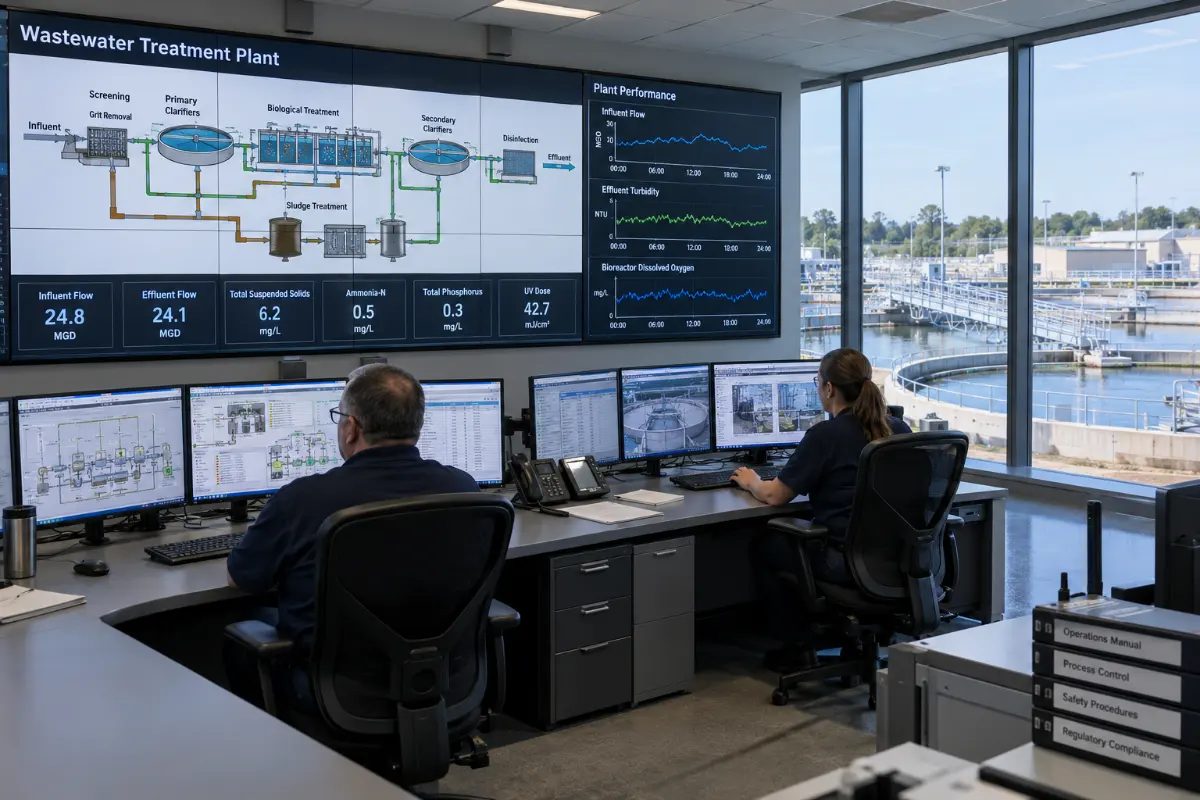
There are perhaps a dozen credible DTRO module suppliers globally, plus a longer tail of assemblers who buy stacks and rebrand systems. Both can work, but the evaluation criteria differ.
Manufacturers vs. Integrators
A true manufacturer controls membrane casting, disc cutting, and stack assembly. An integrator buys stacks and builds the skid, controls, and pretreatment around them. Integrators often deliver better system-level engineering because that is their entire focus. Manufacturers sometimes deliver better module consistency. Neither is automatically better — but you need to know which one you are buying from, because it determines who you call when a stack fails.
Questions That Reveal Supplier Quality
- Can you provide the disc stack assembly drawing with tolerances?
- What is the membrane coating chemistry, and how does it perform against surfactants and solvents?
- How many modules of this exact model are in operation on leachate or similar duty?
- What is your spare disc lead time, and do you stock them regionally?
- Will you provide a fouling projection based on our feed analysis, or only a generic recovery curve?
- What does your commissioning support include — remote, on-site, or both?
- Can we visit a running reference site with comparable feed chemistry?
A supplier who answers all seven with specifics is worth a pilot. A supplier who deflects questions 2, 5, and 7 is telling you something.
Where Suppliers Actually Differentiate
In my experience, the differences that matter after year one are:
- Spare parts availability. Discs, O-rings, and central rods. If these ship from overseas with a 12-week lead time, your uptime suffers.
- Cleaning chemical compatibility. Some coatings tolerate aggressive alkaline cleaning; others degrade. This directly drives cleaning frequency and element life.
- Documentation quality. P&ID accuracy, torque specs, and troubleshooting guides. Poor documentation costs you more than a slightly higher module price.
- Warranty terms. A warranty that excludes fouling-related failure is not a warranty on this application.
System Integration Around the Module
The module is one component. The system determines whether it survives.
Pretreatment
DTRO tolerates more fouling than spiral wound RO, but it is not a pretreatment substitute. On leachate, I typically see the following upstream of the DTRO skid:
- Coagulation and sedimentation or dissolved air flotation for suspended solids
- Sand or multimedia filtration
- Cartridge filtration at 5–10 microns
- Antiscalant dosing tuned to the specific scaling ions in the feed
Skip any of these and you will be cleaning stacks weekly instead of monthly. The breakdown of leachate chemistry is worth reviewing if your feed is landfill-derived, because the ion profile drives your antiscalant selection.
Pumping and Energy
High-pressure pumps for DTRO duty consume the bulk of system energy. On a 100 m³/day leachate system at 80 bar, expect roughly 8 to 14 kWh per cubic meter of permeate, project-dependent. Energy recovery devices can cut that by 20–30% on larger systems, but the payback is usually not there below about 200 m³/day.
Concentrate Handling
DTRO produces a concentrate stream that is typically 15–30% of feed volume, with elevated salinity and organics. You have three options:
- Return to the source (landfill, evaporation pond) if permitted
- Further concentrate with an evaporator
- Haul off site for disposal
For zero liquid discharge projects, the DTRO concentrate feeds an evaporator or crystallizer. I usually recommend evaluating a mechanical vapor compression evaporator for the downstream step, because the energy per cubic meter is lower than multi-effect at small to mid scale. The full ZLD picture is covered in the zero liquid discharge systems guide.
Operating and Maintenance Reality
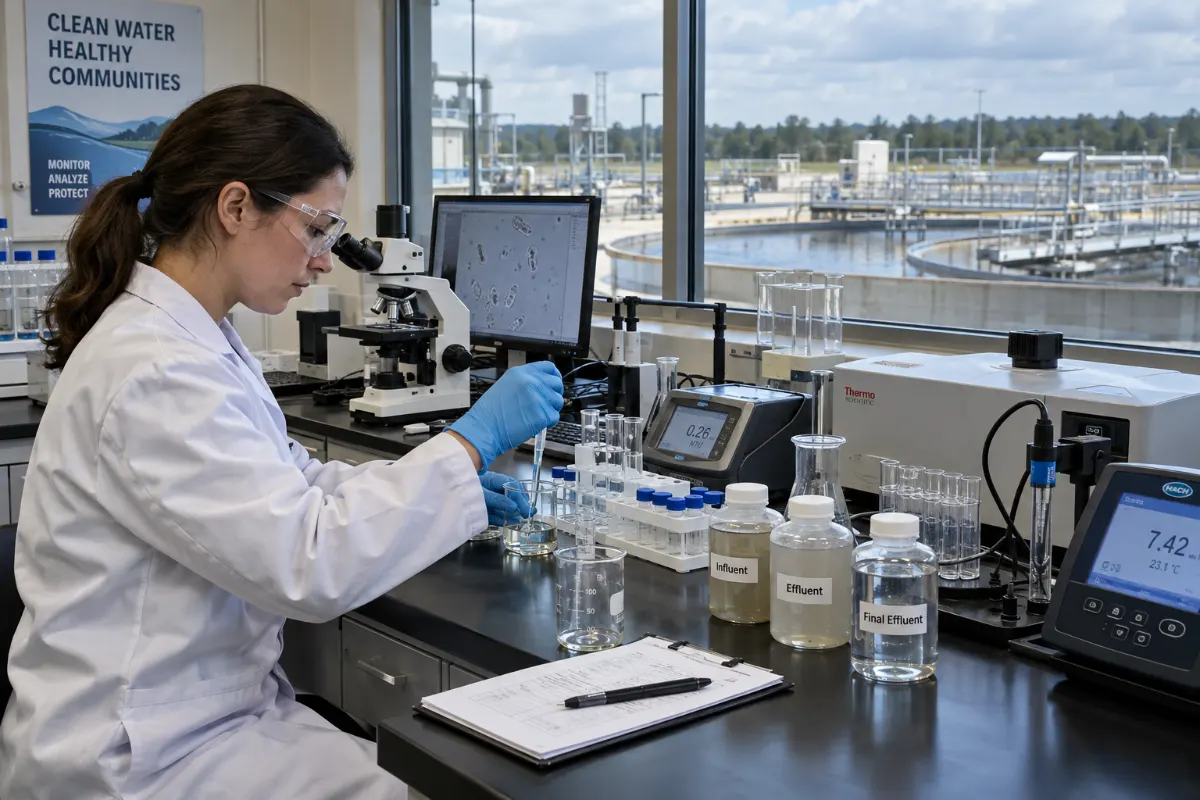
Here is what the first two years actually look like on a leachate DTRO system, based on projects I have been involved with.
Typical Maintenance Schedule
| Task | Frequency | Duration |
|---|---|---|
| Cartridge filter change | 1–4 weeks | 1–2 hours |
| Flush cycle (automated) | Every 8–24 hours | 10–20 minutes |
| Chemical cleaning (CIP) | 2–6 weeks | 4–8 hours |
| Stack inspection | Quarterly | 1 day |
| Disc replacement (partial) | Annually, project-dependent | 1–2 days |
| Full stack rebuild | 2–4 years | 3–5 days |
Common Failure Modes
- Scaling on the last discs. Usually an antiscalant dosing or recovery setpoint problem. Fix the chemistry before blaming the module.
- O-ring extrusion. Caused by pressure spikes during startup. Soft-start sequences and proper valve sequencing prevent this.
- Permeate conductivity creep. Gradual loss of rejection indicates coating degradation or mechanical damage. Track it weekly.
- Concentrate-side fouling. Often organic. Higher cleaning frequency with an alkaline detergent recovers it.
One thing I have learned: log permeate conductivity, feed pressure, and normalized flux daily. The trend tells you about a developing problem two to three weeks before the system alarms. Most operators who struggle with DTRO are not watching trends — they are reacting to alarms.
Cost Structure and Lifecycle Economics
DTRO is not cheap. But the comparison that matters is against alternatives, not against conventional RO on clean water.
Typical Cost Drivers
- Module cost: Modules are a significant fraction of capital, and replacement discs are a recurring cost.
- Pretreatment: Often underestimated. Budget 20–30% of total capital for upstream treatment.
- High-pressure pumps and energy recovery: The largest single energy consumer.
- Chemical cleaning: Recurring opex that scales with fouling severity.
- Concentrate disposal: Frequently the largest opex line on leachate projects.
Lifecycle Comparison
For a mid-sized leachate application, DTRO is usually competitive against evaporation-only or hauling when disposal costs are high. Against conventional RO, DTRO wins on uptime and cleaning frequency but loses on capital. The break-even depends almost entirely on feed fouling potential and disposal cost. Run the numbers with your actual disposal rate — I have seen projects where hauling was cheaper than any on-site treatment, and I have seen the opposite.
From a design review I sat in on: “The cheapest module is the one that runs for two years without being opened.” That is not always the lowest-priced module.
Engineering Recommendations
After enough projects, my advice boils down to a short list.
- Pilot before you commit. Send a real feed sample to at least two suppliers. Compare fouling rates, not just initial flux.
- Design for one module of redundancy. You will need it during cleaning cycles.
- Invest in pretreatment. It protects the most expensive part of the system.
- Standardize on one module model across your site if you operate multiple trains. Spares and training get simpler.
- Plan the concentrate from day one. It is the constraint that kills projects late in the schedule.
- Get the documentation before you sign. If the supplier cannot provide assembly drawings and torque specs during the sales phase, they will not provide them during a crisis.
If you want to walk through a specific application — leachate, plating rinse water, or chemical process wastewater — the fastest path is a short technical conversation with the numbers in front of you. You can reach the engineering team here and we will review your feed analysis and target recovery.
Frequently Asked Questions
How do I choose between DTRO and conventional spiral wound RO?
Start with feed fouling potential. If your feed has high COD, hardness, silica, or suspended solids that survive pretreatment, DTRO will run longer between cleanings and cost less to operate over its life. If your feed is relatively clean — RO permeate polishing, low-fouling industrial water — spiral wound is cheaper and simpler. The crossover is usually around the point where you would be cleaning spiral elements more than once a month.
What is the realistic recovery I can expect from a single-stage DTRO system?
On landfill leachate, plan for 70–80% single-stage recovery. On cleaner industrial streams, 80–85% is achievable. On very high salinity feeds above 80,000 mg/L TDS, expect 60–70%. Anything above these ranges requires either a second stage or an evaporator downstream. Treat any supplier quote above these ranges as an invitation to ask for reference data on comparable feed.
How often will I need to clean the DTRO stacks?
On leachate with good pretreatment, every 2 to 4 weeks. Without adequate pretreatment, weekly. On cleaner industrial feeds, every 6 to 8 weeks. The cleaning interval is your best early indicator of whether pretreatment is working. If it shortens over time, investigate the feed chemistry and antiscalant dosing before assuming the membranes are failing.
What causes premature membrane disc failure?
The three most common causes I see are pressure spikes during startup (extruded O-rings and cracked discs), incompatible cleaning chemicals (coating degradation), and scaling that is allowed to develop to the point where mechanical cleaning damages the surface. All three are preventable with proper operating procedures and daily trend monitoring.
Can I mix DTRO modules from different suppliers in one system?
Technically sometimes, practically rarely worth it. Disc geometry, O-ring dimensions, and hydraulic disc patterns vary between suppliers. Mixing them complicates spares, cleaning procedures, and troubleshooting. If you need to change suppliers, plan to replace the full stack rather than interleave modules.
What pretreatment is mandatory before a DTRO skid?
At minimum: suspended solids removal to below 5 microns, hardness and scaling ion control via antiscalant, and pH adjustment if the feed is outside the membrane’s tolerance range. On leachate, add biological or chemical oxidation ahead of the DTRO if COD is very high, because organic fouling is the dominant cleaning driver on that application.
How much does a DTRO system cost to operate?
Energy is typically 8–14 kWh per cubic meter of permeate, project-dependent. Add chemical cleaning costs, cartridge filter replacements, and disc replacement amortized over element life. On leachate, concentrate disposal often exceeds all of these combined. Get a disposal cost quote before you size the system — it frequently changes the entire economic picture.
What lead time should I plan for spare discs and O-rings?
From a regional stock, days. From an overseas manufacturer, 6–12 weeks. This is a strong argument for choosing a supplier with regional inventory, or for holding a full spare stack on site. The cost of a spare stack is small compared to the cost of a two-month outage.