

A forced-circulation evaporator is a heat-driven concentrator that keeps liquid moving through the tubes at high velocity — typically 1.5 to 3 m/s — so crystals and suspended solids stay in suspension instead of settling on the heat transfer surface. If you are comparing evaporator types for a fouling, scaling, or crystallizing wastewater stream, forced circulation is usually the right answer when falling-film or natural-circulation designs foul too quickly. The trade-off is higher pump power and a larger recirculation loop. This guide walks through how the technology works, where it fits, what drives cost, and what to check before you sign a purchase order.
How a Forced-Circulation Evaporator Actually Works
In a forced-circulation (FC) evaporator, a pump continuously recirculates the boiling liquid through a shell-and-tube heat exchanger. Unlike a falling-film unit, where liquid flows down as a thin film under gravity, the FC design pushes the entire volume through the tubes under pressure. The liquid enters the exchanger below its boiling point, absorbs heat, and then flashes as it re-enters the vapor-liquid separator at lower pressure.
The key mechanical feature is the recirculation ratio — the mass of liquid pumped per unit mass of vapor produced. In most industrial FC evaporators this ratio runs between 20:1 and 50:1, sometimes higher for heavily crystallizing streams. That high flow rate is what scrubs the tube walls and keeps scale from building up. It is also why the circulation pump is often the single largest electrical load in the system.

Three things distinguish a well-designed FC unit from a mediocre one:
- Tube velocity control. Too low and you get deposition; too high and you erode the tubes and waste energy. The sweet spot depends on solids loading and crystal hardness.
- Separator geometry. The vapor-liquid separator must handle entrainment without excessive height. Poor design sends liquid droplets into the compressor or condenser, which is where most operating problems start.
- Heat exchanger surface area. Oversizing costs money up front; undersizing means you cannot reach your target concentration. The right number comes from a proper heat and mass balance, not a rule of thumb.
Where Forced Circulation Fits — and Where It Does Not
I have specified FC evaporators on streams that would destroy a falling-film unit within weeks. The pattern is consistent: high suspended solids, scaling tendency, or a requirement to crystallize salts. Typical candidates include:
- Electroplating rinse water and spent plating baths with heavy metal salts
- Landfill leachate concentrates after membrane treatment
- Pharmaceutical and chemical process streams with high organic loading
- Brine from reverse osmosis or DTRO membrane systems approaching saturation
- Zero liquid discharge (ZLD) trains where the final step must produce a solid salt
Where FC does not fit well: clean, low-solids streams where energy efficiency matters more than fouling resistance. For those, a falling-film multi-effect evaporator or an MVC evaporator will usually beat FC on specific energy consumption. The FC design trades efficiency for uptime, and that trade only pays off when fouling is a real constraint.
Comparing Evaporator Types: A Practical Selection Table
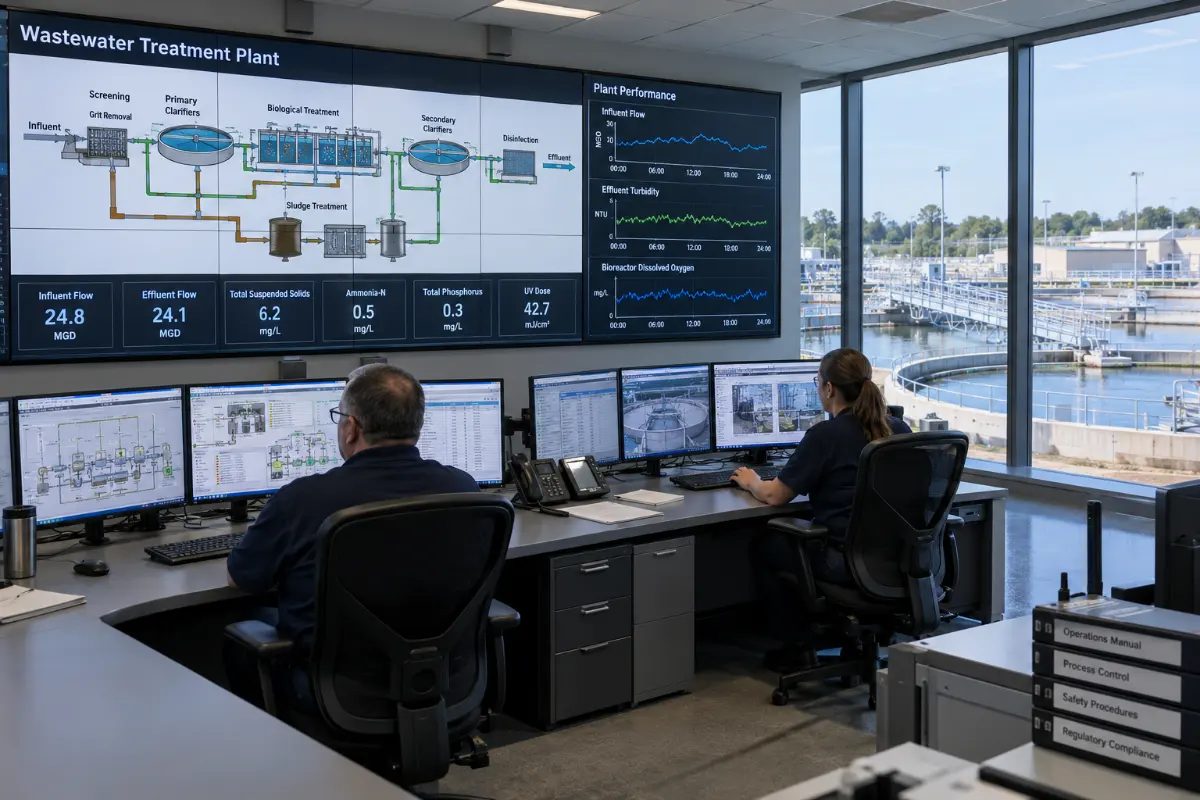
The table below reflects typical design ranges I have seen across industrial projects. Actual values depend on your stream chemistry, concentration targets, and site utilities. Treat these as indicative, not as specifications.
| Parameter | Forced Circulation | Falling Film | Multi-Effect (MED) | MVC / MVR |
|---|---|---|---|---|
| Solids tolerance | High (up to 20%+ suspended) | Low (<1%) | Low to moderate | Low to moderate |
| Scaling resistance | Excellent | Poor | Moderate | Moderate |
| Specific energy (kWh/m³) | Higher (pump + heat) | Moderate | Moderate to high (steam) | Low (electrical) |
| Typical concentration factor | 5x to 20x+ | 3x to 10x | 5x to 15x | 3x to 10x |
| Capital cost | Moderate to high | Moderate | High | High |
| Best for | Crystallizing, fouling streams | Clean, heat-sensitive liquids | Large volume, steam available | Power available, energy savings priority |
If your stream sits between categories — say, moderate solids with a crystallization endpoint — the decision usually comes down to operating cost. A forced-circulation crystallizer running on mechanical vapor recompression can cut steam demand to nearly zero, but the compressor adds electrical load and maintenance complexity. I have written more about that trade-off in the context of MVR technology.
Key Design Parameters That Determine Performance
Heat Exchanger Configuration
Most FC evaporators use a vertical shell-and-tube exchanger with the tubes on the process side. Tube diameter typically ranges from 25 mm to 50 mm. Smaller tubes give more surface area per unit volume but plug more easily. For crystallizing service, I lean toward the larger end and specify a minimum tube diameter of 38 mm unless the flow regime clearly supports smaller.
Tube material matters as much as size. Duplex stainless steel handles chloride-bearing streams reasonably well. Titanium or high-alloy grades are sometimes needed for aggressive chemistries. The heat exchanger design should be based on a fouling factor that reflects your actual stream, not a generic default.
Circulation Pump Selection
The pump must deliver the design recirculation rate at the system head, which includes the heat exchanger pressure drop, separator elevation, and piping losses. Axial-flow or mixed-flow pumps are common for high-flow, low-head service. Centrifugal pumps work for smaller units. Variable frequency drives are standard on modern installations and pay for themselves when the plant runs at partial load.
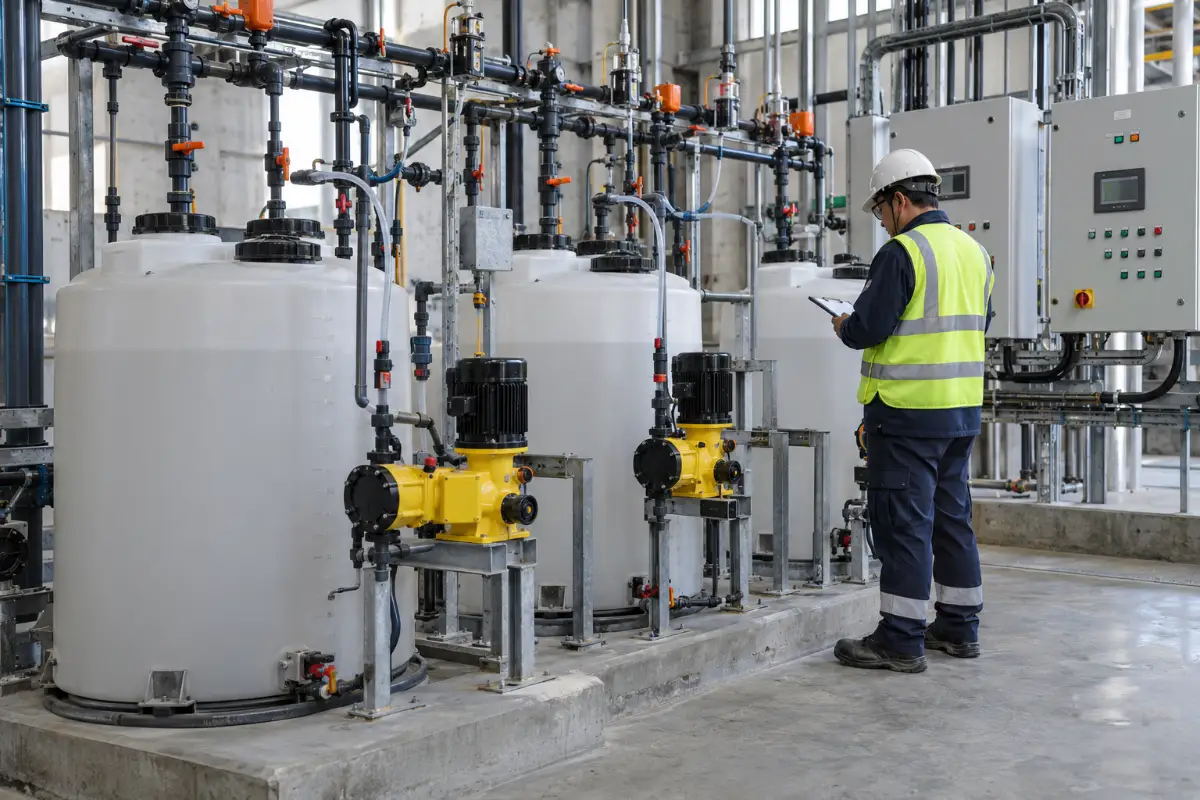
One thing buyers often miss: the pump is a wear item in crystallizing service. Impeller erosion and seal failure are the two most common maintenance events. Specify a pump with a robust seal arrangement and keep a spare rotor on the shelf.
Vapor-Liquid Separator
The separator must disengage vapor from liquid without carrying droplets into the downstream compressor, condenser, or vacuum system. Entrainment causes fouling in condensers, corrosion in compressors, and product loss. A well-designed separator uses gravity settling plus a mist eliminator. Residence time and vapor velocity are the two variables that matter most.
Energy Consumption and Operating Cost
Forced circulation is not the most energy-efficient evaporator on the market, and I tell clients that up front. The recirculation pump consumes power continuously, and the heat exchanger operates at a lower overall heat transfer coefficient than a falling-film unit because the liquid is not a thin film. But efficiency comparisons only make sense when both systems stay online.
Two configurations dominate industrial FC installations:
- Steam-heated FC. Simple, reliable, and familiar to most plant operators. Steam consumption depends on the number of effects. A single-effect unit uses roughly 1.1 to 1.3 kg of steam per kg of water evaporated. Adding effects cuts that proportionally, but each effect adds capital cost and complexity.
- FC with mechanical vapor recompression (MVR). The compressor recompresses the vapor and returns it to the heat exchanger, so external steam demand drops to near zero after startup. Electrical consumption typically falls in the range of 15 to 40 kWh per m³ of water evaporated, depending on compressor efficiency and temperature lift. This is where the operating cost advantage shows up over time.
Which one wins depends on your utility prices and your annual operating hours. In regions with cheap steam and expensive electricity, steam-heated FC often wins. Where electricity is competitive and steam is scarce, MVR is usually the better lifecycle choice. A proper cost analysis should model both scenarios over a 10-year horizon.
Maintenance and Common Failure Modes
After years of commissioning and troubleshooting these systems, I can say most failures trace back to a handful of root causes. None of them are exotic.
Scaling and Fouling
Even in a forced-circulation design, scale can form if the concentration in the boundary layer exceeds saturation. The high velocity reduces the rate, but it does not eliminate it. The fix is usually a combination of:
- Operating at a lower concentration factor
- Adding antiscalant chemistry appropriate to the stream
- Scheduling periodic clean-in-place (CIP) with the right solvent
- Reviewing the heat flux — excessive flux accelerates deposition
Pump and Seal Failures
Circulation pumps in crystallizing service see abrasive solids every day. Impeller wear, seal leakage, and bearing failure are predictable. The best mitigation is preventive maintenance on a schedule, not on failure. Track vibration and seal flush rates; both give early warning.
Entrainment and Carryover
If you see rising condensate conductivity or falling product quality, entrainment is the likely culprit. Check the separator internals, mist eliminator condition, and liquid level control. A level that runs too high is a common cause.
Compressor Issues (MVR Units)
On MVR-driven FC systems, the compressor is the heart of the machine. Fouling on the impeller, bearing wear, and seal degradation all reduce efficiency and eventually force a shutdown. Inlet vapor quality matters enormously — any liquid carryover damages the compressor quickly. This is why separator design deserves more attention than it usually gets during the buying process.
What to Ask Before You Buy
I have sat on both sides of the table — specifying equipment and delivering it. The buyers who end up satisfied are the ones who ask hard questions early. Here is the list I would bring to any vendor meeting.
- What is the guaranteed evaporation rate at my design concentration? Get this in writing with a performance test protocol.
- What is the recirculation ratio, and how was it selected? A number without justification is a red flag.
- What is the expected CIP frequency, and what cleaning chemistry do you recommend? If the vendor cannot answer, they have not thought about your stream.
- What are the utility requirements — steam, electricity, cooling water, compressed air? These drive your operating budget.
- What is the turndown capability? If your production varies, you need to know the minimum stable flow.
- What spare parts should I stock? Pumps, seals, and instrumentation are the usual answers.
- What is the warranty, and what does it cover? Performance guarantees matter more than equipment warranties in this business.
If you are working through a ZLD project, the FC evaporator is usually the crystallizer at the end of the train. It has to be sized for the worst-case stream, not the average. I have seen projects fail because the upstream pretreatment was optimized for cost and the evaporator was left to handle whatever came through. The ZLD system design has to be integrated, not assembled from independent pieces.
Integration With Upstream and Downstream Equipment
An FC evaporator rarely stands alone. In most industrial wastewater applications, it sits at the end of a treatment train that includes pretreatment, membrane concentration, and solids handling. How well those pieces fit together determines whether the whole system runs smoothly.
A typical integrated train for high-solids wastewater looks like this:
- Equalization and pH adjustment
- Chemical precipitation or coagulation for heavy metals and suspended solids
- Filtration or clarification to remove bulk solids
- Membrane concentration (RO or high-pressure RO) to reduce volume
- Forced-circulation evaporation for final concentration or crystallization
- Centrifuge or filter press for salt and sludge dewatering
- Condensate polishing for reuse or discharge
Each stage has to be designed with the next one in mind. For example, if the membrane system sends a concentrate with high hardness to the evaporator, the evaporator will scale faster regardless of its circulation design. Pretreatment softening may cost more up front but pays back in evaporator uptime.
For streams with oily or organic content, the picture changes. Oil can foul heat exchanger surfaces and interfere with crystallization. In those cases, upstream oil separation or evaporation of oily wastewater needs to be planned carefully. The evaporator can handle some organics, but not unlimited amounts.
Capital Cost Drivers and Budgeting
Buyers often want a number before they have defined the stream. I understand the pressure, but a realistic budget requires at least these inputs:
- Flow rate and feed concentration
- Target concentration or crystallization endpoint
- Stream chemistry — chlorides, sulfates, hardness, organics, pH
- Available utilities — steam pressure, voltage, cooling water temperature
- Materials of construction
- Automation level and instrumentation scope
- Site conditions — indoor/outdoor, seismic, ambient temperature
With those inputs, a vendor can give you a range. Without them, any number is a guess. As a rough indicator, small skid-mounted FC units handling a few cubic meters per hour start in the low six figures (USD). Larger systems with MVR compressors and crystallizer sections can run into the millions. The compressor alone can be 30 to 50 percent of the equipment cost on an MVR unit.
Operating cost is where the real money is. Electricity for the circulation pump and compressor, steam if used, CIP chemicals, and maintenance labor all add up. A system that costs 20 percent more up front but runs 15 percent cheaper per cubic meter will pay back the difference in a few years. That is the calculation worth doing carefully.
Need help sizing a forced-circulation evaporator for your stream?
Send us your water analysis and flow data. We will come back with a preliminary design basis and an indicative cost range — no obligation.
Frequently Asked Questions
How do I know if I need a forced-circulation evaporator instead of a falling-film unit?
The short answer: if your stream has more than about 1 percent suspended solids, tends to scale, or needs to reach a crystallization endpoint, forced circulation is the safer choice. Falling-film units are more efficient on clean streams but foul quickly when solids or scaling species are present. If you are unsure, ask a vendor to run a fouling test on a sample before you commit to a design.
What is the typical energy consumption of a forced-circulation evaporator?
For a steam-heated single-effect unit, expect roughly 1.1 to 1.3 kg of steam per kg of water evaporated, plus pump power. For an MVR-driven unit, electrical consumption typically falls between 15 and 40 kWh per cubic meter of water evaporated, depending on compressor efficiency and the temperature lift required. These are indicative ranges — your actual numbers will depend on the specific design and operating conditions.
How often will I need to clean the heat exchanger?
That depends entirely on your stream. A well-designed FC unit on a moderately scaling stream might run 2,000 to 4,000 hours between CIP cycles. A heavily scaling stream might need cleaning every few hundred hours. The circulation design reduces the rate of deposition, but it does not eliminate it. Antiscalant chemistry and operating discipline make a big difference.
Can a forced-circulation evaporator achieve zero liquid discharge?
Yes, but it is usually one part of a larger ZLD train. The FC evaporator concentrates the brine to saturation and often serves as the crystallizer. Upstream membrane concentration reduces the volume the evaporator has to handle, which lowers both capital and operating cost. Downstream, you need a way to dewater and dispose of the salt — typically a centrifuge or filter press.
What is the biggest maintenance cost on an FC evaporator?
In my experience, it is the circulation pump and its seals. Crystallizing service is hard on rotating equipment. Compressor maintenance on MVR units is the second-largest cost. Both are manageable with a preventive maintenance program and a modest spare parts inventory. Neglecting them leads to unplanned shutdowns that cost far more than the parts.
How do I evaluate competing vendor proposals?
Look at the design basis first. Does the vendor show a heat and mass balance? Do they specify the recirculation ratio and explain how they selected it? Do they provide a performance guarantee? Then compare utility consumption, CIP frequency estimates, and spare parts recommendations. The lowest capital cost is rarely the lowest total cost. If a proposal is vague on these points, ask for clarification before you compare prices.
Can I retrofit an existing evaporator with forced circulation?
Sometimes. If the existing unit has a shell-and-tube heat exchanger and a separator, adding a circulation pump and modifying the piping may be feasible. But the heat exchanger and separator were likely designed for a different flow regime, so the retrofit may not deliver the expected performance. It is usually better to evaluate the whole system rather than assume a pump addition will solve a fouling problem.
Forced-circulation evaporation is a mature technology, but it is not a commodity. The difference between a system that runs reliably for 20 years and one that struggles from day one comes down to design detail: tube velocity, separator geometry, material selection, and how well the unit integrates with the rest of the treatment train. Get those right, and the technology does exactly what it promises.