

If you are sourcing disk-tube reverse osmosis (DTRO) skids for leachate, high-salinity brine, or zero liquid discharge (ZLD) duty, the practical answer is this: the best DTRO membrane suppliers in China are not one single company — they split into three groups. First, membrane element and disc manufacturers that sell the core hardware. Second, system integrators that build complete DTRO trains around those elements. Third, full-line equipment makers that combine DTRO with evaporators and crystallizers for ZLD projects. The right choice depends on whether you need replacement discs, a complete skid, or a turnkey train tied to an evaporation line. In this article I’ll walk through how I evaluate these suppliers, what actually matters on a specification sheet, and where projects usually go wrong.

Why DTRO Is Chosen in the First Place
Standard spiral-wound RO struggles with two things: high suspended solids and high fouling potential. Landfill leachate, for example, carries organic matter, hardness, heavy metals, and a shifting salt load that changes with the age of the landfill. A conventional RO element in that service will foul, compact, and lose flux within weeks.
DTRO solves this by changing the flow path. Feed water passes over open disc channels instead of a tightly wound mesh spacer. That open geometry tolerates more solids, cleans more easily, and can run at higher pressures — typically 75 to 120 bar for leachate service, and higher in some brine concentration duties. The trade-off is a lower packing density and a higher cost per square meter of membrane area.
If you want a deeper look at how the disc-tube concept behaves in real systems, there’s a useful technical overview on DTRO membrane systems that covers the module layout and staging logic.
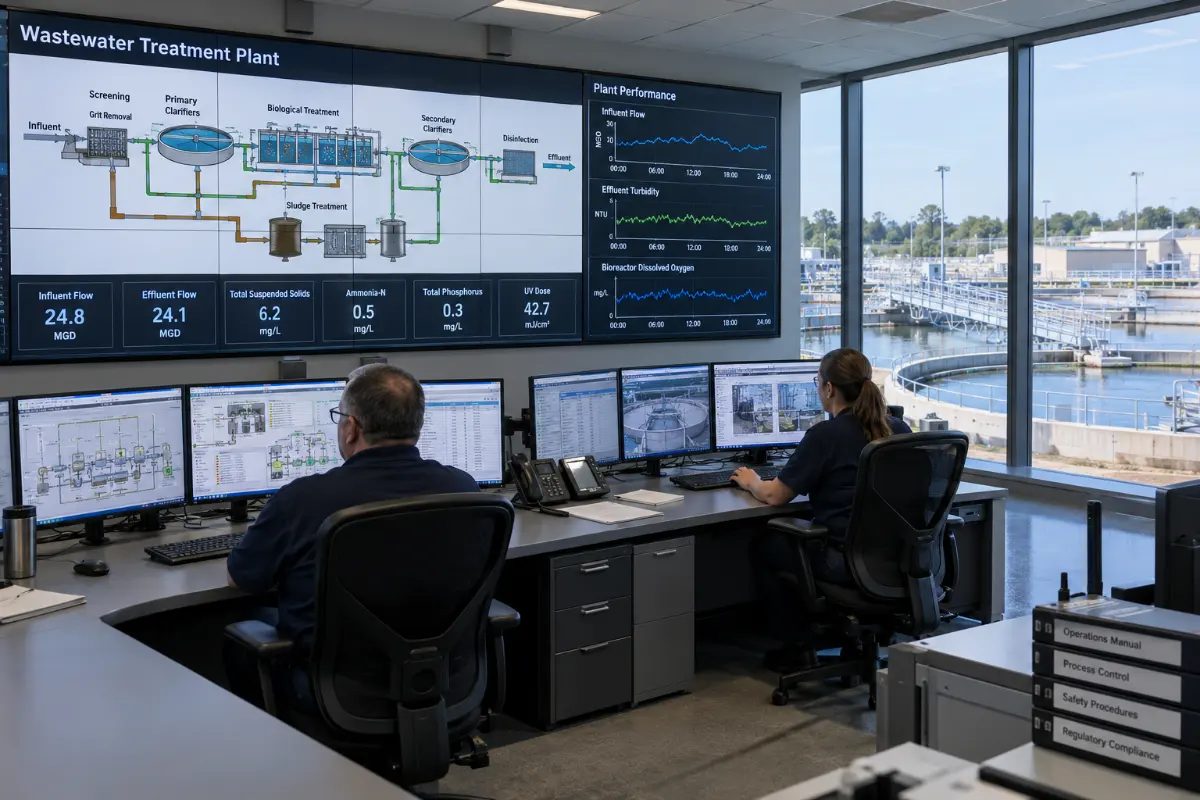
What “Best Supplier” Actually Means in Practice
I’ve sat on both sides of this — specifying equipment and delivering it. When a buyer asks me who the best supplier is, I usually push back with a question: best at what?
There is a real difference between:
- Element makers — they produce the membrane discs, spacers, and pressure housings. Their strength is consistency and cost per element.
- Skid builders — they buy elements and build the pump, valve, instrumentation, and control package around them. Their strength is hydraulic design and automation.
- Full-train integrators — they deliver DTRO plus pre-treatment plus evaporation and crystallization. Their strength is handling the whole water balance.
A supplier that is excellent at making discs may be mediocre at system hydraulics. A strong integrator may not manufacture its own elements and will depend on a third party. Knowing which category you’re buying from prevents most of the disappointment I see in the field.
The Evaluation Criteria I Actually Use
When I shortlist suppliers, I score them on six things. Not marketing claims — verifiable things.
| Criterion | What to Check | Why It Matters |
|---|---|---|
| Membrane element quality | Salt rejection stability, disc flatness, O-ring material | Determines flux retention and cleaning frequency |
| Pressure housing integrity | Material grade, burst test data, corrosion allowance | High-pressure service at 90+ bar is unforgiving |
| Hydraulic design | Stage count, recycle ratio, energy recovery | Drives specific energy consumption (kWh/m³) |
| Control philosophy | PLC/SCADA, CIP automation, alarm logic | Affects operator load and downtime |
| Spare parts supply | Lead time for discs, seals, pumps | Downtime cost usually exceeds part cost |
| Reference depth | Similar water chemistry, not just similar flow | Leachate and brine behave very differently |
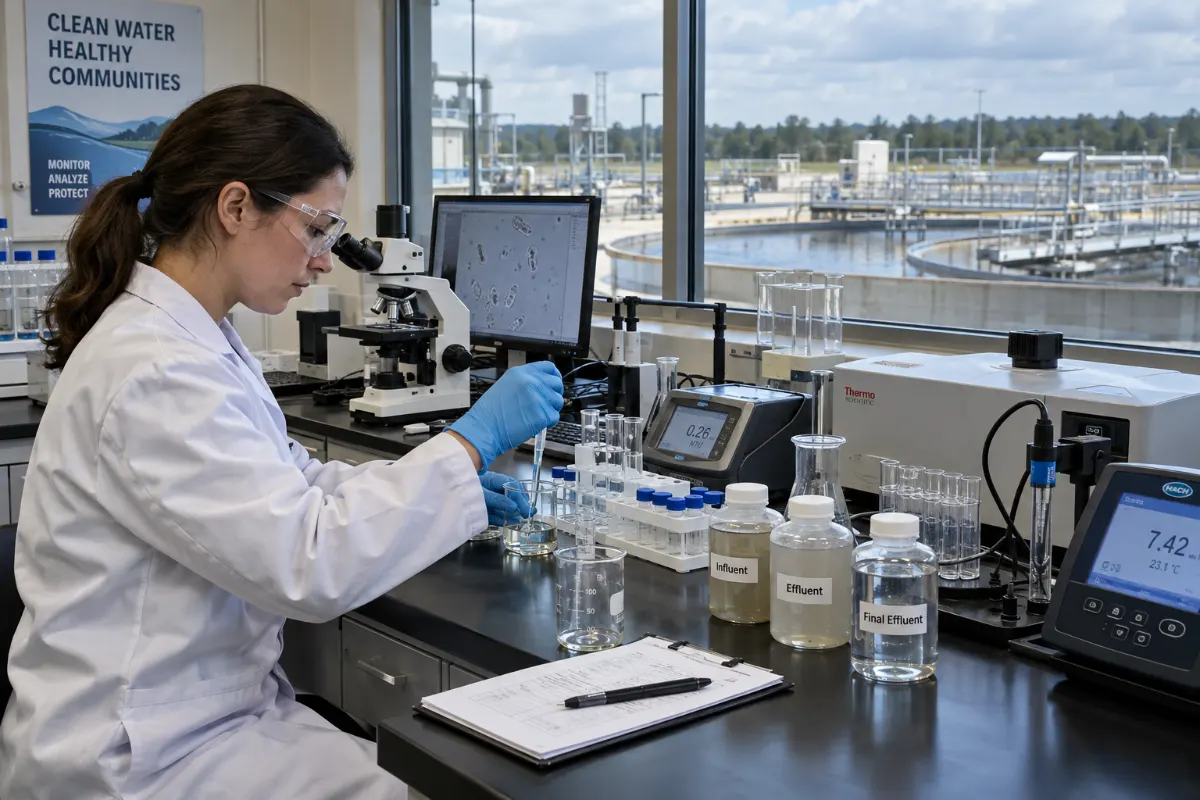
The Three Supplier Categories in Detail
1. Membrane Element and Disc Manufacturers
These suppliers focus on the consumable core. The disc is a composite flat-sheet membrane bonded to a support plate, and the quality of that bond, the flatness of the disc, and the precision of the spacer channels determine how the module performs over time.
What I look for here:
- Consistent rejection across production batches — ask for a batch test report, not a single sample.
- Disc dimensional tolerance. A disc that is slightly out of flat will create channeling and short-circuit the flow.
- O-ring and seal material compatibility with your specific chemistry. Leachate with high organics will attack the wrong elastomer.
These suppliers are usually the most cost-competitive on a per-element basis, but they typically do not provide system-level engineering. If you already have a design and just need elements, this is the right category.
2. DTRO Skid and System Integrators
This is where most industrial buyers land. An integrator takes elements from a manufacturer and builds the complete train: feed pump, high-pressure pump, circulation pump, valves, pressure vessels, CIP system, and controls.
The engineering that matters here is staging. DTRO trains are typically arranged in series stages with recycle loops, and the number of stages, the recycle ratio, and the use of energy recovery devices all affect power consumption. A well-designed two-stage train with energy recovery can cut specific energy significantly compared to a naive single-stage design.
I’ve written about how membrane separation fits into broader treatment trains on the water treatment process page, which is worth reading if you’re building the full flow sheet.
3. Full-Train Integrators (DTRO + Evaporation + ZLD)
For high-salinity brine and leachate where discharge limits are tight, DTRO is rarely the last step. The concentrate it produces still has to go somewhere. That’s where evaporation and crystallization come in.
A full-train integrator delivers DTRO as a concentration step, then hands the brine to a mechanical vapor recompression (MVR) or multi-effect evaporator, and finally to a crystallizer for zero liquid discharge. The advantage is a single point of responsibility for the water balance. The disadvantage is that you’re buying a much larger scope, and the integration risk shifts to one supplier.
If your project is heading toward ZLD, it’s worth understanding how the evaporation side is sized, because DTRO concentrate chemistry drives the evaporator design. There’s a solid explanation of zero liquid discharge systems that covers the train architecture.
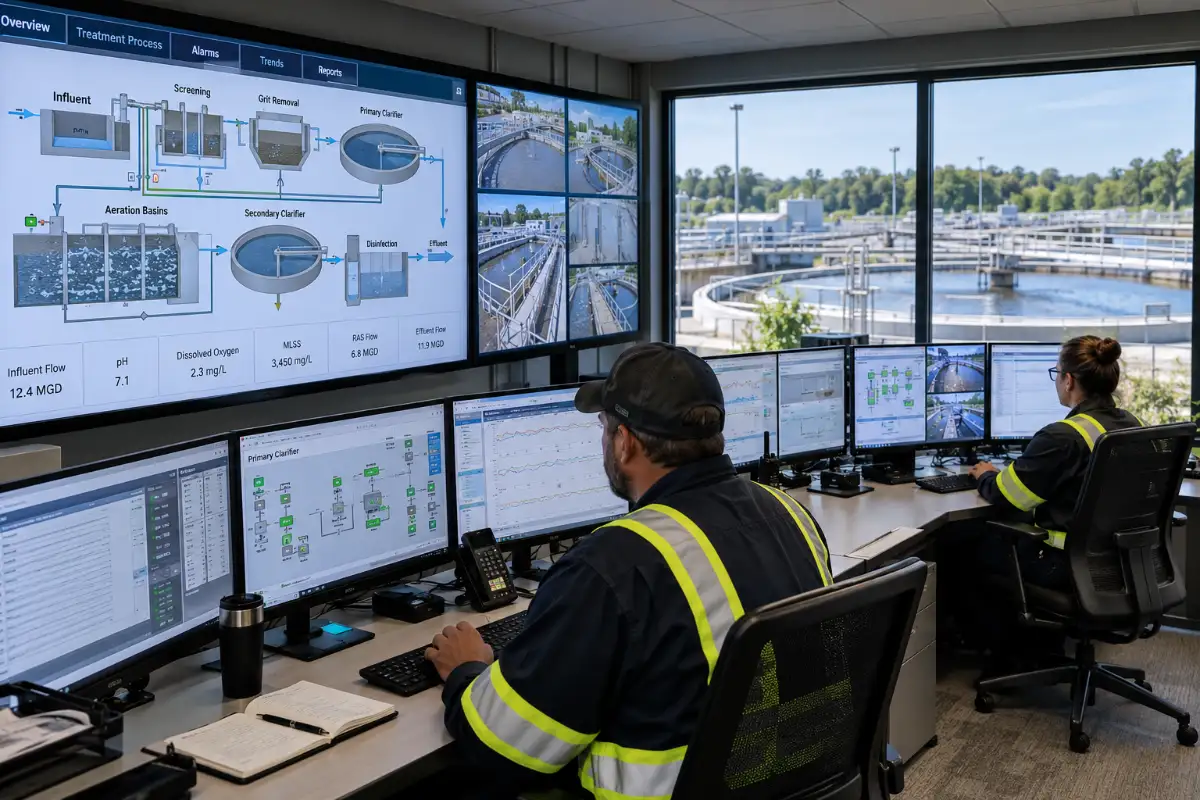
How DTRO Fits Into a Real Treatment Train
Let me walk through a typical leachate scenario the way I’d actually design it, without naming a specific site.
Raw leachate comes in with high COD, high ammonia, variable salinity, and hardness. The train usually looks like this:
- Pre-treatment — screening, equalization, and often softening or chemical precipitation to knock down hardness and scale-forming ions.
- Biological or advanced oxidation — depending on COD load and biodegradability.
- DTRO concentration — two or three stages, concentrating the brine to a fraction of the original volume.
- Evaporation — MVR or multi-effect to further concentrate the DTRO reject.
- Crystallization — for true ZLD, converting the final brine to solid salt.
The DTRO step is doing the heavy lifting on volume reduction, which is why its design quality matters so much. Every percentage point of recovery you gain upstream reduces the evaporator load downstream — and evaporators are the most energy-intensive part of the train.
For a sense of how these trains come together in different industries, there are project write-ups on landfill leachate treatment that show the typical configuration without overstating results.
Energy and Lifecycle Cost: The Part Suppliers Don’t Lead With
Capital cost gets the attention, but the operating cost is where DTRO projects live or die. Three drivers dominate:
Specific Energy Consumption
High-pressure pumping is the main electrical load. For leachate DTRO, typical specific energy falls in a project-dependent range, and it moves with feed salinity, recovery rate, and whether energy recovery is installed. Without energy recovery, a high-pressure train can consume substantially more power than one fitted with a pressure exchanger or turbocharger.
Membrane Replacement Frequency
Discs are consumables. Their life depends on fouling severity, cleaning effectiveness, and operating pressure. A supplier that sells cheap discs but doesn’t help you design a proper CIP sequence is not actually cheaper — you’ll replace them more often.
Chemical Consumption
Antiscalant, cleaning chemicals, and pH adjustment add up. The right pre-treatment reduces chemical demand more than any additive can.
My rule of thumb: if a supplier quotes you a DTRO system without a clear CIP protocol and a membrane replacement forecast, the quote is incomplete. Ask for both before you compare prices.
If you’re comparing evaporation options downstream, the cost structure is similar — capex is visible, opex is where the surprises are. There’s a useful breakdown of MVR evaporator cost drivers that mirrors the same logic.
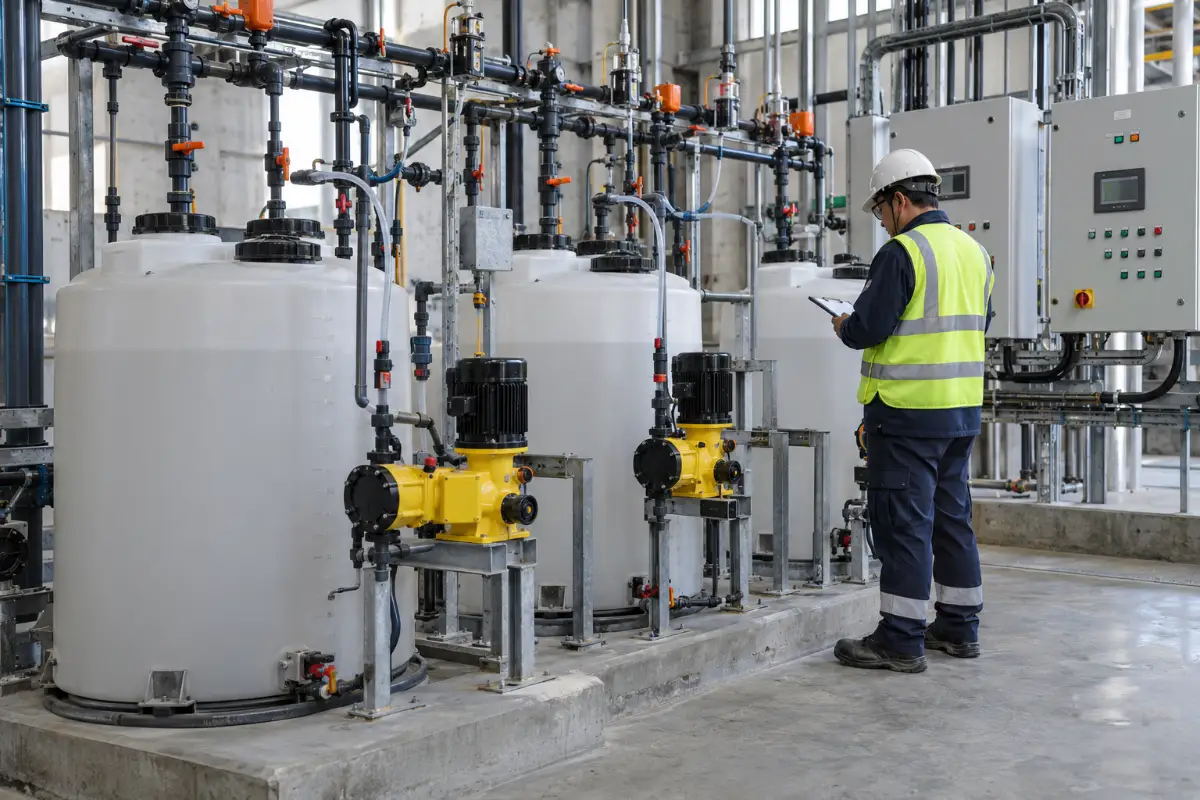
Common Failure Modes and How to Avoid Them
Most DTRO problems I’ve seen trace back to a handful of root causes. Here’s what to watch.
| Failure Mode | Root Cause | Prevention |
|---|---|---|
| Rapid flux decline | Inadequate pre-treatment, organic fouling | Strengthen upstream removal of organics and hardness |
| Scaling on discs | High hardness, poor antiscalant dosing | Softening plus correct dosing control |
| Seal/O-ring failure | Wrong elastomer for chemistry | Match material to feed composition |
| Pressure vessel corrosion | Under-specified material grade | Confirm grade against chloride level |
| Frequent CIP | Poor hydraulic design, low crossflow | Verify stage and recycle design |
| Pump cavitation | Incorrect NPSH margin | Review suction design at design temperature |
Notice that most of these are design and pre-treatment issues, not membrane defects. That’s why I weight system engineering more heavily than element brand when I evaluate suppliers.
How to Compare Suppliers Without Getting Burned
When you’re down to a shortlist, ask each one the same set of questions. The answers reveal more than any brochure.
- What is the guaranteed recovery and salt rejection, and under what feed conditions?
- What is the specific energy consumption at design point, and does it include energy recovery?
- What is the expected membrane replacement interval, and what’s the basis for that number?
- Can you provide a reference at similar salinity and fouling potential?
- What is the lead time for replacement discs and critical spares?
- Who commissions the system, and is remote support available?
- How is the CIP sequence defined, and is it automated?
If a supplier can’t answer the recovery and energy questions with numbers tied to your feed analysis, they’re guessing. That’s a red flag regardless of price.
A Note on Verification
I always recommend buyers validate performance claims against independent references where possible. Public resources from agencies like the U.S. Environmental Protection Agency and the World Bank can help you understand discharge and environmental requirements that shape your design targets, even though they won’t tell you which supplier to pick.
Matching the Supplier to Your Project Stage
Here’s how I’d frame the decision, based on where your project sits.
If You Need Elements Only
Go to a disc and element manufacturer. Focus on batch consistency, dimensional tolerance, and seal compatibility. You own the system design, so the supplier’s job is hardware quality.
If You Need a Complete DTRO Skid
Go to a system integrator. Focus on hydraulic design, staging, energy recovery, and control automation. Ask for the energy number and the CIP protocol.
If You’re Building Toward ZLD
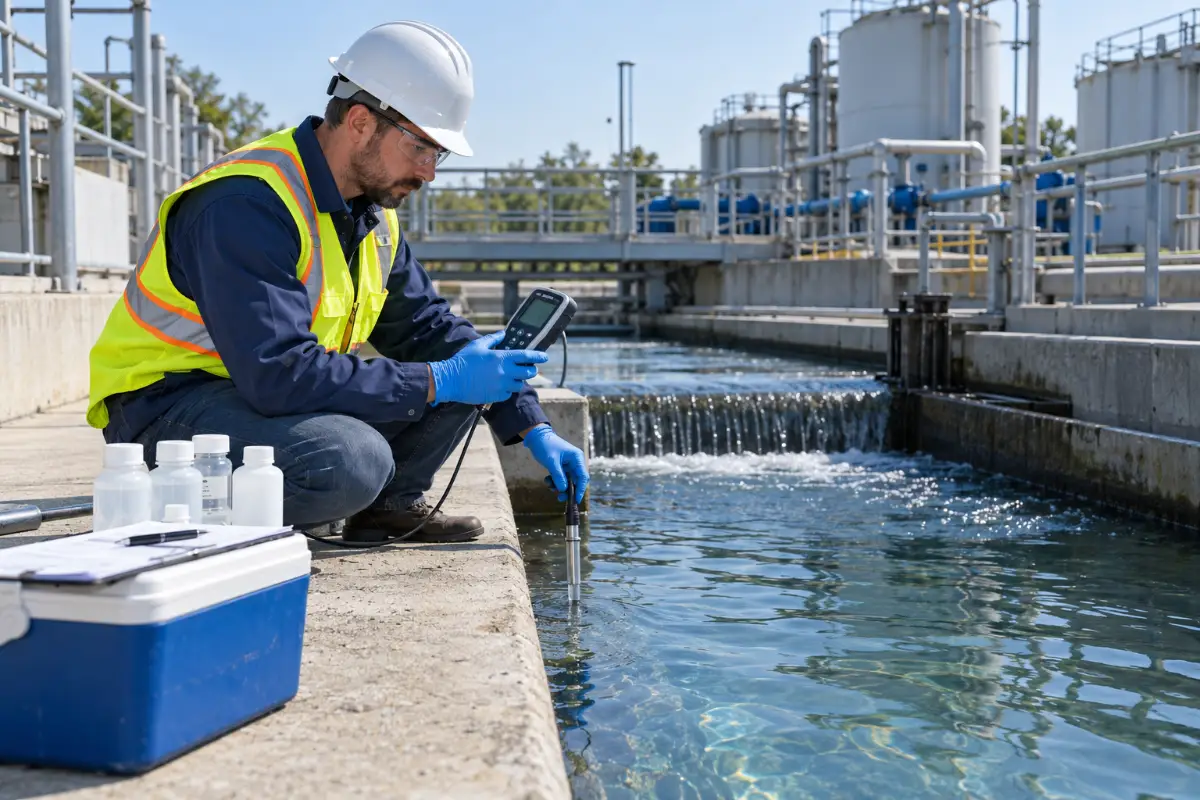
Go to a full-train integrator that can carry DTRO through to evaporation and crystallization. Focus on the water balance across the whole train, not just the membrane step. The wastewater evaporator selection will be driven by your DTRO concentrate chemistry, so the two must be designed together.
Where Evaporation Fits After DTRO
I want to spend a moment on this because it’s where a lot of projects get the sequencing wrong.
DTRO concentrates brine to a point where further RO becomes impractical — osmotic pressure gets too high, and scaling risk climbs. That’s the handoff to thermal treatment. Depending on your flow and energy situation, you’d choose between mechanical vapor recompression, multi-effect evaporation, or a hybrid.
MVR is usually the most energy-efficient for moderate evaporation loads because it recompresses the vapor and reuses the latent heat. Multi-effect systems spread the energy across several stages and can be attractive when you have waste heat available. The choice depends on your steam and power balance, which is a project-specific calculation.
There’s a good technical comparison of mechanical vapor compression evaporators that walks through when MVR makes sense versus multi-effect.
One thing I always tell clients: don’t size the evaporator on the DTRO design concentrate alone. Size it on the realistic worst-case concentrate, because leachate and industrial brine chemistry drift over time. Under-sizing the evaporator is one of the most expensive mistakes in a ZLD train.
Practical Takeaways
If you take nothing else from this, take these points:
- Define what you’re actually buying — elements, a skid, or a full train — before you compare suppliers.
- Weight system engineering over element brand. Most failures are design failures, not membrane failures.
- Insist on numbers: recovery, specific energy, replacement interval, and spares lead time.
- Design DTRO and the downstream evaporator together. They are one water balance.
- Validate discharge requirements early so your design targets are real.
For projects that combine DTRO with thermal concentration, it helps to work with a team that handles both sides of the handoff. If you’re at the specification stage and want to pressure-test your train architecture, you can talk through your project with our engineers — no obligation, just a technical conversation about what your water chemistry actually requires.
FAQ
What should I check first when evaluating a DTRO supplier?
Start with the feed water analysis and ask the supplier to propose a recovery and rejection target based on it. If they can’t tie their numbers to your specific chemistry, move on. Element quality matters, but system design tied to your water is what determines whether the plant actually performs.
How long do DTRO membrane discs typically last?
It varies widely with fouling severity and cleaning practice. In clean, well-pre-treated service, discs can last several years. In aggressive leachate with heavy organic load, replacement intervals are shorter. Ask the supplier for the basis of their forecast, and treat any single number as project-dependent rather than fixed.
Is energy recovery worth it on a DTRO system?
For high-pressure service, usually yes. The high-pressure pump is the largest electrical load, and an energy recovery device reduces the net power drawn. Whether it pays back depends on your electricity cost, operating hours, and feed pressure. Run the numbers on your specific duty rather than assuming.
Why does my DTRO system need frequent cleaning?
Frequent cleaning almost always points upstream — inadequate removal of hardness, organics, or suspended solids — or to a hydraulic design with insufficient crossflow. Before blaming the membrane, review pre-treatment performance and the stage and recycle design. Sometimes the fix is a pre-treatment upgrade, not a different element.
Can DTRO alone achieve zero liquid discharge?
No. DTRO is a concentration step, not a disposal step. It reduces brine volume, but the concentrate still needs thermal treatment — evaporation and typically crystallization — to reach ZLD. Treat DTRO and the evaporator as one integrated train and design them together.
What’s the biggest mistake buyers make when comparing DTRO suppliers?
Comparing on capital cost alone. A cheaper skid with poor hydraulic design or no energy recovery can cost far more over its life through higher power bills and more frequent membrane replacement. Compare total cost of ownership over a realistic operating horizon, and require energy and replacement forecasts in writing.
How do I handle the DTRO concentrate if I’m not going to ZLD?
You have a few options depending on local rules: further concentration and off-site disposal, deep-well injection where permitted, or evaporation to reduce volume before disposal. The right path depends on your discharge regulations and disposal costs, so confirm those constraints before finalizing the design.