

If you’re sourcing a DTRO system for leachate or high-salinity industrial wastewater, the manufacturer you choose matters more than the membrane brand on the nameplate. After more than a decade specifying and commissioning membrane trains, I can tell you the honest answer up front: pick the manufacturer who shows you a full mass balance, owns the disc tube stack design, and can service the unit five years from now — not the one with the lowest quote. A DTRO system is a high-pressure, fouling-tolerant reverse osmosis platform, and its real performance lives in the pre-treatment logic, the stack hydraulics, and the spare parts pipeline. Get those three right and the plant runs quietly. Get them wrong and you’ll be replacing seals every quarter.
Start With Your Water, Not the Equipment
I’ve watched too many projects start with a vendor brochure instead of a lab report. Before you talk to anyone, you need a water analysis that covers at least two seasons of operation. Landfill leachate, for example, swings hard with rainfall and waste age — conductivity, COD, ammonia, and silica can move by a factor of two or three across a year. If your manufacturer designs against a single snapshot, the system will be undersized or chemically mismatched within months.
Here’s what I insist on seeing in a proper feed characterization:
- Conductivity and TDS range, not just an average
- COD and BOD, plus the ratio between them
- Ammonia-nitrogen and total nitrogen
- Silica, calcium, magnesium, barium, strontium (scaling risk)
- Heavy metals and any solvent or oil content
- pH range and alkalinity
- Temperature range across the year
If a manufacturer skips this and jumps straight to a price per cubic meter, that’s your first warning sign. A DTRO system tolerates fouling better than a spiral-wound RO because of its open-channel disc tube design, but it is not immune to scaling or organic fouling. The pre-treatment and cleaning strategy has to be built from your actual water chemistry. For context on how leachate chemistry varies, it helps to understand what chemicals are typically present in landfill leachate before you finalize a design basis.
The Engineering Questions That Separate Real Manufacturers
When I evaluate a DTRO supplier, I don’t start with the price sheet. I start with a technical conversation. The good ones answer these without hesitation; the weak ones deflect to sales language.
1. Do they control the disc tube stack design?
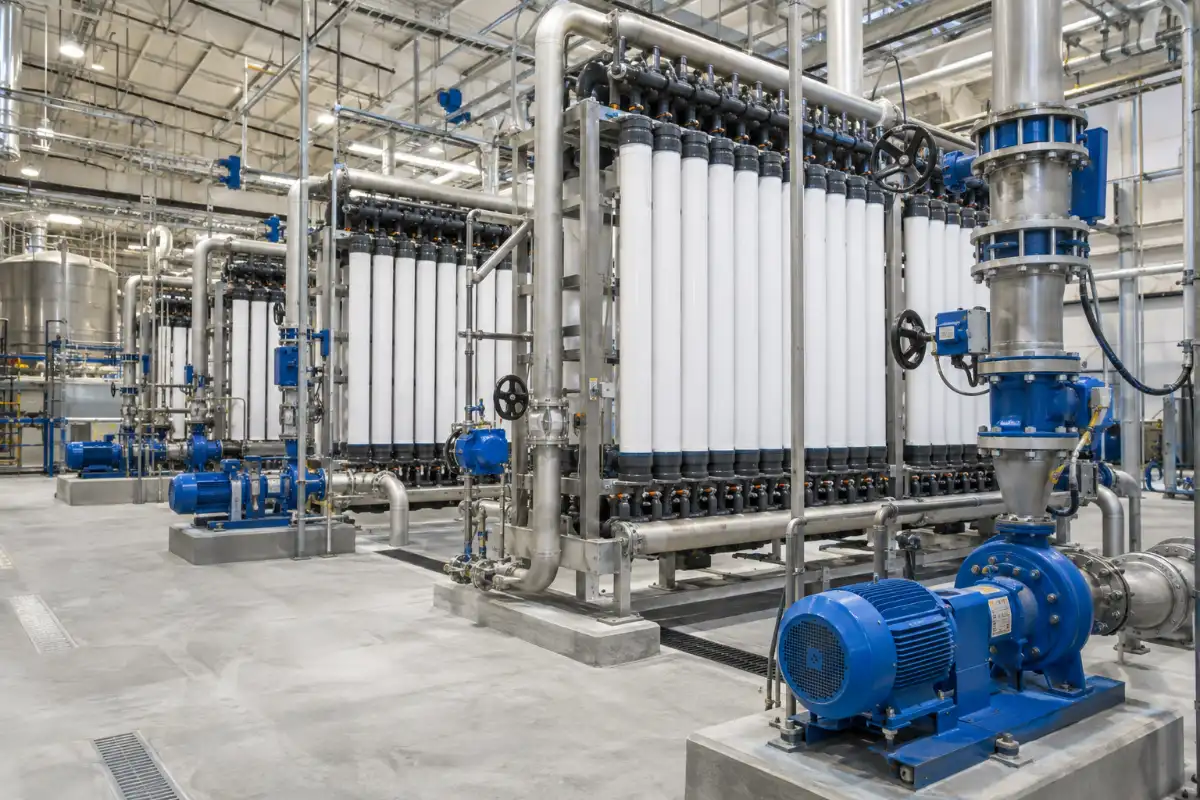
The DTRO stack is the heart of the system. Membrane discs, hydraulic discs, spacers, and the end plates all have to work together. A manufacturer who simply buys stacks and bolts them into a skid has limited ability to troubleshoot when recovery drops or pressure climbs. Ask who machines the hydraulic discs, who specifies the O-rings, and whether they can supply replacement stacks in five years. A company with its own DTRO membrane system platform usually has deeper control over tolerances and service life.
2. How do they handle the concentrate?
DTRO doesn’t destroy salt — it concentrates it. The reject stream is the real problem. A serious manufacturer will talk about the whole brine management chain, whether that’s evaporation, crystallization, or a zero liquid discharge approach. If they can’t explain how your concentrate fits into a zero liquid discharge system, they’re only selling you half a solution. In many leachate projects, DTRO is the front end and evaporation is the back end.
3. What’s the recovery and pressure envelope?
Typical DTRO recovery on leachate sits in a project-dependent range — often somewhere between 75% and 85% — but that number is meaningless without the feed chemistry and the number of stages. Operating pressure commonly lands between 40 and 75 bar depending on salinity and staging. Ask the manufacturer to show you the pressure-recovery curve, not just a single point. If they can’t, they’re guessing.
4. How is cleaning and maintenance designed?
Membrane cleaning frequency drives your operating cost more than anything else. Ask about clean-in-place design, chemical dosing, and how long a full stack teardown takes. A well-designed system lets two technicians service a stack in a shift. A poorly designed one turns it into a two-day job.
5. Who does the commissioning and training?
This is where cheap suppliers fall apart. If the person who commissions your system can’t explain the control logic to your operators, you’ll be calling them for years. Insist on named commissioning engineers, a written startup protocol, and operator training that includes failure scenarios, not just the happy path.
Comparing Manufacturer Types
Not every supplier fits every project. Here’s how I think about the main categories, based on how they typically behave in the field.
| Manufacturer type | Strengths | Watch-outs | Best fit |
|---|---|---|---|
| Full-line system integrator | Owns membrane, evaporation, and ZLD chain; single point of responsibility | Higher upfront cost; may push a packaged solution | Leachate and complex industrial projects needing brine management |
| Membrane specialist | Deep stack and membrane expertise; strong cleaning know-how | May hand off concentrate disposal to others | Projects with existing brine handling |
| Skid assembler | Lowest capital cost; fast delivery | Limited troubleshooting; parts dependency; weak commissioning | Simple, stable, low-fouling streams |
| EPC-led with sub-supplier | Strong project management; clear interface | Membrane performance sits with the sub-supplier | Large turnkey projects with tight schedules |
I generally steer clients toward integrators when the concentrate is hard to handle, and toward specialists when the feed is nasty but the brine has a home. The worst outcome is a skid assembler on a leachate project — that’s where I’ve seen the most avoidable downtime.
Don’t Ignore the Evaporation Side
DTRO rarely stands alone. On high-salinity streams, the reject has to go somewhere, and mechanical vapor compression or multi-effect evaporation usually does the heavy lifting. If your manufacturer can only talk membranes, you’ll end up coordinating two vendors who blame each other when recovery drops. A supplier who understands both sides can design the interface properly — the brine concentration, the scaling control, and the energy balance.
This is where I’ve seen real value from integrators who also build thermal systems. For example, understanding how a mechanical vapor compression evaporator handles high-TDS brine helps you set the right DTRO recovery target. Push recovery too high and you scale the evaporator; push it too low and you oversize the thermal train. The sweet spot is a system-level decision, not a membrane-level one.
If your project also involves sludge handling, remember the dewatering step affects the whole water balance. A screw press sludge dewatering system that returns high-solids filtrate back to the front of the plant can wreck your membrane feed quality if it’s not accounted for. Good manufacturers ask about this. Weak ones don’t.
Cost: What Actually Drives the Number
Capital cost for a DTRO system depends on flow rate, salinity, recovery target, and how much pre-treatment you need. I won’t pretend there’s a universal price per cubic meter — there isn’t. But I can tell you what moves the number:
- Feed salinity and pressure: Higher TDS means higher pressure, thicker housings, and more pump horsepower.
- Pre-treatment scope: Filtration, softening, chemical dosing, and equalization can add 20–40% to the skid cost.
- Redundancy: Standby pumps and stacks add cost but cut downtime risk.
- Automation level: Full PLC control with remote monitoring costs more upfront and less over the asset life.
- Materials: Duplex or super-duplex wetted parts cost more but survive aggressive brine.
Operating cost is where the real money lives. Membrane replacement, cleaning chemicals, energy, and labor dominate the ten-year picture. A system that saves you 15% on capital but cleans twice as often will cost more by year three. I always ask for a lifecycle cost model, and I’m suspicious of any manufacturer who won’t provide one.
My rule of thumb: if a DTRO quote doesn’t include a cleaning frequency estimate and a membrane replacement schedule, it’s not a real quote — it’s a starting point for a negotiation you’ll lose.
Service, Spares, and the Five-Year Test
Here’s the question I ask every supplier: “If I call you in five years for a replacement stack, what happens?” The answer tells you whether you’re buying a product or a relationship.
Look for:
- Named spare parts with lead times in writing
- Local or regional service presence, or a clear remote-support plan
- Documented maintenance intervals and torque specs
- Access to membrane discs and hydraulic components after warranty
- A track record in your specific application, not just general RO
I’ve seen plants sit idle for weeks waiting on a proprietary O-ring. That’s not a membrane problem — it’s a supply chain problem, and it’s the manufacturer’s responsibility to prevent it.
Red Flags I’ve Learned to Trust
After enough projects, you develop instincts. These are the patterns that reliably predict trouble:
- No pilot or bench data. On a complex stream, a reputable manufacturer will offer a pilot test or at least a bench-scale flux test. Refusal is a red flag.
- Guaranteed recovery without water analysis. Nobody can guarantee 85% recovery without knowing your silica and calcium levels.
- Vague commissioning scope. “We’ll support startup” means nothing. Get named engineers and days on site.
- No reference plants you can visit or call. Even anonymized references with performance data are better than none.
- Pressure to sign before a design review. Good engineering takes time.
I also check whether the manufacturer’s claims align with published guidance. Regulatory bodies like the U.S. Environmental Protection Agency and international bodies such as the World Bank publish discharge and environmental guidance that can help you sanity-check performance claims and effluent targets. If a vendor’s numbers sit far outside recognized ranges, ask why.
Matching the System to Your Application
Different industries stress a DTRO system in different ways. Here’s how I frame it:
| Application | Main challenge | Design emphasis |
|---|---|---|
| Landfill leachate | Variable chemistry, high ammonia, scaling | Robust pre-treatment, flexible recovery, strong cleaning |
| Electroplating wastewater | Heavy metals, low pH swings | Metal precipitation upstream, corrosion-resistant materials |
| Pharmaceutical wastewater | Organics, solvents, fouling | Organic removal before membrane, careful cleaning chemistry |
| Battery and new-energy wastewater | High salinity, specific ion balance | Staged concentration, brine valorization options |
If your stream is leachate, a manufacturer with a documented landfill leachate treatment background is worth more than a generalist with a lower price. The same logic applies to electroplating wastewater and pharmaceutical wastewater — application experience shortens the learning curve and reduces startup risk.
How I Run a Manufacturer Evaluation
Here’s the process I use with clients. It’s not glamorous, but it works:
- Screen on capability, not price. Shortlist three to five manufacturers with relevant references.
- Send the same water analysis and design brief to all of them. Compare apples to apples.
- Request a preliminary mass balance and P&ID sketch. This reveals how they think.
- Ask for a lifecycle cost estimate. Include membrane replacement and cleaning chemicals.
- Interview the proposed project engineer. Not the salesperson — the engineer.
- Check references by phone. Ask about downtime, service response, and unexpected costs.
- Negotiate on scope and guarantees, not just price. Performance guarantees matter more than a discount.
This takes a few extra weeks upfront. It saves months of pain later. I’ve never regretted running a disciplined evaluation, and I’ve regretted skipping it more than once.
Where Evaporation Fits In
If your project needs brine concentration or near-zero discharge, the DTRO system is only part of the picture. The thermal side — whether that’s MVC, MVR, or multi-effect evaporation — determines your energy cost and your final disposal volume. A manufacturer who can design both sides together will usually give you a better integrated result than two separate vendors. If you want to understand how the thermal train handles high-salinity reject, it’s worth reviewing how a wastewater evaporation system is typically configured before you finalize the membrane recovery target.
I’ve seen projects where the DTRO recovery was set too aggressively, forcing the evaporator to run at the edge of its scaling limit. The fix was to back off membrane recovery by a few points and let the evaporator breathe. That’s a system decision, and it only happens when one party owns the whole balance.
A Note on Scale and Future Growth
Design for the plant you’ll have in five years, not just today. Flow rates grow, salinity creeps up, and regulations tighten. Ask the manufacturer how the system can be expanded — additional stack modules, a second stage, or a larger evaporator. Modular designs cost a little more upfront and save a fortune later.
I also ask about turndown. Can the system run efficiently at 50% flow during low season? Leachate plants in particular see big seasonal swings. A system that only runs well at design point will waste energy and foul membranes during low-flow periods.
Making the Final Call
Choosing a DTRO system manufacturer is a technical decision disguised as a procurement decision. The right partner gives you a defensible design basis, transparent costs, real commissioning support, and a spare parts plan that survives the warranty period. The wrong one gives you a low price and a long headache.
My advice: weight technical depth and service capability above the initial quote. Ask hard questions. Visit a reference plant if you can. And make sure the manufacturer understands the whole water balance — not just the membrane skid. If they can talk credibly about pre-treatment, concentrate management, and the thermal train behind it, you’re probably talking to the right people.
If you want a second set of engineering eyes on your design basis before you commit, that conversation is usually worth having early rather than after startup.
Frequently Asked Questions
What recovery rate should I expect from a DTRO system?
It depends heavily on feed chemistry and staging. On leachate and similar high-fouling streams, recovery commonly falls in the 75–85% range, but this is project-dependent. Higher salinity, higher silica, and higher scaling potential all push recovery down. Any manufacturer quoting a fixed number without your water analysis is guessing. Ask for a pressure-recovery curve across the expected feed range.
How often do DTRO membranes need replacement?
Membrane life is driven by feed quality, cleaning frequency, and operating pressure. In well-designed systems with good pre-treatment, disc tube membranes often last several years, but aggressive streams can shorten that significantly. The honest answer is that your replacement schedule should come from operating data, not a brochure. Insist on a cleaning and replacement projection as part of the lifecycle cost model.
Can a DTRO system handle high ammonia in leachate?
Yes, but ammonia management is usually handled upstream or in combination with the membrane train. High ammonia can affect scaling and cleaning chemistry, and it often needs biological or stripping treatment before or alongside the membrane stage. A manufacturer experienced in leachate will design the ammonia pathway as part of the overall process, not treat it as an afterthought.
What’s the biggest maintenance cost in a DTRO plant?
In most of the plants I’ve worked on, membrane replacement and cleaning chemicals dominate the maintenance budget, followed by high-pressure pump service. Energy cost is significant but predictable. The variable that catches people off guard is unplanned downtime from fouling or scaling — which is why pre-treatment design and cleaning strategy matter so much. Good design reduces both.
How do I compare quotes from different DTRO manufacturers?
Normalize everything. Compare recovery at the same feed conditions, the same pre-treatment scope, the same materials of construction, and the same automation level. Then compare lifecycle cost, not just capital cost. Ask each vendor for a mass balance, a P&ID, and a spare parts list with lead times. Quotes that look cheap often exclude pre-treatment, commissioning, or the first membrane set — those exclusions are where the real cost hides.
Do I need a pilot test before buying a DTRO system?
For complex or highly variable streams, yes. A pilot test de-risks the design and gives you real flux, recovery, and cleaning data. For simple, stable streams with well-documented chemistry, bench testing may be enough. If a manufacturer refuses any form of pilot or bench validation on a difficult stream, treat that as a serious warning sign.
How important is local service support for a DTRO system?
Very. Membrane systems need periodic cleaning, stack service, and pump maintenance. If the manufacturer can’t respond within a reasonable time — either locally or through trained remote support — your downtime costs will climb fast. Ask for named service contacts, response time commitments, and a clear spares strategy before you sign.