

If your existing reverse osmosis plant is struggling with high-salinity feed, fouling, or declining recovery, the fastest practical upgrade is usually not a bigger conventional RO skid — it is adding a disk-tube reverse osmosis (DTRO) stage. In most retrofits I have worked on, DTRO is bolted on downstream of the existing pretreatment and ahead of the brine handling step, which lets you push recovery higher and cut the volume of concentrate that has to be evaporated or hauled away. The core idea is simple: DTRO handles the dirty, high-pressure end of the duty that spiral-wound elements cannot survive for long. This article walks through how to plan, design, and commission that upgrade without rebuilding the whole plant.

Why Conventional RO Plants Hit a Wall
Spiral-wound RO membranes are excellent at what they were designed for: clean-ish water, moderate salinity, and feed that stays within a narrow fouling window. The moment you ask them to handle landfill leachate, plating rinse water, or a concentrated brine stream, three things happen at once.
First, the feed spacer clogs. Biological growth, colloidal silica, and organic matter pack into the 28 to 34 mil channels, and you cannot clean them out effectively once they bridge. Second, the pressure drop across the element rises, which forces higher feed pressure and accelerates compaction. Third, recovery has to be throttled back to keep the last element from scaling, so you end up with a large concentrate stream that someone has to deal with.
I have seen plants where operators were running at 55 to 60 percent recovery on a stream that should have been pushed to 80 percent or more, simply because the spiral elements could not take the fouling load. That is the gap DTRO fills.
What DTRO Actually Does Differently
Disk-tube RO uses a different hydraulic architecture. Instead of flat membrane leaves wrapped around a permeate tube, the membrane is stacked as disks on a central rod, and the feed flows through an open channel that is typically 2 to 4 mm wide. That open channel is the whole point.
Open channel, tolerant to solids
Because the feed path is wide and the flow is turbulent, suspended solids, biomass, and precipitated salts pass through instead of lodging in a spacer. You can run DTRO on feed that would blind a spiral element in a week. In practice, this means you can often skip or simplify the ultrafiltration and cartridge filtration stages that a spiral system would demand.
High pressure capability
DTRO disk stacks are built to run at 75 to 90 bar, and some configurations go higher. That lets you concentrate brine well beyond what a standard 41 bar spiral system can reach. For a leachate or zero liquid discharge (ZLD) duty, this is the difference between a concentrate that is 8 percent total dissolved solids and one that is 12 to 15 percent.
Modular and cleanable
Disks can be removed, inspected, and replaced individually. You are not throwing away a whole element because one leaf failed. Cleaning is also more forgiving because the open channel responds well to chemical recirculation.
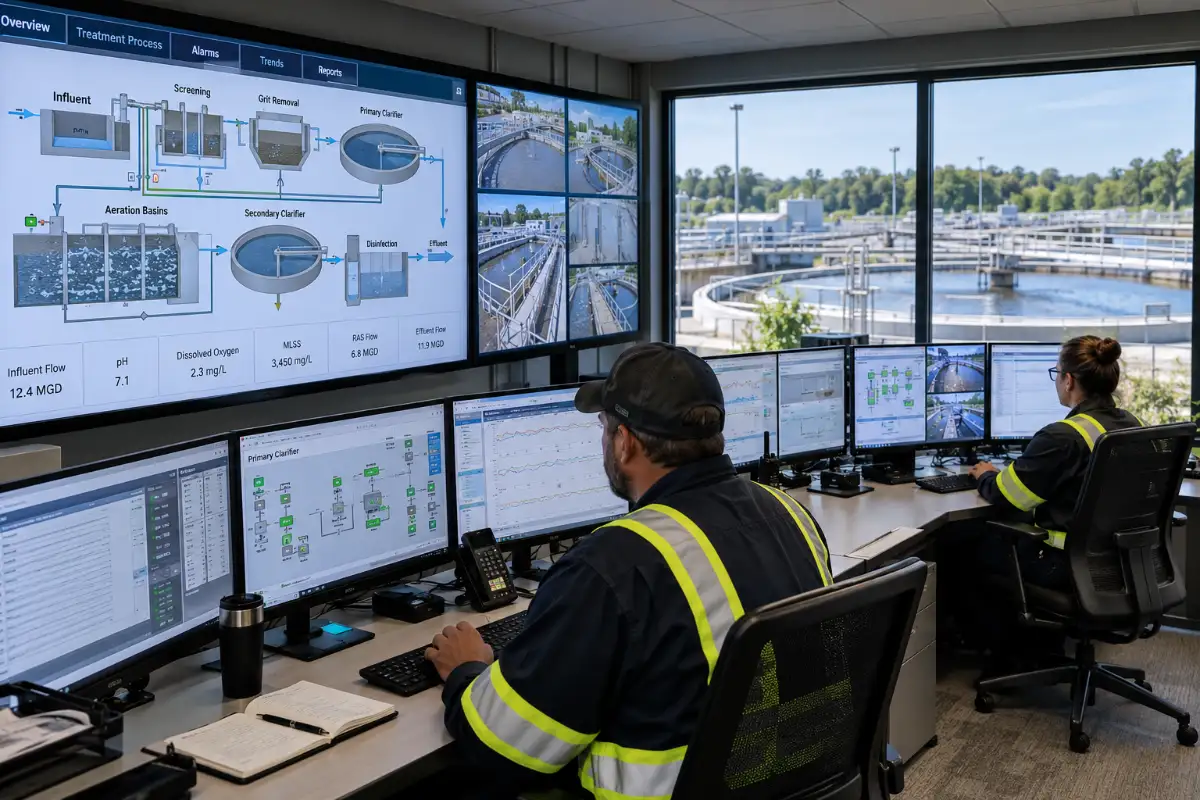
Where DTRO Fits in an Existing Plant
The most common and lowest-risk upgrade is to leave the existing RO train alone and add a DTRO stage on the concentrate. This is sometimes called a brine concentrator retrofit.
Typical arrangement:
- Existing pretreatment (softening, media filtration, antiscalant dosing) stays in place.
- Existing spiral RO continues to make permeate at its normal recovery.
- Spiral RO concentrate is fed to the new DTRO skid, which recovers another 50 to 70 percent of that stream as permeate.
- DTRO permeate is blended back into the product water or sent to the front of the plant, depending on quality.
- DTRO concentrate goes to the evaporator, crystallizer, or haul-off.
If your plant already has an evaporator downstream, the DTRO stage reduces evaporator feed volume by 50 to 70 percent, which usually translates directly into lower steam or compressor power demand. On a mechanical vapor recompression (MVR) system, that is a real operating cost saving. If you want to understand how that evaporator side works, MVR technology is a good starting point.
The alternative is to feed DTRO directly with raw or lightly pretreated water and let it do the bulk of the work. That is a bigger change and usually only makes sense when the existing RO is at end of life or when the feed chemistry is genuinely hostile.
Feed Water Characterization Before You Commit
You cannot size a DTRO upgrade from a single lab report. I always ask for at least two weeks of daily data, and ideally a full seasonal cycle if the plant runs year-round.
| Parameter | Why it matters | Typical design attention |
|---|---|---|
| Total dissolved solids (TDS) | Sets osmotic pressure and required operating pressure | Range 10,000–40,000 mg/L is common for retrofit duties |
| Conductivity | Real-time proxy for TDS and recovery control | Used for automated setpoint control |
| COD / TOC | Organic fouling and membrane life | Above 500 mg/L usually requires pretreatment review |
| Silica | Hard scale that is difficult to remove | Keep below saturation; often needs pH adjustment |
| Calcium and magnesium hardness | Carbonate and sulfate scaling | Softening or antiscalant selection is critical |
| Suspended solids | Channel plugging risk | DTRO tolerates more, but not unlimited |
| pH | Scaling and membrane compatibility | Usually controlled between 6.0 and 7.5 |
| Temperature | Flux and pressure | Design point often 20–30 °C |
If you do not have this data, run a pilot. A trailer-mounted DTRO unit running for four to six weeks on your actual feed will tell you more than any spreadsheet. It also gives you the cleaning frequency data you need for the operating budget.
Pretreatment: What You Can Keep and What You Must Add
One of the attractions of DTRO is that it is more tolerant than spiral RO, but “more tolerant” is not “indestructible.” I have seen DTRO stacks fouled by oil and grease, and I have seen them scaled by silica when the pH control drifted.
What usually stays:
- Media filtration or multi-media filters
- Activated carbon, if organics are a concern
- Antiscalant dosing, though the chemistry may need to change
- Cartridge filtration, often at a coarser rating than before
What often needs to be added or upgraded:
- Softening, if hardness is high and recovery is being pushed
- pH adjustment, for silica or carbonate control
- Deaeration or degasification, if dissolved gases are present
- An oil and grease removal step, if the feed carries any hydrocarbons
The sequencing matters. Put the DTRO after the existing pretreatment train, not before it. The existing equipment is already sized and paid for, and it will protect the new membranes.
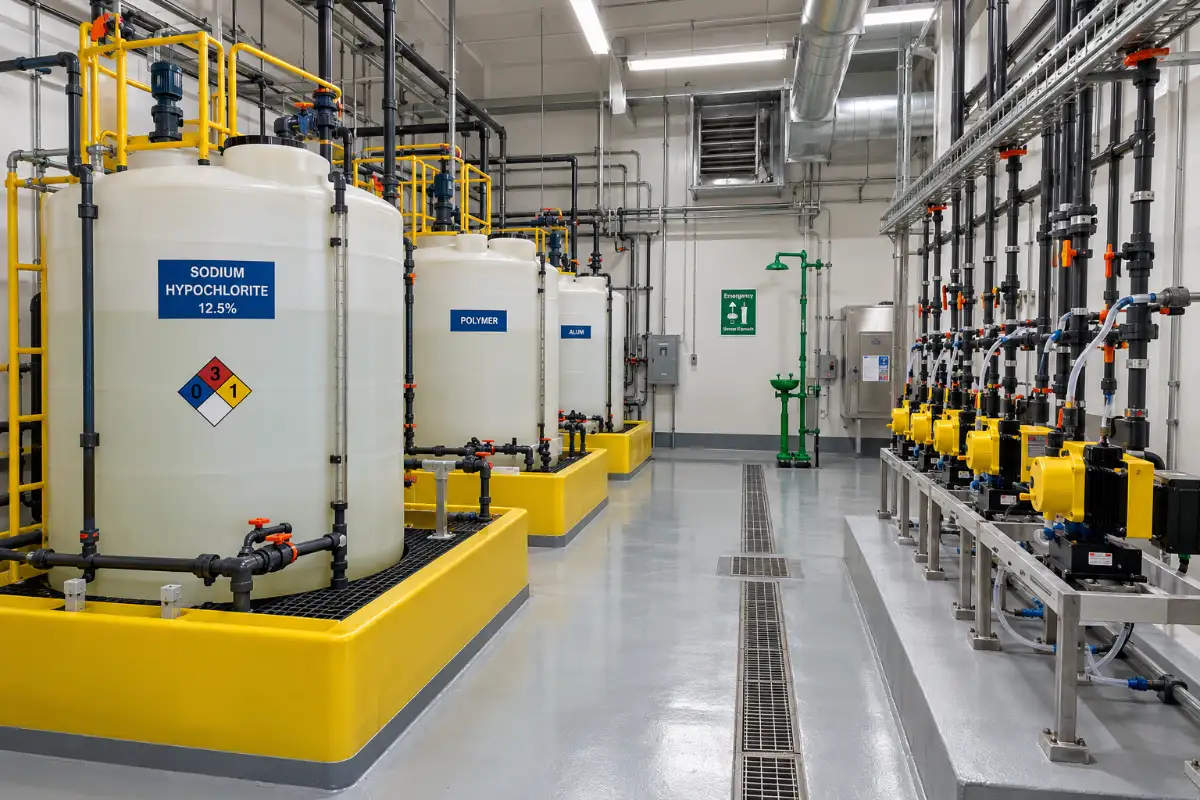
Hydraulic and Pressure Considerations
DTRO runs at higher pressure than spiral RO, so you need to check three things before you buy anything.
Feed pump capability
Your existing high-pressure pump may not be able to reach 75 to 90 bar. If it is a centrifugal pump sized for 40 bar, you will need a new pump or a booster stage. Positive displacement pumps are common on DTRO skids because they handle high pressure and variable flow well.
Piping and valve ratings
Everything downstream of the new pump must be rated for the higher pressure. That includes the DTRO skid itself, the concentrate line, and any relief valves. Do not assume the existing 40 bar piping is adequate.
Energy recovery
At 75 to 90 bar, energy recovery becomes economically important. A pressure exchanger or turbocharger on the concentrate line can recover 30 to 50 percent of the pumping energy. On a 100 m³/day skid, that is a meaningful reduction in kilowatt-hours per cubic meter. If your site has an existing energy recovery device on the spiral RO, it may need to be re-evaluated because the flow and pressure profiles change.
Recovery, Concentration, and the Brine Question
The whole reason to add DTRO is to reduce brine volume. But you need to be honest about where the salt ends up.
Typical indicative ranges for a DTRO retrofit on an industrial concentrate:
| Parameter | Indicative range | Notes |
|---|---|---|
| DTRO recovery on concentrate | 50–70% | Depends on scaling potential and osmotic pressure |
| Overall plant recovery after retrofit | 75–90% | Up from 55–65% typical before |
| Concentrate TDS | 8–15% | Higher with softening and pH control |
| Operating pressure | 60–90 bar | Set by osmotic pressure plus margin |
| Specific energy | 4–8 kWh/m³ permeate | Before energy recovery credit |
These are design ranges, not guarantees. Your actual numbers will depend on feed chemistry, temperature, and how aggressively you run the cleaning cycle.
If the concentrate still has to go to zero liquid discharge, the DTRO stage is what makes the downstream evaporator affordable. A smaller evaporator means lower capital cost and lower operating cost. If you are planning that full chain, it is worth looking at how ZLD systems are configured, because the DTRO and evaporator need to be designed as one system, not two separate purchases.
Membrane Selection and Configuration
DTRO membranes are not all the same. The key choices are:
- Membrane material: Polyamide composite is standard. Some duties benefit from a more fouling-resistant surface chemistry.
- Disk diameter: Larger disks mean fewer seals and lower pressure drop per unit area, but they need more rigid housings.
- Number of stages: Single-stage DTRO is common; two-stage arrangements can push recovery higher but add complexity.
- Flow configuration: Series flow through disk stacks is typical for high-concentration duties.
I generally recommend piloting two membrane options if the feed is unusual. The difference in cleaning frequency and flux decline can be significant, and it is much cheaper to find out on a trailer than after you have bought a full skid.
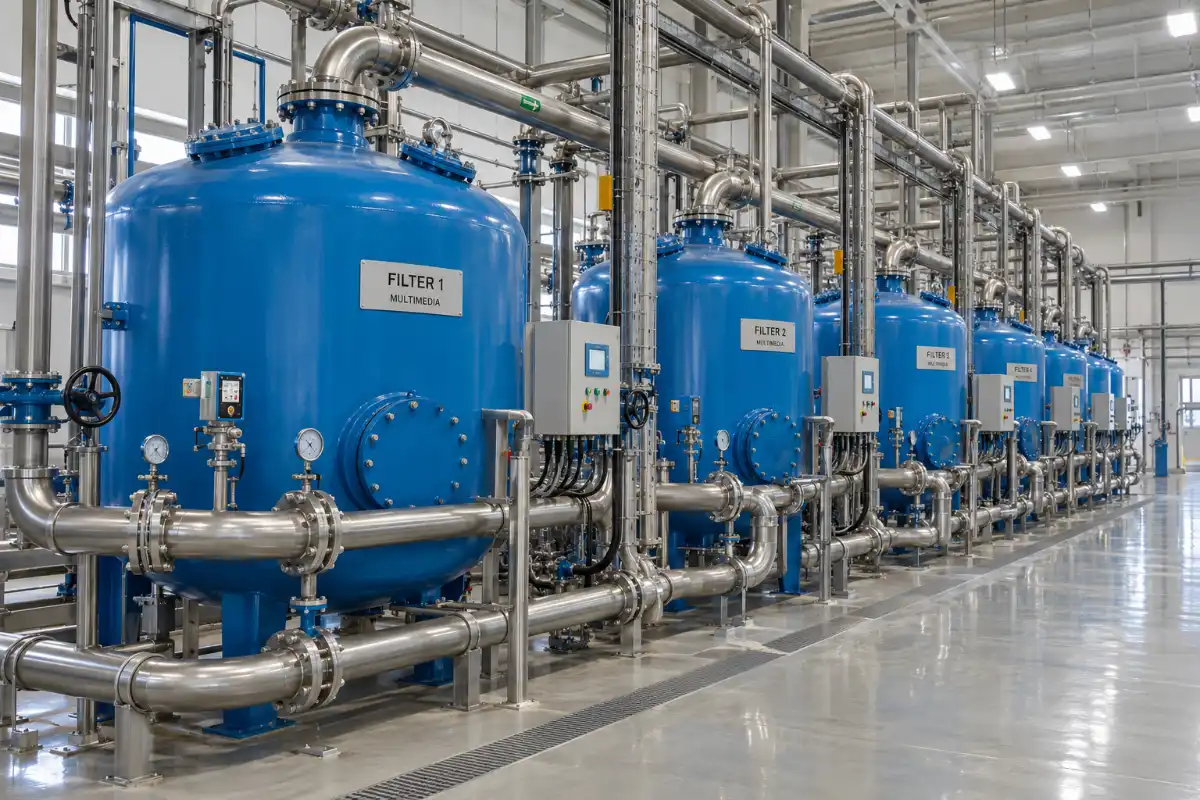
Control Philosophy and Automation
A DTRO retrofit lives or dies on its control system. The two things you must automate are recovery control and cleaning triggers.
Recovery control
Conductivity-based control is standard. The system monitors concentrate conductivity and adjusts the concentrate valve or pump speed to hold a target. If conductivity climbs too high, the system should automatically reduce recovery before scaling occurs. Do not rely on operators to catch this manually on a night shift.
Cleaning triggers
Normalized pressure drop and normalized flux are the two indicators that matter. When either drifts beyond a set threshold, the system should flag a clean-in-place (CIP) cycle. I have seen plants run for months without cleaning because nobody was watching the trend, and the recovery loss was permanent by the time they noticed.
Interlocks
At minimum, you want interlocks for high pressure, high temperature, low feed flow, and high conductivity on the concentrate. These protect the membranes and the pump.
Operating and Maintenance Reality
DTRO is more forgiving than spiral RO, but it is not maintenance-free. Here is what the operating budget actually looks like.
| Item | Typical frequency | Notes |
|---|---|---|
| CIP cleaning | Every 1–4 weeks | Depends on feed fouling load |
| Cartridge filter replacement | Every 2–8 weeks | Cheap insurance for the membranes |
| Antiscalant consumption | Continuous | Dose based on feed chemistry |
| Disk inspection | Every 6–12 months | Look for seal damage and scaling |
| Membrane replacement | Every 2–5 years | Longer with good pretreatment |
| Pump maintenance | Per manufacturer schedule | High-pressure service is demanding |
The single biggest driver of maintenance cost is pretreatment discipline. If you let oil, hardness, or silica slip through, you will pay for it in cleaning chemicals and membrane replacement.
A Practical Retrofit Sequence
Here is the order I use on real projects. It keeps surprises to a minimum.
- Characterize the feed. Two weeks minimum of daily data, plus a full wet-chemistry panel.
- Pilot test. Four to six weeks on actual feed, ideally across a temperature swing.
- Model the mass balance. Include the existing RO, the new DTRO, and the downstream brine handling.
- Check utilities. Power, cooling water, CIP chemicals, drain capacity, and floor space.
- Design the skid. Include energy recovery, CIP, and controls from the start.
- Plan the tie-in. Shutdown windows, temporary bypass, and commissioning sequence.
- Commission with performance testing. Recovery, permeate quality, and pressure drop at design point.
- Train operators on the trends, not just the buttons. The data is what protects the membranes.
Step two is the one people try to skip. Do not skip it. A pilot is cheap compared to a skid that does not perform.
Common Failure Modes and How to Avoid Them
Scaling at high recovery
Pushing recovery too hard without adequate antiscalant or softening is the most common mistake. The fix is conservative design and automatic recovery control.
Organic fouling
High COD feed, especially with oils or surfactants, will coat the membrane surface. The fix is pretreatment, not more cleaning.
Seal leakage
Disk stack seals can fail if the stack is not assembled correctly or if pressure cycles are too aggressive. Follow the manufacturer’s torque and assembly procedure exactly.
Pump cavitation
High-pressure pumps on hot or gassy feed can cavitate. The fix is adequate net positive suction head and, if needed, degasification.
Control drift
Conductivity probes and pressure transmitters drift. Calibrate them on schedule. A drifting probe can cause the system to run outside its safe envelope without any alarm.
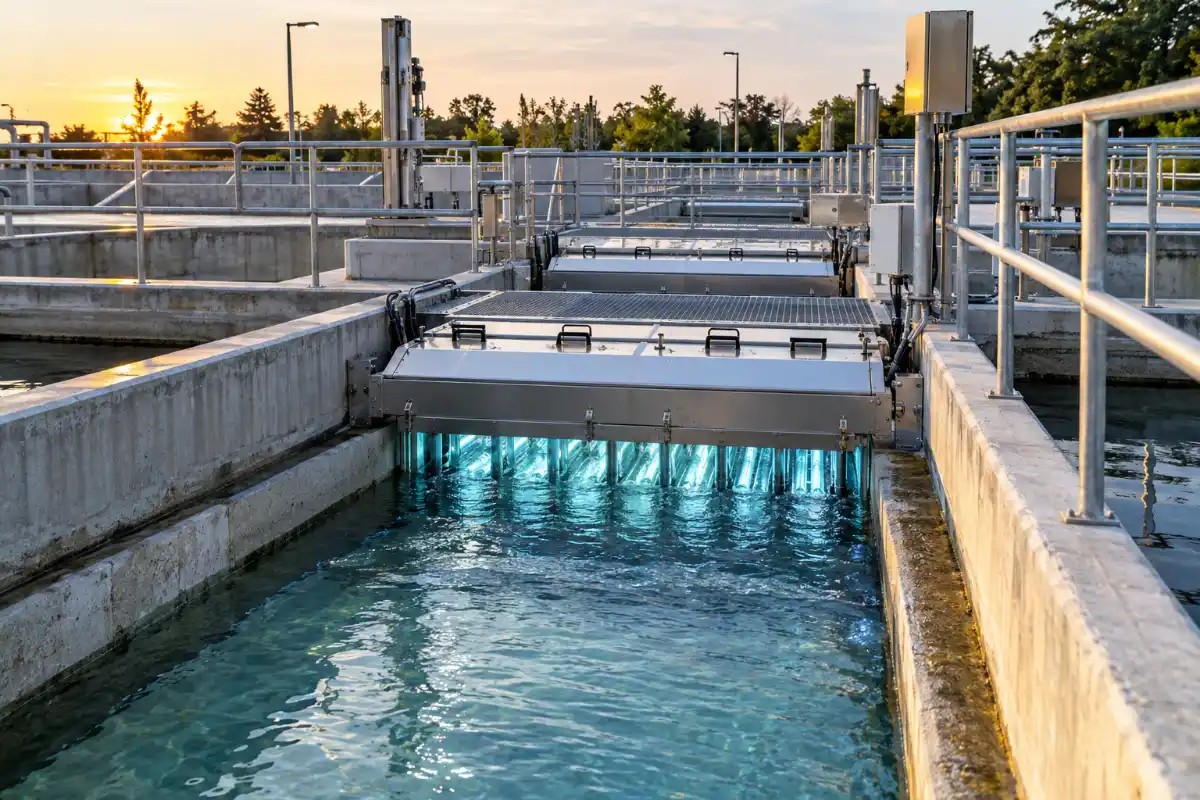
Where DTRO Fits Alongside Evaporation
DTRO is a concentration tool, not a disposal tool. It reduces volume, but the salts and organics still have to go somewhere. In most industrial projects, that means an evaporator or crystallizer downstream.
The combination that works well is DTRO for bulk volume reduction and a mechanical vapor recompression or multi-effect evaporator for final concentration. If you want to see how that pairing is applied on real industrial streams, the evaporator for wastewater treatment overview covers the design logic. The key point is that the DTRO and the evaporator must be sized together. A DTRO that is too aggressive will produce a concentrate that is difficult to evaporate. A DTRO that is too conservative leaves money on the table.
On some duties, a screw press or sludge dewatering step is also part of the picture, especially if the pretreatment generates sludge. That is a separate design conversation, but it affects the overall water balance and should be considered early.
Cost Framework
I am not going to quote you a price, because it depends on flow, pressure, materials, and site conditions. But here is how the cost breaks down.
- Capital: DTRO skid, high-pressure pump, energy recovery device, controls, CIP system, piping, and installation.
- Operating: Power, antiscalant, cleaning chemicals, cartridge filters, and membrane replacement.
- Indirect: Pilot testing, engineering, permitting, and operator training.
The payback usually comes from three places: reduced haul-off or disposal cost for concentrate, reduced evaporator operating cost, and increased permeate recovery that displaces fresh water purchase. On a typical industrial retrofit, payback in the two to four year range is common, but it depends entirely on your disposal cost and water cost. Run the numbers for your site.
If you want a second opinion on the mass balance before you commit capital, that is exactly the kind of thing worth talking through early. You can reach out to our engineering team and we will look at your feed data with you.
Frequently Asked Questions
Can I add DTRO without replacing my existing RO membranes?
Yes, in most cases. The existing spiral RO train stays in service and the DTRO is added on the concentrate. You only replace the existing membranes when they reach end of life on their normal schedule.
What recovery can I realistically expect from a DTRO retrofit?
Indicative range is 50 to 70 percent recovery on the concentrate stream, which typically lifts overall plant recovery from 55 to 65 percent up to 75 to 90 percent. The actual number depends on scaling potential, osmotic pressure, and temperature.
How much pretreatment do I need before DTRO?
Less than a spiral RO would need, but not zero. You still need to control hardness, silica, oil and grease, and suspended solids. Softening and pH adjustment are common additions.
What is the typical cleaning frequency for DTRO membranes?
Every one to four weeks is common on industrial concentrate duties. Cleaner feed can stretch that to monthly or longer. The trigger should be based on normalized pressure drop and flux, not a calendar.
Do I need energy recovery on a DTRO skid?
At 75 to 90 bar, yes, it usually pays for itself. A pressure exchanger or turbocharger can recover 30 to 50 percent of the pumping energy, which is significant on a continuous-duty system.
How does DTRO affect my downstream evaporator?
It reduces the evaporator feed volume by 50 to 70 percent, which lowers both capital and operating cost on the evaporator side. The two systems should be designed together so the concentrate chemistry is compatible.
What is the biggest risk in a DTRO retrofit?
Skipping the pilot test. Feed chemistry varies more than most people expect, and a four to six week pilot on actual water will reveal fouling, scaling, and cleaning behavior that no spreadsheet can predict.
How long does a DTRO retrofit take to install?
From pilot completion to commissioning, a typical industrial retrofit runs three to six months, depending on lead times, site tie-in windows, and permitting. The tie-in itself is usually a short shutdown if the existing plant can run on bypass.