

If you want a realistic number for a landfill leachate treatment system, most industrial projects land somewhere between $450,000 and $6 million in capital cost, depending on flow rate, contaminant load, and how far you need to push treatment. That range is wide because leachate is one of the most variable waste streams in the industry. I’ve quoted systems for 20 m³/day sites that fit on a single skid and for 500 m³/day plants that needed their own building. The single biggest cost driver isn’t the equipment brand — it’s the process train you choose and how conservatively you design it.
In this article I’ll walk through what actually drives landfill leachate treatment system cost, how to compare process options on a lifecycle basis, and where projects typically go over budget. I’ll use engineering ranges rather than fake precision, because anyone who gives you an exact price before sampling your leachate is guessing.
Why Leachate Is Harder to Treat Than Most Industrial Wastewater
Landfill leachate changes with the age of the landfill. Young leachate (under 5 years) typically runs high in BOD, COD, and volatile fatty acids, with a pH on the acidic side. Mature leachate (10+ years) shifts toward lower BOD but stubborn COD from humic and fulvic compounds, plus high ammonia nitrogen and rising salinity. A system designed only for young leachate will struggle five years later.
Typical raw leachate characteristics I see in design data:
| Parameter | Young Landfill (indicative) | Mature Landfill (indicative) |
|---|---|---|
| COD | 10,000–60,000 mg/L | 1,000–5,000 mg/L |
| BOD/COD ratio | 0.4–0.7 | 0.05–0.2 |
| Ammonia-N | 500–2,000 mg/L | 1,000–3,000 mg/L |
| TDS | 5,000–15,000 mg/L | 10,000–30,000 mg/L |
| pH | 5.5–7.0 | 7.5–8.5 |
Those numbers are project-dependent and vary with climate, waste composition, and cover practices. But they explain why a single technology rarely solves the whole problem. If you want a deeper look at what’s actually in the water, this breakdown of chemicals found in landfill leachate is a good starting point.
The Process Train Determines Most of Your Cost
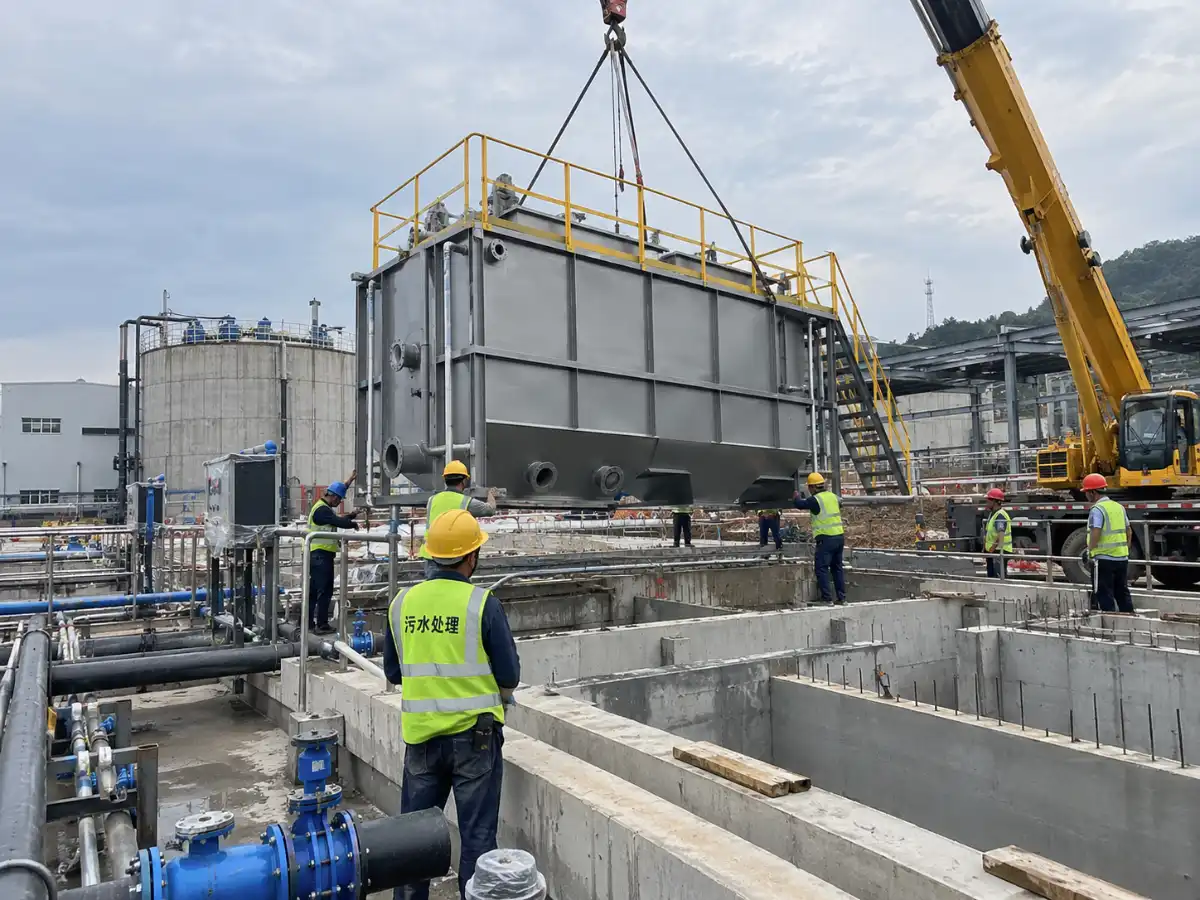
Before we talk dollars, we need to talk about the sequence of unit operations. Leachate treatment is almost always a combination of biological, membrane, and evaporation stages. Each addition changes both capital and operating cost significantly.
Stage 1: Pretreatment and Biological Treatment
Most projects start with equalization, pH adjustment, and either an MBR or a sequencing batch reactor. Biological treatment handles the biodegradable fraction and, critically, ammonia through nitrification-denitrification. For a 100 m³/day system, an MBR package typically runs $250,000 to $700,000 installed, depending on whether you need external membrane modules and how much aeration capacity is required.
If ammonia is above 1,500 mg/L, you may need a dedicated stripping step or a longer SRT. I’ve seen projects try to skip this and then fight ammonia compliance for years. Don’t.
Stage 2: Membrane Concentration
After biology, the water still carries refractory COD, salts, and color. This is where membrane systems earn their place. Two common paths:
- DTRO (disk tube reverse osmosis) — handles high fouling potential and high salinity better than spiral-wound RO. Capital cost for a 100 m³/day DTRO train typically runs $180,000 to $450,000.
- Conventional industrial RO — cheaper upfront but needs more pretreatment and struggles above 15,000 mg/L TDS without careful design. If you’re working with high-pressure applications, you may need high-pressure RO membranes rated for the duty.
Membrane systems produce a concentrate — usually 20–35% of feed volume — that has to go somewhere. That’s where evaporation comes in.
Stage 3: Evaporation and Zero Liquid Discharge
If your discharge permit doesn’t allow brine disposal, you’re looking at evaporation. This is the most expensive part of the train, but it’s often unavoidable. Options include:
- MVR (mechanical vapor recompression) — the most energy-efficient evaporator for most leachate applications. Power consumption typically runs 15–35 kWh per m³ of distillate, versus 200+ kWh/m³ for a simple steam-heated single effect.
- Multi-effect evaporators — better when you have cheap steam available. A multi-effect evaporator can cut steam demand substantially compared to a single effect.
- MVC evaporators — similar to MVR but with different compressor configurations; useful for smaller flows or where power quality is a concern.
An MVR system for 50 m³/day of concentrate typically costs $600,000 to $1.5 million installed, including the compressor, heat exchangers, and crystallizer if you need true ZLD. For a full picture of what a zero liquid discharge system adds to a project, that’s a good reference.
Capital Cost Breakdown by System Size
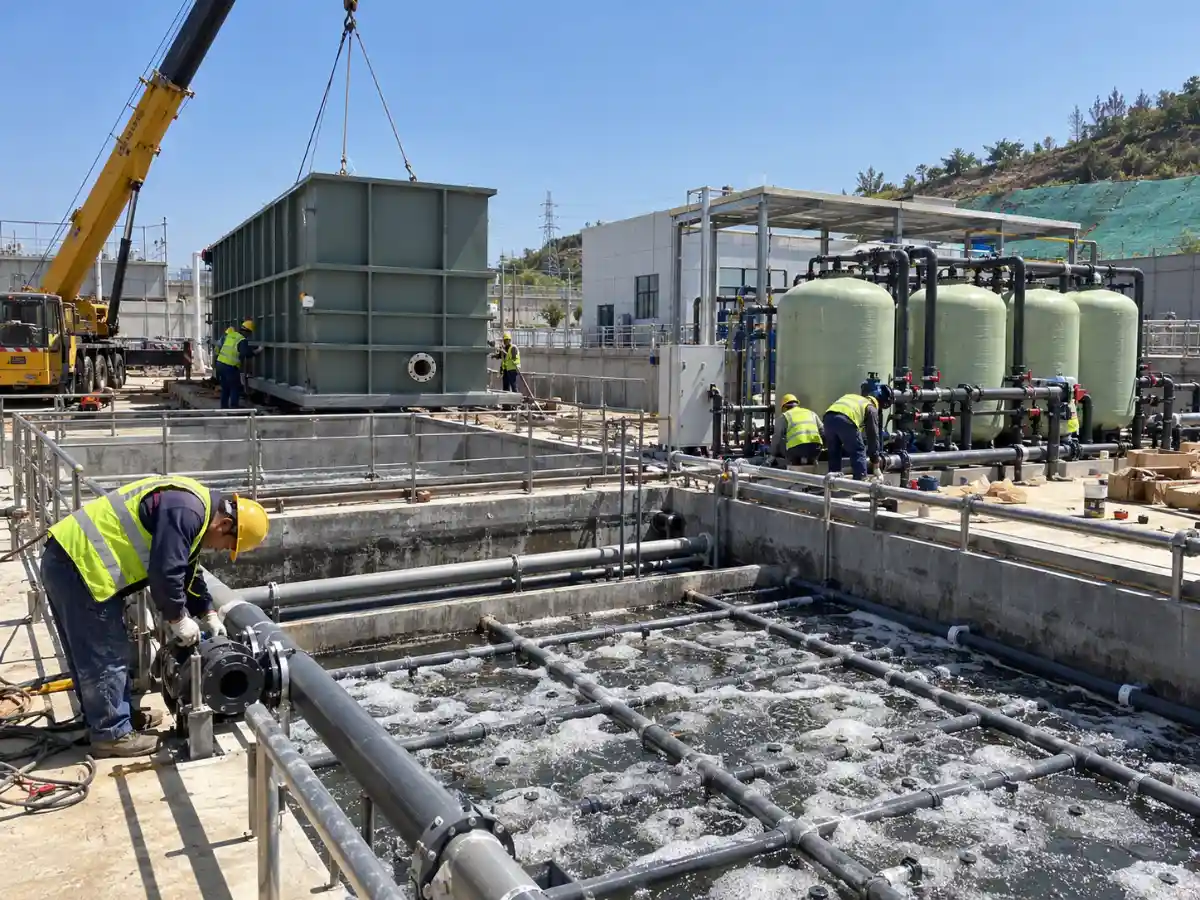
Here’s how the numbers stack up across typical project scales. These are indicative ranges for a complete system — pretreatment through final polishing — and assume moderate contaminant loads. High salinity, high ammonia, or strict discharge limits push you toward the upper end.
| System Capacity | Indicative CAPEX Range | Typical Process Train |
|---|---|---|
| 20–50 m³/day | $450,000–$1,100,000 | EQ + MBR + DTRO + small MVR |
| 50–150 m³/day | $900,000–$2,400,000 | EQ + MBR + DTRO + MVR + crystallizer |
| 150–300 m³/day | $2,000,000–$4,200,000 | Full biological + two-stage membrane + MVR + ZLD |
| 300–500 m³/day | $3,500,000–$6,000,000+ | Custom multi-train, redundant equipment, full ZLD |
These ranges exclude land, civil works, permitting, and grid upgrades, which can add 20–40% on top. They also assume you’re not dealing with unusual contaminants like high heavy metals or radioactive isotopes, which would require additional pretreatment.
Operating Cost: The Number That Actually Matters
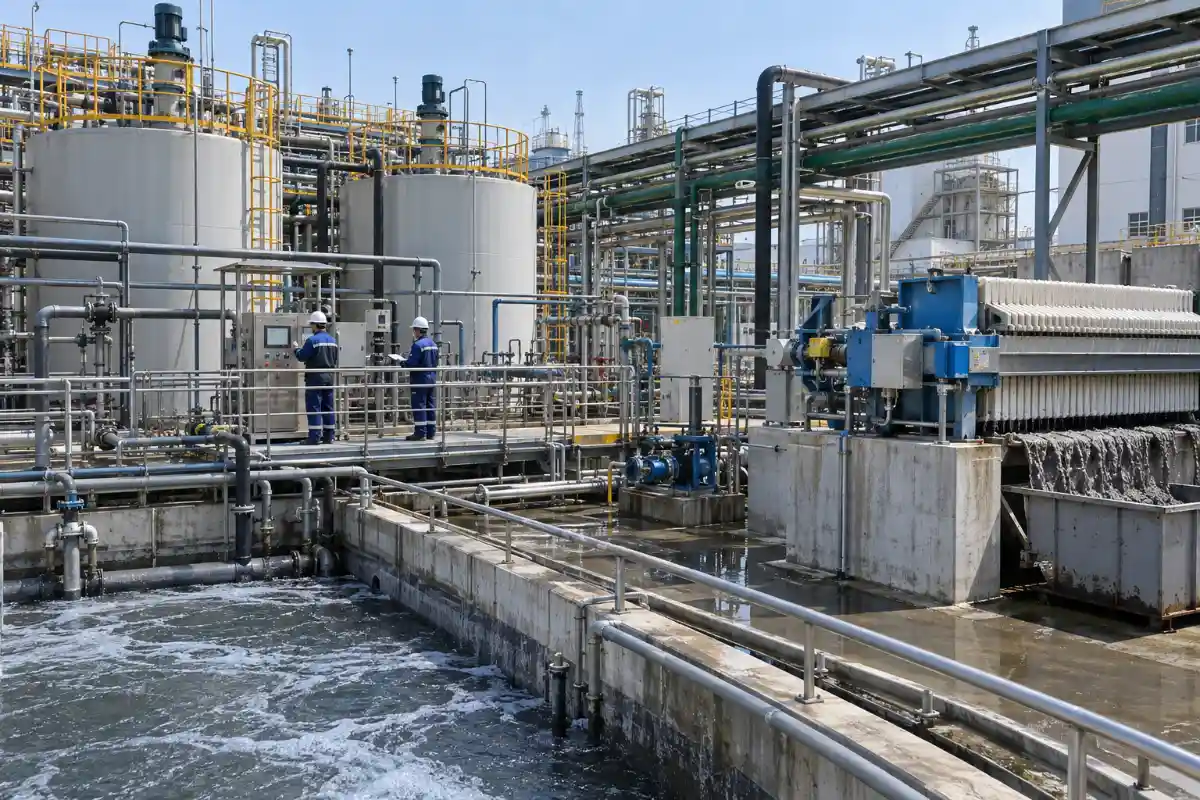
I’ve seen clients fixate on CAPEX and then get blindsided by OPEX. Over a 15-year life, operating cost usually exceeds capital cost by a factor of 1.5 to 3. The main contributors:
- Electricity — the dominant cost for MVR and membrane systems. At $0.10–$0.20/kWh, an MVR system treating 100 m³/day can run $40,000–$90,000 per year just in power.
- Membrane replacement — DTRO and RO elements typically last 2–4 years depending on fouling. Budget 8–15% of membrane CAPEX annually.
- Chemicals — antiscalant, cleaning chemicals, pH adjustment, and nutrients for biology. Usually $3–$8 per m³ treated.
- Labor — a well-automated plant needs 0.5–1.5 operators per shift. Less automation means more labor but lower upfront cost.
- Sludge and brine disposal — this can be brutal. If you’re producing 5–10% of feed as solid waste and disposal costs $150–$400 per ton, it adds up fast.
For a 100 m³/day leachate plant, total OPEX typically lands between $180,000 and $450,000 per year. That’s $5–$12 per m³. If your number is well below that, either your leachate is unusually clean or you’re missing a cost line.
How to Compare Process Options Without Getting Burned
The right comparison isn’t CAPEX versus CAPEX. It’s total cost of ownership over the design life, adjusted for risk. Here’s the framework I use with clients:
- Define the discharge target first. If you can discharge to a municipal sewer, you may not need evaporation at all. If you need ZLD, you’re in a different cost universe.
- Model leachate variability. Design for the 90th percentile, not the average. Systems sized for average conditions fail during storm events and seasonal peaks.
- Price the concentrate. Membrane systems are cheap until you have to deal with the reject. Factor in evaporation, disposal, or both.
- Include redundancy where it matters. A single compressor failure that shuts down your plant for two weeks costs more than the spare.
- Get a real energy profile. Don’t accept “low energy” claims without a load list. Ask for the compressor kW, pump kW, and total connected load.
If you’re early in the evaluation stage, it helps to understand how process selection in water treatment works before you commit to a train. And if you’re comparing evaporator types specifically, this overview of MVR evaporator cost drivers is worth reading.
Where Projects Go Over Budget
After enough projects, you start to see the same mistakes. These are the ones that hurt most:
Underestimating Leachate Strength
Design based on a single grab sample is a recipe for failure. Leachate quality swings with rainfall, waste input, and landfill age. I always recommend at least 12 months of composite sampling before final design. If that’s not possible, add 30–50% design margin.
Skipping Pilot Testing
For any system over 50 m³/day, pilot testing the membrane and evaporation stages pays for itself. A six-week pilot typically costs $40,000–$120,000 and can prevent a $500,000 design error. I’ve seen pilot results change the recommended process train more than once.
Ignoring Scaling and Fouling
Leachate is loaded with calcium, magnesium, silica, and organics that foul heat exchangers and membranes. If your evaporator design doesn’t account for regular cleaning cycles and antiscalant dosing, you’ll be pulling heat exchangers every few months. Proper MVC evaporator heat exchanger design and material selection matters here.
Poor Turndown Capability
Landfill leachate flow drops as the landfill closes and caps. A system designed for peak flow but operated at 30% capacity runs inefficiently and fouls faster. Specify turndown from the start.
Maintenance and Reliability: The Hidden Cost Line
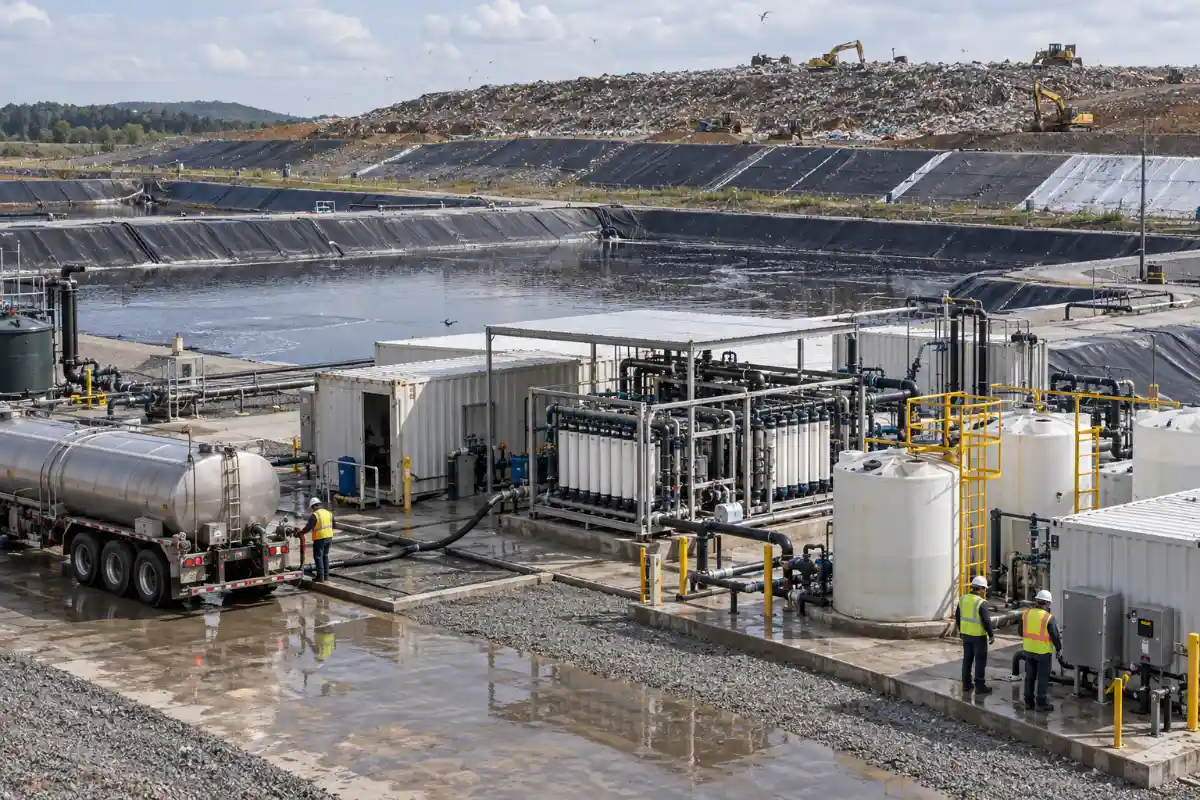
Maintenance on a leachate plant is not optional. Budget 3–6% of CAPEX annually for spares, service, and repairs. The items that fail most often:
- Compressor seals and bearings on MVR systems
- Membrane elements (fouling, not mechanical failure)
- Pumps handling high-solids or high-salinity streams
- Instrumentation — pH, conductivity, and flow meters drift
- Heat exchanger tubes — scaling and corrosion
If you’re running an evaporator, choosing the right compressor configuration makes a big difference. A compressor-based wastewater evaporator designed for your duty cycle will last longer and cost less to maintain than a general-purpose unit pushed beyond its range.
Frequently Asked Questions
What is the typical capital cost of a landfill leachate treatment system?
For a complete system from pretreatment through final discharge or ZLD, most projects fall between $450,000 and $6 million. Small systems under 50 m³/day sit at the low end; systems above 300 m³/day with full ZLD sit at the high end. The exact number depends on flow rate, contaminant load, discharge requirements, and how much redundancy you specify.
How much does it cost to operate a leachate treatment plant per year?
For a 100 m³/day plant, annual operating cost typically runs $180,000 to $450,000, or roughly $5–$12 per cubic meter treated. Electricity, membrane replacement, chemicals, and residue disposal are the main drivers. Plants with full ZLD and high salinity sit at the upper end.
Do I really need evaporation, or can membranes handle it alone?
Membranes alone can work if you have a permitted disposal route for the concentrate and your TDS is manageable. Once TDS exceeds roughly 20,000–30,000 mg/L, or if your permit requires zero liquid discharge, evaporation becomes necessary. The decision should be based on your discharge permit and the true cost of concentrate disposal, not just membrane performance.
What’s the difference between MVR and MVC evaporators for leachate?
Both use mechanical compression to reuse vapor energy, but the compressor type and configuration differ. MVR is generally more energy-efficient at larger scales and is my default recommendation for leachate above 30 m³/day. MVC can be a better fit for smaller flows or where the available power supply limits compressor size. The right choice depends on your flow, power quality, and maintenance capability.
How long does it take to design, build, and commission a leachate treatment system?
From contract award to commissioning, expect 6–12 months for systems under 100 m³/day and 12–24 months for larger or ZLD projects. Pilot testing, if required, adds 2–3 months. Permitting can add significant time depending on the jurisdiction and discharge route. I always advise clients to start the permitting process in parallel with design, not after.
What causes the most common operational problems in leachate treatment systems?
Scaling and fouling on membranes and heat exchangers top the list, followed by ammonia breakthrough in biological stages and compressor reliability issues on evaporators. Most of these trace back to design assumptions that didn’t match actual leachate conditions. Regular monitoring, proper antiscalant dosing, and a maintenance schedule based on operating hours rather than calendar time prevent most failures.
Can I phase the investment to reduce upfront cost?
Yes, and I often recommend it. A common approach is to build the biological and membrane stages first, then add evaporation when discharge requirements tighten or concentrate disposal costs rise. The key is to design the initial system with space, power, and piping provisions for the future evaporation stage. Retrofitting without those provisions can cost 30–50% more than building it in from the start.
If you’re evaluating options for a specific site, the fastest way to get a realistic number is to share your flow rate, leachate analysis, and discharge target. From there, a proper process train and cost estimate can be developed. You can reach out to our engineering team to start that conversation.