

If you’re sourcing evaporation equipment from overseas, the real question isn’t whether a factory can build a unit — it’s whether they can deliver a system that still performs in year three, when your feed chemistry has drifted, your operators have turned over, and your production schedule has changed twice. I’ve spent more than a decade specifying, commissioning, and troubleshooting thermal and membrane systems, and I’ve watched buyers get burned by factories that looked impressive on a brochure but fell apart on the details. This guide walks through how to evaluate a Chinese evaporator factory the way an engineer would: by testing their process knowledge, fabrication discipline, documentation habits, and service behavior before you sign anything.
Start With the Factory’s Engineering Depth, Not Its Catalog
Most factories can show you a nice catalog. Far fewer can show you a heat and mass balance for your specific wastewater. That’s the first filter I apply.
When I evaluate a supplier, I ask for a preliminary process design based on my actual feed analysis — not a generic datasheet. If they come back with a real material balance, a steam or power consumption estimate, a blowdown strategy, and a scaling risk assessment, that tells me they have process engineers, not just salespeople forwarding a template.
Here’s what separates a real engineering shop from an assembly operation:
- They ask about your feed chemistry first. TDS, COD, hardness, silica, chlorides, pH, oil and grease, and temperature range. If they don’t ask, they’re guessing.
- They flag scaling and fouling risk before you do. Silica, calcium sulfate, and organics behave very differently in an evaporator, and the design response is not the same.
- They can explain why they chose a particular configuration. A mechanical vapor compression (MVC) evaporator and a multi-effect train solve different problems, and a competent engineer will tell you which trade-offs apply to your case.
- They push back. If a factory agrees with every assumption you hand them, they’re not engineering — they’re copying.
I also look at how they handle turndown. Industrial wastewater flow rates swing. A system that only runs efficiently at 100% nameplate capacity is a system that will waste energy half the time. Ask what the minimum stable operating load is and how they maintain it.
Configuration Choices Tell You How They Think
The configuration a factory recommends — and how they justify it — reveals a lot about their competence. There’s no universally “best” evaporator. There’s only the right fit for a given duty.
For high-salinity streams with limited steam availability, a MVR (mechanical vapor recompression) design often makes sense because it recovers latent heat internally. For sites with cheap waste steam, a multi-effect evaporator may be more economical on a lifecycle basis. For small flows or pilot work, a single-effect unit can be the pragmatic choice.
What I want to hear from a factory is a reasoned comparison, not a sales pitch. A good process engineer will sketch out something like this:
| Configuration | Typical fit | Main trade-off |
|---|---|---|
| Single-effect | Low flow, pilot, simple duty | High specific energy per ton evaporated |
| Double-effect | Moderate flow, available steam | Balance between capex and steam use |
| Triple-effect | Higher flow, steam-driven site | Lower steam per ton, larger footprint |
| MVC / MVR | High salinity, power-driven site | Higher electrical demand, low external steam |
Notice I said “typical fit.” These are indicative ranges, not rules. Real selection depends on your steam price, electricity price, feed chemistry, and how much operator attention you can realistically provide. A factory that treats these as fixed rules is not thinking.
I also pay attention to how they handle the crystallization end of the process. If your stream is heading toward zero liquid discharge, the crystallizer design and solids handling often determine whether the whole plant stays online. Ask how they manage salt removal, mother liquor purge, and the risk of scaling in the forced-circulation loop.
Fabrication Quality Is Where Promises Meet Reality
This is the part buyers underweight most often. Process design gets all the attention, but fabrication quality decides whether the unit survives its first year.
When I visit a factory — or evaluate one remotely — I look at material traceability, welding procedures, and how they handle heat exchanger surfaces. Evaporators live in a harsh environment: high temperature, high chloride, frequent cleaning cycles. A poorly welded tube-to-tubesheet joint will fail, and it will fail at the worst possible time.
Specific things I check:
- Material selection logic. Are they using duplex stainless, titanium, or a coated carbon steel based on the actual chloride and temperature profile? Or defaulting to 316L because it’s cheap?
- Welding documentation. WPS/PQR records, welder qualification, and NDT reports on critical joints. If they can’t produce these, walk away.
- Heat exchanger design. The heat exchanger is the heart of the system. Ask about tube wall thickness, fouling allowance, and cleaning access.
- Compressor selection. For MVC systems, the compressor is often the single largest reliability risk. Ask about the brand, the operating envelope, and the spare parts strategy.
- Pump and instrumentation quality. Cheap pumps and sensors are a false economy. They cause downtime, and downtime costs more than the parts.
I’ve seen factories cut corners on tube thickness by a fraction of a millimeter to win a bid. That fraction shows up as a tube failure eighteen months later, usually in the middle of a production run. It’s not worth it.
Documentation and Testing: The Paper Trail That Protects You
A factory’s documentation habits tell you how they’ll behave when something goes wrong. If the documentation is thin before the sale, it will be thinner after.
I require, at minimum:
- A full P&ID with instrument tags, control loops, and safety interlocks clearly marked.
- A heat and mass balance tied to a defined feed composition and operating case.
- Equipment datasheets for every major component, including the compressor, pumps, and heat exchangers.
- A control philosophy document explaining how the system starts up, shuts down, and handles upsets.
- An O&M manual written in clear English, not machine-translated boilerplate.
The O&M manual point matters more than people expect. If your operators can’t understand the manual, they’ll run the system by trial and error. That’s how fouling events turn into forced shutdowns.
On testing: ask whether they do a factory acceptance test (FAT) on a representative feed, or at least a hydro test and functional check. For larger systems, a witnessed FAT is worth the travel cost. It catches wiring errors, instrument calibration issues, and control logic problems before the equipment ships.
In my experience, the projects that go smoothly are the ones where the buyer spent an extra two weeks on documentation review before shipment. The projects that go badly are the ones where everyone was in a hurry to get the equipment on a truck.
Energy, Cost, and Lifecycle Thinking
Capital cost is the number everyone negotiates. Operating cost is the number that determines whether the project was actually a good decision.
For an evaporator, the dominant operating costs are usually electricity (for MVC/MVR) or steam (for multi-effect), plus maintenance, chemicals for cleaning, and operator time. A factory that can give you a realistic specific energy consumption figure — in kWh per ton of distillate or kg of steam per ton of distillate — is a factory that has actually run systems.
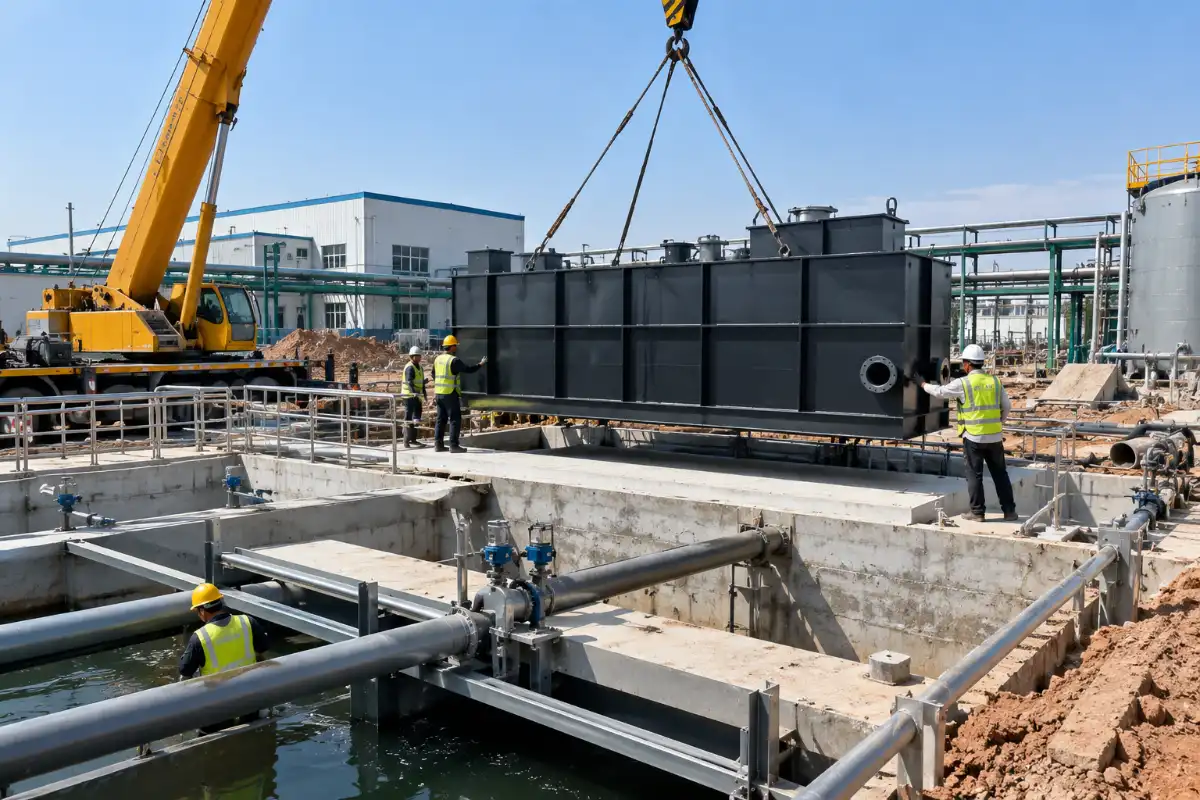
Be cautious with any supplier who quotes energy consumption without stating the assumptions. Specific energy depends heavily on feed concentration, boiling point elevation, and the number of effects or the compression ratio. A number without context is marketing, not engineering.
I usually ask for a simple lifecycle comparison across two or three configurations, using my own utility prices. That conversation quickly reveals whether the factory understands total cost of ownership or just wants to sell the biggest unit.
For a broader look at how evaporator cost drivers behave across configurations and site conditions, it helps to see how capex and opex interact over a ten-year horizon rather than a single purchase price.
Service, Spare Parts, and the Long Game
This is where a lot of overseas purchases quietly fail. The equipment arrives, it works, and then a compressor seal fails two years later and nobody can get a replacement in under three months.
Before you commit, get clear answers on:
- Recommended spare parts list with lead times and pricing.
- Remote support capability. Can they access the PLC remotely, or at least review data logs and advise?
- Commissioning support. Will they send a qualified engineer, and for how long? Who pays for travel?
- Training. Is operator training included, and is it hands-on or classroom only?
- Warranty terms. What’s covered, what’s excluded, and how are claims handled?
A factory with a real service culture will have a documented commissioning protocol and a named service contact. A factory without one will promise everything verbally and deliver nothing in writing.
I also ask about their experience with the specific industry. A factory that has built systems for electroplating wastewater understands heavy metal and chloride issues. One that has worked on landfill leachate understands the variability problem. Industry-specific experience shortens the learning curve on your project.
A Practical Evaluation Checklist
Here’s the sequence I use when I’m screening a new factory. It’s not glamorous, but it works.
- Send a real feed analysis and ask for a preliminary process design with a material balance.
- Review their configuration recommendation and ask them to defend it against one alternative.
- Request welding procedures, material certificates, and NDT reports for a recent similar unit.
- Ask for a sample P&ID and O&M manual from a completed project.
- Get a spare parts list with lead times and prices.
- Ask for two or three references in a similar industry, and actually call them.
- Negotiate a witnessed FAT if the system size justifies it.
- Confirm commissioning scope, training, and warranty in writing before signing.
If a factory balks at any of these, that’s information. It tells you how the relationship will go after the purchase order.
Need a second opinion on a supplier’s process design?
Send us your feed analysis and the proposal you’re reviewing. We’ll tell you where the design assumptions look thin — no obligation, no sales script.
Common Failure Patterns to Watch For
After enough projects, you start to see the same mistakes repeat. Here are the ones I see most often when a buyer is evaluating a Chinese evaporator factory.
Underestimated scaling and fouling
The design assumes clean operation, but real wastewater fouls heat transfer surfaces. The result is falling capacity, more frequent cleaning, and eventually a system that can’t hit its rated output. Ask specifically how they handle silica, calcium, and organic fouling.
Oversized or undersized compressor
A compressor that’s too small can’t achieve the required compression ratio. One that’s too large runs inefficiently at low load. The correct sizing depends on the actual boiling point elevation and the target concentration, not a rule of thumb.
Inadequate instrumentation
Without reliable conductivity, density, temperature, and pressure measurement, the control system is flying blind. Operators end up running the system manually, which means it only performs as well as the least experienced person on shift.
Poor turndown behavior
Systems that only work at design flow are a problem for any plant with variable production. Confirm the minimum stable load and how the control system handles it.
Weak commissioning
Even a well-built system can fail if commissioning is rushed. Insist on a structured startup with performance verification against the design basis.
How to Compare Two Factories Fairly
When you have two or three proposals on the table, don’t compare on price alone. Normalize the offers first.
| Comparison point | What to check |
|---|---|
| Scope of supply | Are all parties quoting the same boundaries? Pumps, instrumentation, control panel, civil works? |
| Design basis | Same feed composition, same product quality target, same ambient conditions? |
| Energy consumption | Specific energy per ton of distillate, with stated assumptions. |
| Materials of construction | Wetted parts, gaskets, and any corrosion allowances. |
| Spare parts and service | Lead times, pricing, and named service contacts. |
| Commercial terms | Payment schedule, warranty, and performance guarantees. |
Once the offers are normalized, the cheapest option often stops looking cheap. That’s the point.
What Good Looks Like in Practice
I’ll close the evaluation section with a picture of what a strong factory actually behaves like, because it’s easier to recognize than to describe in the abstract.
A strong factory sends you a process design that includes a clearly stated design basis, a material balance, a utility summary, and a list of assumptions. They flag the risks — scaling, corrosion, turndown — before you ask. They provide references you can actually reach. They answer technical questions with technical answers, not marketing language. And when you push back on an assumption, they either defend it with data or revise it.
That behavior is consistent across the whole project. It doesn’t appear just at the proposal stage and then disappear after the purchase order. If you see it early, you’ll see it later.
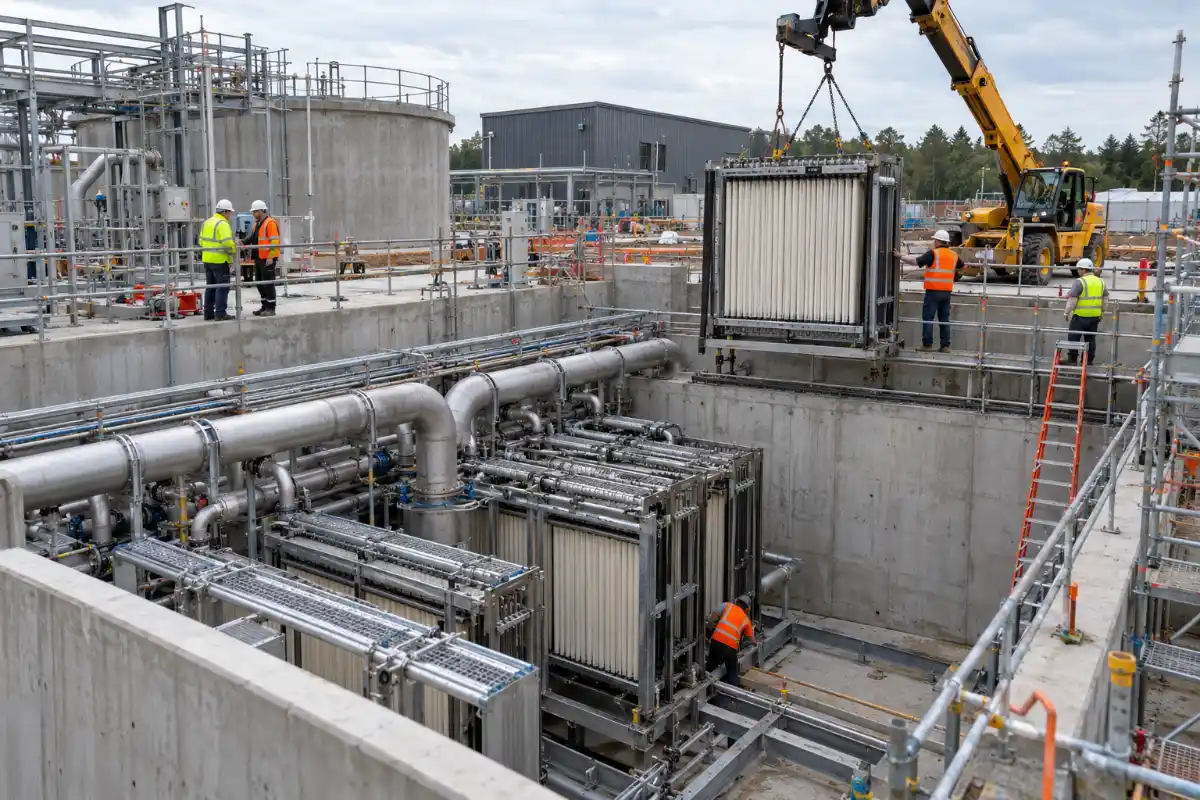
For a broader view of how evaporator systems integrate into a full treatment train, including membrane pre-concentration and final disposal, it helps to understand the whole process rather than just the thermal stage. A well-designed wastewater evaporation system usually sits behind a membrane stage that reduces the volume the evaporator has to handle, which cuts both capex and opex.
Frequently Asked Questions
How do I know if a factory’s process design is realistic?
Ask for the design basis in writing: feed composition, flow rate, product quality target, and ambient conditions. Then ask them to explain how the material balance changes if the feed concentration rises by 20%. A factory with real process depth will answer quickly and coherently. One that’s guessing will stall or give a vague answer.
What’s a reasonable energy consumption range for an MVC evaporator?
It depends heavily on the compression ratio, boiling point elevation, and feed concentration. Typical MVC systems consume on the order of 15 to 40 kWh per ton of distillate, but that range is wide because the underlying conditions vary so much. Treat any single number without stated assumptions with caution.
Should I always choose MVR over a multi-effect evaporator?
No. MVR makes sense when electricity is reasonably priced and steam is scarce or expensive. Multi-effect systems make sense when you have cheap waste steam available. The right choice depends on your utility prices, your feed chemistry, and your site constraints. A good factory will walk you through the trade-offs rather than defaulting to one technology.
How important is a witnessed factory acceptance test?
For systems above roughly 1 ton per hour of evaporation capacity, it’s usually worth the travel. A witnessed FAT catches wiring errors, instrument calibration problems, and control logic issues before the equipment ships. Fixing those issues at the factory is far cheaper than fixing them on site.
What spare parts should I stock from day one?
At minimum: compressor seals and bearings if applicable, pump mechanical seals, key instrument sensors (conductivity, pressure, temperature), gaskets, and any proprietary control components. Ask the factory for a recommended two-year spare parts list and get pricing upfront so there are no surprises later.
How do I handle scaling in a high-silica wastewater stream?
Silica scaling is one of the harder problems in evaporation. Options include operating at lower concentration factors, seeding with silica particles, or using a crystallizer design that manages silica precipitation deliberately. The right approach depends on your silica concentration, pH, and temperature profile. Ask the factory how they’ve handled silica in past projects and what their specific design response is.
What’s the biggest cause of evaporator downtime in the first two years?
In my experience, it’s a combination of fouling that wasn’t adequately anticipated in the design and instrumentation that isn’t reliable enough to let the control system do its job. Both are preventable with better design and better component selection. Both are also easy to cut when a factory is trying to win on price.
How long should commissioning take?
For a mid-sized industrial system, plan on two to four weeks for mechanical completion, functional testing, and performance verification. Rushing commissioning is one of the most common causes of long-term operating problems. Build the time into your schedule.
Final Thoughts
Evaluating a Chinese evaporator factory isn’t about finding the cheapest bid or the fastest delivery. It’s about finding a partner who can think through your specific wastewater problem, build equipment that survives real operating conditions, document the system clearly, and support it after the sale. The factories that do this well aren’t hard to identify once you know what to look for — they ask better questions, they push back on weak assumptions, and they put their commitments in writing.
Take the time to run a proper evaluation. It costs you a few weeks upfront and saves you years of operational headaches. That’s the trade every experienced buyer makes.