

Battery manufacturing brine is not like most industrial wastewater. It is a high-salinity stream loaded with sodium sulfate, lithium salts, nickel, cobalt, manganese, and trace organics from cathode and anode processing. If you are dealing with this stream, the short answer is this: the most reliable battery manufacturing brine treatment solution combines pretreatment to remove heavy metals and hardness, membrane concentration to shrink volume, and a thermal evaporator or crystallizer to finish the job. Which specific combination you choose depends on your salt profile, discharge limits, and whether you are chasing zero liquid discharge (ZLD).
I have worked on brine systems for battery material plants, and the mistakes I see are almost always the same. Someone undersizes the pretreatment, the evaporator scales within weeks, and the whole train becomes a maintenance headache. The chemistry is unforgiving. Let me walk you through how I actually approach these projects.
What Makes Battery Manufacturing Brine So Difficult
Battery brine comes from several places in the plant. You get it from cathode active material washing, from precursor synthesis, from electrolyte preparation, and from equipment cleaning. Each stream has a different fingerprint, and blending them without thinking is one of the first errors I see.
The core challenges are consistent across most of these streams:
- Very high total dissolved solids. Conductivity often runs into the tens of thousands of microsiemens, sometimes higher. This rules out simple biological treatment and most conventional clarification.
- Mixed heavy metals. Nickel, cobalt, and manganese are valuable but toxic. They must be removed or recovered before any thermal step, or they will foul heat exchangers and contaminate condensate.
- Hardness and scaling ions. Calcium, magnesium, and sulfate combine to form hard scale on heat transfer surfaces. This is the number one cause of evaporator downtime I have seen.
- Residual organics. Binders, solvents, and additives create foaming and fouling problems in evaporation and membrane systems.
- Variable composition. A plant running different product lines will send different brine every week. A system designed for one recipe will struggle with the next.
If you want a broader refresher on what separates these streams from ordinary industrial wastewater, the fundamentals of what is wastewater are worth reviewing before you design anything.
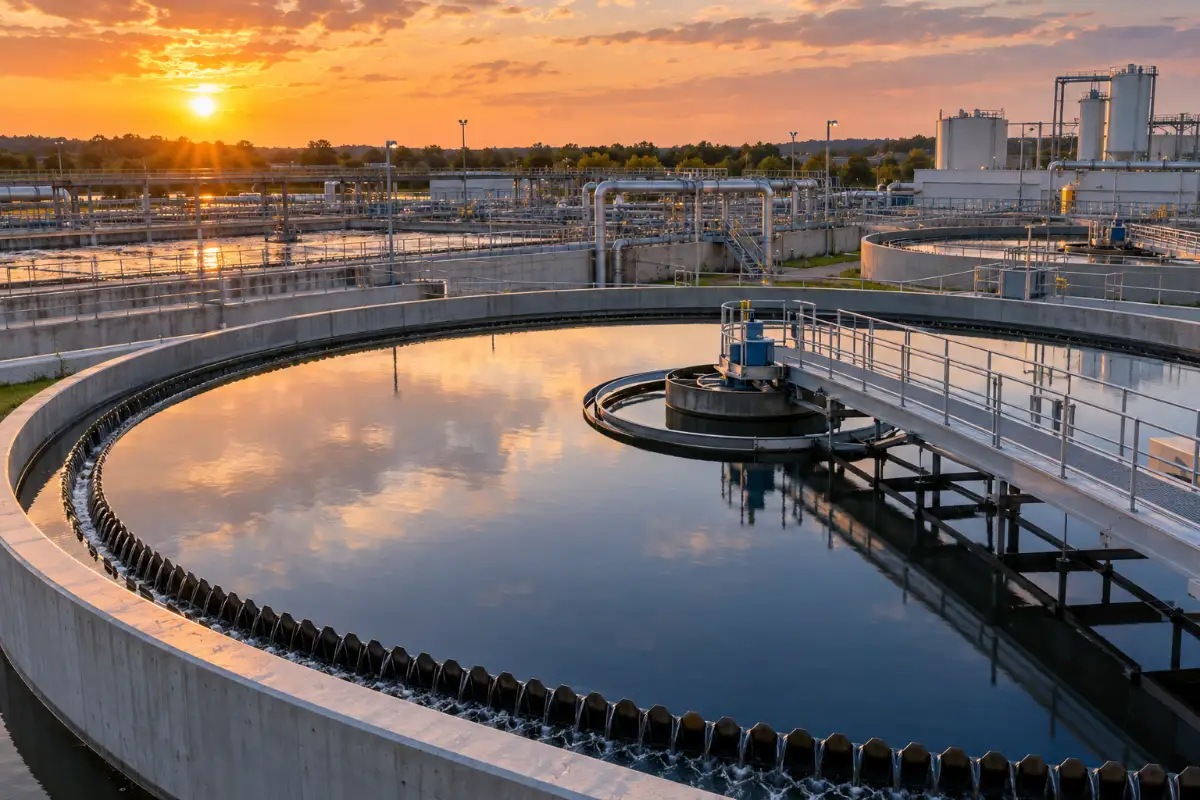
The Treatment Train I Actually Recommend
There is no single unit that handles battery brine. You need a train. The order matters as much as the equipment itself.
Step 1: Equalization and Homogenization
Never feed a thermal or membrane system directly from a process line. Battery plants produce batch discharges. Without a properly sized equalization tank, you will send shock loads of high-hardness or high-metal brine into your downstream equipment. I typically size equalization for at least 24 hours of average flow, more if the plant runs campaign-style production.
Step 2: Chemical Pretreatment
This is where most of the reliability is won or lost. The goal is to knock out heavy metals, hardness, and suspended solids before they ever reach a membrane or an evaporator.
Typical steps include:
- pH adjustment to precipitate metals as hydroxides
- Sulfide or carbonate dosing for residual metal removal where hydroxide alone is not enough
- Coagulation and flocculation
- Clarification or dissolved air flotation
- Filtration down to at least 5 microns, often finer for membrane protection
I usually add softening here too. If you skip it, you are gambling with your evaporator. The sludge from this stage needs its own handling. A screw press sludge dewatering unit is a common and practical choice for the metal hydroxide sludge, because it handles the fine, gelatinous material better than some belt presses.
Step 3: Membrane Concentration
Once the brine is clean, you want to remove as much water as possible before you spend energy on evaporation. This is where membrane systems earn their capital cost back.
For high-salinity streams, standard reverse osmosis will hit its osmotic pressure limit fast. You need either high-pressure RO or, more commonly for difficult brines, a DTRO membrane system. DTRO handles higher fouling potential and higher salinity than spiral-wound elements, and it tolerates the kind of variability battery plants produce.
If you want to understand how these membrane stages fit into a broader treatment sequence, the water treatment process overview is a useful reference.
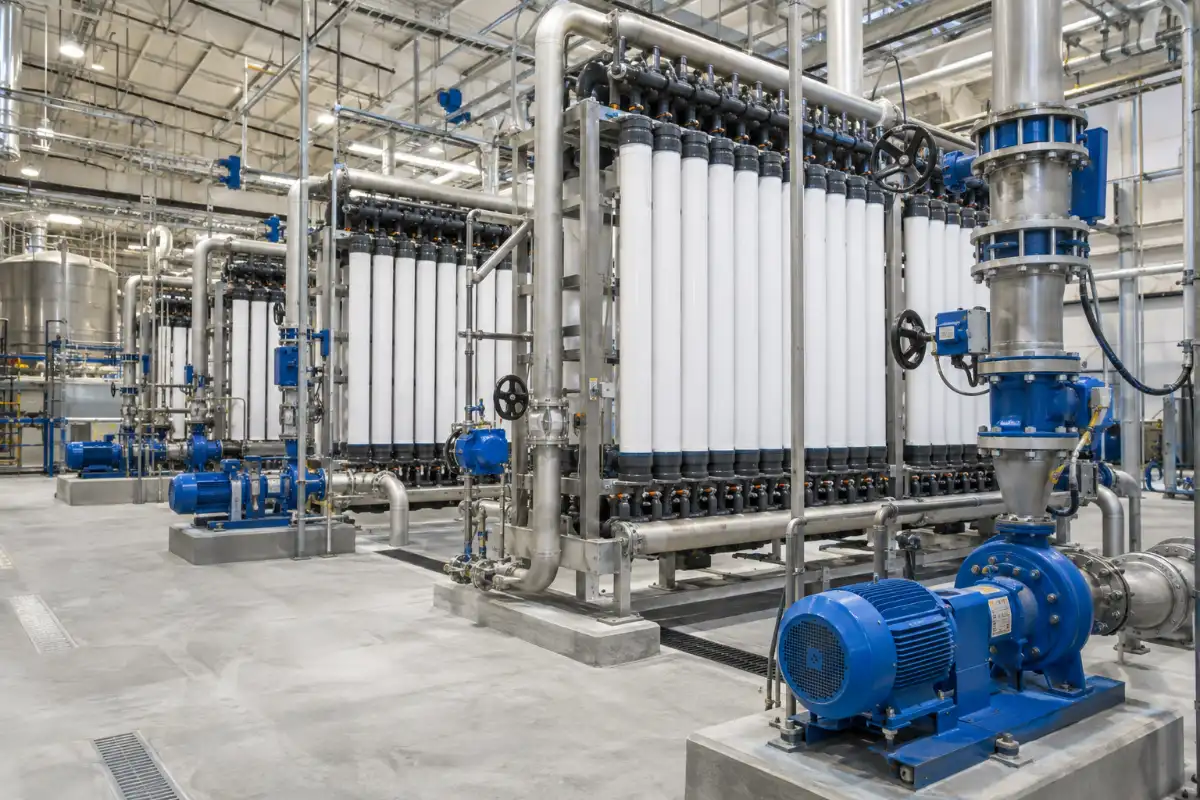
Step 4: Thermal Evaporation and Crystallization
This is the workhorse for the concentrated reject. The choice between mechanical vapor recompression (MVC/MVR) and multi-effect evaporation comes down to energy cost, scale, and available utilities.
| Technology | Typical Use Case | Energy Profile | Key Trade-off |
|---|---|---|---|
| Single-effect evaporator | Small flows, low steam cost, simple operation | Highest steam demand per unit water evaporated | Lowest capital, highest operating cost |
| Double-effect evaporator | Medium flows where steam is available | Moderate steam demand | Balance of capex and opex |
| Triple-effect evaporator | Larger flows with cheap steam | Low steam demand per unit evaporated | Higher capital, more complex |
| MVC / MVR evaporator | High electricity availability, no steam, medium to large flows | Low steam, high electrical demand | Higher capex, low running cost when power is cheap |
For most battery brine projects I have been involved with, the decision comes down to whether the site has steam. If it does not, MVC is usually the answer, and the mechanical vapor compression MVC evaporator design is well suited to the concentrated reject from membrane stages. If the site has cheap steam and the flow is large, multi-effect wins on operating cost.
If you are still comparing the two families, this breakdown of MVR technology versus multi-effect is worth reading before you commit to a configuration.
Step 5: Crystallization and Solids Handling
If you are targeting zero liquid discharge, the concentrated brine goes to a crystallizer. The salts come out as a solid that you either sell, dispose of, or process further. The condensate from the evaporator and crystallizer is usually clean enough to reuse in the plant, which is often the real economic driver for battery manufacturers.
If ZLD is on your roadmap, it helps to understand how a zero liquid discharge system is structured from the ground up, because retrofitting it later is expensive.
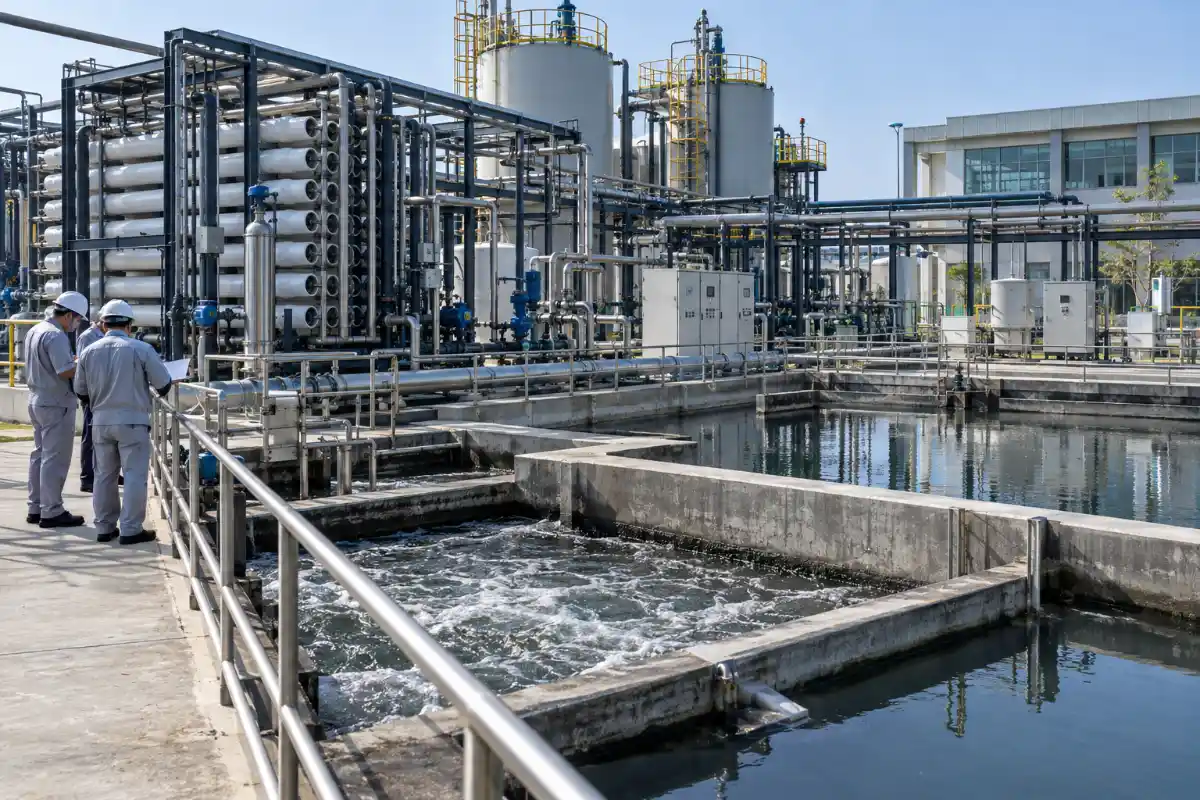
Choosing Between MVC and Multi-Effect for Battery Brine
I get asked this constantly. Here is how I actually decide.
When MVC Makes Sense
- No steam available on site, or steam is expensive
- Electricity is reasonably priced and stable
- Flow is moderate, typically under a few hundred cubic meters per day of feed
- You want a compact footprint and a system that can start and stop quickly
- The brine has already been concentrated by membranes, so the evaporator feed is smaller
When Multi-Effect Makes Sense
- Steam is readily available and cheap
- Flow is large and steady
- You have space for a taller, larger vessel arrangement
- You want lower electrical load on site
There is also a middle path. Some plants run a hybrid where a multi-effect train does the bulk of the evaporation and an MVC unit polishes the final concentrate. This can be worth the complexity if your utility costs are unusual.
In my experience, the single biggest factor in evaporator reliability is not the evaporator itself. It is how well you protect it upstream. A well-pretreated brine will run for months between cleanings. A poorly pretreated one will scale in weeks.
Energy, Cost, and Lifecycle Reality
Let me be honest about the economics. Battery brine treatment is capital-intensive and energy-intensive. Anyone telling you otherwise is selling something.
The main cost drivers are:
- Pretreatment chemicals. pH adjustment, coagulants, and metal precipitation agents add up fast.
- Sludge disposal. Metal hydroxide sludge is often classified as hazardous, which raises disposal cost significantly.
- Membrane replacement. DTRO and high-pressure RO elements are not cheap, and battery brine shortens their life compared to cleaner feed.
- Evaporator energy. This is usually the largest single operating cost, whether it is steam or electricity.
- Maintenance labor. Scaling, corrosion, and fouling mean ongoing attention.
The offset is water recovery and, in some cases, salt recovery. If you can reuse the condensate and recover a saleable salt, the payback picture changes substantially. I always model both scenarios before recommending a configuration.
For a realistic look at what drives capital and operating cost in these systems, this analysis of MVR evaporator cost drivers gives a grounded view rather than a sales pitch.
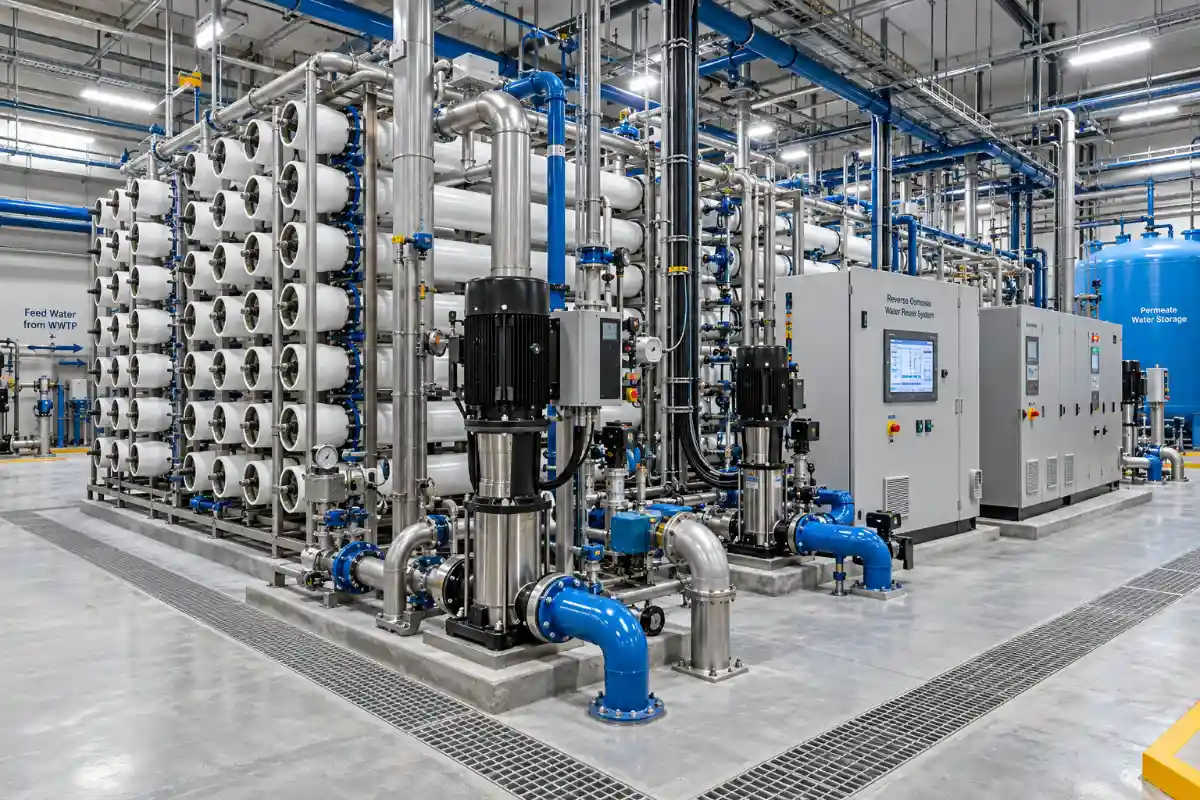
Maintenance and Common Failure Modes
After enough years on these systems, you start to see the same failures repeat. Here is what to watch.
Scaling on Heat Transfer Surfaces
This is the classic problem. Calcium sulfate and calcium carbonate deposit on tubes and reduce heat transfer efficiency. The fix is upstream softening and antiscalant dosing, plus a cleaning-in-place routine that actually gets followed. Operators skip cleaning when production is busy, and then they pay for it with a shutdown.
Foaming in the Evaporator
Residual organics from binders and solvents cause foaming, which carries liquid over into the condensate and contaminates your clean water. Antifoam helps, but the real fix is better organic removal upstream, either by oxidation or by membrane pretreatment.
Membrane Fouling and Scaling
DTRO membranes are more tolerant than spiral-wound, but they are not immune. Inorganic scaling, organic fouling, and biofouling all happen. Regular flushing, proper pretreatment, and monitoring of differential pressure and normalized flux are essential.
Corrosion
High-chloride brines are aggressive. Material selection matters enormously. I have seen stainless steel components fail in months where duplex or titanium would have lasted years. Do not cut corners on wetted materials.
Compressor and Mechanical Issues in MVC
The compressor is the heart of an MVC system. Vibration, bearing wear, and seal failures are the usual suspects. A preventive maintenance schedule based on running hours, not on failure, is the difference between a reliable system and a constant repair cycle.
Design Ranges You Can Actually Use
I am cautious about giving precise numbers because every project is different. But these indicative ranges are useful for early-stage planning. Treat them as project-dependent starting points, not guarantees.
| Parameter | Typical Indicative Range | Notes |
|---|---|---|
| Feed TDS to membrane stage | 10,000 – 60,000 mg/L | Higher requires high-pressure or DTRO |
| Membrane concentrate TDS | 60,000 – 120,000 mg/L | Depends on osmotic limit and fouling |
| Evaporator feed TDS | 80,000 – 250,000 mg/L | Higher reduces evaporator duty |
| Water recovery (membrane + thermal) | 70 – 95% | ZLD configurations reach the high end |
| MVC specific energy | 15 – 40 kWh per m³ evaporated | Strongly dependent on brine properties |
These ranges shift with salt composition, scaling tendency, and how aggressively you push concentration. Always validate with bench and pilot testing before committing to a full-scale design.
What I Tell Clients Before They Sign a PO
A few things I have learned the hard way, and now pass along:
- Pilot test the actual brine. Not a synthetic recipe. Real brine from your plant, at the worst-case composition you expect.
- Design for variability. Battery plants change products. Your treatment train needs turndown and flexibility.
- Do not undersize pretreatment. It is the cheapest part of the system and the one that determines whether everything downstream works.
- Plan for sludge. Metal hydroxide sludge handling is often an afterthought, and it should not be.
- Think about materials early. Corrosion-resistant alloys cost more upfront and save you repeatedly over the life of the plant.
- Build in monitoring. Conductivity, pH, turbidity, and differential pressure data tell you when something is drifting before it becomes a failure.
If you want to see how these principles play out in comparable industrial settings, the approach used in electroplating wastewater treatment is a useful parallel, since metal-bearing brine has similar pretreatment demands.
For sites also managing other high-strength streams, the strategies in landfill leachate treatment offer relevant lessons on handling variable, high-salinity feeds.
Regulatory Context
Discharge limits for battery manufacturing brine are tightening in most jurisdictions. Heavy metals, salinity, and in some cases specific ions like sulfate and chloride are all regulated. The U.S. Environmental Protection Agency publishes effluent guidelines that are a useful reference for what regulators expect, and the World Bank provides environmental, health, and safety guidance for industrial discharges that many projects use as a baseline. Always confirm the specific limits that apply to your site with your local authority, because they vary widely.
Frequently Asked Questions
Can I treat battery brine with biological treatment alone?
No. The salinity and heavy metal content are far too high for conventional biological processes. Biological treatment may play a role for the organic fraction after dilution, but the brine itself needs physical, chemical, and thermal treatment.
Do I really need both membranes and an evaporator?
In most cases, yes. Membranes reduce the volume that the evaporator has to handle, which cuts energy cost significantly. Running an evaporator on full-strength feed without membrane concentration is possible but usually more expensive to operate.
How often will my evaporator need cleaning?
With good pretreatment, I have seen systems run for several months between cleanings. With poor pretreatment, it can be every few weeks. The difference is almost entirely upstream of the evaporator.
What is the biggest cause of membrane failure in battery brine service?
Scaling from calcium and sulfate, followed by organic fouling. Both are manageable with proper pretreatment and cleaning protocols, but they require discipline.
Is zero liquid discharge realistic for a battery plant?
Yes, but it is a significant capital and energy commitment. ZLD makes the most sense when discharge is not permitted, water reuse is valuable, or salt recovery offsets the cost. For some sites, partial treatment with permitted discharge is more economical.
How do I choose between MVC and multi-effect evaporation?
Start with your utility situation. If you have cheap steam, multi-effect usually wins on operating cost. If you do not have steam or electricity is cheap, MVC is typically the better fit. Flow rate and available space also matter.
What material should I specify for wetted parts?
It depends on chloride concentration and temperature. Duplex stainless, titanium, and high-alloy materials are common in high-chloride service. Do not assume standard 316 stainless will hold up.
Where This Leaves You
Battery manufacturing brine treatment is a multi-stage problem, and the design has to respect the chemistry. Pretreat aggressively. Concentrate with membranes to save energy. Finish with thermal evaporation or crystallization depending on your discharge goals. Protect your heat transfer surfaces and your membranes, and the system will run reliably.
If you are planning a project and want a second opinion on your process configuration, I am happy to talk through the trade-offs. You can reach out here and we can look at your specific brine profile together.