

If you are trying to budget a multi-effect evaporator, the honest answer is that price is not a single number — it is the output of a design calculation. A 5 ton/hour triple-effect system and a 5 ton/hour four-effect system with a crystallizer can differ by a factor of two or more, even though they process the same volume. In my experience quoting these systems, the equipment cost usually lands somewhere between $180,000 and $2.5 million depending on capacity, number of effects, materials, and whether you need solid salt recovery. This article breaks down what actually drives that range, where the real money goes over a 10-year life, and how to compare quotes without getting misled by a low headline figure.
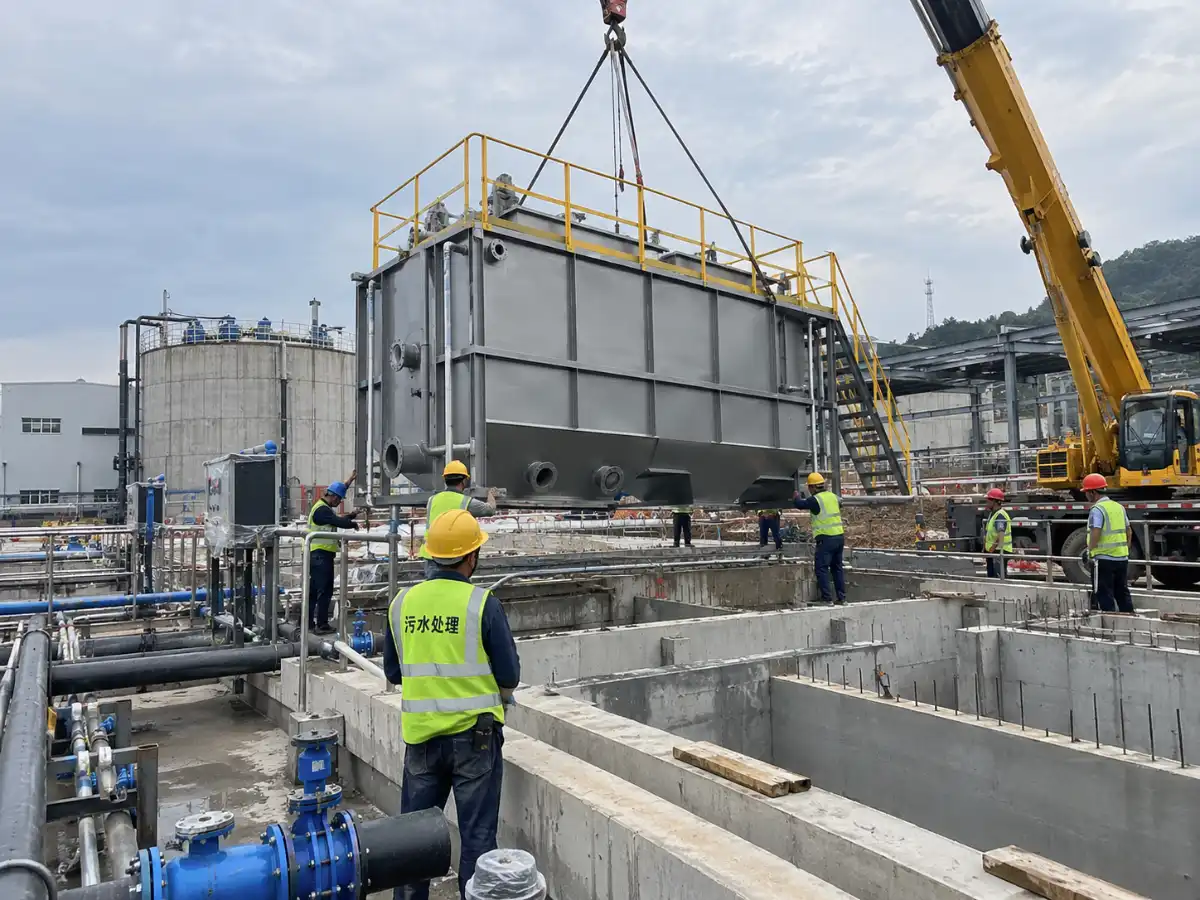
What a Multi-Effect Evaporator Actually Is (and Why It Matters for Cost)
A multi-effect evaporator uses the vapor boiled off in one vessel to heat the next vessel. Because the boiling point drops as pressure drops, each successive effect runs at a lower temperature and pressure. The practical result: you evaporate roughly the same amount of water using a fraction of the steam.
That is the whole economic argument. A single-effect unit needs about 1.0 to 1.1 kg of steam per kg of water evaporated. A double-effect unit drops to roughly 0.55 kg/kg. A triple-effect unit gets to about 0.4 kg/kg. A six-effect unit might reach 0.2 kg/kg. Every additional effect costs more steel, more heat exchanger surface, more pumps, and more instrumentation — but it cuts your steam bill.
So the “price” question is really a question about where you sit on the trade-off curve between capital cost and operating cost. If you have cheap waste steam available, fewer effects make sense. If you are buying steam at industrial rates, more effects usually pay for themselves within two to four years.
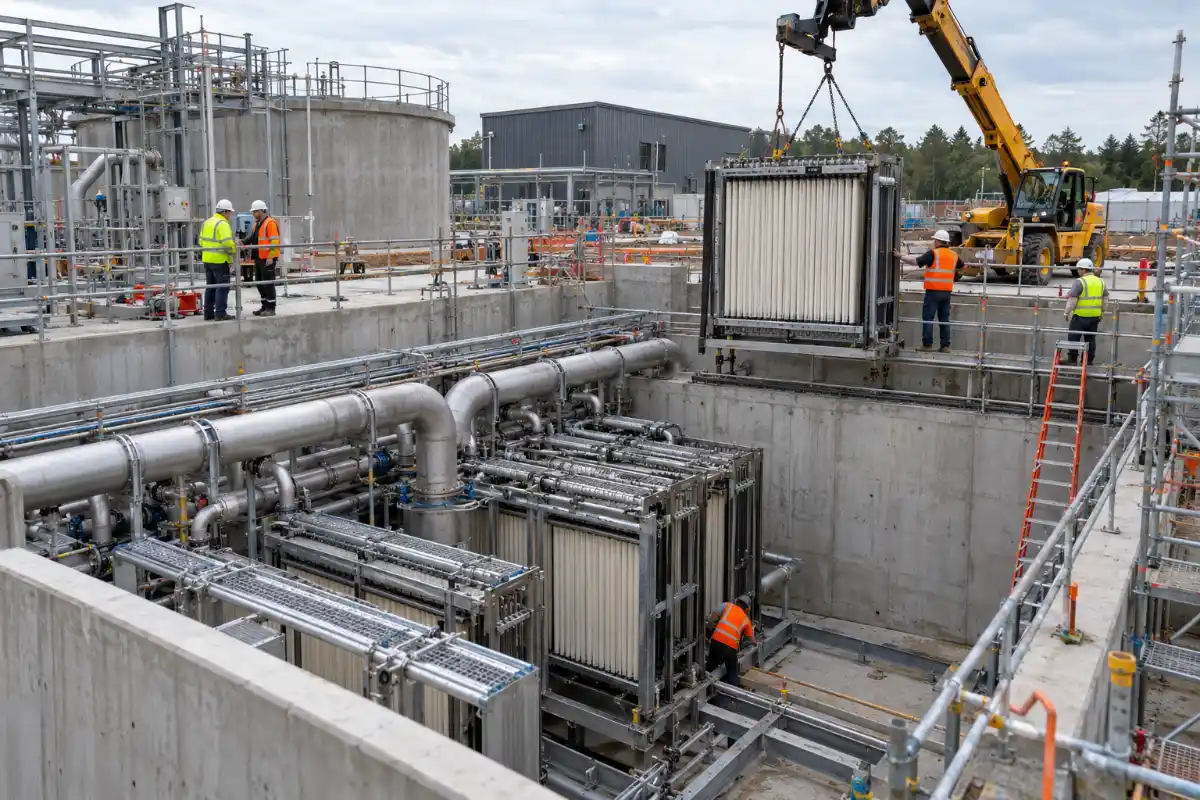
The Capital Cost Breakdown: Where the Money Goes
When I build a budget estimate, I break the system into these buckets. The percentages are typical for a mid-size industrial unit, but they shift a lot with materials and scope.
| Cost Component | Typical Share of Equipment Cost | What Drives It |
|---|---|---|
| Heat exchangers / calandrias | 25–35% | Surface area, tube material, number of effects |
| Vessels and separators | 15–25% | Pressure rating, alloy selection, size |
| Vacuum system (ejectors or pump) | 8–15% | Number of stages, final boiling temperature |
| Pumps and circulation | 8–12% | Flow rate, solids handling, corrosion resistance |
| Instrumentation and controls | 8–12% | Automation level, redundancy, SCADA integration |
| Crystallizer (if ZLD) | 15–30% extra | Salt recovery requirement, solids concentration |
| Structural, piping, insulation | 10–20% | Site conditions, skid vs field-erected |
Notice that heat exchangers dominate. That is why the material of construction is the single biggest cost lever after capacity. Carbon steel is cheap but only works for near-neutral, low-chloride streams. 316L stainless handles most industrial wastewater. Duplex and titanium show up when chlorides exceed a few thousand mg/L or when pH swings. Moving from 316L to titanium on the wetted parts of a 10 ton/hour system can add $150,000 to $400,000 to the price — and it is often non-negotiable.
If you want to see how we approach heat exchanger design for these duties, the heat exchanger selection logic is worth reviewing before you request quotes, because it explains why two vendors can quote very different surface areas for the same duty.
Capacity: The Dominant Price Driver
Evaporator cost does not scale linearly with capacity. It scales closer to the 0.6 to 0.7 power of capacity — the classic “six-tenths rule” from chemical plant economics. Doubling capacity typically increases cost by about 50 to 60%, not 100%.
Here is an indicative range for a triple-effect system treating industrial wastewater, 316L wetted parts, skid-mounted, with basic automation. These are budgetary numbers for planning only; actual quotes depend heavily on the specific stream and scope.
| Evaporation Capacity | Indicative Equipment Cost (USD) | Typical Footprint |
|---|---|---|
| 1–2 ton/hour | $180,000 – $350,000 | Skid, 2 containers |
| 3–5 ton/hour | $350,000 – $650,000 | Skid or small field-erected |
| 8–12 ton/hour | $650,000 – $1,200,000 | Field-erected, multi-level |
| 15–25 ton/hour | $1,200,000 – $2,500,000 | Field-erected, substantial civil works |
These figures cover the evaporator island. They do not include pretreatment, civil works, foundations, electrical supply upgrades, or the crystallizer if you need zero liquid discharge. A full ZLD train — pretreatment, membrane concentration, evaporator, crystallizer, solids handling — can easily run two to three times the evaporator price alone. If that is your target, it is worth understanding the full ZLD system architecture before you commit to an evaporator scope.
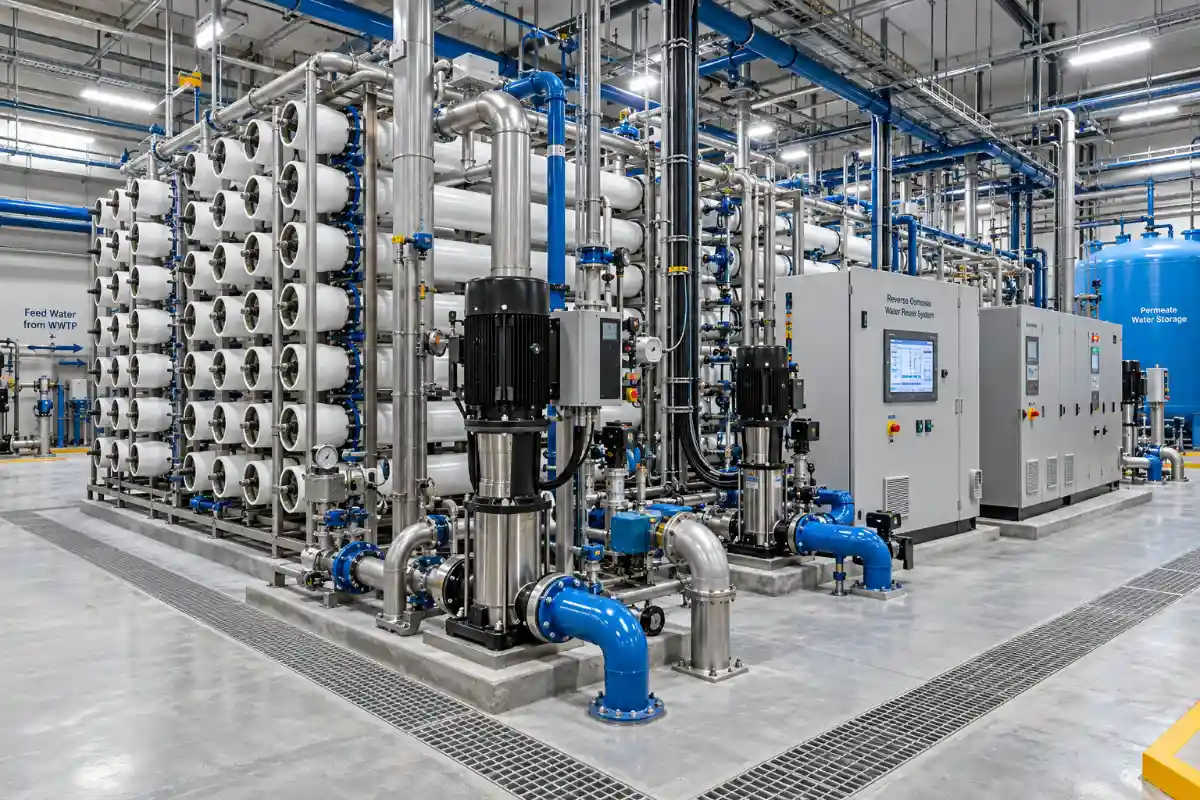
Number of Effects: The Capital vs. Operating Trade-Off
This is where most of the engineering judgment lives. Adding an effect costs money up front and saves steam forever. The question is whether your steam price justifies it.
Let me put rough numbers on it. Assume 10 ton/hour of evaporation, 8,000 operating hours per year, and steam at $25 per ton.
| Configuration | Steam Consumption (kg/kg) | Annual Steam Cost | Relative Capital Cost |
|---|---|---|---|
| Single effect | ~1.05 | $2,100,000 | 1.0x |
| Double effect | ~0.55 | $1,100,000 | 1.4x |
| Triple effect | ~0.40 | $800,000 | 1.8x |
| Four effect | ~0.32 | $640,000 | 2.3x |
| MVR (mechanical vapor recompression) | ~0 (electricity only) | $250,000 – $450,000 (power) | 2.0–2.6x |
Look at the jump from single to double effect. The capital goes up 40%, but the steam bill drops by half. That pays back in months, not years, for most facilities buying steam. The jump from triple to four effect is much weaker — you save about $160,000 a year but add maybe $300,000 to $500,000 in capital. Payback stretches to three years or more, and it only makes sense if steam is expensive or you have a long project life.
This is also where MVR enters the conversation. An MVR evaporator replaces the steam chest with a mechanical compressor that recompresses the vapor. It uses electricity instead of steam. If your site has cheap power and expensive steam, MVR can beat a four-effect system on lifecycle cost. If you have waste steam available, multi-effect usually wins. I have written about this comparison in more detail in the context of MVC evaporator design, because the choice between thermal and mechanical compression is the single most consequential decision in an evaporation project.
Feed Characteristics: The Hidden Cost Multiplier
Two streams with the same flow rate can produce evaporator prices that differ by 300%. Here is what I look at first when a client sends me a water analysis.
Total Dissolved Solids and Boiling Point Elevation
High TDS raises the boiling point. That reduces the temperature difference between effects and forces more heat transfer surface. A stream at 5% TDS might need 20% more surface area than a 1% stream at the same duty. Above 15–20% TDS, the effect becomes severe, and you may need forced circulation or falling film designs rather than simple natural circulation.
Scaling and Fouling Tendency
Calcium, magnesium, silica, and sulfate scale on heat transfer surfaces. Once they do, your capacity drops and your cleaning frequency goes up. The design response is either pretreatment (softening, antiscalant dosing, pH adjustment) or a more robust evaporator configuration with larger surface area and clean-in-place provisions. Both cost money. A stream that scales heavily might need 30% extra surface area as fouling allowance — that is real capital.
Chlorides and Corrosion
Chloride is the material selector. Below 200 mg/L, 316L is usually fine. Between 200 and 2,000 mg/L, you want to look at duplex or higher molybdenum grades. Above 2,000 mg/L, titanium or high-alloy alternatives become the norm for wetted surfaces. The price difference between 316L and titanium on a 10 ton/hour system is substantial — often $200,000 or more.
Organics, Oils, and Foaming
Oily or surfactant-laden streams foam in the separator. Foam carries liquid over into the condensate and into the next effect, which destroys performance. The fix is mechanical — larger separators, demisters, sometimes antifoam dosing. It adds cost and complexity. If your stream has significant oil, you need to address it before the evaporator, not inside it. The engineering approach to evaporation with oily wastewater is a good reference for how pretreatment changes the evaporator scope.
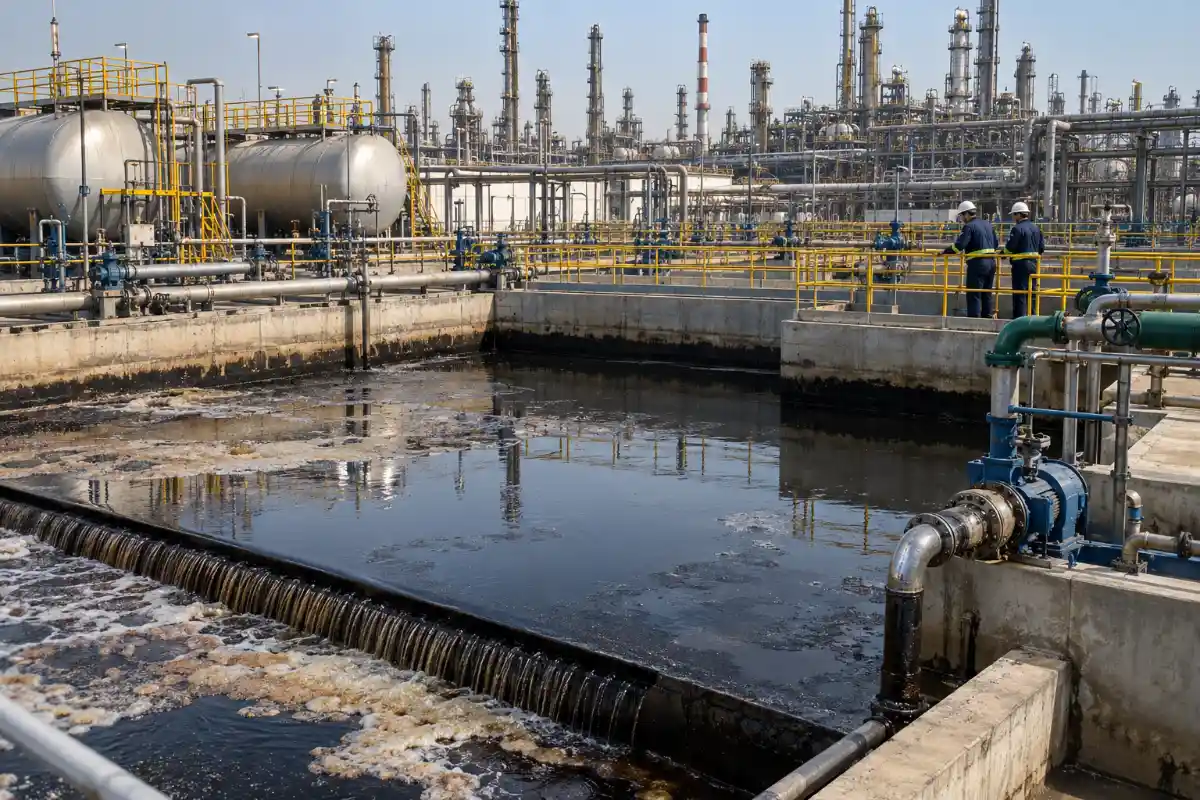
Operating Cost: Where the Real Money Is
Capital cost is a one-time hit. Operating cost runs every year for the life of the plant. Over 10 years, OPEX usually exceeds CAPEX by a wide margin. Here is what to model.
Steam or Power
This is 50–70% of OPEX for a thermal system. Use your actual steam price, not a generic number. If you generate steam on-site, use your marginal fuel cost. If you buy it, use your contract rate. The difference between $15/ton and $35/ton steam changes the optimal number of effects dramatically.
Cooling Water
The condenser rejects the heat you put in, minus what leaves with the concentrate. Cooling water at $0.05–$0.15 per m³ adds up. Air-cooled condensers avoid the water cost but raise electricity consumption and capital cost. In water-scarce regions, air cooling is often the only option.
Electricity
Pumps, vacuum systems, and the compressor if you are running MVR. For a thermal multi-effect system, electricity is maybe 5–10% of OPEX. For MVR, it is 80–90% of OPEX. That is why MVR economics hinge entirely on your power price.
Maintenance and Chemicals
Antiscalant, antifoam, caustic and acid for cleaning, replacement gaskets, pump seals, and instrument calibration. Budget 3–6% of equipment capital per year for maintenance. If your stream is aggressive, budget higher.
Labor
A well-automated system needs one operator per shift, often shared with other plant duties. A poorly automated system needs constant attention. Automation pays for itself in labor savings, and it also prevents the operational mistakes that cause downtime.
Comparing Quotes: What to Look For
When you put three quotes side by side, the cheapest one is rarely the best value. Here is what I tell clients to check.
- Scope boundaries. Does the quote include pretreatment, civil works, electrical, insulation, commissioning, and training? A low price that excludes half the scope is not a low price.
- Heat transfer area. Ask for the calculated area and the fouling allowance. A vendor who quotes 20% less area is either optimistic about fouling or cutting corners.
- Material specification. Get the exact alloy for every wetted component. “Stainless steel” is not a specification.
- Guaranteed performance. What evaporation rate, steam consumption, and condensate quality are guaranteed? What are the test conditions?
- Warranty and service. How long, what is covered, and who pays for travel? A local service presence matters more than a low price when a pump fails at 2 a.m.
- Reference installations. Ask for installations treating a similar stream. If the vendor cannot provide one, that is information.
I have seen projects where the lowest bid ended up costing 40% more over five years because of excessive cleaning downtime, premature heat exchanger replacement, and condensate quality that did not meet discharge limits. The multi-effect evaporator design principles that prevent those problems are not optional extras — they are the difference between a system that runs and one that fights you.
Lifecycle Cost: The Only Number That Matters
Let me walk through a realistic comparison. Same duty, same stream, three configurations. 10 ton/hour evaporation, 8,000 hours per year, 10-year life, 8% discount rate.
| Item | Triple Effect (Steam) | Four Effect (Steam) | MVR |
|---|---|---|---|
| Equipment CAPEX | $900,000 | $1,200,000 | $1,300,000 |
| Installation and civil | $300,000 | $380,000 | $350,000 |
| Annual steam cost | $800,000 | $640,000 | $0 |
| Annual power cost | $120,000 | $140,000 | $400,000 |
| Annual maintenance | $60,000 | $75,000 | $85,000 |
| 10-year OPEX (undiscounted) | $9,800,000 | $8,550,000 | $4,850,000 |
| Total 10-year cost | $11,000,000 | $10,130,000 | $6,500,000 |
In this scenario, MVR wins by a wide margin because power is assumed cheap relative to steam. If steam were $12/ton and power were $0.15/kWh, the ranking would flip. The point is not that MVR is always better — it is that you cannot pick a configuration without running your own numbers. Any vendor who tells you otherwise is selling, not engineering.
If you want a structured way to compare options for your specific utility prices and stream, the MVR cost analysis framework walks through the same logic applied to mechanical compression, and it is directly transferable to multi-effect comparisons.
Common Mistakes That Inflate Cost
I have reviewed enough projects to see the same errors repeat. Avoiding them saves real money.
- Designing for the worst-case stream without confirming it exists. If your peak TDS is 8% but you normally run at 3%, designing for 8% adds 25% to capital and you pay for it forever. Confirm the real operating envelope.
- Ignoring pretreatment. A $50,000 softening system can save $300,000 in evaporator surface area and years of cleaning downtime. Pretreatment is usually the cheapest place to solve a problem.
- Over-specifying materials. Titanium everywhere is safe but expensive. If chlorides are only high in one section, use the alloy where it is needed and 316L elsewhere.
- Under-specifying automation. Manual control of a multi-effect system is a full-time job and a source of instability. A modest investment in controls pays back in stability and labor.
- Forgetting the condensate. The distillate has to go somewhere. If it needs further treatment to meet discharge limits, that is part of the project cost. Plan for it.
- Buying on price alone. The lowest bid is often the most expensive over the asset life. Evaluate total cost of ownership, not sticker price.
Frequently Asked Questions
How much does a multi-effect evaporator cost?
For a triple-effect industrial wastewater evaporator with 316L wetted parts, budgetary equipment cost runs from about $180,000 for a 1–2 ton/hour skid to $2.5 million for a 15–25 ton/hour field-erected system. Capacity, number of effects, material of construction, and whether a crystallizer is included are the main drivers. Add 30–50% for installation, civil works, and commissioning if those are not in the equipment scope.
How many effects should I choose?
It depends on your steam price and project life. Going from single to double effect almost always pays back quickly because steam consumption drops by nearly half. Triple effect is the common sweet spot for industrial wastewater. Four or more effects only make sense when steam is expensive and the project life is long, because the marginal steam savings shrink with each added effect while capital keeps climbing.
Is MVR cheaper than a multi-effect evaporator?
Not on capital — MVR typically costs 20–40% more up front than a comparable triple-effect system because of the compressor. On operating cost, MVR usually wins if electricity is cheap relative to steam, because it uses no steam at all. If you have waste steam available, a multi-effect system often has the lower lifecycle cost. Run the numbers with your actual utility prices before deciding.
What maintenance does a multi-effect evaporator need?
Expect routine cleaning of heat transfer surfaces every few weeks to a few months depending on scaling tendency. Pump seals, gaskets, and instrument calibration are ongoing. Budget 3–6% of equipment capital per year for maintenance on a well-designed system, higher for aggressive streams. The biggest avoidable cost is downtime from fouling, which is why pretreatment and proper fouling allowance matter so much.
Why do quotes for the same duty vary so much?
Because the scope is rarely the same. Differing heat transfer area, material specifications, automation level, included accessories, warranty terms, and scope boundaries all move the price. A quote that excludes pretreatment, civil works, or commissioning can look 30% cheaper while actually costing more. Always normalize quotes to the same scope before comparing.
Can a multi-effect evaporator handle high-chloride wastewater?
Yes, but material selection becomes critical. Above roughly 2,000 mg/L chloride, 316L is usually not adequate and you need duplex stainless, titanium, or higher alloys on wetted surfaces. This can add $150,000 to $400,000 to the price of a mid-size system, but it is not optional — the wrong material will fail within a few years and cost far more to replace.
What is the typical lead time for a multi-effect evaporator?
For a skid-mounted system in standard materials, 4–6 months is typical. Field-erected systems with custom alloys, crystallizers, or complex automation run 8–14 months. Add time for permitting, civil works, and site installation. If schedule is tight, standardizing on proven designs and materials is the fastest path, even if it costs slightly more than a fully custom approach.
Do I need a crystallizer?
Only if you are targeting zero liquid discharge or need to recover solid salt. A crystallizer adds 15–30% to the evaporator cost and significant operating complexity. If your discharge permit allows a concentrated brine to be sent to a permitted disposal facility, you can often avoid the crystallizer and save substantial capital. Check your discharge limits and disposal options before committing to ZLD.
If you are working through a specific stream and want a realistic budget range rather than a generic number, send us the water analysis and flow rate. We will tell you what configuration makes sense and what it should cost — including the parts most vendors leave out of the first quote. Request a project review and we will come back with a scope-level estimate you can actually plan against.