

Selecting an evaporator for salty wastewater comes down to four things: the chemistry of your brine, the volume you need to evaporate, what you plan to do with the concentrate, and how much energy you are willing to pay for over the next ten years. Get those four right and the technology choice almost makes itself. Get them wrong and you end up with a system that scales, foams, corrodes, or quietly drains your operating budget. I have walked through enough of these selections to know that the evaporator is rarely the hard part — it is the feed characterization and the disposal strategy that decide whether the project succeeds.
Start With the Water, Not the Equipment
Every failed evaporator project I have seen started with someone picking a machine before they understood the feed. Salty wastewater is not one thing. It is a spectrum that runs from mildly brackish rinse water to saturated brine from a zero liquid discharge (ZLD) train. Before you talk to any vendor, you need a water analysis that covers more than total dissolved solids (TDS).
The parameters that actually drive selection
- TDS and specific ions. Sodium chloride behaves differently from calcium sulfate or silica. Chloride drives material selection; calcium and silica drive scaling.
- Scaling potential. Hardness, sulfate, silica, and carbonate all precipitate as you concentrate. This is the single most common cause of evaporator downtime.
- Organic load. Chemical oxygen demand (COD), oils, and solvents affect foaming, fouling, and whether you need pretreatment.
- pH and volatility. Low pH plus chloride is a corrosion problem. Ammonia or volatile organics can carry over into the condensate.
- Boiling point elevation. As salt concentration rises, the boiling point climbs. This changes compressor duty and heat exchanger sizing more than most people expect.
- Presence of suspended solids. Anything that will not dissolve needs to be removed upstream, or it will end up as deposit on your heat transfer surfaces.
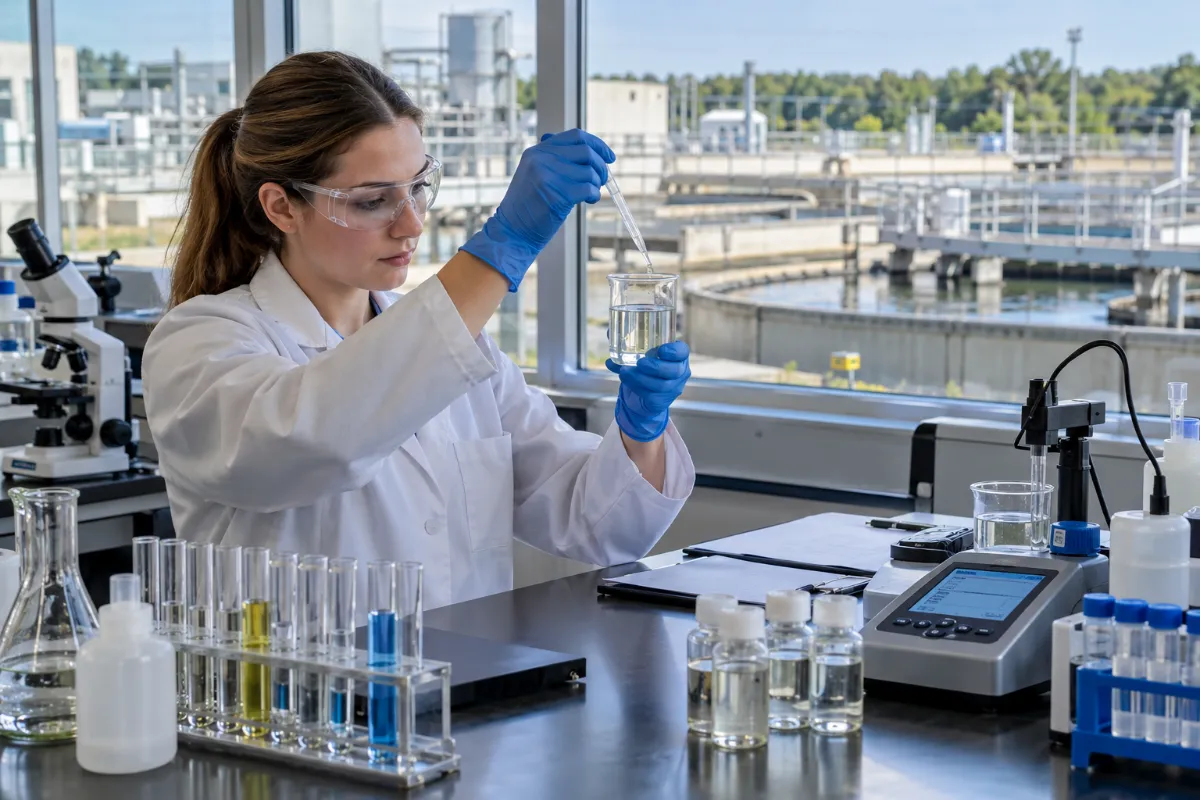
I always ask for a minimum of a full ion profile, COD, oil and grease, and a lab-scale evaporation test if the budget allows. That test tells you where scaling begins and what the concentrate will look like. It is cheap insurance. For a broader look at how evaporation fits into a treatment train, see this overview of process in water treatment.
Understanding Your Evaporator Options
There are really only a handful of families to choose from, and each has a comfort zone. Let me walk through them the way I would in a design review.
Single-effect evaporators
One effect, one pass of heat, roughly one kilogram of steam per kilogram of water evaporated. Simple, robust, and easy to operate. The catch is energy. Single-effect units make sense for small flows, intermittent duty, or when you have cheap waste heat available. If you are evaporating more than a few cubic meters per day on purchased steam, the operating cost will hurt. Details on where these fit are covered in this look at single-effect evaporators.
Multi-effect evaporators
Stack several effects and reuse the vapor from one as the heating medium for the next. A double-effect unit roughly halves steam consumption; a triple-effect cuts it further. The trade-off is capital cost, footprint, and a higher boiling point in the later effects, which pushes scaling risk up. Multi-effect trains are the classic choice for large, steady flows where steam is available and the brine is not too aggressive. You can read more on multi-effect evaporators and how the effects are typically arranged.
Mechanical vapor compression (MVC / MVR)
Instead of buying steam, you compress the vapor you just produced and use it to heat the same body. Electrical energy replaces thermal energy, and the specific consumption drops sharply. MVC is my default recommendation for medium to large salty wastewater streams where electricity is reasonably priced and the feed is consistent. The compressor is the heart of the system, and its reliability depends on clean vapor, correct pressure ratios, and good control. This primer on mechanical vapor compression MVC evaporator design covers the operating envelope.
Membrane and hybrid approaches
Reverse osmosis (RO) and disc tube reverse osmosis (DTRO) can concentrate salty water far more cheaply than thermal evaporation — up to a point. Once osmotic pressure gets high enough, membranes stop being economical and you hand the job to an evaporator. In a ZLD train, membranes do the bulk concentration and the evaporator finishes the job and produces solids. High-pressure RO and DTRO are worth evaluating before you commit to a fully thermal design. A relevant reference is this page on DTRO membrane systems.
Comparing the Main Technologies
The table below is a planning-level comparison. Treat the ranges as indicative — actual numbers depend heavily on your feed, your utility prices, and how the system is controlled.
| Technology | Typical capacity range | Energy source | Relative energy use | Best fit | Main risk |
|---|---|---|---|---|---|
| Single-effect | Small, up to a few m³/day | Steam or hot water | High per unit water | Small or intermittent streams, waste heat available | Operating cost at scale |
| Double-effect | Small to medium | Steam | Moderate | Steady moderate flows | Scaling in second effect |
| Triple-effect | Medium to large | Steam | Lower than double | Large steady flows, steam on site | Higher boiling point, fouling |
| MVC / MVR | Medium to large | Electricity | Low thermal, moderate electric | Consistent feed, good power supply | Compressor reliability, vapor quality |
| Membrane (RO/DTRO) | Wide, but limited by salinity | Electricity | Lowest per unit water | Pre-concentration before thermal stage | Osmotic pressure limit, fouling |
Notice that the table does not tell you which one to buy. It tells you which questions to ask. If your flow is 200 m³/day and you have steam on site, multi-effect is a strong candidate. If your flow is 50 m³/day and you have no steam but reliable power, MVC usually wins. If your flow is 500 m³/day, you probably want membranes doing the heavy lifting and a smaller thermal unit finishing the job.
The Energy Question Nobody Wants to Answer
Capital cost is a one-time number. Energy is forever. When I model lifecycle cost, I weight energy heavily because it is the line item that keeps growing.
Here is the rough logic. A single-effect evaporator on purchased steam consumes on the order of one kilogram of steam per kilogram of water evaporated. A triple-effect unit can cut that by roughly two-thirds. An MVC unit shifts the load to electricity, and its specific power consumption is typically in the range of 15 to 40 kWh per cubic meter of water evaporated, depending on boiling point elevation, compressor efficiency, and how close you run to the design point. Those are indicative figures, not guarantees — your numbers will move with your feed.
The practical takeaway: for anything above a small flow, single-effect on purchased steam is rarely the right long-term choice. Do the math over ten years, not one. For a deeper look at what drives both capital and operating cost, this analysis of MVR evaporator cost drivers is a useful reference.
I tell clients the same thing every time: the cheapest evaporator to buy is almost never the cheapest evaporator to own. Spend the extra engineering hours on feed characterization and heat integration before you spend money on steel.
Pretreatment: Where Projects Are Won or Lost
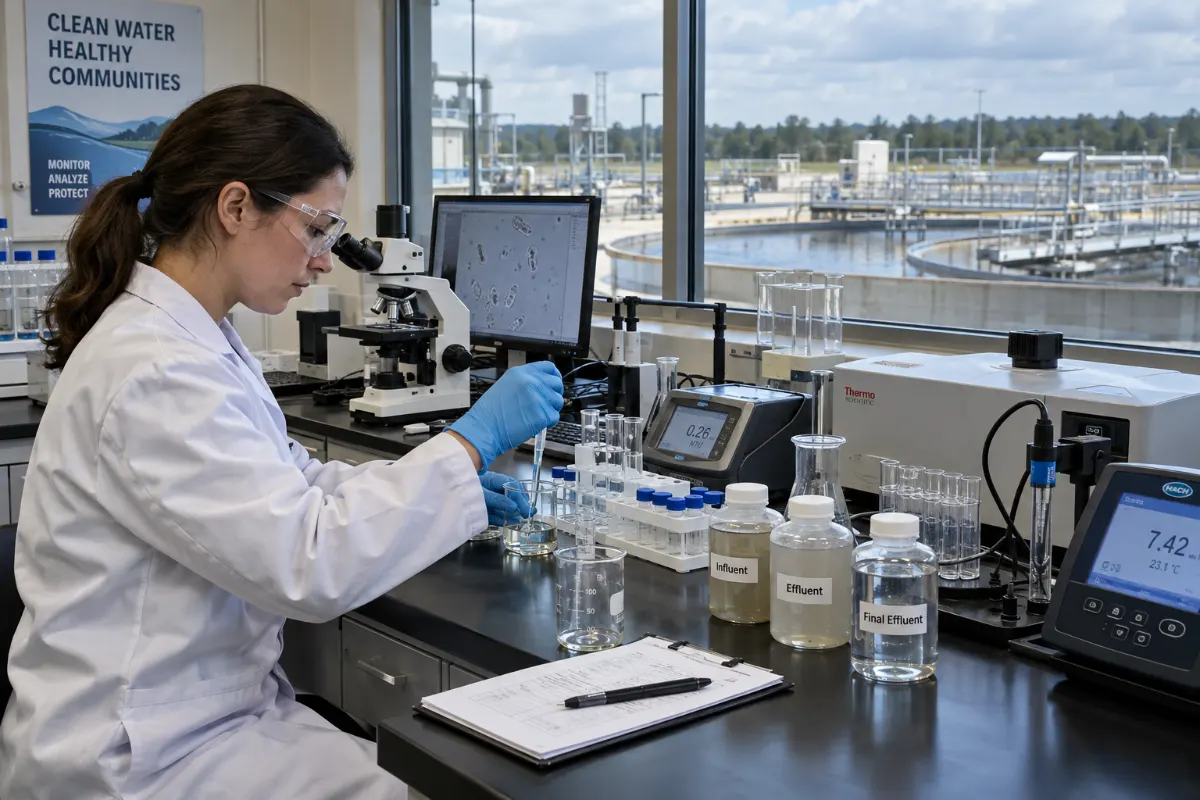
If I could change one habit in this industry, it would be to stop treating pretreatment as an afterthought. The evaporator is a heat exchanger business. Anything that fouls a heat exchanger will shut you down.
Common pretreatment steps
- Softening or chemical precipitation to remove calcium and magnesium before they scale the tubes.
- pH adjustment to keep scale-forming species soluble, or to drive them out deliberately before evaporation.
- Deaeration or degassing to remove dissolved gases that cause corrosion or interfere with condensation.
- Oil and grease removal using dissolved air flotation or similar, because organics foul surfaces and cause foaming.
- Filtration to catch suspended solids that would otherwise deposit on tubes.
- Antiscalant dosing where precipitation cannot be eliminated, only controlled.
Scale control is the difference between a plant that runs for months between cleanings and one that runs for weeks. If your feed is high in hardness or silica, plan for it in the design, not in the maintenance schedule.
Materials, Corrosion, and the Chloride Problem
Salty wastewater is aggressive. Chloride attacks standard stainless steels, and hot concentrated brine attacks almost everything. Material selection is not a place to save money.
For moderate chloride levels, duplex stainless steels often work well. For high chloride and high temperature, you are usually looking at titanium, super duplex, or higher alloys in the wetted, hot sections. The compressor and vapor side can often use less exotic materials because the vapor is far less corrosive than the liquid, but this depends on what volatilizes with the vapor. If your feed contains ammonia or organic acids, the condensate can be surprisingly corrosive.
I always ask the vendor to show me the material selection logic, not just a list. If they cannot explain why a given alloy was chosen for a given temperature and chloride level, that is a red flag. The heat exchanger is where corrosion shows up first, so it pays to understand how those surfaces are specified — see this discussion of MVC evaporator heat exchangers.
What Happens to the Concentrate
This is the question that decides whether you need an evaporator at all, and if so, how far you concentrate.
If you can send a liquid concentrate to a permitted disposal facility, you can stop at a moderate concentration and keep the system simple. If you cannot — because of cost, permit limits, or the nature of the waste — you are heading toward zero liquid discharge, which means crystallizing the brine and handling solids. That is a much bigger project.
ZLD is not a single piece of equipment. It is a train: pre-concentration with membranes, then evaporation, then crystallization, then solids dewatering. Each stage has its own operating cost and its own failure modes. I have seen ZLD projects succeed and I have seen them become maintenance nightmares, and the difference is almost always how well the feed was understood and how honestly the operating cost was modeled. If you are considering this route, this overview of zero liquid discharge ZLD systems covers the building blocks.
Solids handling
Once you produce crystals or a concentrated slurry, you still have to dewater them. A screw press sludge dewatering unit is often used to reduce the moisture in the solids before disposal. Plan for this from the start — it is easy to forget that the evaporator is only half of the material balance.
Operating Experience: What Actually Breaks
I have watched enough systems run to know the failure patterns. They are consistent.
- Scaling on heat transfer surfaces. The number one cause of lost capacity. Usually traced back to inadequate pretreatment or optimistic antiscalant dosing.
- Foaming and carryover. Organics and certain salts cause foam that carries liquid into the vapor line and contaminates the condensate.
- Compressor wear or surge. In MVC systems, a dirty or wet vapor stream damages the compressor over time. Vapor quality matters more than most operators realize.
- Corrosion failures. Often at welds, flanges, or where temperature and chloride concentration peak.
- Control drift. Density, temperature, and pressure control all drift as sensors foul. A system that ran well in year one can run poorly in year three without instrument maintenance.
- Condensate quality excursions. Volatile organics or ammonia slip into the distillate and cause permit problems downstream.
None of these are mysterious. They are all foreseeable, and they are all manageable with good design and disciplined operation.
A Practical Selection Sequence
Here is the order I actually use when I sit down with a client.
- Characterize the feed thoroughly. Full ion profile, COD, oil and grease, pH, and a lab evaporation test if possible.
- Define the product. What quality must the condensate meet? What form must the concentrate take?
- Set the flow and duty. Average and peak flow, hours of operation per day, seasonal variation.
- Evaluate the energy supply. Is steam available? What does electricity cost? Is waste heat recoverable?
- Screen the technologies. Use the table above to narrow to two or three realistic options.
- Model lifecycle cost. Capital plus ten years of energy, chemicals, maintenance, and disposal.
- Check the material selection. Confirm the alloys match the chloride and temperature profile.
- Review the control philosophy. How will the system handle feed variation, scaling onset, and upset conditions?
- Talk to operators of similar systems. Ask what breaks and how often.
Steps one and two are where most projects go wrong. Everything downstream depends on them.
Common Mistakes I See Repeatedly
Let me be blunt about the patterns.
Designing on nameplate flow instead of real flow. Your average flow might be 100 m³/day, but your peak could be 160. Size for the peak, or provide buffer capacity.
Ignoring boiling point elevation. High salinity raises the boiling point, which raises compressor duty and changes heat exchanger performance. It is not a footnote.
Underestimating pretreatment. The evaporator gets blamed for problems that started upstream.
Buying on capital cost alone. The cheapest bid often has the highest operating cost. Model the ten-year picture.
Forgetting the concentrate. If you have not solved disposal, you have not solved the problem.
Skipping operator training. A well-designed system run poorly will underperform a modest system run well.
When to Bring in a Specialist
If your stream is straightforward — moderate salinity, no exotic organics, steady flow — you can probably select a system with internal engineering support and a good vendor. If your stream is aggressive, variable, or headed for zero liquid discharge, bring in someone who has done it before. The cost of a design review is trivial compared to the cost of a system that never runs right.
If you would like a second opinion on your specific case, you can reach out to our engineering team and we will walk through the feed data with you. No obligation, just an honest look at whether evaporation is the right answer for your stream.
Frequently Asked Questions
How do I know whether I need MVC or a multi-effect evaporator?
Start with energy supply and flow. If you have steam on site and a large, steady flow, multi-effect is often the better fit. If you have no steam but reliable electricity and a medium to large flow, MVC usually wins on operating cost. For small or intermittent flows, a single-effect unit may be perfectly adequate. The decision hinges on your utility prices and how consistent your feed is.
What is the biggest cause of evaporator downtime?
Scaling on heat transfer surfaces, by a wide margin. It is almost always a pretreatment or antiscalant issue rather than an equipment defect. If you control hardness, silica, and pH properly upstream, your cleaning intervals will be far longer.
How much does it cost to run an evaporator?
It depends on the technology, your utility prices, and your feed. Thermal systems are dominated by steam cost; MVC systems are dominated by electricity. As an indicative range, MVC specific power consumption typically falls between 15 and 40 kWh per cubic meter of water evaporated, but your actual number will depend on boiling point elevation, compressor efficiency, and operating conditions. Always model over ten years, not one.
Can I use membranes instead of an evaporator?
Often, yes — up to a point. RO and DTRO can concentrate salty water far more cheaply than thermal evaporation, but osmotic pressure limits how far you can go. Many well-designed systems use membranes for bulk concentration and an evaporator for final concentration or crystallization. The right split depends on your target concentration and disposal route.
What maintenance should I plan for?
Expect regular cleaning of heat transfer surfaces, inspection of the compressor in MVC systems, calibration of density and temperature instruments, and periodic checks of the condensate quality. Keep spare parts for the compressor and any critical pumps. Build a cleaning schedule based on actual performance data, not a fixed calendar.
How do I handle foaming in the evaporator?
Foaming is usually caused by organics, oils, or certain surfactants in the feed. The first step is to remove them upstream with oil separation or flotation. If foaming persists, you may need antifoam dosing, a larger vapor space, or a mechanical foam breaker. It is better to solve it in pretreatment than to fight it in the evaporator.
What should I ask a vendor before I buy?
Ask for the material selection logic, the expected cleaning interval based on your feed, the control philosophy for feed variation and upsets, and references from similar applications. If a vendor cannot explain why a given alloy or design was chosen for your specific water, keep looking.
Selecting an evaporator for salty wastewater is not about finding the most advanced machine. It is about matching the technology to your water, your energy supply, your disposal route, and your operating reality. Get the feed characterization right, model the lifecycle cost honestly, and plan for the concentrate from day one. Do that, and the equipment choice becomes the easy part.