

If you run a mine, you already know that water is the hardest part of the operation to control. Ore type changes, rainfall changes, and the same plant that ran clean last quarter can suddenly produce a stream that eats through standard equipment. The best wastewater treatment equipment for mining is not a single machine — it is a matched set of processes chosen around your specific water chemistry, flow rate, and discharge limits. After more than a decade specifying and commissioning these systems, I can tell you the winners are almost always the same categories: primary clarification and metals removal, membrane concentration, thermal evaporation for the brine, and reliable sludge dewatering. Everything else is a variation on those four.
This article walks through how I actually select equipment for mine water, where most projects go wrong, and what the real cost drivers look like over a 15-year life.
What Makes Mining Wastewater Different
Before you pick a single piece of equipment, you need to understand what you are dealing with. Mine water is not municipal sewage, and treating it like sewage is the fastest way to blow a budget.
The main characteristics I look at in every survey:
- High dissolved solids. Total dissolved solids (TDS) frequently runs 5,000 to 50,000 mg/L, and in some pit lakes or tailings return water it goes far higher. This kills conventional biological treatment and pushes you toward membranes and evaporation.
- Heavy metals. Iron, manganese, zinc, copper, lead, and arsenic are common. They need pH adjustment and precipitation, or they will foul everything downstream.
- Sulfate. Often the single biggest headache. High sulfate drives scaling in evaporators and complicates discharge limits.
- Acidity or extreme alkalinity. Acid rock drainage can sit at pH 2–4, which dictates your materials of construction before anything else.
- Variable flow. Storm events can double or triple your design flow in hours. Equalization is not optional.
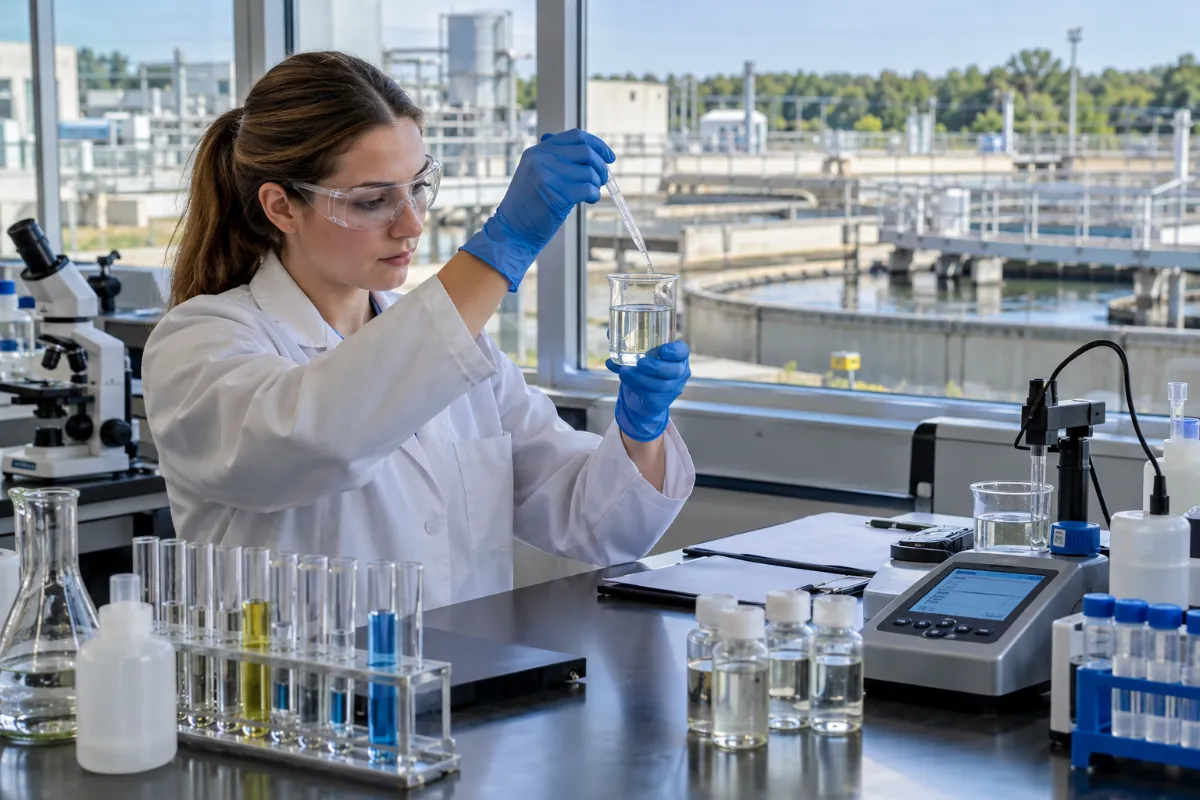
Get this characterization wrong and no amount of good equipment will save the project. I insist on at least a 30-day composite sampling campaign before I size anything.
The Core Equipment Categories That Actually Matter
1. Primary Treatment: Clarification, Metals Precipitation, and Equalization
This is where 80% of the load gets removed for the least money. A well-designed primary stage typically includes:
- Flow equalization tank sized for 8–24 hours of average flow
- Rapid mix and flocculation for coagulant and polymer dosing
- Chemical precipitation for metals (hydroxide or sulfide depending on the metal)
- High-rate clarifier or dissolved air flotation for solids separation
Sizing is straightforward once you know your flow profile, but the chemistry is not. I have seen plants overspend by 40% on downstream equipment because they under-dosed lime in primary treatment. Do not cut corners here.
2. Membrane Systems: Where the Real Concentration Happens
Once the bulk solids and metals are out, membranes do the heavy lifting. For mine water with high salinity and scaling potential, standard RO will not survive. You need either high-pressure RO or, more commonly now, DTRO membrane systems.
DTRO (disc tube reverse osmosis) handles high suspended solids, high salinity, and harsh chemistry far better than spiral-wound membranes. In my experience on leachate and mine brine projects, a DTRO train can concentrate feed 4–6x before you hit the practical pressure limit. That reduces the volume you send to thermal treatment, which is where the money goes.
For lower-salinity streams — say under 15,000 mg/L TDS — a well-designed high-pressure RO system is usually more economical. The crossover point depends on your scaling index and the cost of your brine disposal.
3. Thermal Evaporation: The Brine Killer
This is the part most people get wrong. Membranes concentrate. They do not eliminate. Eventually you have a brine stream at 15–25% solids that has to go somewhere. If your site has zero liquid discharge (ZLD) requirements or no discharge permit, you need evaporation.
Three configurations dominate mine water projects:
- Multi-effect evaporators (MEE). Best when you have cheap steam available. Each additional effect improves steam economy, so a triple-effect unit uses roughly one-third the steam of a single-effect. Capital cost rises with the number of effects.
- Mechanical vapor recompression (MVC). Best when electricity is cheaper than steam. A compressor recompresses the vapor and reuses it as the heating medium. Very energy-efficient at scale but the compressor is the single biggest maintenance item.
- MVR. Similar concept, different mechanical arrangement. Often chosen for smaller capacities or where the vapor quality is difficult.
I usually recommend starting with a multi-effect evaporator when steam is available, and switching to MVC evaporation when the plant is electrically driven. On a recent leachate-style project with 200 m³/day of concentrated brine, the MVC route cut operating cost by roughly 30% versus a four-effect MEE — but that number is project-dependent and I would not quote it as a rule.
4. Sludge Dewatering: The Underrated Cost Center
Every stage above produces sludge, and sludge handling is where operators quietly lose money. A screw press sludge dewatering unit is my default recommendation for mine water because it handles abrasive solids, runs continuously, and needs far less operator attention than a filter press.
Typical design ranges I work with:
- Feed solids: 1–4% dry solids
- Cake solids: 18–30% dry solids, depending on the sludge type
- Polymer consumption: 2–6 kg per dry ton, project-dependent
If you have high-clay tailings or fine precipitate, a filter press may still win on cake dryness. But for daily operation, the screw press is the more forgiving machine.
5. Zero Liquid Discharge (ZLD) Integration
ZLD is not a piece of equipment — it is an architecture. A typical mine ZLD train looks like this:
- Equalization and metals precipitation
- Softening (lime or caustic soda) to remove hardness
- DTRO or high-pressure RO concentration
- Thermal evaporation of the RO concentrate
- Crystallization or spray drying of the final brine
- Screw press dewatering of all sludge streams
Each stage protects the next. Skip softening and your evaporator will scale in weeks. Skip the equalization tank and your membranes will see shock loads they were not designed for. I have walked into plants where a single missing softening step cost six figures in premature heat exchanger replacement.
If ZLD is on your table, it is worth looking at a purpose-built ZLD system design rather than bolting together components piece by piece.
Equipment Selection Comparison Table
Here is how I frame the choice for most mine water projects. Treat the numbers as typical design ranges, not guarantees.
| Equipment | Best For | Typical Capacity Range | Energy Profile | Main Maintenance Issue |
|---|---|---|---|---|
| High-rate clarifier | Metals and TSS removal | 50–2,000 m³/h | Low | Sludge blanket control |
| DTRO membrane | High-TDS, scaling-prone feed | 20–500 m³/day per skid | Moderate (pumps) | Membrane replacement, 3–5 yr |
| High-pressure RO | Moderate TDS, clean feed | 50–1,000 m³/day | Moderate | Scaling, pretreatment quality |
| MEE (triple-effect) | Steam available, large flow | 5–200 m³/h evaporation | Low if steam is cheap | Heat exchanger scaling |
| MVC evaporator | Electric-driven plants | 3–100 m³/h evaporation | Low electrical per m³ | Compressor overhaul, 3–5 yr |
| Screw press dewatering | Continuous sludge handling | 1–50 m³/h feed | Low | Screw wear, polymer tuning |
What Drives Cost Over the Life of the Plant
Capital cost gets all the attention during procurement. Operating cost decides whether the plant survives the first five years. Here is how I break it down for clients:
Capital Cost (CAPEX)
- Membrane systems: 20–35% of total installed cost
- Thermal evaporation: 30–50% of total installed cost
- Civil works and tanks: 15–25%
- Instrumentation and controls: 5–10%
Operating Cost (OPEX)
- Electricity: often the largest single line item, especially for MVC and high-pressure pumps
- Chemicals: lime, caustic, antiscalant, polymer — typically 15–25% of OPEX
- Membrane and heat exchanger replacement: 8–15% of OPEX, lumpy
- Labor: 5–15%, heavily dependent on automation level
One number I always tell clients: a well-designed MVC evaporator on mine brine typically consumes 15–40 kWh per cubic meter of distillate, depending on feed concentration and compressor efficiency. If a vendor quotes you half that, ask for the heat and mass balance.
“The cheapest equipment to buy is almost never the cheapest to own. I have seen plants where the initial savings on a low-grade heat exchanger were wiped out in the first year of service.” — a sentiment shared by most commissioning engineers I work with.
Common Failure Modes and How to Avoid Them
Scaling in Evaporators
Sulfate and calcium scale is the number one cause of evaporator downtime in mine water service. The fix is upstream softening and antiscalant dosing, not more frequent cleaning. If you are cleaning your evaporator more than once a quarter, your pretreatment is wrong.
Membrane Fouling
Organic fouling and biofouling are common in leachate-adjacent streams. DTRO is more tolerant than spiral-wound, but it still needs proper pretreatment. I budget for membrane replacement every 3–5 years, not 7, when the feed is aggressive.
Polymer Overdosing in Dewatering
Operators often add more polymer when cake is wet. This usually makes things worse — it blinds the screw press and increases sludge volume. Tune with a jar test, not with the dosing pump.
Undersized Equalization
If your equalization tank is smaller than 8 hours of average flow, expect shock loads to reach your membranes. I have never regretted a bigger equalization tank. I have regretted small ones on almost every project.
If you want to see how these failure modes play out in real treatment trains, the leachate treatment project case is a good reference for the same chemistry challenges you will see in mine water.
Practical Selection Logic I Use on Every Project
When I sit down with a client, I work through these questions in order:
- What is the discharge limit? If it is ZLD, the architecture is fixed early. If it is a numeric limit, you have more flexibility.
- What is the flow profile? Average, peak, and storm. This sizes equalization and everything downstream.
- What is the water chemistry? TDS, hardness, sulfate, metals, silica, organics. Each one eliminates certain technologies.
- What is available on site? Steam, electricity, waste heat, labor skill level. This decides MEE versus MVC, and manual versus automated.
- What is the 15-year cost of ownership? Not the purchase price. The full picture including replacement cycles and consumables.
I have walked away from projects where the client wanted to skip steps 2 and 3. Those plants always come back as emergency retrofits two years later.
Frequently Asked Questions
How do I choose between MVC and multi-effect evaporation for mine water?
Start with your energy source. If you have cheap or waste steam, multi-effect evaporation usually wins on operating cost. If you are electric-driven and have reasonable power rates, MVC is typically more efficient at moderate to large scale. Below about 5 m³/h of evaporation, a single-effect or double-effect unit is often more practical regardless of energy source.
What pretreatment do I need before a DTRO membrane system?
At minimum: equalization, pH adjustment, metals precipitation, clarification or filtration, and usually softening if hardness is above 500 mg/L as CaCO₃. DTRO tolerates more suspended solids than spiral-wound RO, but it is not a substitute for pretreatment. Antiscalant dosing is standard.
How often will I need to replace membranes in a mine water application?
Typical design life is 3–5 years for aggressive feeds and 5–7 years for cleaner streams. Actual life depends on pretreatment quality, cleaning frequency, and operating pressure. Budget for the shorter end and treat replacement as a planned cost, not a surprise.
What is a realistic operating cost for a ZLD system on mine water?
It varies widely, but for a system combining membrane concentration and thermal evaporation, typical operating cost falls in the range of $3–$12 per cubic meter of feed, driven mostly by electricity, chemicals, and membrane/heat exchanger replacement. Sites with cheap power and good pretreatment sit at the low end.
Why does my evaporator scale even though I dose antiscalant?
Antiscalant only works within its design envelope. If your feed hardness or sulfate exceeds the threshold the chemical was selected for, it cannot prevent scaling. Check your softening performance first, then verify the antiscalant dose against the actual feed analysis — not the design basis from two years ago.
How much equalization capacity do I really need?
For mine water, I recommend 8–24 hours of average flow, with the higher end for sites that see storm events or batch discharges. Anything under 8 hours usually leads to shock loads reaching membranes and evaporators, which shortens their life.
Is a screw press or a filter press better for mine sludge?
For continuous operation and abrasive solids, screw press is usually the better choice. For maximum cake dryness on fine precipitates or when you need batch operation, a filter press can win. Many plants run a screw press for primary sludge and a filter press only for the final crystallizer solids.
Where This Leaves You
There is no universal “best” equipment for mine wastewater. There is only the best-matched set of processes for your specific water, your discharge limits, your energy supply, and your operating team. Get the characterization right, size the equalization properly, protect your membranes and evaporators with real pretreatment, and choose equipment based on total cost of ownership rather than purchase price. Do that, and the plant will still be running smoothly when the mine plan changes for the third time.