

If you operate a power plant, you already know the water side of the business can make or break your compliance record. The best wastewater treatment equipment for power plants depends on your cooling system, flue gas treatment, and coal or ash handling streams. In my experience, the winning setup usually combines chemical precipitation, membrane concentration, and evaporation. That trio handles heavy metals, high dissolved solids, and the near-zero liquid discharge limits that many permits now demand. Get the stream characterization right first, then match equipment to load. Everything else is detail.
What Makes Power Plant Wastewater Different
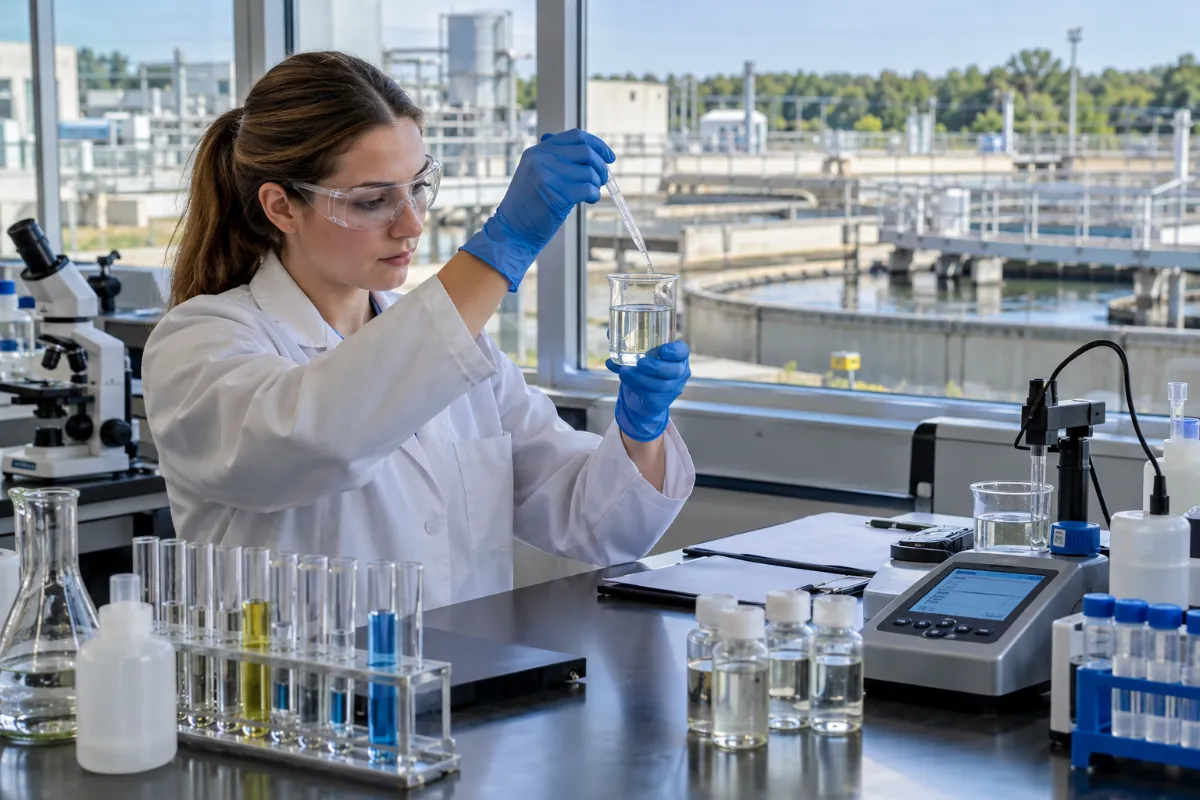
Power plant effluent is not one stream. It is several, each with its own chemistry. I have walked plants where the cooling tower blowdown, the FGD purge, and the bottom ash water all fed into one sump. That is a recipe for upset chemistry and fouling.
Here is what I typically see:
- Cooling tower blowdown — high TDS, silica, and scaling ions. Volume is large but concentration is moderate.
- Flue gas desulfurization (FGD) purge — heavy metals like selenium, mercury, and arsenic, plus chlorides and suspended gypsum solids.
- Bottom and fly ash handling water — high suspended solids, variable pH, sometimes leachable metals.
- Boiler blowdown and condensate polishing waste — low volume, but high purity requirements on the recycle side.
- Demineralizer regeneration waste — acid and caustic spikes that wreck biological systems if not neutralized.
Each stream needs its own treatment train. Mixing them rarely saves money once you factor in chemical consumption and downtime.
Core Treatment Stages and Equipment Selection
1. Pre-Treatment and Heavy Metal Removal
Almost every coal or oil-fired plant starts with chemical precipitation. You add lime or caustic to raise pH, then a sulfide or organosulfide to drop metals out of solution. A clarifier or high-rate solids contact unit does the separation.
Key selection points:
- Choose a clarifier with a sludge blanket that tolerates flow swings. Power plants ramp load, and the water side feels it.
- Size the reaction tank for at least 30 minutes of contact time at peak flow. Short-cutting is the number one cause of metals carryover I have seen.
- Use a screw press sludge dewatering unit downstream. It handles the metal hydroxide sludge with less operator attention than a filter press and produces a drier cake for landfill.
For plants with selenium, add a biological reduction step or an iron co-precipitation stage. Selenium is the metal that fails discharge tests most often in my experience.
2. Membrane Concentration for Volume Reduction
Once metals are out, you are left with high TDS water. If your permit allows discharge, you can stop here. If you are heading toward zero liquid discharge, membranes do the heavy lifting on volume reduction.
A DTRO membrane system is my default recommendation for FGD purge and cooling blowdown. Disk-tube reverse osmosis handles the fouling that spiral-wound membranes cannot. It tolerates higher suspended solids and scales, which means fewer cleanings and longer membrane life.
Typical design ranges I use for power plant streams:
- Recovery per pass: 70–85% depending on silica and sulfate saturation
- Operating pressure: 40–90 bar for DTRO, higher for brine stages
- Concentrate TDS: 60,000–120,000 mg/L before evaporation
These are project-dependent numbers. Silica is usually the limiting ion, not TDS. Run a jar test and a saturation index before you commit to recovery targets.
3. Evaporation and Crystallization for ZLD
When membrane concentrate has nowhere to go, evaporation takes over. This is where most of the capital and energy cost sits.
You have three main choices:
- Multi-effect evaporator — steam-driven, good when you have waste heat or low-cost steam. More effects mean better steam economy but higher capital.
- Mechanical vapor recompression (MVR) — electric-driven, best when power is cheap and steam is not available. Lower operating cost than thermal in most grid scenarios.
- Hybrid MVC + crystallizer — my preferred layout for true ZLD. The MVC evaporator concentrates to near-saturation, then a forced-circulation crystallizer produces solid salt for disposal.
For plants with existing steam headers, a multi-effect evaporator often wins on lifecycle cost. For greenfield sites or plants moving off coal, MVR is usually the better bet.
Equipment Comparison at a Glance
This table reflects typical design ranges I use for scoping. Actual selection depends on your water analysis, permit limits, and site utilities.
| Equipment | Best For | Typical Capacity | Energy Profile | Maintenance Load |
|---|---|---|---|---|
| Chemical precipitation + clarifier | Heavy metals, suspended solids | 50–500 m³/h | Low (pumps, mixers) | Moderate — sludge handling |
| Screw press dewatering | Metal hydroxide and gypsum sludge | 0.5–20 m³/h sludge | Low | Low — periodic wash |
| DTRO membrane system | High-fouling brine concentration | 10–200 m³/h | Medium — high-pressure pumps | Moderate — membrane replacement |
| Industrial RO | Low-fouling recycle streams | 20–500 m³/h | Medium | Low to moderate |
| MVR / MVC evaporator | Concentrate volume reduction | 5–100 m³/h feed | High — compressor driven | Moderate — compressor and heat exchanger |
| Multi-effect evaporator | Steam-rich sites, large volumes | 10–300 m³/h feed | High — steam driven | Moderate — tube scaling |
| Crystallizer | Final ZLD solids | 1–30 m³/h concentrate | High | High — scaling and solids handling |
Energy and Lifecycle Cost Reality Check
I get asked about cost more than anything else. Here is the honest breakdown.
For a mid-size plant moving 100 m³/h of FGD purge toward ZLD, the treatment train is roughly:
- Pre-treatment and metals removal: 15–20% of total capital
- Membrane concentration: 25–30% of total capital
- Evaporation and crystallization: 50–60% of total capital
Operating cost follows a similar shape. Evaporation dominates. An MVC evaporator typically consumes 15–35 kWh per cubic meter of distillate, depending on boiling point elevation and compressor efficiency. A multi-effect evaporator with available steam may run lower on purchased energy but higher on steam cost if you are buying it.
The MVR evaporator cost picture has shifted in recent years. Compressor prices and electricity rates drive most of the variance. I always run a sensitivity analysis on power price before locking in a technology.
Maintenance is the hidden cost. Evaporator heat exchangers scale. Compressors need scheduled overhauls. Membranes need replacement every three to five years. Budget 3–6% of capital per year for maintenance on a ZLD train. If a vendor quotes less, ask for their service history.
Practical Design and Operating Advice
After enough projects, patterns emerge. Here is what I tell every client before they sign a PO.
Characterize the stream properly
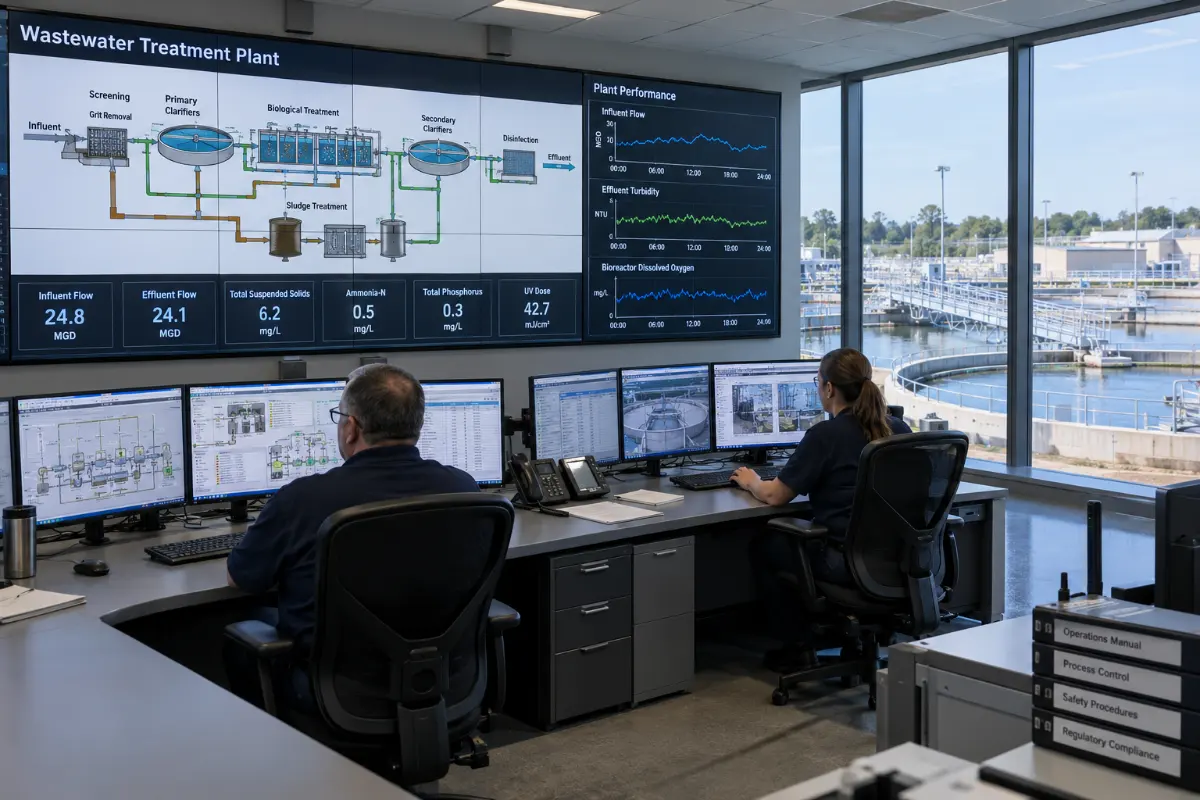
Run at least two weeks of composite sampling. Include silica, sulfate, chloride, hardness, and metals. Do not rely on a single grab sample. Power plant water chemistry changes with load, fuel, and season.
Design for turn-down
Plants do not run at nameplate. Your treatment train should handle 40–100% flow without channeling or short-circuiting. Variable frequency drives on pumps and compressors pay back fast.
Plan for scaling before it happens
Silica, calcium sulfate, and carbonate scale are the killers. Use antiscalant, seed recirculation, or a fluidized bed crystallizer if your saturation indices are high. Cleaning a scaled evaporator can cost a week of downtime.
Keep the sludge side simple
Sludge handling is where operators cut corners. A well-sized screw press and a covered storage pad prevent the mess that leads to permit violations.
Instrument for the hard measurements
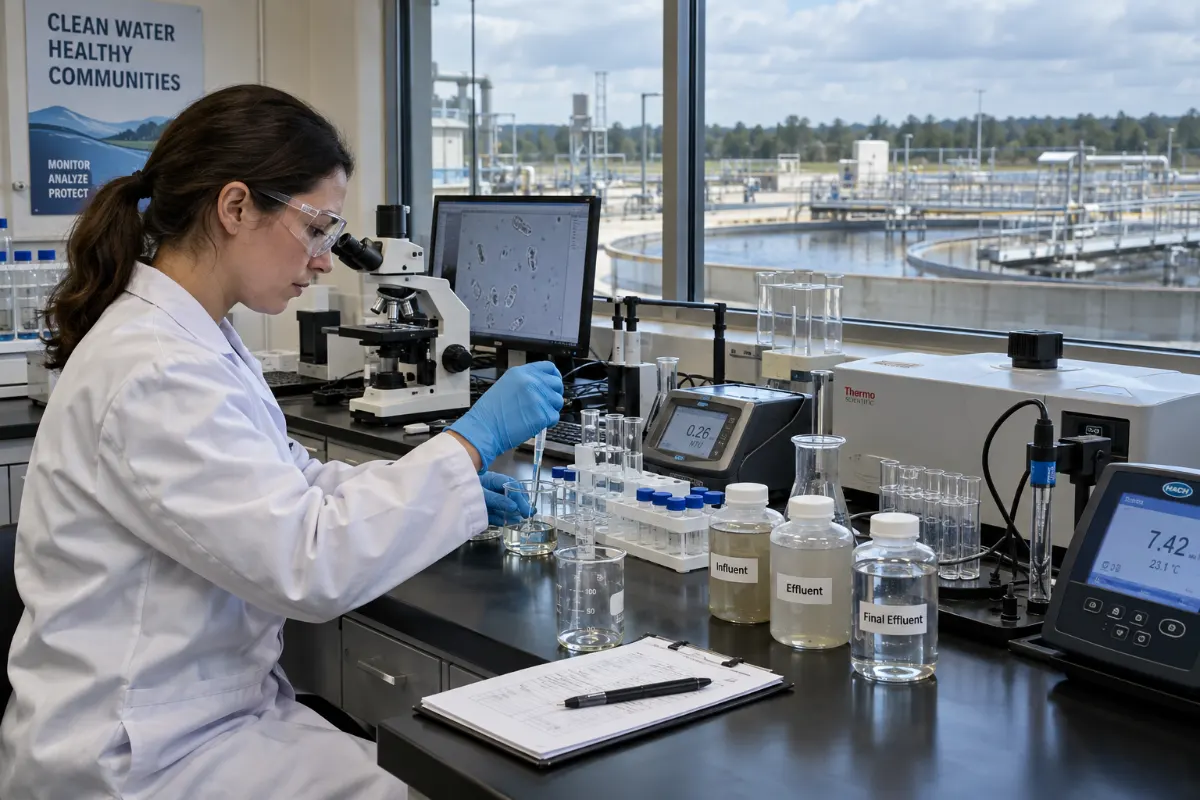
Install online conductivity, pH, and turbidity at minimum. If you are running ZLD, add a silica analyzer and a density meter on the crystallizer. The data pays for itself the first time you catch a scaling event early.
Common Operating Problems and Fixes
Membrane fouling
Symptoms: rising pressure drop, falling recovery. Fix: check pre-treatment performance first, then clean with the right chemistry. DTRO tolerates more fouling than spiral-wound, but it is not immune.
Evaporator scaling
Symptoms: falling heat transfer, rising boiling point. Fix: verify antiscalant dosing, check for silica saturation, and consider a seed slurry if scaling is chronic.
Compressor vibration or high discharge temperature
Symptoms: alarms, reduced capacity. Fix: check impeller balance and bearing condition. Schedule vibration analysis quarterly on MVR units.
Sludge dewatering underperformance
Symptoms: wet cake, high polymer use. Fix: check flocculation mixing energy and screw speed. Small adjustments often recover performance.
Discharge limit exceedances
Symptoms: metals or TDS over permit. Fix: verify reaction pH and sulfide dosing, then check clarifier sludge blanket. Most exceedances trace back to pre-treatment, not the advanced stages.
When to Choose Which Technology
Here is my quick decision logic:
- Discharge is allowed, TDS is moderate — chemical precipitation plus industrial RO. Simple, proven, low cost.
- Discharge is allowed, TDS is high and fouling is a problem — DTRO for concentration, discharge the brine if permitted.
- ZLD required, steam available — multi-effect evaporator plus crystallizer.
- ZLD required, no steam, power is affordable — MVC evaporator plus crystallizer.
- Retrofit into tight footprint — pre-packaged skid systems for pre-treatment and membrane stages, then a modular evaporator.
There is no universal answer. Anyone who tells you otherwise is selling something.
“The best equipment is the one your operators can run reliably at 3 a.m. on a holiday weekend. Design for that reality, not the ideal case.”
Frequently Asked Questions
What is the most common mistake in power plant wastewater treatment design?
Sizing for average flow instead of peak. Power plants ramp load, and the water side sees the swings. Design for peak flow with turn-down capability, or you will be cleaning up upsets for years.
How much does a ZLD system cost for a power plant?
Capital cost depends heavily on flow and technology. As a rough range, a 50–100 m³/h ZLD train runs in the millions of dollars. Evaporation and crystallization make up more than half. Operating cost is dominated by electricity or steam. Always run a sensitivity analysis on utility prices before committing.
How long do membranes last in power plant wastewater service?
Three to five years is typical for DTRO in FGD purge service. Spiral-wound membranes in cleaner streams may last longer. Fouling and cleaning frequency drive replacement timing more than calendar age.
Can I avoid evaporation if my permit allows some TDS discharge?
Yes, if your permit allows it. Many plants discharge membrane concentrate after metals removal. Check your permit limits carefully. If you can discharge, you save a large capital and operating cost.
What maintenance tasks should I schedule for an MVR evaporator?
Quarterly vibration analysis on the compressor. Annual inspection of heat exchanger tubes for scaling. Regular calibration of conductivity and density instruments. Antiscalant dosing system checks weekly. These simple routines prevent most unplanned outages.
How do I handle silica scaling in an evaporator?
Control it before it forms. Keep silica below saturation in the concentrate, use antiscalant, and consider seed recirculation. If scaling is chronic, a fluidized bed crystallizer or a higher purge rate may be needed.
What is the best way to dewater metal hydroxide sludge?
A screw press is my default for most power plant sludges. It produces a drier cake than a belt press with less operator attention. For very fine or oily sludge, a filter press may still be the better choice. Test before you buy.
Final Thoughts
Selecting wastewater treatment equipment for a power plant is a stream-by-stream exercise. Characterize first, then match technology to load, permit, and site utilities. Pre-treatment handles metals. Membranes reduce volume. Evaporation closes the loop when ZLD is required. Get the fundamentals right, design for turn-down and scaling, and keep maintenance realistic. That approach has served me well across dozens of projects, and it will serve you well too.
If you want a second opinion on your treatment train or a scoping study for a new system, our team can help. Reach out to discuss your project.